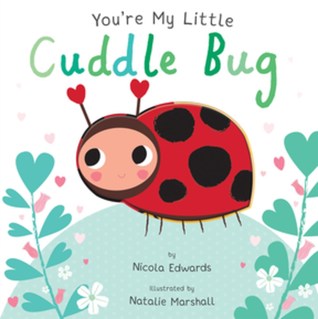
You’re My Little Cuddle Bug by Nicola Edwards

Share

You’re My Little Cuddle Bug
Author: Nicola Edwards; Illustrator: Natalie Marshall
Published February 1, 2017 by Silver Dolphin Books

Summary: Celebrate your little cuddle bug with this sweet and colorful rhyming board book!

Celebrate your little cuddle bug with this sweet and colorful rhyming board book! With chunky pages for little hands and die-cut cuddle bugs to add depth and interest, children will love the interactive features alongside the story.

My Review: The bright bugs pop on the page in a way that emanates warmth. This book reminds me of the popular classics like Time for Bed by Mem Fox. It’s fun for parents/guardians to read to their children, and the sweetness of the story and illustrations pop off of the page. The book is set up with cutouts and raised illustrations. On the first page, there is a baby bug, and when the reader turns the cut-out page, the baby bug is joined by a cuddling parent. It’s quite a charming little board book that made me smile.

Teachers’ Tools for Navigation: The book’s audience seems to be children and families, but I think it would also make a sweet read-aloud at a daycare or preschool before naptime. Children might draw their own cuddle bugs and write a verse from a parent or guardian to a child.

Discussion Questions: Which is your favorite bug? Why? How is this bug different from all of the other bugs in the book?; How do the bugs cuddle differently?

We Flagged: “So when the night is beetle black, and daytime’s at an end, we’ll snuggle up, two cuddle bugs, and sleep my little friend.”

Read This If You Loved: Time For Bed by Mem Fox; Twenty Yawns by Jane Smiley; Goodnight Moon by Margaret Wise BrownGoodnight Songs by Margaret Wise BrownA Book of Sleep by Il Sung Na, I’m Not Sleepy by Jonathan Allen, Hoot & Honk Just Can’t Sleep by Leslie Helakoski 

Recommended For: 

readaloudbuttonsmall

RickiSig

**Thank you to Casey from Media Masters for sharing these books with us!**

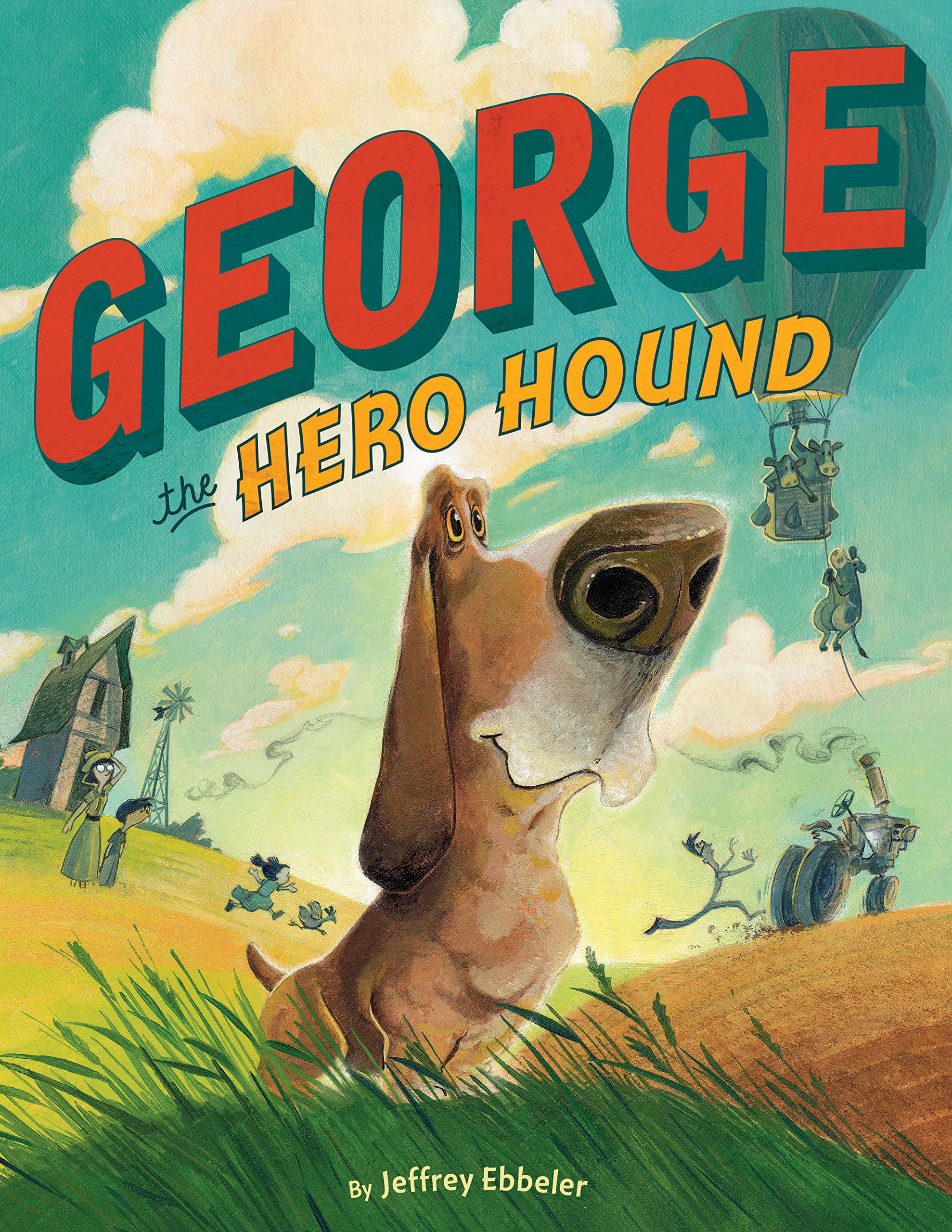
George the Hero Hound by Jeffrey Ebbeler

Share

George the Hero Hound
Author: Jeffrey Ebbeler
Published March 20th, 2018 by Two Lions

Summary: George is a good ol’ hound dog. He helps Farmer Fritz with the chores and—most important of all—he keeps those sneaky cows out of the cornfield.

Then Farmer Fritz moves away, and a new family from the city moves in. The Gladstones have a lot to learn. George tries to help, but they don’t understand his job on the farm…until the day little Olive goes missing, and George shows everyone what it means to be a hero hound!

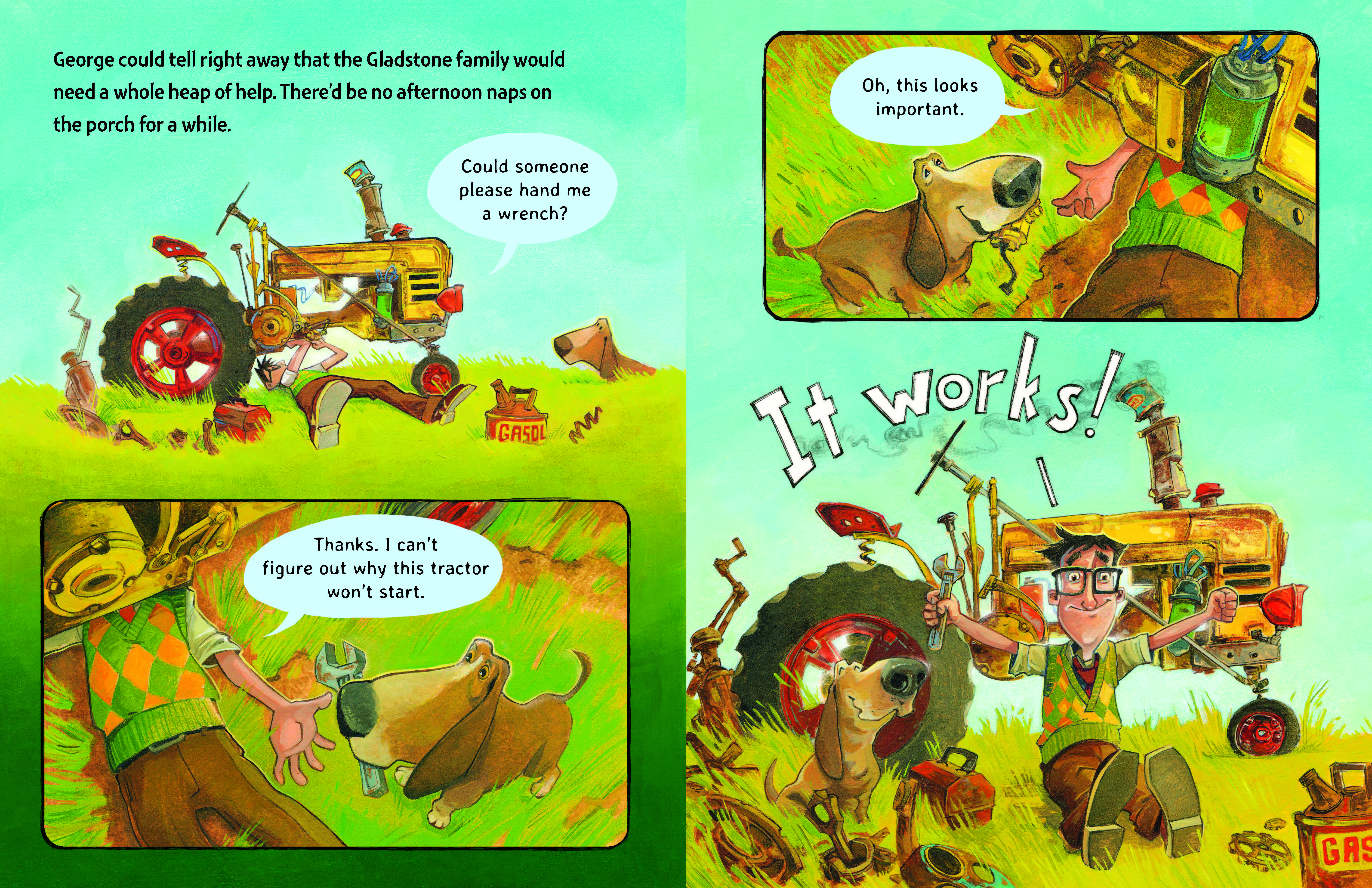
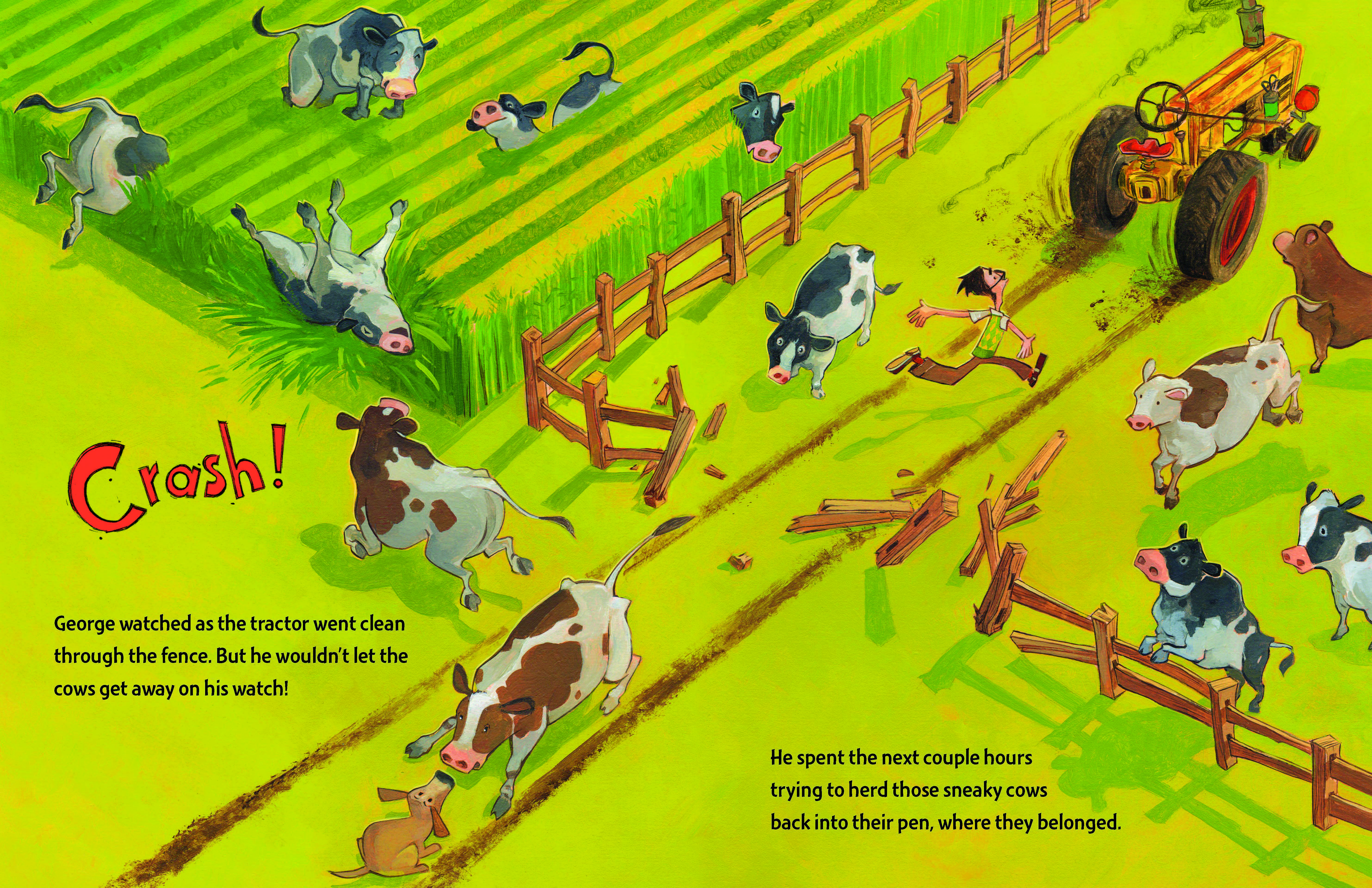
ReviewFirst, I have to talk about how much I just love George, his expressions, and his story. Just look at that cover! Don’t you want to just follow him around?! But you want to know what made the story for me? The extra story that was told through the illustrations. George’s story that is told through the text is a look at figuring out home when things change and dealing with a new situation, and George is definitely the hero in all of it; however, it is the hilarious stories told in the background that add just the extra HAs! to the story. Watch for the cows to make some Mission Impossible-esque moves and for the Gladstones to make some silly mistakes.

Teachers’ Tools for Navigation: What a great way to introduce storytelling through words and illustrations. When I did my Caldecott unit with my middle schoolers, so many of them didn’t know how to read a story without being told it in words. Use the illustrations in the background for a creative writing prompt to have students write an alternate text for each page using what is going on in the background of the told story.

George’s tale would also be a good text to use to introduce theme and the idea that a text can have more than one theme, depending on which character you are learning from.

Discussion Questions: 

  • How is George a hero?
  • What do you think the cows’ master plans include?
  • How are the Gladstones different from Farmer Fritz?
  • What are clues that the Gladstones are from the city?
  • How does the author indicate dialogue versus narration?
  • What is a clue that would have told the Gladstones George’s name?

Flagged Passages: “George was a good old hound dog. Every day George was up, even before the chickens, to help old Farmer Fritz with the cores. That rust-bucket tractor was always falling apart. . . and those wily cows were always plotting to get out and feast on the cornfield.”

And some passages from after the Gladstone family moves in:

Read This If You Love: Officer Buckle and Gloria by Peggy Rathman; My Dog is the Best by Laurie Ann Thompson; Click, Clack, Moo by Doreen Cronin; Farmer Duck by Martin Waddell; Chicken Dance by Tammi Sauer

Recommended For: 


Signature

**Thank you to Two Lions for providing a copy for review!**

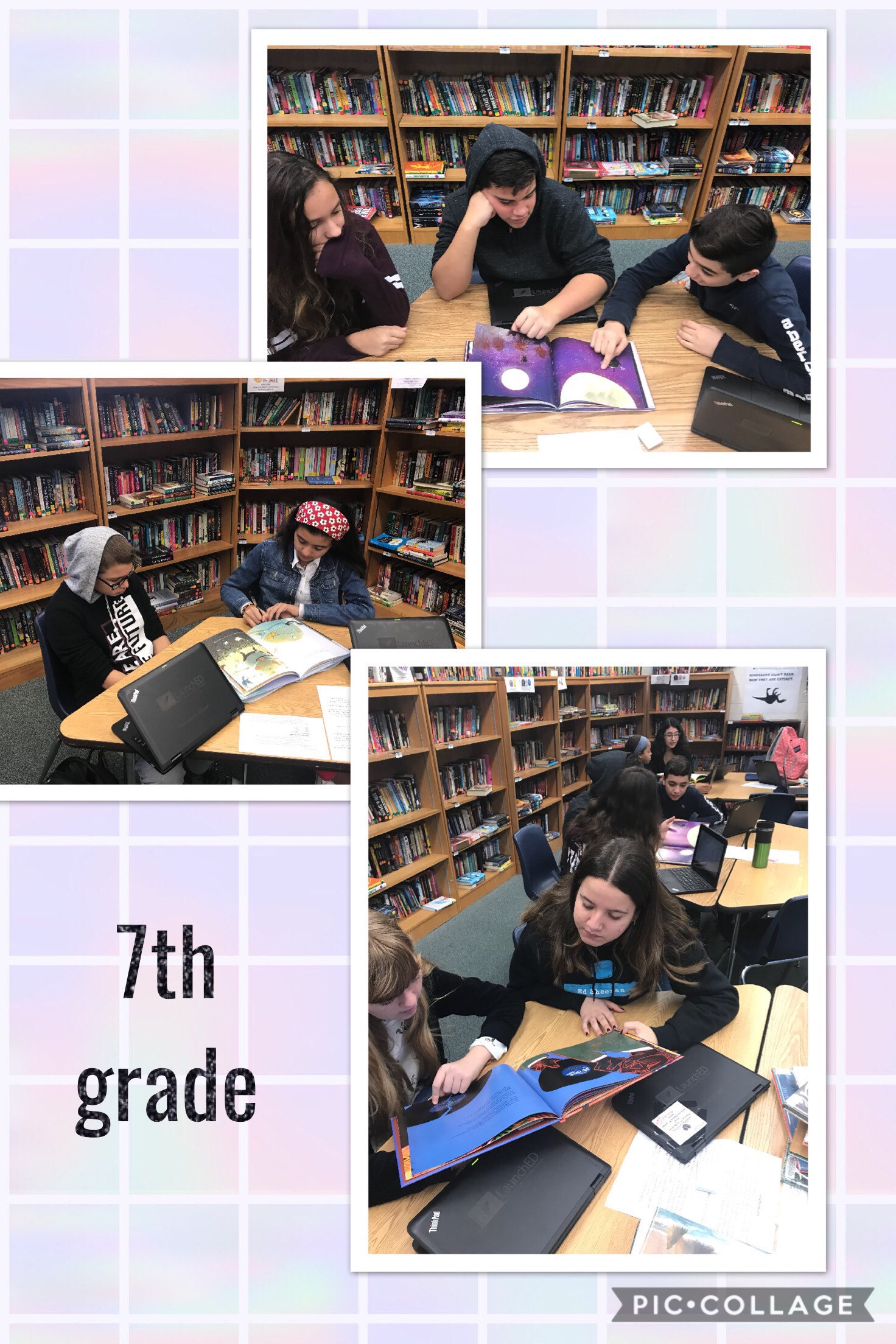
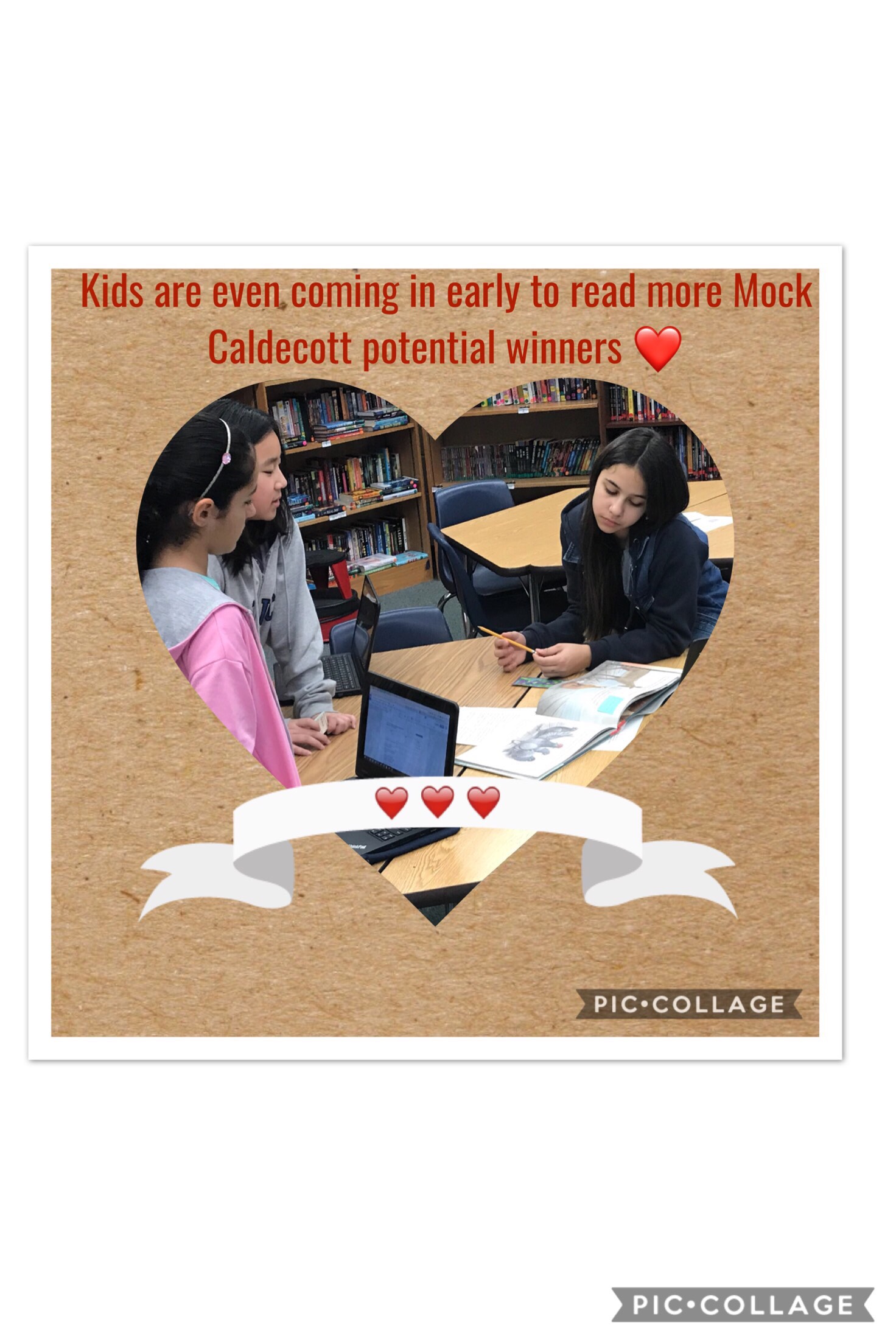
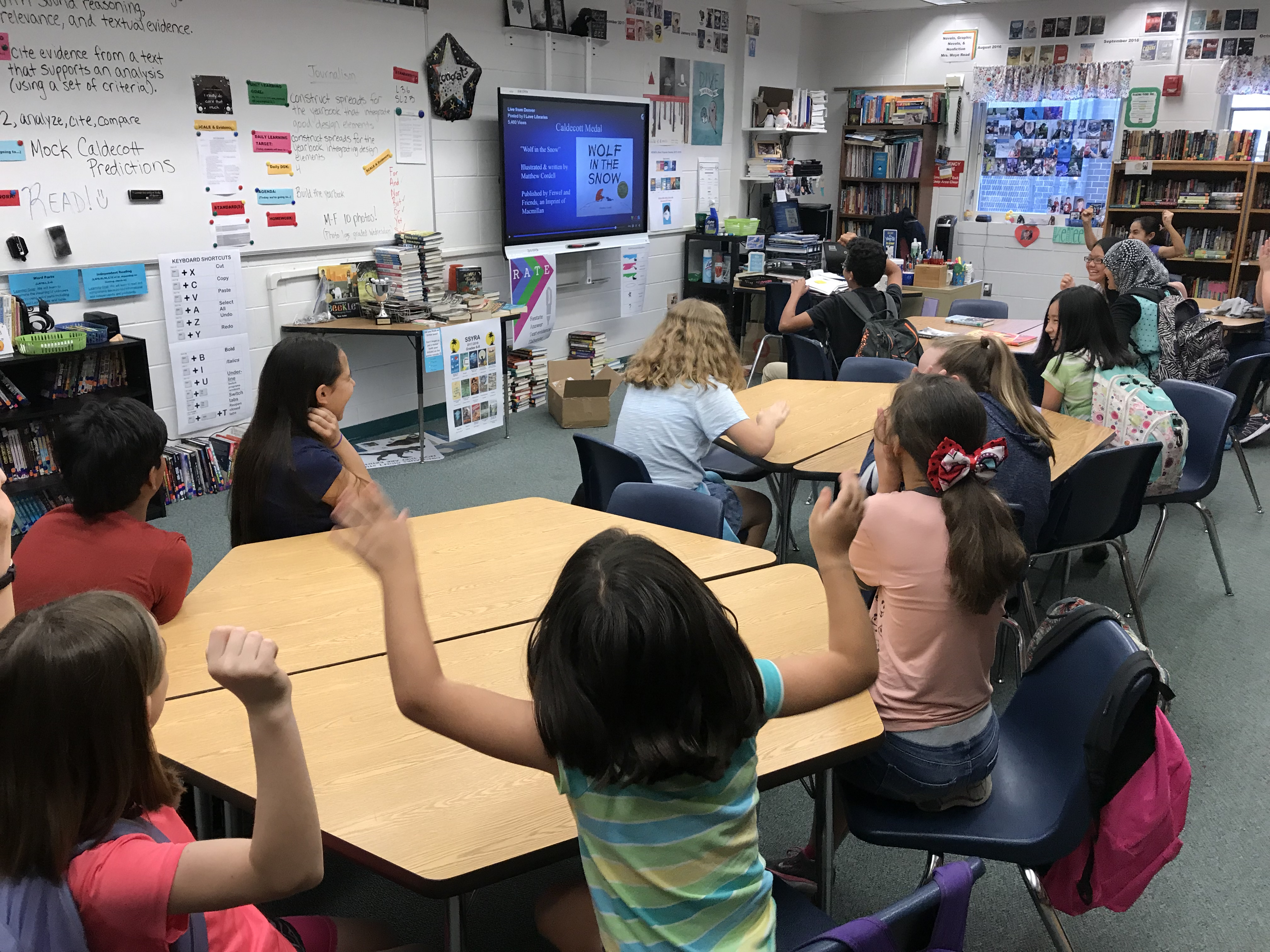
Kellee’s Classes’ 2018 Mock Caldecott Experience

Share

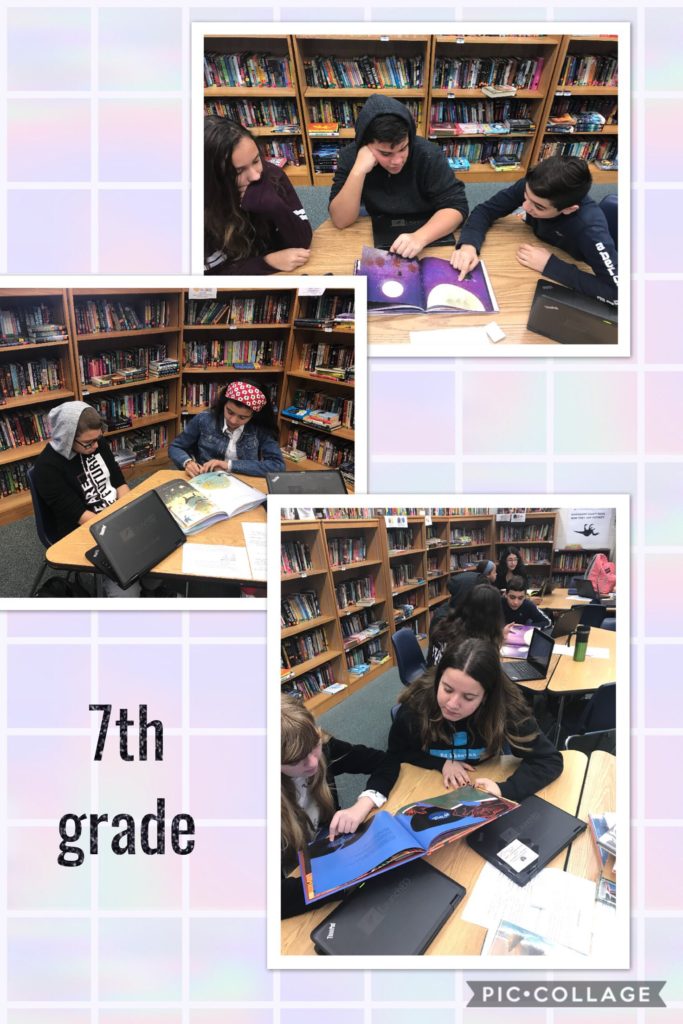
Last year was my first year taking part in a mock award when my lunch book club did the Mock Newbery. I loved the process and the conversations, but I really wanted to move to a less stressful book club and make the process more focused and to get more students involved, so I decided to do a mock award with my class; however, I knew that doing the Newbery well is a very long process, so I thought the Caldecott would be interesting to try with middle schoolers. And I was right!

When I decided to do a Mock Caldecott unit, I didn’t really know what I was doing, so I turned to my friends on Twitter who have done Mock Caldecott lessons before. I also turned to good-ole Google. With all of this help and a bit of hard work, I felt pretty good to start.

Choosing Books
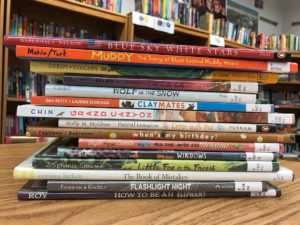
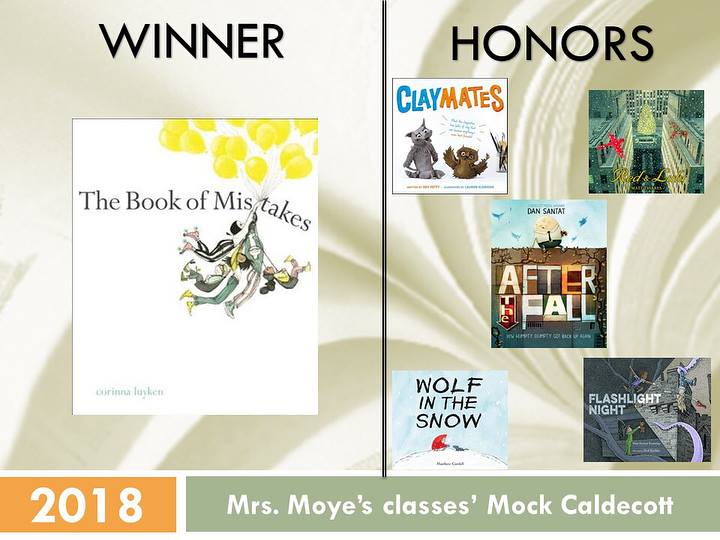
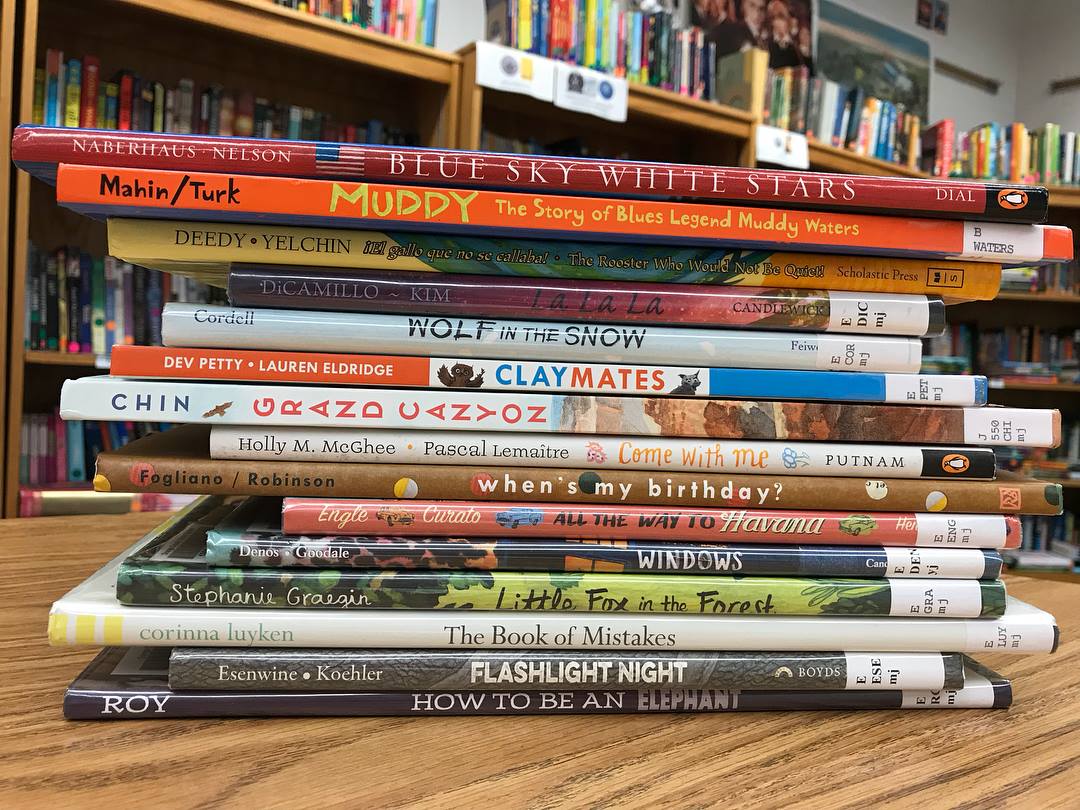
To pick books, I completely trusted my PLN and myself, and I chose 20 books that blew them and/or me away. The books were:

A Boy, a Mouse, and a Spider by Barbara Herkert, Ill. by Lauren Castillo
After the Fall by Dan Santat
All the Way to Havana by Margarita Engle, Ill. by Mike Curato
Blue Sky, White Stars by Sarvinder Naberhaus, Ill. by Kadir Nelson
Claymates by Dev Petty, Ill. by Lauren Eldridge
Come with Me by Holly M. McGhee, Ill. by Pascal Lemaitre
Flashlight Night by Matt Forrest Esenwine, Ill. by Fred Koehler
Grand Canyon by Jason Chin
How to Be an Elephant by Katherine Roy
La La La by Kate DiCamillo, Ill. by Jaime Kim
Little Fox in the Forest by Stephanie Graegin
Muddy: The Story of Blues Legend Muddy Water by Michael Mahin, Ill. by Evan Turk
Red & Lulu by Matt Tavares
The Antlered Ship by Dashka Slater, Ill. by The Fan Brothers
The Book of Mistakes by Corinna Luyken
The Rooster Who Would Not be Quiet! by Carmen Agra Deedy, Ill. by Eugene Yelchin
The Wolf, The Duck, & The Mouse by Mac Barnett, Ill.by Jon Klassen
When’s My Birthday? by Julie Fogliano, Ill. by Christian Robinson
Windows by Julia Denos, Ill. By E.B. Goodale
Wolf in the Snow by Matthew Cordell

Standards and Learning Goals

To justify a Caldecott Unit, I needed to tie it to middle school standards, and I chose to focus on the standards of citing textual evidence to support analysis and presenting claims and findings with relevant evidence. There were also five secondary standards that fit the unit.

LAFS.8.RL.1.1 2 Cite the textual evidence that most strongly supports an analysis of what the text says explicitly as well as inferences drawn from the text.
LAFS.8.SL.2.4 3 Present claims and findings, emphasizing salient points in a focused, coherent manner with relevant evidence, sound valid reasoning, and well-chosen details; use appropriate eye contact, adequate volume, and clear pronunciation.
LAFS.8.SL.1.1d Acknowledge new information expressed by others, and, when warranted, qualify or justify their own views in light of the evidence presented.
LAFS.8.RL.1.2 3 Determine a theme or central idea of a text and analyze its development over the course of the text, including its relationship to the characters, setting, and plot; provide an objective summary of the text.
LAFS.8.RL.1.3 3 Analyze how particular lines of dialogue or incidents in a story or drama propel the action, reveal aspects of a character, or provoke a decision.
LAFS.8.RL.2.5 3 Compare and contrast the structure of two or more texts and analyze how the differing structure of each text contributes to its meaning and style.
LAFS.8.RL.2.6 3 Analyze how differences in the points of view of the characters and the audience or reader (e.g., created through the use of dramatic irony) create such effects as suspense or humor.

Timeline

After determining the standards, I created a scale to help plan my timeline. I knew I needed to start with the students understanding the Caldecott criteria and end with students presenting claims and evidence supporting their claim.

Level Target Evidence
4 I can do level 3 plus I have appropriate eye contact, volume, and clear pronunciation and can think on my feet during a discussion. Mock Caldecott discussion
3 I can present claims and findings with sound reasoning, relevance, and cite evidence from the text that supports my analysis. Choose which potential winners they believe will be honored and present this claim using evidence from the text.
2 I can cite evidence from a text that supports my analysis (using a set of criteria). Analyze past winners for criteria.

Analyze potential winners for criteria.

1 I understand the criteria I will be using to analyze a text. Caldecott criteria presentation

Example Beekle analysis

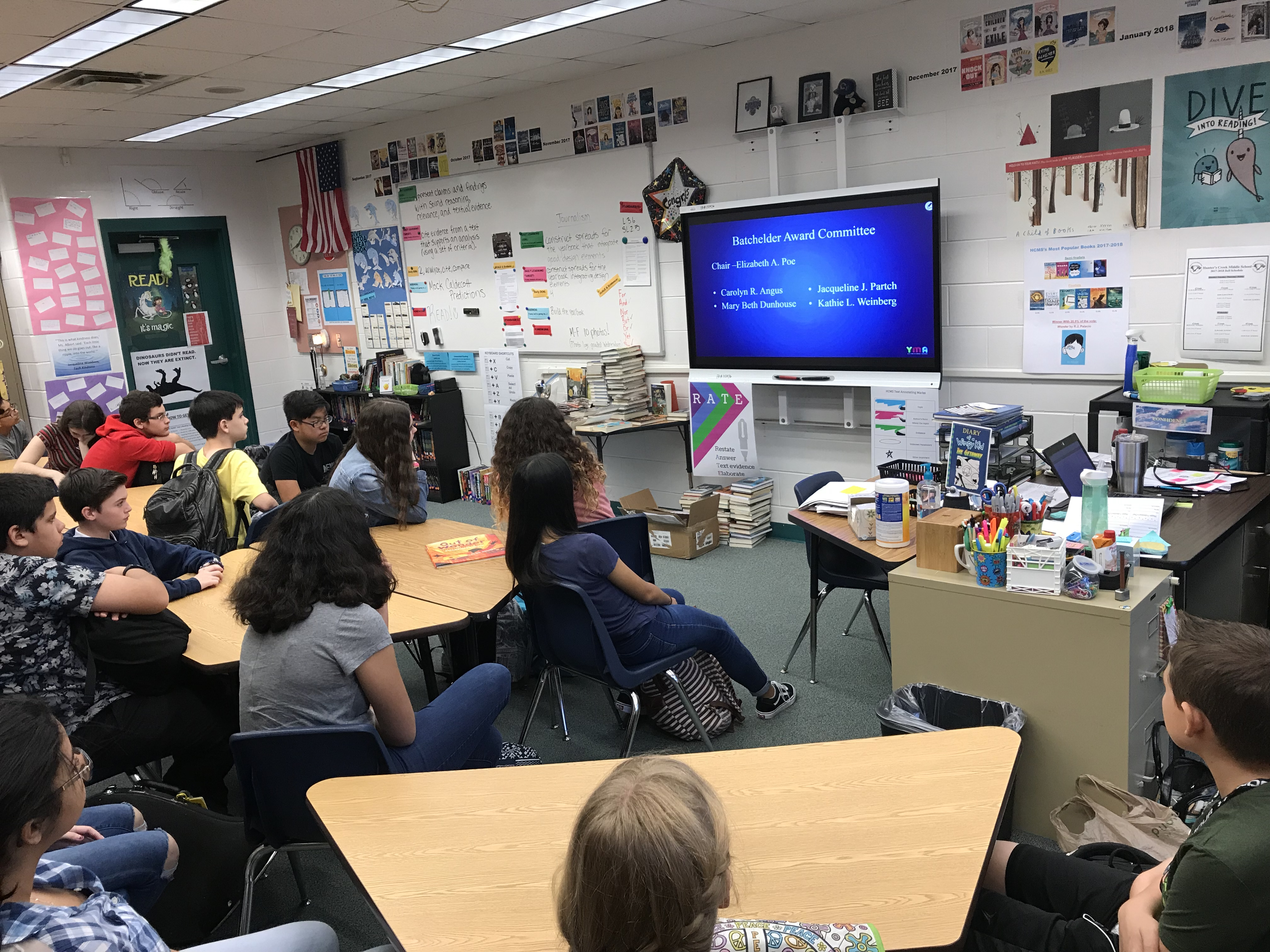
The next step, in my Google searching, I found a wonderful Slideshare by librarian Steven Engelfried from Portland, Oregon. Over about 40 minutes in two days we went through all of the criteria. We also talked about some art elements vocabulary that they would need to know and use during the unit (and I found Quizlets on Elements of Art and Art Mediums!)

I’ll be honest, I really didn’t know where to go from here… Luckily, there is an amazing teacher from Illinois named Jessica Lifshitz who teaches 5th grade and wrote such a brilliant post about the Mock Caldecott unit in her classroom, and I finally felt like I could proceed with this unit and do it well–all because of this post! I’ve emailed Jessica to thank her, but I also want to publicly do it here–thank you, Jessica!

The next step was sharing books that already won or were honored for the Caldecott. We started with Beekle by Dan Santat as a whole class. Then, my students, in partners, got to browse a huge pile of Caldecott books, and I asked them to answer for each book: “Why did this book win over the others? How did it meet the Caldecott criteria?” I also had them rotate partners to make sure they were hearing different opinions and voices. Here are some examples of student answers:

Du Iz Tak? I think this book was honored over other picture books in the year it was published because the story is fun and in a made-up language which made us think about what they were talking about and try to translate it to English. She uses lots of space and colors. Some pages there are no words which make the pictures necessary to understand it. The medium she uses are gouache and ink.
Journey This book was honored over the others because the illustrations had such good creativity and were very unique. There was no writing, so you had to rely on the pictures to tell the story. The bird found the girl after she set him free, and led him to a friend. The story has a very good meaning, and a good purpose. It had a variety of contrasting colors, and showed the most important stuff in bright colors. It had a very powerful visual experience. It showed the plot, setting, and characters in illustrations. Her world was bland in the beginning, but after she came into the new world, everything explodes with color.
King Bidgood’s in the Bathtub I think that this book was honored because all of the illustrations in the book are very detailed and tell the story without words. If you were to remove the words from the book you would still know what was going because all the pictures are very detailed and have a lot of different colors on every page.
Where the Wild Things Are I think this book was honored by how realistic the illustrations are and for how fun the story is. I love the leading lines the illustrator uses how there are no words over the illustrations giving the book plenty of white space. All the spreads have plenty of  happy colors which for me makes the book very appropriate for kids.
Swimmy The book was drawn with watercolors. The illustrator was very meticulous and detailed when he was painting the pictures. It actually felt like some objects had a texture  that you could feel. It was very entertaining. Younger children would be fascinated with the drawings and would love the story. This was a great book in all aspects.
Interrupting Chicken I think this book was honored because it included other famous stories but with a plot twist. They included little red riding hood and she was on her way to go to her grandma when she met a stranger and the chicken said don’t talk to strangers. Then the story ended so fast. The style of the chicken’s drawing of his own story was like a child’s actual drawing. It was very kiddy and I liked that the story was kind of based off of what the dad was trying to do to the chicken. He kept telling him stories but he never fell asleep. Now the chicken told him a story about his dad not falling asleep but in real life the dad fell asleep before the story ended. The illustrations look like they are painted and the colors are very warm to make the room seem cozy.

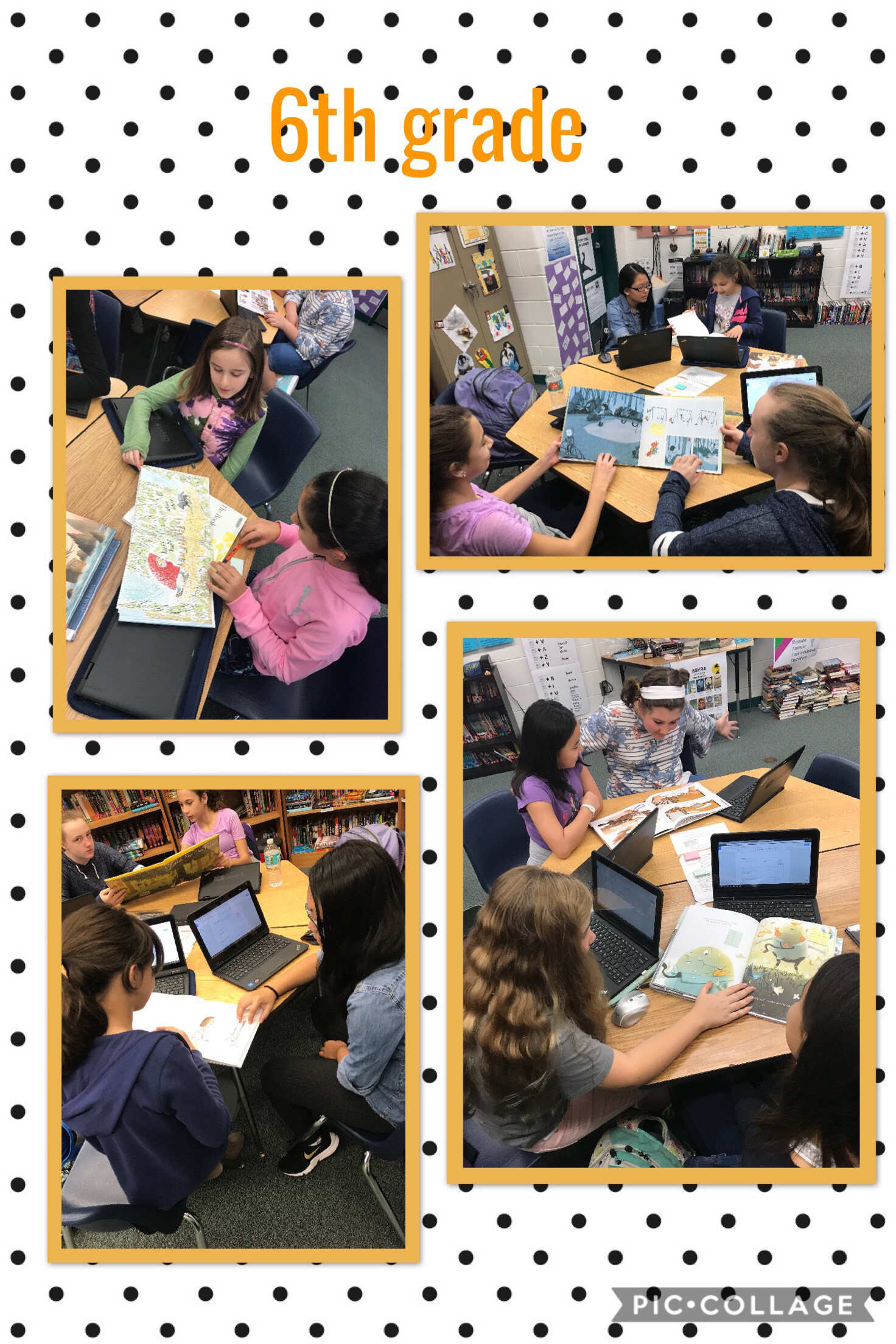
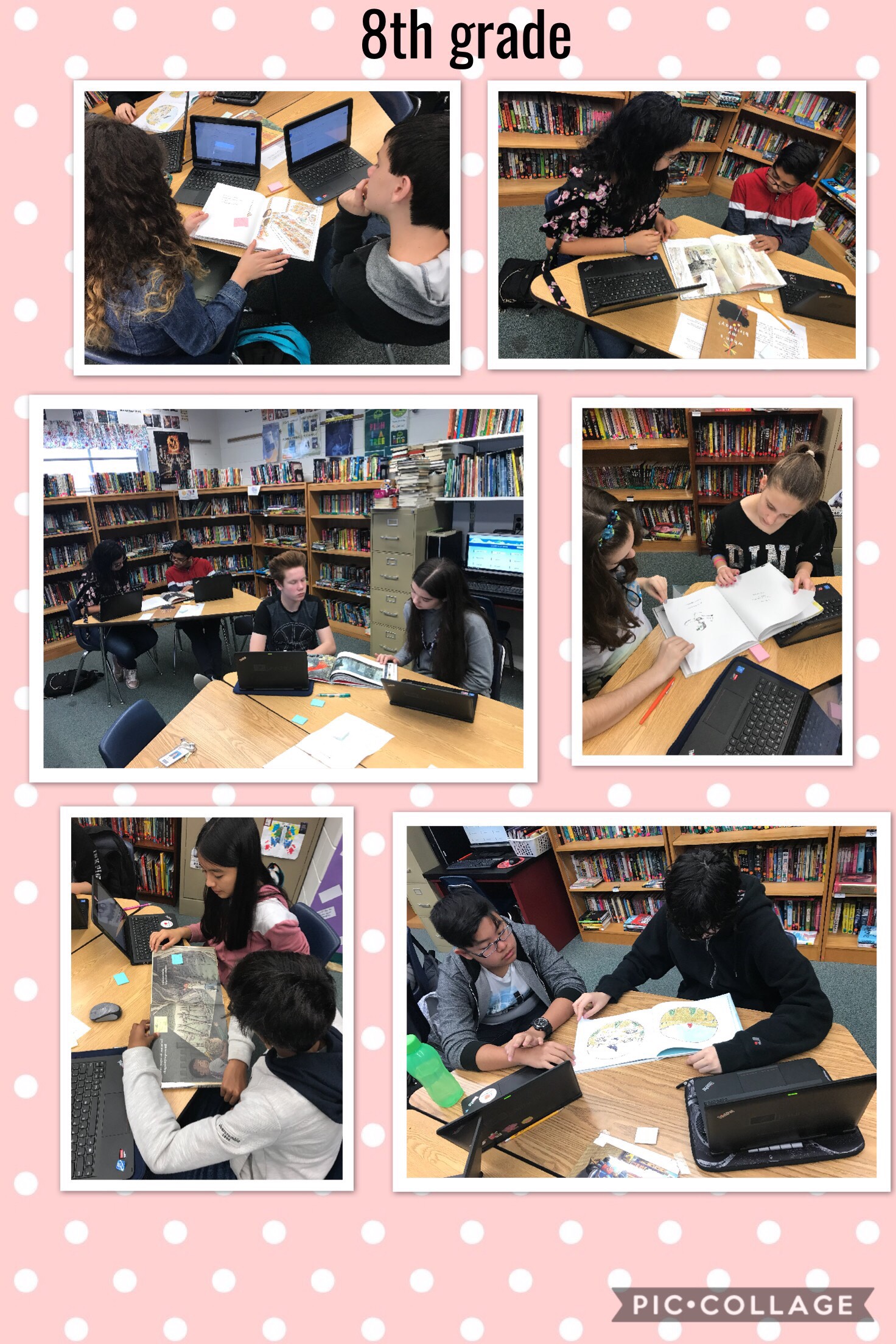
Now that they were experts on the criteria and saw example of winners/honors, it was time to jump into our Mock Caldecott titles. To evaluate these books, I had them look specifically at each part of the Caldecott Criteria, and they had to answer how the book fit or didn’t fit the criteria. I set up a pretty clear close reading process for them to follow:

  • First read: Just read the book and enjoy!
  • Second read: Focus on the illustrations. How do they meet Caldecott criteria? What does the author excel at? Use Post-Its to annotate your thoughts.
  • Third read: Focus on the narrative elements of the story. Use Post-Its to annotate your thoughts on how the illustrations enhanced the narrative.

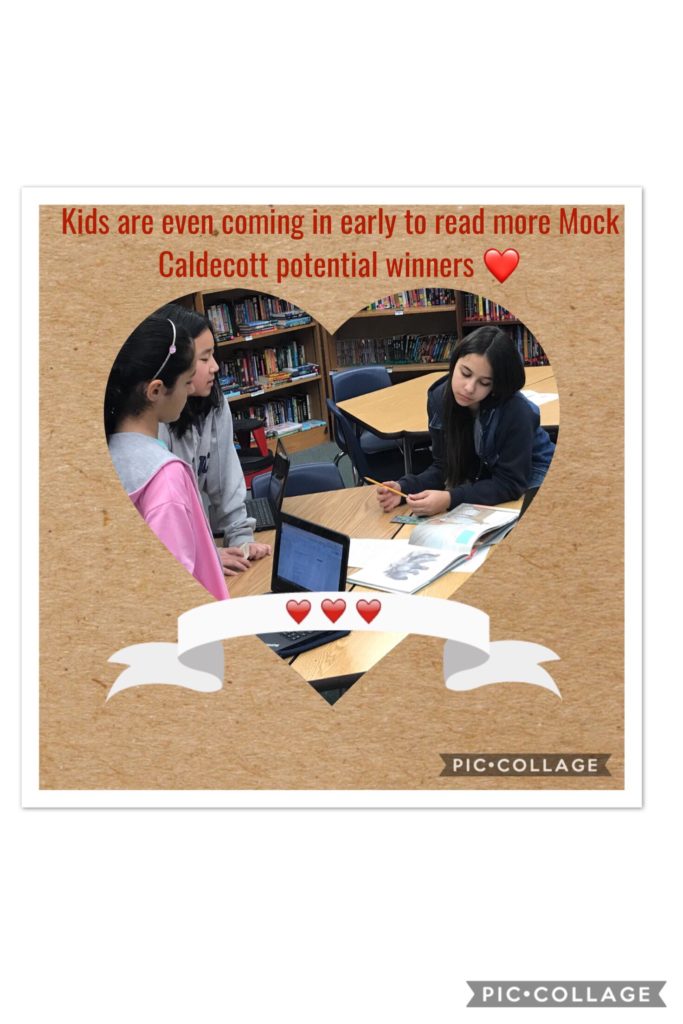
Students started in pairs again then we scaffolded off to working independently. I also had them leave the Post-Its in the books, so the students were seeing thoughts across classes. Students were asked to get to at least ten of the mock books. We did this for over a week to allow them time to read as many as they can and also time to evaluate properly.
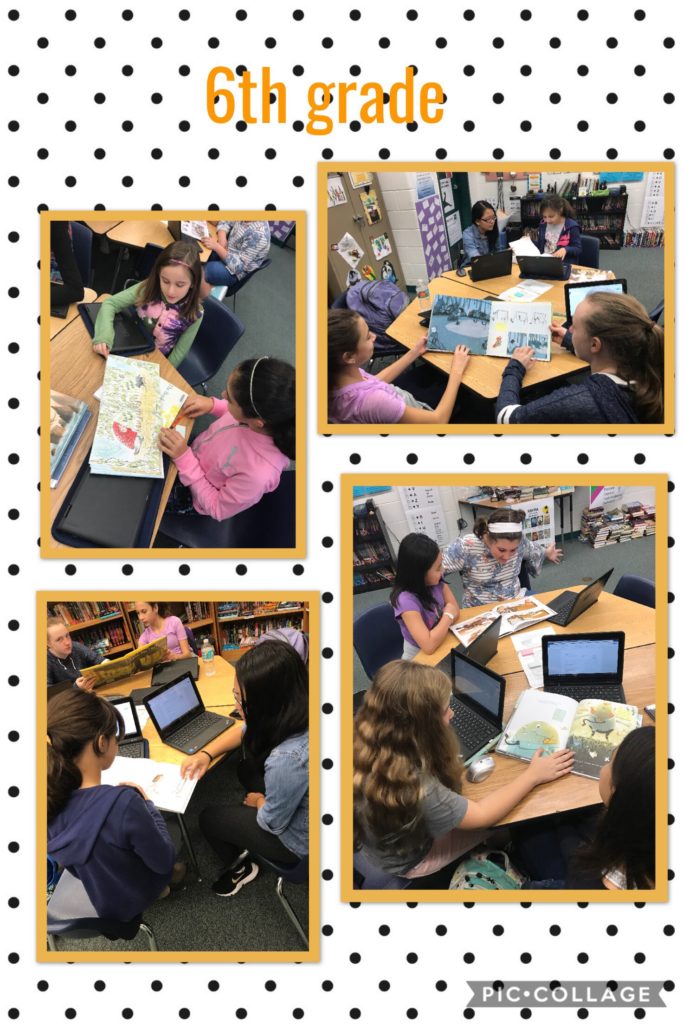
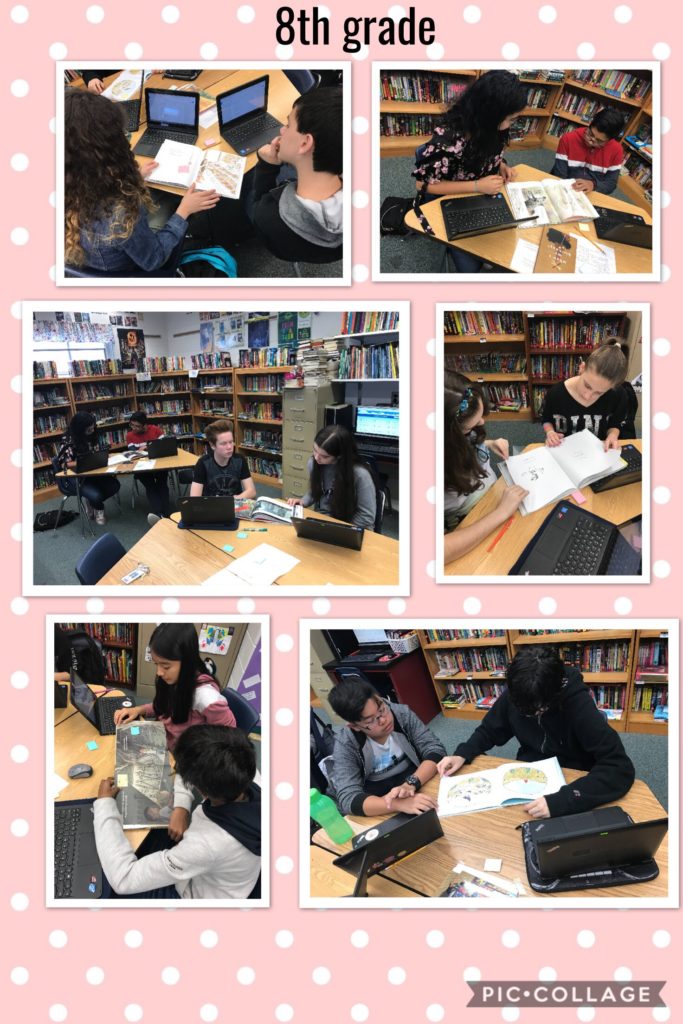
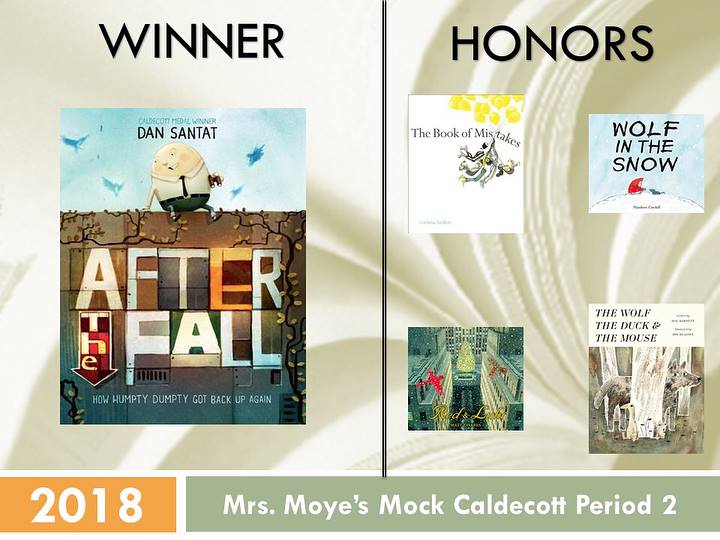
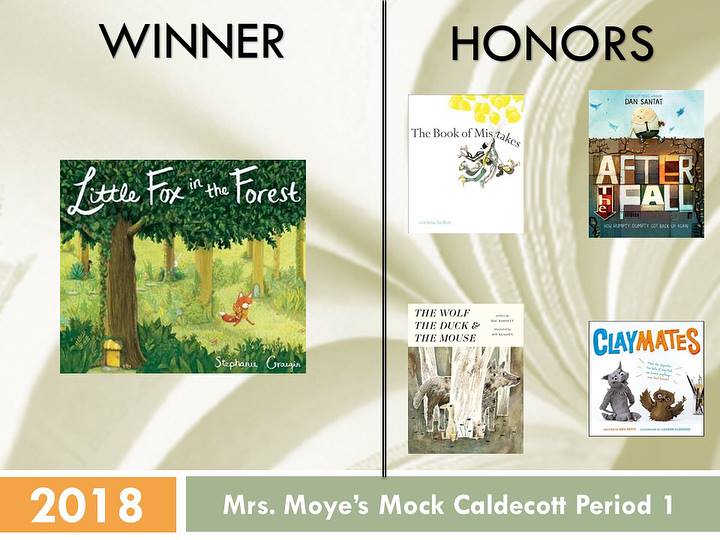
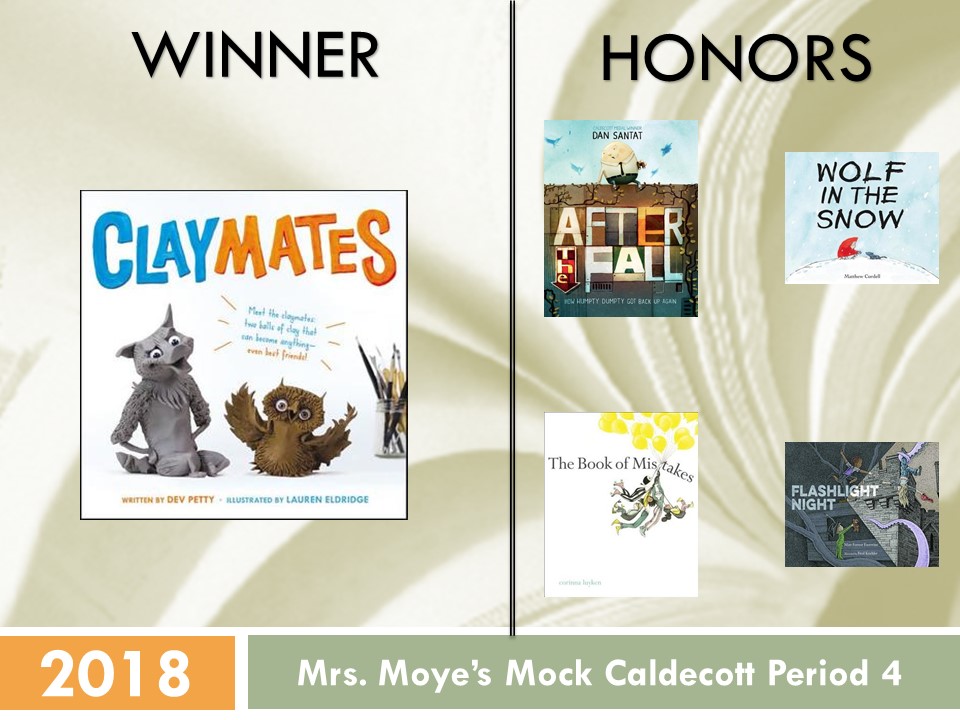
At the end of the unit and the Thursday and Friday before the ALA Youth Media Awards, it was time to start making predictions. First, I had them rank the books they read from favorite for the Caldecott to least favorite. Using these predictions, I gave books numerical scores and figured out average scores. I also had students get together in groups of three to five to pick their collaborative four favorite books and awarded bonus points. With all of these scores, I was able determine the winners for each class as well as for all of my classes.

The last thing my students did before finding out who had won was complete a written response answering:

  • What book do you feel best met the Caldecott criteria thus you feel should win?
  • What criteria did it most meet?
  • Share evidence supporting your claims.
    • Use RATE: Restate, Answer, Textual Evidence, Explain/Elaborate!

Some student responses:

  • I think that The Book Of Mistakes should win because it does appeal to kids because it is very colorful, with much space so they can focus on what is important. The rest of the book is white except for the illustrations, which I think is easier for the kids to understand what is important. Also, the illustrator used a lot of artistic medium, with paint, pen, and other things, she made very good illustrations that connected with the story. They really made a visual experience, because if you just had the story, you would not know what was going on at all, and so you had to depend on the pictures to tell the story. I think that this book should win the Mock Caldecott award because I think that it deserves it with beautiful illustrations that have a good meaning and theme, and I think that they really appeal to kids, and so therefore should win the Mock Caldecott Award. The illustrations were very nice, and they tell the characters, and other narrative elements. There was a lot of line, space, colors and other things that made the illustrations very unique among other illustrations by other illustrators. The colors did change depending on many things, and the color choices were very good. I think that The Book Of Mistakes should win the Mock Caldecott Award.
  • I think After the Fall would win the Caldecott. The reasoning in this is because with the amount of detail put into the text more specifically the illustrations. The illustrations in the book show a big part of the story. It shows the sequence of events with the illustrations now that the egg falls then he lives a sad life without being able to climb due to his fear. You can see the emotion and detail with everything he does not like being grey or showing sadness. Then, in the end, he made an invention to be able to fly again a mini plane even with him having bandages and being injured after the fall. He tests it out and then it gets stuck on where he fell he decides to go up and with the pictures you could see how stressed out he was. Then at the end, you can see the light and feathers cracking showing that he is becoming a bird. But that’s not the first reference throughout the book it shows birds on every page giving reference to the end of it. Then you see him fly away into the sky after he hatches. That is why After the Fall will win the Caldecott.
  • The book Little Fox In The Forest is going to win because of its unique illustrations. These illustrations such as when the Little girl lives in a colorless world and brings her colorless fox to show and tell. When the little girl is swinging on the swing she finds the orange fox stealing her colorless stuffed fox . Now the little girl and her best friend is chasing the fox and follows the fox in the forest. Then all the sudden you start to see little experts of color, and then there was a very colorful magical forest. This book was such a good using of artistic medium and a very good visual experience this book definitely deserves to be on top.
  • I think Wolf in the Snow should win the mock Caldecott because of the detail in the illustrations. It has a story in the illustrations which is about a wolf cub and a girl who help each other out. The detail in the wolves and every picture is great, for example, the wolves breath due to the cold environment they are in. This book really appeals to kids because of the illustrations they are showing like when the wolf stares at the girl holding the wolf cub, and it creates a questioning of what will happen next. This book does not need words at all because you can already see the story from the illustrations. This means there is a great visual experience in the book.
  • The book that I think will win the Caldecott is Flashlight Night by Fred Koehler the illustrator of this book. I think this book will win because it tells the story with the imaginations of kids and uses lots of colors and is told amazingly. I think this book appeals to kids because it shows how you imaginations can take you anywhere. The art to make this book was very detail from one illustration to the next. The illustrations work amazing with the story because depending on what the illustration was the story would match up perfectly with it. This are some of the reasons why I think that Flashlight Night should win the Mock Caldecott this year.

Our Winners
The ALA Youth Media Awards
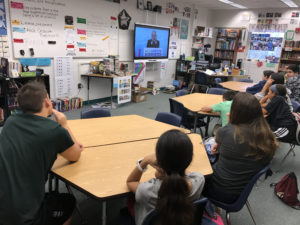
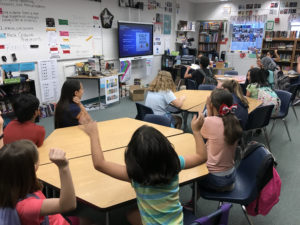
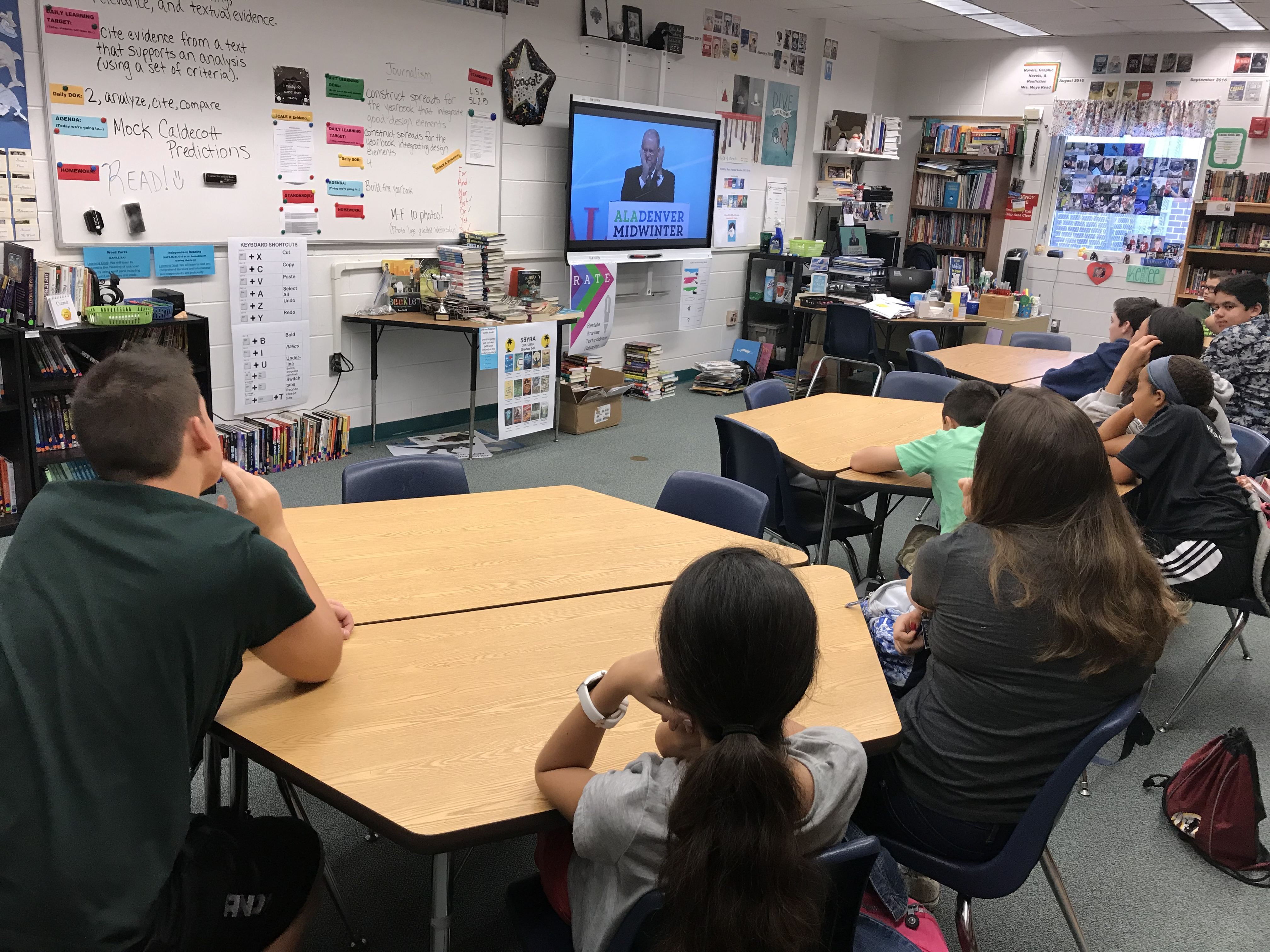
On Monday, February 12th, my classes watch the ALA Youth Media Awards either live or recorded, and it was so much fun to watch their reactions when they saw books they read or their disappointment when their favorites didn’t win. We were so excited to see Grand Canyon and Wolf in the Snow honored with the Caldecott, and the students who put them high on their prediction felt so validated. There were three Caldecott honor books that we hadn’t had in our pile, so we have them coming from the public library, and I promised them that we’d have a conversation on why those titles may have won over the ones that we chose.

This unit was one of my favorite lessons ever, and I was so impressed with my students and the quality of books! Thank you to everyone who helped me make this possible, and I hope that if you are reading this and never done a Mock Caldecott award that you now feel like you could because if I can, you can 🙂 

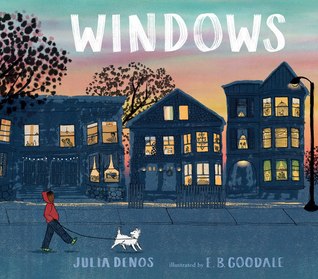
Windows by Julia Denos

Share

Windows
Author: Julia Denos; Illustrator: E. B. Goodale
Published: October 17, 2017 by Candlewick

Goodreads Summary: Walking his dog at dusk, one boy catches glimpses of the lives around him in this lovely ode to autumn evenings, exploring your neighborhood, and coming home.

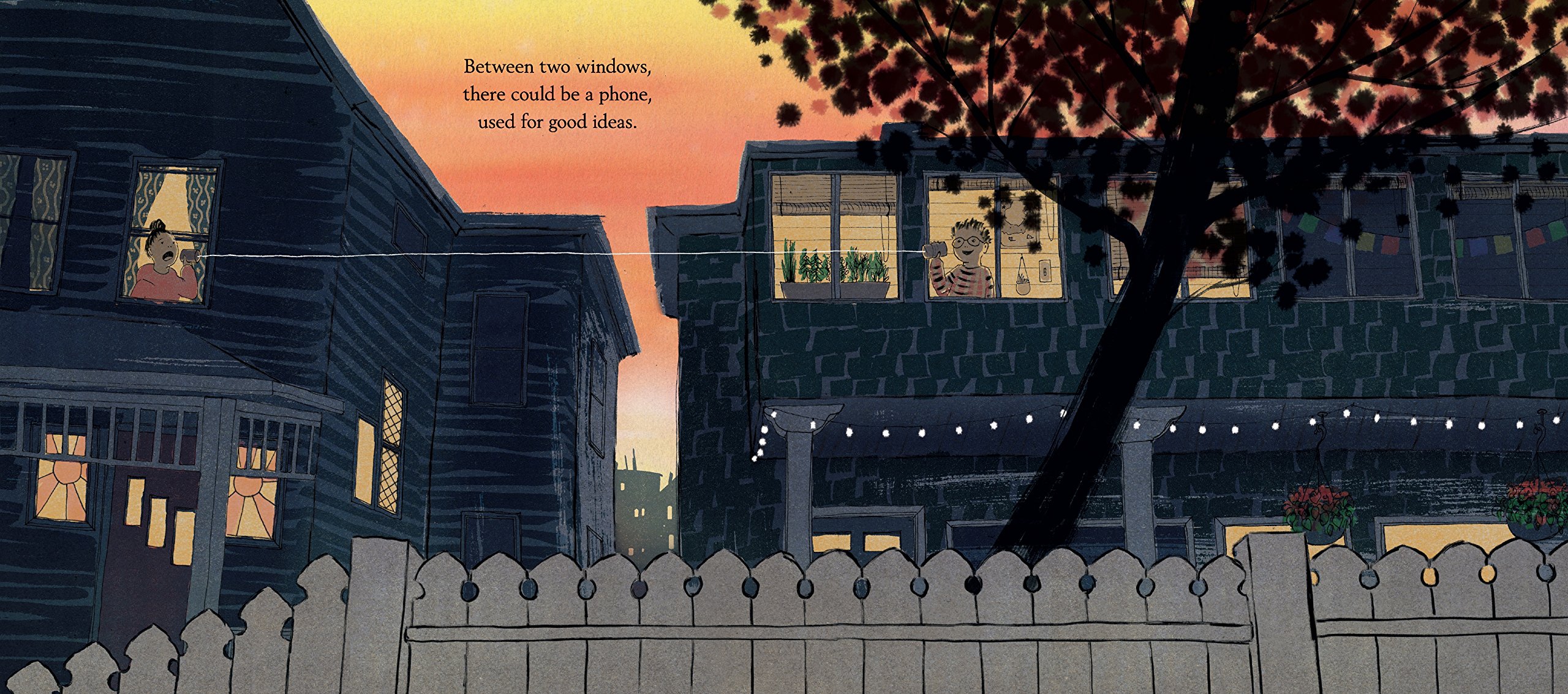
Before your city goes to sleep, you might head out for a walk, your dog at your side as you go out the door and into the almost-night. Anything can happen on such a walk: you might pass a cat, or a friend, or even an early raccoon. And as you go down your street and around the corner, the windows around you light up one by one until you are walking through a maze of paper lanterns, each one granting you a brief, glowing snapshot of your neighbors as families come together and folks settle in for the night. With a setting that feels both specific and universal and a story full of homages to The Snowy Day, Julia Denos and E. B. Goodale have created a singular book — at once about the idea of home and the magic of curiosity, but also about how a sense of safety and belonging is something to which every child is entitled.

My Review: This quiet book captured my heart. My husband used to live in Somerville, and this text beautifully captures the beauty of the city—and the beauty of many cities. I love the way that the author and illustrator reveal that peaking into windows allows us to view a slice of someone else’s world. We don’t see their entire world, but we see the sliver that they allow us to see. This book reminds us to pause and look around us. I am saving this book to give to my son for his birthday because I know he will love it. It’s a book that any person of any age will appreciate.

Teachers’ Tools for Navigation: Teachers might start by asking students to draw a window and the people inside of it. Then, students could move to writing about that family. Perhaps, the window reflects the beauty of those individuals’ world, or perhaps, it doesn’t show the truth. I love the possibilities that this book allows for teachers.

Discussion Questions: What would a window to your house look like? How might each room appear a bit different?; What do we see through the windows of others? What might we miss?

We Flagged:

Read This If You Loved: Last Stop on Market Street by Matt de la Peña; Each Kindness by Jacqueline Woodson, A Bus Called Heaven by Bob Graham, Harlem by Walter Dean Myers

Recommended For:

classroomlibrarybuttonsmall readaloudbuttonsmall 

  RickiSig

**Thank you to Candlewick for providing a copy for review!**

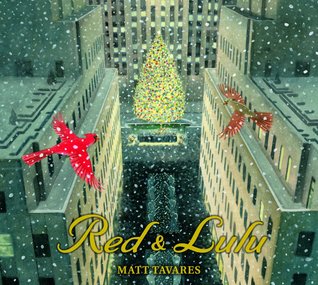
Red & Lulu by Matt Tavares

Share

Red & Lulu
Author & Illustrator: Matt Tavares
Published September 19th, 2017 by Candlewick Press

Summary: Separation and miles cannot keep a determined cardinal from his loved one in an ode to serendipity and belief that is destined to be a new Christmas classic.

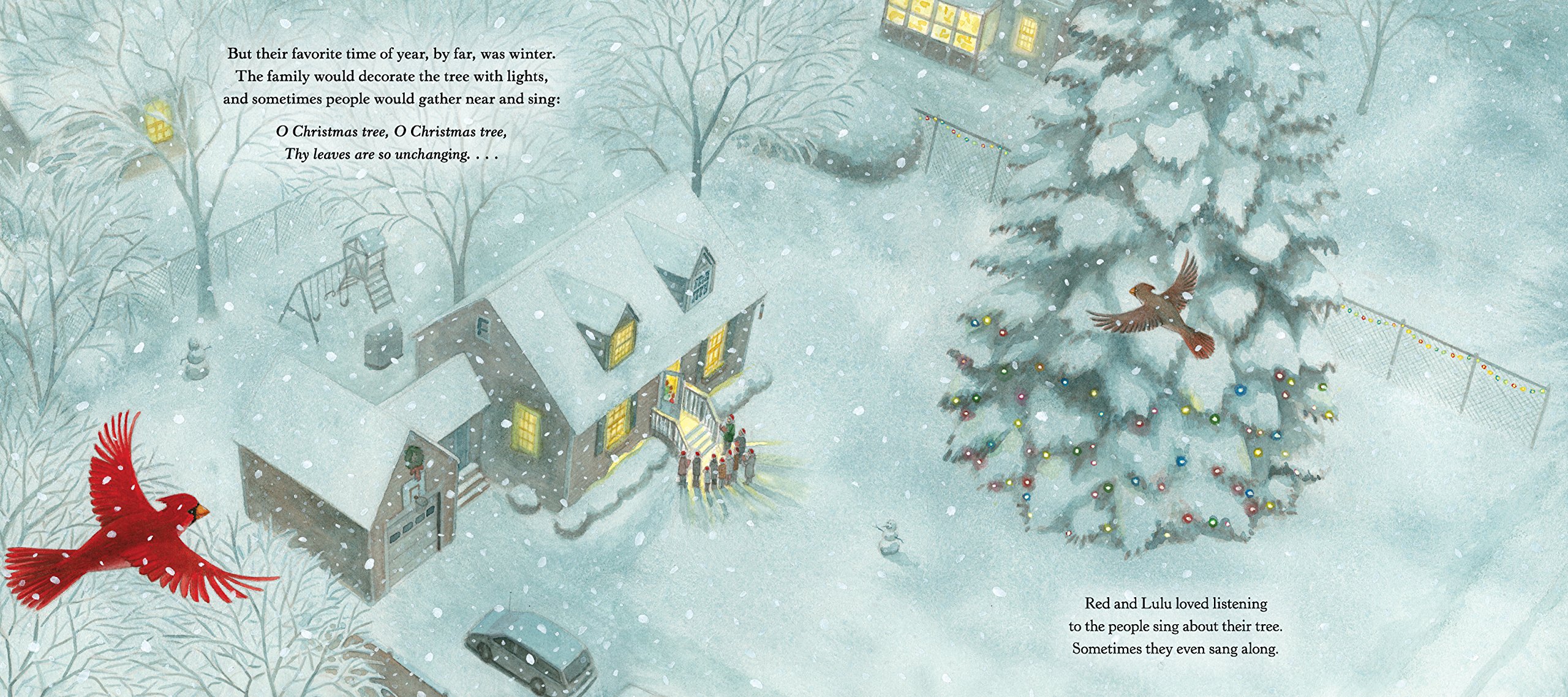
Red and Lulu make their nest in a particularly beautiful evergreen tree. It shades them in the hot months and keeps them cozy in the cold months, and once a year the people who live nearby string lights on their tree and sing a special song: O Christmas Tree, O Christmas Tree. But one day, something unthinkable happens, and Red and Lulu are separated. It will take a miracle for them to find each another again. Luckily, it’s just the season for miracles. . . .

From Matt Tavares comes a heart-tugging story combining the cheer of Christmas, the magic of New York City, and the real meaning of the holiday season: how important it is to be surrounded by love.

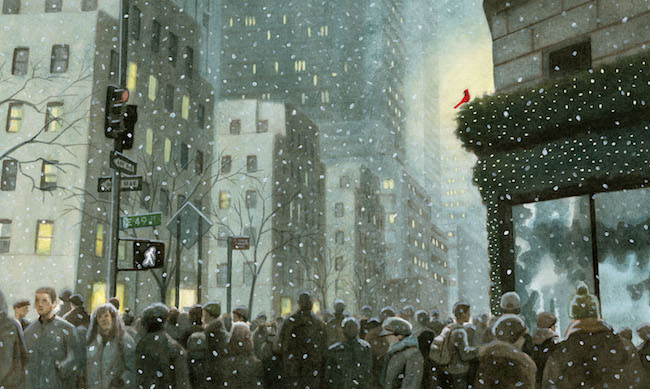
Review: Wow, Matt Tavares! So much is going on in this book, and it is all beautiful. First, we meet the stars of our book: Red & Lulu, and you’ll love them right away. Their love flies off the page. And the scene when they are separated broke my heart! And since I don’t read summaries, I had no idea what was going to happen, and it was so sad, but Red would not give up.

In addition to the story of love and separation, it is also a story of the Rockefeller Christmas Tree. Tavares includes back matter about the tree, its history, and traditions. Through its inclusion and the repetition of “O, Christmas Tree,” the mood is set and you are transported to NYC at Christmas time.

Finally, I cannot forget to mention the AMAZINGLY BEAUTIFUL illustrations. They took my breath away. They are edge to edge, inclusive, and so detailed.

Teachers’ Tools for Navigation: Red & Lulu is going to be an instantaneous Christmas classic! And I loved the discussion of Rockefeller Center which allows for a historical and American tradition conversation around the book.

Discussion Questions: 

  • What is so special about the very final page of the book?
  • How can you tell the difference between Red & Lulu? Why did the author choose to illustrate them that way?
  • How did the author’s repetition of “O, Christmas Tree” affect the mood of the book? And what did the lyrics indicate in the story?
  • Before you knew where Lulu ended up, what clues did Matt Tavares include to foreshadow where Lulu was?
  • Which spread of illustrations is your favorite? Why?
  • What did you learn about Rockefeller Center and its Christmas Tree from the book? What would you like to learn more about?

Flagged Passages: 

Book Trailer: 


Read This If You Love: CHRISTMAS!, Birds by Kevin Henkes, Bluebird by Bob Staake, A Christmas Wish for Corduroy by B.G. Hennessy, Other titles on my student Maria’s Top Christmas Books List

Recommended For: 

Signature

**Thank you to Candlewick Press for providing a copy for review!**


Review with Giveaway and YouTube Video!: Bruce’s Big Move by Ryan T. Higgins

Share

We’re so excited to be partnered with Disney-Hyperion to bring you this review and giveaway of Bruce’s Big Move! 

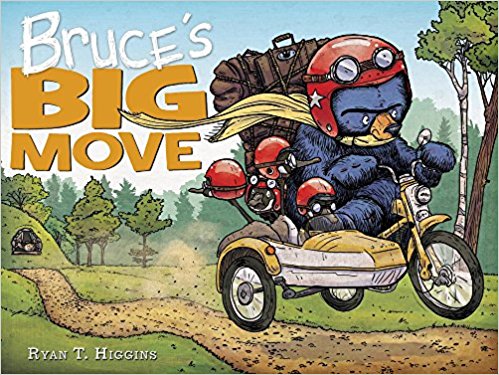
Bruce’s Big Move
Author & Illustrator: Ryan T. Higgins
Published September 27th, 2017 by Disney-Hyperion

Summary: After the events of Hotel Bruce, our favorite curmudgeonly bear shares his home with not only his four geese, but three rowdy mice besides! Fed up with their shenanigans, Bruce sets off to find a rodent-free household. But as usual, nothing goes quite according to plan…

A hilarious sequel for fans of the previous Bruce books, as well as a standalone discovery for new readers, Bruce’s next reluctant adventure is sure to keep kids giggling.

About the Author: Ryan T. Higgins (ryanthiggins.com) is an author and illustrator who likes the outdoors and cheese sandwiches. He is NOT a grumpy old black bear, but he DOES like making books about one—starting with the best-selling Mother Bruce, which received the E. B. White Read-Aloud Award and the Ezra Jack Keats New Illustrator Honor. He lives in Maine with his wife and kids… and too many pets.

LEARN MORE
Visit books.disney.com
Follow Disney-Hyperion on TwitterFacebook, and Instagram
#BrucesBigMove #FollowBruce

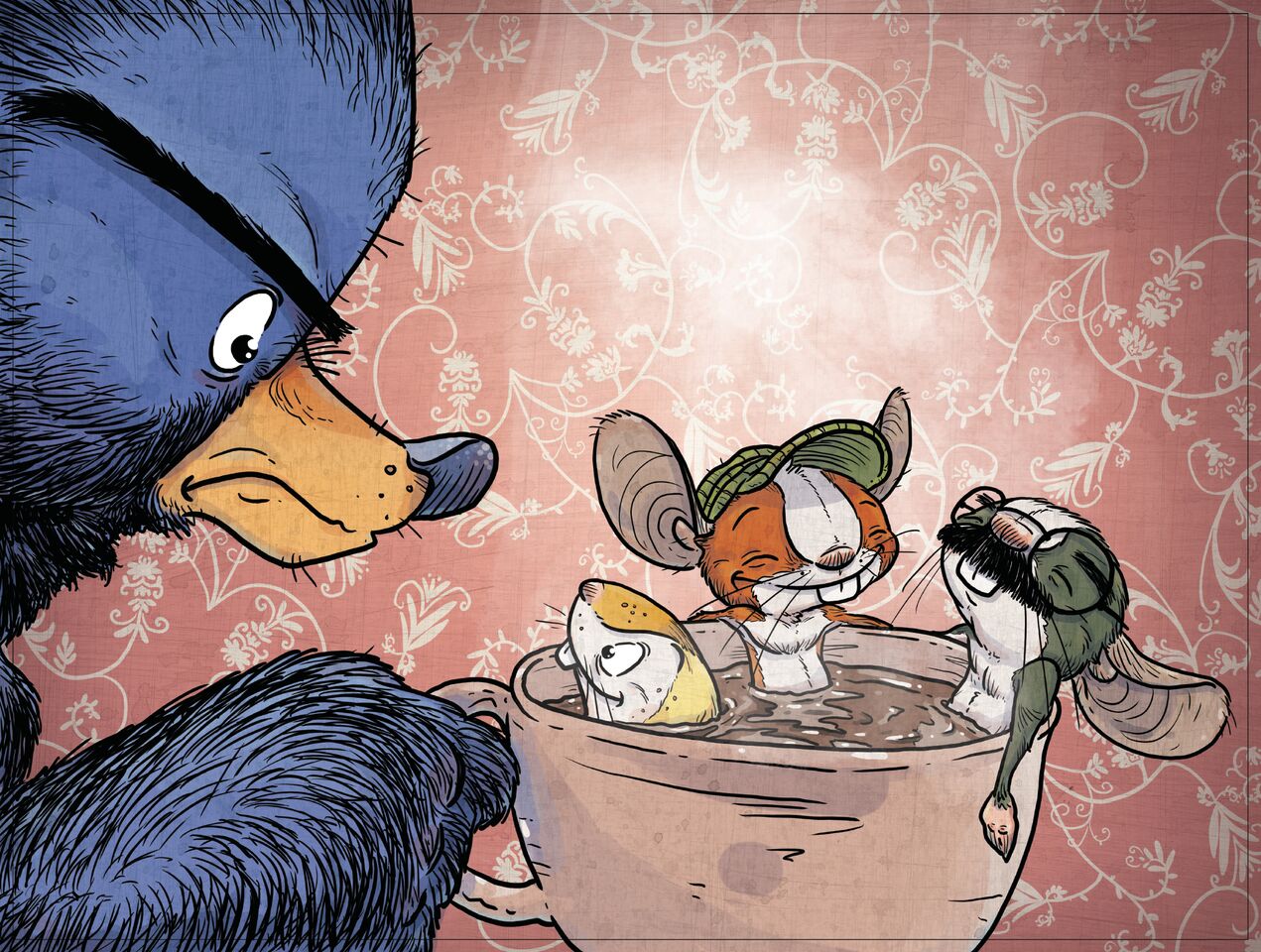
Kellee’s Review: Bruce is back and still a curmudgeon. Following the events in Mother Bruce where he becomes the mother to 4 geese and Hotel Bruce when 3 mice move in, Bruce decides enough is enough and wants to get away from the rodents once and for all, and he is willing to go to the extreme (moving) to get away. 

One of my favorite things about the Bruce books are the character’s expressions! Bruces’ stories are one only half told in the words, the rest can be found in the illustrations. The illustrations are so expressive and detailed giving each character a personality without it having to be explained.

And just like in the first two Bruce books, there is a definite message in the end! What do you think will make Bruce happy?

Ricki’s Review: I can’t decide whether I like the words or the illustrations more in this book. They are both hysterical! I absolutely adore Bruce. He makes me smile. Ryan T. Higgins is incredibly talented—I will read anything he writes!

Kellee is spot on. Bruce’s facial expressions make me laugh and laugh. I wish I captured my 4-year-old reading this book. He kept laughing and pointing to the pictures. I like the Bruce books because Higgins incorporates clear messages for readers, and he masterfully creates books that make great classroom read alouds!

Teachers’ Tools for Navigation: Use Bruce’s Big Move, and the other Bruce books, as read alouds to discuss illustrations’ purpose in stories, theme, and characterization with students. Alternatively, consider asking students to create their own Bruce fanfiction!

Discussion Questions: 

  • Why does Bruce want to get rid of the rodents?
  • On each page, look at the characters’ expressions and discuss what clues they give the reader about the character.
  • What do you think will make Bruce happy?; Did you predict the ending of the book?
  • What do you think the author’s message was at the end of the book?

Flagged Passages: 

“Bruce wished there was a way to get rid of the pesky rodents. But there wasn’t.”

Realtor Ryan help his bear friend Bruce find the perfect rodent-free home: 

Read This If You Love: The first two books in the Bruce series, You Will Be My Friend! by Peter Brown, This is a Moose by Richard T. Morris, Be Quiet by Ryan T. Higgins, Here Comes Teacher Cat by Deborah Underwood, Nibbles by Emma Yarlett

Recommended For: 

classroomlibrarybuttonsmall 

Disney-Hyperion is partnering with us for a Whole Lotta Bruce GIVEAWAY!
One (1) winner receives:
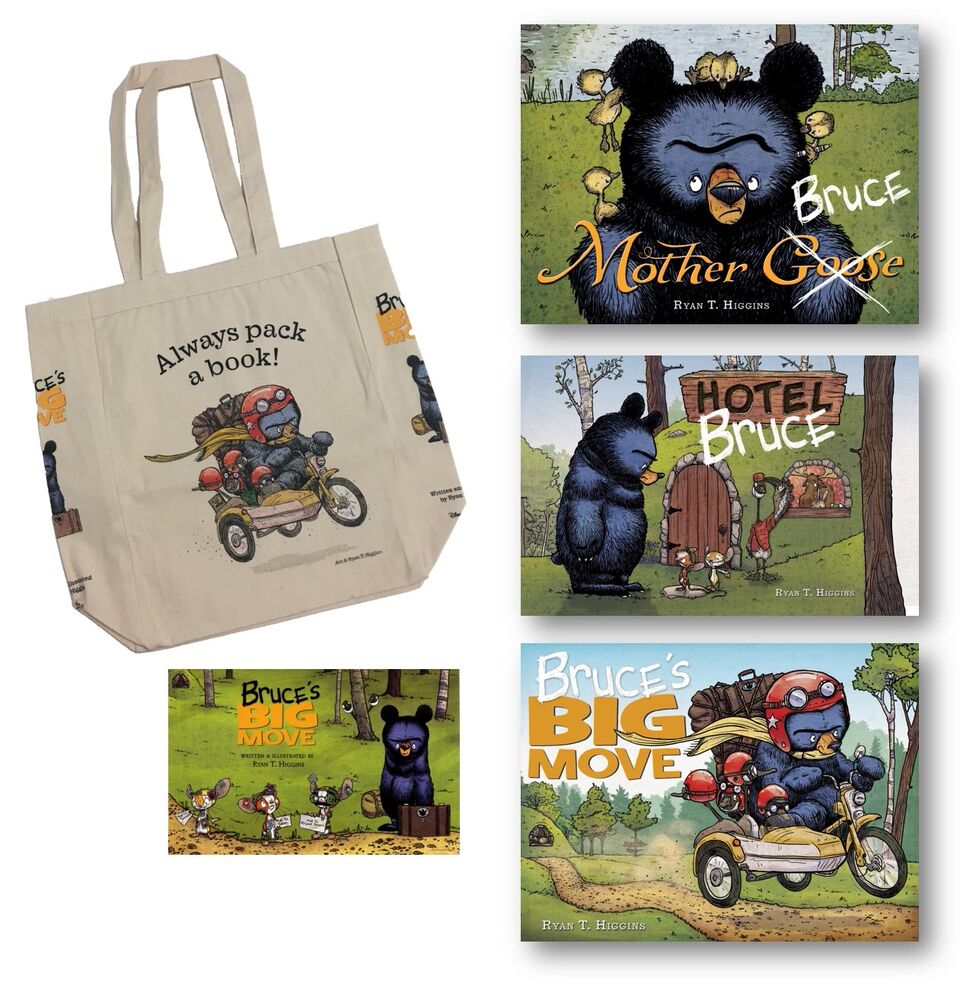
Copies of Bruce’s Big Move, Hotel Bruce, and Mother Bruce
Branded tote bag and stickers

a Rafflecopter giveaway

Signatureand 

**Thank you to Alex at Big Honcho Media for providing copies for review!**

All My Friends Are Fast Asleep by David Weinstone

Share

All My Friends Are Fast Asleep
Author: David Weinston; Illustrator: Magali Le Huche
Published September 5, 2017 by FSG

Summary: After tossing and turning in his bed, a little boy embarks on a nighttime quest to find a cozy place to rest. He visits one animal friend after another, from a lark in its nest to a mole in its hole. But while all the animals he meets are happily dozing off, this tuckered-out wanderer remains wide-awake–until he finally finds the perfect spot to lay his head.

From David Weinstone, the popular children’s musician and creator of the Music for Aardvarks program, comes All My Friends Are Fast Asleep, a rhythmic, cheerily illustrated bedtime story sure to smooth the way to sleep for young insomniacs everywhere.

Ricki’s Review: I love books that feature a different animal on each page. This book is different from others that I’ve read because it explores the different ways in which animals sleep. My son enjoyed reading this with me, and he demonstrated each of the animal’s ways of sleeping. It was very fun and interactive. The illustrations are simply lovely. They pop off the page and lure the reader to want to turn the page to see which animal is next. We had a lot of fun with this book—we enjoyed stopping on each page to discuss the animal together.

Kellee’s Review: One of Trent’s favorite board books is A Book of Sleep by Il Sung Na which has a little owl that ventures out to visit other animals and they are all sleeping. We talk about the differences between all of the different animals and how different they sleep. All My Friends are Fast Asleep elevates this conversation and will be a great ladder up from the board book. In this book, the young protagonist is having trouble sleeping, so he goes and visits animals to try to sleep how they are to see if it’ll help. In the end, he realizes that the best way to sleep is in his bed, but we, as the reader, in the end have learned about many different animals’ sleeping habits. Additionally, the book ends with guitar chords to accompany the book to turn it into a song–how much fun!

Teachers’ Tools for Navigation: Teachers might ask students to pick one animal in the book and research other aspects of that animal’s life. Or, students could find other animals in the wild and draw additional pages of this book. They could compile those pages into a sequel!

Visit www.allmyfriendsarefastasleepbook.com for a free download of David Weinstone’s musical version of the text!

Discussion Questions: Which is your favorite animal page? Why? How is this animal different from all of the other animals in the book?; Why does the boy end up in his bed at the end of the night? What other animals could he have found?

We Flagged: “It’s time for bed and overhead / the moon has risen high / but I can’t seem to fall asleep, / no matter how I try.”

Read This If You Loved: Twenty Yawns by Jane Smiley; Goodnight Moon by Margaret Wise BrownGoodnight Songs by Margaret Wise BrownA Book of Sleep by Il Sung Na, I’m Not Sleepy by Jonathan Allen, Hoot & Honk Just Can’t Sleep by Leslie Helakoski 

Recommended For: 

readaloudbuttonsmall classroomlibrarybuttonsmall

RickiSigand Kellee Signature

**Thank you to Kelsey from Macmillan for sharing these books with us!**