Author Guest Post!: “Defeating Your Fear of Writing” by Jan Eldredge, Author of Evangeline of the Bayou

Share

“Defeating Your Fear of Writing”

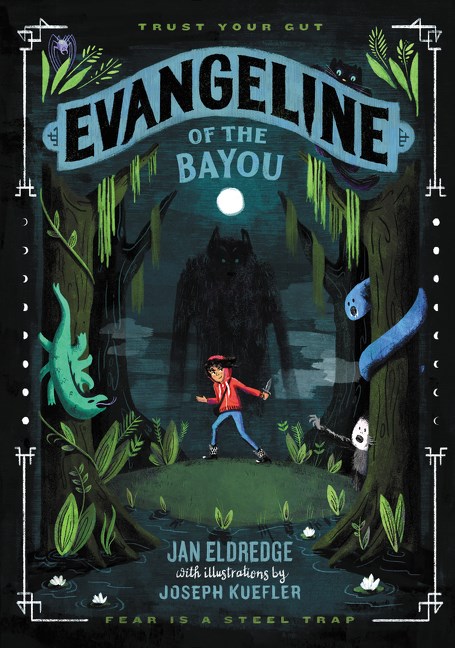
“Fear is a steal trap,” Gran advises Evangeline, the heroine of my debut middle grade novel. EVANGELINE OF THE BAYOU is the story of twelve-year-old Evangeline Clement, a haunt huntress apprentice studying the ways of folk magic and honing her monster-hunting skills. As soon as her animal familiar makes itself known, the only thing left to do is prove to the council she has heart. Then she will finally be declared a true haunt huntress. Of course, things do not go as planned for Evangeline. And when she and her grandmother are called to New Orleans to resolve an unusual case, she must summon her courage to defeat a powerful evil that’s been after her family for generations.

Gran goes on to warn Evangeline, “Fear keeps you from moving forward. It binds up your courage as well as your smarts.” These wise words of Gran’s hold true for nearly any situation we encounter, whether it be hunting monsters or writing essays.

As the leader of a local writers group for the past dozen years, and having been a member of numerous critique groups, I’ve learned that one thing we creatives all have in common is fear. And we have a lot of them, like: showing our writing to family and friends, getting our work critiqued by other writers, not knowing how to begin our stories, not knowing how to end our stories, or not being able to come up with any new ideas. But one of the most common fears I’ve seen is that of simply getting started, rallying the courage to just jump in and begin the writing of that novel, memoir, or short story. I call it “freezing on the high-dive”.  Taking that initial leap can be scary, but it doesn’t have to be.

After discussing this topic with numerous fellow writers over numerous coffees and teas, I’ve come to suspect this particular fear stems from the mistaken belief that we have to get our words right the first time, that somehow a perfect stream of brilliance must flow straight from our head and onto the blank sheet of paper. This unrealistic expectation can lead to a lot of frustration and writing resistance. Fortunately, there are a few easy techniques writers of any age and any writing level can incorporate to defeat their fear of writing and get their words moving forward. These simple tips can be applied to everything from the writing of novels and essays, to the writing of thank you notes.

The first step is to think of the writing process as one that uses two distinct parts of your brain: the creative side and the editorial side. Going into a project while trying to use them simultaneously is when many of us run into trouble. The two parts do not play, or work, well together.

Once you’ve accepted the fact that you’ve essentially just carved your brain into two halves, the next step is to hush that editorial side. Reassure it that it will have its turn to make corrections and clean things up later, but for now it’s Creative’s turn to play. Allow your imagination to run wild and free. Let go of rules and logic. There are no right or wrong ideas in this phase of your project. Don’t worry about choosing the perfect word, and don’t worry about things like spelling and punctuation. That’s Editor’s job for later on.

If you’re still having trouble coming up with ideas, here’s another helpful tip: just start writing. Write anything, even if it’s simply the words, “I don’t know what to write.” There’s something almost magical about the act of putting pen to paper, or fingers to keyboard, that gets the creative tap flowing. Taking away all those expectations of perfection will conquer that fear of not being able to think of anything to write.

Now that you’ve got some great ideas and images, and maybe even some really cool lines of dialogue, let your creative side take a rest. This is the time to set your internal editor free. Allow it to get to work picking and choosing what elements to use, what order to put them in, and making sure the grammar, spelling, and punctuation are all up to snuff.

This is the technique I used while writing EVANGELINE OF THE BAYOU, and I’m using it now as I work on the sequel. Keeping the creative half of my mind separated from the editorial half has helped me defeat my fear of just diving into the writing. It’s helped me overcome my worry that my writing is too sloppy, nonsensical, and filled with mistakes. I know that by setting my creative side free to do what it does best, it’ll provide me with fun, fresh, and unexpected ideas. Sometimes it delivers more ideas than I can use, or ideas that are in need of further research and tweaking, but that’s okay, because I know I’ll soon be unleashing my editorial side to make my words all shiny and clean.

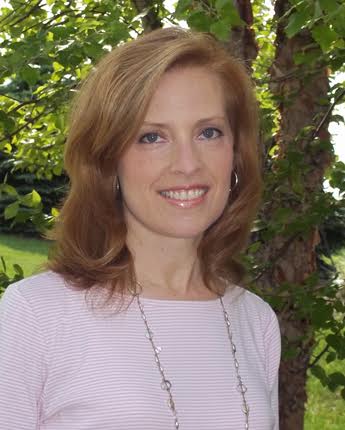
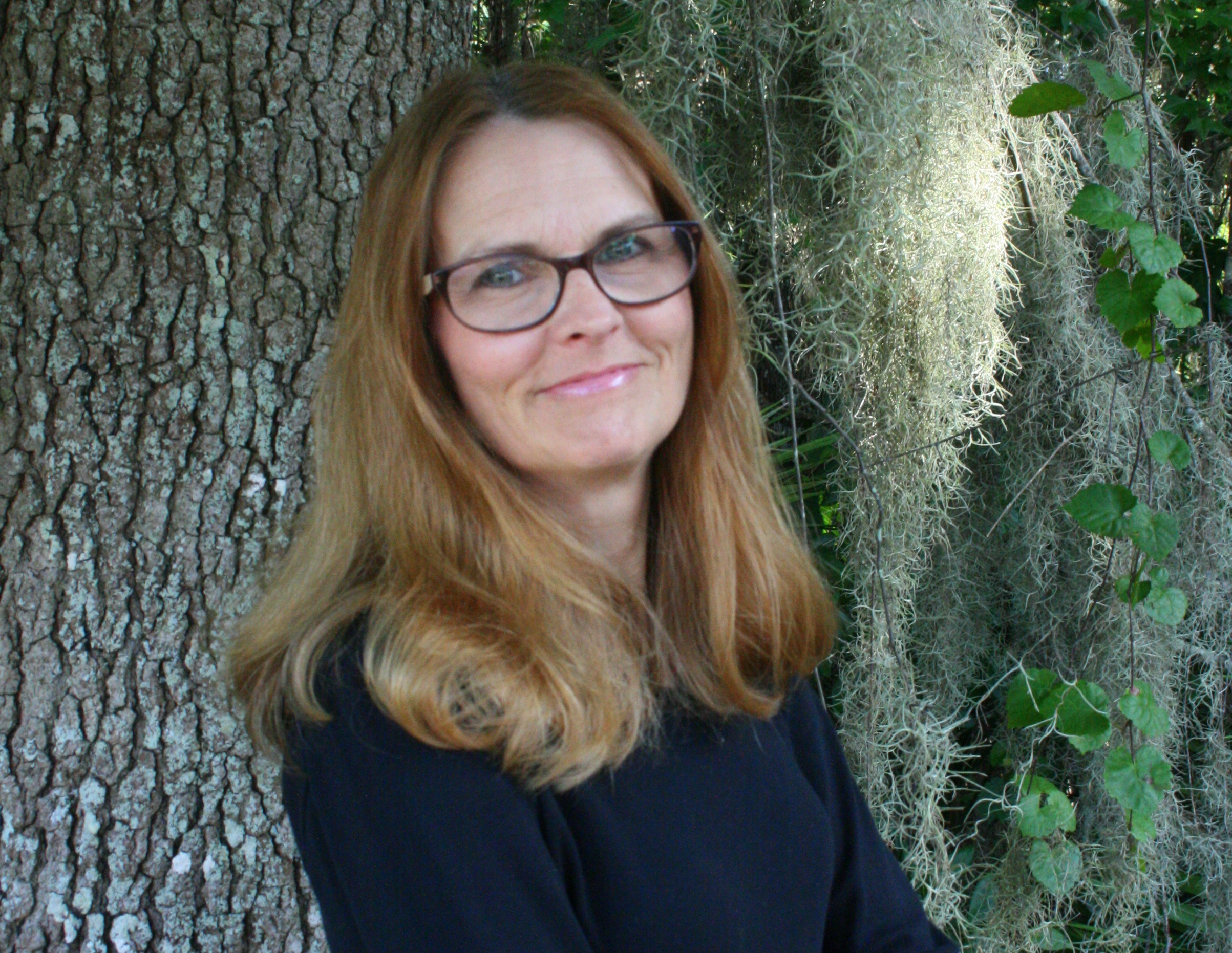
About the Author: Jan Eldredge was born and raised in Louisiana. She now lives in Celebration, Florida with her husband, their children, and a house full of cats. When she’s not writing, she spends her time reading, going to theme parks, and exploring old cemeteries. She is particularly fascinated with monsters, magic, and all such eldritch things.

Evangeline of the Bayou
Author: Jan Eldredge
Illustrator: Joseph Kuefler
Published May 1st, 2018 by Balzer + Bay

About Evangeline of the BayouEvangeline Clement is not just your everyday twelve-year-old. Upon her thirteenth birthday, she will officially become a haunt huntress just as talented as her mama and Gran, descended from a long, proud line of haunt huntresses in Louisiana. That is, if her animal familiar shows up, her powers emerge, and she can prove to the Council that she has heart (whatever that means). Because she couldn’t possibly be a middling, born without any magical abilities, right? She can’t be the end of Gran’s line.

Fear is a steel trap. It keeps you from moving forward. It binds up your courage, as well as your smarts.
— Gran Holyfield, haunt huntress

Citizens have been calling for Gran’s help to send troublesome creatures like Bayou Banshees and Johnny Revenants back where they belong. As her apprentice, Evangeline has learned not just the cures to any local supernatural afflictions but also how to navigate the bayou, how to climb trees, and how to fight – all while wearing her signature silver-tipped gator-skinned boots! Now in an unusual request, Gran has been called from the swamp to New Orleans to undertake an emergency case. But after a string of undeniable signs indicating that death is near, can Evangeline protect her aging grandmother and save the city of New Orleans – whether she’s a haunt huntress or not?

EVANGELINE OF THE BAYOU will inspire young readers to trust their gut no matter how terrifying that might be.

Thank you so much to Jan for your honest and inspiring post!

Author Guest Post!: “What Kinds of Storybook Characters Teach the Best Lessons” by Patty Costello, Author of Catalina and the Kind’s Wall

Share

“What Kinds of Storybook Characters Teach the Best Lessons?”

Do you want to teach your students prosocial behaviors? What are good ways to teach children about sharing, caring, helping, honesty, fairness, and responsibility? One popular way is through storybooks, which have been a part of children’s lives and schooling for hundreds of years. Storybooks entertain, but they can also teach important life and moral lessons. But what are the best kind of characters in storybooks to teach children prosocial behavior? Does one type of character work better than another? Many stories for young children often contain animal characters who are anthropomorphized: they take on human characteristics and can talk, walk, eat, and get into all sorts of mischief too. A group of researchers at the Jackman Institute of Child Study in Toronto found that in a review of over 1000 children’s books, more than half the books featured animals, and only 2% were realistic depictions of the animals; in other words, 98% of the animals in over half of picture books feature anthropomorphized animals. People on all sides of the picture book equation – teachers, students, parents, authors, and illustrators – all have assumed that children are naturally attracted to animals and therefore in using anthropomorphized animals, a story may be more enchanting and its lessons more accessible to children’s young minds. And the bigger assumption is that children may be more likely to act in agreement with the moral of the anthropomorphized animal story.

But is this true? These same researchers – Nicole Larsen, Kang Lee and Patricia Ganea – realized in 2017 that no direct psychological or child development study had ever asked this question – are anthropomorphized animals better at promoting prosocial behavior in children compared to a book featuring human characters? The researchers realized that it was unclear as to whether children can learn prosocial moral lessons from stories with anthropomorphized animal characters and then act accordingly.

The researchers designed a study to help answer this very question: Can children learn prosocial moral lessons from stories with anthropomorphized animal characters? Do stories with anthropomorphized animal characters work better than stories with human characters at teaching kids lessons?

How did they study this? They first picked a book called Little Racoon Learns to Share by Mary Pacard. The book has a sharing theme and a moral lesson – that sharing makes you feel good. The story features anthropomorphized animals as the main characters. The researchers took the book and used Photoshop to create the same book, only with human characters instead.

All children in the study (males and females ages 4 – 6) had a vocabulary test first to make sure that they were all at a similar language ability level. Next, the children were allowed to choose 10 of their favorite stickers from a huge pile of stickers. They were then told that there was a child their same age that could not be there that day and therefore would not get any stickers. The children were told that they could share some of their stickers with this (imaginary) child by putting them into an envelope when no one would be looking. This was the pre-test or baseline measure to get a sense of their sharing level before they heard the book about sharing.

Next, students were divided into three groups of 32 children each. The first group heard the sharing story with the human characters. The second group heard the same story, but with the original animal characters. The third group, the control group, heard a story about seeds. The children in the control condition were also asked to choose between reading either a book about human characters or a book about animal characters. This question was asked to determine whether children would prefer to read the animal book or the human book when given a choice. If the argument that using anthropomorphized animal characters makes a story more captivating to young children is correct, then children should be more likely to choose the book about animal characters. I’ll cut to the chase on this one – the children in this control group picked each book equally – there was not a clear preference for the animal book over the human book.

After the three groups heard the book, the same sticker sharing task was given with new stickers (post-test). The researchers measured the differences in sticker donation before and after the story reading. Again, the researchers were wondering whether reading storybooks with a sharing theme could significantly increase children’s generous giving relative to reading the control story about seeds. More importantly, they examined whether the story in the animal condition with anthropomorphized animal characters and the story in the human condition with real human characters would have differential effects in promoting generosity in young children, that is, would the children share more stickers after hearing the sharing story with animals or humans, or would it even matter?

What happened? I bet you are very curious by now! Reading a book about sharing had an immediate effect on children’s sharing behavior: Children who read the book with human characters became more generous with how many stickers they donated to the fictional child. In contrast, there was no difference in generosity between children who read the book with anthropomorphized animal characters and the control book; both groups decreased how many stickers they gave.

Here is the chart I adopted from the study:

Condition Before the book: How many stickers did they donate? After hearing the book: How many stickers did they donate?
Human characters 2.03 stickers 3 stickers ↑
Animals characters 2.31 stickers 1.7 stickers ↓
Control condition – book about seeds 2.14 stickers 2 stickers ↓

Why did the researchers think this happened? Maybe children see anthropomorphic characters more as animals than humans. Maybe they are not able to interpret the anthropomorphic characters as being similar to themselves, and as a result, the lesson in the story is not absorbed. This does not mean that children should never hear stories with animal characters, but it’s important to keep this in mind.

Future research future should look at whether anthropomorphism in books has the same effect on older children as on younger children as this study was done on 4 – 6-year olds.

It’s fun (at least for me as a cognitive neuroscientist!) to think about storybooks from an academic perspective – maybe the assumptions we hold are not true – studying these assumptions in a systematic way can provide real answers and guidance for future generations of teachers and parents.

This post was adopted from the following article should you like to read it yourself: Larsen, N.E., Lee, K., Ganea, P.A. (2017). Do storybooks with anthropomorphized animal characters promote prosocial behaviors in young children? Developmental Science, pp. 1-9.

About the Author: Patty lives in Boise, Idaho with her husband, a zany awesome toddler, a dog named Pippa, and a dog named Spencer. She grew up in the Twin Cities and is a Minnesotan at heart (you betcha!). She has a BS in Psychology from the University of St Thomas and a PhD in Neuroscience from the University of Minnesota. She currently works in higher education. Her first book, Catalina and the King’s Wall, released May 5th, 2018 from Eifrig Publishing. At all hours of the day (and night) she can be found standing at her desk, helping her university run smoothly and working on her next children’s book. For fun, she likes to trail run, mountain bike, cross country ski, and hike. She is also a voracious volunteer for various local organizations.

Catalina and the King’s Wall
Author: Patty Costello
Illustrator: Diana Cojocaru
Expected publication: May 5th, 2018 by Eifrig Publishing

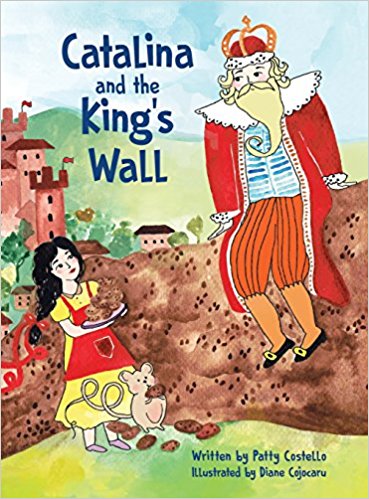
About Catalina and the King’s WallWhen Catalina overhears the king planning to build a wall, she fears her family won’t ever be able to visit. Catalina tricks the king into building walls that droop, drip, swirl, and swoosh away. But now the king demands an impenetrable wall. Luckily, Catalina has the perfect ingredients to bake up a family reunion! Through beautiful illustrations and enjoyable prose, kids learn how to stand by their convictions of inclusivity and kindness even when powerful people tell them not to.

Thank you, Patty, for a look at this study and for sharing your book!

Author Guest Post!: “Digging into Fantasy and SciFi: An Anthropological Approach” by Darby Karchut, Author of Del Toro Moon

Share

“Digging into Fantasy and SciFi: An Anthropological Approach”

Like many authors, I came to writing via a circuitous route. A childhood obsession with The Lord of the Rings led to a fascination with history and other cultures, which led to an undergraduate degree in anthropology, which led to teaching 7th grade social studies, which led to writing middle grade and YA fantasy. See? Circuitous.

This is particularly true with my upcoming book, Del Toro Moon, a tale about a boy and his family—descendants of Spanish knights and aided by talking Andalusian war horses—who hunt monsters in the modern-day American Southwest. Del Toro Moon incorporates all my feels: fantasy, horses, the history and legends of the Southwest (I’m a proud New Mexican native now living in Colorado), and powerful familial bonds, especially between fathers and sons.

Since I write mostly fantasy, my school visits often focus on reading and writing in that very popular genre. One writing trick I share with upper elementary and middle/high school students is to have them scrutinize literary worlds as an anthropologist would—another cross-curriculum tool between literature and social studies.

Part One

I begin by reviewing the eight elements or universals found in all human cultures. I do include this caveat: if a group of people does not have all eight elements, then it is probably a social group, not a culture as an anthropologist would define it:

Elements of Cultures

Religion

  • Religion answers basic meanings about life
  • Can be formal and elaborate or informal and peripheral to the culture

Language

  • One of the strongest unify forces of a culture
  • Variation of a language is called a dialect (local form of a language that may have a distinct vocabulary and pronunciation)
  • Idioms, metaphors, sayings, and cuss words – so fun for writers!

History

  • Actual as well as mythical
  • Shapes how a culture views itself and the world
  • Stories about the challenges and successes of a culture support certain values and help people develop cultural pride and unity
  • Cultural holidays mark important events and enable people to celebrate their heritages

Daily Life (Food/Clothing/Shelter)

  • Secular and holy meals
  • Clothes and weapons or tools, including information technology
  • Housing, including the building, furniture, gardens, etc.

Social Groups

  • People can belong to more than one social group based on age, gender, interests, etc.
  • The family is the most important social group
  • People act differently in different groups (socialization)
  • Ethnic group: a group that shares a language, history, religion, and sometimes, physical traits

Arts & Crafts

  • Expresses what people think is beautiful and meaningful
  • Can also tell stories about important figures and events in the culture
  • Music, visual arts, dance, performing arts, literature, crafts

Government

  • People need rules in order to live together without conflict
  • Limited Governments (restricts the power of its leaders)
  • Unlimited Governments: (leaders are all-powerful)

Economy

  • A system that determines what goods and services are produced, how to produce them, and who will receive them
  • Four main types of economic systems:
    • Traditional: barter and trade
    • Market: capitalism
    • Command: communism
    • Mixed: a blend of two or more

Part Two

Next, the students divide into teams of two or three. Using a simple web graphic organizer (I’ve included an example—feel free to use it), each team takes apart a favorite book, movie, or TV show and determines if that book/movie/show/etc. has those eight elements. Some common favorites are:

Star Wars                                Harry Potter                 Star Trek         Percy Jackson

The Lord of the Rings            The Hunger Games        Warriors          Others?

The students must include a justification. For example, if a team is examining Star Wars and puts “Jedi” in the Religion circle, they must explain why they placed it there as opposed to History or Government.

Part Three

Finally, I have them complete the same exercise with their own work-in-progress. This is also a useful tool to aid in plotting a story prior to writing the first draft. I’ve had some pretty amazing discussions during this activity. One of my favorite was a debate focused on whether information technology should be listed under “Tools” or “Religion.”

I’d enjoy hearing about other ways teachers and librarians are connecting various disciplines, especially between the humanities and STEM. Please share with me and thank you!

About the Author: Darby Karchut is a multi-award winning author, dreamer, and compulsive dawn greeter.  A proud native of New Mexico, she now lives in the foothills of the Rocky Mountains, where she runs in blizzards and bikes in lightning storms. When not dodging death by Colorado, Darby is busy at her writing desk. Her books include the best selling middle grade series: THE ADVENTURES OF FINN MacCULLEN. Best thing ever: her YA debut novel, GRIFFIN RISING, has been optioned for film. Her latest book, DEL TORO MOON, releases Fall 2018 from Owl Hollow Press. Visit the author at www.darbykarchut.com

Del Toro Moon
Author: Darby Karchut
Publishing September 2018 by Owl Hollow Press

Summary: Bad enough Matt Del Toro is the greenest greenhorn in the family’s centuries-old business: riding down and destroying wolf-like creatures, known as skinners. He must also learn how to match his father’s skills at monster hunting. Odds of doing that? Yeah, about a million to one. Because Matt’s father is the legendary Javier Del Toro—hunter, scholar, and a true caballero: a gentleman of the horse.

Now, with the skinners multiplying, both in numbers and ferocity, Matt is desperate to keep his father and hot-tempered older brother from killing each other, prevent his new friend, Perry—a horse-crazy girl who recently moved to their small town of Huerfano, Colorado—from discovering the true nature of his odder-than-oddball family, and save a group of paleontologists from getting skinner-ed.

Luckily, Matt has twelve hundred pounds of backup in his best friend—El Cid, an Andalusian war stallion with the ability of human speech, more fighting savvy than a medieval knight, and a heart as big and steadfast as the Rocky Mountains.

Serious horse power.

Those skinners don’t stand a chance.

www.darbykarchut.com

www.owlhollowpress.com

https://www.goodreads.com/book/show/35183477-del-toro-moon?from_search=true

Thank you Darby for sharing this look at writing from a cross-curricular viewpoint!


Blog Tour with Author Guest Post and Giveaway!: “The Importance of a Diverse Cast of Characters” by Carolyn O’Doherty, Author of Rewind

Share

“The Importance of a Diverse Cast of Characters”

One of the lessons most writers learn early in their careers is to write what you know. This is generally good advice, since understanding a place or a topic or an emotion makes it much easier to write something that sounds real on the page. The rule is not, of course, meant to be taken completely literally. Fiction is, by definition, made up. Having spent time in one city, it isn’t a huge stretch to place a story in a city one hasn’t visited. If you understand what it feels like to be scared or excited you can believably expand that experience to portray the emotional impact of say, being kidnapped or winning the lottery without suffering (or enjoying) that fate yourself. But how does “write what you know” apply when we’re talking about characters with different cultural backgrounds than their authors?

Diversity in books has become a hotly debated topic in recent years and for good reason. Too many readers feel alienated because an overwhelming percentage of books on the shelves are about exclusively white, middle class, straight characters. This limited perspective doesn’t just alienate people who don’t fit this narrow profile, it is a lost opportunities for everyone as books are an ideal way for people to immerse themselves in other cultures and life experiences. The challenge for an author is how to accurately create diversity when that is not “what we know.” It’s a challenge that must be approached with care. Getting the neighborhoods wrong when your character wanders the streets of Chicago is mildly annoying; using a stereotype to show a teenager is gay or African American is both damaging and offensive.

So what is an author to do? I am a white, middle class, woman who has mostly lived in cities. I don’t feel confident about accurately portraying the life experience of someone in a poor rural community who faces racism on a regular basis. What I can do is create a world for my characters that is not solely populated by white, middle class people, and I can do that with confidence because the world I live in is chock full of people from every background, shape, and color. Basically, I can follow the rule to write what you know while adding this important corollary: pay attention. I set REWIND in my hometown, so to make the scenes feel realistic, I had to pay attention to the people I actually see every day. Who passes me on the street when I head to work? Where is my grocery store clerk from? What kinds of accents do I overhear when eating out at a restaurant? Writing a multicultural community is not only the “right thing to do,” it is also the accurate thing to do.

In REWIND I have to admit to a little bit of a cheat. The teenage protagonists in the novel are orphaned and have been raised their entire lives in an Institutional Center. This set-up allowed me to include characters of various races without having to portray multiple cultures. Or, what is probably more accurate, I could place them all in my own culture without that feeling false within the context of the story. My first person point-of-view character is white, but other characters in the book are not. (I looked up census data and matched the ethnicity of the remaining teenagers—all of whom share a random genetic trait—to the reported census distribution in order to accurately reflect the region.) I did sometimes mention someone’s race as part of a character description, but tried to add that detail to white characters as often as I did with minority ones, in hopes that “white” wouldn’t be the assumed default just because no race is mentioned.

Diversity in book is more than just having an international cast. One of my fears as a writer is that I inadvertently typecast a character. My efforts to avoid this have focused on another fundamental lesson for good writing: descriptions are strongest when they also illuminate something about the book’s world or about the character doing the describing. Saying “the Hispanic teacher handed out our assignments” does not create a compelling scene in part because real people are never defined solely by their ethnicity or sexuality or any other single factor. Writing a scene where our hero is at his friend Manuel’s family restaurant and Manuel is mocking his attempts to pronounce the Spanish words on the menu tells me something about Manuel as a person and his relationship with our hero. Having a non-Asian character step into an Asian grocery store and not be able to read the packing nor understand the people around her could be a great way to show her feelings of alienation. Like real people, characters should stand out as unique and multi-faceted. My hope is that by placing three-dimensional characters in a variety of realistic settings, a greater breadth of readers will feel at home in my novels.

I know that including a diverse cast in a book with a white point-of-view character is not the same thing as creating truly inclusive literature. In a better world, there will be more published authors who are able to represent the life experiences of underrepresented people with nuance and understanding. REWIND is my debut novel. As a writer, I am still exploring ways to better incorporate diversity. As a reader, I encourage all of us to seek variety in our reading choices, both to support those voices that sometimes struggle to be heard and to enrich our own life by learning what it feels like to be someone else. This is not because reading widely is a politically correct imperative—immersion in a wide array of experiences is the gift we give ourselves when we sit down to read a good book.

Thank you so much to Carolyn for this IMPORTANT post and for being willing to chat about diversity with us! 

About the Author: Carolyn O’Doherty lives in a much prettier and less dangerous version of Portland than her characters. She’s loved writing and books her whole life, but ventured into novel writing late. In 2011 she received an MFA (Master of Fine Arts) in Creative Writing from Stonecoast. When, as a kid, she dreamed up the idea of freezing time, she only considered the benefits: always having the perfect snappy come-back, the right answer on the test, untraceable revenge. It was when she turned the idea into a novel that she delved into the dark side of this potential blessing.  Outside of writing, Carolyn has spent the last twenty years working with Portland non-profits to develop affordable housing.

Make sure to checkout her debut novel: 

Summary: [April 10th, 2018 by Boyds Mills Press] Sixteen-year-old Alex is a Spinner–she has the ability to rewind time to review past events. Hated and feared because of their ability to find the truth, the small population of Spinners is restricted to Centers–compounds created to house and protect them. Alex’s society uses the Spinners’ skills to solve major crimes, but messing with time comes with consequences: no Spinner lives past the age of twenty. At sixteen, Alex is in her prime–until time sickness strikes early. When she is offered an experimental treatment, Alex sees a future for herself for the first time. But the promising medication offers more than just a cure–it also brings with it dire consequences.

Don’t miss out on the other stops on the Rewind blog tour: 

Sunday, April 15
Unleashing Readers

Monday, April 16
Linda K. Sienkiewicz blog

Tuesday, April 17
Books by Pamela Thompson blog

Wednesday, April 18
YA Books Central

Thursday, April 19
The Brain Lair

Friday, April 20
Ms. Yingling Reads

And make sure to enter the Rewind giveaway!

a Rafflecopter giveaway

Thank you again to Carolyn and Boyds Mills Press for hosting the Rewind blog tour!

For more advice to writers about including diversity into your work, visit https://diversebooks.org/resources/resources-for-writers/.

Author Guest Post!: “Let Me Tell You a Secret” by Barb Rosenstock, Author of many nonfiction texts including her newest, The Secret Kingdom

Share

“Let Me Tell You a Secret”

It’s almost always the kids’ first question, “Where do you get your ideas?”

At school visits, I say the typical author stuff: I keep a file of items that I find interesting (true.) I read a lot of books and take notes (true.) I’m a veteran eavesdropper and will ask anyone almost anything (super true.)

But recently, I realized that I’m not being completely honest. All these above techniques give kids (their teachers and librarians) the impression that “ideas” are purposeful. As in, “I think I’ll write a book, which idea will I use?”

That kind of thinking is exactly why I remember disliking the writing I had to do for school (honestly, I hated writing, so if you know a kid that hates it, maybe she’ll be an author!)  I hope things have changed, but I remember school writing as a series of prompts: Write about an adventure. How would your dog talk? What if you lived on the moon?

Though I was a natural blabbermouth, writing prompts paralyzed me.  As a third grader faced with blank paper and a “creative writing” prompt, my overwhelming thought was, “What if a girl has nothing to say?” Which gave me the idea (still in there, btw) that I was somehow “bad” at writing. Because I couldn’t create on cue, didn’t like fantasy, and couldn’t write about what I didn’t care about.

Maybe it’s idealistic, but I’d rather kids want to write, not have to write—you know, the way most of them really want to talk. Rather than making it seem like real writers wrack our brains and go over idea lists when a project is due, it’s time to let you in on a secret

My ideas, almost all of them, are accidents. I’m doing one thing and something else comes up. I’m reading one thing and something else is mentioned. Writing is following your mind wherever it goes. It’s noticing what’s around you. Kids (those who love writing and those who don’t) are great at noticing! Yet, writing ideas are sometimes presented as if they are foreign objects a kid has to sweat over and hunt out. It’s not true. For example, I tripped on the idea for my newest book doing something most kids love, surfing the internet.

The Secret Kingdom, is the true story of an outsider artist in India named Nek Chand.  I had no “ideas” in a folder about Nek Chand, or his large art environment, the Rock Garden of Chandigarh. I knew nothing about outsider art. Instead, I was working on a draft of a Van Gogh picture book (now the book, Vincent Can’t Sleep) that was going nowhere. I was bored. I was frustrated. I spent hours on Twitter and FaceBook. Vincent was driving me crazy–I couldn’t come up with the right words to show how he loved being outside at night. I hated Van Gogh, and I hated writing. I sat in my office searching random things on my laptop, and accidentally googled something like, “artists working outside.”

Boom! There was a picture of a waterfall with oddly cool statues in front of it. What’s that? Wait! One guy made that? How? Out of recycled scraps? Where? In India? Vincent went into a file folder and I was off in search of the story that became The Secret Kingdom.

Every author works differently, but that’s how my books are born. They don’t come from lists of ideas, but instead from accidental encounters and questions. Books are born from what I don’t know. Books are born from, “Wow! Cool!” And since kids are the wow-est, cool-est people on the planet, hopefully we can all find ways to let their reading and writing reflect their passions.

One of the other common school visit questions (teacher prompted I’m sure) is, “How do you do your research?” Again, I usually answer, “in libraries, and traveling to the settings of my books.” For various books I’ve visited national parks, presidential homes and watched cars race on a beach.  When kids write though, schools typically can’t provide those kinds of experiences.  So, what do you do when you can’t visit?

I’d never really run into that situation before, but that was the case with The Secret Kingdom. Though I desperately wanted to travel to Chandigarh and see Nek Chand’s Rock Garden, a research trip to India was totally out of this picture book author’s budget.

How could I experience it instead? Look at every single photo, map and schematic of the Rock Garden I could find. Read every book or article ever written about Nek Chand or his artwork. Track down and talk by email to people around the world who knew Nek Chand, his work and had visited the place themselves. Discover that a small museum within driving distance had the largest collection of his work in the U.S. Contact the U.K. based foundation trying to support his legacy. Most importantly, ask people culturally familiar with the setting and Mr. Chand to read drafts and comment. The way Nek Chand picked up scraps of village life and built them into art is the way I collected people who helped tell his story. We became a community convinced that the story of one refugee who created a new home with his art was important for today’s children.

Here’s the secret about writing that I promise to share from now on. There isn’t a list. There isn’t a right way. Honor the way you think. Be open to what life throws at you. Surround yourself with people who care. Creating books or any other art is a lot like life, a series of lovely accidents.

About The Secret Kingdom: Nek Chand, a Changing India, and a Hidden World of Art, by Barb Rosenstock, illustrated by Clarie A. Nivola:

After the partition of India in 1947, Nek Chand Saini settled in the city of Chandigarh, with nothing but stories brought from his homeland. Dismayed at his stark new surroundings, Nek began collecting river rocks, broken glass, and cracked water pots found on the roadside. He cleared a section of jungle and for seven years he stockpiled odds and ends. They were castoffs and rubbish to everyone else, but to Nek, they were treasures. He began to build a labyrinth of curving paths, mosaics, and repeating patterns: his very own tribute to the winding village of his youth, a hidden land of stories. Nek kept his kingdom secret for fifteen years, until a government crew stumbled upon it and sought to destroy it. But local fans agreed in awe: the Rock Garden had to be protected. Author Barb Rosenstock introduces readers to the outsider artist’s stunning creation, while Claire A. Nivola’s illustrations bring to life the land’s natural beauty and the surreal world Nek coaxed from his wild landscape.

About Barb Rosenstock:

Barb Rosenstock is a children’s book author who loves true stories. Her work includes The Camping Trip That Changed America: Theodore Roosevelt, John Muir, and Our National Parks, illustrated by Mordicai Gerstein; The Noisy Paint Box: The Colors and Sounds of Kandinsky’s Abstract Art, illustrated by Mary GrandPré; and many others. Barb Rosenstock lives in Chicago.

Thank you to Barb for her amazing post showing us insight into author-dom!
If you haven’t read any of Barb’s amazing nonfiction picture books, you should get on that now! 🙂

**Thank you to Kathleen and Phoebe at Candlewick for connecting us with Barb!**

Author Guest Post!: “Writing Science Fiction Fantasy for Middle Graders” by Nancy K. Lodge, Author of Mona Lisa’s Ghost

Share

Writing Science Fiction Fantasy for Middle Graders

I am thrilled to have this opportunity to talk about my books on Unleashing Readers. I came to fiction writing late, having spent most of my career as a professor at universities in the U.S. and in Italy. I have a PhD in Renaissance Art History, and it never occurred to me that I would someday write books for children. However, it must have been inevitable because my grandmother, Dorothy Kunhardt wrote some of the best-loved Picture Books of all time, the most famous of which is Pat the Bunny.

Learning to write fiction

Five years ago, I decided that I wanted to write books that would bring art and artists to life for children between the ages of nine and twelve. When I stopped teaching to write The Crystal Navigator, I knew nothing about writing fiction. However, I have been an avid reader all my life and to write well, one must be well read. Reading books by great writers like Ann Tyler, Flaubert, F. Scott Fitzgerald, Evelyn Waugh, and of course, E.B. White is the most instructive way to learn how to construct a beautiful sentence without being flowery and sentimental, how to avoid using clichés, how to show rather than tell.

The rules laid down by the how-to write books- never use adverbs, stay away from adjectives too, don’t begin a book with a dream, waking up, walking on a beach- paralyzed me. Once I decided to forget them and wrote without worrying about rules, my writing became much better. However, it takes practice to be a good writer, and it takes time to learn how to edit. I had to teach myself not to get sidetracked with things that had nothing to do with the story. Every sentence must move the action along or the reader will get bored.

I think there are two ingredients that that make a good writer. First, great writers have read enough great literature to have internalized the rhythms of the written word. If you know what a sentence should sound like, you’ll be able to write sentences. Second, all great writers are great storytellers, and it’s the storytelling who keep us up at night. “Stylish writers make you admire them, but storytellers force you to read the next chapter.” I can’t remember where I read this, but it’s helpful. It takes a huge burden off my mind. Just allow yourself to write the story and worry about the writing later.

My Aim

My aim is to inspire a love of reading and spark of lifelong love of art. There are so many wonderful stories about the lives of great artists -what they were like, and the circumstances surrounding their most famous paintings-I knew would delight children.

A Literary Upbringing Helps

I grew surrounded by books. I gobbled up the Oz books, Alice in Wonderland, and I was addicted to Nancy Drew. Although I don’t think it makes a writer, I think it helps to grow up in a literary family. My maternal grandmother was a Lincoln scholar and author of fifty children’s Picture books. My father was a professor at Harvard Business School, who wrote books about ethics and economics. His father, Henry Cabot Lodge wrote about his experience in Viet Nam. And my great grandfather, George Cabot Lodge was a poet.

Plot and Characters Development for Mona Lisa’s Ghost?

Usually, I have a hard time coming up with a plot, but it was easier in the case of Mona Lisa’s Ghost. There are three sources of inspiration for the book. In 2004 I read an article about the Louvre Museum’s plans to scan the Mona Lisa to measure the paint layers. I thought ‘how ludicrous and yet how typical of art historians.’ On the other hand, what a great starting point for a mystery. A monstrous and deadly Spectrographic Scanner zooms into the Mona Lisa and causes a ghastly molecule-destroying syndrome. The second source of inspiration was the otherworldly landscape in the background of the Mona Lisa. It is truly a fantasy, where snow-capped mountains exist alongside sunlit rippling lakes and streams. I thought how wonderful it would be to enter the painting at the horizon-line, so I wrote about portal into the background of the painting. Finally, I was inspired by Einstein’s idea of creating our own reality was the third inspiration.

My character, Lucy is probably pretty much a self-portrait. She is braver than I am, but her impatience and humor are mine. My character Sam, the eleven-year-old genius is inspired by a dear cousin. Sam is an inventor with a wide knowledge of physics, communications, and Einstein. I had to read articles about physics, underground rivers, sound waves, how the telephone works, hence ‘faulty feedback loops.’ I like to think up interesting, fun things for Sam to invent, such as his program called Roving Tentacles, a digital, steerable telescope thingy and can go around corners and investigate or the Plasma Pinch, cloaking a person with plasma-like sound waves.

The Books

Drawing on my knowledge of art history, I have written the first two books in the Lucy Nightingale Adventure series about an eleven-year-old girl, as she learns to value herself and others. In both The Crystal Navigator and Mona Lisa’s Ghost, I incorporate art historical fact into a fantasy world where children travel alongside my protagonists, Lucy and her magical guide Wilbur. I want them to feel the exhilaration of flying though a star-crowded night and feel the spongy grass under their feet, as Lucy and Wilbur jump onto Sandro Botticelli’s flower-strewn meadow in his painting, the Primavera. I wanted children to imagine what it would be like to be hurled into the night sky over the little village in Vincent van Gogh’s Starry Night or to find a portal into the background landscape of the Mona Lisa.

In The Crystal Navigator, Lucy goes back in time to meet and helps famous artists. For example, she helps Leonardo da Vinci achieve the right expression on Lisa’s face. Lisa is a fun-loving, somewhat naughty teenager. Leonardo is at his wits end trying to stop her from making funny faces. He is about to give up when Lucy whispers to him, “Why not ask her husband to surprise her? Maybe she will smile the right way.” Sure enough, when Lisa sees her husband, her eyes light up with love and she smiles in the mysterious way that allows Leonardo to capture her soul.

On the rainy evening Lucy and Wilbur visit Michelangelo in his leaky hut in Rome, they find him in a particularly grumpy mood. He is furious because it’s always too dark for him to sculpt when he gets home from painting the Sistine Chapel. Lucy thinks of an ingenious way to help him see his sculptures at night. “Glue a candle to the visor of a wide-brimmed hat and you will have plenty of light to see your sculptures.”

Her last visit is with Vincent van Gogh in the year 1889 at the asylum in St. Remy, France. Vincent shows Lucy his panting, Starry Night and asks her what she sees. Lucy tells him she sees a “stormy painting, everything moves like ocean waves. The cypress tree is like a sea monster.” She marvels at the thick paint, the choppy lines of his brushstroke, and the smear where he dragged his finger through the paint. He tells her about his fears and she tried to comfort him.

Kirkus Reviews wrote this about The Crystal Navigator, “… Throughout this entertaining, fantastical debut, the author brings the artists and their paintings to life with resonant, informed vignettes. Each funny or soulful encounter gives Lucy opportunities to realize that she’s also an original, smart thinker…A vividly written work of juvenile fiction that mixes fantasy and suspense with messages of empowerment, history, art, and science.”  The book won a Mom’s Choice Award and Readers’ Favorite Best Educational Book of 2015.

This year, while editing Mona Lisa’s Ghost, book two in the series, I was lucky to have a group of bright sixth graders from a local school to help me with dialogue and plot. The book revolves around Leonardo da Vinci’s mysterious portrait of Lisa Gherardini and combines themes of reincarnation, science, and the theft of the Mona Lisa. Lucy and her best friend, Sam have formed SLARP, (Sam and Lucy’s Anomalies Research Project,) to investigate odd happenings in the universe. They find their first case while watching a class video about the newly-scanned Mona Lisa. The experiment to measure the paint layers with a Spectrographic Scanner has had terrible consequences. Lucy and Sam are horrified when they see that the painting is in chaos. A purple storm engulfs the sunny landscape, Lisa is crying, and letters float in her right eyeball.

If those weren’t reasons to investigate, one of their classmates, shy Melissa Blackwood, claims to be the reincarnation of Lisa Gherardini, the real Mona Lisa. She tells Lucy that she has come back to get the portrait her husband paid for, but which Leonardo never delivered to her. Then the painting vanishes without a trace and Lucy and Sam embark on a perilous chase to find it before the molecule-destroying syndrome destroys it. With Sam’s superphone, the Quetzal, a gadget equipped with a shape-shifting key, micro tracking chips, and deactivation program called Roving Tentacles, Lucy travels with Wilbur through the phantom-infested catacombs under Paris, down underground rivers were evil monsters flick their tails against Wilbur’s little boat, and back to sixteenth-century France where Leonardo is working for the French king.

In the end, SLARP’s first case is a success. They solve the mystery of who stole the panting and how it got fixed. If the details of the case were ever made public, it would stun the world and change the face of Quantum Physics forever.

One editorial reviewer wrote this about Mona Lisa’s Ghost: “Art historian Nancy Kunhardt Lodge’s Mona Lisa’s Ghost takes readers on a thoroughly researched, mesmerizing, and magical journey, incorporating a mix of art history, time-travel fantasy, communication across time, reincarnation, high-tech devices, science, and the mystery of the letters in the eye of the Mona Lisa.”

Mona Lisa’s Ghost was awarded a Gold Mom’s Choice Award. Both books have been published in Spanish by Madrid publisher Editorial Kolima.

In the end, the only critics who matter are the children we write for. I value all the wonderful letters I’ve received from children telling me how much they loved my books. They are the real reward. Thank you so much for giving me a chance to talk about my books.

Thank you, Nancy, for this wonderful post sharing your books and goals!

 and

Author Guest Post!: “How to Get Your Toddler to Enjoy Reading” by Shana Hollowell, Author of Little Mouse’s Sweet Treat

Share

“How to Get Your Toddler to Enjoy Reading”

by Shana Hollowell, MPH

I cannot think of a better activity than reading with your child. Not only is it a great bonding experience, but it helps your child learn the meanings of words, explore new concepts through pictures, and stimulate their imagination. Some parents may feel reading to their child during the toddler years is a challenge due to their attention span and ability to sit quietly. However, the following are some easy tips to get your energetic, busy toddler to wind down and develop a love for reading.

Select the right book.

Choose a book that you think your toddler will enjoy, not necessarily a book that you want to read. Make sure it is fun and age appropriate. Books geared towards toddlers usually rhyme and are not too long, which is important as toddlers are not known for their attention span. Toddlers love animals, the alphabet, real pictures of children, a finger puppet, etc. When reading the book to your toddler, say the rhymes in a sing-song voice. Your child will enjoy hearing your voice and looking at the bright, colorful pictures.

Read every day.

Make sure that reading to your child is an important part of your day. Children love routine so whether you read before nap time, after bath time, before bed time, etc., try to read to your toddler at the same time every day. It also makes a good winding down activity for active toddlers. Soon your child will begin to expect and look forward to reading time.

Keep books accessible.

Store your child’s books so that they are readily accessible to them, not just you. View your child’s room from their eye level. Install book racks low on the wall so they are within your toddler’s reach or store books on the floor in a basket or bin. Create a special reading nook in their bedroom with a bean bag chair or a cool teepee.  The goal is to keep your child’s books low so they are able to see them and pick out a book to look at whenever they choose.

Change books as interests change.

As your toddler grows, they may begin developing new or different interests. You want your child to enjoy the books they read and learn that books are special so change books as your child’s interests change. You can also promote reading during special occasions. For instance, if you celebrate Christmas, when you put your Christmas tree up, place Christmas storybooks under the tree so your toddler can pick out a Christmas story to read leading up to Christmas Day. Websites that carry a variety of low cost children’s books are Thriftbooks and Amazon.

Involvement is key.

When you read to your child, do not just read the story word for word and close the book. Instead, explain and involve your child in the book. Let them hold and feel the book. Talk about what is in each picture before turning the next page. For instance, in “Little Mouse’s Sweet Treat,” little mouse meets different animals that share their preferred food with him. Talk to your toddler about the colors of each animal and the sounds they make. For example, on the page where little mouse meets the cow and the cow offers him grass to eat, you can also say “The cow is black and white. The cow says moo.” Then after a couple reads, you should be able to point to the cow and ask your toddler “what animal is this” and they will respond “cow” and then say “what does the cow say” and they will respond “moo.” Then, try to incorporate it into everyday life. For instance, when you drive past a cow pasture, say “look a cow just like little mouse met in the book.” Another fun activity in “Little Mouse’s Sweet Treat,” is to have your child find and point out the little snail that is hiding on each page. Toddlers get so excited when they find the snail that follows little mouse on his journey.

Keep at it.

If your toddler does not seem interested, do not give up. They are learning and absorbing so many new things. Just keep reading and soon your toddler will start asking you to read to them. Sometimes they may ask for one particular book to be read over and over, but just remember this is how they learn. They are internally building their memory, vocabulary, and understanding. Then, one day they will repeat phrases from the book and read to you. This makes it all worthwhile. I hope these tips help make reading an enjoyable experience for you and your toddler and they grow into becoming a lifelong reader.

Shana Hollowell is a public health professional and author of the children’s picture book, “Little Mouse’s Sweet Treat.” She has two boys age 8 months and 2 years old and reads to them every day. “Little Mouse’s Sweet Treat,” is recommended for children ages 0-5 and is available for purchase on Amazon and Barnes and Noble.

About the Book:

Little Mouse’s Sweet Treat is a cheerful, lyrical story that tells the tale of a little mouse that goes on an adventure in search of something sweet. He meets lots of friends along the way that share their preferred treats with him, but none are quite right. He is disappointed until he arrives home and realizes his Mommy baked the sweetest snack just for him – cookies! Toddlers, preschoolers, and kindergarteners love this book.

About the Author:

Shana Hollowell has a Master’s of Public Health in Health Care Management from Eastern Virginia Medical School and a Bachelor’s of Biology from Old Dominion University. She is a Supervisor for the Virginia Department of Health. She has a background in HIPAA compliance, medical research compliance, and veterinary management. She lives in Suffolk, Virginia, with her husband, two baby boys, four cats, 31 koi fish, and hundreds of bonsai trees. She has been published previously in scientific journals, but this is her first children’s picture book.

Thank you, Shana, for this very helpful advice!

and