Student Voices: Author Reflections from Susana N., 7th grader, and Meghan K. & Ricardo D., 8th graders

Share

Author Reflections

“Four Authors I’d Love to Meet” by Susana N., 7th grade

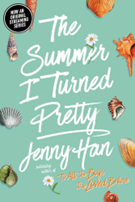
I will love to meet Jenny Han. The books of hers I have read are amazing. I want to keep reading all her books. I love how she keeps the readers interested in the book. I will love to meet her and have a book with her autograph. The Summer I Turned Pretty is, for me, in my top two in all the book I read in this whole school year, and I hope keep reading all her book.

I have read almost all of Raina Telgemeier’s books; they are very good, and I love all of them! They are all so funny, and I recommend them. I want to meet Raina Telgemeier because when I first read Smile, almost the whole school was talking about it and when I first read it, it was really good, and I knew I had to read the other ones by her, and they were really good she a very good author.

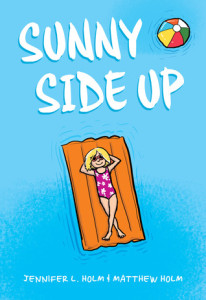
When I first read Sunny Rolls the Dice, it became one of my top books of all the books I have read. Since I liked it, I knew I had to read all the series. All the books are so good. I need to meet Jennifer L. Holm. Her books always put a smile in my face. All her books are very good, if I could read a book again and again, it would be these.

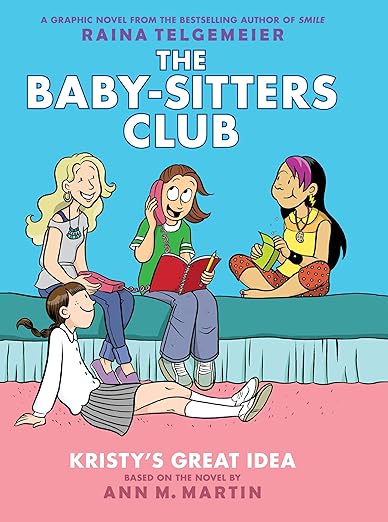
I read the first Baby-Sitters Club book when I was in 6th grade, and it was so good! I knew I had to read all the books. Then I found out there was a series on Netflix, andand the series is as good as the book. I want to meet Ann M. Martin because her books are nice and always have a message of the story. They are more than just good book, they are really good books. I will always love these books.


“Author Spotlight: Ann M. Martin” by Meghan K., 8th grade

Get to Know Ann M. Martin

Ann M. Martin is the author of many books and series. One of her most famous series The Baby-Sitters Club. The Baby-Sitters Club has sold over 180 million copies. Even though Baby-Sitters Club is a popular series in her collection, that does not mean it’s the only one. She has written many different books, like Slam Book, On Christmas Eve, Rain Reign, and many more. Ann M. Martin has great books, and they teach great life lessons and give messages to whoever reads them. Ann M. Martin is a great author, I think, because she relates her books to some of her own life experiences and childhood memories or feelings. Ann M. Martin has made a name for herself in children’s and young adult fiction. She is a full-time writer and published her first book in 1985 while working for Scholastic as a children’s book editor. 

I chose Ann M. Martin to spotlight because her books and series are very inspiring and interesting to read. I loved her series The Baby-Sitters Club throughout middle school. They are one of the only books I would read because they kept me interested, as well as Baby-Sitters Little Sister. If anyone asked me for an opinion on her books I would recommend for them to read them. 

Resource: The Baby-Sitters Club Wikipedia & Ann M. Martin Wikipedia


“Reflection on Akira Toriyama’s Passing” by Ricardo D., 8th grade

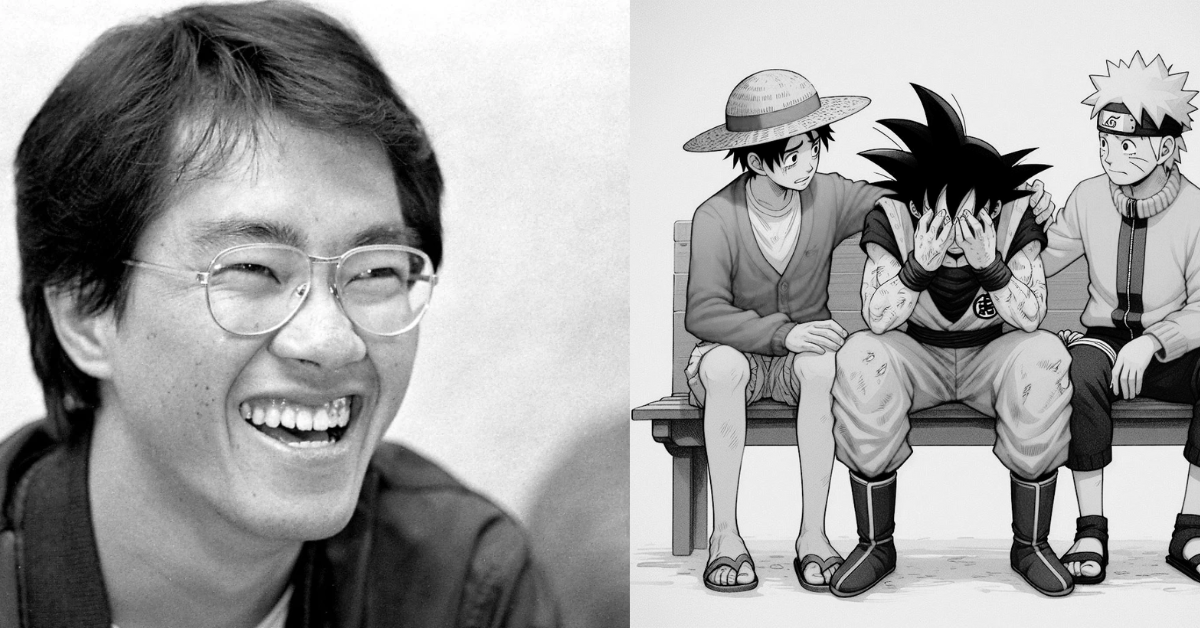
Akira Toriyama — The Legendary Mangaka, No More | by Jijo George | Medium

Manga creator Akira Toriyama passed away on March 1st 2024. The cause of his  passing was due to an acute subdural hematoma, which is when you injure your head severe enough to cause pooled blood to push on the brain. His death was not announced on March 1st, it was announced on the 8th due to his family’s request. He still had a lot of projects he was working on when he passed as well. I found out late at night when a friend called me out of nowhere and told me about it. Dragon Ball is my favorite anime and his death happened before they even animate the moro arc, which is tragic.

What caused his death?

A few weeks before his death, Akira Toriyama said he wasn’t sure he could keep going. “I am not sure how much more I can do, as I am not very confident about my health, probably due to my lifestyle when I was younger…”. It is not confirmed what he meant by lifestyle, but it is assumed that he is referring to his smoking habits, poor diet, and stress early in his career. He spoke many times about how deadlines were getting to him and that he would smoke several packs of cigarettes a day, hair loss due to stress, and sleepless nights for days. If it’s like that for other manga artists, worrying about deadlines and stress, that’s just too much.

Who will be Akira Toriyama’s successor?

Despite his death, Dragon Ball Super will continue. His student and apprentice Toyotaro will write and also draw the manga. Toyotaro himself was a massive Dragon Ball fan since he was little. His drawing style and skills caught the attention of Akira and ended up working closely with him. I think Toyotaru could continue Dragon Ball but it’s not going to be the same, art style sure but, writing-wise I don’t think so. Toyotaru’s drawing skills are good but I don’t think he has much experience writing manga.

Other manga creator’s thoughts

Eiichiro Oda, known for making One-Piece, and Masashi Kishimoto, known for making Naruto both wrote eulogies about Akira Toriyama. Oda stated that it was too early, that sadness washes over knowing he would never see Akira again. Kishimoto wishes his family well and feels lost like Oda. It’s sad that we probably will never know what he was working on, nor the finished result.

Impacts on me

I grew up watching Dragon Ball when I was younger, I liked it so much that I even watched Dragon Ball GT. Most people think GT isn’t good and whatnot but I liked it. I also watched Dragon Ball Z Kai which is just Dragon Ball Z but improved. Once I found out about Akira’s death I couldn’t believe it. He usually didn’t speak publicly much so people knew little about him but he made the show I and millions of people watched every day in the morning. These news made everyone that watched the show feel down, including me.

Sources: https://thedaoofdragonball.com/blog/news/akira-toriyama-last-message/#google_vignettehttps://screenrant.com/one-piece-naruto-akira-toriyama-tribute-dragon-ball/https://www.marca.com/en/lifestyle/tv-shows/2024/03/08/65ea8bc622601d0e068b4575.html


Thank you so much to my student voices today and their reflections on favorite authors!

Author Guest Post: “Guide Them like Lighthouses to the Shores of Success” by Preston Norton, Author of The House on Yeet Street

Share

Guide Them like Lighthouses to the Shores of Success

When I was in second grade, I considered myself to be the dumbest kid in my class. I came to this rather tragic realization when my teacher instituted a math exercise where we would be given a sheet of fairly simple math equations and a time limit. Those who finished the series of equations before the time was up received a sticker that was placed in front of our name on a very pretty poster board display. Every successful completion within the time limit resulted in another sticker. Some of my classes finished every single math quiz within the time limit and had the unstoppable line of stickers to prove it. Other kids missed the occasional day, but overall, had a fairly mean lineup of stickers. There were other kids still who struggled but achieved the occasional sticker, and I’m sure the few they possessed meant a great deal to them.

And then there was poor, dumb Preston who had not a sticker in the world.

At this point, my teacher must have realized her error because she began the practice of “skipping” days. Whenever she skipped a day—and we did not have one of these timed math quizzes—everyone got a sticker. I finally had my sticker. There was only one problem: I knew I hadn’t earned it. As the school year progressed, more and more of these “skip days” occurred, and before I knew it, I had enough stickers to hide from the untrained eye the fact that I had not earned a single one of these on my own. None of my second grade peers made fun of me for how few stickers I had. But that didn’t change the fact that I had earned a tremendous new bully: myself. Nothing tanks one’s self-esteem more than knowing you’re the dumbest kid in the class and having the stickers (or lack thereof) to prove it.

I wish I could tell you that this was the origin story of how I went on to become the world’s greatest mathematician. Alas, this is not that story. I wager my math skills to this day are only marginally better than the fifth graders to whom I teach (environmental science). Math is not something I was born to be good at. This is not to say I think one needs to be born good at something in order to succeed at it. But I do think we are born with innate interests and desires. And the sooner we can key into what these things are, the sooner we can unleash a world of potential, either in ourselves, or—in the case of teachers—from these young minds whom rely so deeply upon the light of our learning. As teachers, we can—and should—guide them like lighthouses to the shores of success. Now I realize, as a children’s author, that I am a somewhat biased source, but I can think of no better beacon than the power of literacy and books.

Flash forward to the Scholastic Book Fair.

As a second grader—even one with zero stickers (real ones anyway)—the allure of the Scholastic Book Fair was powerful. Born into a relatively low-income family, I had enough money to buy one book—a single book—and as such, I had to make it count. The book I settled on was one about dinosaurs. I was probably eight years old. Of course, I liked dinosaurs. This purchase was made purely on the appeal of the cover with absolutely no understanding of the sort of book I was walking into. And that was nonfiction. Now, as someone who adores nonfiction, I can tell you with certainty that I was ill-equipped with the literacy required to tackle such a read. What essentially happened was I would “read” the words on the page and have zero comprehension of what I’d just read. It was the most surface level act of reading with none of the understanding behind it. This could have been a relatively painless failure, if not for my cousin Tobin—in the same grade as me—who bought the exact same book as me. And let me tell you, he was simply gushing with newly learned dinosaur facts. Hey, Preston, did you know that a stegosaurus was roughly 30 feet long, weighed 11,000 pounds, but only had a brain the size of a dog’s? Oof. I suddenly felt a terrible kinship to stegosauri.

Needless to say, I felt pretty defeated. The thought occurred that if couldn’t even understand a book someone else my age was reading for enjoyment, I might never amount to anything. This is a terrible thing for an eight-year-old to feel.

I may have been my own worst enemy, but I did have someone in my court: my mom. As a lover of books and even writing, she knew I had the desire to read—even if I hadn’t found the right book just yet. With that said, she’d heard a thing or two about this spooky book series called Goosebumps. And so, as I entered the third grade, to a brand-new school, a new start, and a slightly lower than normal self-esteem, she hooked me up with my very first one: Goosebumps #2: Stay Out of the Basement.

Holy f***ing s***! What the f*** was I reading? I had no idea—it was weird as s***—and I was here for it. Their dad was a f***ing plant monster thing? Hell yeah! And thus, I fell down the slippery slope of a book series with just way too many books and where every chapter ends on a cliffhanger.

I wasn’t long before my mom had realized her child’s sudden new hobby was about to get expensive. And so, without further ado, she introduced me to the library. While there were plenty of Goosebumps to spare, I burned through these faster than a teenage boy burns calories. At a certain point, I was forced to redirect my attention elsewhere. I had a great science fiction run with the works of Bruce Coville. But perhaps no chapter book had a greater impact on me than Bunnicula: A Rabbit-Tale of Mystery (1979).

The premise is this: a family called the Monroes has a pet dog, Harold (the narrator), a pet cat named Chester (a vaguely paranoid orange tabby who loves literature and milk), and a brand-new pet rabbit—the titular Bunnicula—who may or may not be “sucking the life” out of vegetables. I can tell you the exact moment when this novel changed my life. Keep in mind that this is a recollection of events from the nostalgia-fueled memory of a thirty-eight-year-old, who has not reread the novel since they first read it as an eight-year-old (give or take). Picture this: Chester, jealous of all the attention the family bunny has been receiving of late, is contemplating an attempt on Bunnicula’s life. After reading that vampires can be slain by pounding a stake through their heart, Chester interprets this murder weapon as a juicy slab of steak, which he removes from the fridge, proceeds to throw on top of the bunny, and then hops on top of it, attempting to somehow pound it through this poor rabbit’s heart.

“I think it’s supposed to be sharp?” Harold asks (according to my memory).

“Of course, it’s sharp,” says the version of Chester who lives rent-free in my head. “It’s sirloin.”

Somehow, someone had forgotten to pass on the memo to me that books could be funny. This was undoubtedly the funniest thing I had ever read. To this day, it might still be! And it was in this moment, when a moment of humor conveyed through written word irrevocably tripped a dopamine neurotransmitter in my brain, flooding it with hysterical euphoria, that I came to a life-altering realization: I wanted to write.

When I was maybe eleven years old, I attempted to write my first novel. It was about a dog and a cat who get lost in Australia and befriend a dingo. I maybe wrote a chapter or two before I quit. Whether or not it was a good chapter or two is inconsequential. What it was instead was an important chapter or two—perhaps the most important chapter or two I’ve ever written—because it taught me one of the most powerful lessons that eleven-year-old me could learn: I could write. I could tell a story. I had stories inside of me that I wanted to tell.

When I was fourteen years old, I made another attempt, this time in the fantasy genre, of which I was growing quite fond. I got further this time; wrote more pages, more chapters. Did not finish.

I made another attempt again when I was sixteen years old, and this was an important one. Because I did not stop. I kept writing. Maybe on and off, but I kept on going, even when I turned seventeen.

When I was eighteen years old, I finished the novel that I started when I was sixteen: a high fantasy novel called The Mark of Mekken, starring a young protagonist named Aidan Cross. Once more, whether it was good or not is far less consequential than how important it is to me. Amidst my (failed) attempts to publish it, I asked for publishing advice in a fan letter I wrote Christopher Paolini, of whom I was a big fan at the time. Paolini’s success at such a young age was endlessly inspirational to me. To my surprise and delight, Paolini wrote me three pages of letters back in encouragement. Oh, and he also recommended me to his agent, Dan Lazar, who would keep an eye out for my manuscript! I’ll spare you the suspense: Dan Lazar did not sign on to represent my novel. But he did write me the most encouraging rejection letter I have ever received, particularly in regard to my protagonist, Aidan, whom he hoped would succeed on his journey.

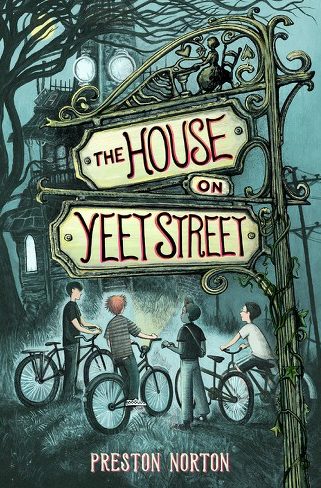
Some eagle-eyed readers might recognize that my major middle grade debut, a queer ghost story called The House on Yeet Street—to be published August 27, 2024 by Union Square Kids—also features a protagonist named Aidan Cross. This is not by coincidence. The House on Yeet Street might be middle-grade horror—perhaps not so distant from the Goosebumps stories that inspired it and, indeed, changed my life—but it is also a story about creativity and identity and how closely the two intertwine. In The House on Yeet Street, my thirteen-year-old MC, Aidan Cross is writing a fantasy love story starring a fictional version of his best friend, Kai Pendleton—reimagined as a merman named Kai Pendragon—and a genderbending version of himself named Nadia (Aidan spelled backwards). When I originally pitched this MG book idea to my agent and editor, it was with three other ideas, two of which I was convinced would be selected over it. Not only was I surprised that The House on Yeet Street floated to the top, but I was also elated, especially as it has easily turned into the personal favorite and possibly most personal of all my novels. It has also caused me to reflect on the version of Aidan Cross I wrote all those years ago and the queer subtext I may or may not have fully understood in his story and my own.

I know what you’re thinking: what does this have to do with teachers? To which I would reply: everything! I would also pose the question: who is a teacher? Or better yet: who can be a teacher? To which I would reply: everyone. A teacher can be a mom, an author, even a literary agent. I believe a teacher can even be a book—even one about monster plant dads and vampire bunnies. What better teacher than the one who is born inside a child’s mind? There is a reason evil and ignorant people across the nation are organizing to ban books—of all things—from children, even as the whole entire internet sits at their fingertips. It is much easier to stop a child from becoming literate and learning to think independently—by carefully censoring and curating their access to literature and ideas—than it is to stop a young person from thinking for themself once they have learned how to do so.

To teachers, to librarians, to every adult with a child in their life: don’t stop shining your light. These children see you. These children need you.

The future needs you.

Publishing August 27th, 2024 by Union Square & Co.

About the Book: A hilarious ghost story about a group of thirteen-year-old boys whose friendship is tested by supernatural forces, secret crushes, and a hundred-year-old curse.

When Aidan Cross yeeted his very secret journal into the house on Yeet Street, he also intended to yeet his feelings for his best friend, Kai, as far away as possible.

To Aidan’s horror, his friends plan a sleepover at the haunted house the very next night. Terrance, Zephyr, and Kai are dead set on exploring local legend Farah Yeet’s creepy mansion. Aidan just wants to survive the night and retrieve his mortifying love story before his friends find it.

When Aidan discovers an actual ghost in the house (who happens to be a huge fan of his fiction), he makes it his mission to solve the mystery of Gabby’s death and free her from the house. But when Aidan’s journal falls into the wrong hands, secrets come to light that threaten the boys’ friendship. Can Aidan embrace the part of himself that’s longing to break free…or will he become the next victim to be trapped in the haunted house forever? 

About the Author: Preston Norton teaches environmental science to fifth graders. He is the author of Neanderthal Opens the Door to the UniverseWhere I End & You Begin, and Hopepunk. He is married with three cats.

Thank you, Preston, for this reminder that we are guides to the kids in our lives!

Author Guest Post: “The Plant Rescuer and Following Dad’s Footsteps” by Matthew Rivera, Author of The Plant Rescuer

Share

“The Plant Rescuer and Following Dad’s Footsteps”

I have a close relationship with my father, and I grew up watching him tend the yard. Whether it was mowing the lawn, pulling apart clumps of irises, or delicately staking his jalapeño plants, my dad has a knack for gardening. Unfortunately, I didn’t inherit his skills. As an adult, I love to garden, and it’s become my passion. However, it’s taken a lot of hard work and perseverance. My backyard garden is a source of pride. I grow black-eyed Susans, hollyhocks, poppies, cosmos, dahlias, and a host of other flowering plants. I continuously learn through tips I’ve picked up from blogs, books I’ve found in my local bookstores, and of course, the library.

Growing up, my parents believed in giving me enough space to figure stuff out on my own. As a child, I spent Saturday’s pouring through stacks of books I’d find in my local library. Whether it was learning how to bake cakes from scratch, or figuring out how to raise chickens, the library was my go-to for discovery and learning. In THE PLANT RESCUER, I wanted Manny’s experience with problem-solving to reflect that of my own. Some have asked why Manny couldn’t research on a computer, like some children today. I like to point out that Manny’s family doesn’t own a computer. Besides, he loves the experience of going to the library with Nana.

THE PLANT RESCUER, isn’t entirely biographical. It’s a pastiche of childhood experiences coupled with a discussion I had with a gardener while living in Los Angeles. The gardener shared how he was working hard to send his child to college. My father wasn’t a professional gardener, but he worked a lot, which included graveyard shifts. Similarly, my dad was a hard-working parent that didn’t have a lot of time. This is why Manny feels it’s important to figure things out for himself, and frets over how to bring his ‘amigo’ back to life. The fretting part of the story is most-definitely autobiographical.

To this day, I’ll share gardening frustrations with my dad, and he’s always quick to point out that he mostly learned through a lifetime of trial and error. Unfortunately over the years, I’ve had to toss plenty of my own errors in the compost bin. Regardless of how frustrated I get, I remember the advice my dad once shared with me, it’s the act of gardening where we need to find joy. Getting the fennel to reach seven feet tall, or the pothos to wrap around the living room is icing on the cake.

Published May 21st, 2024 by Neal Porter Books

About the Book: Manny harnesses love, determination, and a visit to the library to care for his first plant and make his gardener father proud.

Manny comes from a long line of gardeners, and to him, the greatest gardener of all is his dad. Dad always knows what plants need. Even with no yard to garden in, he tends their small apartment into a lush jungle.

One day, the time comes for Manny to get his very own first plant! Dad trusts Manny to care for his new amigo, and Manny is determined to rise to the challenge. But watching Dad’s masterful work isn’t the same as knowing everything he knows, and Manny’s amigo keeps wilting, no matter what he tries! Dad would know what to do, but this is Manny’s plant, and he wants to be the one to save it.

Luckily, before his new amigo, Manny had another friend: the library! A day of research and a stack of books gets him back on track in no time. Manny’s plant grows bigger and bigger, until his room overflows with beautiful, healthy leaves, plentiful enough for Dad to share cuttings with the whole neighborhood. Now Manny can proudly say that he is the youngest in a long line of gardeners.

Longtime illustrator Matthew Rivera makes his authorial debut with a story that will warm every green-thumbed heart. Any child with an older role model whose shoes they dream of growing into will delight in Manny’s success and his zest for independent trial-and-error.

A Junior Library Guild Gold Standard Selection

About the Author: Matthew Rivera grew up in Arizona, and worked for many years as an art director for agencies, large corporations and toy companies. He now lives in Portland, Oregon and is an author and illustrator of books for children. He can be found working at his desk with a large cup of coffee, while Mavis, his pet rabbit, yanks his shoelaces for extra greens.

Thank you, Matthew, for sharing this wonderful dad story with us on Father’s Day!

Author Guest Post: “Peer Tutoring, Musical and Otherwise” by Caroline Palmer, Author of Camp Prodigy

Share

“Peer Tutoring, Musical and Otherwise”

As far as I’ve heard, peer tutoring is typically intended to be the most beneficial for one person–the one being tutored. In contrast, while the tutor themselves may receive extra credit in a class, or some pocket change, they ultimately don’t learn anything new. Or at least, that’s how it seems. In reality, the few times I’ve been asked to explain a concept to one of my classmates, I’ve always walked away from the encounter feeling more assured in my knowledge and aware of the weaknesses I need to build up. Peer tutoring is much more reciprocal than most people assume!

When it comes to older tutors, the balance is naturally lopsided. One party is experienced and well versed in the topics of choice, and the other is not. With peer tutors, however, the participants are on equal footing. Both must work together to come up with answers to their questions. And being closer in age to your collaborator makes it easier to understand one another. Who can better explain a concept in a way that makes sense than someone on your level?

In high school, I took an orchestra class every year. It was a very collaborative environment! Something that stood out to me was a type of practice called sectionals. You and your peers who played the same specific instrument would group together for a set amount of time to make progress on the music you were learning. The head of the group–the one who sits in front–leads the sectional. I was first given this duty around 9th grade, and I remember being intimidated at the thought of having to take a leadership position, having to talk to people I didn’t know well, and having to instruct peers who were older than me. I’m sure that the first sectional I led was rough, but with practice, I was able to get used to and even enjoy the responsibility. Aside from helping my peers learn, I was also able to better identify the skills I needed to improve.

And apart from being educational, peer tutoring is a great chance to build interpersonal relationships. I became a better musician when I led those sectionals, and also, I grew as a person. I was able to become closer to my peers, despite how shy I tended to be in school. All of us were able to trust each other–they could trust that I would offer them helpful and clear advice, and I could trust that they’d point out places in the music where we all needed to agree on the best way to play. In addition to strengthening our friendships, this sort of peer tutoring also strengthened my self-confidence. If I hadn’t been pushed to lead, I might not have done as well in orchestra as I did, and I certainly would’ve been far less social with the rest of the class.

I can imagine that there are plenty of kids in schools who would be less than enthused at the chance to teach their peers. Whether because they see it as a waste of time, they doubt their own expertise in the subject matter, or they’re awkward talking to those they don’t know well–like I was. Still, I’d say that they should give it a shot. Sometimes, you have to push through the discomfort for a while to reap the benefits.

Tutor or tutee, if they still struggle with the material after doing their best, at least they might have a new friend willing to help them through it.

Published June 11th, 2024 by Atheneum Books for Young Readers

About the Book: Perfect for fans of Victoria Jamieson and Raina Telgemeier, this heartwarming middle grade graphic novel follows two nonbinary kids who navigate anxiety and identity while having fun and forming friendships at their summer orchestra camp.

After attending an incredible concert, Tate Seong is inspired to become a professional violist. There’s just one problem: they’re the worst musician at their school.

Tate doesn’t even have enough confidence to assert themself with their friends or come out as nonbinary to their family, let alone attempt a solo anytime soon. Things start to look up when Tate attends a summer orchestra camp—Camp Prodigy—and runs into Eli, the remarkable violist who inspired Tate to play in the first place.

But Eli has been hiding their skills ever since their time in the spotlight gave them a nervous breakdown. Together, can they figure out how to turn Tate into a star and have Eli overcome their performance anxieties? Or will the pressure take them both down?

About the Author: Caroline Palmer (they/them) is a nonbinary comic creator. Their work has been published in the comics anthology, A Taste of Home (2020) by Level Ground Comics, and they’ve been consistently updating their Webtoon Talent de Lune since 2016.

Thank you, Caroline, for reminding us to allow peers to collaborate and educate!

Author Guest Post: “Creativity, Collaboration, and Cookies” by Tracy Badua and Alechia Dow, Author of The Cookie Crumbles

Share

“Creativity, Collaboration, and Cookies”

When you mention group projects, how many of your students groan?

With grades at stake, there’s so much potential for conflict: some people may battle for control, some may disagree about what the overall project should look like, and some might not even complete their assigned tasks. To some students, having to partner up often feels like extra work.

But group projects get a bad rap. Collaboration doesn’t have to mean more conflict or more work: it can be an opportunity to excel together. Learning how to work well in a team proved to be a vital skill when we embarked on our own group project: writing a middle grade murder mystery. In The Cookie Crumbles, two best friends must solve the mystery behind a celebrity judge’s collapse at a kids baking competition.

  • Why did you choose to co-write THE COOKIE CRUMBLES?

Alechia: The Cookie Crumbles, in my mind, was the type of story that would be a blast with dual perspectives and voices. Add that I’ve been friends with Tracy for nearly eight years, and it made the project that much easier to develop together. Tracy and I have similar styles, we have the same work ethic, and we complement each other. Knowing that she will find the things I forget (descriptions are tough), and I’ll think of the things she might’ve missed, means we’re a good team. A lot of communication and establishing an order of operation made collaboration seamless.

  • What do you think you each brought to the process?

Alechia: Food is a huge part of my life and is absolutely in my element. So bringing that to a story that features food heavily meant I could rely on the skills I learned in pastry school––creating fancy desserts, sure, yet also food writing. I have to add that when Tracy and I work together, we tend to laugh a lot. Many of our jokes ended up making it into the final version of this book. How much you enjoy the process seeps into the story and I think (I hope) the reader feels that too.

Tracy: I brought in my intense love of organization. I took notes on all of our brainstorming conversations and had spreadsheets mapping out everything from what happens in each chapter, what they’re baking, and who wins which baking competition round. Collaborating on a project requires a lot of clear communication, and I tried my best to use whatever tools we had handy to make the process run smoothly.

  • How do your characters work together as a team?

Laila is a talented kid chef, and she’s invited to compete at the Golden Cookie Competition at the prestigious Sunderland boarding school. Her best friend, newscaster-hopeful Lucy, comes too, hoping to write a strong piece that will wow the Sunderland scholarship committee. But when one of the celebrity judges collapses after eating one of Laila’s cookies, there are whispers that Laila had something to do with it.

Together, Laila and Lucy work to not only clear Laila’s name, but to also figure out the real culprit. This means poking around for clues, tag-teaming interviews with the judges and other competitors, and covering for each other so they can thoroughly investigate. They do hit some stumbling blocks along the way, and you’ll have to read the book to see if this friendship can weather all the storms!

  • What other co-written middle grade works do you recommend?

Alechia: Save Me a Seat by Sarah Weeks and Gita Varadarajan is adorable! Time After Time (Best Wishes #3) by Sarah Mlynowski & Christina Soontornvat is one of my daughter’s favorite series. Camp Sylvania: Moon Madness by Julie Murphy & Crystal Maldonado is going to be a blast, no doubt!

Tracy: I love The Secret of the Dragon Gems by Rajani LaRocca and Chris Baron and You Are Here: Connecting Flights, an anthology edited by Ellen Oh.

Published June 11th, 2024 by Quill Tree Books

About the Book: Best friend duo works to solve baking competition puzzle in charming story.

The Great British Bake Off meets a tween-friendly Knives Out in this fun and propulsive middle grade novel following two best friends who must solve the mystery behind a baking competition gone awry.

This sweet treat early readers are calling “completely sublime” comes from author buddies and Middle Grade favorites Alechia Dow, an American Library Association notable and Indie Next Kids pick novelist, and Tracy Badua, a Society of Children’s Book Writers and Illustrators’ multi-award winner.

Laila gave Lucy a cupcake on the second day of kindergarten, and they’ve been inseparable ever since. But the summer before eighth grade, they find out that since they live on opposite sides of town, they’ll go to different high schools. Yuck!

Then Laila’s invited to compete at the Golden Cookie competition, which awards its winner admission and a full ride to the prestigious Sunderland boarding school, and it’s the perfect opportunity. Sunderland doesn’t just have an elite culinary program;
it’s also home to an elite journalism track, if only newscaster-hopeful Lucy could build up a strong enough portfolio to impress the scholarship committee.

But when one of the celebrity judges collapses after sampling Laila’s showpiece, rumors of foul play swirl, with Laila rising to the top of the suspect list. Even worse, a major storm has effectively cut off all access to the outside world. Can the girls find the real culprit and clear Laila’s name before it’s too late?

About the Authors: 

Tracy Badua is an award-winning Filipino American author of books about young people with sunny hearts in a sometimes stormy world. By day, she is an attorney who works in national housing policy, and by night, she squeezes in writing, family time, and bites of her secret candy stash. She lives in San Diego, California, with her family.

TikTok: @tracybwrites | Instagram: @tracybaduawrites | Facebook: U | Twitter: @tracybwriteshttps://tracybadua.com/

Alechia Dow is a former pastry chef, a librarian, and an award-winning author of acclaimed young adult sci-fi fantasies, several short anthology pieces, and magical (sometimes mysterious) middle grade stories. When not writing, you can find her having epic dance parties with her family, baking, reading, taking teeny adventures, and exploring her local food scene.

Instagram: @alechiadow | https://www.alechiadow.com/

Thank you for sharing this fun interview and an inside look at The Cookie Crumbles!

Author Guest Post: “Soil Science” by Peggy Thomas, Author of The Soil in Jackie’s Garden

Share

“Soil Science”

As a kid, I loved to dig in the garden. And I still do. But it wasn’t until I heard the statistic – that one tablespoon of healthy soil contains more living organisms than there are people on Earth – that I felt compelled to write a story about the importance of soil.

Healthy soil is everything! Just think about it. Everything we eat comes directly or indirectly from the soil. Most of the things we use every day can be traced back to the soil. Yet many of us walk along never realizing the magic happening under our feet.

In THE SOIL IN JACKIE’S GARDEN, which is structured like the classic “The House That Jack Built,” the main character and her friends follow the soil cycle as they plant a seed, watch their plants grow, and harvest the results. But the story doesn’t end there. To be part of the cycle, Jackie composts the scraps, returning nutrients back to the soil.

More than anything, I hope the book inspires kids to dig deeper, get their hands dirty, and feel connected to the world around them. To get them started, here are a few activities to pair with different sections of the story:

  1. This is the soil in Jackie’s garden…

By making SOIL SLURRY, you can find out what kind of soil you have in your garden. With nothing more than a glass jar, some soil and water you’ll separate soil particles into layers of sand, silt and clay.

  1. These are the worms – squirrrm, that stir the soil in Jackie’s garden.

This activity comes from Maine Agriculture in the Classroom. Make an EARTHWORM HABITAT and watch how these amazing creatures aerate and feed the soil.

  1. This is the stem, long and lean…

In CELERY SCIENCE you’ll witness the amazing capillary action that moves water and nutrients up and down a plant stem. All you need is a stalk of celery, water and food coloring.

  1. These are the leaves, shiny and green…

How do plants breathe without lungs or a nose or a mouth? They have tiny pores in their leaves called stomata, and in this super easy exercise you’ll be able to see how plants take in carbon dioxide and release oxygen. BREATHE IN!

  1. This is the compost created by critters…

Follow Jackie’s lead and become part of the soil cycle.

With MAKE A MINI COMPOSTER you’ll be able to see the transformation as invisible microbes break down organic material and turn it into plant food just in time feed your Spring flowers.

Published May 29th, 2024 by Feeding Minds Press

About the Book: Perfect for National Learn About Composting Day, The Soil in Jackie’s Garden introduces budding gardeners to the magic happening in their very own backyard with beautiful visuals that open vertically to showcase the secrets beneath the surface of the soil. Follow Jackie and her diverse group of friends as they meet pollinators, measure progress, and patiently wait for their sweet snack to grow. But it doesn’t stop there — the soil is packed with critters creating compost for next season’s seeds!

Written in the cumulative style of “The House that Jack Built,” the catchy alliterations and engaging illustrations are interwoven with scientific facts that teach young readers about the life cycle of a plant, the natural processes that create new soil, and the importance of composting for a sustainable garden.

About the Publisher: Feeding Minds Press is a project of the American Farm Bureau Foundation for Agriculture. The mission of the Foundation is to build awareness and understanding of agriculture through education. The goal of Feeding Minds Press is to publish accurate and engaging books about agriculture that connect readers to where their food comes from and who grows it. Learn more at feedingmindspress.com.

About the Author: Peggy Thomas is the author of more than twenty award-winning nonfiction books for children including Hero For the Hungry: The Life and Work of Norman Borlaug, illustrated by Sam Kalda, and Full of Beans: Henry Ford Grows a Car, illustrated by Edwin Fotheringham, which earned the AFBFA 2020 Book of the Year Award. When not in her garden, Peggy is most likely speaking with students about sustainability and food security or researching her next true story. Learn more about Peggy at www.peggythomaswrites.com.

The illustrator of The Soil in Jackie’s Garden is Neely Daggett. She lives with her husband and three children in tree-filled Portland, Oregon. Making picture books is her passion, but Neely also loves to work in her garden, take her dog Luna on long walks, and visit the Oregon coast with her family. You can find more of Neely’s work at www.neelydaggett.com.

Thank you, Peggy, for these fun activities to bring Jackie’s garden into the classroom!

Author Guest Post: “Let Kids Read Below Their Reading Levels” by Adrian So, Fourteen-Year Old Author of The Groundworld Heroes

Share

“Let Kids Read Below Their Reading Levels”

As a high school student, most of my friends around me are reluctant readers. They don’t seem to have a connection with any of the books they’ve read, and often take a long time to finish them. But that comes with one big exception: Books with pictures, and less words.

Even those who despise reading the most would happily flip through pages of Big Nate, Dog-Man, and Diary of a Wimpy Kid. One thing teachers might take notice of is that these books are well below the reading level of grade nine (the grade I am currently in). Hence a teacher of mine condemned it when one of my friends pulled out a comic book during silent reading.

My book, The Groundworld Heroes, is intended for young children, but I believe that anyone interested shall be able to read it. So I think educators should leave room for students to choose their preferred reading material. If there isn’t freedom of choice, students will lose interest or even develop a hatred of reading altogether.

Having the ability to read is instrumental to the success of our next generation. We shall encourage them to select what they read and not limit them to a specific reading level.

You can order my “under-the-reading-level” book here:
Amazon
Barnes and Noble

Publishing August 6th, 2024

About the Book: “An original voice and a fun, funny adventure underground.” Adam Rex, NYT Bestselling Author of THE TRUE MEANING OF SMEKDAY

When Groundworld is on the brink of extinction, it takes one mole with courage to save the day.

When Benjamin, a junior mole digger, witnesses a human invasion of his homeland, he must find his long-lost courage and unite two culturally distinct realms to fight the intruders and save his kind from extinction. What perils lie before him as he ventures into the unknown? Can Benjamin go up against a rough bunch of illegal animal trappers before it’s too late?

Meet the Groundworld heroes as they defend their country’s sovereignty and save their fellow citizens from capture and extinction.

Perfect for fans of Kate Dicamillo and Roald Dahl.

About the Author: Adrian So is a young writer who lives in Canada. In his free time, he likes to read, write, hang out with his gang of crazy friends, and play soccer. He is currently a high school student.

Thank you, Adrian, for supporting something that we truly believe here at UR!