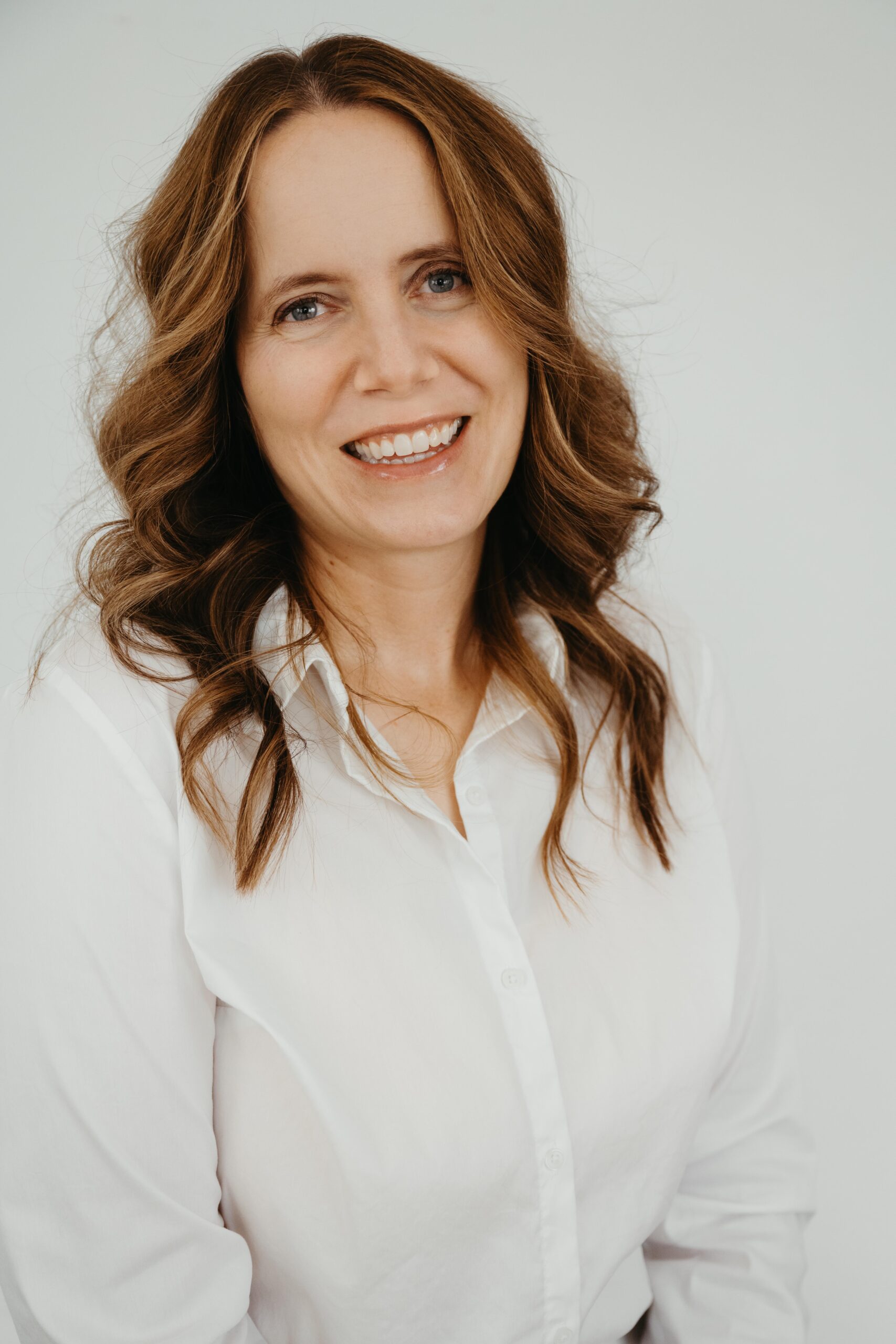
Author Guest Post: “On Writing the Unexpected Narrator” by Jordan Kopy, Author of Theodora Hendrix and the Monstrous League of Monsters

Share

“On Writing the Unexpected Narrator”

My debut middle grade novel, Theodora Hendrix and the Monstrous League of Monsters, follows the adventures of one Theodora Hendrix, who isn’t your average ten-year-old: her best friend is a talking, top-hat-wearing tarantula named Sherman. She reads torat cards (think tarot cards, but magical). Oh, and she lives in a haunted mansion full of monsters, breaking Headquarters’ Number One Rule: Keep Monsters Hidden from Humans.  When a series of anonymous letters threatens to reveal her secret, Theodora must follow a series of clues to track down the source. If she fails, Theodora will be sent to live with humans (the horror, the horror!) and her family will end up in the Deepest, Darkest Prisons of Transylvania. Forever.

Like many authors, I’m often asked where I got the idea for this book. The story goes like this: my mom and I were watching one of our favorite movies, “My Cousin Vinny”.  Fred Gwynne, who played the judge, also played Herman Munster on “The Munsters”, a black and white television show from the 1960s. That fact must have been in my head – probably because my mom mentioned it a dozen-odd times – when I went to sleep, because I woke up the next morning with the idea for a story about a ten-year-old girl being raised by a bumbling family of monster superheroes. I jumped out of bed and grabbed my laptop; two hours later, I had written the book’s opening chapters. Over the next few days, I outlined the plot – at least, I knew where the story started and how it ended, sketched out my ensemble cast of characters, and sorted out the book’s main themes. But what I hadn’t sorted out was my narrator.

Choosing the narrator is one of the most critical decisions an author makes when crafting their story, as this is the vehicle by which your tale is relayed to your reader. There’s much to consider:

For starters, who is the narrator – who’s telling us this story? It can be anyone, really – the main character, a third party, an animal sidekick…When thinking through the various options, considering point of view can be super helpful: most novels typically employ first or third person point of view. In first person, the narrator is directly involved in the story, sharing the events that occurred according to their own recollection or experience, using “I” or “we” to describe the action. A well-known example of this is the Percy Jackson and the Olympians series by Rick Riordan. In third person, the narrator isn’t directly involved in the story, using “he”, “she”, or “they” to describe the action. Third person is often (but not always!) omniscient, meaning that the narrator is all-knowing. A (very!) well-known example of this is the Harry Potter series by J.K. Rowling. Along with point of view, the narrator’s perspective – i.e., their individual perceptions of and interactions with the world at large – should also be considered: a narrator whose perception differs from that of the main character will provide a different experience than one in which a similar worldview is shared. Together, point of view and perception can help to define the best narrator for a given tale; the former tells us the “what”, the latter the “how”.

I had no clear sense of my narrator when I first started writing Theodora Hendrix and the Monstrous League of Monsters. So, I started thinking about perspective and point of view – and kept waffling between the two. I liked the intimacy of first person as it allows readers to experience events with the main character – a technique which is particularly successful with young readers who can, perhaps, more easily envision themselves in that character’s shoes. In contrast, I liked the omniscience of third person as allows the narrator to hint at things yet to come which the main character couldn’t possibly know; this works especially well in novels in which there’s some degree of mystery, which I knew my story would have. In the end, I decided to take a (perhaps not so small) risk and combine the two. The result is a rather unexpected narrator:

In the prologue and the epilogue, my narrator’s point of view is first person. He often breaks the fourth wall, speaking directly to the reader. He’s also mysterious: he declines to introduce himself at the beginning of the tale, stating that his identity is for him to know and “for you to find out”; it is only on the very last page that he finally reveals himself. In contrast, the main body of the novel is largely relayed in deep third person, where the narrator closely mimics Theodora’s perspective. To bridge the gap between the two, he occasionally interrupts the story, breaking the fourth wall to share his own thoughts and insights directly with the reader.

To make this process a little less painful going forward, I’ve made myself a “narrator checklist” which I peruse whenever I begin a new manuscript. Some of the questions I consider are:

  1. Who is telling this story? Is it one person or multiple people?
  2. Why are they telling it and not someone else?
  3. Where do they stand in relation to the story – are they directly involved in the action or observing it from the outside?
  4. What information do readers need to follow the plot, and who can best convey this to them?
  5. Comparatively, what information should be withheld or obscured or obscured from readers, allowing for potential misdirection?

Sometimes, choosing a narrator is a matter of trial and error. If the plotting is tight, the characters well-developed, and the pacing appropriate, it may be worth taking another look at your narrator. Changing the point of view and perspective can feel more than a little overwhelming, but it’s worth it in the end: the right narrator can make all the difference.

Published July 16th, 2024 by Simon & Schuster Books for Young Readers

About the Book: If you think monsters don’t exist, just ask Theodora Hendrix. The start of a brilliantly funny new series, perfect for fans of Amelia Fang.
The first rule of the Monstrous League of Monsters is: Keep monsters hidden from humans. But when zombie George and his cat companion Bandit find an abandoned baby, they can’t leave her to be eaten by hobgoblins. So they spirit her home where she quickly becomes part of the family. Fast-forward ten years, and young Theodora doesn’t seem too scarred by her monstrous upbringing. But now a series of anonymous letters suggest that someone is about to reveal their secret. If Theodora doesn’t act fast, she may lose her family for ever…

“Readers will be irresistibly drawn into the captivating world of Kopy‘s monster-filled middle-grade novel, where the promise of tantalizing secrets sets the stage for adventure. …a delightful blend of whimsy and mystery … lively characters and light mystery, the narrator imparts a particularly mischievous charm, with cheeky asides…With playful, comical illustrations reminiscent of the Addams Family that vividly bring the scenes and characters to life, this delightful, cheeky romp is ideal for those who relish eerie tales with a humorous twist.” – Booklist

About the Author: Jordan Kopy is a born and raised New Yorker who now lives in London with her husband and poorly behaved (but lovable) cat. A financial services professional by day (no idea how that happened), Jordan spends her nights with ghouls, witches, and the occasional evil hag. She’s also the author of Theodora Hendrix and the Curious Case of the Cursed Beetle and Theodora Hendrix and the Snare of the Shadowmongers.

Thank you, Jordan, for this post looking at the process of choosing a narrator!

Author Guest Post & Giveaway!: “Crafting Multi-dimensional Characters” by A. Kidd, Author of Yasuko and the Dream Eater

Share

“Crafting Multi-dimensional Characters”

When I visit schools, part of my presentation includes a character sketch activity with students. Not only is it fun and interactive, but building a character forms the basis on which the rest of your story revolves around. Even with an intriguing plot, you still need a dynamic character to follow. Someone you can relate to and root for. We all know the cliches: the princess, the knight, the dragon. But sometimes it’s good to mix it up a little. The princess knight or, better yet, the princess dragon is far more interesting.

This concept works well with my new picture book, Yasuko and the Dream Eater, which is inspired by a Japanese legend about the dream eater, who eats bad dreams when called 3 times. What makes this character so unusual is that traditionally it is made up of five different animals. It has the head and trunk of an elephant, the eyes and ears of a rhino, the tail of an ox, the arms and legs of a tiger, and the belly of a bear. It also has a curly mane that looks like a lion, although it isn’t part lion. Some kids think it is part unicorn, because the mane has blue and pink colors shimmering within it.

We talk about culture and diversity, and how having multiple backgrounds makes you unique. Just like my main character, Yasuko, is both Japanese and American, the dream eater is made up of many different animals.  And just like a character can be a cat or a dog or a mouse, it could also be made up of all these animals, which would be unique indeed! In the story, Yasuko feels different when visiting her grandmother in Japan. Making the origami crane is not the same as making paper airplanes at home in America. She also misses her goodnight hug from her parents. In Japan, family members often pat children on the head to show affection rather than offer a hug at bedtime. By the end, Yasuko learns that she can connect to her grandmother in other ways, and that clasping hands together can also feel like a tiny hug. So with our own stories, we can seek to not only show how our characters are unique but why that makes them special.

Try this with your students: Using a large pad of paper or wipe board, ask your students to name 5 creatures (including animals, mythical beings, robots, aliens, etc.) List those on the board, then talk about at least one defining trait for each. Then it is your turn (or perhaps another student can volunteer) to make up a new animal or creature based on all 5 listed. This is where it gets interesting! But kids love to see the results. They can also each draw one on their own. Or for younger children, you can provide puzzle piece cutouts of different animals, split in 3 pieces. Children can take turns making new, mixed up animals, by rearranging the animal parts.

Take it one step further: You can also talk about the basic elements of story. Students often ask me where to start when writing. All they really need to know is who their character is, what they want, and what gets in the way. You can often accomplish this by establishing what your character’s interests are as well as what scares them. One group of students said their character, who looked like a dust bunny, liked to play with Barbies but was afraid of cheese. Now this may sound silly, but the basis of many great stories starts with asking the question, What if? What if the dust bunny wanted to play with her Barbies, but a hunk of sharp cheddar cheese left by a mouse was guarding the dolls. How can she surpass the obstacle to get what she wants?

Creating dynamic characters goes beyond physical traits. They can have brown hair and blue eyes or blue hair and brown eyes, but we also need to know their personality. That is where learning their likes and dislikes comes in, as well as how they behave and why. It’s especially important to move beyond the cliché. You can have a main character who wants to be in the talent show, but the villain or antagonist is a bully preventing them from joining. What if you turned it around and made the main character the bully instead? Or try giving your character two opposing qualities that they are battling with throughout the book. We can go back to the princess knight who wants to fight dragons but also wear fancy dresses. Maybe she isn’t allowed to go to the ball unless she puts down her sword and forgoes her helmet. Or the dragon princess who isn’t accepted because she’s green and has scales and doesn’t fit the stereotypical look of what a princess should be. This would form an internal struggle as well as an external struggle. Just like Yasuko in my book, how can your characters learn to accept both parts of themselves?

I think the key is to teach kids that we’re all basically complex characters in our own lives. And none of us wants to be judged, liked, or disliked based on just one trait. So if we create more interesting and complex characters in our stories, we’ll be representing a more diverse and realistic picture of the world. The more intriguing and unique our characters are, the more fascinating their stories will be, and the more likely readers will want to turn pages to find out what happens to them. Especially because the stories we read can help us learn something about our own lives and how to move about and thrive in a complex world.

GIVEAWAY!

A. Kidd author would be delighted to give away one copy of her new book, Yasuko and the Dream Eater. To participate, simply leave a comment on this blog post and a contact email. One lucky winner will be chosen at random. You must reside in the US.

Published April 11th, 2023 by Quiet Storm Publishing

About the Book: Yasuko has the same bad dream every night while visiting her grandmother in Japan, so her grandmother suggests she call the dream eater for help. When the dream eater is still hungry after devouring Yasuko’s nightmare, Yasuko must stop it from gobbling up her good dream too.

Inspired by a Japanese legend, Yasuko and the Dream Eater will help kids dealing with nightmares as well as celebrate what it means to be part of a bicultural family. The book is fully illustrated and includes an author’s note, cultural note, and instructions for making origami.

About the Author: A. Kidd lives in the US but has travelled to Japan many times to visit family and for sightseeing. Japan feels like her second home. Although she dreams often, she hasn’t needed to call the baku yet. She is also the author of the middle grade fantasy, The Healing Star.

A. Kidd is available for author visits! For more information, please email her at a.kiddwrites@gmail.com or visit her website at www.akiddwrites.com. She loves to inspire young writers. Her motto is, if A. Kidd can do it, so can they!

Thank you for this fun activity, examples, and the GIVEAWAY!

Author Guest Post: “Living a Multicultural Life: A Book List” by Kara H.L. Chen, Author of Asking for a Friend

Share

“Living a Multicultural Life”

First and second generation Americans face the unique challenge of having to navigate between the culture of their (or their parents’) county of origin and those of America. For children and teens, especially, the tension that can come from the clash of these worldviews can be confusing and difficult.

Middle grade and young adult books that explore these differences in perspectives, and which discuss how characters deal with these conflicts, may provide some comfort for those in the same situation. In my book, ASKING FOR A FRIEND, the main character, Juliana Zhao, has spent her life trying to follow her Taiwanese mother’s guidance for “success” but soon comes to realize that it may not lead to what she truly wants.

Here are some other books that explore what it means to grow up with more than one culture (book descriptions provided by the publishers):

LILY XIAO SPEAKS OUT – Nicole Chen

Lily Xiao can’t wait to go to Camp Rock Out this summer, where she’ll finally be able to shed her “class robot” good girl reputation and start her journey to becoming the next Eddie Vedder! And she can’t wait to do it with her best friend and cousin, Vivian, who’s just moved from Taiwan to Lily’s California hometown.

But as the two cousins work their way through seventh grade, Vivian struggles more and more with her schoolwork, which is all taught in English. If Vivian can’t get her grades up, her parents won’t let her go to rock camp.

Determined to help, Lily embarks on a mission to push their school to provide more support for English-as-a-Second-Language learners like Vivian. But her first-generation immigrant family is nervous about Lily challenging the status quo. We should be grateful to be here, they always say.

With Camp Rock Out on the line, Lily will need to decide how far she’ll push against her family’s wishes in order to stand up and speak out.

IN THE BEAUTIFUL COUNTRY – Jane Kuo

Anna can’t wait to move to the beautiful country—the Chinese name for America. Although she’s only ever known life in Taiwan, she can’t help but brag about the move to her family and friends.

But the beautiful country isn’t anything like Anna pictured. Her family can only afford a cramped apartment, she’s bullied at school, and she struggles to understand a new language. On top of that, the restaurant that her parents poured their savings into is barely staying afloat. The version of America that Anna is experiencing is nothing like she imagined. How will she be able to make the beautiful country her home?

This lyrical and heartfelt story, inspired by the author’s own experiences, is about resilience, courage, and the struggle to make a place for yourself in the world.

RUBI RAMOS’S RECIPE FOR SUCCESS – Jessica Parra

Graduation is only a few months away, and Rubi Ramos’s “recipe for success” to get into prestigious Alma University is already off track.

When Alma waitlists Rubi’s application, Rubi will need to be distraction-free to make the grade and keep her parents―who have wanted this for her for years―from finding out. Which means falling for her cute surfer-slash-math tutor, Ryan, definitely won’t work. And neither will breaking her mother’s ban on baking―her parents didn’t leave Cuba so she could bake just like them.

But some recipes are begging to be tampered with.

When the First Annual Bake Off comes to town, Rubi’s passion for baking goes from subtle simmer to full boil. Add to the mix her crush on Ryan may be turning into a full-fledged relationship and Rubi’s life is suddenly so different from what it was. She’s not sure if she has what it takes to win the Bake Off, or where the relationship with Ryan is going, but there’s only one way to find out―even if it means going against her parents’ priorities.

Now Rubi must differentiate between the responsibility of unfulfilled dreams she holds and finding the path she’s meant for.

A joyful novel of first romance, new possibilities, and the chance to define yourself, Rubi Ramos’s Recipe for Success will find its way into your heart.

THE LOVE MATCH – Priyanka Taslim

Zahra Khan is basically Bangladeshi royalty, but being a princess doesn’t pay the bills in Paterson, New Jersey. While Zahra’s plans for financial security this summer involve working long hours at Chai Ho and saving up for college writing courses, Amma is convinced that all Zahra needs is a “good match,” Jane Austen style.

Enter Harun Emon, who’s wealthy, devastatingly handsome, and…aloof. As soon as Zahra meets him, she knows it’s a bad match. It’s nothing like the connection she has with Nayim Aktar, the new dishwasher at the tea shop, who just gets Zahra in a way no one has before. So, when Zahra finds out that Harun is just as uninterested in this match as she is, they decide to slowly sabotage their parents’ plans. And for once in Zahra’s life, she can have her rossomalai and eat it too: “dating” Harun and keeping Amma happy while catching real feelings for Nayim.

But life—and boys—can be more complicated than Zahra realizes. With her feelings all mixed up, Zahra discovers that sometimes being a good Bengali kid can be a royal pain.

LOVEBOAT, TAIPEI – Abigail Hing Wen

“Our cousins have done this program,” Sophie whispers. “Best kept secret. Zero supervision.”

And just like that, Ever Wong’s summer takes an unexpected turn. Gone is Chien Tan, the strict educational program in Taiwan that Ever was expecting. In its place, she finds Loveboat: a summer-long free-for-all where hookups abound, adults turn a blind eye, snake-blood sake flows abundantly, and the nightlife runs nonstop.

But not every student is quite what they seem:

Ever is working toward becoming a doctor but nurses a secret passion for dance.

Rick Woo is the Yale-bound child prodigy bane of Ever’s existence whose perfection hides a secret.

Boy-crazy, fashion-obsessed Sophie Ha turns out to have more to her than meets the eye.

And under sexy Xavier Yeh’s shell is buried a shameful truth he’ll never admit.

When these students’ lives collide, it’s guaranteed to be a summer Ever will never forget.

And my newest book, publishing July 23rd:
ASKING FOR A FRIEND – Kara H.L. Chen

Juliana Zhao is absolutely certain of a few things:

  1. She is the world’s foremost expert on love.
  1. She is going to win the nationally renowned Asian Americans in Business Competition.

When Juliana is unceremoniously dropped by her partner and she’s forced to pair with her nonconformist and annoying frenemy, Garrett Tsai, everything seems less clear. Their joint dating advice column must be good enough to win and secure bragging rights within her small Taiwanese American community, where her family’s reputation has been in the pits since her older sister was disowned a few years prior.

Juliana always thought prestige mattered above all else. But as she argues with Garrett over how to best solve everyone else’s love problems and faces failure for the first time, she starts to see fractures in this privileged, sheltered worldview.

With the competition heating up, Juliana must reckon with the sacrifices she’s made to be a perfect daughter—and whether winning is something she even wants anymore.

“A swoonworthy, heart-wrenching view into the trials of growing up second generation in an immigrant community.” – Kirkus Reviews

A person smiling in front of a bookshelf

Description automatically generated

About the Author: Kara H.L. Chen is a Taiwanese American writer who received her MFA in fiction from Brooklyn College. She is the author of LOVE & RESISTANCE (Quill Tree/HarperCollins, 2023) and ASKING FOR A FRIEND (Quill Tree/HarperCollins, 7/23/24). Her website is at karahlchen.com or you can find her on Instagram and Twitter/X @hl_kara or @karahlchen on Substack.

Thank you, Kara, for this list of must reads!

Author Guest Post: “How to Read a Horse” by Amy Novesky, Author of If You Want to Ride a Horse

Share

“How to Read a Horse””

My picture book IF YOU WANT TO RIDE A HORSE is about the dream of riding a
horse. It’s also about writing one. I am a rider and a writer. (If you say them aloud they sound alike!)

I’ve been writing and riding—and dreaming!—since I was kid. Writing and riding both are rich in metaphor. Whether one wants to ride a horse or not, IF YOU WANT TO RIDE A HORSE can be read as a book about dream making of all kinds.

What do you want to do? What’s your dream? Name it, call it into being.
What does your dream look like? Imagine it, the big stuff and all the pretty little details.

This is the fun part. Write it down and/or draw it. Tell it to someone you trust. What do you need for your dream? Learn about it, ask for help, gather all the tack and tools.

Take care of your dream. Shelter it, feed it, groom it ‘till it shines. How do you keep your dream alive? How do you care for it?

Where does your dream live? Where is it? How will you get there? What is the first
step?

Dreams are hard work. You might have to chase after it, wrangle it, tame it a bit, find the right fit. With grace and grit you’ll wear it.

Okay, it’s time to give this dream a try. Are you ready?

Show up. This is the hard part. Facing your thousand-pound dream. What are you
feeling? Is your heart galloping? It’s natural to feel many things all at once, even—and
maybe especially—fear. What do you fear most? Failing? Falling off? You are not alone.

If you fall off your dream, and you might, will you walk away, hang up your hat? Or will you get back in the saddle, bruised butt and ego, take hold of the reins again and ride on?

Whatever you dream, be brave. Calm. Remember to breathe and have fun! You can do this. Before you know it, you will have your dream eating out of the palm of your hand.

Published March 12th, 2024 by Neal Porter Books/Holiday House

About the Book: What’s the most important first step to riding a horse? Simply closing your eyes . . . and dreaming.

If You Want to Ride a Horse introduces young readers to the joys of owning, riding, and caring for horses. It only starts with imagination—from there, the possibilities are endless.

Beginning with a daydream, our young rider goes from dreaming about a horse, choosing their ideal kind of horse, meeting their horse, cleaning their horse, tacking up in preparation to ride, soothing their horse (and themselves) through a hard moment, triumphantly getting on, and finally galloping gloriously off into the sunset.

If You Want to Ride a Horse celebrates the imagination, the most powerful steed of all.

The book includes an author’s note, an illustrator’s note, and fun facts about horses and horseback riding.

About the Author: Amy Novesky’s award-winning picture books include IF YOU WANT TO RIDE A HORSE; GIRL ON A MOTORCYCLE; and CLOTH LULLABY, THE WOVEN LIFE OF LOUISE BOURGEOIS. THE POET AND THE BEES will follow in 2025 and TO WANDER, thereafter. Amy writes and rides in the Marin Headlands, just north of San Francisco. To learn more, visit www.amynovesky.com and follow @amynovesky.

Thank you, Amy, for sharing the power of dreams!

Author Interview: Q&A with Rhonda Roumani and Nadia Roumani, Authors of Insha’Allah, No, Maybe So

Share

Sally Morgridge, editor at Holiday House, interviewed the creators of Insha’Allah, No Maybe So to look at their process, purpose, and product:

  1. Discovering the real meaning of “Insha’Allah” seems to be a bit of a rite of passage for Muslim and Arab kids around the world. Do you have a specific memory from your childhood where you finally put the pieces together? Do you have memories of your own children going through the same thing?

RHONDA: I don’t have a specific memory. I think my parents were especially good at saying no, so we didn’t quite experience the word insha’Allah as no from our own parents. I have experienced the “no” part of Insha’Allah more with my own kids, when they challenge me and my husband when we say it to them—and within our community. I do love hearing people’s stories about how they thought insha’Allah meant “no” growing up. It’s a sort of cultural bond because whether the person is religious or non-religious, whether they are Arab or from a part of the world that uses the word insha’Allah, there’s a moment of recognition, of a common lived experience with a simple word. When my sister-in-law was a little girl, she once asked her mom when her dad would be returning home from his trip. When her mom responded, “tomorrow, insha’Allah,” she burst into tears. When her mom asked her why she was crying, she responded, you said insha’Allah, that means baba isn’t coming home!” That one might sound a little dark, but we laugh when we tell these stories. They’re small moments of misunderstanding, of acknowledging we see each other, that we are experienced similar things growing up. And there’s often a lot of laughter associated with those moments.

NADIA: From a very early age, I really took the idea of insha’Allah to heart. This might be a bit dark… but my father was the only physician on both my dad’s side of the family and my mom’s.  So when someone would get sick on either side, many times they would stay with us for a while as their health plan was sorted out. When we were young, we had two cousins, who lived in the Syria and Lebanon, who came to the states to get treatment for cancer.  Watching them both go through treatment, and both ultimately lose their lives to cancer at such a young age, really impacted me and my understanding of life and uncertainty. So early on, I really believed in the idea of insha’Allah, that we do not have control of what happens to us, and we need to live each day as a gift.  We need to make exciting and ambitious plans, but know that in the end, God may have other plans for us.

  1. How was the process of co-authoring a book with your sister?

NADIA: Simple and complicated at the same time.  Simple in that our story came together quickly.  Although we ended up going on some exploratory tangents with new characters and other plot lines, we came back to our original script, which is the one we both loved.  I had brought the initial idea of the book to Rhonda after I tried to explain the concept of insha’Allah to my newborn. I shared the line that appears in the book about “you were my insha’Allah” with my daughter, and then quickly relayed that to my sister as possibly the start of a children’s book.  Shortly after that Rhonda had a clear idea for a story line with Ranya’s debating with her mom and somehow those two pieces fell together quickly and effortlessly.

Thankfully Rhonda was already an author and had done the hard work of finding an agent. So I didn’t have to worry about any of that – as Rhonda liked to remind me. 🙂

The complicated part is that families are messy, and working with family, as I’m sure almost all siblings who work together can attest to, can be challenging because the line between your work and your relationship is blurred.  What might be a harmless debate over an edit, or scheduling time to speak, can turn into a heated conversation about how you “didn’t let me borrow your hairbrush when I was 10”… But that is family – the loving, the joyful and the messy.

Unfortunately we live on opposite sides of the country and we still have not had a chance to truly celebrate the book’s release together! We are hoping we will have a chance to do that this summer.

RHONDA: It was fun and frustrating and eventually very gratifying. We are very different and our work environments are also very different. Nadia usually runs meetings and leads large groups of people—so she’s used to being in charge. I usually work on my own as a writer—or maybe with an editor. So my work is more solitary. So just like we put two concepts together, we had to figure out how to also work on something so personal together, while respecting each other’s spaces and ways. It was a learning process. We might have had a few arguments along the way. But I think we both learned a lot about each other during this process. I didn’t think that was even possible at our age.

  1. Publishing a book for children is very much in the spirit of the word “Insha’Allah,” as a book is like a concrete, tangible expression of your hopes and dreams. What do you hope that children take away from Ranya’s story?

NADIA: Uncertainty is such a complex concept for children – for adults too! We hope this book helps open a conversation with children about uncertainty, and why we can make the best plans, but sometimes they may fall through. We also hope that it opens a playful conversation between kids and parents about making earnest intentions, even if uncertainty is part of life – especially by putting parents on the spot about their true intentions when they say insha’Allah.

RHONDA: What Nadia said! I hope kids also understand that as parents, we don’t mean to deceive them. Sometimes we don’t know the answer, so we say insha’Allah. I also hope we remind parents of the beauty of this word and that, if we want to say no, we should just say no. The word Insha’Allah isn’t supposed to be a “get out of the question” free card.

  1. As relatively new picture book authors, it must have been an interesting experience to sit back and watch an illustrator bring your beloved characters and their world to life. What is your favorite illustration in the book?

RHONDA: This is a hard question because there are so many details that I absolutely love. I love the spreads of Ranya as she presses her mom with questions. I think my favorite spread is the two-page spread of them walking home, as they pass the MARKET PLACE. It reminds me of how my own kids can talk and talk and talk – and press and press and press about something– and I’m just trying to do something simple, like get home. It just felt so real. But the final picture of Ranya is just perfect. She’s such a za’ara – a rascal—and that last illustration captures her perfectly.

NADIA: It was such a fascinating process. I was so surprised to learn that you hand over the script, without any illustration notes or direction, and then the illustrator takes it from there. But now having been through the process, that makes so much sense. The illustrator brings their imagination, vision, brilliance and ideas to the book and makes it their own as well.  Olivia did just that and more. Their illustrations captured Ranya’s spunky personality and her loving interactions with her mom. It is so hard to pick just one illustration, but I’ll share my favorite ones, and the reasons why

– I laughed out loud when I saw the way she illustrated Ranya’s parents standing next to one another. I giggled at their height difference and their facial expressions, and didn’t know if that is how Olivia imagined they might be in reality or simply in Ranya’s mind. Either way, I loved that one.

– I adore the full two-page spread of Ranya and her mom walking in front of the marketplace. The colors, the details, the surrounding activity, the colors and the warmth.

– I love the spread of Ranya and her mom baking cookies.  I now bake with my 2.5 year old daughter and this spread felt so familiar – it was just missing the cookie dough on her fingers and nose 🙂

– and I absolutely love the cover! It so beautifully captures a mother-daughter’s special connection.

Published May 14th, 2024 by Holiday House

About the Book: A sweet and playful picture book about a common Arabic word for life’s uncertainties that will ring true for all families.

Ranya wants to go to the park. “Insha’Allah,” her mom tells her.

But doesn’t that just mean no? Ranya’s mom says “Insha’Allah” when Ranya asks to make cookies. She says it when Ranya wants to sleep over at Jayda’s house. She says it when Ranya begs to go to Disneyland.

This might sound familiar to parents and caregivers . . . It’s hard to know what to say when you can’t promise anything! Sometimes grown-ups say “Maybe” or “We’ll see.” And in millions of Arab and Muslim homes around the world, families use the phrase “Insha’Allah” when talking about the future.

So, what does “Insha’Allah” really mean? In this warmly illustrated picture book, Ranya and her mom tackle the meaning of the powerful phrase and ponder the best way to talk about their hopes and dreams—and maybe, sometimes, the things they want to put off. (Like cleaning up toys!)

Cozy art and joyful, loving characters make this a perfect family read aloud.

A Junior Library Guild Gold Standard Selection

About the Authors: 

Rhonda Roumani is a Syrian-American journalist who has written about Islam, the Arab world and Muslim-American issues for more than two decades. She is the author of the middle grade novel Tagging Freedom and picture book Umm Kulthum: Star of the East. Visit her at www.rhondaroumani.com.

Nadia Roumani is a social entrepreneur, coach, consultant, and co-founder of the University of Southern California’s American Muslim Civic Leadership Institute and Stanford University’s Effective Philanthropy Learning Initiative. She is also a Senior Designer with Stanford University’s Hasso Plattner Institute of Design.

Thank you Sally, Rhonda, and Nadia for this fun & insightful interview and sharing your book!

Student Voices: Author Reflections from Susana N., 7th grader, and Meghan K. & Ricardo D., 8th graders

Share

Author Reflections

“Four Authors I’d Love to Meet” by Susana N., 7th grade

I will love to meet Jenny Han. The books of hers I have read are amazing. I want to keep reading all her books. I love how she keeps the readers interested in the book. I will love to meet her and have a book with her autograph. The Summer I Turned Pretty is, for me, in my top two in all the book I read in this whole school year, and I hope keep reading all her book.

I have read almost all of Raina Telgemeier’s books; they are very good, and I love all of them! They are all so funny, and I recommend them. I want to meet Raina Telgemeier because when I first read Smile, almost the whole school was talking about it and when I first read it, it was really good, and I knew I had to read the other ones by her, and they were really good she a very good author.

When I first read Sunny Rolls the Dice, it became one of my top books of all the books I have read. Since I liked it, I knew I had to read all the series. All the books are so good. I need to meet Jennifer L. Holm. Her books always put a smile in my face. All her books are very good, if I could read a book again and again, it would be these.

I read the first Baby-Sitters Club book when I was in 6th grade, and it was so good! I knew I had to read all the books. Then I found out there was a series on Netflix, andand the series is as good as the book. I want to meet Ann M. Martin because her books are nice and always have a message of the story. They are more than just good book, they are really good books. I will always love these books.


“Author Spotlight: Ann M. Martin” by Meghan K., 8th grade

Get to Know Ann M. Martin

Ann M. Martin is the author of many books and series. One of her most famous series The Baby-Sitters Club. The Baby-Sitters Club has sold over 180 million copies. Even though Baby-Sitters Club is a popular series in her collection, that does not mean it’s the only one. She has written many different books, like Slam Book, On Christmas Eve, Rain Reign, and many more. Ann M. Martin has great books, and they teach great life lessons and give messages to whoever reads them. Ann M. Martin is a great author, I think, because she relates her books to some of her own life experiences and childhood memories or feelings. Ann M. Martin has made a name for herself in children’s and young adult fiction. She is a full-time writer and published her first book in 1985 while working for Scholastic as a children’s book editor. 

I chose Ann M. Martin to spotlight because her books and series are very inspiring and interesting to read. I loved her series The Baby-Sitters Club throughout middle school. They are one of the only books I would read because they kept me interested, as well as Baby-Sitters Little Sister. If anyone asked me for an opinion on her books I would recommend for them to read them. 

Resource: The Baby-Sitters Club Wikipedia & Ann M. Martin Wikipedia


“Reflection on Akira Toriyama’s Passing” by Ricardo D., 8th grade

Akira Toriyama — The Legendary Mangaka, No More | by Jijo George | Medium

Manga creator Akira Toriyama passed away on March 1st 2024. The cause of his  passing was due to an acute subdural hematoma, which is when you injure your head severe enough to cause pooled blood to push on the brain. His death was not announced on March 1st, it was announced on the 8th due to his family’s request. He still had a lot of projects he was working on when he passed as well. I found out late at night when a friend called me out of nowhere and told me about it. Dragon Ball is my favorite anime and his death happened before they even animate the moro arc, which is tragic.

What caused his death?

A few weeks before his death, Akira Toriyama said he wasn’t sure he could keep going. “I am not sure how much more I can do, as I am not very confident about my health, probably due to my lifestyle when I was younger…”. It is not confirmed what he meant by lifestyle, but it is assumed that he is referring to his smoking habits, poor diet, and stress early in his career. He spoke many times about how deadlines were getting to him and that he would smoke several packs of cigarettes a day, hair loss due to stress, and sleepless nights for days. If it’s like that for other manga artists, worrying about deadlines and stress, that’s just too much.

Who will be Akira Toriyama’s successor?

Despite his death, Dragon Ball Super will continue. His student and apprentice Toyotaro will write and also draw the manga. Toyotaro himself was a massive Dragon Ball fan since he was little. His drawing style and skills caught the attention of Akira and ended up working closely with him. I think Toyotaru could continue Dragon Ball but it’s not going to be the same, art style sure but, writing-wise I don’t think so. Toyotaru’s drawing skills are good but I don’t think he has much experience writing manga.

Other manga creator’s thoughts

Eiichiro Oda, known for making One-Piece, and Masashi Kishimoto, known for making Naruto both wrote eulogies about Akira Toriyama. Oda stated that it was too early, that sadness washes over knowing he would never see Akira again. Kishimoto wishes his family well and feels lost like Oda. It’s sad that we probably will never know what he was working on, nor the finished result.

Impacts on me

I grew up watching Dragon Ball when I was younger, I liked it so much that I even watched Dragon Ball GT. Most people think GT isn’t good and whatnot but I liked it. I also watched Dragon Ball Z Kai which is just Dragon Ball Z but improved. Once I found out about Akira’s death I couldn’t believe it. He usually didn’t speak publicly much so people knew little about him but he made the show I and millions of people watched every day in the morning. These news made everyone that watched the show feel down, including me.

Sources: https://thedaoofdragonball.com/blog/news/akira-toriyama-last-message/#google_vignettehttps://screenrant.com/one-piece-naruto-akira-toriyama-tribute-dragon-ball/https://www.marca.com/en/lifestyle/tv-shows/2024/03/08/65ea8bc622601d0e068b4575.html


Thank you so much to my student voices today and their reflections on favorite authors!

Author Guest Post: “Guide Them like Lighthouses to the Shores of Success” by Preston Norton, Author of The House on Yeet Street

Share

Guide Them like Lighthouses to the Shores of Success

When I was in second grade, I considered myself to be the dumbest kid in my class. I came to this rather tragic realization when my teacher instituted a math exercise where we would be given a sheet of fairly simple math equations and a time limit. Those who finished the series of equations before the time was up received a sticker that was placed in front of our name on a very pretty poster board display. Every successful completion within the time limit resulted in another sticker. Some of my classes finished every single math quiz within the time limit and had the unstoppable line of stickers to prove it. Other kids missed the occasional day, but overall, had a fairly mean lineup of stickers. There were other kids still who struggled but achieved the occasional sticker, and I’m sure the few they possessed meant a great deal to them.

And then there was poor, dumb Preston who had not a sticker in the world.

At this point, my teacher must have realized her error because she began the practice of “skipping” days. Whenever she skipped a day—and we did not have one of these timed math quizzes—everyone got a sticker. I finally had my sticker. There was only one problem: I knew I hadn’t earned it. As the school year progressed, more and more of these “skip days” occurred, and before I knew it, I had enough stickers to hide from the untrained eye the fact that I had not earned a single one of these on my own. None of my second grade peers made fun of me for how few stickers I had. But that didn’t change the fact that I had earned a tremendous new bully: myself. Nothing tanks one’s self-esteem more than knowing you’re the dumbest kid in the class and having the stickers (or lack thereof) to prove it.

I wish I could tell you that this was the origin story of how I went on to become the world’s greatest mathematician. Alas, this is not that story. I wager my math skills to this day are only marginally better than the fifth graders to whom I teach (environmental science). Math is not something I was born to be good at. This is not to say I think one needs to be born good at something in order to succeed at it. But I do think we are born with innate interests and desires. And the sooner we can key into what these things are, the sooner we can unleash a world of potential, either in ourselves, or—in the case of teachers—from these young minds whom rely so deeply upon the light of our learning. As teachers, we can—and should—guide them like lighthouses to the shores of success. Now I realize, as a children’s author, that I am a somewhat biased source, but I can think of no better beacon than the power of literacy and books.

Flash forward to the Scholastic Book Fair.

As a second grader—even one with zero stickers (real ones anyway)—the allure of the Scholastic Book Fair was powerful. Born into a relatively low-income family, I had enough money to buy one book—a single book—and as such, I had to make it count. The book I settled on was one about dinosaurs. I was probably eight years old. Of course, I liked dinosaurs. This purchase was made purely on the appeal of the cover with absolutely no understanding of the sort of book I was walking into. And that was nonfiction. Now, as someone who adores nonfiction, I can tell you with certainty that I was ill-equipped with the literacy required to tackle such a read. What essentially happened was I would “read” the words on the page and have zero comprehension of what I’d just read. It was the most surface level act of reading with none of the understanding behind it. This could have been a relatively painless failure, if not for my cousin Tobin—in the same grade as me—who bought the exact same book as me. And let me tell you, he was simply gushing with newly learned dinosaur facts. Hey, Preston, did you know that a stegosaurus was roughly 30 feet long, weighed 11,000 pounds, but only had a brain the size of a dog’s? Oof. I suddenly felt a terrible kinship to stegosauri.

Needless to say, I felt pretty defeated. The thought occurred that if couldn’t even understand a book someone else my age was reading for enjoyment, I might never amount to anything. This is a terrible thing for an eight-year-old to feel.

I may have been my own worst enemy, but I did have someone in my court: my mom. As a lover of books and even writing, she knew I had the desire to read—even if I hadn’t found the right book just yet. With that said, she’d heard a thing or two about this spooky book series called Goosebumps. And so, as I entered the third grade, to a brand-new school, a new start, and a slightly lower than normal self-esteem, she hooked me up with my very first one: Goosebumps #2: Stay Out of the Basement.

Holy f***ing s***! What the f*** was I reading? I had no idea—it was weird as s***—and I was here for it. Their dad was a f***ing plant monster thing? Hell yeah! And thus, I fell down the slippery slope of a book series with just way too many books and where every chapter ends on a cliffhanger.

I wasn’t long before my mom had realized her child’s sudden new hobby was about to get expensive. And so, without further ado, she introduced me to the library. While there were plenty of Goosebumps to spare, I burned through these faster than a teenage boy burns calories. At a certain point, I was forced to redirect my attention elsewhere. I had a great science fiction run with the works of Bruce Coville. But perhaps no chapter book had a greater impact on me than Bunnicula: A Rabbit-Tale of Mystery (1979).

The premise is this: a family called the Monroes has a pet dog, Harold (the narrator), a pet cat named Chester (a vaguely paranoid orange tabby who loves literature and milk), and a brand-new pet rabbit—the titular Bunnicula—who may or may not be “sucking the life” out of vegetables. I can tell you the exact moment when this novel changed my life. Keep in mind that this is a recollection of events from the nostalgia-fueled memory of a thirty-eight-year-old, who has not reread the novel since they first read it as an eight-year-old (give or take). Picture this: Chester, jealous of all the attention the family bunny has been receiving of late, is contemplating an attempt on Bunnicula’s life. After reading that vampires can be slain by pounding a stake through their heart, Chester interprets this murder weapon as a juicy slab of steak, which he removes from the fridge, proceeds to throw on top of the bunny, and then hops on top of it, attempting to somehow pound it through this poor rabbit’s heart.

“I think it’s supposed to be sharp?” Harold asks (according to my memory).

“Of course, it’s sharp,” says the version of Chester who lives rent-free in my head. “It’s sirloin.”

Somehow, someone had forgotten to pass on the memo to me that books could be funny. This was undoubtedly the funniest thing I had ever read. To this day, it might still be! And it was in this moment, when a moment of humor conveyed through written word irrevocably tripped a dopamine neurotransmitter in my brain, flooding it with hysterical euphoria, that I came to a life-altering realization: I wanted to write.

When I was maybe eleven years old, I attempted to write my first novel. It was about a dog and a cat who get lost in Australia and befriend a dingo. I maybe wrote a chapter or two before I quit. Whether or not it was a good chapter or two is inconsequential. What it was instead was an important chapter or two—perhaps the most important chapter or two I’ve ever written—because it taught me one of the most powerful lessons that eleven-year-old me could learn: I could write. I could tell a story. I had stories inside of me that I wanted to tell.

When I was fourteen years old, I made another attempt, this time in the fantasy genre, of which I was growing quite fond. I got further this time; wrote more pages, more chapters. Did not finish.

I made another attempt again when I was sixteen years old, and this was an important one. Because I did not stop. I kept writing. Maybe on and off, but I kept on going, even when I turned seventeen.

When I was eighteen years old, I finished the novel that I started when I was sixteen: a high fantasy novel called The Mark of Mekken, starring a young protagonist named Aidan Cross. Once more, whether it was good or not is far less consequential than how important it is to me. Amidst my (failed) attempts to publish it, I asked for publishing advice in a fan letter I wrote Christopher Paolini, of whom I was a big fan at the time. Paolini’s success at such a young age was endlessly inspirational to me. To my surprise and delight, Paolini wrote me three pages of letters back in encouragement. Oh, and he also recommended me to his agent, Dan Lazar, who would keep an eye out for my manuscript! I’ll spare you the suspense: Dan Lazar did not sign on to represent my novel. But he did write me the most encouraging rejection letter I have ever received, particularly in regard to my protagonist, Aidan, whom he hoped would succeed on his journey.

Some eagle-eyed readers might recognize that my major middle grade debut, a queer ghost story called The House on Yeet Street—to be published August 27, 2024 by Union Square Kids—also features a protagonist named Aidan Cross. This is not by coincidence. The House on Yeet Street might be middle-grade horror—perhaps not so distant from the Goosebumps stories that inspired it and, indeed, changed my life—but it is also a story about creativity and identity and how closely the two intertwine. In The House on Yeet Street, my thirteen-year-old MC, Aidan Cross is writing a fantasy love story starring a fictional version of his best friend, Kai Pendleton—reimagined as a merman named Kai Pendragon—and a genderbending version of himself named Nadia (Aidan spelled backwards). When I originally pitched this MG book idea to my agent and editor, it was with three other ideas, two of which I was convinced would be selected over it. Not only was I surprised that The House on Yeet Street floated to the top, but I was also elated, especially as it has easily turned into the personal favorite and possibly most personal of all my novels. It has also caused me to reflect on the version of Aidan Cross I wrote all those years ago and the queer subtext I may or may not have fully understood in his story and my own.

I know what you’re thinking: what does this have to do with teachers? To which I would reply: everything! I would also pose the question: who is a teacher? Or better yet: who can be a teacher? To which I would reply: everyone. A teacher can be a mom, an author, even a literary agent. I believe a teacher can even be a book—even one about monster plant dads and vampire bunnies. What better teacher than the one who is born inside a child’s mind? There is a reason evil and ignorant people across the nation are organizing to ban books—of all things—from children, even as the whole entire internet sits at their fingertips. It is much easier to stop a child from becoming literate and learning to think independently—by carefully censoring and curating their access to literature and ideas—than it is to stop a young person from thinking for themself once they have learned how to do so.

To teachers, to librarians, to every adult with a child in their life: don’t stop shining your light. These children see you. These children need you.

The future needs you.

Publishing August 27th, 2024 by Union Square & Co.

About the Book: A hilarious ghost story about a group of thirteen-year-old boys whose friendship is tested by supernatural forces, secret crushes, and a hundred-year-old curse.

When Aidan Cross yeeted his very secret journal into the house on Yeet Street, he also intended to yeet his feelings for his best friend, Kai, as far away as possible.

To Aidan’s horror, his friends plan a sleepover at the haunted house the very next night. Terrance, Zephyr, and Kai are dead set on exploring local legend Farah Yeet’s creepy mansion. Aidan just wants to survive the night and retrieve his mortifying love story before his friends find it.

When Aidan discovers an actual ghost in the house (who happens to be a huge fan of his fiction), he makes it his mission to solve the mystery of Gabby’s death and free her from the house. But when Aidan’s journal falls into the wrong hands, secrets come to light that threaten the boys’ friendship. Can Aidan embrace the part of himself that’s longing to break free…or will he become the next victim to be trapped in the haunted house forever? 

About the Author: Preston Norton teaches environmental science to fifth graders. He is the author of Neanderthal Opens the Door to the UniverseWhere I End & You Begin, and Hopepunk. He is married with three cats.

Thank you, Preston, for this reminder that we are guides to the kids in our lives!