Blog Tour with Review and Author Guest Post!: Won Ton and Chopstick: A Cat and Dog Tale Told in Haiku by Lee Wardlaw

Share

WON TON AND CHOPSTICK cover

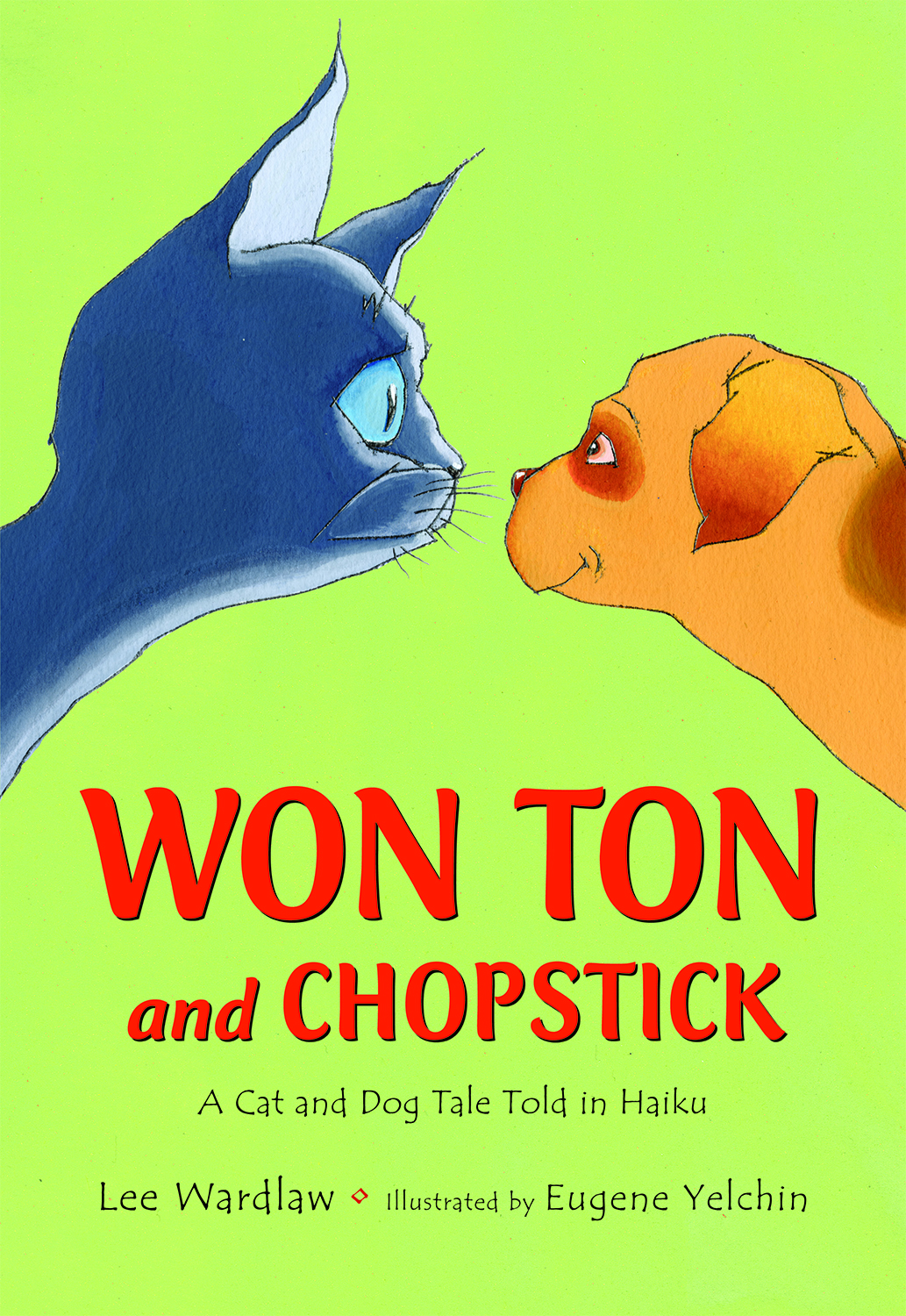
Won Ton and Chopstick: A Cat and Dog’s Tale Told in Haiku
Author: Lee Wardlaw
Illustrator: Eugene Yelchin
Published: March 17, 2015 by Henry Holt and Co. (BYR)

Goodreads Summary: Won Ton has a happy life with his Boy, until…
Ears perk. Fur prickles.
Belly low, I creep…peek…FREEZE!
My eyes full of Doom.

A new puppy arrives, and nothing will be the same.Told entirely in haiku and with plenty of catitude, the story of how Won Ton faces down the enemy is a fresh and funny twist on a familiar rivalry.

Ricki’s Review and Teachers’ Tools for Navigation: A Review in Haikus:

Quite Adorable
Fun for All, Especially
Middle Grade and Teen

Vocabulary
Will Teach the Crowds to Love Words
Fantastic Must-Read

Recommended for
Use as a Mentor Text for
Creative Writing

The Illustrations
Capture the Fun of this Tale
Or Should I Say Tail?

Kellee’s Review and Teachers’ Tools for Navigation: Well, Ricki sure one-upped me on this one! But I think she showed a really great example of what you can do with this book. I think it is a perfect introduction to haiku. It makes poetry accessible and fun which is the opposite of what students think when they think of poetry. I actually shared the first Won Ton book with my class at the time, and we wrote our own haiku about our favorite animal. Lee Wardlaw also includes very descriptive and specific vocabulary which would lead to a wonderful conversation about word choice and imagery.

I loved the first Won Ton book (see my review here), and I was happy to see that Lee Wardlaw had written a second so I could see what Won Ton was up to now. I am completely a cat person, so I love how Lee captures the nuances and thoughts of Won Ton.

Bonus Features: Activity Kit for Won Ton and Chopstick and Teacher’s Guide for Won Ton and Chopstick

Discussion Questions: How do the author’s haikus add to the complexity of this tale?; How does the vocabulary enhance the story?; What did you learn about friendship?; How do the illustrations enhance the themes of this book?; How does Won Ton’s feelings for Chopstick change throughout the book?

We Flagged: 

“Master of escape!
High-flying, dog-defying
acrobatic cat!”

Read This if You Loved: Won Ton by Lee Wardlaw; One Leaf Rides the Wind by Celeste Davidson Mannis; If Not for the Cat by Jack Prelutsky; I Haiku You by Betsy E. Snyder; Dogku by Andrew Clements

Check out Won Ton and Chopstick at the Other Stops the Blog Tour:
Mon, Mar 30
Library Fanatic
Tues, Mar 31
Kid Lit Frenzy
Wed, Apr 1
Teach Mentor Texts
Thurs, Apr 2
Sharpread
Fri, Apr 3
A Foodie Bibliophile in Wanderlust
Sat, Apr 4
Booking Mama
Mon, Apr 6
The Children’s Book Review
Tues, Apr 7
5 Minutes for Books
Wed, Apr 8
Cracking the Cover
Thurs, Apr 9
Unleashing Readers
Fri, Apr 10
Word Spelunker
Sat, Apr 11
Bermuda Onion
 Recommended For: 

readaloudbuttonsmall  classroomlibrarybuttonsmall

Author Guest Post:

“Eight Things I Learned from My Cats about Writing Haiku”

by Lee Wardlaw

1. There is no yesterday; there is no tomorrow. There is only you, scratching me under my chin right now.

Haiku poems focus on a right-this-instant experience—or from a memory of that experience. So remind your students to write in the present tense.

2. When poised at a hole, remain still—and use your ears, eyes, nose, whiskers and mouth to detect a lurking gopher.

Observation is crucial to haiku. It’s hard for children today to quiet their minds, especially when they’re constantly bombarded with TV, internet, iPhones, video games, etc. So take them outside, away from all of that! Encourage them to sit alone on the playground, under a tree, on a sunny bench, whatever, and use all five senses to absorb, appreciate, and anchor the moment.

3. Be patient. Then, when least expected—pounce!

Haiku captures ONE moment in time, revealing a surprise . . . or evoking a response of a-ha! or ahhh. This pounce helps the reader awaken and experience an ordinary moment or thing in an extraordinary way.

4. Most cats have 18 toes—unless we’re polydactyl; then we might have 20, 22, even 28 toes!

Japanese haiku feature a total of seventeen beats or sound units: five in the first line, seven in the second, five again in the third. But this 5-7-5 form doesn’t apply to American haiku because of differences in English phonics, vocabulary, grammar, and syntax. Too many teachers focus only on the 5-7-5 because they use haiku as lesson about syllables. Please don’t! When children force an unnecessary adjective or adverb (or a bunch of adverbs) into a haiku simply to meet the 17-beats rule, it ruins the flow, brevity, meaning, and beauty of a poem. It’s not a poem at all, just a laundry list. You end up with poems like this:

My cat is so cute.

He’s really, really, really

cute and so fluffy.

Encourage your students to experiment with any pattern they prefer (e.g. 2-3-2, 5-6-4, 4-7-3)—provided the structure remains three short lines. Remember: what’s most important here is not syllables but the essence of a chosen moment.

5. When I’m out, I want in; when I’m in, I want out. Mostly, I want out. That’s where the rats, gophers, lizards, snakes, bugs and birds are.

Traditional haiku focus on themes of nature, and always include a kigo or “season” word. This doesn’t mean you must be explicit about the weather or time of year. A sensorial hint (e.g. a green leaf indicates spring; a russet leaf indicates fall) is all that’s needed.

6. What part of meow don’t you understand?

Tease a cat and it won’t bother to holler—it will bite and scratch. It shows its annoyance rather than tells. Good haiku follows suit. Instead of explaining, haiku should paint a picture in the reader’s mind of the feeling it evokes. So encourage children to show the reader how cute and fluffy their cat is instead of just telling us.

7. If you refuse to play with me, I will snooze on your keyboard, flick pens off your desk, and gleefully shed into your printer.

Yes, haiku has “rules,” but remember to play! Encourage students to use words like toys, to frolic with them in new ways to portray images, emotions, themes, conflicts and character.

8. When in doubt, nap.

Good writing comes from revising. But before working on a second (or third . . . or fourth!) draft, both the students and their haiku need a “nap.” Set aside the poems for a few days (a few weeks is even better!). What needs revising will be much more obvious if the poems are read again with rested eyes, alert ears, and a fresh mind.

 About Lee Wadlaw:

Lee Wardlaw swears that her first spoken word was “kitty.” Since then, she’s shared her life with 30 cats (not all at the same time) and published 30 books for young readers, including Won Ton: A Cat Tale Told in Haiku, recipient of the Lee Bennett Hopkins Poetry Award and many other honors. Lee has a B.A. in Education, an AMI-Primary Diploma from the Montessori Institute of San Diego, and is finishing her M.Ed. in Education/Child Development. She lives in Santa Barbara with her family. http://www.leewardlaw.com

RickiSigandSignature

**Thank you to Barbara at Blue Slip Media for providing copies for review and giveaway!**
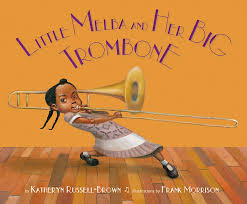
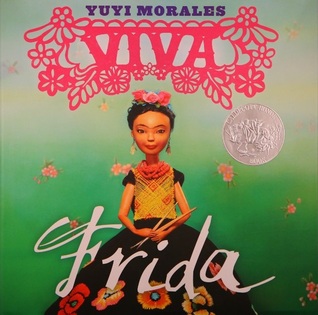
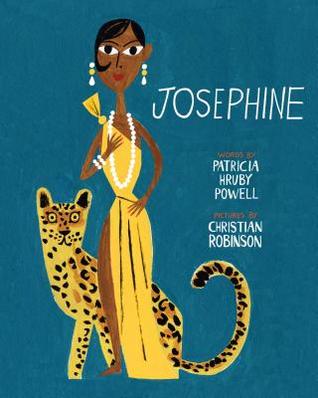
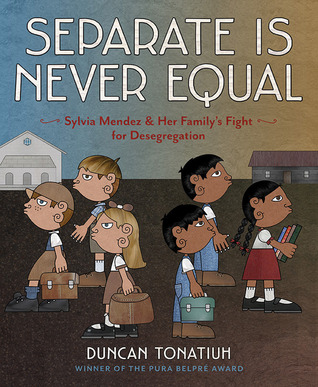
From Kellee’s (Huge) Library Pile Part Five: We Need Diverse Books (Nonfiction) | Little Melba and her Big Trombone by Katheryn Russell-Brown, Viva Frida by Yuyi Morales, Josephine by Patricia Hruby Powell, & Separate is Never Equal by Duncan Tonatiuh

Share

NFPB2015

Nonfiction Picture Book Wednesday

Nonfiction Picture Book Wednesday is hosted by Kid Lit Frenzy and was started to help promote the reading of nonfiction texts. Most Wednesdays, we will be participating and will review a nonfiction text (though it may not always be a picture book).
Be sure to visit Kid Lit Frenzy and see what other nonfiction books are shared this week!

From My (Huge) Library Pile

Because of It’s Monday! What Are You Reading? posts, I find myself often with huge piles of picture books from the library that were highly recommended by fellow bloggers. I celebrate many of the nonfiction pictures books on Wednesdays, but I want to share some of the fiction picture books I have enjoyed. So, I decided to start series here on UR where I can pass on the love for these books sporadically as I read them. Here is a list of some great pictures books that I’ve read recently from my huge library pile (part 5!).

When I was watching the ALA Book Award announcements, I realized that there were many that I had not read, so I immediately ordered them from my library. While reading, I was so happy to see so many diverse picture books (fiction and nonfiction) winning awards. This week I wanted to highlight the picture books I read that were full of diversity. Today I will share the nonfiction titles, and on Friday I will share the fiction titles. 

littlemelba

Little Melba on her Big Trombone
Author: Katheryn Russell-Brown
Illustrator: Frank Morrison
Published September 1st, 2014 by Lee & Low Books
2015 Coretta Scott King for Illustrator Honor

I know I have said this before, but I love the trend of writing picture books about strong woman who should be well known because of their brilliance. Melba Liston is an inspiration. What I loved most about this book is that I think it captured Melba’s spirit as well as the rhythm of the music. The lively oil paintings mixed with Melba’s amazing story make you feel like you know her by the end of the book. I was excited to read the back matter to learn more, and immediately went to You Tube to hear some of her music. I am so glad I was introduced to her.

vivafrida

Viva Frida
Author: Yuyi Morales
Photographer: Tim O’Meara
Published September 2nd, 2014 by Roaring Brook Press
2015 Caldecott Honor, Pura Belpré (Illutrator) Honor

Frida Kahlo is such a mysterious woman. Usually through an artist’s work, you feel like you get to know them, but through Frida’s work, I always felt like she became even more of a mystery to me. This book just adds to that mystery. Told in small phrases in Spanish and English, the books explores creativity and imagination more than it explores Frida’s life. But oh, what an exploration into imagination and creativity it is. We go on a journey with Frida to create a piece of art which is what she lives for, and it makes you, the reader, want to go create so you can live. The beautiful photographs bring Frida, Diego, and many of Frida’s animal friends to life. They are superb!

Josephine

Josephine: The Dazzling Life of Josephine Baker
Author: Patricia Hruby Powell
Illustrator: Christian Robinson
Published January 14th, 2014 by Chronicle Books
2015 Sibert Honor, Coretta Scott King Award for Illustrator Honor

This is quite the book! When I ordered it, I hadn’t realized that it was illustrated chapter book biography, but after learning about Josephine, I can see why she couldn’t be confined to less pages. Her life is an explosion of adventure from running away at 13 to standing up for her civil rights to spying for France during WWII to adopting her “rainbow tribe.” Like Melba, Josephine was a new name for me, but I cannot believe I hadn’t heard of her before. She is the epitome of strength and was a large part of the civil rights movement. I am so glad that I read this picture book that truly captures her spirit through the rhythmic prose and colorful, lively illustrations.

SeparateisNever

Separate is Never Equal: Sylvia Mendez and Her Family’s Fight for Desegregation
Author and Illustrator: Duncan Tonatiuh
Published May 6th, 2014 by Abrams Books for Young Readers
2015 Sibert Honor, Pura Belpré (Illutrator) Honor

Everyone has heard of Brown v. Board of Education, but Sylvia’s case is the predecessor of desegregation in the United States. After Sylvia and her siblings are denied entry into the school they are zoned for, even though they are American, and are sent to the “Mexican school,” Syvlia’s father goes on a mission which leads him all the way to the California Court of Appeals to ensure that his children get the best education possible. I loved that through all of the trials of the Mendez family, they never lost their dignity and grace. They are truly an inspiration This is a book that every teacher and child should read because the Mendez family should be a household name, and it looks at equal accessibility to education which is still relevant today.

What picture books should I add to my pile next?

Signature

Want to see Part One? You can view it HERE.
Want to see Part Two? You can view it HERE.
Want to see Part Three? You can view it HERE.
Want to see Part Four? You can view it HERE.

Top Ten Tuesday: Characters We’d Like to Check in With

Share

top ten tuesday

Top Ten Tuesday is an original feature/weekly meme created at The Broke and the Bookish. The feature was created because The Broke and Bookish are particularly fond of lists (as are we!). Each week a new Top Ten list topic is given and bloggers can participate.

 Today’s Topic: Top Ten Characters We’d Like to Check in With

We are still thinking about these guys/gals and would love to hear back about how they are doing.

Ricki

1. Hazel from The Fault in Our Stars by John Green

Gosh, I think about this girl weekly. I feel deeply connected to her and would love to hear how she is doing, emotionally and physically.

2. Violet from All the Bright Places by Jennifer Niven

It hasn’t been too long since I finished this book, but I would love to hear how Violet is doing. She is brave, so I am sure she is doing just fine, but just as I would call an old friend, I feel the desire to give Violet a ring.

3. Tyrell from Tyrell and Bronxwood by Coe Booth

Tyrell is one of my all-time favorite characters. He has strength beyond compare. I’d love to hear how things are going with him.

4. James Whitman from Dr. Bird’s Advice for Sad Poets by Evan Roskos

This book belongs in every classroom. And an update about James belongs in my life.

5. Junior from The Absolutely True Diary of a Part-Time Indian by Sherman Alexie

Junior taught me a lot of life lessons. I’d love to talk to him to thank him and hear how he is doing.

Kellee

I made this list without looking at Goodreads, so these the characters that I really wonder about. I think it is interesting that they are all young ladies in “quiet” middle grade books. It just shows how great the characterization was in these book.

I did think about putting Hazel from TFioS, but I saw Ricki had her (I love everyone on Ricki’s list by the way!). I also considered Ron/Hermoine/Harry and Eleanor/Park, but I assumed they’d be on many lists. But I would love to check in on them.

I did struggle with writing blurbs for each of these because I can’t give away spoilers!!

1. Willow Chance from Counting by 7s by Holly Goldberg Sloan

Oh Willow. She is just beginning to heal when the book ends. I really want to know what she is up to and whose life she is changing now.

2. Marlee from Lions of Little Rock by Kristin Levine

Do Marlee and Liz get to be friends?!?!

3. Carley from One for the Murphy’s by Lynda Mullaly Hunt

I’ll be honest. I did not like how this book endeD because I selfishly wanted something end. I did not feel like it was the “happily ever after” that I wanted. But it is the way it is (which was super real). I would love to check in with Carley to find out if everything is going better than I assume it is.

4. Ally and everyone from Fish in a Tree by Lynda Mullaly Hunt

I almost felt like the end of Fish in a Tree was a beginning of another book. I would love to know how Travis, Ally, Keisha, Albert, and, of course, Mr. Daniels are doing.

5. Fern from See You At Harry’s by Jo Knowles

I just want to know how Fern and her family are doing.

Which characters would you like to check in with?

RickiSig and Signature

It’s Monday! What Are You Reading? 4/6/15

Share

IMWAYR

It’s Monday! What Are You Reading? From Picture Books to YA!

It’s Monday! What are you Reading? is a meme hosted by Sheila at Book Journeys. It is a great way to recap what you read and/or reviewed the previous week and to plan out your reading and reviews for the upcoming week. It’s also a great chance to see what others are reading right now…you just might discover the next “must-read” book!

Jen Vincent, of Teach Mentor Texts, and Kellee decided to give It’s Monday! What Are You Reading? a kidlit focus. If you read and review books in children’s literature – picture books, chapter books, middle grade novels, young adult novels, anything in the world of kidlit – join us! We love this meme and think you will, too.

We encourage everyone who participates to support the blogging community by visiting at least three of the other book bloggers that link up and leave comments for them.

Last Week’s Posts

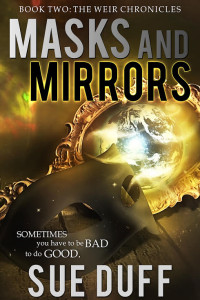
top ten tuesday babe ruth ted williams henry aaron pedro must-read-2015-logo girls like us fade to black Book Cover - Masks and Mirrors

Tuesday: Ten Books We’ve Recently Added to Our To-Be-Read Lists

Thursday: #MustReadin2015 Spring Update

Sunday: Author Guest Post by Sue Duff, Author of Fade to Black and Mask and Mirrors

**Click on any picture/link to view the post**

 Last Week’s Journeys

Kellee: I have had a pile of picture books from the library to read for weeks, so I decided that this week would be when I read them. ALL of them were wonderful. Not a bad one in the bunch! You’ll see below that I am going to review nine of them this week because I was so happy with the diversity I found in these picture books, and I’ll blog about many of the others in the weeks to come. The picture books I read were:

  • Winter Bees and Other Poems of the Cold by Joyce Sidman
  • Butterfly Park by Elly MacKay
  • H.O.R.S.E: A Game of Basketball and Imagination by Christopher Myers
  • Separate is Never Equal: Sylvia Mendez and Her Family’s Fight for Desegregation by Duncan Tonatiuh
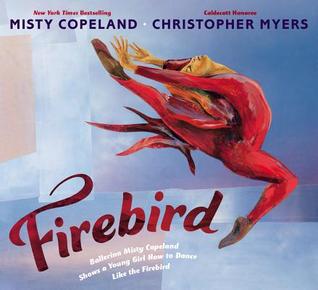
  • Firebird by Misty Copeland
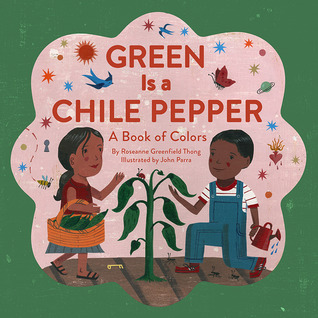
  • Green is a Chile Pepper: A Book of Colors by Roseanne Thong
  • Won Ton and Chopstick: A Cat and Dog Tale Told in Haiku by Lee Wardlaw
  • By Mouse and Frog by Deborah Freeman
  • The Adventures of Beekle: The Unimaginary Friend by Dan Santat
  • The Sky Painter: Louise Fuertes, Bird Artist by Margarita Engle
  • Josephine: The Dazzling Life of Josephine Baker by Patricia Hruby Powell
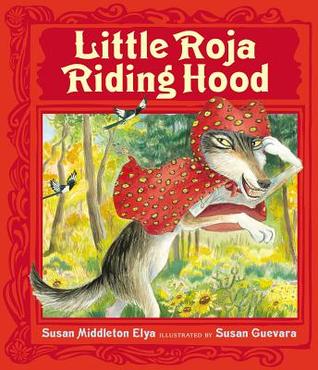
  • Little Roja Riding Hood by Susan Middleton Elya
  • Viva Frida by Yuyi Morales
  • Little Melba and her Big Trombone by Katheryn Russell-Brown
  • Wolfie the Bunny by Ame Dyckman

I also finished two novels this week. First, I read Hunt for the Bamboo Rat by Graham Salisbury which is an interesting look at World War II from a Japanese-American from Hawaii working for the army in the Phillipines. It is a WWII story like none other that I have read. It was also my first Graham Salisbury work, and I know I need to read more as he sure know how to craft a story. I also finished the early chapter book Cody and the Fountain of Happiness by Tricia Springstubb. Ever since Tricia did a guest post here and on Nerdy Book Club, I knew I wanted to read her work, and I am so happy that I was able to read Cody. Readers of Mercy Watson, Junie B. Jones, Bramble and Maggie, and other stories of rambunctious young ladies are going to find a friend within these pages.

Ricki: Henry and I spent some quality time in the library. I picked up several books to read to him, but two stood out most. King for a Day by Rukhsana Khan tells the story of Basant, a holiday to celebrate the arrival of spring, and is set in Pakistan. I loved the beautiful kites and appreciated that the author didn’t make the character’s disability the main focus of the story. If I still taught high school, I would definitely use this book while I taught The Kite Runner. We also enjoyed Please, Mr. Panda by Steve Antony. I’ve seen this one pop up on many blogs, and I finally found a copy. I thought it was charming and will definitely be using it to discuss manners with my son. 🙂

This Week’s Expeditions

Kellee: I am almost done with Five, Six, Seven, Nate by Tim Federle. I adore these books, and the audiobooks make them even better. I do hope that there is going to be a third. I also plan on reading Say What You Will by Cammie McGovern and Fake Snakes and Weird Wizards (Here’s Hank #4) by Henry Winkler and Lin Oliver.

Ricki: I am embarrassed at how far behind I have gotten in my reading. In four weeks, when school ends, I can’t wait to dive in. I know I say this every week. Anyways, I have been reading several books about discourse analysis. I didn’t post them here because I don’t want to bore you. I am fascinated by the ways we use discourse in subtle ways to reveal thinks like our figured worlds. Don’t worry, I will read some awesome YAL or picture books next week to fill the gaps. Some of you are saying, “Thank goodness I have Kellee because I can’t comment on this Ricki lady’s stuff.”

Upcoming Week’s Posts

top ten tuesday vivafrida SeparateisNever Josephine littlemelba WON TON AND CHOPSTICK cover greenisachile littleroja Firebird HORSE

Tuesday: Characters We’d Like To Check In With

Wednesday: From My (Huge) Library Pile Part Five: We Need Diverse Books (Nonfiction)

Thursday: Blog Tour and Author Guest Post!: Won Ton & Chopstick: A Cat and Dog Tale Told in Haiku by Lee Wardlaw

Friday: From My (Huge) Library Pile Part Six: We Need Diverse Books (Fiction)

 So, what are you reading?

Link up below and go check out what everyone else is reading. Please support other bloggers by viewing and commenting on at least 3 other blogs. If you tweet about your Monday post, tag the tweet with #IMWAYR!

 Signature andRickiSig

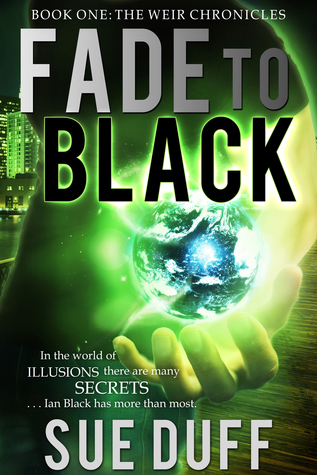
Author Guest Post!: Sue Duff, Author of Fade to Black and Masks and Mirrors

Share

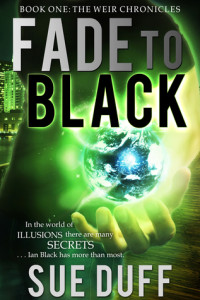
 fade to black Book Cover - Masks and Mirrors

Fade to Black and Masks and Mirrors, Books One and Two from the Weir Chronicles series
Author: Sue Duff
Release Date: April 2, 2015

Masks and Mirrors Summary:  Ian Black’s commitment to safeguarding Earth has come at a price. His career as an illusionist is at a standstill and attending to the planet’s needs has distanced him from his best friend, his guardians, and the woman he loves. When presented with an opportunity to perform, Ian seizes the chance. But moments before he takes the stage, Ian encounters the mysterious Jaered and a rebel force fighting to protect Earth alongside the Weir.

Jaered is determined to stop a malevolent Weir from releasing a drug capable of wiping out the last vestiges of their race and plunging Earth into self-destruction. But when Jaered is willing to sacrifice an innocent child to obtain the drug for himself, Ian risks everything to uncover the secrets of the rebel forces and their true intentions for Earth’s survival.

Cross-Curricular Activity: This book is purely fictional, but the author has based the Weir powers on earth and space physics. The ability to “shyft” comes from the parallax effect, healing from complex matrix, etc. Vortexes are real and found scattered across our planet. The energy from the sun nourishes us, much like it does the core of the Weir Sars.

Class Activities:  

1. Discuss this premise from the novel: “What is science if not the knowledge to see magical things in a different way? The only aspect that separates the two—is time.”

a. What do you think the author means by that?

b. Do you agree that science will eventually explain all of the mysteries in the universe?

c. Name something that was thought of as “magic” centuries earlier, but has scientific basis today?

d. What is a mystery of our universe that still exists today? Where would you begin to find a scientific explanation?

2. The overall premise of the novel is that magical beings exist, but as their race de-evolves, they turn to modern science to find a way to combat it in order to perpetuate their existence.

a. What are ways that humans fight to survive? Animals? Plants and vegetation?

b. What scientific discoveries have helped mankind to survive? Animals? Plants and vegetation?

c. Do you agree with the premise that all that roams the surface of the planet is interconnected? If so, what does it mean to live in harmony?

3. The Weir believe that what happens below the surface of Earth affects what happens above it.

a. Name the different energies that come from the “inner workings” of our planet.

b. What energies do we derive from the solar system?

c. Do you believe that humans can effect change to weather? Control earthquakes? Hurricanes? If not now, in the future? If so, debate the good and harm that could come from that.

4. The protagonist, Ian Black, didn’t develop the combined Weir powers as the Weir prophesy predicted, so he turned to illusions as a way to cope.

a. Name a power you wish you had. Why? How would you use it?

b. What special talent or gift do you have? How and when do you use it?

c. If you could control something in the natural world (animal behavior, various forms of weather, plants, etc.) what would it be? Why? How would you use it?

Book Passage: 

“Did you know about the experiments going on at QualSton?” Ian asked.

Galen’s steps slowed. “I’ve suspected. Not just there but at other Weir facilities around the world.”

“What they did to those creatures, all in the name of science. That’s not the Weir way.”

“Our race is dying, Ian. It’s a bitter pill for powerful men to face extinction. When your powers turned out less than predicted you became a living symbol of the Weir’s mortality,” Galen said. “They’re counting on science to give them a second chance.”

“DNA strands for Channeling. The Weir aren’t so magical after all,” Ian said.

“What is science if not the knowledge to see magical things in a different way? The only aspect that separates the two—is time.” Galen opened Ian’s bedroom door and it swung wide into the room. “There will always be magic as long as we believe in what we don’t understand.”

“I shot energy out of my hand.” Nauseous, Ian stopped short at sharing what it did to the back of a man’s head. He swallowed hard, but the horror at taking a life lodged in his throat.

“In modern day, it’s called a Core Blast but known a few centuries ago as the Dragon’s Breath,” Galen said, sliding into a lecture like a pair of slippers. “Its source is the central core of the earth.”

“It felt like getting shot with a lava mud pie,” Ian said and grabbed the jamb of his bedroom door to steady himself.

“The moment it hits, if not fatal, it absorbs some of the victim’s own core energy and renders them temporarily powerless. In medieval times, Dragon Breath Sars were quite coveted for battle.”

Ian stepped into the room and leaned against the dresser, unwilling to return to his bed any sooner than he had to. It felt good to be on his feet in spite of the unsteady gait.

Sue Duff

About the Author: Sue has been writing since high school but never became serious about it until a skiing accident laid her up for an entire summer and she turned on the word processor to combat the boredom. A couple years later, her first urban fantasy novel, Fade to Black, was a finalist in the RMFW Colorado Gold Writing Contest. By day, she’s a dedicated speech-language therapist in an inner city school district to pay the bills but her life as a writer is her true passion and the creative outlet keeps her sane.

Sue is a member of the Rocky Mountain Fiction Writers and The Pikes Peak Writers. Her creativity extends into her garden and the culinary arts. She is the second oldest of six girls with an avid reader mom and her dad, the family’s single drop of testosterone in a sea of estrogen. Fate thought it hilarious to give her a son but maternal instincts swing both ways and she didn’t break the little bugger. She lives in Colorado with her miniature dachshund, Snickers and hears from her son, Jonathan whenever he needs something.

To get the latest news, updates on events or the scoop on future novels in The Weir Chronicles series, subscribe to her email list.

You can find Sue online through the following links:

Author WebsiteFacebook (Author Page), Facebook (for the Series), TwitterGoodreadsVirtual Tour Page

**Thank you to Sue Duff for this guest post, and thank you to Samantha Lien for connecting us!**
RickiSig andSignature

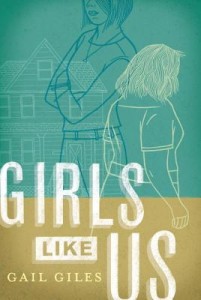
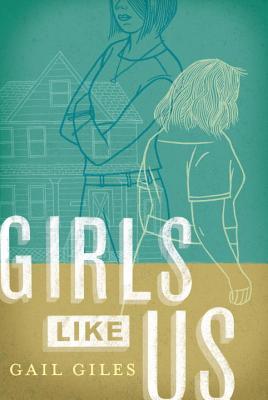
Girls Like Us by Gail Giles

Share

girls like us

Girls Like Us
Author: Gail Giles
Published May 27th, 2014 by Candlewick Press

Goodreads Summary: With gentle humor and unflinching realism, Gail Giles tells the gritty, ultimately hopeful story of two special ed teenagers entering the adult world.

We understand stuff. We just learn it slow. And most of what we understand is that people what ain’t Speddies think we too stupid to get out our own way. And that makes me mad.

Quincy and Biddy are both graduates of their high school’s special ed program, but they couldn’t be more different: suspicious Quincy faces the world with her fists up, while gentle Biddy is frightened to step outside her front door. When they’re thrown together as roommates in their first “real world” apartment, it initially seems to be an uneasy fit. But as Biddy’s past resurfaces and Quincy faces a harrowing experience that no one should have to go through alone, the two of them realize that they might have more in common than they thought — and more important, that they might be able to help each other move forward.

Hard-hitting and compassionate, Girls Like Us is a story about growing up in a world that can be cruel, and finding the strength — and the support — to carry on.

My Review: While reading this book, I had no question that it deserved the Schneider Teen Award. The Schneider Family Book Award honors a “book that embodies an artistic expression of the disability experience for adolescent audiences,” and Girls Like Us take us into Quincy and Biddy’s worlds as they learn to transition from a special-ed classroom in high school to real life in such a true matter, it definitely meets the criteria for the award. In many ways, the book is like any book about girls who just graduated from high school: learning to live with a roommate you don’t understand, learning to be responsible, etc. However, the challenges that these young ladies face because of their disabilities  puts the book on a whole different level. Although the book is primarily about Quincy and Biddy’s life, it does illuminate some serious issues towards the treatment of differently abled individuals. (P.S. I love the ending very much!)

There is so much to talk about with this book! Because it impacted myself and a few of my friends, we decided to have a Twitter chat focused around it (#GLUChat). If you have read the book (because there are spoilers) check out our conversation: https://storify.com/trkravtin/girls-like-us-twitter-chat. Thank you to Teresa for archiving and Michele, Carrie, Alyson, and Leigh for taking part in it with me!

Teachers’ Tools for Navigation: The characters in this book are so complex! Even the secondary characters are fleshed out and have a presence. Girls Like Us is a wonderful example of character building and voice and how that can make (or break) a novel. It is especially fascinating to compare the voice and tone of the two girls’ sections. Extremely well crafted.

Discussion Questions: How do Quincy and Biddy complement each other?; How does Miss Lizzy help Quincy and Biddy overcome the challenges they face leaving school?; How did you (and Miss Lizzy) underestimate Quincy and Biddy? Why did you/she do so?; If you were going to record your feelings like Biddy and Quincy do, what would your recording say?; Did you predict why Biddy didn’t like males correctly? Did you predict the ending?

We Flagged: “My name is Biddy. Some call me other names. Granny calls me Retard. Quincy call me White Trash sometimes and Fool most of the time. Most kids call me Speddie. That’s short for Special Education.

I can’t write or read. A little bit, but not good enough to matter. There’s a lot of stuff I don’t know. If I could write I could make a long list. List might reach lal the way through Texas to someplace like Chicago. I don’t know where Chicago is. That’s another thing for the list.

But there’s some things I do know. And once I know a thing, I hold it tight and don’t let it stray off. Granny shouldn’t call me Retard. I know that. It ain’t nice. It hurts my feelings. I know it’s a wrong thing to hurt somebody’s feelings. I know that I ain’t White Trash. Trash is something you throw away. You don’t throw nobody away. That’s wrong. Even if my mama done it to me.” (p. 1)

Recommended For: 

classroomlibrarybuttonsmall

Signature

Kellee and Ricki’s #MustReadIn2015 Spring Update!

Share

must-read-2015-logo

Background of #mustreadin2015 for those of you who missed the introductory post:

#mustreadin2015 is a challenge hosted by Carrie Gelson at There Is A Book For That:

“For anyone out there with a To Be Read list that seems like it will never end, this challenge is for you! This is all about making your own personal list of books (5? 10? 20? 30? more?) that you commit to reading in 2015. Books can be published in any year, be from any genre, and be from any category (adult, YA, MG, Graphics, NF, etc.).  As your TBR list grows, you promise you will get to the books on this list.”

These are our hopeful lists. Many are books we’ve been wanting to read for a long time, while others are books we just really want to read as of right now (January 2015), and lastly, some are books we really need to read because we’ve promised someone (or each other). Primarily, we included young adult and middle grade books because they are what we are going to try to read more of this year. As Carrie said, we will absolutely be reading many books not on this list! And don’t worry, we will still be reading the latest and greatest picture books to our boys.

Our full #mustreadin2015 book lists are available here

Ricki’s #mustreadin2015 Spring Update

 Completed as of April 2: 5 out of 25

I am a bit farther behind than I would like to be, but I know I am going to skyrocket ahead this summer. I have been reading books outside of my list (e.g. books for The ALAN Review), but I am back on track. I just started my 6th book this week, and I moved a few others to my nightstand. That is the first step, right? I’ve loved every book I read, and they ALL lived up to their respective hypes, so I am pretty happy I committed to this challenge.

audacity dreaming in indian _206890SchEsperanza_0.tif

how it went down secret hum of daisy

*Please click the book covers above for full reviews.*

I loved the bravery and dogged determination of Clara in Audacity by Melanie Crowder. This book in verse impacted me in ways I cannot describe. It made me feel a sense of feminism and strength while teaching me about labor unions and the Orthodox Jewish faith. It belongs in classrooms, and it will empower young women.

Dreaming in Indianedited by Lisa Charleyboy and Mary Leatherdale, brims with stunning illustrations, photography, artwork, and words. The voices of the young people within this book will stick with me forever. It shows the connectedness of Native Americans while also showing the distinctness of tribes.

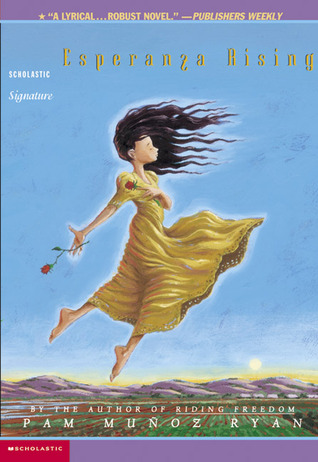
I wish I had written a full review for Pam Muñoz Ryan’s Esperanza RisingAt the time, I decided I would skip a lengthy review because many of the readers of this blog have likely read it. How silly of me! I am disappointed in myself because this was an unbelievable book that deserves a full review—regardless of how old it is. I got lost in Esperanza’s story–it is a book that kids will read and not realize how much they are learning because the story is so compelling.

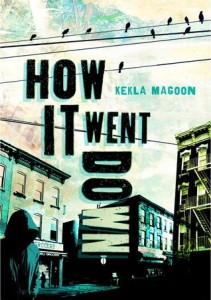
Everyone seems to be talking about Kekla Magoon’s How It Went Down—and for good reason! Each chapter is short (a few pages) and the narrators shift as they tell about the shooting of a teenager. The reader is suspended in a feeling of disbelief as s/he tries to navigate the truth. It feels quite realistic to recent news stories which have horrified America—Treyvon Marton, Michael Brown, and many other young Black men. This would make for a great conversation starter in classrooms.

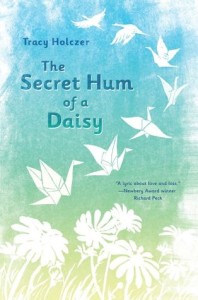
I asked my book club to read The Secret Hum of a Daisy by Tracy Holczer, and all four of us fell in love with the story. It is a quiet book about a young girl who loses her mother. Readers travel through a gamut of emotions while reading this book and experience the stages of grief right along with the narrator. This is an important book that would be a great resource for many teachers.

Kellee’s #mustreadin2015 Spring Update

Completed as of April 2: 9 out of 25

It seems like I am right on track to finishing my 25 books, and the best part is that I have enjoyed every single one.

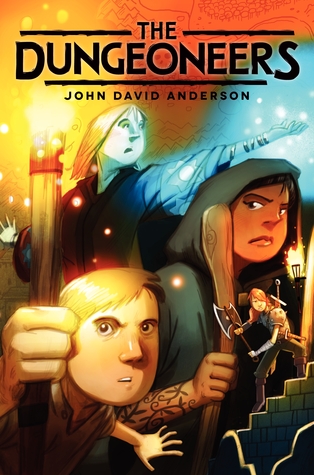
never fall down the lions of little rock dungeoneers

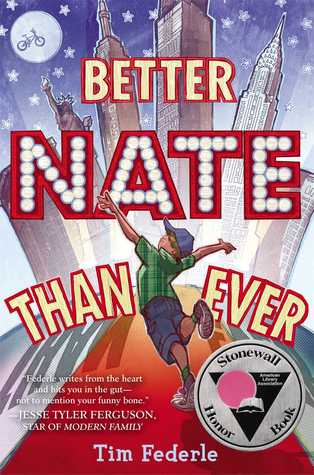
betternate howtospeakdolphin secret hum of daisy

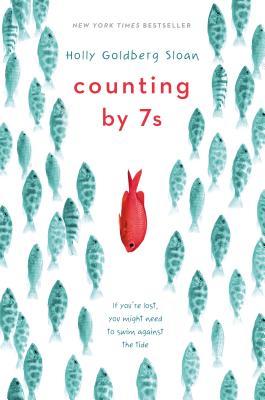
counting by 7s strangelibrary gabit

I am so glad that Ricki told me I needed to read Never Fall Down by Patricia McCormick. It is one of those books that sticks with you after you finish it, and you cannot help but talk about. I find myself mentioning it at least once a week in my classroom. It wrecks your heart. I am also so glad I learned about the Cambodian genocide. It makes me a better person. (Full review)

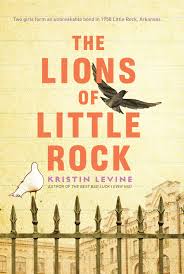
Lions of Little Rock by Kristin Levine is a book that I have been meaning to read since it came out, and I am so glad that I finally did. It is a different look at integration in the south during the late 50s. I got so invested in the story and was lucky enough to be reading the book at the same time as a student. It was so much fun to discuss it with her.

I loved Anderson’s novel Sidekicked, so when I read about The Dungeoneers by John David Anderson, I knew that I had to get my hands on it. It is a story filled with adventure, suspense, and mystery. I love that the main characters are underdogs and easy to connect with. I cannot wait to share my full review as it gets closer to the publication date.

Oh. My. Goodness. I love this book so much! I just finished it, and I immediately had to read the second one. Better Nate Than Ever by Tim Federle is more than just a funny book about a young boy auditioning for a Broadway musical. It is about a boy who doesn’t feel like he fits in at home because of who he is. There are so many young kids out there that will connect with this feeling. And the prejudice and bullying that Nate faces is so real for so many. However, this book has hope. He finds something he loves and it helps him find a place to be himself.

Ginny Rorby has written five novels, all of which I have loved. Her newest, How to Speak Dolphinlike her others deals with both animal and human issues. This book looks at autism, blindness, animal captivity, and much more–all important issues, but her book never feels like it is overloaded. Fans of Rules by Cynthia Lord will definitely love this one. (Full review)

Like Ricki said above, The Secret Hum of a Daisy by Tracy Holczer is a book that will definitely pull at your heart strings and become a favorite. It is an intense look at grief and family. (Full review)

Counting by 7s by Holly Goldberg Sloan‘s Willow Chance is one of the most amazing young woman I’ve ever encountered in a book. She is brilliant and somehow changes the lives of every person she encounters. And she is not the only well-crafted character in the book–everyone in the book is important and very well developed. This is a wonderful middle grade book that I now know why so many people love it.

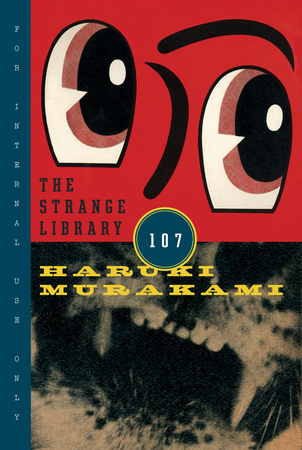
My brother and father love Haruki Murakami‘s novels, so when a special edition novella came out, my mom got a copy for me and I got one for my brother and father. I am happy I read The Strange Library, so I can now see what the fuss is about. Murakami’s writing is riddled with metaphors and imagery. Although I still don’t know if I understand it all, it was quite interesting.

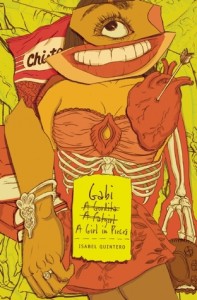
The voice of Gabi in Gabi, A Girl in Pieces by Isabel Quintero is one of the best in any YA I’ve read recently. She is so real, and I found Gabi to be a book that so many teens will connect with. I not only loved the truth in her story, I adored the unique format  and the cast of characters. (Full review)

Do you have a #mustreadin2015 list?
What are your #mustreadin2015 books?
Share your update below!

Signature andRickiSig