Review, Signed Hard Copy Giveaway, and Author Interview: Invisible Fault Lines by Kristen-Paige Madonia

Share

Invisible Fault Lines

Invisible Fault Lines
Authors: Kristin-Paige Madonia
Anticipated Publication: May 3, 2016 by Simon & Schuster Books for Young Readers

Summary: Tired of living in limbo, Callie finally decides to investigate her father’s disappearance for herself. Maybe there was an accident at the construction site that he oversaw? Maybe he doesn’t remember who he is and is lost wandering somewhere? But after seeing a familiar face in a photo from the Great San Francisco Earthquake of 1906, she wonders if the answer is something else entirely.

Hailed by Judy Blume as a “remarkable young novelist,” Kristen-Paige Madonia, author of Fingerprints of You, explores how to rebuild a life after everything seems lost.

My Review: This book kept me guessing! From the very first page, I wondered what happened to the narrator’s father. About halfway through, I realized that it didn’t matter what happened to him because this is a story about character. It is an emotional ride through the trauma of a young girl’s life after her father goes missing. I felt all of her emotions right along with her—guilt, fear, anger. I particularly enjoyed the evolvement of her friendship with her best friend Beckett. I appreciate authors who feature characters who happen to be gay—rather than making this the sole focus of a story. I recommend this book to readers who enjoy strong character development. 

Teachers’ Tools for Navigation: Teachers might consider tying this story into a study of missing persons. This investigation could go beyond children as missing persons and extend into adults who are missing. Students might research local missing persons in their area, and this could lead to advocacy efforts.

Discussion Questions: What do you think happened to Callie’s father? What different potential realities does Callie explore in the story?; How does the author switch the point-of-view effectively to deepen our understanding of the story?; What emotions does Callie experience in the story? How might we tie these into the stages of grief? Should she feel guilty that she doesn’t start looking for her father immediately? Why or why not?

Flagged Passage: “My father disappeared on a Tuesday that should’ve been like any Tuesday, but eventually became the Tuesday my father disappeared.”

Read This Series If You Loved: Fingerprints of You by Kristen-Paige Madonia; If I Stay by Gayle Forman; Vanishing Girls by Lauren Oliver; Where Things Come Back by John Corey Whaley, The Body of Christopher Creed by Carol Plum-Ucci

Recommended For: 

  litcirclesbuttonsmall  classroomlibrarybuttonsmall


Interview with Kristen-Paige Madonia
Kristen-Paige Madonia

Can you tell us a little bit about your writing process/ How has writing this book been different from writing Fingerprints of You

The most important thing I learned from writing Invisible Fault Lines is that my process will inevitably change depending on the project. My first book, Fingerprints of You, was a fairly straightforward novel with a traditional structure and timeline, so I wrote it start to finish and was able to create the first draft in less than two months — of course it took much longer to revise and polish, but in general is was quick and relatively easy to write. My new novel is much more complicated, as it blends a contemporary mystery set in 2006 with bits and pieces set one-hundred years earlier, as the 1906 San Francisco Earthquake plays a large role in the novel. It’s a hybrid novel, and the narrative arc is a bit more intricate, so though I initially tried to use the same process I used when writing Fingerprints of You, it just didn’t work. Eventually I wrote the book out of order and then went back, during revision, and braided the two storylines together. So in terms of process, I suppose it’s ever changing! And of course that’s one of the reasons that I write – there are no rules and there’s no one way to do it. It’s about experimenting, about doing something different each time you sit down to work.

Where/How did you come up with the premise of this book? 

Like most writers, I write from a place of curiosity. With Fingerprints of You, I was curious about the ways we define family, but this novel stemmed from my curiosity about grief and the various modes we use to manage and process loss. I began writing it after hearing David Levithan read from his novel Two Boys Kissing, specifically honing in on the sentence that eventually became the epigraph of Invisible Fault Lines: “How beautiful the ordinary becomes once it disappears.” We were both at Wordstock Book Festival in Portland, and I was in between projects, hoping to find inspiration while traveling to publicize Fingerprints of You. And there it was. That line. I couldn’t get it out of my head. I tend to begin stories with an event after which nothing will be the same for the character, and that idea of ordinary, of how our version of ordinary can shift in an instant, intrigued me. So I wanted to write about that kind of shift and about the possibility of the impossible being possible, which is where the link to the historical event, the earthquake of 1906, originated. I knew I wanted to do something completely different than Fingerprints of You and that I wanted to experiment with form and genre while staying true to my character-driven style of writing.

From the outset, we wonder what happened to Callie’s father, and at one point, Callie and her friends explore potential reasons for his disappearance. We obviously won’t spoil the book for readers, but did you know how the book would end from the very beginning?

I did. I knew that I wanted to invite the reader to participate in the novel in a more active role than my last novel allowed. I believe all books are collaborative projects between the author and the reader, but this novel leans heavily on what the reader brings to the story, on what they want to believe and how they want to interpret the events in the book. When I first imagined the story, I decided that I wanted to write a book that honors the fact that not all questions have clear answers – I think it’s part of our job, as YA authors, to be realistic and honest with our readers while also allowing for and portraying hope, so that was one of my original goals, and it inevitably shaped the ending.

Beck is a wonderfully crafted character. Did you base him on anyone in your life?

Oh, he’s such a scene-stealer, isn’t he?! Every time he showed up in the novel, I fell a little bit more in love with him. No, he’s not based on anyone I know, but I imagine him to be a compilation of my best friends from high school and also my current best friends: honest, hilarious, and one-hundred percent golden-hearted.

You are a professor of YA Lit and creative writing. How has this impacted your position as an author or thoughts as a writer? Do you get feedback from students, or do you keep your work private?

This is such a complicated question, so in attempt to not write a fifteen-page essay here, I’ll simply say that I love what I do. I find great inspiration from working with students who hope to pursue a creative life, who find value in literature and the arts. But the reality is that every moment I spend teaching and planning and grading is one less moment that I spend writing my own work, and that’s the hard part. Teaching reminds me why I write and what my tools are in terms of craft, and actively publishing new work reminds me how important it is to be a positive literary citizen, to serve as a mentor and encourage and inspire young authors. It’s a hard balance, of course, but it’s also a privilege to be both a professor and a published author, so I could never complain about the challenges.

Are you working on anything new?

I am! And I’m in that bizarre and dreamlike phase of being equally terrified and excited by my new project. It’s also a protective phase in terms of not wanting to talk much about it yet, but I will say that it’s a project based on my curiosity about our reliance on technology and the environmental and creative effects of that reliance.

Thanks so much for having me on your blog – it’s been lovely to visit with you!


**Thank you to Kristen-Paige Madonia for providing an copy for review and a signed hard copy for the giveaway!**

 RickiSig

Author Guest Post!: “Reading the Middle Grade Mind” by Sally Barlow-Perez, Author of The Unintended Runaways

Share

“Reading the Middle Grade Mind”

Have you ever tried to steer one of your favorite kids toward one of your favorite books? You’re in eager enthusiasm mode. “Hey, you are going to LOVE this book!”

Then the kid rears back, looks like you asked him to drink a glass of hot chalk, gives you that look, and says, “Uh, thanks, but I don’t think so.”

Just like adults, kids pick books for their own reasons. And timing is everything. One week a reader might feel like something light that reflects familiar problems like, The Mother Daughter Book Club series; the next week he or she might relish the challenges of Wonder or maybe a visit to a whole to universe in The Lightning Thief or something as wacky as one of the Wimpy Kid books. It all depends on mood, just like it does with you and me. Or stress level. Or time availability. I’ve seen a 9-year old read and enjoy a Babysitter Club book – standard 3rd grade level reading—during a school week, and Wonderstruck— 5thgrade level reading–on her vacation. Makes sense. You and I don’t read Dostoevsky when we barely have time for lunch. Middle grade readers thrive on a huge variety of choice. Which is lucky, since as authors, we are just as eclectic as our young readers!

That said, I am sure there are those of us who try to shake loose a few practical thoughts before we set pen to paper to write our deathless prose. No doubt, in addition to prayer, you’ve tried to psyche out just where that sweet spot in middle grade literature is. Sure, there are trends and the Goodreads lists and I’m sure there are some left-brain writers out there who can successfully write to the formula. But since I’ve always favored on-the-spot research, I thought I’d go directly to the source: my sixth grade consultants: Sarah, Haley, Carolyn, Mia and Emily. “What have you been reading lately?” I asked them. These are just a few samples of the many titles they sent me:

  • Escape from Mr. Lemoncello’s Library by Chris Grabenstein
  • I Will Always Write Back:  How One Letter Changed Two Lives by Martin Ganda
  • The Agony and the Ecstasy by Irving Stone.
  • The Port Chicago 50 by Steve Sheinkin
  • School of Charm by Lisa Ann Scott
  • Black Beauty by Anna Sewall
  • Little Women by Louisa Mae Alcott
  • Number the Stars by Lois Lowry
  • Hope is a Ferris Wheel by Robin Herrera
  • The Hunger Games by Suzanne Collins
  • Wonder by R.J. Palacio
  • The Egypt Game by Zilpha Keatley Snyder

Sure, it’s a girls list; not much blood and guts there but look at the variety. From dystopia to Victoriana to the serious issues of an adolescent with a disability to pure escapism. Irving Stone, no less! Remarkable that reading tastes could vary so widely among such friends from the same school in the same grade with such similar backgrounds. My point being, that predicting subject matter that will appeal to every middle grader is a losing proposition.

Picture this—and if you’ve taken your children or your students to the library, you’ve seen it many times. A middle grader sitting on the floor between the stacks taking out book after book off the shelf, looking at it very briefly, and then returning it to that empty slot among the other books. Those poor, forlorn, rejected books. Someone put his or her heart and soul into writing that book! What was wrong with it! Well, it just didn’t suit, that’s all. For reasons we, as onlookers (or the unfortunate author of said rejected volume) will never know. My conclusion: short of writing a tome on the love life of ants, I might as well forget trying to guess what will suit the middle grade reader and suit myself instead.

At the same time—trying with some difficulty to recall my past life as a lit. major—I tryed to find the commonalities in the lists of books my sixth graders sent me. It wasn’t in the eras, the settings or the subject matter. They varied from Hogwarts, to Ghana, to the rural South, to a dystopian future, to small town USA, to ancient Rome.  Lots of variety there and choice in those areas can be a matter of cover art, flap blurb or momentary whim. But in the protagonist (Lit. 101 !) I do think young people make a conscious choice to read a book featuring one of two different kinds of protagonists:

  1. A character with whom they can completely identify; someone who shares their sensibilities, their strengths, their weaknesses, and their secret feelings; someone who permits them to sigh in relief, saying, “I am not alone; Someone else feels or behaves that way too.”
    Or
  2. A character with whom they can partially identify, but who is perceived as an individual to emulate; someone with qualities to admire, or aspire to, even if those qualities are as basic as patience, or self-assurance, or courage rather than the ability to fly or fight dragons.

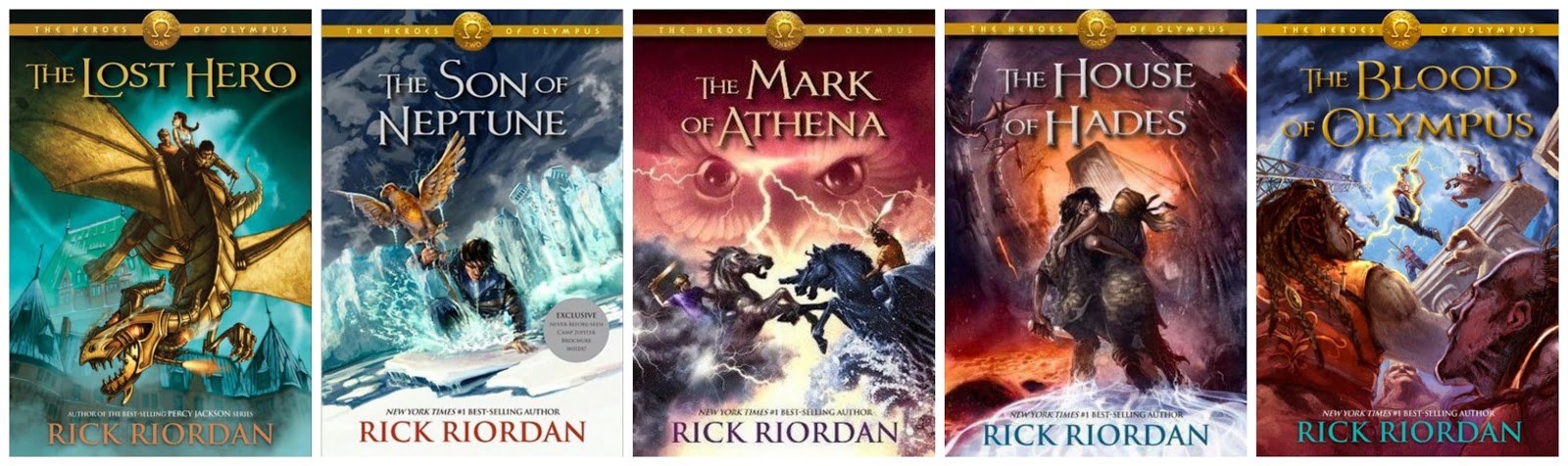
It might be simplistic to say that the former is featured in reading that requires a little less concentration than the latter. I’m sure there are examples either way. But the best authors show us well rounded characters who evolve and change in both cases. What a privilege it is to read the work of the many wonderful authors of middle grade fiction who make their characters come alive for us. I see my young friends absorbing Palacio’s Auggie, Hodgson Burnett’s Sara Crewe, Pullman’s Lyra, Selznick’s Ben and Rose; Riordan’s Percy, and Lowry’s Jonas and I think, “These characters are becoming part of who my young friends are.” How could they not?

I too feel as though I too have been influenced by the thousands of fictional characters that have filled me up over the years. A good number have come from middle grade books. Many from young adult books. One memorable one was the picture book that inspired my own middle grade novel, The Unintended Runaways, with its lively painting of a gypsy wagon and the carefree little girl who lived in it.

The tale that formed around that picture was the story I wanted to tell. I fought it. I’d been in marketing and public relations and I knew historical fiction was emphatically NOT in vogue. Would anyone read it? Newsletters and conferences told me I would never sell it.  “Write it anyway,” I told myself. I already had visions of the beautiful blue wagon and the big shire horse trotting down the lovely rural roads of mid-19th century England. market.

“Don’t be an idiot,” I argued back. “You’re a journalist. You wrote a history book. Get out there and write something that’ll sell. How about an academy for shapeshifters? A middle school mafia? An underground society ruled by 12-year olds? You can do it! Get with the program!”

“Yeah,” said my better self. “And it will suck, big time and you will hate every minute of it. This is 40,000 words we’re talking about.”

So I did it my way. I wrote my historical novel about 19th century young people. Unfashionable as my setting might be, I knew today’s middle graders would identify with the larger themes of justice, freedom, and family. And I hoped they would fall in love with my characters just as I did.

Thus The Unintended Runaways came into being. My sixth grade consultants – who were very generous early readers!—say they like it. (They kind of have to say that.) But the proof will be in the sales figures. Because as a general rule……

There’s just no reading the middle grade mind.

____________________________________________

Links:

Website:  www.theunintendedrunaways.com

____________________________________________

unintended Runaways

Summary: For a girl who loved adventure, twelve-year old Lia Leonides had the perfect life. Every summer, she and her grandfather traveled the rural roads of England in their gypsy wagon, stopping at fairs and selling horse brasses along the way. It was exactly the life Lia wanted, until the day a mysterious letter arrived. Lia’s grandfather warned her not to get her hopes up, but lifelong dreams are hard to ignore. Lia’s father was alive and looking for her. But when her grandfather suddenly passes away, Lia is sent to work as a servant in an orphanage and is left with a choice that she never wanted to make: let the world decide her future for her, or run away and decide it for herself? Lia, with the help of her beloved pets and some unexpected friends, must take her gypsy wagon south on a harrowing journey before her father disappears forever. A persistent sheriff and the constant threat of misfortune won’t make the trip easy, but Lia and her friends don’t plan to let anything stop them from forging their own destinies.

____________________________________________

sally b-p

About the Author: Sally Barlow-Perez openly admits that books have taken over a good chunk of her life. She gobbles down two or three library books a week, ranging in genre from young adult, to middle grade, to fantasy, to mystery. She tries to balance her book obsession with writing, hiking, and hanging out with the young people who inspire her. But no matter how hard she tries, she always comes back to books. As a fiction writer, Sally’s focus is curiosity. “Curiosity is a great excuse for writing, as well as for reading,” she says. “Even when I finish a book, I still wonder what the characters are doing!” Sally makes her life in Palo Alto, California. She has two grown sons, whom she believes to be her greatest contribution to mankind. The Unintended Runaways is her first middle-grade novel. More information is available at www.theunintendedrunaways.com.

Thank you Sally for this insightful guest post!

Kellee Signature andRickiSig

Cody and the Mysteries of the Universe by Tricia Springstubb

Share

cody and the mysteries of the

Cody and the Mysteries of the Universe
Author: Tricia Springstubb
Illustrator: Eliza Wheeler
Published April 12th, 2016 by Candlewick Press

 Goodreads Summary: Not everything turns out to be as it first appears when Cody and her best friend, Spencer, navigate a neighborhood mystery and the start of a new school year.

Cody’s best friend, Spencer, and his parents are moving in with his grandmother right around the corner, and Cody can’t wait. For one thing, Cody needs Spencer to help solve the mystery of the never-seen Mr. Meen, who lives on the other side of the porch with a skull-and-crossbones sign in the window and an extermination truck out front. How’s Cody to know that a yellow jacket would sting her, making her scream “Ow! Ow!” just as they start spying? Or that the ominous window sign would change overnight to “Welcome home,” only deepening the mystery? In this second adventure, Spencer’s new-school jitters, an unexpected bonding with a teacher over Mozart, and turf-claiming kids next door with a reason for acting out are all part of Cody’s experiences as summer shifts into a new year at school.

My Review: I loved this one as much as the first one. (P.S. You don’t have to read the first one to enjoy this one, but they are both so good you should read both.) What I love most about the books is that Cody and Spencer and their families and the secondary characters are just so flawed and familiar and real. What I love second most about the book is how Tricia Springstubb writes. It is lyrical yet to the point. Beautiful yet not fluffy. See my example below. What I love third most about the book is the humor. Cody is one funny young lady!

Cody’s story this time revolves around two things: Spencer moving nearby and things not going as expected and the mystery behind the Meens, the bullying girls who live next to Spencer. Springstubb navigates both of these topics (bullying and friendship) with ease along with other minor topics like family and identity which makes Cody’s story perfect for all young readers because they will either relate or be able to use the story to help them in the future.

Teachers’ Tools for Navigation: Cody’s story represents so many different types of people: different races, different families, different situations, different popularity, different talents, etc., so her stories are perfect for reading aloud to a class/child.

It could also be used as a mentor text for language during a writing workshop’s narrative unit.

Discussion Questions: What does Cody mean by the baton of love?; Is it ever okay to fight?; Why does Payton’s behavior affect Wyatt so much?; How did Cody expect Spencer being at her school to be? How did it end up?

Flagged Passages: “He [Spencer] was getting ready to practice his violin. Mom and Cody sat down to listen. The song he played was called ‘Go Tell Aunt Rhody.’ The music was complicated. Was it sad? Was it happy? Could it be both at the same time? Cody decided it was perfect night-before-school music. All the while he played, her hand un-itched.” (p. 32)

Read This If You Loved: Cody and the Fountain of Happiness by Tricia Springstubb, The Trouble with Ants by Claudia Mills, Marty McGuire series by Kate Messner, Eleanor series by Julie Sternberg, Lola series by Christine Pakkala, The Top-Secret Diary of Cecile Valentine by Julie Sternberg

Recommended For: 

readaloudbuttonsmall classroomlibrarybuttonsmall

Kellee Signature
**Thank you to Candlewick for providing a copy for review!!**

Blog Tour, Review, Giveaway, and Author Interview: Curiosity House: The Screaming Statue by Lauren Oliver and H. C. Chester

Share

curiosity house

Curiosity House: The Screaming Statue
Authors: Lauren Oliver and H. C. Chester
Anticipated Publication: May 3, 2016! by HarperCollins

Summary: Four orphans with extraordinary abilities and questionable pasts—Pippa, Sam, Thomas, and Max—are happy to be out of harm’s way now that the notorious villain Nicholas Rattigan is halfway across the country in Chicago. But unfortunately their home, Dumfreys’s Dime Museum of Freaks, Oddities, and Wonders, is in danger of closing its doors forever.

But their troubles only get worse. The four friends are shocked when their beloved friend, famous sculptor Siegfried Eckleberger, is murdered. As they investigate, they find clues that his death may be tied to the murder of a rich and powerful New York heiress, as well as to their own pasts.

In this second book in the exceptional Curiosity House series by bestselling author Lauren Oliver and shadowy recluse H. C. Chester, the four extraordinary children must avenge their friend’s death, try to save their home, and unravel the secrets of their past . . . before their past unravels them.

My Review: I actually read the second book in the series before the first, and I had so much fun reading both! The murder mystery kept me guessing throughout the series, and I imagine both middle grade readers and readers of all ages will have great fun with this book! The world of this book feels like it is set about one hundred years ago, so I enjoyed reading sections aloud to my son. We talked with him about “freak shows” and their purpose and existence. He is very young, so the conversation did not get very critical, but I imagine that classroom teachers would have excellent discussions with students about these topics. Each of the characters is very different from the others, which made reading this book so enjoyable. What I enjoyed most about the book (and series) is its accessibility. While the freak show aspect is an element of our past, the book feels like it is set right in this moment, and this is what makes it such an engaging book for readers!

Teachers’ Tools for Navigation: This series is a creative lesson gold mine for teachers. How neat would it be to print pictures from the museum and post them around the room? Students could walk around the room and be inspired to write their own fiction. Then, they might share stories and see how different their perspectives might be. This could lead to conversations about author’s craft and outside inspiration as a writing source.

Learn More about The Curiosity House:
The Book Website, which includes School Resources!:  http://www.thecuriosityhouse.com/
Read More about Authors Lauren Oliver and H. C. Chester: http://www.thecuriosityhouse.com/authors.php
Downloadable Character Buttons!

Discussion Questions: Which character was your favorite? What characteristics made the character most interesting to you? How do others respond to this character?; How do you imagine Lauren and H. C. worked together on this project? (Hint: After guessing, take a peek at the interview questions below.); Why might author collaborations be so valuable?

Flagged Passage: “It was only eleven o’clock in the morning and already topping ninety degrees in New York City. The street outside of Dumfrey’s Dime Museum of Freaks, Oddities, and Wonders was as still as a painting.”

**Please note that this passage is from an advanced reader copy and will potentially change with publication.**

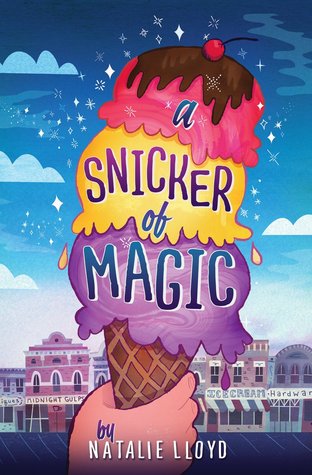
Read This Series If You Loved: Wonder Show by Hannah Barnaby, Miss Peregrine’s Home for Peculiar Children by Ransom Riggs, Circus Mirandus by Cassie Beasley, A Snicker of Magic by Natalie Lloyd, Mechanical Mind of John Coggin by Elinor Teele, Big Fish by Daniel Wallace, Night Circus by Erin Morgenstern, Peter Pan by J.M. Barrie

Recommended For: 

  litcirclesbuttonsmall  classroomlibrarybuttonsmall

a Rafflecopter giveaway

Interview with Lauren Oliver and H.C. Chester!
Oliver and Chester

What does your writing process look like? Is it mainly collaborative in nature, or do you work alone?

HCC: My working relationship with Ms. Oliver represents what I regard as the ideal collaborative arrangement.  I permit her access to my unique collection of rare and extraordinary artifacts–as well as giving her the invaluable benefit of my encyclopedic knowledge of all things related to the strange and arcane–and she does all the work.

What have you learned from each other while writing these books?

HCC: I have learned that MS. Oliver possesses what can only be termed bananaphobia.  My discovery of this strange phenomenon occurred when I invited her to join Trudy and myself for lunch during one of her–Ms. Oliver’s–research trips to my private museum and made the error of ending  the meal with what I believed would be a delicious dessert of canned fruit cocktail adorned with hand-cut banana slices.  I will spare you a description of the scene that ensued. Let me only say that Trudy was so traumatized that it took her an unusually long span of nearly fifteen minutes to finish off her dish of fruit cocktail.

Lauren, how has writing this series been different from writing your other texts, which explore a much different genre? Has the intended audience affected your writing process in any way?

LO: I actually have two other middle grade books, Liesl and Po, and The Spindlers, so writing for a younger audience wasn’t unfamiliar to me. I really love it, because it gives me a chance to explore my humorous side. And I love how sheerly inventive and, for lack of a better word, kooky you can be with a younger audience.

H.C., what have you learned from this writing process? Has it affected the ways you look at the museum?

HCC: I have learned that the most satisfactory writing process is one in which someone else does all the work.  As for your second question, my answer is: not really.

Interview with the character, Phoebe the Fat Lady:
Phoebe

Weighing in at half a ton, Phoebe is tremendously proud of her size and keeps up a rigorous diet regimen that includes toast soaked in bacon fat and whole sticks of butter. The scariest day of her life was when she discovered, that due to the flu, she had lost ten pounds.

Since you’ve left, what adventures have you embarked on? Who do you miss most?

Phoebe: Hugo and I have traveled all over Europe, where we’ve seen things that are truly freakish! Do you know that in France, snails are a delicacy?

Have you maintained the same weight? How has life been for you, in general?

Phoebe: Oh, certainly not! That is one of the strongest misconceptions people have about my weight–that I do not have to work, every day, to maintain my fantastic enormity. But in fact as a child I could barely be considered plump! In order to maintain my beautiful physique, I follow a strict diet of twenty-six meals a day and restrict my exercise to less than one hundred meters.

Will we see you again?

Phoebe: Never say never!

**Thank you to Natasha Ochshorn and Lauren Oliver for providing an advanced copy for review!**

Be sure to visit the other great blogs on this blog tour! Before us was: http://www.literaryhoots.com and coming up next is: http://www.memyshelfandi.com!

 RickiSig

Author Guest Post!: “Possible Impossibilities: Magic and the Middle-Grade Reader” by I. J. Brindle, Author of Balthazar Fabuloso in the Lair of Humbugs

Share

Possible Impossibilities: Magic and the Middle-Grade Reader”

When my son, Theo, was about to turn four, I asked him what he wanted for his birthday. His answer was simple, only one thing: Hogwarts Castle. “A mini tree-fort version?” I suggested hopefully. Nope, he wanted the whole thing, old stones, talking portraits, moving staircases, the whole shebang, to be built in our backyard. “Or a Batcave,” he relented, seeing my expression. “If you can’t do Hogwarts, I’ll take a Batcave.”

If little kids have one super power it’s that power to believe random, wacko stuff is totally possible. And why not? Those kind of things are happening all the time in their worlds: steam suddenly whistling out the spout of a kettle, crusty old seeds pushing up pale green sprouts through the dirt, clear light through faceted glass turning into rainbows. I remember clearly when I was four, hammering metal coffee cans and other bits of debris to an old flat piece of plywood to make a boat I would sail across Lake Ontario. My dad, who was sorting the laundry nearby, never told me that was not going to happen. To this day, I think that was one of the best gifts he ever gave me.

Too often, well-meaning adults rush in to help children develop a sense of perspective, an understanding of what is realistic, sealing up the cracks between the world of imagination and the more reliable, tried and true “reality.” The instinct generally comes from a good place. To protect from disappointment. To make sure the child is investing his or her precious hopes and dreams in something that might actually, in a million years, have some chance of ever happening.

“If only he would ask for something we could actually give him,” I remember bemoaning to Theo’s dad after Theo finished showing us the impossibly grandiose Batcave blueprints he had found in the back of one of his Batman books. Then I thought about my boat. About that sense of possibility. I took a deep breath. “This is too big a job for us,” I admitted to Theo. “But how would you do it?” Theo was disappointed in us. But eventually he took a shovel, went out behind the house and started to dig. His friends came over later in the week and they dug as well. And the digging has gone on sporadically from then—for about nine years now. At first it might have been about the bat cave, but as the digging went on it became about something else: about the undefined, mysterious possibilities of the hole itself. Something way better than anything we, his parents, could have cobbled together for him.

By the time kids get to the middle grades, the concept “real” becomes very important. “Is that real gold?” “That is sooooo fake!” At the same time, this age is also the sweet spot for the greatest magical literature ever written: Harry Potter; The Lion, The Witch and the Wardrobe; The Hobbit; The Dark Also Rises. The other day, my ten-year-old, Nicholas (one of the biggest realists I know), told me that all his favorite books have some kind of magic or fantasy in them. Hardly seems a coincidence. As the concepts of reality become more practically defined and potentially limiting, fantasy allows middle-graders to keep the doors and windows open into other possibilities.

Possibilities is the key word. When your nose is stuck between the covers of a great fantasy book, it’s not because you’re so caught up with bunch of stuff that could never happen. It’s because you’ve entered a place where the outrageous and fantastical does happen and you can’t wait to see what’s going to happen next. And sometimes what happens next is someone comes along and lifts one of these possible impossibilities off the page and turns it into a reality. The Internet search engine, for example, appeared in Douglas Adam’s Hitchhiker’s Guide to the Galaxy long before the real version was created. Sci-fi author, Jules Verne, landed the first rocket ship on the moon in remarkably accurate detail in his novel From the Earth to the Moon over a century before the first real lunar landing occurred. Sometimes what looks like wall between fantasy and reality is actually a door.

These doorway-moments, these meeting points of the real and the fantastical, are essential in middle-grade fantasy. Sometimes these doorways are quite literal. Harry Potter’s first arrival at Platform 9 ¾. Lucy walking through the wardrobe into Narnia. Other times the doorways come through characters that are so powerfully human it’s impossible not to relate to them, even if they are a different species from a totally different place and time. For example, Bilbo Baggins, the furry-footed hobbit who longs for adventure but is so attached to domestic comforts he almost abandons his great adventure when he discovers he has left his handkerchiefs at home.

When writing my middle grade novel, Balthazar Fabuloso in the Lair of the Humbugs, the first doorway I discovered was through Balthazar’s family’s stage magic. When picking up a new bit of magic, they start by figuring out how to fake it, palming a coin to make it look like it disappeared, hiding a dove up a sleeve, etc. Only after they’ve mastered the illusion so fully it becomes second nature does the trick part fall away and the magic become real.

Some of my favorite doorway–moments as a writer come when magic doesn’t work out the way anyone planned. Unpaid bills that are folded into magical origami animals and sent flying away but wind up coming home again to demand payment. An invisibility charm that only works for as long as long as you hold your breath. Magic that is great for levitating sofas and turning puffs of smoke into baby turtles, but is totally useless for eliminating dry-rot or paying down credit card bills. In other words, magic that acts like life: messy and unpredictable, but kind of amazing at the same time.

Can magic help Balthazar get his family back after they mysteriously vanish in a sinister stage accident? Possibly, but first Balthazar must find his own magic, a journey which leads him down a rabbit hole of family secrets, unexpected friendships, surprise betrayals, sinister cliques and a few other twists and turns. A journey that is about messing up, figuring stuff out, banging into walls, overcoming limitations, and, ultimately, about making the impossible possible, although not quite in the way anyone had planned.

One of my favorite games to play on hikes and long road trips is the “what if” game. What if this forest was actually our home? What if the raindrops on the windshield all had personalities? What if that red car behind us is an evil road wizard hot on our trail? What if we could open the plane door and walk out onto the clouds? It’s all about finding the doorways, then seeing where they lead, the more unexpected the better. Sometimes they lead to a story or a sketch. Other times to complete absurdity. But they always lead somewhere. Which is why magical literature is so important to middle-graders. Not simply because of the magic itself, but because of the possibilities it opens up, possibilities which can lead anywhere.


Balthazar Fabuloso

Balthazar Fabuloso in the Lair of Humbugs

About the Book: Magic, humor and high adventure are used to reaffirm fundamental family values in this debut novel.|

Balthazar Fabuloso’s lovable and eccentric family performs a magic show. What makes the act so unusual is that all the Fabulosos actually have superhuman powers, except for Balthazar, a practical-minded 11-year-old who simply aspires to be a normal kid. So when everyone but Balthazar disappears mid performance, the only Fabuloso without real magical skills must save the family. Balthazar wonders if the family’s archrivals, the Furious Fistulas, are to blame or if there are other, even darker forces at work. To free his loved ones Balthazar must work with some questionable characters, including a lunatic long-lost uncle, three enigmatic senior citizens and the loathsome Pagan Fistula, whose family also mysteriously goes missing.

At the center of these disappearances is a force so evil that the world’s most preeminent magicians cower before it. What hope could a ragtag crew of misfits have against it?

Link to the Book: http://www.holidayhouse.com/title_display.php?ISBN=9780823435777

I.J. Brindle

About the Author: I. J. Brindle is an author and screenwriter. She has also produced internet games for Disney, written and directed theater in New York and Montreal, clerked in a bookstore, waited tables, and had a bunch of other adventures along the road. She is the mother of two wild monkey children and the companion of a dog named Moose.

Check Out the Other Books on the Tour:

Balthazar_BlogTour02

Thank you to I. J. for this important post. We hope our readers enjoyed her words as much as we did!

Thank you to Brittany at Holiday House for connecting us with I. J.!

RickiSigandKellee Signature

Blog Tour, Character Interview, Giveaway, and Review!: The Mechanical Mind of John Coggin by Elinor Teele

Share

Mechanical Mind Blog Tour Banner

mechanical mind

The Mechanical Mind of John Coggin
Author: Elinor Teele
Illustrator: Ben Whithouse
Published April 12th, 2016 Walden Pond Press

Goodreads Summary: A quirky, humorous, whimsical, and heartwarming middle grade debut about a young boy who runs away from home with his sister to escape working in the family coffin business—and discovers even more adventure than he bargained for.

John Coggin is no ordinary boy. He is devising an invention that nobody has ever seen before, something that just might change the world, or at least make life a little bit better for him and his litter sister, Page. But that’s only when he can sneak a break from his loathsome job: building coffins for the family business under the beady gaze of his cruel great-aunt Beauregard. Having lost their parents when Page was a baby, how else are they supposed to survive?

Perhaps by taking an enormous risk—a risk that arrives in the form of a red-haired scamp named Boz. When Great-Aunt Beauregard informs John that she’s going to make him a permanent partner in Coggin Family Coffins—and train Page to be an undertaker—John and Page sign on with Boz and hit the road. Before long, they’ve fallen in with a host of colorful characters, all of whom, like John and Page, are in search of a place they can call home. But home, they realize, isn’t something you find so much as something you fight for, and John soon realizes that he and Page are in for the fight of their lives.

Elinor Teele’s picaresque debut is a rollicking tale filled with wild adventures, daring escapes, and—thanks to Boz—more than a little catastrophe.

My Review: One thing I’ve noticed is that so many orphans in stories seem to always get into some sort of trouble and then go on amazing adventures. Like Annie, Grubb from Alistair Grim, and Peter Nimble before him, John Coggin, a recent orphan, finds himself in quite a predicament of a situation when he is forced to work for his great aunt’s funeral home. It is the last straw when Great Aunt Beauregard tries to force Page, John’s sister, to go to work with them, and that begins the adventure! Elinor Teele takes us on quite a journey! With Boz, the comic relief with an amazing vocabulary, our three main characters meet some unique characters along the way.

Teele’s ability to weave such an odd story together and make it seem seamless is remarkable. John, Page, and Boz have about 5 stops along their journey all with a wide-variety of characters who all are a bit quirky but also relatable and you end up loving all of them. Although everything that happens is quite farfetched, you end up believing it all because you just want John and Page to be successful!

Teachers’ Tools for Navigation: In the classroom, I think this book would be a perfect opportunity to discuss ways to determine unknown vocabulary within a text. Boz has QUITE a vocabulary and uses words that will be unknown to many of the middle grade readers the book is aimed for; however, the author does a fabulous job of having context clues or restatements of what the words mean. I would love to use passages of this book for vocabulary instruction.

It could also be used as a mentor text for imagery, specifically character description. Like I said, throughout the book we meet some very odd characters, but they are all described so well you can picture them. Same with John’s contraptions and the setting. Elinor Teele’s specific word choice really brings the story to life.

Lastly, I think it would be fun to compare/contrast the orphans within middle grade novels and discuss why orphans are chosen for so many adventurous books. Peter Nimble and Alistair Grim along with John Coggin would definitely be a great place to start, and you could even tie it in with “Annie.”

Also check out the Educational Activity Kit based on the book for more ways to use the book in the classroom or library.

We Flagged: “”Up and at ‘em, troops! The back of a new day is already broken, and time marches on!’

Boz blew into the barn like a category five hurricane and came to rest at John’s feet. ‘Where are the foundations of your perambulation?’ His baffled face collapsed even further into itself.

‘Where are the what?’ John asked blearily. The bright summer sun was making fireflies of the dust around Page’s hair.

‘Your shoes, young man, your shoes.’

‘I threw them outside.’

‘Well, find them! We go, we see, we conquer!’” (p. 58)

Special Guest! Q&A with Boz (by Elinor Teele): Boz may, in fact, be the worst interviewee on the planet. It was barely possible to get him into a hotel lounge and almost impossible to keep him there. And his hair! It seemed to have a life of its own. After this experience, I am firmly convinced his only future is a career as a human firework.  

mechanical illustration

Q. So, first I’d like to ask… Boz? Boz! Could you please stop swinging from the chandelier?
A. Of course, profuse apologies my Fallonesque friend. I was merely trying to pump some blood to my knee joints. I ingested a box of sugar-coated hookoo grubs yesterday and I fear they have inflamed my rheumatics.

Q. Where did you get a box of hookoo grubs?
A. A gift from the Queen of Samarrand. She says she misses my winsome ways.

Q. How did you become friends with a Queen?
A. Oh, I have roamed the bureaus and boards of many a parliament. From the sweat-soaked slums to the blasted heaths, I have crisscrossed this great globe itself in eighty days and under. “A wandering minstrel, I…”

At this point in the interview, Boz yanked open the door to the lobby and vaulted onto the hotel’s front desk. From there, he sang operettas to incoming guests until security guards brought him back into the lounge. 

Q. I don’t think the concierge enjoyed your singing.
A. It’s a waste of vitriol trying to please critics. Besides, it gave me an opportunity to relieve him of his time commitments.

Q. You stole his watch?!
A. You may say that, but I couldn’t possibly clarify.

Q. Well, what can you comment on?
A. Anything that tickles your pearly whites.

Q. Okay, how about this? Some people have said that your way of speaking is far too complicated to understand. They point out many kids have enough trouble with basics, so why make it harder?
A. I grant you that my vocabulary may be a little bewildering, but why not be wild? There are so many beautiful words in this world that go a’begging. As my dear friend Dodo Dodgson often opines, “Look after the senses and the sounds will look after themselves.”

Q. Yes, I noticed you tend to appropriate phrases from famous writers.
A. Who was it that said that bad artists copy and great men steal? Or was it that the immature youth imitates and the mature matron plagiarizes? I can’t remember. 

At this point in the interview, Boz once again made a grab at the chandelier. This time – thanks to the force of his liftoff – he was hurled round and round the room like a demented tornado.
Q. Are you insane? Should I call the fire brigade?
A. Wouldn’t do that, my dear boy. They’re still irked about the incident with the propane and the propellers.
Q. What did that involve?!
A. A gaggle of insurance investigators, apparently.  

Q. I give up. I don’t know how John Coggin put up with you.
A. But John and I are friends! Buddies of the bosom. Compadres of the cabana. Say what you will about my ethical standards, but I always believe in my friends!
This was a revealing comment, and I would have liked to ask Boz more about it. Unfortunately, he had let go of the chandelier and was already rocketing skyward through one of the open windows. I last saw him passing a goshawk.
Walden TV Features John Cogginhttp://waldentv.com/video/rtwt-john-coggin/

elinor-teele

Find Elinor Teele at her website.

Recommended For: 

classroomlibrarybuttonsmall closereadinganalysisbuttonsmall litcirclesbuttonsmall

Giveaway!
Enter to win!

a Rafflecopter giveaway

Don’t miss out on the other blog tour stops!

April 11 – Bluestocking Thinking
April 12 – Novel Novice
April 13 – This Kid Reviews Books
April 14 – Maria’s Melange
April 15Unleashing Reader
April 18Next Best Book
April 19Foodie Bibliophile
April 20For Those About to Mock
April 21 – Walden Media Tumblr
April 22Charlotte’s Library
April 25Flashlight Reader
April 26Teach Mentor Texts
April 27Librarian’s Quest
April 28Kid Lit Frenzy
April 29Novel Novice

Kellee Signature

**Thank you to Walden Pond Press for providing a copy for review and giveaway!!**

Exclusive Reveal!: Teaching Guide for Raymie Nightingale by Kate DiCamillo

Share

raymie

Raymie Nightingale by Kate DiCamillo is out today!

And we are happy to be able to be able to exclusively reveal the teaching guide.

Kate DiCamillo writes heartprint stories, and Raymie Nightingale is no different. Raymie Nightingale shares with the reader a story of three very different girls who all are enveloped in sadness for different reasons and need each other to find their way out. You will love Raymie and the Three Rancheros!

I had so much fun writing this guide, and I hope that many of you find the activities and discussion questions within it useful to you and your students!

Please note: There are some spoilers in the guide, so please be aware if you are reading the guide before reading the book.

You can also access the teaching guide here.

You can learn more about Raymie on Candlewick Press’s Raymie Nightingale page.

Recommended For: 

readaloudbuttonsmall classroomlibrarybuttonsmall litcirclesbuttonsmall closereadinganalysisbuttonsmall

Don’t miss out on this one!

Kellee Signature