I Walk with Vanessa: A Story About a Simple Act of Kindness Illustrator: Kerascoët
Anticipated Publication: April 24, 2018 by Schwartz & Wade
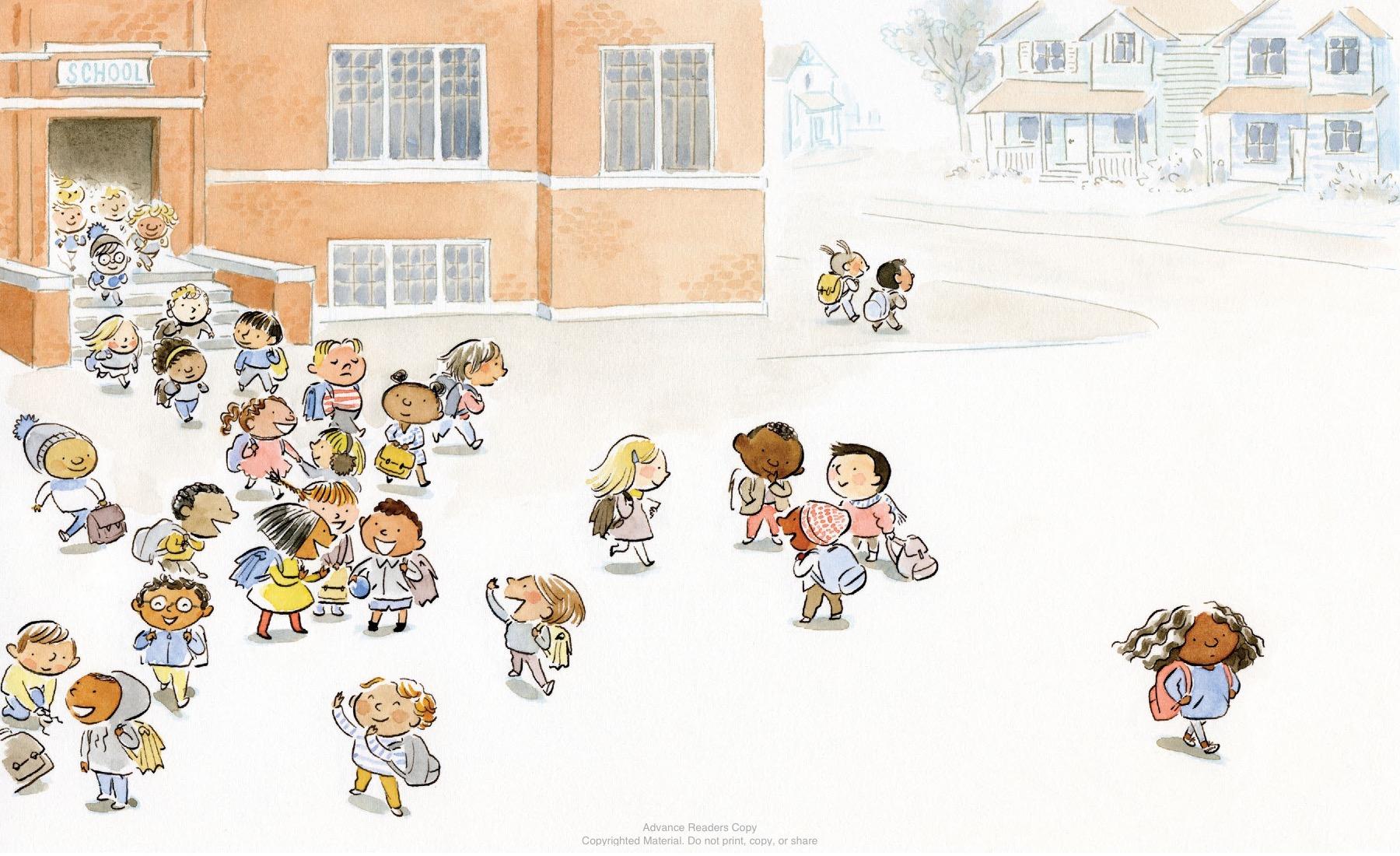
Goodreads Summary: This simple yet powerful picture book–from a New York Times bestselling husband-and-wife team—tells the story of one girl who inspires a community to stand up to bullying. Inspired by real events, I Walk with Vanessa explores the feelings of helplessness and anger that arise in the wake of seeing a classmate treated badly, and shows how a single act of kindness can lead to an entire community joining in to help. With themes of acceptance, kindness, and strength in numbers, this timeless and profound feel-good story will resonate with readers young and old.
My Review: I was very fortunate to receive an F&G of this book at ALA Midwinter. Whew! I was told that this book was inspired by a true story of a large group of students who walked with a student who was being bullied. It’s really quite magical. This is the kind of book that will appeal to a wide assortment of readers at a wide range of ages. I wouldn’t be surprised if this book rakes in a few awards next year. The story is beautifully done. It inspired some great conversations with my four-year-old. We were able to point to each of the characters and talk about what they were doing in each situation. That said, if I had to place this book in one age group, I think it would make a great fit at the early elementary school level.
Teachers’ Tools for Navigation: This is a phenomenal book to talk about the bystanders. It would pair beautifully with Jacqueline Woodson’s Each Kindness. When I read this with my son, we spent a lot of time point out several of the students on the pages. We talked about what each of them were doing and in some cases, what they weren’t doing. This book is a must-read.
Discussion Questions: Why do you think the illustrator team chose to make the book wordless? How does this make the book more or less powerful for you?; What emotions do you see in the characters? Why are they feeling the way that they feel?; Do bystanders have a responsibility?
Adventures in Science: Human Body Author: Courtney Acampora
Published: December 12, 2017 by Silver Dolphin Books
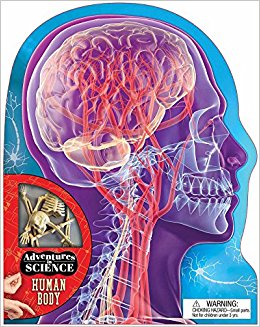
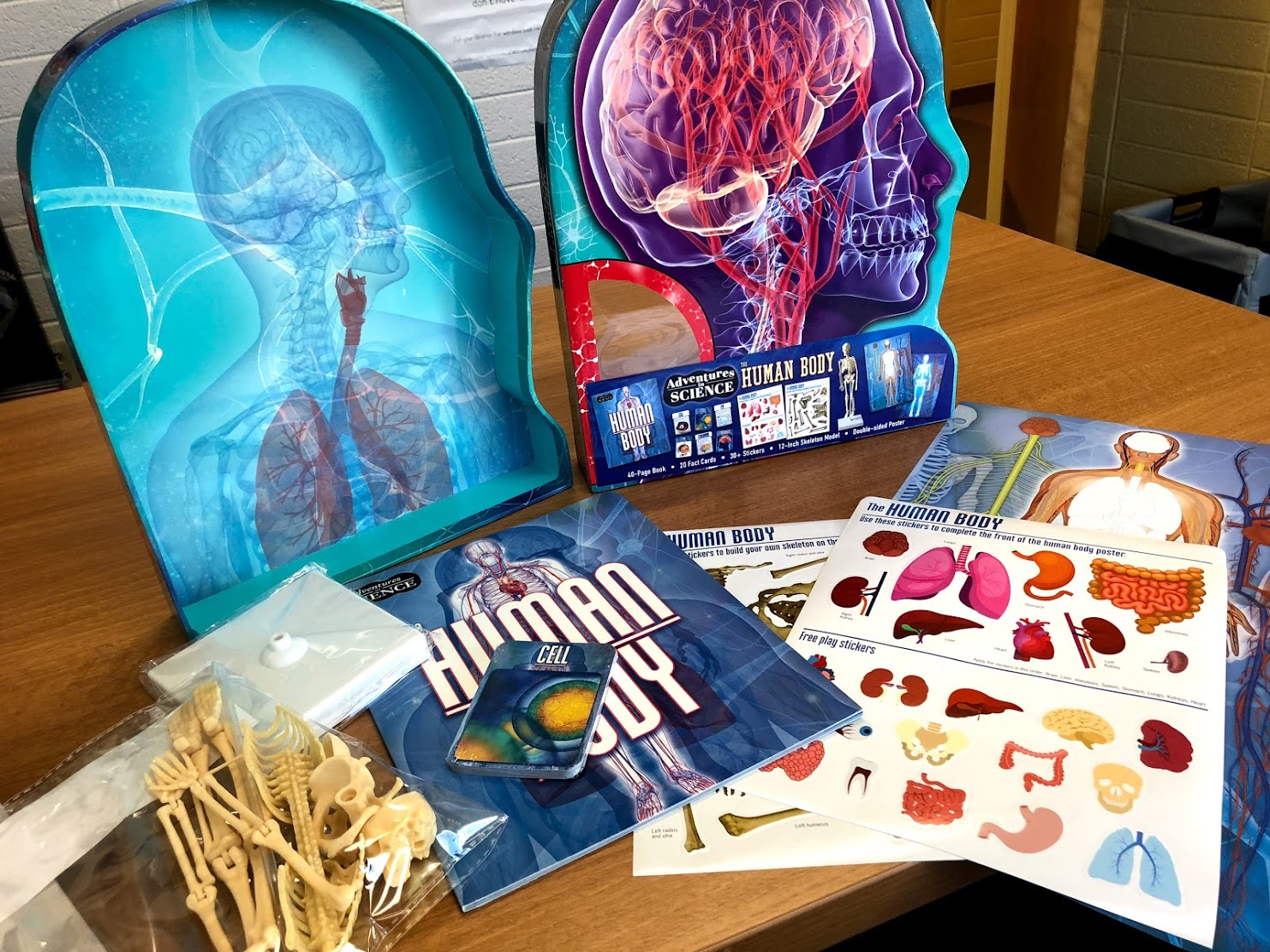
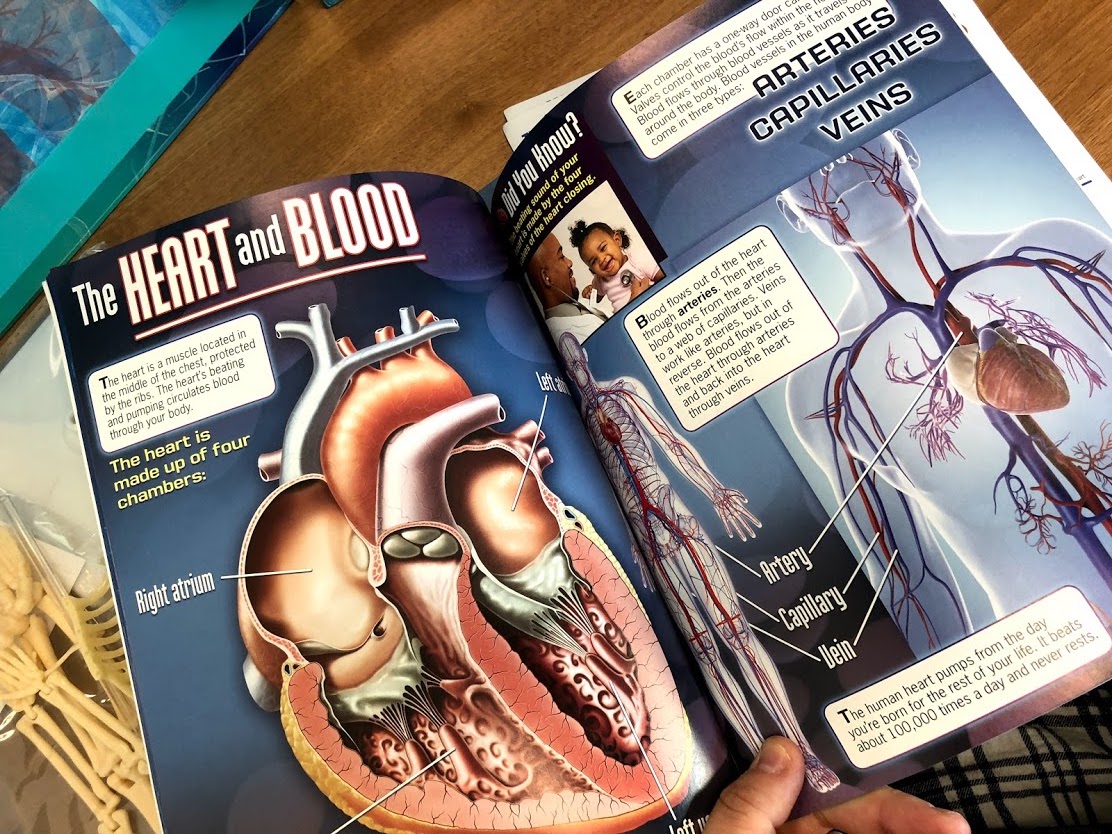
Summary: Which part of the brain is in charge of creativity? What is the smallest human muscle? Take a trip inside the humanbody and discover the amazing systems that allow us to move, breathe, and speak. After reading about everything from the digestive tract to the cornea, kids can assemble their own plastic skeleton and view the systems of the body in a layered cardstock model. With 20 fact cards, 2 sticker sheets, and a double-sided poster, this interactive kit is a perfect primer for learning about how the humanbody works.
Review: This book kit is so much fun! It’s very cleverly designed to engage readers. It includes an informational book about the human body, a skeleton to build, flash cards, a sticker sheet that features the major bones of the human body, a sticker sheet that features the organs within the human body, and a double-sided poster with outlines to help readers stick the bone and organ stickers in the correct places. As we read the book, we did the activities and filled in the human body. What a powerful learning experience! I am crossing my fingers that this kit becomes a series. I would love to purchase a kit for space, geography, etc.
Teachers’ Tools for Navigation: Teachers could purchase five kits and divide their classes into five different groups to build the skeleton and affix the stickers onto the appropriate parts of the body. I sent a message to a few of my friends who homeschool their children. I think this kit will be a huge hit in their families.
Discussion Questions: What did you learn as you did the activities?; What parts of the human body do you find most interesting? Why?; How do the different parts of the body work together?
We Flagged:
Read This If You Loved: Any nonfiction books about the human body; interactive books and kits
Recommended For:
**Thank you to Casey at Media Masters Publicity for providing a copy for review**
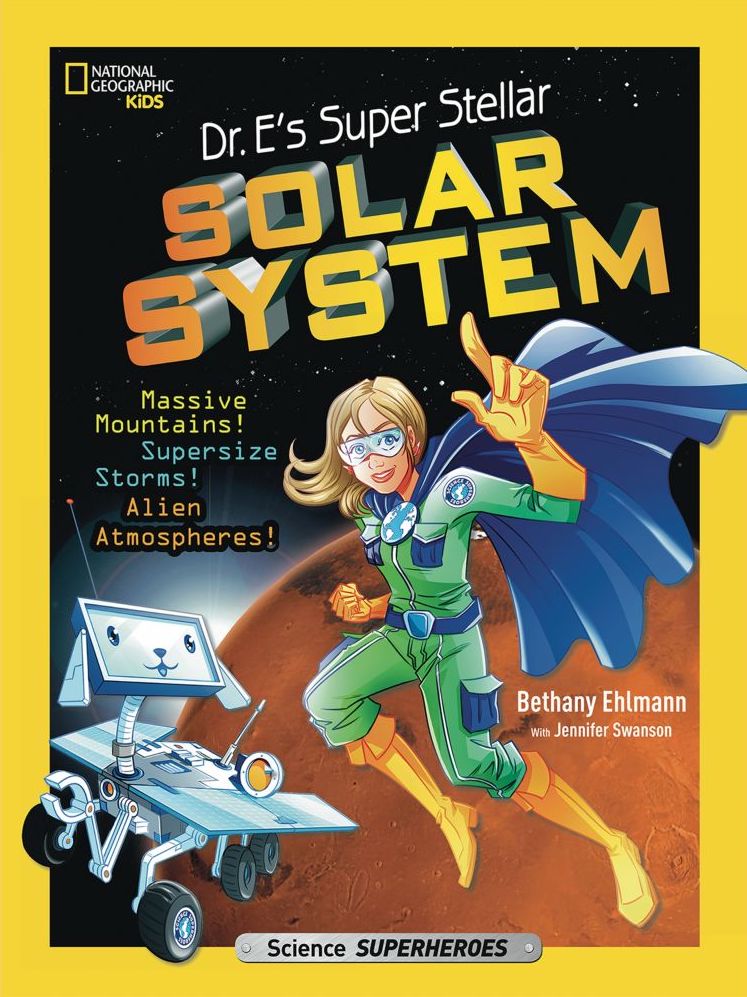
Dr. E’s Super Stellar Solar System Authors: Bethany Ehlmann with Jennifer Swanson
Published January 16, 2018 by National Geographic Children’s Books
Goodreads Summary: Take to the skies with Planetary Geologist Dr. E and her robot sidekick, Rover, to explore the solar system’s wildest, most astronomical geology–with comic book flair! This stellar book introduces kids to outer space through in-depth info and comic book adventure. Along the way, kids follow explorer Bethany Ehlmann, a member of the NASA Mars Rover Curiosity mission, and her lovable robo-dog, Rover, as they study and protect our amazing solar system. Dr. E’s conversational and funny explanations of the solar system and planetary geology will pull kids in like gravity. The pairing of fun, graphic novel side stories with science facts makes big concepts accessible and interesting to boys and girls of all levels, from STEM science fans to reluctant readers alike.
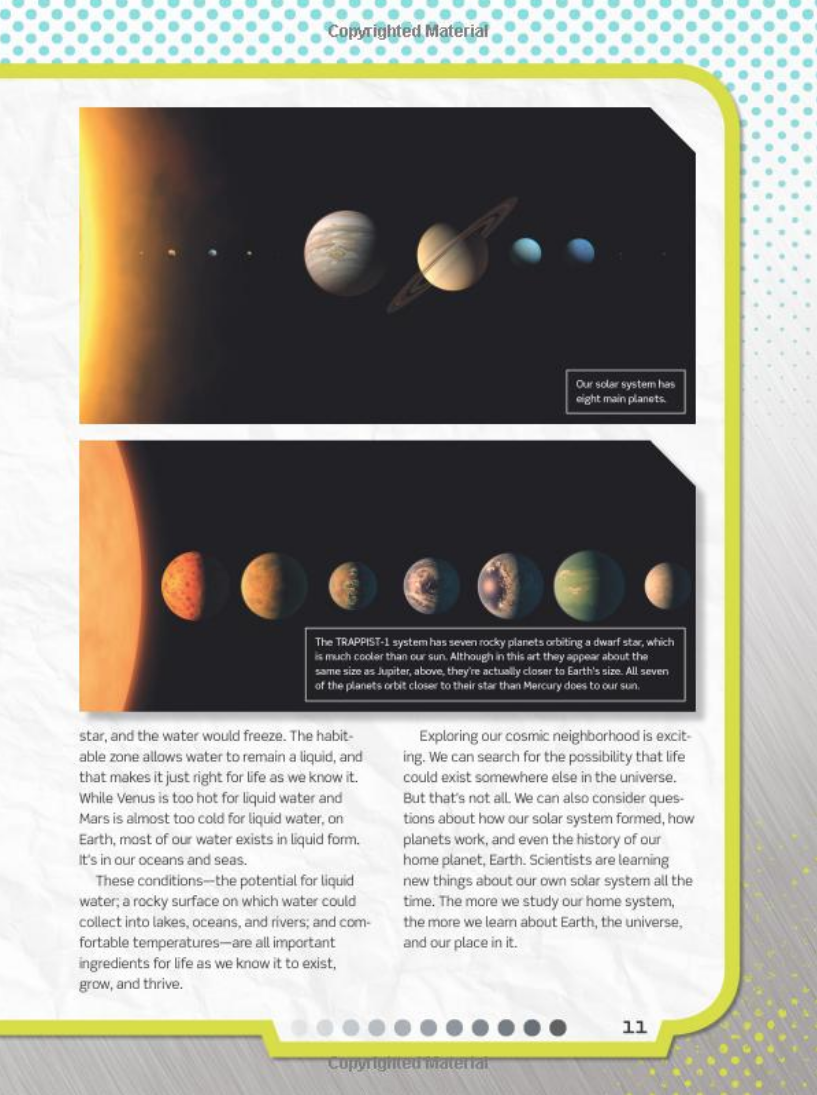
Review: This book is wild. I learned so much while reading it. I thought I knew a lot about space, but this book made me realize how much I didn’t know about it. My son is much too young for this book, but he loved looking at the pictures while I summarized the text on the pages. There are some fantastic photographs, and there are also digital representations of what things might look like. Most exciting, this book filled me with wonder. There are so many possibilities with space, and I am really excited about new discoveries and new information that will come in my lifetime and beyond. This is a must-read for space lovers and those who are curious about the world. I particularly appreciated the comics at the front of each chapter. They allowed me to better engage with the material that followed. Dr. E made me want to learn even more about space!
Teachers’ Tools for Navigation: I’d love to see this book used in literature circles. The National Geographic books are phenomenal, so teachers might collect books on various topics and allow students to form groups based on interest.
Discussion Questions: After reading about _____, what did you learn?; What do you still want to learn about space?
We Flagged:
Image from Amazon.
Read This If You Loved: Any nonfiction book about space, for background knowledge when reading science fiction that takes place in space (e.g. Space Encyclopedia)
Recommended For:
**Thank you to Karen at Media Masters Publicity for providing a copy for review**
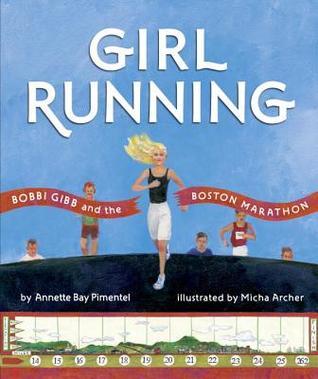
Girl Running: Bobbi Gibb and the Boston Marathon
Author: Annette Bay Pimentel
Illustrator: Micha Archer
Published February 6th, 2018 by Nancy Paulsen Books
Summary: The inspiring story of the first female to run the Boston Marathon comes to life in stunningly vivid collage illustrations.
Because Bobbi Gibb is a girl, she’s not allowed to run on her school’s track team. But after school, no one can stop her–and she’s free to run endless miles to her heart’s content. She is told no yet again when she tries to enter the Boston Marathon in 1966, because the officials claim that it’s a man’s race and that women are just not capable of running such a long distance. So what does Bobbi do? She bravely sets out to prove the naysayers wrong and show the world just what a girl can do.
* “A bright salutation of a story, with one determined woman at its center.”–Kirkus Reviews, starred review
Review: I first learned about Bobbi Gibb when I read The Girl Who Ran by Frances Poletti & Kristina Yee and after reading it, I knew I wanted to learn more about Bobbi Gibb because she did so much for women’s progress when it came to running. Without her standing up and going against everyone, it would have taken longer for women to be accepted as marathoners.
Pimentel does a beautiful job showing Gibb’s inspiration, determination, and journey. I loved seeing more about what happened during the marathon than what I knew before and especially was verklempt by the support she found when ran by Wellesley College and the women at the college came out and cheered for her. I also loved learning that the other runners supported her!
Through the afterwords, I also found out that Gibb had to wait 30 years before she was listed as the female winner of the Boston Marathon in 1966, 1967, and 1968 races because the officials wouldn’t honor her as a runner. This shows that so often even when the masses support something, it is a systemic issue that needs to be fixed.
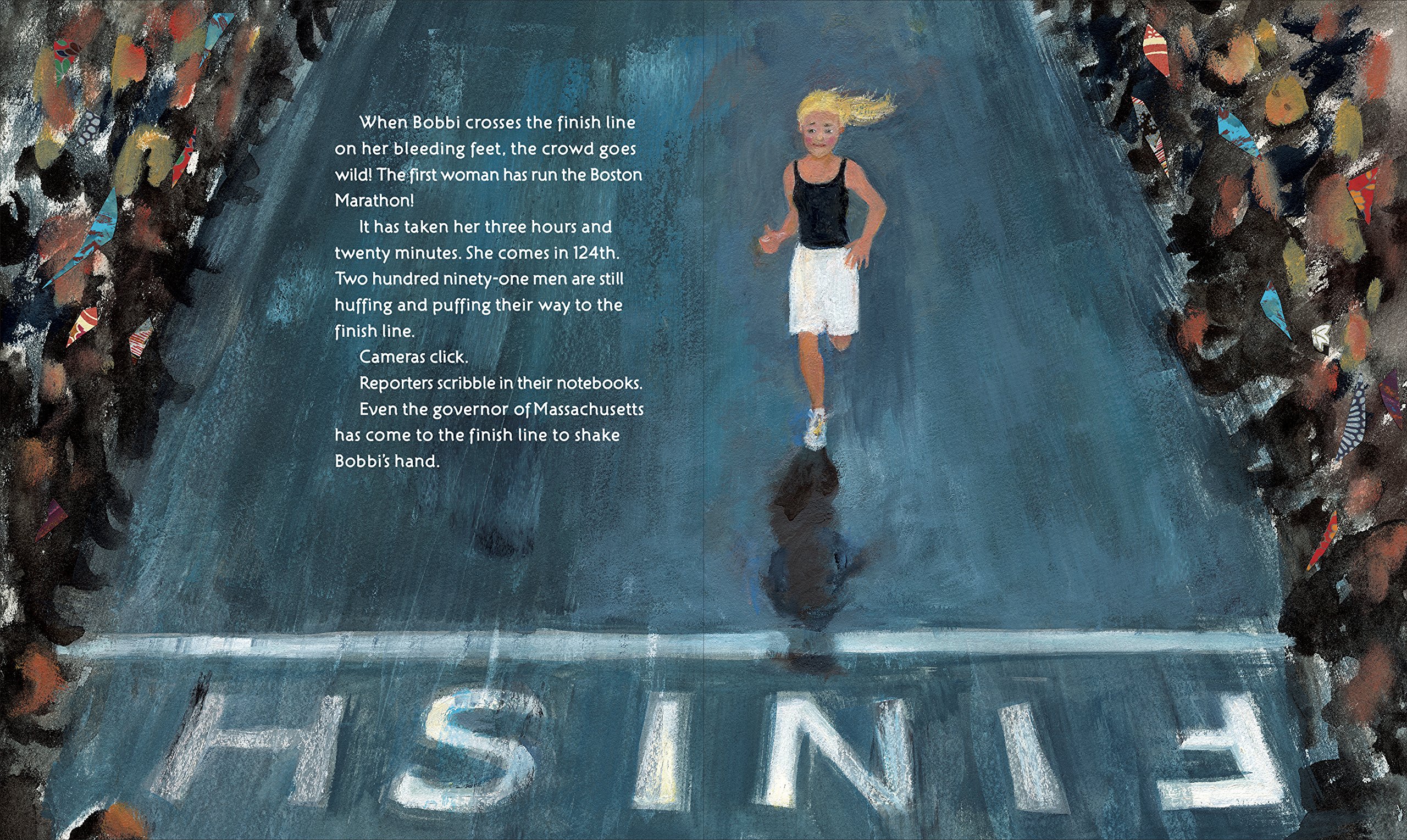
Last but not least, I must share how much I adore Archer’s artwork. I was a big fan of her work in Daniel Finds a Poem, and once again I found that her illustrations were the perfect addition to the story being told.
Teachers’ Tools for Navigation: Gibb is one example of an American that changed history but may not be well known. I think it would be fascinating to introduce Gibb using Pimentel’s picture book as a way to start discussions about normal people changing the world. I would then share other stories about heroes like Rosa Parks, Malala Yousafzai, and Jesse Owens. I’d also reference other books like Be a Changemaker and 31 Ways to Change the World. The research could also be narrowed down to just sports; however, I think it is a wonderful discussion to have about how Gibb may have “only” changed marathons, it is part of a bigger movement.
Discussion Questions:
Why did people think that women couldn’t run marathons?
How did Bobbi Gibb prepare for her first official marathon?
Did the other runners react the way you had expected? Explain.
How did Archer’s artwork support Pimentel’s story of Gibb?
What traits does Gibb show that helped her be successful?
When Gibb began to get blisters, were you afraid that she wasn’t going to finish? Explain your thinking and reactions as the story continued.
Flagged Passages:
Read This If You Love: Picture book biographies, Women’s rights
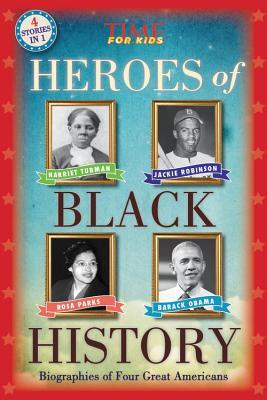
Heroes of Black History: Biographies of Four Great Americans
Author: The Editors of Times for Kids
Introduction by Charlayne Hunter-Gault
Published December 19th, 2017 by Times for Kids
Blog Tour Week 4’s Feature American:
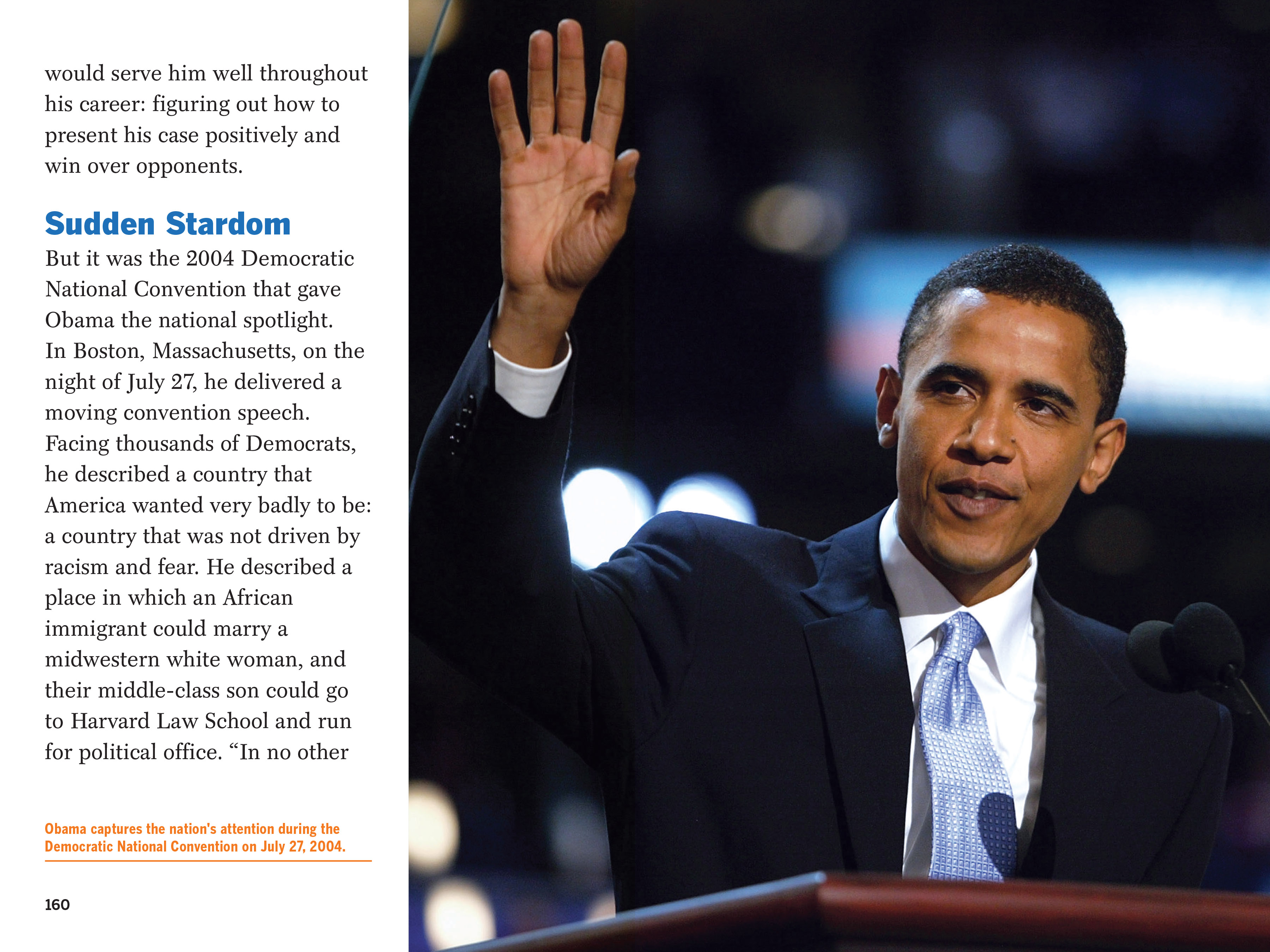
Barack Obama
Summary: TIME for Kids Heroes of Black History presents the stories of four great American heroes every child should know about in one volume: Harriet Tubman, Jackie Robinson, Rosa Parks, and Barack Obama. Featuring an introduction by journalist and civil rights activist Charlayne Hunter-Gault, Heroes of Black History shines a light on the long fight for social justice in the United States as it highlights the accomplishments and personal histories of these four pivotal Americans.
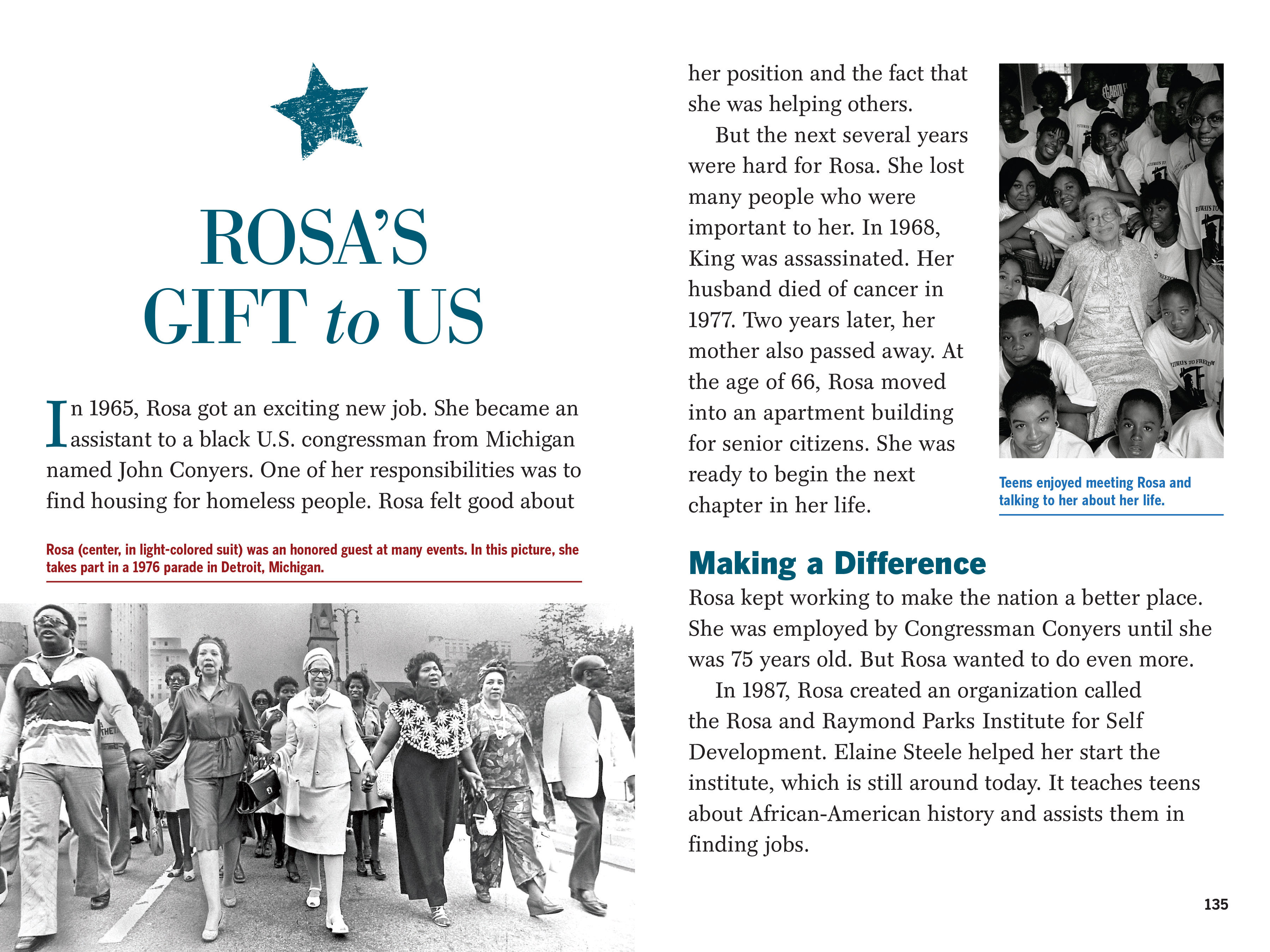
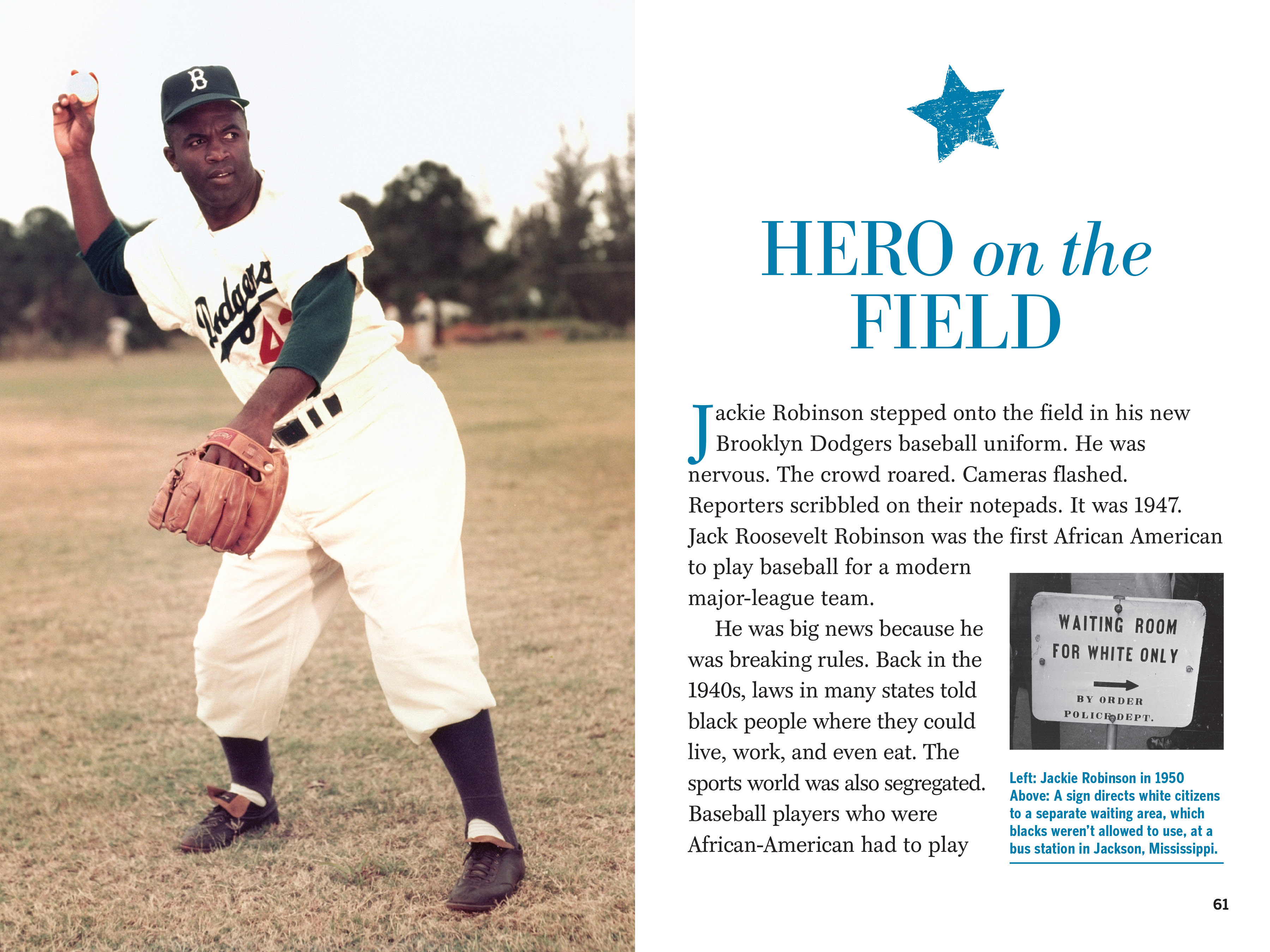
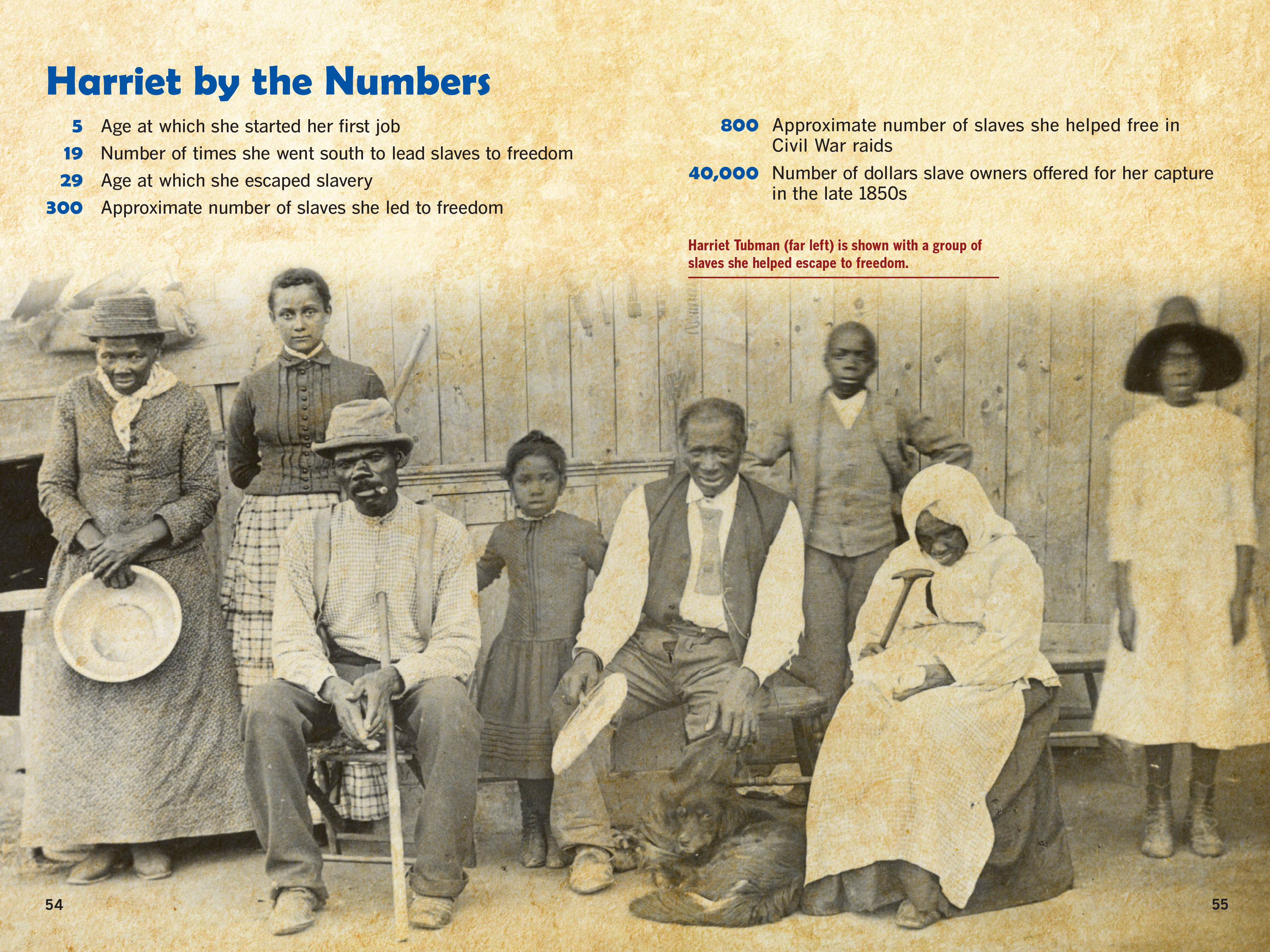
Young readers learn about the life of Harriet Tubman—born a slave around 1820, she escaped to the North, but returned to the South nineteen times as a conductor on the Underground Railroad to lead 300 slaves to freedom. An incredibly gifted athlete, Jackie Robinson endured taunts, slurs, and death threats when he broke the color barrier in Major League Baseball in 1947. Rosa Parks refused to give up her seat to a white man on an Alabama bus in 1955 and paved the way for a Supreme Court decision that declared segregation on Alabama’s public buses was unconstitutional. On January 20, 2009, Barack Obama took the oath of office as our country’s first African American president.
Illustrated with a dynamic mix of photographs and illustrations, the biographies of these Americans delve deeper than their accomplishments to reveal details on their childhoods, early experiences, schooling, family life, and more. Sidebars about related topics—Underground Railroad routes, sports firsts, the Harlem Renaissance, and more—give context and additional insights for young readers. Heroes of Black History also gives readers a timeline overview of three centuries of African American history, beginning with the slave trade, touching upon the formation of the NAACP, the civil rights movement, the March on Washington, and other pivotal events, up through the beginning of the Black Lives Matter movement. Brief profiles of more than twenty additional heroes of black history, a glossary of key terms, and a detailed index are also included in this comprehensive book.
Review: When I was asked to take part in this blog tour, I knew right away that I wanted to be part of week 4 of the tour to focus on Barack Obama for a few reasons: 1) I need a reminder of modern heroism; 2) I’ve featured the other three Americans on Unleashing Readers before (Harriet Tubman, Jackie Robinson, Rosa Parks); 3) The Obamas, in my opinion, are the perfect couple to feature on a Valentine’s Day post.
Obama’s biography within this text reminded me that hard work, high ethics, kindness, love, and intelligence can lead to success and that being cutthroat or brutal are not the key features in heroes of mine. The biography, overall, was quite simple and focused on the main points of Obama’s life and presidency; however, it is a wonderful introduction to his life thus far and really ensures that readers understand how he got to where he is and how he changed history. It was so refreshing to read about a person that faced discrimination and resistance with such grace and resilience.
I also got to glimpse into the upbringing of Obama which I ended up knowing less about than I thought. I hadn’t realized he hardly knew his father nor that he lived in Indonesia for a while before returning to live with his grandparents in Hawaii. All of this lead to Michelle and him meeting while he was completing an internship–her stability appealed to him. And that was the beginning of a beautiful romance. And the beginning of a journey that neither of them probably saw coming.
The other sections in this text follow similar suits in that they are wonderful introductions of each historically significant American.
Teachers’ Tools for Navigation and Discussion Questions: This four-stories-in-one biography from Time has so many applicable uses in classrooms! The publisher created teaching guide shares discussion questions, topics for writing, a scavenger hunt, more heroes of Black history, activities for students for each biography, a cloze read book review, and fast facts for each hero.
Histories Mysteries
Author: Kitson Jazynka
Illustrators: Various
Published October 17th, 2017 by National Geographic Society
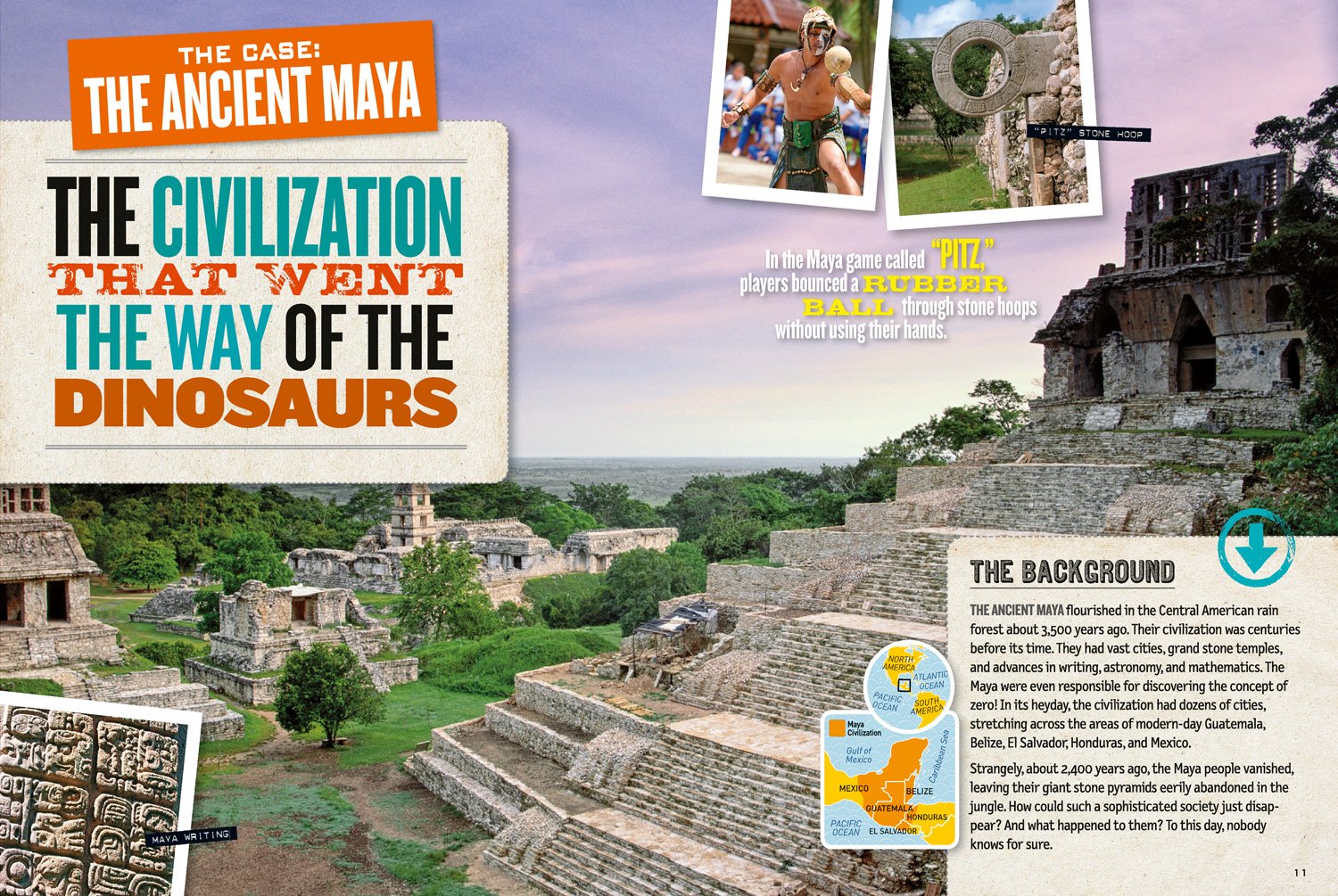
Summary: Why were the Easter Island heads erected? What really happened to the Maya? Who stole the Irish Crown Jewels? The first book in this exciting new series will cover history’s heavy-hitting, head-scratching mysteries, including the Lost Colony of Roanoke, the Bermuda Triangle, the Oak Island Money Pit, Stonehenge, the Sphinx, the disappearance of entire civilizations, the dancing plague, the Voynich manuscript, and so many more. Chock-full of cool photos, fun facts, and spine-tingling mysteries.
Review: I feel like a broken record, but I just feel like it needs to be repeated: National Geographic Kids are publishing some truly phenomenal books for kids to read independently and/or for teachers to use in the classrooms. This one is no exception! It is beautifully structured with each mystery being shared with background, more details, clues, and theories along with illustrations and photographs. It is broken up into 7 chapters with mysteries all within the chapter around a specific topic. The chapter topic’s are: vanished civilizations, unexplained deaths and disappearances, creatures of myth and legend, freaky phenomena, mystifying monuments, cryptic codes and lost languages, & treasure troves.
Teachers’ Tools for Navigation: I felt very similarly about this book as I did about What Would Happen?, another National Geographic book–I just want to bring it into a classroom and let kids just inquire about any of the mysteries that tickle their fancy! How much fun it’d be to just allow students to get obsessed with a mystery then share it with their classmates.
Discussion Questions:
Which mystery do you want to do more research on?
[For each mystery] Do you agree with the theory shared? OR Which of the theories shared do you agree with?
What other mysteries would you like to learn more about?
Flagged Passages:
Read This If You Love: History, Mysteries, National Geographic Kids books
Recommended For:
Stop by Kid Lit Frenzy to check out the link up of other Nonfiction Picture Book reviews!
**Thank you to Media Masters Publicity for providing a copy for review!**
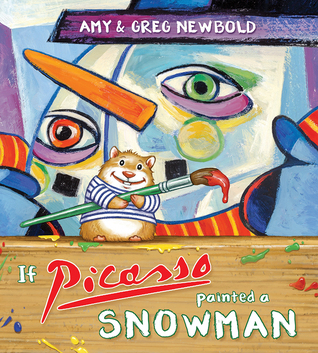
If Picasso Painted a Snowman
Author: Amy Newbold
Illustrator: Greg Newbold
Published October 3rd, 2017 by Tilbury House Publishers
Summary: If someone asked you to paint a snowman, you would probably start with three white circles stacked one upon another. Then you would add black dots for eyes, an orange triangle for a nose, and a black dotted smile. But if Picasso painted a snowman…
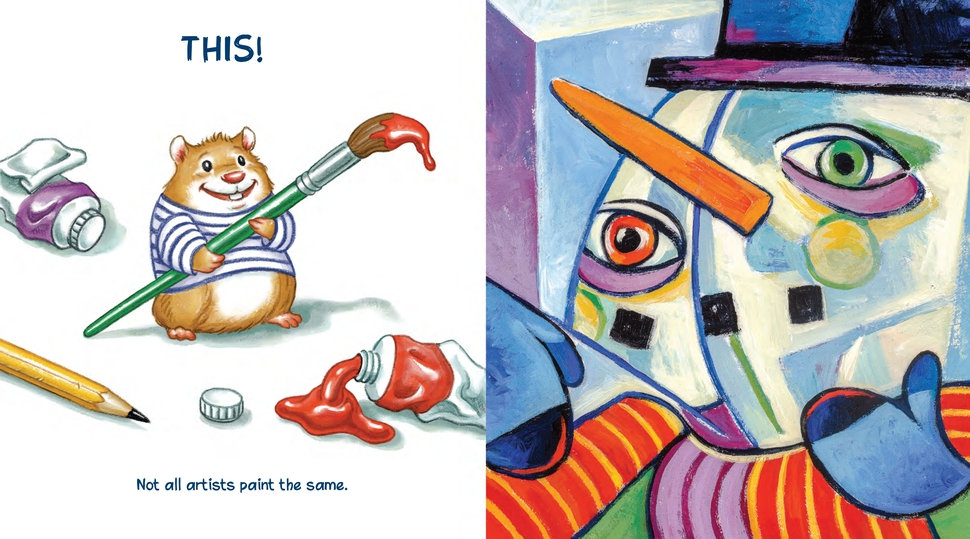
From that simple premise flows this delightful, whimsical, educational picture book that shows how the artist’s imagination can summon magic from a prosaic subject. Greg Newbold’s chameleon-like artistry shows us Roy Lichtenstein’s snow hero saving the day, Georgia O’Keefe’s snowman blooming in the desert, Claude Monet’s snowmen among haystacks, Grant Wood’s American Gothic snowman, Jackson Pollock’s snowman in ten thousand splats, Salvador Dali’s snowmen dripping like melty cheese, and snowmen as they might have been rendered by J. M. W. Turner, Gustav Klimt, Paul Klee, Marc Chagall, Georges Seurat, Pablita Velarde, Piet Mondrian, Sonia Delaunay, Jacob Lawrence, and Vincent van Gogh. Our guide for this tour is a lively hamster who—also chameleon-like—sports a Dali mustache on one spread, a Van Gogh ear bandage on the next.
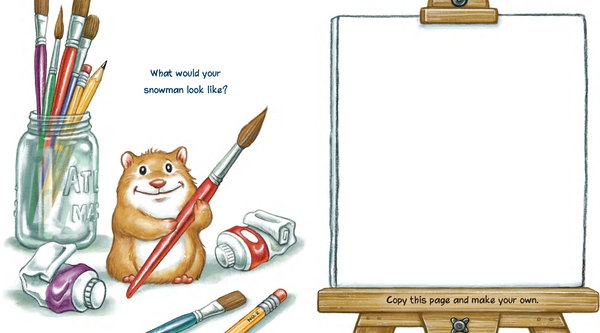
“What would your snowman look like?” the book asks, and then offers a page with a picture frame for a child to fill in. Backmatter thumbnail biographies of the artists complete this highly original tour of the creative imagination that will delight adults as well as children.
Review: Trent and I are really big fans of this one! It has become a regular bedtime book. Amy & Greg Newbold did a fantastic job teaching about art and artists while at the same time adding an entertainment factor through an imaginative and narrative aspect. Now, my experience reading this book for the first time is very different than Trent’s and other readers’ experiences will be like because of prior knowledge. Since I already knew the artists, I could pick out the style elements that were included in the snowman artwork, loved many of the snowmen because of how much it did look like the artists’ work, and even found aspects funny. Trent, on the other hand, read the book from a different lens because he saw all the snowmen first then we talked about each artist and using the back matter and internet, he learned about each of the artists.
Teachers’ Tools for Navigation: It would be so interesting to use the book in both ways: either with giving background knowledge ahead of time or introducing the book then the artists. And the book does such a wonderful job promoting creative freedom and sharing that each artist has their own style and medium which would lead to some really great opportunities for students to explore what their artistic style would be.
Discussion Questions:
[After studying an artist not in the book] How do you think ____ would paint/make/create a snowman?
What parts of each artist’s style did the Newbolds utilize when creating If Picasso Painted a Snowman?
Which snowman creation was your favorite? Why?
After reading the back matter, which artist would you like to learn more about?
Compare and contrast a “regular” snowman which each snowman in the book. Compare and contrast the different types of snowmen.
Author Interview: I was lucky enough to ask Amy & Greg interview questions. I chose to ask:
-How did you choose which artists to highlight in your book?
-How did you each prepare for writing the book?
-Any specific reason for the choice of a hamster?
-Other than art history, what do you hope readers get from the book?
Amy: I got the idea for If Picasso Painted a Snowman while visiting the Musee Picasso in Paris, France. Pablo Picasso’s work was so inventive, and I wondered what it would look like if he created a snowman. That was the beginning of the book. I knew right away certain artists that I wanted to include in the book, including Georges Seurat, Jackson Pollock, Piet Mondrian, and Salvador Dali. In the beginning, I wanted to include all my favorite artists, but as the project took shape, it became more important for me to include artists who made a significant contribution to art. Greg and I discussed each artist, as he had to envision how to paint a snowman in the style of that painter. He brought in artists like Paul Klee and Roy Lichtenstein. It was a wonderful experience to research each of these artists and we both gained a deeper appreciation for their work.
The actual writing of the book took place over many months. Some of the lines in the book came easily, while others took quite a bit of time to figure out. I read the text out loud multiple times and made changes if the words weren’t flowing. Greg and I also participated in a workshop at a writing conference where we were able to get critiques on the book during the writing process. Testing out the manuscript in front of a group really helped. I didn’t write the biographies of each artist until we had signed our contract with Tilbury House to do the book. Once we had a contract, I got busy researching so I could write something that is hopefully informative and interesting about each of these amazing painters.
Greg: This project was so much fun that it often felt like playing rather than work. Before beginning a piece, I researched the artist’s style, the materials and techniques that they used and what motifs and design quirks made them unique. Each piece was a treat to work on and for the most part, I feel that I captured some of the essence of what each artist was known for. I learned many new processes but probably the most fun I had was imitating Jackson Pollock’s drip style “action paintings”. Some people look at Pollock’s work and assume that they could do it since all you have to do is splatter paint around. After more study I realized that Pollock’s work is far from random and unplanned. There is an interesting rhythm and process in the way he layered paint. I had a great afternoon in the back yard dancing around my canvas laid on the ground deciding where the next splash of paint would look the best and trying to put it there. My Pollock turned out pretty well and was also used as the endpapers of the book. I was so entertained by the process that I want to do it again.
I designed the hamster in honor of a family pet named Max. He is the visual tour guide through the book, and you can see evidence of him on nearly every page. His presence adds another dimension to the book as he does things like carry a ruler to get straight lines on the Mondrian piece. In another picture, he wears Picasso’s striped shirt, or Monet’s beret. The hamster is not in the text, but offers several fun references for readers in the know. Keep an eye out for him and his wardrobe changes throughout the book!
Amy & Greg: We both hope that this book encourages artists of all ages to have fun with art. It is simply an introduction, an invitation to try different techniques and styles, use unexpected colors, explore and distort shape and line. By looking at the variety of ways artists painted in history, we hope kids understand that they can find and express their own creative vision.
Flagged Passages:
THIS! is how a snowman would look if Picasso painted one.