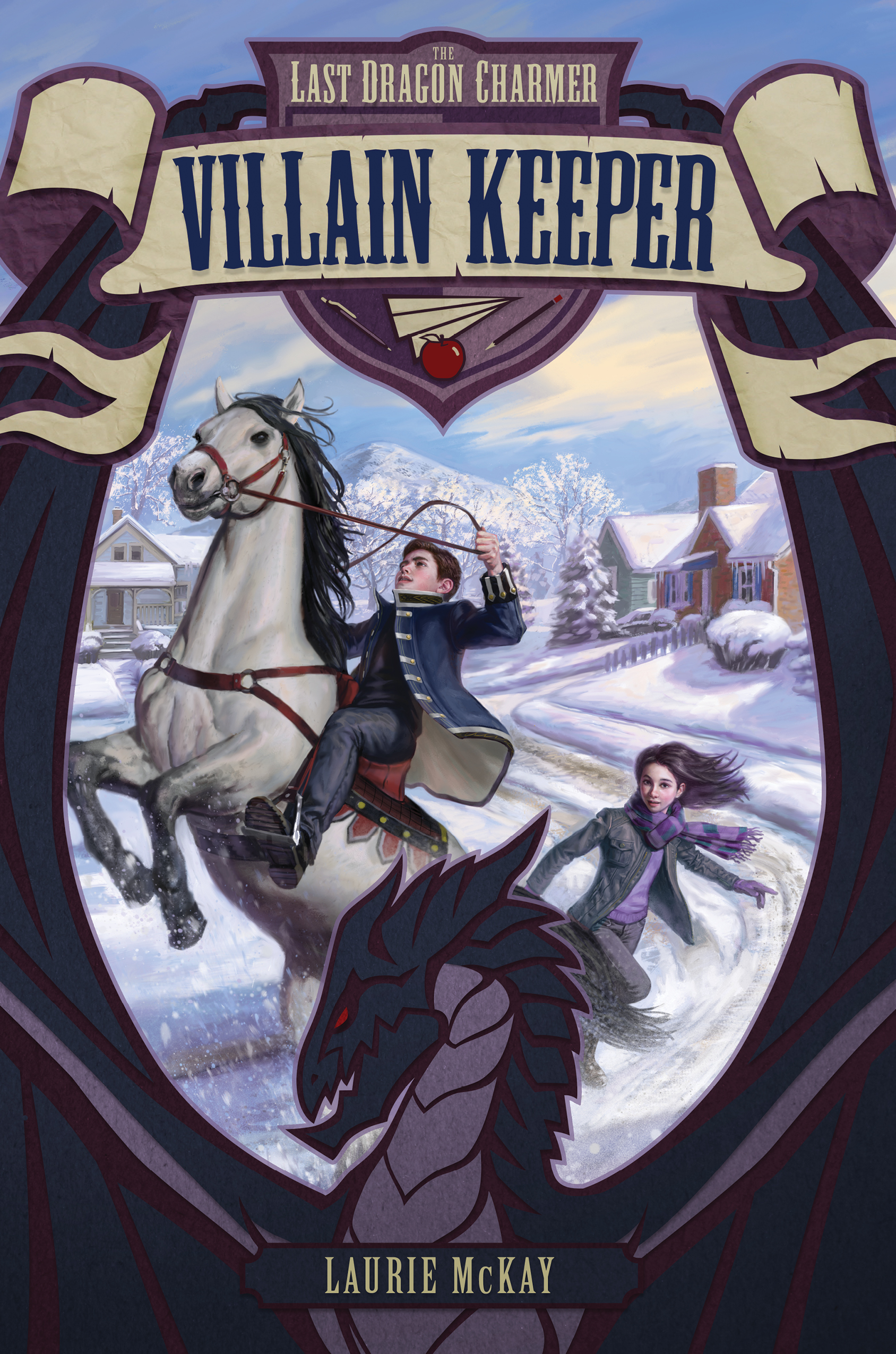
Author Guest Post!: “How Settings Help Shape Characters’ Character” by Anne Boles Levy, Author of The Temple of Doubt

Share

How Settings Help Shape Characters’ Character

by Anne Boles Levy

I love long walks on sunlit beaches, or watching it rain outside my window, or listening to the happy screams of kids on a playground. I love settings, in other words. I’m in different moods in each of those places, and I’m always curious to see how that’s true of characters in novels and movies.

People react to their surroundings – think of yourself, stuck in traffic, with someone cutting in front of you. Honnnkkk! Then think of yourself in your favorite reading spot, curled up with a book and a cup of cocoa. I know where I’d rather be.

And why shouldn’t characters be the same? How would one of your students describe Katniss Everdeen hunting in the woods near her home versus her state of mind in the Hunger Games arena? Or Harry Potter living in the cupboard under the stairs versus his first view of Hogwarts?

I love teaching about setting to my middle schoolers, and I think I achieved a Zen-like bliss creating my own setting for The Temple of Doubt.

In it, my protagonist, Hadara, squirms with discomfort in a hot, sticky classroom on a tropical island. She can’t wait for the open spaces of her town and its surrounding wilds. She too reacts differently in each place, until it was hard for me to separate setting from situation, and situation from characterization. Her ability to wade through a swamp, shimmy up a tree, and find her way among treetop huts says something about the choices she makes and where she feels she can be herself.

Characters don’t merely interact in their settings – it’s not just a place where stuff happens. Take these two characters: one wakes up each morning between silk sheets, the sun streaming through high windows into an airy room. The other wakes up on a hard pallet in the hayloft of a barn, with only a scratchy horse blanket for warmth.

Without knowing anything else about the characters – gender or age, ethnicity or national origin – you’re likely already inferring a few facts about their life circumstances. Maybe you’re imagining that one is likely well off and the other, not so much. Were they born into these circumstances, or is this a recent quirk of fate for each? What might happen if they met?

When I taught 6th grade, I had my students keep a little chart for all the settings in A Wrinkle in Time, since Meg and her companions land on several planets, including a two-dimensional one! But we start at Meg’s comfy home, with its brightly lit kitchen, and we compare not only all the different places she winds up, but how her attitude and reactions also change.

Characters, like real people, are at least partly a product of their environments, and their sense of belonging – or not – can in turn spark the central conflict. Sometimes they fit perfectly in a setting, and it comes under attack, forcing them to act. Other times, home is no longer where the heart lies, and it’s time to journey on.

When seen through the character’s eyes, setting becomes so much more than a place and a time. It’s often a map to the parts of themselves that matter most.


Temple of Doubt

About the Book: 

It’s been two six-days since a falling star crashed into the marshes beyond Port Sapphire, putting the wilds of Kuldor off-limits to fifteen-year-old Hadara. She feels this loss deeply and is eager to join her mother beyond the city limits to gather illegal herbs and throw off the yoke of her tedious religious schooling. Medicines of any sort are heresy to the people of Port Sapphire, who must rely on magic provided by the god Nihil for aid. And if people die from that magic, their own lack of faith is surely to blame. At least, that’s what Hadara has been taught—and has so far refused to believe.

Hadara and her mother have ignored the priests’ many warnings about their herb gathering, secure in knowing their tropical island is far from Nihil’s critical gaze. Then two powerful high priests arrive from Nihil’s home city to investigate the fallen star, insisting it harbors an unseen demon. This sets off speculation that an evil force is already at work in Port Sapphire and brings one of the holy men to Hadara’s doorstep. When he chooses Hadara as a guide into the wilds, she sets off a chain of events that will upend everything she’s been taught about the sacred and the profane.

The Temple of Doubt is the first installment in a series that follows a teenager who is given a greater destiny and purpose than she could’ve ever imagined.

Excerpt from the Book:

My sandals thunked across age-worn planks on a bridge that linked the two halves of the city, east and west, commerce and families. The bridge’s arch gave me a flaw­less view of the flat rows of warehouses, the ships in their berths, the gleaming white of the Customs House at the mouth of the harbor. I could hear the singsong street ven­dors that gave Callers Wharf its name. It was already filling with crowds anticipating a spectacle. We hurried across the bridge and plunged into its teeming market. A brass trinket lured here, a whiff of savory spices pulled there. Amaniel tapped her foot impatiently while I took a peek into a few stalls before they closed.

“What if Nihil himself is coming? Honestly, Hadara, you’d make him wait while you tried on scarves.”

“The kiosks are always closed by the time school lets out.” I was sure I could face anything, even Nihil, in a pair of cloth slippers dyed a vivid pink, but they were about to vanish behind a reed shutter. “If Nihil’s coming, the port might be closed for a long time. If he isn’t, then maybe he won’t be offended if I shop some.”

Amaniel gripped my sleeve. “I’m dragging you if you don’t come. I mean it. I’m not missing this.”

“Alright, alright,” I said. “I don’t know what bitter root you’ve been eating today, but you’re all pucker.”


Anne Levy

About the Author: Anne Boles Levy has lived in eight states, forcing her to make up settings for her fantasy novels since she can’t remember what any real place looks like. She currently teaches English to middle schoolers after more than two decades writing and editing for print, web, and radio. Anne is a graduate of Smith College and studied abroad at University College London, and has her master’s in journalism from Columbia University. She’s also an amateur silversmith and the absent-minded wife to her long-suffering husband, Brett. They run around after two children and a cat in Scottsdale, Arizona.


Thank you to Cheryl at Skyhorse Publishing, Inc. for connecting us with Anne!

RickiSigandSignature

In the World of Books: 25 Girls Who Stand Out For Ricki

Share

When Carrie Gelson asked Kellee and I to join her post about 25 girls who stand out in middle grade and young adult literature, we jumped at the opportunity. Kellee and I devour hundreds of books each year, yet we find that there are characters who stick with us through the years. It was difficult for me to limit my list to just 25 girls, but I am very proud of this group of young women. They don’t always make the right choices,  but they really stand out for me. I hope you find (or have found) these girls to be just as as special as I have. Next Thursday, I will share the boys!

Ricki 25 girls


  1. Violet Markey from All the Bright Places by Jennifer Niven
  2. Astrid Jones from Ask the Passengers by A.S. King
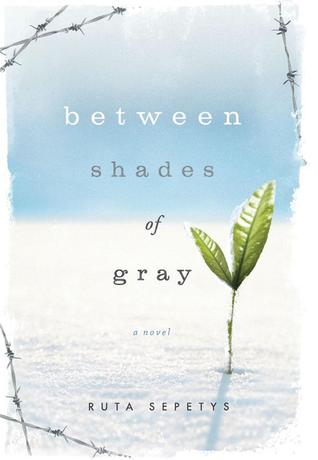
  3. Lina from Between Shades of Gray by Ruta Sepetys
  4. Jackie Woodson from brown girl dreaming by Jacqueline Woodson
  5. Willow Chance from Counting by 7s by Holly Goldberg Sloan
  6. Anne Frank from The Diary of a Young Girl by Anne Frank
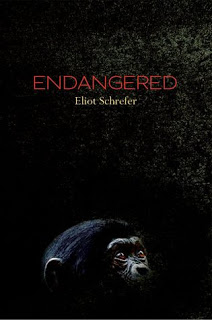
  7. Sophie Biyoya-Ciardulli from Endangered by Eliot Schrefer
  8. Esperanza from Esperanza Rising by Pam Muñoz Ryan
  9. Calpurnia Tate from The Evolution of Calpurnia Tate by Jacqueline Kelly
  10. Hazel Grace Lancaster from The Fault in Our Stars by John Green
  11. Katsa from Graceling by Kristen Cashore
  12. Esperanza Cordero from The House on Mango Street by Sandra Cisneros
  13. Ellie from Jumping off Swings by Jo Knowles
  14. Alaska Young from Looking for Alaska by John Green
  15. Mattie Gokey from A Northern Light by Jennifer Donnelly
  16. Maria Virginia Farinango from The Queen of Water by Laura Resau
  17. Rose Justice from Rose Under Fire by Elizabeth Wein
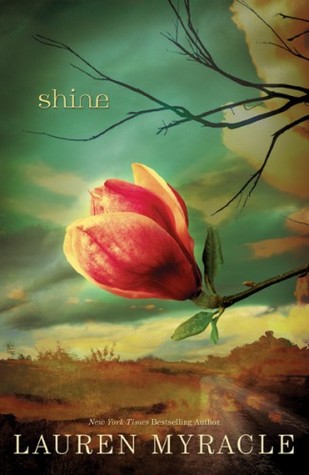
  18. Cat from Shine by Lauren Myracle
  19. Lakshmi from Sold by Patricia McCormick
  20. Felicity Pickle from A Snicker of Magic by Natalie Lloyd
  21. Amber Appleton from Sorta Like a Rockstar by Matthew Quick
  22. Melinda Sordino from Speak by Laurie Halse Anderson
  23. Gabriella from Tree Girl by Ben Mikaelsen
  24. Lupita from Under the Mesquite by Guadalupe Garcia McCall
  25. Lia from Wintergirls by Laure Halse Anderson

Who makes it to your list?

RickiSig

Check out Kellee’s list of 25 girls that stand out for her.

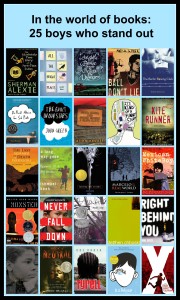
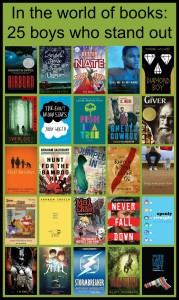
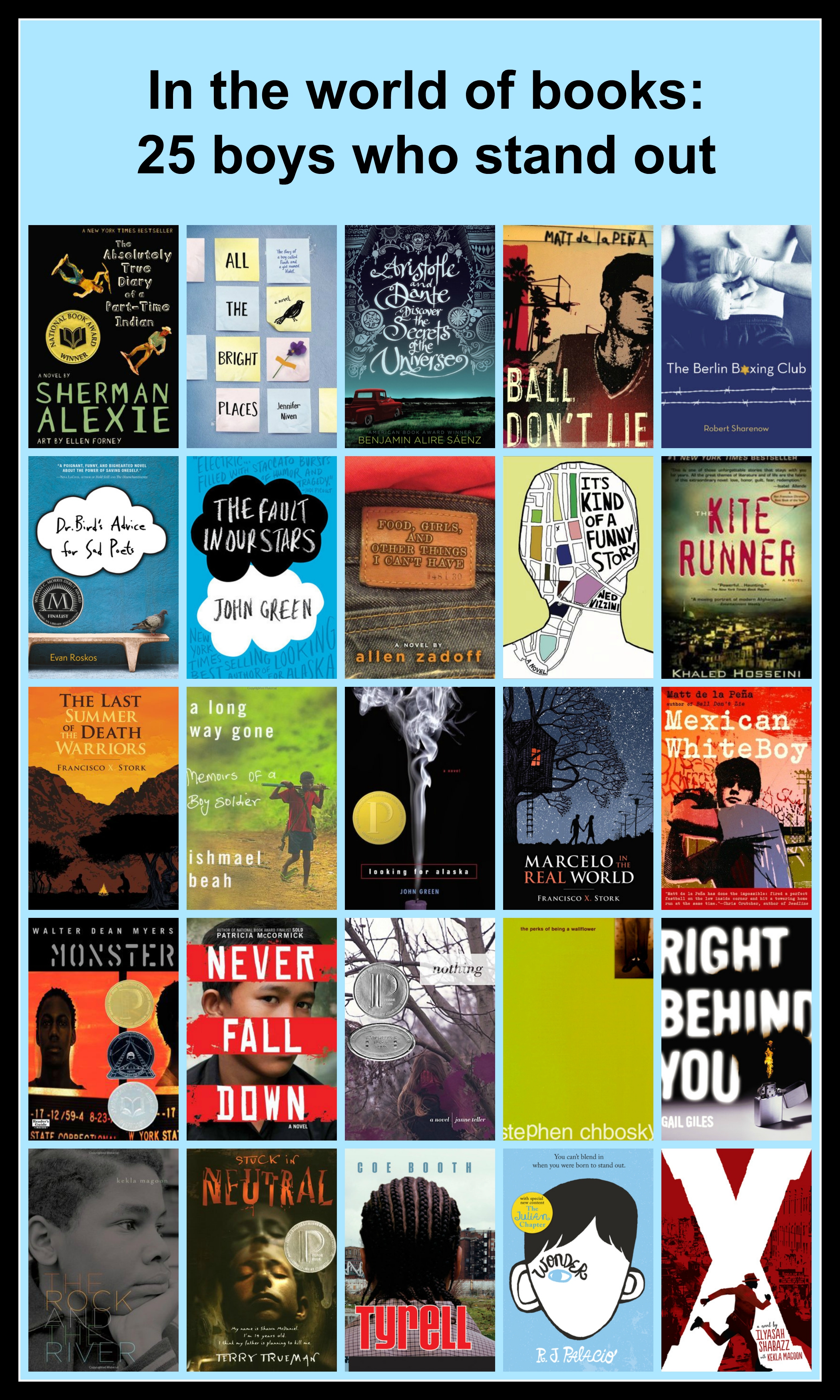
Check out Kellee’s list of 25 boys that stand out for her.

Review and Author Interview!: Cold War on Maplewood Street by Gayle Rosengren

Share

cold war maplewood

Cold War on Maplewood Street
Author: Gayle Rosengren
Published August 4, 2015 (Today!) by Putnam

Goodreads Summary: Cold War anxieties play out in a sensitively told story set during the Cuban missile crisis in the 1960s, perfect for fans of Gary Schmidt and Kristin Levine.

Joanna can’t get over how her brother broke his promise to never leave like their dad did. Sam is thousands of miles away on a navy ship, and no matter how often he sends letters, Joanna refuses to write back. When she makes a promise, she keeps it.

But then President Kennedy comes on TV with frightening news about Soviet missiles in Cuba—and that’s where Sam’s heading. Suddenly Joanna’s worries about being home alone, building up the courage to talk to a cute boy, and not being allowed to go to the first boy-girl party in her grade don’t seem so important. Maybe sometimes there are good reasons to break a promise.

The tense timeline of the Cuban missile crisis unfolds alongside a powerful, and ultimately hopeful, story about what it means to grow up in a world full of uncertainty.

Ricki’s Review: Cold War on Maplewood Street highlights a time period that isn’t common in the genre of historical fiction. I was intrigued from the very beginning because I have read few books focused on the Cuban missile crisis. The author excellently balances narrative and history in this engaging, thought-provoking text. Joanna is a strong girl who is ashamed of the way she treated her brother when he left for war. She makes a realistic mistake and tries to work through her emotions regarding her treatment of her brother and also the frightening events of war. There are many concepts for teachers to draw upon in this text—family, friendship, war, and fear, to name a few—and teachers will find this text offers rich opportunities for classroom discussion.

Kellee’s Review: What I think Ms. Rosengren does so well in this book is tell a real story with a piece of history as the backdrop. This is a Cold War/Cuban Missile Crisis story, but that isn’t what the book is all about. This book is about Joanna, her family, and her best friend. Her characters are very real and show the real emotions that must have been running through so many peoples’ veins during this tense time.  Because of how well this book is crafted as a narrative within a historical time period, I believe it would be a great introduction to this time period for middle grade readers. Many will have never heard of the Cold War or Cuban Missile Crisis, so learning about it through Joanna’s story is perfect. 

Teachers’ Tools for Navigation: Teachers might consider using this text to ask students to examine their regrets. Students could begin by closely examine characters that have regrets. Who are they? Do their regrets impact others? Then, the students could consider world leaders or pop culture to consider regrets that famous people might have and how these regrets impacted their lives. Finally, the students might journal to make connections with the text by examining mistakes they have made or regrets they hold in their personal lives.

Another interesting aspect of this book is the theme of communication. Students could compare the lack of communication of some of the characters in the book (which led to a major issue) and the lack of communication which led to the Cuban Missile Crisis. How could communication have helped either of these situations?

Discussion Questions: How would you react if your sibling went to war? Is Joanna’s reaction realistic? Is it fair?; How does war impact the lives of those who stay home? How do the characters of this text react differently from each other? Do you think the war impacted the choices Pamela’s family members make?; What is Mrs. Strenge’s role in the novel? How does she enhance our reading of the story?

Author Interview!: 

Unleashing Readers: What interested you in the Cold War, specifically?

Gayle Rosengren: When I wrote the first draft of Cold War on Maplewood Street–twenty years ago(!)–itwas to share a singular experience from my childhood, the Cuban Missile Crisis. But for several reasons, the manuscript never made it to an editor and I had to set it aside.

Years later I decided to revisit it with a different objective in mind. Now, I wanted to tell a story in which the crisis was the backdrop for a story about how poor communication can destroy relationships. The Cold War itself was an example of a break-down in communication on such a major scale that it very nearly led to destruction on a global level. In my novel, poor communication is demonstrated by main character Joanna’s failure to write to her brother and apologize for the terrible things she said to him when he left for the Navy. It’s also shown in her avoidance of a new tenant in their building, an old woman Joanna finds frightening for several reasons; and it’s demonstrated in her best friend Pamela Waterman’s family, when Mrs. Waterman runs away instead of confronting her husband about how desperate she is to see Paris.

UR: What does your research process look like?

GR: My research began with plumbing my own very vivid memories of the week of the crisis. I was twelve, and I was scared, especially since–although they tried to conceal it–I could see that adults were scared too.

But the major source of the historical details in Cold War on Maplewood Street came from the Chicago Tribune’s archives and actual headlines, photos, and articles that appeared in what was then The Chicago Daily Tribune. Remember, I wrote the first draft of the manuscript over twenty years ago. Pre-computer. And given that newspapers and television newscasts were the primary news sources of the day, I felt it was a solid source for my facts. I have a fat file full of copied newspaper pages that provided everything from the news to the weather and the television schedule. (All 4 channels!)

Today we know more about what was going on during that infamous week (in particular the note that Kennedy sent to Khrushchev agreeing to remove our nuclear weapons from Turkey) but I wanted Joanna to know only what anyone else living in the U.S, and specifically Chicago, would have known at the time.

UR: Did you decide on your time period or your protagonist/narrative first?

GR: This was an instance where the time period was clearly the inspiration for the story, and the protagonist and voice followed. I originally wrote this manuscript in the third person, rewrote it in first person, and then went back to third as I struggled to discover the character and voice that would best serve the story.

UR: Did anyone in your life inspire your characters?

GR: I modeled Joanna’s and Sam’s relationship on my close relationship with my brother Dennis. He was in the Air Force at the time of the missile crisis and based relatively safely in Okinawa, Japan, but I imagined that he was in the Navy, on a ship off the east coast of the U.S., and likely to be swept into action as part of the Cuba quarantine and blockade. I imagined how terrified I would have been for him. And then, to up the stakes, I imagined that when he’d left, Joanna in her hurt and anger accused him of deserting them just like their father had years before. The guilt she would feel knowing she might never get to apologize would be overwhelming.

Joanna’s mother was modeled after my single mother who always worked hard and scrimped to take care of us. Pamela was every good friend I ever had with a normal (which at the time meant two-parent) family.

As for Joanna, she was a lot like me at 12–childish and thoughtless one moment, grown-up and sensitive the next, taking awkward steps toward adulthood and all the while longing for the protective cocoon of childhood that was forever left behind in that unforgettable week. Like Joanna, I too loved horses and dogs and hated being alone in the house at night.

We Flagged: “[S]taying positive and hopeful—even pretending to—was much better than giving in to fear.” (p. 142)

Read This If You Loved: Countdown by Deborah Wiles; Paper Cowboy by Kristin Levine; What the Moon Said by Gayle Rosengren; Purple Heart by Patricia McCormick; Spy Catchers of Maple Hill by Megan Frazer Blakemore

Recommended For: 

  litcirclesbuttonsmall classroomlibrarybuttonsmall

 RickiSigandSignature

**Thank you to Penguin for providing copies for review and Ms. Rosengren for the author interview!**

Circus Mirandus by Cassie Beasley

Share


circus mirandus

Circus Mirandus
Author: Cassie Beasley
Published January 1, 2015 by Dial

Goodreads Summary:
Do you believe in magic?
Micah Tuttle does.

Even though his awful Great-Aunt Gertrudis doesn’t approve, Micah believes in the stories his dying Grandpa Ephraim tells him of the magical Circus Mirandus: the invisible tiger guarding the gates, the beautiful flying birdwoman, and the magician more powerful than any other—the Man Who Bends Light. Finally, Grandpa Ephraim offers proof. The Circus is real. And the Lightbender owes Ephraim a miracle. With his friend Jenny Mendoza in tow, Micah sets out to find the Circus and the man he believes will save his grandfather.

The only problem is, the Lightbender doesn’t want to keep his promise. And now it’s up to Micah to get the miracle he came for.

Ricki’s Review: I was only a few pages in when I knew this book would be special. I was captivated by the beautifully described setting and the words that seemed to dance off the pages. This book is about magic, but the writing is quite magical in itself. I usually give my ARCs away, but I am hanging on to this copy because I plan to read it to my son when he is a bit older. I’ll likely buy another copy because I am eager to see the illustrations! I suspect that this text will create lifelong readers. It belongs in every classroom in America. Circus Mirandus is the kind of book that takes you to another world—one that will stay in your heart forever.

Kellee’s Review: I liked Circus Mirandus  from the very beginning, but as soon as the circus officially enters he story, the magic just engulfs you. I think it is the Lightbender that makes the story. He is a mystery, but also the person that I feel like I connected with the most. I truly feel that he is what makes this book as magical as it is. I also really liked Jenny. Jenny represents the main stream (which is odd to say because Jenny is a little bit odd), but Jenny has already moved past magic and is so straight forward. Convincing her to believe in anything past what she sees and knows was such a challenge for Micah. (But she is such a great friend!)

One of the things I really liked about the text is the theme of helping kids stay kids for as long as possible. Circus Mirandus is around to help keep the magic of childhood alive. That is something I can believe in!

Circus Mirandus was my informal Twitter book club’s choice for July, and I loved chatting with them about the book (and Ricki joined us this time!). To see the archive of our chat, you can view it here. (Warning: There are spoilers for the book in the chat.)
Some of my favorite quotes from the chat were:

“I loved that Jenny was willing to go along on the journey even if she had trouble believing.” -Alyson Beecher

–“Yes! That is what made me love her. She was willing to support her friend.” -Kellee Moye

–“And Jenny needed a friend, found something in herself that “might” want to believe, too?” -Linda Baie

–“I love how great Jenny and Micah are for each other…helping each other find courage and comfort.” -Beth Sanderson

“It was interesting that the light bender just dismissed G., rather as we all should dismiss evil people.” -Linda Baie

“I loved the relationship between Micah and Gpa. He had so many words of wisdom to prepare Micah.” -Leigh Anne Eck

–“The wonderful relationship between Micah and his Grandpa is what I will remember the most about this book.” -Cynthia Alaniz

“I don’t think we should hide kids from life truths like death. Kids need to be taught healthy ways to grieve.” -Ricki Ginsberg

“The artwork is special! It is interesting to read the Ch then look at the art & find the reasoning behind the art.” -Kellee Moye

–“Yes! There is something special when physical aesthetic of book matches aesthetic of the language.” -Christy Rush-Levine

Favorite quotes shared from the book:

“Because when you try too hard to hold on to something, you break it.”

“Who you are is more than good enough.”

Teachers’ Tools for Navigation: This book naturally lends itself to a creative project. I would love to have students work together to design their own circus. Perhaps each student could be in charge of designing a different section of the circus and writing about it. For example, one student might be in charge of writing the opening speech for a circus act; another student could be in charge of writing a newspaper article about the events; another student might be in charge of writing to the mayor to ask permission to use a field for the circus. I’d allow students to generate their own ideas, so they can take ownership of their work.

However, the best place that this book could end up is in as many kids’ hands as possible! It deserves to be read and read widely.

Discussion Questions: What is Jenny’s role in the novel? How does she add to the story?; Do you think you would believe in the circus? Why or why not?; Which characters showed bravery? Why or why not?; What role does fantasy play in this text? How would it be different if it was a work of realistic fiction?

We Flagged: “You never need an invitation to go home.”

Read This If You Loved: Books by Roald Dahl, A Snicker of Magic by Natalie Lloyd, Wonder Show by Hannah Barnaby, Miss Peregrine’s Home for Peculiar Children by Ransom Riggs, Big Fish by Daniel Wallace, Night Circus by Erin Morgenstern, Peter Pan by J.M. Barrie

Recommended For: 

 readaloudbuttonsmall litcirclesbuttonsmall closereadinganalysisbuttonsmall classroomlibrarybuttonsmall

 RickiSigandSignature

**Thank you to Penguin for providing copies for review!**

Top Ten Tuesday: Fellow Book Nerd Characters We Love

Share

top ten tuesday

Top Ten Tuesday is an original feature/weekly meme created at The Broke and the Bookish. The feature was created because The Broke and Bookish are particularly fond of lists (as are we!). Each week a new Top Ten list topic is given and bloggers can participate.

 Today’s Topic: Fellow Book Nerd Characters We Love

Because they remind us of our book-obsessed selves, of course!

Ricki

1. Liesel Merminger from The Book Thief by Markus Zusak

book thief

She is so young, but yet, she steals books. She can’t resist them! I love this girl.

2. Scout Finch from To Kill a Mockingbird by Harper Lee

to kill a mockingbird

Scout says, “Until I feared I would lose it, I never loved to read. One does not love breathing.”

3. A. J. Fikry from The Storied Life of A. J. Fikry by Gabrielle Zevin

the storied life

This grumpy man stole my heart.

4. Hermione Granger from Harry Potter by J. K. Rowling

harry potter

I am not a huge Harry Potter fan, but I am a huge Hermione fan. She reminds me of me!

5. Francie Nolan from A Tree Grows in Brooklyn by Betty Smith

Tree Grows in Brooklyn

Francie said that “the world was hers for the reading.” I will never forget the scene where she reads in the fire escape.

Kellee

1. Matilda from Matilda by Roald Dahl

matildaDahl

Matilda was the first book nerd I ever encountered in a book, and I loved her! I wanted to be as smart as her, and I wanted to hang out with her.

2. Josie from Out of the Easy by Ruta Sepetys

out of the easy

Josie lives and works in a bookstore and dreams of a college education. She is a book nerd in a place where they aren’t appreciated, and I adored her for that.

3. Cath from Fangirl by Rainbow Rowell

fangirl

Cath is a fangirl (hence the name of the book). She loves Simon Snow, a character in a book series, and spends most of her time writing fanfiction about Simon and visiting Simon Snow forums. She may even be more of a book nerd than I am.

4. The Gorilla from Look! by Jeff Mack

look!

This poor gorilla just wants to read a book. Hopefully the boy will appease him!

5. Miss Brooks from Miss Brooks Loves Books! (And I Don’t) by Barbara Bottner

miss brooks

 I want to teach with Miss Brooks! This book celebrates librarians and books and shows the impact of a book loving librarian on students.

Who are your favorite book nerds?

RickiSig and Signature

Henry’s Freedom Box by Ellen Levine

Share

NFPB2015

Nonfiction Picture Book Wednesday

Nonfiction Picture Book Wednesday is hosted by Kid Lit Frenzy and was started to help promote the reading of nonfiction texts. Most Wednesdays, we will be participating and will review a nonfiction text (though it may not always be a picture book).
Be sure to visit Kid Lit Frenzy and see what other nonfiction books are shared this week!

Henry's Freedom Box

Henry’s Freedom Box
Author: Ellen Levine; Illustrator: Kadir Nelson
Published: January 1, 2007 by Scholastic

GoodReads Summary: A stirring, dramatic story of a slave who mails himself to freedom by a Jane Addams Peace Award-winning author and a Coretta Scott King Award-winning artist.

Henry Brown doesn’t know how old he is. Nobody keeps records of slaves’ birthdays. All the time he dreams about freedom, but that dream seems farther away than ever when he is torn from his family and put to work in a warehouse. Henry grows up and marries, but he is again devastated when his family is sold at the slave market. Then one day, as he lifts a crate at the warehouse, he knows exactly what he must do: He will mail himself to the North. After an arduous journey in the crate, Henry finally has a birthday—his first day of freedom.

Review: The story of Harriet Tubman is perhaps the most commonly taught story about the Underground Railroad. Henry “Box” Brown’s story is quite different, and I learned a lot by reading this book. I think it would be an excellent text to teach in the classroom. This book made me very emotional, and I am still thinking about it, weeks after I finished it. The illustrations are gorgeous, and the story is inspirational. The author’s note at the end of the text provide more factual information that will send students scouring for more information about the time period.

Teachers’ Tools for Navigation: Most obviously, this would be an excellent text for a unit about slavery or the Civil Rights Movement. I am a big proponent of using texts outside of traditional units (or Black History Month) because these texts are valuable beyond the time period they represent. I would love to do a unit on Endurance or Bravery or Freedom. I would find and group similar texts that promote discussion and inquiry about the theme and ask students and essential questions like, What does it mean to be brave?

Discussion Questions: How does Henry endure many challenges in life? In what ways is he brave?; What does Henry teach us about life?; Describe another famous person in history or modern times who reminds you of Henry.

One of the Many, Beautiful Illustrations:

Kadir Nelson Henry 

Read This If You Loved: Dave the Potter: Artist, Poet, Slave by Laban Carrick Hill; The Listeners by Gloria Whelan; Freedom Summer by Deborah Wiles; The Other Side by Jacqueline Woodson; The Diary of Anne Frank by Anne Frank

Recommended For:

  readaloudbuttonsmall  classroomlibrarybuttonsmall

RickiSig

Top Ten Tuesday: Books that Feature LGBTQ Characters or Issues

Share

top ten tuesday

Top Ten Tuesday is an original feature/weekly meme created at The Broke and the Bookish. The feature was created because The Broke and Bookish are particularly fond of lists (as are we!). Each week a new Top Ten list topic is given and bloggers can participate.

 Today’s Topic: Books that Feature LGBTQ Characters or Issues

When this week’s topic popped up about celebrating diversity, we knew that we wanted to celebrate books with LGBTQ characters or issues (particularly in light of the SCOTUS same-sex marriage ruling). Below are 10 books we’ve read that we feel are wonderful representations of middle grade and young adult literature that include LGBTQ characters or issues. They are listed in no particular order, and to be honest, we had a hard time narrowing the list to ten!

Ricki and Kellee

1. Aristotle and Dante Discover the Secrets of the Universe by Benjamin Alire Sáenz

aristotleand

A beautiful, quiet book that is very literary, Aristotle and Dante Discover the Secrets of the Universe follows Aristotle, a boy who doesn’t have friends until he meets Dante. Through Dante, he learns about friendship, life, and loyalty.

2. Ask the Passengers by A.S. King

ask the passengers

Astrid is very cerebral–she can get lost in philosophical theories and questions about the world. Her favorite pastime is laying on the bench in her backyard so she can send her love to the passengers on the airplanes that fly overhead. At her catering job, Astrid meets Dee, and she falls in love. She isn’t sure if this makes her a lesbian, as she has never loved another girl, and society wants to fit her in a box that she isn’t quite sure describes her.

3. Drama by Raina Telgemeier

drama

Drama takes place during a middle school theater production and deals with dating and friendships of the theater kids. This book needed to be included on our list for the way that homosexuality is dealt with as a non-issue in the book. It is just straight forward and matter of fact–just part of life.

4. Shine by Lauren Myracle

shine

Cat is best friends with Patrick, and they are inseparable. After some troubling incidents, she decides to stray from Patrick and their group of friends and becomes a loner. The book starts off with Patrick, beaten until he is unconscious, slumped in front of a gas station with a gas nozzle hanging from his mouth and a sign that reads “Suck this, faggot.” With every page, readers become more and more hooked to the mystery that unfolds. This is a book that teaches readers to look internally at the judgments they make of others. Most importantly, this is a book that teaches us to SHINE.

5. October Mourning by Lesléa Newman

october

This is an incredibly important publication–both for those who know and remember his story, and for those who were too young to have lived through the horror of it all. Matthew Shepard, a 21-year-old, openly gay college student encountered two other college students in a bar on fateful night on October 6th, 1998. Pretending to be gay, the two men lured Matthew into their truck, drove to a deserted area, tied him to a fence, and beat him with a pistol as he begged for his life. Eighteen hours later, a biker saw Matthew and rode for help. Sadly, Matthew died in a hospital five days later with his family by his side. Leslea Newman, the author, was scheduled as the keynote speaker at Matthew’s school for Gay Awareness week the following Sunday. Using resources and documents, she constructs a beautiful, unforgettable book in verse that truly captures the horrifying events of this tragedy.

6. Luna by Julie Anne Peters

luna

Regan is the only person who knows that her brother, Liam, secretly feels he is a female. As Liam transgenders into Luna, the reader is able to feel the multitude of emotions that both Regan and Luna feel throughout the process. This book is worthy of the awards it has received.

7. So Hard to Say by Alex Sanchez

so hard to say

Very few books deal with questioning sexuality in middle school, but Alex Sanchez does just that in So Hard to Say.

8. Boy Meets Boy by David Leviathan

boy meets

This was the first David Leviathan book that I ever read, and I was truly enthralled with the world that he crafted. In Boy Meets Boy, different is normal and prejudice doesn’t exist, so it is a romantic comedy which just happens to be between a boy and a boy.

Note: Two Boys Kissing also deserves to be honored in this list. It weaves together stories of four gay teens as they face the challenges of being young and gay as they navigate the world.

9. Openly Straight by Bill Konigsberg

openly

Rafe just wants to be a regular teen. Not the GAY teen who does this and that. Just a teen. So, for his senior year, he transfers to a boarding school and keeps his sexuality a secret; however, hiding who you are is harder than Rafe ever thought it’d be.

10. I Am J by Cris Beam

i am j

J is a boy but was mistakenly born as a girl. I am J is his story of working through the depression associated with having a body that was “assigned” to him. This is a truly inspiring, heartfelt, and change-making novel.

Honorary

gracefully george

Gracefully Grayson and George are both about transgendered youth, and their search for acceptance. Neither of us have read these books, but we are so excited that such important LBGT books are being published in the MG/YA world! We cannot wait to read these.

For more LBGT titles, check out the Stonewall Book Award which is a set of three literary awards that annually recognize “exceptional merit relating to the gay/lesbian/bisexual/transgender experience” in English-language books published in the U.S.


There are so many great books about LGBTQ issues, and as we stated above, we had a hard time narrowing down our list to just ten books. Which would you add?

RickiSig and Signature