Author Guest Post!: “Cross Curricular Integration of Climate Change Education Using Middle Grade Fiction” by Michael J. Bowler, Author of Warrior Kids

Share

Cross Curricular Integration of Climate Change Education Using Middle Grade Fiction

With pollution and climate change being, arguably, the most serious issue facing the youth of this century, I authored a book, Warrior Kids, that’s suitable for middle grade through high school. The storyline educates and empowers kids to lead the way in solving this crisis. Included within the plot, and added to the back of the book in the form of Extension Activities, are numerous ways kids as young as elementary school age can take an active role in ensuring a healthier planet for themselves and their own children far off in the future.

Teachers need to implant the belief in students that they can be the change they want to see in the world. When dealing with the environment, adults need to give kids hope and not preach that the sky is falling, which is the message of so many environmental groups in their pursuit of donations. I wrote an entire post about how kids need hope, not fear. Fear paralyzes us, while hope encourages us toward action. My book is filled with hope and positive solutions to the environmental crisis that kids and teens can readily embrace.

I’m sharing cross-curricular ideas that almost all teachers can utilize, whether or not they incorporate Warrior Kids into their classes. Warrior Kids does, however, contain a plethora of ideas that middle and high school students should find of interest discussing and debating. The eBook of Warrior Kids is free for any teacher who requests it.

  1. SCIENCE: At all grade levels, classes can plant gardens around school and have the students tend them. Each grade level can have a different garden or a different responsibility in maintaining one larger garden. Organizations like Common Vision can help you get started. Especially in big cities, kids have little contact with nature and don’t really have a sense of what will be lost if we destroy it. Having them nurture living things and spend time in a garden is an easy way to reawaken their innate connection to the natural world.
  2. MATH: there are so many “numbers” issues your students could work on computing. For example, take plastic water bottles. Based on America’s current annual disposal of water bottles (each of which can only be recycled once) how many acres of land will be needed in the form of landfill to hold all the discarded bottles, both those recycled and turned into a then-non-recyclable item, or those initially tossed into the trash? These calculations can be done for five years into the future, ten years, twenty years, etc. In this way, the students will become tangibly aware of the negative impact of buying water in plastic bottles. The same principal can apply to the numbers of trees we cut down versus how many trees there are worldwide, and to a host of other environmental concerns.
  3. CHEMISTRY: have the students learn in greater depth the ingredients that make up the various kinds of plastics and why certain ones are chemically unhealthful. (There is a section at the back of Warrior Kids that breaks down the different plastics based on toxicity.) Your students can also explore the new biodegradable plastics that are currently available, and others that are still experimental, and debate the pros and cons of each. Chemistry students can also study the effects that “fracking” chemicals have on the environment. Fracking is a method of digging for oil or natural gas. Over six hundred chemicals are added to water during the fracking process – toxic chemicals like benzene and formaldehyde. What is the physical impact on the eco-system when these chemicals leak into groundwater or dissipate into the air? What is the impact on human, animal, and plant life?
  4. BIOLOGY: have your students explore the scientific data that sets two degrees Celsius as the threshold over which the planet cannot safely become any warmer. Have them consider random factors like major volcanic eruptions and how those might affect global temperatures and the climate as a whole. Have them calculate various temperature increases on sea levels and existing plant and animal life. What species are more likely to survive higher temperatures and why? Will parts of the earth become uninhabitable for humans due to heat levels? If so, at what temperature might that occur?
  5. EARTH SCIENCE: students can study the link between heavily fracked areas like Oklahoma and an increase in seismic activity. Is there a direct or indirect connection, and does proximity of wells to known and unknown earthquake faults pose a serious threat to people?
  6. ENGLISH/ELA: have your students go through Warrior Kids and break down the various speeches given by Lance (the eighteen-year-old leader of the youth movement) as examples of persuasive writing. Does he back up his words with evidence? Does he use effective rhetoric? Which aspects are the most persuasive and which are the least and why? If teachers don’t want to use the book, students can use this technique with real activists in the climate arena who speak to the United Nations or other bodies. Are their words substantive, or just platitudes with no specifics to back up their arguments? Take one of their speeches and re-write it to make the message more meaningful and powerful.
  7. SPEECH/DEBATE: students can analyze the effectiveness of Billy’s “Alien Invasion” analogy in his address to the joint session of Congress (or any of Lance’s speeches, as noted in number five, or real speeches delivered by climate activists.) Have students write their own speeches to congress, the UN, or even their parents about why our behaviors need to change so the planet can heal. They can practice their speeches on each other, in front of the class, and even in front of other classes throughout the school. They could attend a school board meeting and attempt to persuade the district to become more sustainable.
  8. BUSINESS/ECONOMICS: have your students calculate the costs of having the school run on solar power. What would be upfront costs to the district and what would be the savings over time? They can pitch their ideas to the principal and the school board. They can even write a grant to obtain money and make the project a reality.
  9. HISTORY: have students explore and report back on the taxpayer subsidies that have been given to fossil fuel companies over the decades. What were the lobbying efforts based on? Which party or politicians have been most in the pocket of these industries, and what would happen politically if all such subsidies were cut off?
  10. GOVERNMENT: have students study up on campaign finance laws – why is it illegal for 501(c)(3) non-profits to campaign for or endorse candidates for public office? They can explore environmental activist groups that have 501(c)(3) status to see if they have ever campaigned for a candidate. If so, did that violation of law affect their non-profit status in any way? If it didn’t, do your students think it should have? Why or why not?
  11. MUSIC: have students compose songs that address the climate issue from the perspective of youth. Put these songs on YouTube and share them with like-minded young people around the world.
  12. ART: create posters/paintings that promote recycling, sustainability, and renewable energy. Enter these works into art contests. There are a number of contests that promote environmental artwork and offer prize money that can be used for eco-friendly projects.
  13. DANCE: interpretive dances that illustrate the negative impacts of pollution and climate change could be an amazing way for the student who isn’t a great writer or speaker to express his/her ideas.
  14. ALL CURRICULAR:
    • Start an Earth Warriors Crew with your class (EW is the fictional group in my book) and get other classes involved. It’s a great community service opportunity and the kids can actively help the move toward sustainability.
    • Each class can have a FB Group page, and link it to the Warrior Kids FB Group Page, if they so choose. They can share their accomplishments rather than selfies (a theme in the book.)
    • They can order t-shirts like the ones worn in the book (I’m happy to share the logo or even order the shirts for you.) They can also create their own shirts with whatever slogan they feel works for them in their community.
    • Have cool giveaways to your students who come up with the most creative idea for sustainability, recycling, reusability, or even creative ways to get the cooperation of reluctant adults (either people they know or politicians.)
    • Organize petition drives for needs in your school or community.
    • Have your class start paper collections. The students can sort all the paper by colors for proper recycling.
    • If there isn’t already a strong recycling program for bottles and cans, have them start one.
    • Where I taught high school, the maintenance staff would throw old computers into the trash. Have your kids make sure all old electronics around the school site are e-waste recycled. If there isn’t a city location nearby, Salvation Army takes e-waste and makes sure it’s recycled properly.

These are just a few of the activities I present at the conclusion of Warrior Kids. There are others, including a list of fifty simple things we can all do to help save the planet. Kids in every curricular area can take almost any of those fifty activities and turn them into a class or school/wide project. I also provide a list of organizations that students can explore in order to learn about climate change and become more involved in making a difference.

Thematically, Warrior Kids posits that we need to shift our human consciousness away from “me” centered thinking over to “we” centered thinking if the earth, and the human race, are to truly heal. When we focus on seemingly small things – like cutting plastic waste, for example – we are taking a huge step toward shifting that consciousness because our actions have a global impact. Just by each of us, and our students, reducing the use of plastic, we improve the entire world and become one with teachers and students in other countries who are doing the same. It’s simple, it’s unifying, it’s elevating, and ultimately it’s a major step toward preserving a healthy planet for the next generation. The time to act is now. As Billy says to his crew in Warrior Kids: “Earth Warriors, assemble!”

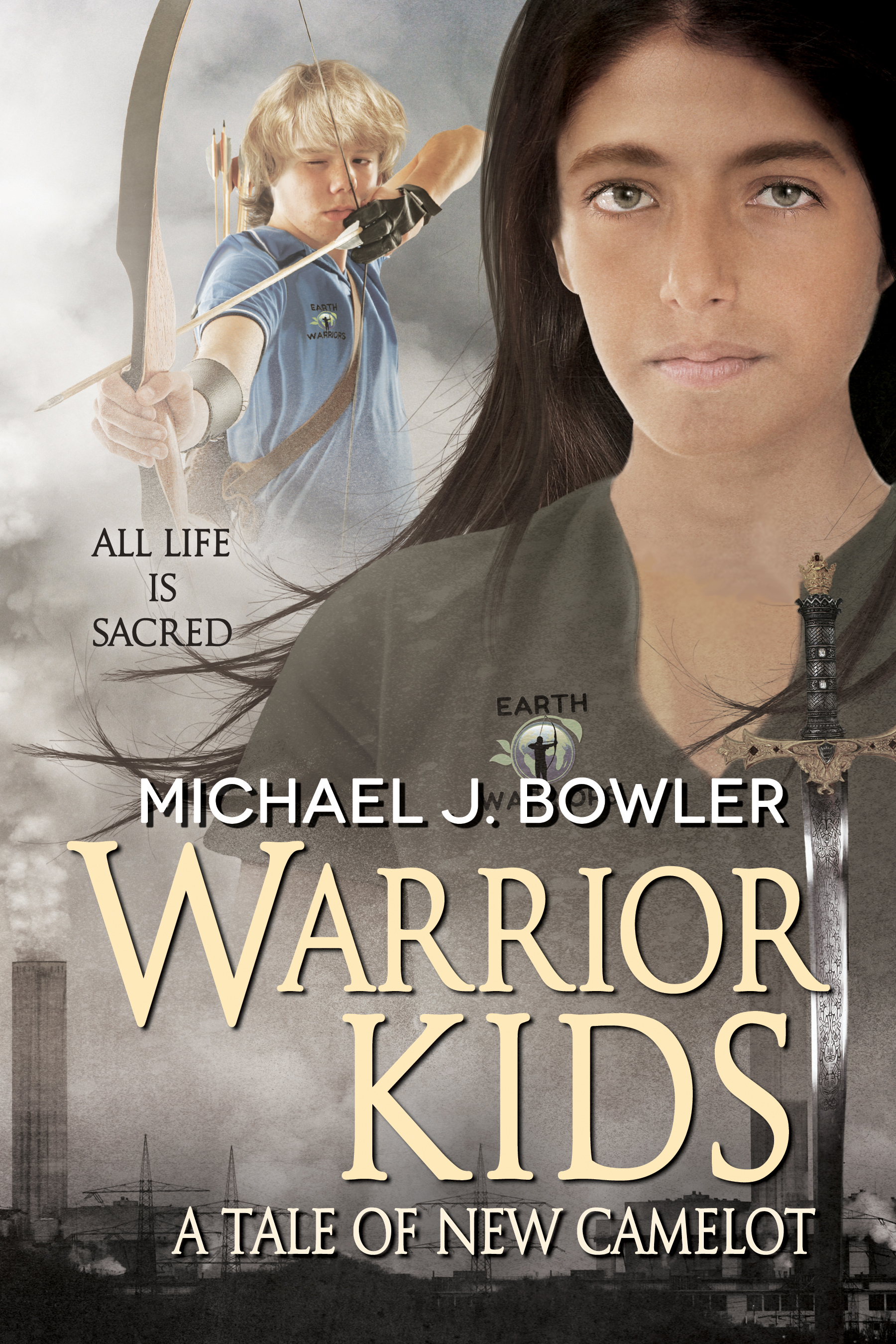
WarriorKids-FRONT COVER

The future looks bleak unless eighteen-year-old Lance and his New Camelot Earth Warriors can save the planet from catastrophic climate change.

Spurred by twelve year-olds Billy, Enya, Itzamna, and his ten-year-old brother, Chris, Lance creates a branch of Earth Warriors, a youth-led movement designed to save the earth from its greatest enemy – greed.

His involvement leads to Earth Warrior crews springing up all across America. Millions of kids leap into action, paralyzing the country and alarming the rich and powerful.

Having adopted his father’s philosophy of doing what’s right, rather than what’s easy, Lance makes serious enemies when he calls out New Camelot donors who represent fossil fuel or other polluting industries, and then barely escapes a series of “accidents” designed to kill him.

When he challenges the United States Congress to step up and act immediately on the climate crisis, the attacks on him escalate. With the majority of America’s kids on his side, Lance and his young Earth Warriors prepare for the United Nations Conference of the Parties in Paris, where they will call upon world leaders to stop talking about sustainability and start acting on it.

But whoever wants him dead isn’t giving up. Will Lance and his crew live long enough to even get to Paris?

Warrior Kids is a standalone tale set within the Children of the Knight universe.

About the Author: Michael J. Bowler is an award-winning author of nine novels––A Boy and His Dragon, A Matter of Time (Silver Medalist from Reader’s Favorite), and The Knight Cycle, comprised of five books: Children of the Knight (Gold Award Winner-Wishing Shelf Book Awards; Reader Views Honorable mention; Runner-Up Rainbow Awards), Running Through A Dark Place (Bronze Award Winner-Wishing Shelf Book Awards), There Is No Fear, And The Children Shall Lead, Once Upon A Time In America, Spinner (Winner Hollywood Book Festival; Honorable Mention San Francisco Book Festival; Bronze Medal from Readers’ Favorite; Literary Classics Seal of Approval; Runner-Up in Southern California Book Festival; Honorable Mention in the Halloween Book Festival), and Warrior Kids: A Tale of New Camelot.

His horror screenplay, “Healer,” was a Semi-Finalist, and his urban fantasy script, “Like A Hero,” was a Finalist in the Shriekfest Film Festival and Screenplay Competition. He partnered with two friends as producer, writer, and/or director on several ultra-low-budget horror films, including “Fatal Images,” “Club Dead,” and “Things II.”

He grew up in San Rafael, California, and majored in English and Theatre at Santa Clara University. He went on to earn a master’s in film production from Loyola Marymount University, a teaching credential in English from LMU, and another master’s in Special Education from Cal State University Dominguez Hills.

He taught high school in Hawthorne, California for twenty-five years, both in general education and to students with learniag disabilities, in subjects ranging from English and Strength Training to Algebra, Biology, and Yearbook.

He has also been a volunteer Big Brother to eight different boys with the Catholic Big Brothers Big Sisters program and a thirty-year volunteer within the juvenile justice system in Los Angeles.

He has been honored as Probation Volunteer of the Year, YMCA Volunteer of the Year, California Big Brother of the Year, and 2000 National Big Brother of the Year. The “National” honor allowed him and three of his Little Brothers to visit the White House and meet the president in the Oval Office.

He is currently writing a novel based on his screenplay, “Like A Hero.”

His goal as an author is for teens to experience empowerment and hope; to see themselves in his diverse characters; to read about kids who face real-life challenges; and to see how kids like them can remain decent people in an indecent world.

You can find him at:
www.michaeljbowler.com
FB: michaeljbowlerauthor
Twitter: BradleyWallaceM
Blog: www.sirlancesays.wordpress.com
tumblr: http://michaeljbowler.tumblr.com/
Pinterest: http://www.pinterest.com/michaelbowler/pins/
Amazon: http://www.amazon.com/Michael-J.-Bowler/e/B0075ML4M4
Instagram: StuntShark

Thank you to Michael for his great cross-curricular post! These activities will be wonderful for the classroom and even would work well around Earth Day in April!

Kellee Signature andRickiSig

Author Guest Post!: “Where Are You From? Honing Research And Evaluation Skills With A Family Tree Project” by Lissa Johnston, Author of The Dala Horse

Share

“Where Are You From? Honing Research And Evaluation Skills With A Family Tree Project”

by Lissa Johnston

It’s human nature to be curious about each other. In our caveman days, the ability to detect whether someone was similar to you or very different from you (friend or foe?) was an important survival skill. These survival instincts remain with us today, but we go about evaluating ourselves a little differently. We still observe and make judgments about our fellow humans based on previous experience. As mankind has evolved, we have added the wonderful gift of language – now we can also ask questions! Among adults we see this in the tried-and-true conversation starter,‘what do you do’? With kids, that question doesn’t work as well because most of them ‘do’ the same thing – they’re students. More (and better!) questions are required. A similar question that works well in this process of discovery is not, ‘what do you do?’, but rather: ‘where are you from?’

You may think this is a simplistic question, yielding little in the way of learning opportunities. Everyone knows where they are from, you might be thinking. What’s so special about that? I would argue this one simple question can be more enlightening than it seems, for at least two reasons. One: not everyone, especially not children, are aware of where they are ‘from’. Secondly, when I ask ‘where are you from?’, I hope to encourage you to dig into your family tree and tell me where you are really FROM.

The cool thing about this seemingly nosy inquiry is that it works equally well when turned upon one’s self. One of the main sources of inspiration for my latest book, The Dala Horse, was discovering one branch of my family tree was Norwegian. As a Native Texan growing up in a big city, it was something of a surprise to discover I had Scandinavian roots. The closest I had ever come to anything Norwegian was when the Cowboys played the Vikings, and that wasn’t very often.

Occasionally my younger school-age cousins will reach out to me with questions about our family tree for a class project. I am so thrilled that family tree projects are becoming commonplace in the classroom. It’s the perfect learning opportunity. It combines history, math, sociology, geography, and the golden ingredient: it’s all about the student!

The beauty of a family tree project is that it easily incorporated Into your existing reading plan. There’s no need to add or adjust the reading schedule unless you just want to. Once you start looking at your current assigned reading projects through family tree glasses, opportunities for tying into a family tree project abound. The connection is pretty obvious with social studies, history, or historical fiction books. But if you dig a little deeper, it can also be made with more mainstream books. Most have characters with a variety of ethnic backgrounds. If not, they may take place in locales that vary from yours. Either is a great jumping off point with this simple and adaptable question: ‘[character] in [book] is from [location]. Where are you from?’ And if your current assigned reading is somewhat homogenous, ask the students to write their own version of the story, putting it in a different locale or time period that has some connection to their own family tree.

Some additional ideas for incorporating a family tree project into your lesson plans:

  • Have students work up a family tree project going as far back as they can. It’s okay if it’s only two or three generations. Question marks in the family tree are okay. That happens to professional genealogists all the time!
  • Pre-select a 20 year time period (1900-1920; 1960-1980). Have the students create a fictional biography about one of the family members who was born within that time period. Extra credit if the story correlates with the age that person would have been within that era. For example, if teacher has selected the era 1940-1960, and Uncle Kenneth was born in 1941, his bio should focus on what he would have been doing from age 0-19. Hint: best to keep this within the last 100 years to make family tree research a little easier.
  • Create some tickets, each with different eras written on them. Number of tickets should equal or exceed number of students in class. For example if you have 30 students, create 35 or so tickets. Divide total number of tickets into 3-4 different eras. Write the eras on the tickets and have students draw out of a jar for what era they will be writing about, again featuring a member of their family tree who lived within that era. This helps spread the research around so that everyone is not looking for the same handful of books on a narrow slice of shelving in your library. You can have them work together in groups, or as individuals. The groups can be organized so that each group is working on the same era so that you have a horizontal storyline. Or, group composition can be completely random so that you might end up with a more vertical storyline for the project within that group: one from 1920-1940; 1940-1960; 1960-1980; and so forth.
  • Students select a person from their family tree. Match something about this person with a similar topic from your school library and write a review of this book. Be sure to include the connection with your family/why you chose it. For example, perhaps Granny Louise grew up on a dairy farm. Select a book about farms, or cows, or the state or city where she lived.
  • Occasionally some students will have some difficulty tracing their family tree back very far. To avoid this issue, make the entire project about fictional or non-fictional characters that THEY get to choose. Create an imaginary family tree for that person going back three generations (self, parents, grandparents). Although the characters will be fictional, their significant life events (birth, marriage, school, death), geography, occupation, etc. must line up more or less correctly with the fictional character. So for example a fictional family tree based on Abraham Lincoln would have a very different set of facts than, say, a fictional family tree of LeBron James.
  • I did mention math, up there, didn’t I? So I better include a few math suggestions. Compile a list of the various ethnic identities in your class based on what the students have uncovered going back to their grandparents’ generation. Which group is the largest? Smallest? How would you calculate these two numbers into percentages? Extra points for determining how your class’s stats line up with similar statistics locally and/or nationwide. Extra points for discovering what other parts of the country have similar groups. In other words, if the smallest percentage represented in your class is of Italian ancestry, where are the largest concentrations of Italian immigrants in the US?
  • Place all ethnic groups represented by your students in a jar. Draw three. Have students research whether there are any businesses such as shops or restaurants in your area that share a common heritage with these three.
  • Reverse that project. Have the class compile a list of several shops and restaurants in your town. Have them research the ethnic groups they represent.
  • Family tree programs and software are very popular now. If your students are old enough, you may lead them in researching family tree records online. In order to avoid any privacy concerns you can easily keep it very general and just look at for example census records for your town going back however far. A fun activity with census records is looking at people’s professions. If accessing these programs is not possible, allow family interviews instead.
  • One of the activities I suggest in the book is a good example of demonstrating how cultural traditions persist through time. Cultural traditions of Norwegians in Texas might seem an obscure subset, until you start brainstorming how many of our traditions we follow and enjoy share today had their roots in other ethnic groups. Challenge students to list the various ethnicities represented in the classroom. Pair these with traditions familiar to many. For example, St. Patrick’s Day is an Irish tradition. Mardi Gras = French. Kwanzaa = African American. I mentioned the Minnesota Vikings earlier. Sports teams often have ethnic cultural connections and are very familiar with many students.
  • Popular songs, artists, even instruments are a great resource for cultural variety. What are the origins of the guitar? Drums? What type of music is traditional in Poland, or India?
  • I’ve saved my favorite activity for last. After completing their family tree research, each student must find something in their research that connects them with at least one other student. For example, perhaps student 1 had a grandfather who was in the Navy during World War II, and student 2 had an ancestor who emigrated to the United States after World War II. Be lenient with the connections. This is a great activity for class-wide brainstorming. A spider diagram on a white board or any display that could be left up for a few days would be ideal for this. The project is complete when each student’s name is represented and linked to someone else’s in the spider diagram.

My wish for students is that they experience the eye-opening discovery that even though some of us may look very much alike on the outside, we may be very different on the inside. And of course, the opposite is true! Sometimes the people who look the most different from us on the outside are the ones with whom we find we have the most in common. There may not be many of you reading this now who have Norwegian ancestors who settled in Texas, like I do. But I bet there are plenty of you whose ancestors came here from somewhere else – also like me!


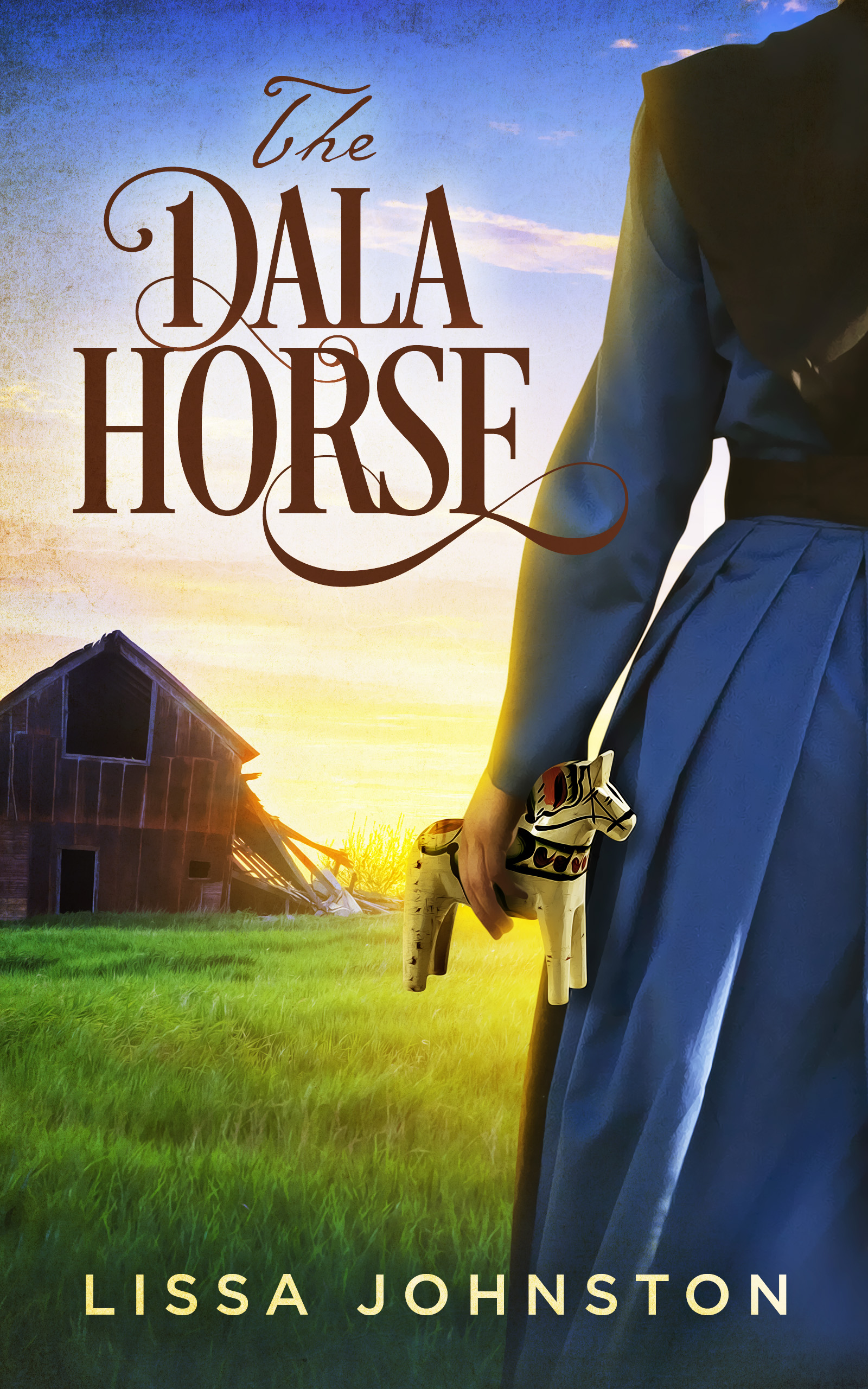
About The Dala Horse

10-year-old Kaya Olson lives in a small Norwegian immigrant settlement in
post-Civil War Texas. When her mother is killed in a stage coach robbery,
Kaya feels responsible. Can she uncover the secrets her family is keeping
to solve the mystery surrounding her mother’s death?

Thank you to Lissa for these great research and evaluation skills!

RickiSigandKellee Signature


Author Guest Post!: “Nurturing Nature in the Classroom” by Rebecca Bielawski, Author of the Mummy Nature series

Share

“Nurturing Nature in the Classroom” 

If you are having trouble getting your class out and into nature, there are a hundred ways you can get nature into your class.  If  you want your kids to run wild with nature-based crafts and projects, but your imagination feels as dried up as an autumn leaf, don’t despair – On the wonderful world wide web you can discover all the inspiration you need.  I especially recommend Pinterest boards and Google+ communities to look for specific ideas suited to your group’s age and other circumstances.

Here are a few tips for adapting nature projects and nature crafts that you might find, to your own classroom or home school environment.

Adapt ideas to your local area  e.g., seeds to germinate that are readily and cheaply available, plants that are easy to sprout and suited to the climate and of course child friendly. Your local garden centre can help out. Local plant species will always be more relevant to the kids. (Planting sunflowers was my favourite as a kid.)

Adapt ideas to your available resources  Most projects will not represent an elevated cost.  Here you can use recycled materials such as plastic bottles and yoghurt pots,  eg. hand trowels can be made from plastic milk or juice bottles with handles. You can also reinforce the Reuse, Reduce Recycle mantra. If you have more of a budget you could, for example, buy plants for the classroom that represent your nature goals.

Don’t forget about your human resources  Think about, how many people you have available to help out. Don’t be afraid to ask parents, grannies etc. for help. Get to know a bit about them, what sector do  they work in, do they have any interesting hobbies or contacts? Find out who has the wildest back yard and if they need it to be explored.  They will be able to help in a million ways with their expertise or simply their time and enthusiasm.

Plan an excursion  Think about what nature opportunities are offered by the surrounding countryside. Go with someone who has knowledge of the local plant life, to enrich the visit and be aware of dangerous or poisonous plants.

It’s great if you can go out to a local forest or mountain or other wild habitat but if that presents too much of a logistical or safety problem, even a local park or a corner of the playground can be ideal to focus on one point of interest, for tiny discoveries inside the grounds of the school.  Take them to see the weeds growing out of the cracks in the pavement. They can track how fast they grow, pull them out to observe the roots or discuss flowering or seed dispersal.  There is a lot to be learnt from the bugs under the rocks too, eg. observational drawings, questions: Why do they live there? What are they doing? Identify and compare species… Finding moss and lichen and other treasures is another option.

Plan ahead and imagine what restriction or problems you might encounter during the activity, especially if you are the only adult involved.

Here are a few juicy nature ideas to get you started:

Flower spotting
Flower pressing
Flower arrangements
Vaseline saucers – you put a thin layer of vaseline on a small plate and make circular patterns with different petal and small leaves
Finding animal tracks, burrows, nests
Collecting seed pods, cones, feathers, sticks, bark, leaves to make their own nests, collages, miniature habitats
Worm collecting for a class compost bin where the kids can throw their biodegradable rubbish from their snacks
Have a “dirty day.” In rural schools, everyday is pretty much a dirty day, but urban schools might find the concept more of a novelty and very liberating –  Kids come with old clothes and can play in the dirt, make mud pies and are allowed to get as dirty as they want

Remember, the opportunities to bring our little ones closer to their natural surrounding can be found in every corner.  Happy worm hunting!

About the Author: Rebecca Bielawski is the author of the educational series of children’s books MUMMY NATURE, designed for home and classroom use for under 6yrs.  With a background in biology, nutrition, art and graphic design.  She grew up in rural New Zealand, and now lives in the south of Spain where she is involved  in a community project teaching English to Spanish children through stories, games, arts and crafts. http://www.booksbeck.com/

author photo

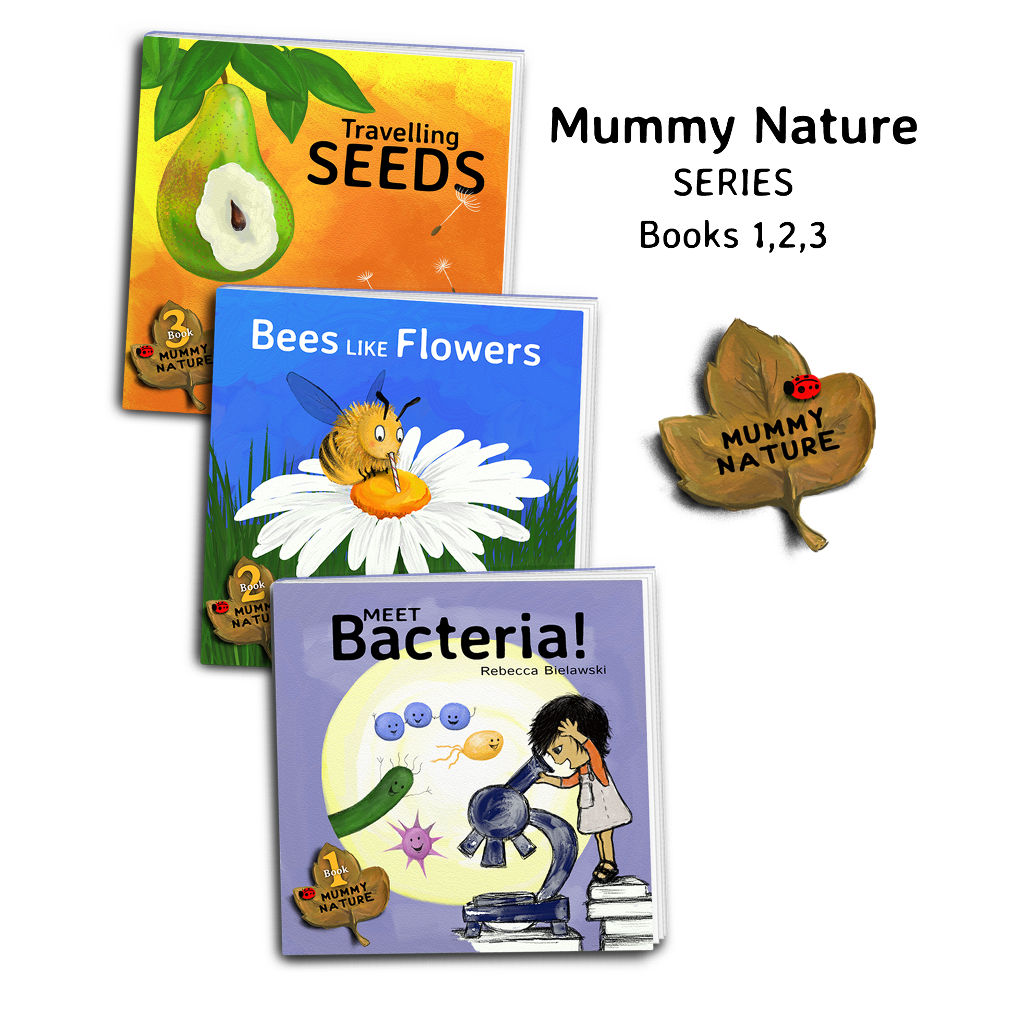
About the Series: Each book in the series is one mini nature lesson wrapped up in colour and rhyme. These books are intended for very young children including toddlers and will give them just a glimpse into some of the wonders of the natural world. Illustrated for maximum vibrancy and visual impact, using rhyme to engage young minds and encourage participation. Read the rhymes to your children and soon they will be reading them to you!

The narrator is a small child and keen observer who tells us in short rhyming phrases everything she thinks we should know, and all about the magical things she sees around her. Sometimes she is camouflaged in the long grass and other times she has to climb a tree to get a better look.cover

Review of Meet Bacteria (Mummy Nature Book 1) here at Unleashing Readers: This book is a great introduction to scientific exploration and then to bacteria itself. I love that the protagonist is a young girl who is exploring the world around her. I think students will see themselves in her, and that along with the interesting, rhyming information about the different types of bacteria will really persuade kids to want to explore.

I do think that this is just an introduction though. Each bacteria is briefly mentioned along with a fun illustration. I would love to see this book be a jumping off point to an inquiry unit about bacteria.

Thank you Rebecca for tips on how to connect our kids/students with nature from such a young age!

Kellee Signature andRickiSig


Author Guest Post!: “Spurring Ideas with Creative Teamwork” by Jack Keely, Author of The Whistlebrass Horror

Share

“Spurring Ideas with Creative Teamwork”

I recently co-authored a YA novel with another writer, Briar Lee Mitchell. This process proved to be a positive and surprisingly creative experience for both of us. Briar got the ball rolling with a few sentences that described a rather ordinary scene, which had a slightly ominous suggestion of things to come.

It had only been a circle of stones by the river. Nothing so special about it really, but it hadn’t been there the day before. He was sure of it. 

With that, we were off, bouncing pages and ideas back and forth. Over time, characters changed, names changed, and the story galloped off in unexpected directions. The end result was The Whistlebrass Horror published by Permuted Press. Our teamwork was a success.

While recently teaching a graphic design class, I thought it would be interesting for the students to design and illustrate something that they had written themselves. With so many dazzling distractions instantly available on their TVs, computers, and magic phones, many young people are discouragingly hesitant to open a book. If you suggest that they attempt some creative writing, you may find yourself confronted with a roomful of kids staring at you in bewilderment.

For instructors who love to read and are entranced with the magic of wordplay, there are few things as rewarding as winning over a reluctant reader or igniting the creative spark in a budding writer. The initial challenge is simply breaking the ice. I wondered if setting up my students in teams might be a good way to break through any stage fright they might have, and allow them to rely on each other to propel a story forward. I mentioned this idea to another instructor. His response was emphatic.

“Don’t do it,” he said. “They’ll hate you.”

He had learned from experience that setting up classroom teams could result in disaster. Students were often paired with partners that they didn’t like. Some teams were saddled with a student who did no work, or an alpha kid who attempted to dominate the rest. The result was unproductive lopsided partnerships. After pondering the pitfalls, I came up with an alternative method of getting students to collaborate.

We started by discussing Chris Van Allsburg’s brilliant book, The Mysteries of Harris Burdick in which evocative pictures depicting mysterious events are accompanied by a title and a single sentence that encourage readers to invent their own stories.

I asked my students to each come up with at least two imaginative sentences that could be part of a novel or short story. The sentences did not have to relate to each other in any way. Most came up with ten or more that varied from wry observations to fragments of conversations. Students wrote about strange machines, modern day dinosaurs, telepathic dogs, and intimidating strangers. The surprising results were along the lines of the following:

  • He suspected that the creature was hiding in the old grocery store.
  • As the sun came out from behind a cloud, the pigs began to dance.
  • Had his mad uncle concealed the skeleton key in the birthday cake?
  • “But why are you wearing a penguin costume?” whispered Agnes.

The second part of the exercise was where the teamwork came sneaking in. Students were given lists of every sentence that the class had come up with. They were asked to select one or more of their own and one or more written by others. Then they were asked to write a very short story (a paragraph or two long) that included their selections. There was no limit on the number of sentences used, and most chose to use several. If necessary, changes in gender, names, and so on could be made.

The results were ingenious. The students read the stories aloud and enjoyed the laughter and applause they received. Some stories were very funny and some were quite serious. There were elements of fantasy, science fiction and magic realism. It was very interesting to see how different individuals used the same sentences to achieve different results.

Finally, the students created layouts and illustrations for their fiction. For many, it was a new experience to see their own writing and byline presented in a professional looking way. The entire exercise proved to be pleasant, provocative, and painless. My goal was to involve the students in authorship and collaboration, and to let them see how working with words can be fun and rewarding.

As they were leaving, one young man paused and said, “That was a fun class.”

Mission accomplished!


About the Author

Jack Keely Author 10 14 15

Some claim that Jack Keely is the son of a celebrated spiritualist. Others insist that he grew up in the wagons of a traveling carnival. In any case, he has always been an aficionado of the arcane, the peculiar, and the eccentric.

He spent four years exploring the haunts of H. P. Lovecraft in the historic city of Providence, while obtaining his degree in illustration from Rhode Island School of Design. After an additional two years of study at Cranbrook Academy of Art, Keely began a long and checkered career illustrating dozens of books, including the best-selling Grossology series by Sylvia Branzei.

He recently completed the cover art and interior illustrations forThe Whistlebrass Horror, and co-authored the tale with Briar Lee Mitchell. The duo is currently at work on a sequel, The Whistlebrass Storm Watcher.

Jack Keely is said to spend most of his time behind the chained gates of the Keely family manse. Although the moldering old house appears to be abandoned, a light can often be seen at night in the library windows. On quiet evenings, if their hearing was sufficiently acute, passersby would likely hear the rhythmic thwack of a typewriter, or the scratch of a pen across a sheet of drawing paper.

About The Whistlebrass Horror

Whistlebrass Horror Cover

Founded on cursed land, Whistlebrass, Vermont is a place of dark deeds and darker dreams. Shortly after teenage newcomer Casey Wilde arrives in the haunted town his little sister disappears. Determined to get her back, Casey’s only clues are a murdered man’s rambling journal and a mysterious stone spiral on an isolated stretch of riverbank.

To help find his sister Casey teams up with Pike, a teen psychic with a rebellious streak. But Casey and Pike are up against a suave sociopath, a legion of living shadows, and a reptilian humanoid capable of stealing their life force and crushing them into dust. Who can Casey ask for help when no sane adult will believe his story?

Thank you, Jack, for this great teaching post, and thank you to Permuted Press for connecting us with Jack!

RickiSigandKellee Signature

Author Guest Post!: Parents + Baby + Technology = #BabyLove by Corine Dehghanpisheh

Share

Parents + Baby + Technology = #BabyLove

#BabyLove: My Social Life highlights the social phenomena of sharing daily activities using technology and social networks.

The inspiration for my book, #BabyLove: My Social Life came from my experiences of using many devices, apps, and social media with my child.  After the birth of my daughter Lily, I became a jubilant mother.  I wanted everyone to meet her and get to know her especially my immediate family and friends.

There was just one tiny problem­– my husband, and I lived out of state, quite a distance away from most of our closest family and friends.  So like many other new parents and families in today’s society, we took to our phones– photographing and creating videos of our baby girl.  We shared some of these items through social media, texting, emailing, and anything else that kept us connected with our loved ones.

We wanted our family and friends who were interested in getting to know Lily to be kept updated on her progress.  Along with updating our social network feeds, we found family photo sharing options with more privacy and regularly made FaceTime calls.

These modern tools coupled with quite a few family trips home have been a big help in establishing close connections for Lily.  As she grew out of infancy into toddlerhood, she began recognizing faces and voices as they popped up on our phones and in person.  This advancement and connection made my husband, and me relieved.

I know that these tools fall far from perfect or efficient.   So I take advantage of the positive aspects of these devices, apps, and social media sites along with the necessary security measures to enjoy their benefits.

Even though the premise of #BabyLove: My Social Life is cute and humorous the story could be used to introduce more thought provoking discussions or education on the topics of social media, technology, and parenting in today’s modern world.

BabyLove Banner

I have provided some ideas below of topics that could be used in a parenting group, class, or classroom discussions with students.

Parenting Topics

  1. Relevant apps that aid in parenting and education.
  2. Put down the phone­– parents as technology role models.
  3. Technology and social media safety.
  4. How to establish on-line privacy and setting parental controls.

Classroom Topics

  1. Provide guidelines for using technology and social media safely.
  2. Discuss the positive and negative aspects of technology and social media.
  3. Relevant educational apps.

#BabyLove Book Cover

About the Book: “Click.” “Tap.” Tag and Post. An adored baby tells a modern tale about life in today’s digital world. #BabyLove: My Social Life highlights the social phenomena of sharing daily activities using technology and social networks.

“A charming modernization of the traditional bedtime tale.”- Reviewed by Kirkus

“#BabyLove: My Social Life, is a clever and entertaining look at raising children in the age of social media… The author’s story flows beautifully, and her illustrations are brightly colored, cheerful and humorous… Dehghanpisheh’s wry and subtle humor is evident throughout this story that will entertain adults as well as the children they share the book with. #BabyLove: My Social Life is highly recommended for tech-savvy parents and their babies.” – Reviewed by Readers’ Favorite

#BabyLove offers a hipster view of contemporary parenting. Beneath the story of technological trendiness, however, lies a more enduring portrait of nurture and joy.” – Reviewed by Foreword Clarion Reviews

#BabyLove was published in July 2015 and is available for sale on Amazon.

Corine Dehghanpisheh

About The Author: Corine Dehghanpisheh is a children’s book author and illustrator. Her inspirations for writing and illustrating come from everyday life.

She was a Mom’s Choice Awards® Silver Recipient and a Next Generation Indie Author Finalist for her debut children’s book Can We Play Again?, which was published in March 2012. Her inspiration for this book came from her work as a Licensed Creative Arts Therapist in NYC. Corine published her second children’s book, Buddy’s Dream, in November 2013, and her third children’s book, #BabyLove: My Social Life, in July 2015.

When Corine is not busy being creative, she is most likely having fun taking pictures of her family. Corine lives in Manhattan, NY with her husband and new baby.

Readers can connect with Corine on Facebook, Twitter, and Goodreads. To learn more, go to http://www.booksbycorined.com/ 

Thank you Corine Dehghanpisheh for introducing us to picture books 2.0,

Kellee Signature andRickiSig


Author Guest Post!: “My Son’s Teacher’s Approach to Reading” by Beth Vrabel, Author of A Blind Guide to Stinkville

Share

“My Son’s Teacher’s Approach to Reading”

My son’s passion is soccer, but math comes a quick second. Those drills everyone groans about? The ones where students have five minutes to solve a hundred problems? He eats them up.

I think I get why: each week there is an obvious growth potential. He can—and does—create specific goals. This week, he scored a 98 percent in division facts. If he can do the same or better next week, he can move up to double-digit division. The progress can—and is—charted, allowing him to see the steady increase in his knowledge base.

Growth in reading and writing isn’t obvious. Just because a book is thicker than another doesn’t mean it’s more challenging. Just because he read it doesn’t mean he understood it. Just because he can tell you what happened doesn’t mean the story blossomed—or better yet, exploded—in his mind.

I have yet to see a writing or reading exam that goes beyond measuring grammar and vocabulary ability to measuring depth of engagement with a story. Sure, there are degrees of reading power tests, but do they really showcase whether a student “gets it”? I can time how long he spends reading, but how does that reflect what he absorbed?

Really, there is only one way to tell. Conversation.

My son’s second-grade teacher was brilliant at this. “Have you read this book?” she asked him one day, putting Call of the Wild on his desk. “I know you like dogs. Maybe you’d like this book. It’s one of my favorites.”

And then, a few days later, “What do you think about John Thornton?”

My boy was hooked. Maybe not on the story—at first—but in having book discussions with his teacher. He fell hard for the story later, but those few moments each afternoon where his teacher asked him where he was in the story filled him up. That she could hint to what was coming and loved the book as much as he did made a huge difference.

Soon he was asking her for other recommendations. Even better, he was looking for books he could recommend to her. “Mom, do you think my teacher has read this book?” he asked a few weeks later, pulling Where the Red Fern Grows from our shelves. “Do you think you could read it to me?”

Soon we, too, were talking through a book, drawing connections. He imagined what it would be like to live barefoot and wild like Billy. We moved on to Tuck Everlasting and debated what would make us drink from the spring. Would we want to live forever? He held my hand when my voice shook as I read the last chapter of Flora and Ulysses.

Now there were twenty kids in my son’s second-grade class. His teacher shouldn’t and couldn’t be expected to have separate lengthy book discussions with each child. But she didn’t have to; just a quick question here or there was more than enough to ignite his enthusiasm for reading.

My son’s daily reading log lists chapter titles and page numbers, but it doesn’t reflect the times he doodles Little Ann and Old Dan on his worksheets. It doesn’t measure his imaginary games of Quidditch on our front lawn, or take into account the Gryffindor hat he wears to bed each night. It doesn’t show that he named his guinea pig “Winn-Dixie.”

I ran into my son’s teacher at Barnes & Noble one Saturday. Her hands were full of books. One was specifically for my boy to read. “I can’t keep up with all of my readers,” she said. Is there any better indicator of amazing teaching than that?

About the Author

Beth Vrabel grew up in a small town in Pennsylvania. She won a short-story contest in fourth grade and promptly decided writing was what she was going to do with her life. Although her other plans–becoming a wolf biologist, a Yellowstone National Park ranger, and a professional roller skater–didn’t come to fruition, she stuck with the writing. After graduating from Pennsylvania State University with a degree in journalism, she moved through the ranks of a local newspaper to become editor of two regional magazines and a lifestyle columnist. Beth now lives in Connecticut with her wonderful husband, two charming children, a spoiled rotten puppy, and two guinea pigs, Winn-Dixie and Pippin.

About A Blind Guide to Stinkville

Stinkville

Before Stinkville, Alice didn’t think albinism—or the blindness that goes with it—was a big deal. Sure, she uses a magnifier to read books. And a cane keeps her from bruising her hips on tables. Putting on sunscreen and always wearing a hat are just part of life. But life has always been like this for Alice. Until Stinkville.

For the first time in her life, Alice feels different—like she’s at a disadvantage. Back in her old neighborhood in Seattle, everyone knew Alice, and Alice knew her way around. In Stinkville, Alice finds herself floundering—she can’t even get to the library on her own. But when her parents start looking into schools for the blind, Alice takes a stand. She’s going to show them—and herself—that blindness is just a part of who she is, not all that she can be. To prove it, Alice enters the Stinkville Success Stories essay contest. No one, not even her new friend Kerica, believes she can scout out her new town’s stories and write the essay by herself. The funny thing is, as Alice confronts her own blindness, everyone else seems to see her for the first time.

This is a stirring small-town story that explores many different issues—albinism, blindness, depression, dyslexia, growing old, and more—with a light touch and lots of heart. Beth Vrabel’s characters are complicated and messy, but they come together in a story about the strength of community and friendship.


Thank you, Beth, for this post. We hope our sons are fortunate to have teachers like this one.

Kellee Signature andRickiSig

Author Guest Post!: “Choosing Your Stepping Stones” by Margaret R. Chiavetta, Author of The Alchemist’s Theorem: Sir Duffy’s Promise

Share

“Choosing Your Stepping Stones”

Kids who are like me need the power of choice to help engage them in reading. Their choices are the stepping stones that lead to the path of engaged readers. They don’t just need a variety of stories to choose from; they also need the option to put a book down when it doesn’t interest them. Forcing myself to read something that doesn’t interest me is torture, but reading something that does interest me opens up my tastes, so that maybe one day a book I didn’t like before might actually be enjoyable later, when I am a slightly different person.

Reading has always been difficult for me. I don’t know why exactly. I know that my father has a difficult time reading, too. My mother and three sisters are “voracious” readers, and they are all well read. So I reckon there is something genetic involved.

As a child, I always wanted to read—I craved story just as much as any human being—but I couldn’t. I don’t mean that I couldn’t read (early testing deemed me an average, competent reader), I mean that I couldn’t stay engaged with the words on the page. I could look at illustrations and make up stories in my head, but I couldn’t bring myself to read the words.

I remember seeing books on our shelves that I wanted to read, like an herbal medicine guide, but no matter how many times I picked it up, I couldn’t engage with the words and retain the information. I grew up thinking I wasn’t very smart, and wishing I could read lots of books and become smarter.

I almost never finished the books assigned to me in school. I usually skimmed them, or asked friends before the test what I needed to know. Speaking out loud in front of people was a nightmare for me. Whenever a teacher asked me to read aloud in class my anxiety was so bad that I had no engagement with what I read whatsoever.

It wasn’t until fourth grade that I found my first stepping stone. We were assigned the book The Cay by Theodore Taylor. I loved the story. It was the first book I ever finished. Back then, I had no idea why the experience was different, but now as an adult I know exactly why. It’s an adventure story about survival. I love survival stories!

I still didn’t read assigned school books after that. However, I found my next stepping stone two summers later. I was home and extremely bored. There was a book that sat on the back of our toilet all of the time. I picked it up and read the whole thing cover to cover. It was a Calvin and Hobbes comic book. I fell in love with the series. I asked for more of the comics and got them for my birthday.

I still didn’t read the books assigned to me in school, and I rarely ever picked up books on my own. In high school, I remember reading The Amityville Horror and a romance novel, but that’s about it.

During college, a couple of important things happened. First, I started to suspect that I had the capacity to be smart in my own way. Second, my English 102 teacher assigned Octavia Butler’s book Dawn. It was my next stepping stone. I loved this book so much that I finished it and immediately went out and bought the second book of the series. Shortly after Butler’s books, I picked up Jean Auel’s Earth’s Children series. My tastes for fiction began forming a pattern.

My stepping stones turned into a walkable path when I moved to Puerto Rico after college to do field research. There wasn’t much to do after work. I could watch DVD’s but only at night because it was too hot to sit on the furniture during the day. All there was for me to do was read.

I read like a demon. My mother and sisters turned me on to Diana Gabaldon’s Outlander series, which I ate right up. My tastes diversified the more I read. In school, I never read the Hemingway books assigned because they didn’t interest me at the time, but in Puerto Rico I loved reading A Moveable Feast and A Farewell to Arms. I also picked up nonfiction, like David Sedaris’ books, and various memoirs and biographies. After Puerto Rico, I didn’t read as much, but I still read a lot more than before I lived there.

To this day, reading is still difficult for me. I can blow through a book in a couple of days if the story grabs me, and grabs me fast. But there are countless books I have picked up and struggled through, eventually putting back down. I know that reading is much easier when I have a choice, and I don’t feel pressured to read the same way and the same amount as other people. When I do choose to read a good book that suits my current mood, I can’t put it down.

My novel, The Alchemist’s Theorem, is the book I wrote for my younger self. If I had come across this fantasy adventure full of weird creature companions as a kid, I would have gobbled it up. I hope that it will serve as a stepping stone for kids who are wired like me and need a good foothold as readers.

I think it’s important to give kids free-range when it comes to reading. How can an entire class like the same book and read it at the same pace? In that scenario, there are at least a couple of kids suffering through it. And even when you let them choose their own books, it’s probable that they won’t like the first one or two or three that they pick up. As a kid, I wish I received encouragement to keep trying. I should have kept picking up books and putting them down until one grabbed me. I think my stepping stones would have popped up sooner, getting me to my reading path quicker.

CHIAVETTA_PIC

About the Author: Margaret graduated from the University at Buffalo in 2005 with her BA degree in anthropology. Afterward, she moved to Puerto Rico for a year where she spent the hot humid days following around free-range rhesus macaque monkeys. When the study finished, she went from one monkey job to the next, moving up and down the east coast for several years. Then she attempted a primatology graduate program in London, England, but developed an allergy to academia. Margaret dropped out and returned to the US and eventually went on to get her MFA in creative writing, graduating from the University of Washington Bothell in 2014. The Alchemist’s Theorem is her first novel. She lives in Seattle.

Alchemist Theorem

About The Alchemist’s Theorem: Sir Duffy’s Promise: An eccentric boy named Mendel and the alchemist Sir Duffy set out on a series of quests with their many weird and endearing creature companions–like Esther the snake-ish gusselsnuff and Gooder the big, lazy, carnivorous horse. These determined travelers must venture across the continent of Terra Copia, an exotic land where the species of flora and fauna in one forest are completely different from the next. It is up to them to safeguard secrets and dangerous artifacts from cagey enemies in order to prevent a terrifying curse from returning to their land.

The Alchemist’s Theorem published on November 6th and is now available.

Thank you to Margaret for this post!
We love the message that there is always hope when it comes to reading!

Kellee Signature andRickiSig