Author Guest Post!: “Trick or Read” by Judy Newman aka The Book Lady aka Pepper Springfield, Author of the Bobs and Tweets series

Share

“Trick or Read”

When I was in fifth grade I made an awesome Halloween costume:  I was a jar of Skippy Peanut Butter.  No one could tell who I really was since my head was covered, but I got lots of compliments on my cool creativity.

However, that was the high point:  after that I was never able to figure out another Halloween costume I was comfortable wearing.

So, decades later, still blocked on finding a suitable costume, I decided to approach Halloween from another angle: I started giving out books, instead of candy, to trick or treaters.

Moaning like zombies, my family and friends told me this was not a good idea: “no one,” they said, “wants to trick or treat for books.”  “Halloween,” they howled like werewolves, “is for handing out candy.”  “No kids,” “they screeched like a scary witch, “will come to our house for books.”

But… they were all wrong.

Twenty-five years later I am still handing out books to hundreds and hundreds of kids on Halloween. And even though I still haven’t figured out a good costume for myself, I do have another persona: I am known in town as “The Book Lady.”

I have to leave work and my job as President of Scholastic Book Clubs early on Halloween, because kids and their families who come from all over town as well as from neighboring communities (and even in groups from community centers), start lining up early—around 3:30 in the afternoon—to make sure they don’t miss out on the reading FUN! The police come to help direct traffic and the whole community gets into the act.

It makes me so happy to see all these kids and their families—who come from miles around—line up just to make sure they get books! I live on a long, flat street, with wonderful neighbors, who are, for the most part, happy to answer the door with all kind of creative treats (including toothbrushes!) for the swarms of kids who make their way down the block after they leave the “Book House.”

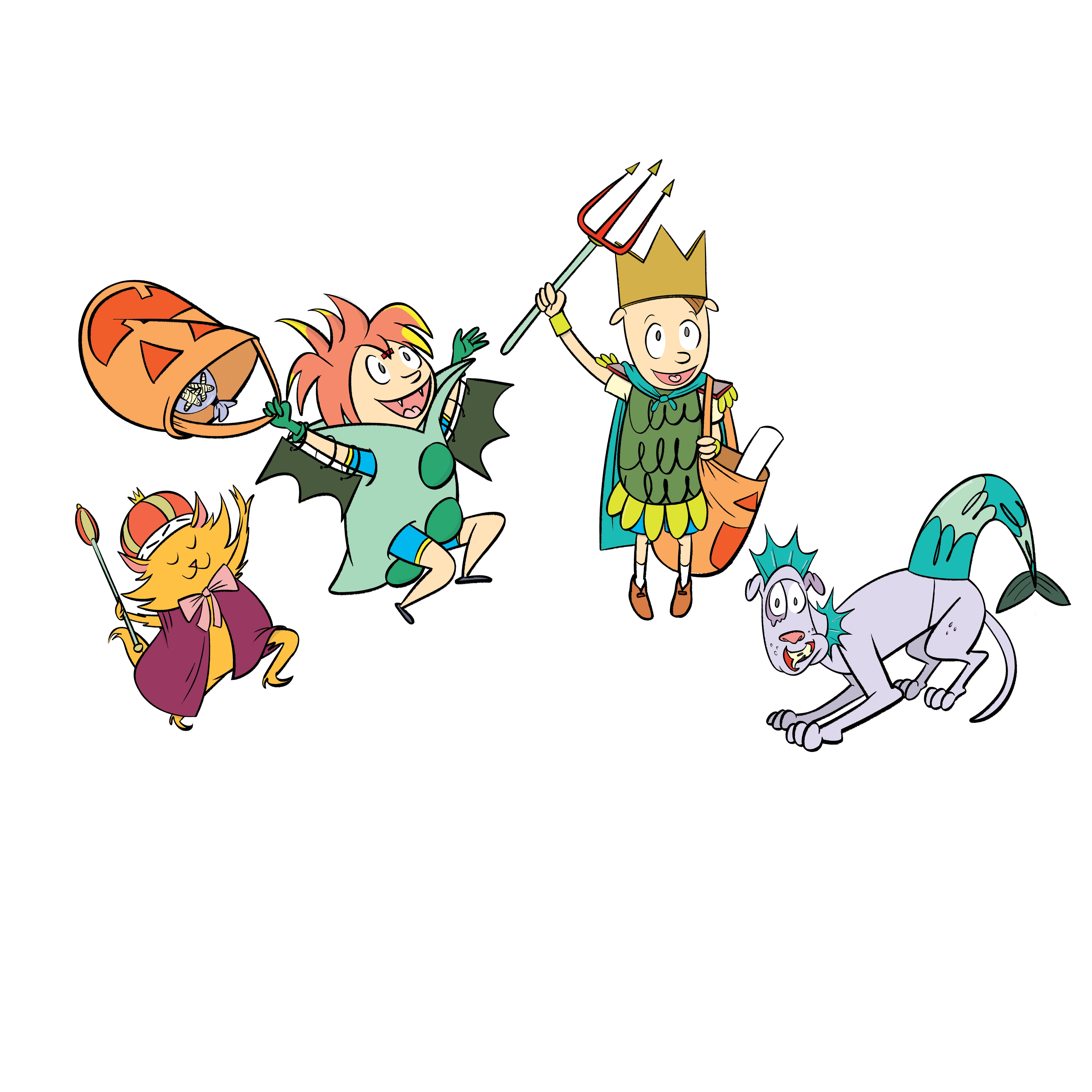
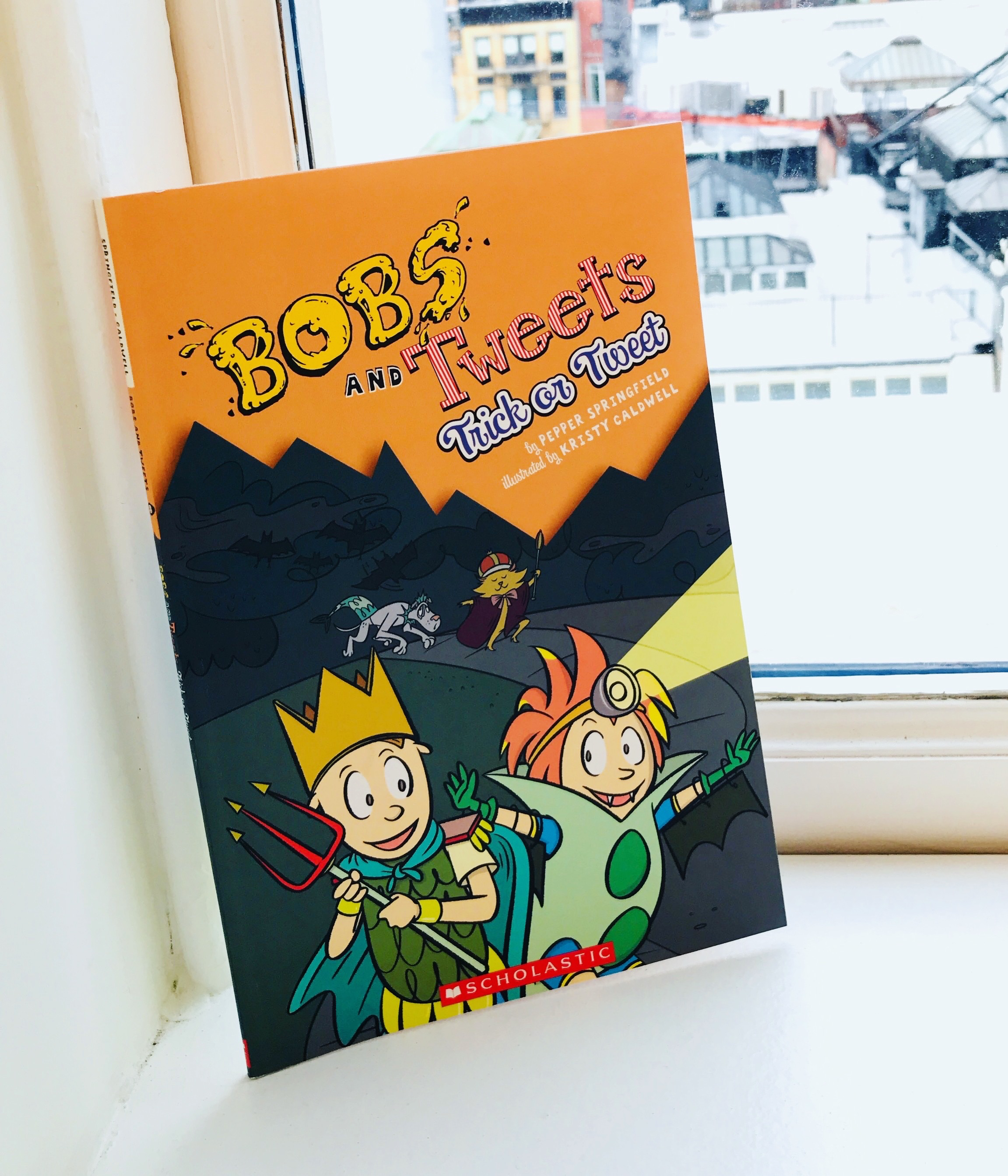
It was all this Halloween excitement that inspired me to write Trick or Tweet, the third book in the Bobs and Tweets series, illustrated by Kristy Caldwell.

I got so much inspiration from all kids who have come to “The Book House” on Halloween: kids stuffed into vegetable costumes, like Lou Tweet.  Vampires and zombies, like the Bobs. Ninjas, and superheroes, and mermaids, and unicorns, (along with people handing out toothbrushes, and awesome decorations and…well you name it!)  Last year, a child came dressed as a jar of Skippy Peanut Butter, which as you can imagine made me smile.

The trick or treaters all want to tell me what books they want to read and how they enjoyed—or did not like — the books they got from the Book House last year.  There is nothing quite so thrilling for me as talking to hundreds of children dressed up in costumes, expressing their creativity and their ideas– and talking about books.

Most of us who work in children’s book publishing strive to help children discover books in which they can see themselves.  We know that when kids choose and own their own books they read more and start to see themselves as readers. In my day job, as President of Scholastic Book Clubs I am privileged to work with 800,000 classroom teachers and their students—from pre-K through high school–all across the country, creating book orders filled with affordable books for all children to choose and own.

In my Halloween role as “The Book Lady, “ it is so fun and inspiring to hand out books to super eager trick or treaters who all love lining up for books on Halloween.  And as, Pepper Springfield, the author of the Bobs and Tweets books, I am truly honored to engage with readers through my characters on Bonefish Street.

So… I guess I don’t need another Halloween costume for myself after all.

Happy Reading! Happy Halloween!

About the Author: Pepper (aka Judy Newman to PW readers, close friends, and family) was born and raised in Massachusetts. She LOVES rock ‘n’ roll and chocolate, just like Lou Tweet. And, like Dean Bob, Pepper loves to read and do crossword puzzles. Over the years, Pepper has loved all kinds of pets: dogs, cats, hamsters, turtles, fish, a bunny, and an imaginary monkey.

Bobs and Tweets: Trick or Tweet
Author: Pepper Springfield
Illustrator: Kristy Caldwell
Published August 28th, 2018 by Scholastic

About the Book: Lou Tweet and Dean Bob can’t wait to go trick-or-treating on Bonefish Street on Halloween. This year, they’re entering the Best Halloween Block contest, which means they need to visit every house and mark down each delicious treat that they receive.

But with spooky houses, a power outtage, and another big Tweets and Bobs family feud, will Lou and Dean be able to accomplish their task and win the contest? Find out in another spooky installment of Bobs and Tweets, this time with funhouses, new friends, and lots and lots of candy!

This third book in the Bobs and Tweets series is filled with full-color illustrations and high-interest rhymes that’s just right for reluctant readers. It’s Dr. Seuss meets Captain Underpants wrapped into one zany Halloween adventure! So go ahead, read and laugh and trick-or-treat with the Bobs and Tweets!

Thank you, Pepper, for showing how book lovers can spread the reading love on Halloween!

Author Guest Post: “Behold the Power of Books!” by Cassidy Dwelis, Author of the Braidy von Althuis series

Share

“Behold the Power of Books!”

Talking to kids about hard topics is tough. When your little one, or a little one you know, is going through a tough time, it can be challenging to talk to them about what is going on in their life. Many kids are embarrassed about it, and are afraid of speaking up. What can we do as parents, educators, and creators to help kids with difficult things in their life, whether they are issues with a turbulent household, bullying, or the loss of a loved one?

Behold the power of books!

The folks at www.stopbullying.gov say that the best way for educators and staff to help kids impacted by bullying is through creative writing and artistic works. By introducing students to books that cover difficult topics, it can be easier to talk to them about what is going on in their life, and easier for them to speak up. Having characters in works of fiction that are relatable is important to a lot of readers, and seeing someone who is going through a tough time, just like them, can help kids come up with creative solutions to their troubles. We are Teachers has a great list of books that have anti-bullying messages, Parents showcases books about divorce, and What’s Your Grief has a whopping 64 books for kids on death and grief. The resources are out there, and by putting these books in classrooms and libraries, we can open the conversation with kids about the tough things.

My favorite approach to these kinds of topics is in the books that do not directly say in the title that they are about the topic. Diverse experiences should be written into every character, and these kinds of struggles make young protagonists much more interesting. By having characters experience the everyday struggle and deal with things that almost all kids deal with, this allows us as educators, adults, and parents to more freely talk about the issues with little ones. By continuing to stay involved in our kids’ lives, we can help put a stop to the problems that they deal with, or, at the very least, lessen the blow that the difficult times often bring.

What are your favorite books about tough topics for kids? Have you ever utilized fiction to talk to your students about emotional topics?

About the Author: Elaborate storytelling is something that has entertained humankind since its start, and Cassidy’s goal is to take the words on the page and forge them to life, like a star being born. Using a variety of media, Cassidy uses her hands to weave magic on the canvas and visualize elements extant before only in dreams. By utilizing an expressive and traditionally-inspired quality in her work, Cassidy brings worlds and characters of all sorts into existence.

Cassidy Dwelis currently resides in Colorado, and has earned a BFA in both Illustration and Game Art. Cassidy writes Middle Grade, Young Adult, and New Adult fiction, and is currently acquiring her MA in Publishing. Cassidy’s dream is to help others bring their imagination to life, through the art of storytelling.

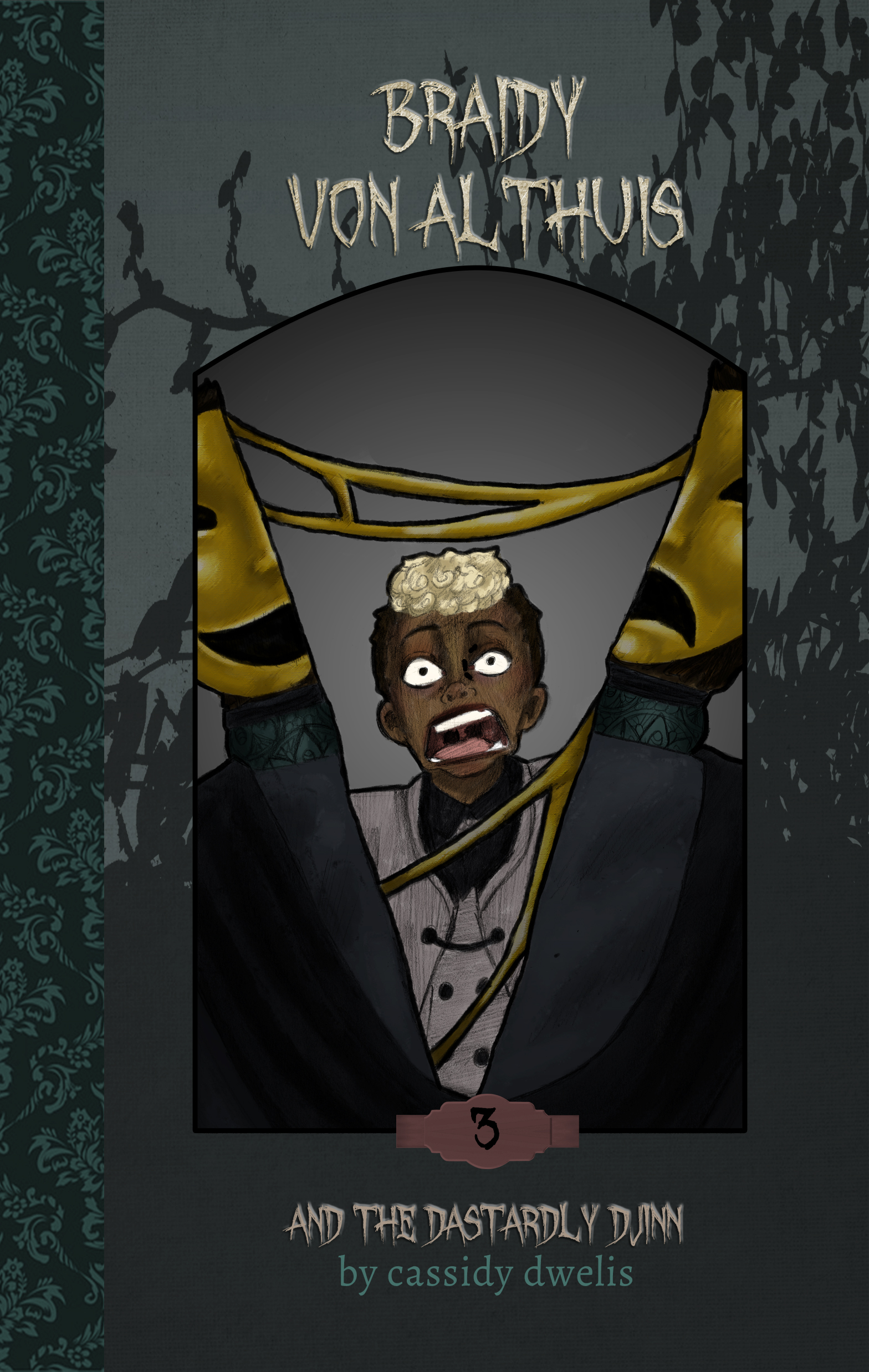
Braidy von Althuis and the Dastardly Djinn
Publishes October 30th, 2018

About the Book: “He should have known this would happen. Wishes in movies and books seemed to go bad, so why would this one be any different?”

Ten-year-old Braidy von Althuis misses his family dearly. Ever since his father, his aunt, and his uncle went to look for Gran in Europe, the house has been quiet and lonely. Even worse, Braidy’s cousin Blockhead is miserable after a breakup. Braidy wishes more than anything that he could do something to make his cousin happy.

His wish is granted by a mysterious djinni, but the wish does not solve all his problems. Something is wrong with Blockhead, and Braidy learns a dark secret about his family that changes everything he knew. Will Braidy and Blockhead be able to undo the djinni wish, or will Braidy spark a war that may change the world as he knows it?

Braidy von Althuis and the Dastardly Djinn is a story about identity, self-worth, consent, and responsibility.

Thank you, Cassidy, for this post reiterating what we truly believe!

Author Guest Post!: “Things Sure Were Different In My Day” by Cara Bartek, Ph.D., Author of Serafina Loves Science

Share

“Things Sure Were Different In My Day”

I caught myself saying something the other day that I never thought I would say to my children, and I’m still reeling from the sheer horror of how those words felt as they spilled out of my mouth. In my defense, my kids had been complainingin high-pitched, whiny voices that could crack the most ardent sainthow bored they were. As I looked around at their toys, their bikes, their swing set in the backyard, their books, their tablets, without even thinking I said, “How can you girls be bored with so much stuff to do? You should be grateful for all this entertainment because things sure were different in my day.”

That’s right, I said the dreaded phrase: THINGS SURE WERE DIFFERENT IN MY DAY.

The girls looked at me like I was a dog walking on my back legs. I could almost see them trying to calculate what “in my day” looked like, their eyes blinking and squinting as numbers and Greek symbols flashed above their heads like a cartoon. Maybe they saw cavemen walking around in mammoth-skin skinny jeans, or those old-timey gangsters hanging out in saloons with cigars dangling from their lips drinking kombucha teas from Starbucks. It had to be some strange, foreign amalgam of their own reality and the reality they could only assume their screamy old mom came from.

But the truth is, my day was very different. My childhood was arguably simpler. There was no online shopping or Prime deliveries and certainly no social media. Kids “in my day” were not as connected as kids are today, with information at their fingertips. This makes our children much more knowledgeable, and this is great for learning and exploring. Whenever we have a science project or a social studies report due, my girls and I head to the web. We have found loads of practical and fun information. It is also very easy to stay in touch with our friends and family. For anyone who has moved and left behind people they care about, social media can be a wonderful tool to preserve friendships. But as with all wonderful things in this world, there are disadvantages, too. Our tightly connected and information-saturated world means our kids know a lot more about tough realities.

This difficult knowledge hit home when my oldest child’s class practiced emergency protocols. She often would come home and tell me what she would do when “code red” was activated. Her demeanor was calm and even happy as she described the role she would play. One day she happened to see coverage about a school shooting. The reporter spoke about the different ways that students and teachers worked to save the lives of their fellow classmates and staff. The actions they described, such as barricading doors and hiding in closets, were similar to what her class had been practicing. I could see her brain making the connections, and this led to inevitable questions and a very difficult conversation. While this was something I never wanted to talk about with my little girl, it was a conversation that was necessary. Children are exposed to and must face difficult realities.

Difficult Realities for Developing Kids

Kids begin to develop their own identities almost as soon as they are born. They say “no” to gooey green baby food and later wear black lipstick to their grandma’s 80th birthday party. Or maybe that was just me? Regardless of the black lipstick, healthy emotional, physical, and spiritual development is rooted in the development of one’s identity. Difficult circumstances such as school violence, bullying, and even divorce can destabilize or strengthen their identity.

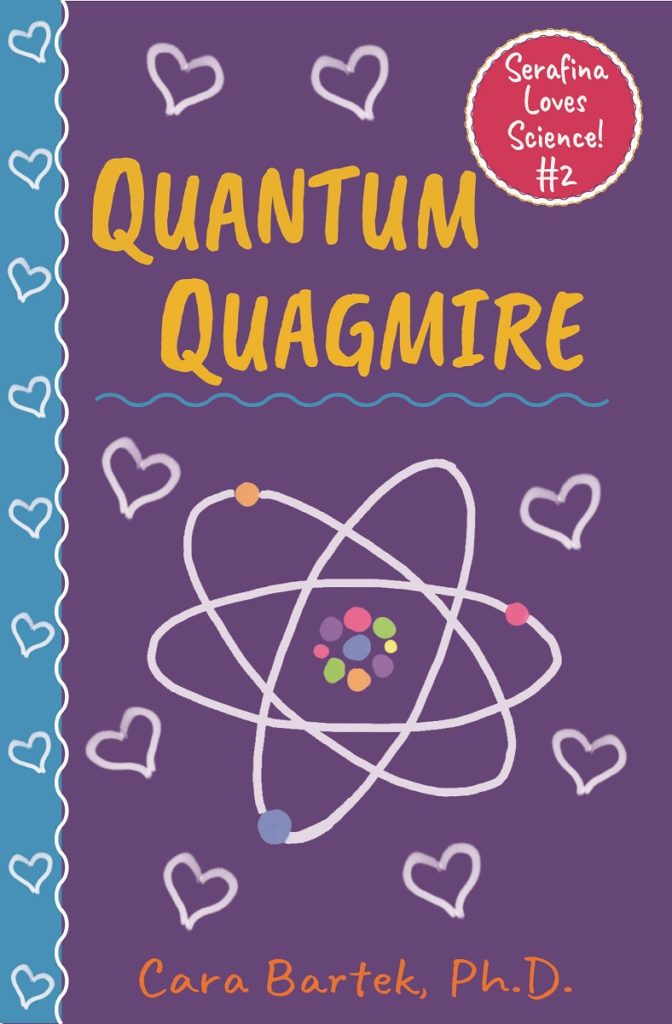
In my science-themed middle grade book, Quantum Quagmire, I cover the topic of divorce. Serafina Sterling learns her best friend, Tori Copper, is going through a difficult time when she starts to lose interest in her most beloved hobbies, bug hunting and pizza eating. And what’s troubling Tori is more difficult for Serafina to understand than cold fusion: Tori’s parents are getting a divorce. 

Serafina turns to her friends and science to try to figure out how to prevent the divorce. Using the scientific method, trial and error, and one disastrous release of a dangerous class pet, Serafina realizes her beloved science has reached its limit. Or has it? In the end, Serafina is able to understand a very important quantum principle and use it to help Tori accept the inevitable split. Serafina and her friends realize that while they may not be able to prevent a divorce, they have the tools to understand and accept the difficult reality.

The purpose of this book was not only to convey one of my favorite quantum concepts, quantum entanglement, but to also help kids navigate through difficult realities they may face. Especially in today’s information heavy world.

 Change versus Acceptance

We all have some control over our lives. Where we live. The job we have. What’s for dinner? We can’t, however, control the weather, what our neighbors are like, and who our bosses are. Kids have even less control. They can’t vote. They can’t get their own place. And they can’t understand what they can and can’t change without some guidance.

In Quantum Quagmire, I emphasize the importance of acceptance. Serafina and her friends try to reunite Tori Copper’s parents. When those efforts fail, her mother helps her understand that sometimes bad things happen in a person’s life. Serafina was able to take these lessons and help Tori accept the change. More importantly, she helped her see that even though her parents would not be living in the same house anymore, they would always be connected as a family. 

Sugarcoating is Good. Perspective is Better. 

My hope is that my entire Serafina Loves Science! series helps lay the groundwork for difficult conversations with children. Our kids will face a lot of challenges and failures in their lives, just as we have “back in our day”. Their relative success or failure in life will be the result of how well they can navigate, recover, and later thrive because of those bumps in the road.

When my oldest daughter recently lost her front tooth and was concerned she would “look weird” in class, I tried giving her a sugarcoated answer. I told her that the little hole in her face was “cute” and that at least she had a very handy soup strainer until her grown-up tooth came in. Those answers seemed to placate her for about 10 minutes. But as I stared at my gap-tooth seven-year-old, with her arms folded tightly across her chest and her brows pinched into a tight knot, I realized she was onto my bogus mom answers. I took a deep breath and tried to put it into perspective for her. I told her that, in my day, I also had been self-conscious about looking like a piano missing a lot of keys, and that her friends probably felt the same way. I listed some of her friends who also were missing their front teeth. She seemed to respond to this and even gave me a hug.

While having a missing tooth isn’t as difficult as divorce or school violence, the method of providing perspective remains. Kids are smart, and they are growing. Providing them with truthful, honest, and loving guidance can make a difference. It certainly did for Serafina and her friends!

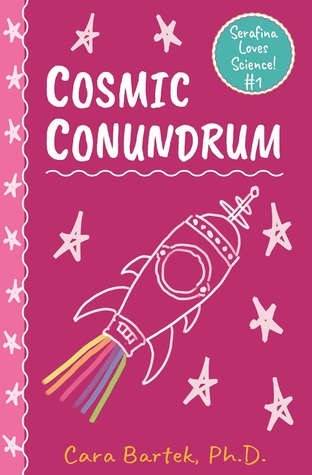
Serafina Loves Science
Cosmic Conundrum
Quantum Quagmire
Published by Absolute Love Publishing

Series Summary: Serafina Loves Science! is a middle grade fiction series that focuses on 11-year-old Serafina Sterling. Serafina is just like other kids who have to deal with issues like annoying older brothers, cliques at school, and parents who restrict her use of noxious chemicals. But she has a secret … Serafina loves science! Her passion for all things scientific helps her make new friends and figure out the old ones, understand her family, invent new devices for space travel, and appreciate the basic principles of the universe.

Cosmic Conundrum Summary: See Kellee’s review from Friday!

Quantum Quagmire Summary: Serafina suspects something is wrong when her best friend, Tori Copper, loses interest in their most cherished hobbies: bug hunting and pizza nights. When she learns Tori’s parents are getting a divorce and that Tori’s mom is moving away, Serafina vows to discover a scientific solution to a very personal problem so that Tori can be happy again. But will the scientific method, a clever plan, and a small army of arachnids be enough to reunite Tori’s parents? When the situation goes haywire, Serafina realizes she has overlooked the smallest, most quantum of details. Will love be the one challenge science can’t solve?

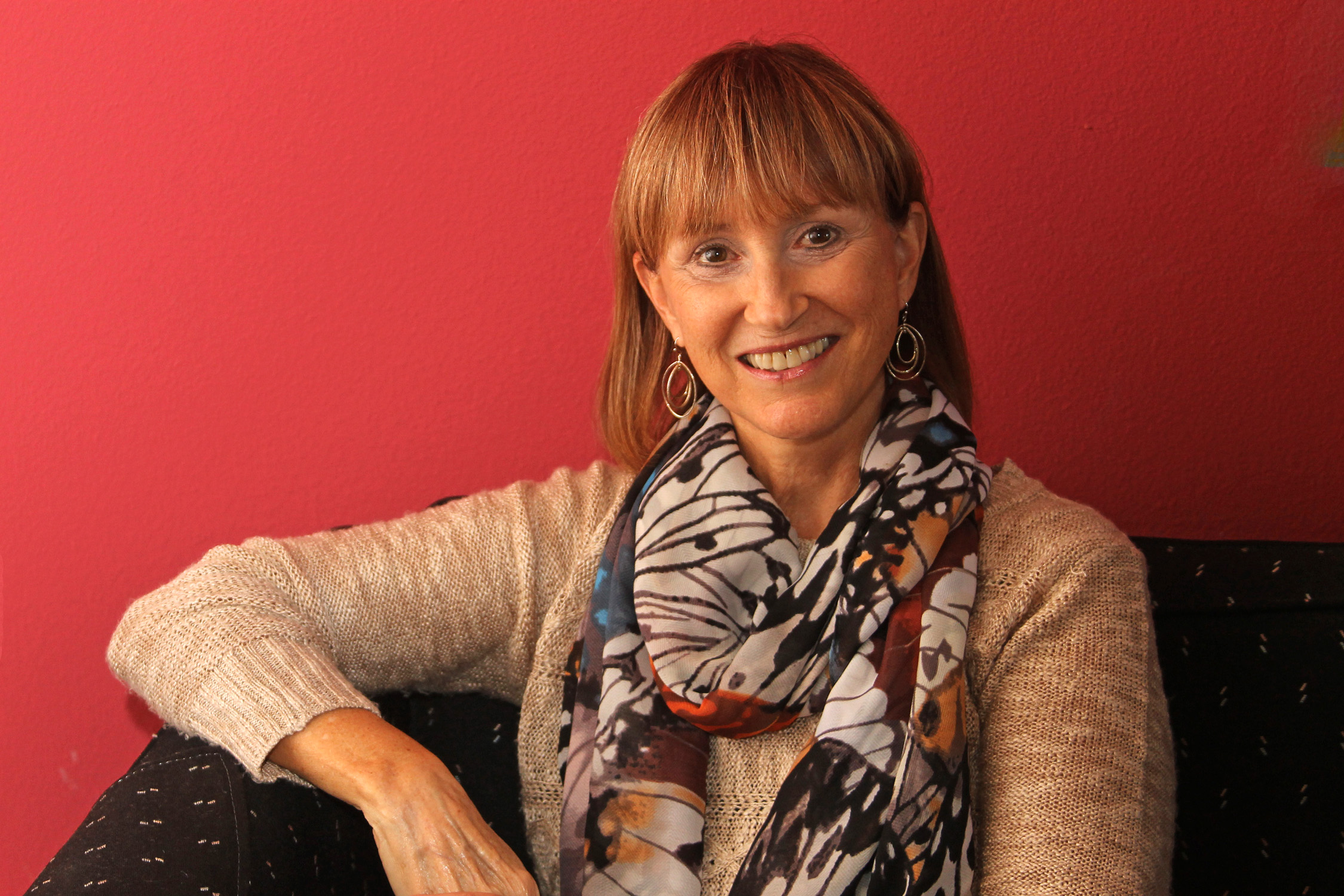
About the Author: Cara Bartek, Ph.D. lives in Texas with her husband and two daughters. The Serafina Loves Science! series was inspired in part by her career path and in part by her two little girls. Her hope is to make this world a more equitable and opportune place for her daughters one silly story at a time. Visit www.carabartek.com.

Thank you to Cara and Absolute Love Publishing for sharing this awesome outlook into the changes in childhood in the 21st century and how Serafina deals with these changes!

Author Guest Post: “Shedding a Light of Understanding on Kids Who Are Different” by Janet McLaughlin, Author of Different

Share

“Shedding a Light of Understanding on Kids Who Are Different”

Growing up in an average American household, I never gave much thought to what it was like to be different or out of the norm. My education was homogenous: Catholic grade school, Catholic high school, even a year at a Catholic all-girls college. I married a nice, Catholic boy and raised three wonderful children. Life was what I understood it to be—simple. Oh, I had challenges, but nothing out of the ordinary.

Then my two beautiful, incredible grandchildren were born to my youngest child, and all that changed. The oldest started exhibiting quirky movements that turned into compulsive movements. She also started to have explosive outbursts, especially when things didn’t go her way—everyday things like what color shoes to wear.

It soon became obvious that there were issues. After visits to numerous doctors, Madison was diagnosed with Tourette syndrome, and the bottom fell out from under us. We fell into the unknown, and our ordinary life became extraordinary, but not in a good way.

I watched as Madison and her family coped with her physical and vocal tics. I watched as Madison cringed into herself at restaurants after she made a scene, feeling that “everyone was staring at her.” I learned to understand, if only in a small way, what it means to be different.

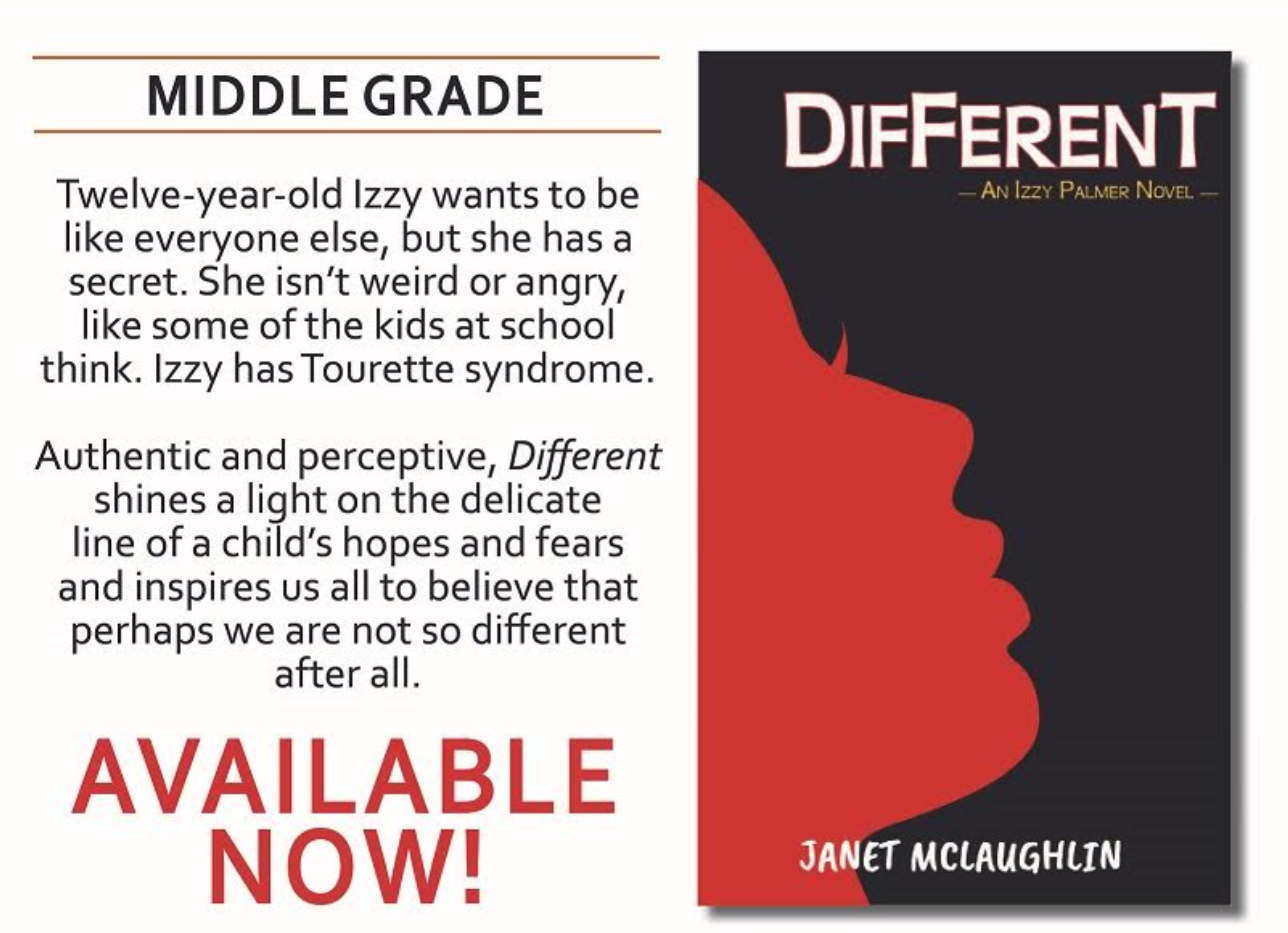
Which brings me to my novel, DIFFERENT. Izzy, the protagonist, is modeled after my granddaughter. It’s not her story, but it is her life. I’ve watched her cope over the last 15 years, often folding into herself when she felt people were judging her. She’s a beautiful person and a troubled one. She doesn’t like to talk about her TS. She doesn’t want pity. She wants to be accepted as normal.

I don’t have any answers here. I don’t live in the world of a teacher, and my parenting days are mostly given over to advice for my children—when asked. But I do know this. I do know that I’m not so quick to judge the child having a tantrum in the restaurant or the man walking down the street talking to himself. I do know that teachers have it much harder than I did when I taught second grade many years ago. And parents have many more challenges than I did when my kids were growing up.

What I hope is that my novel will help teachers and parents understand the world of the child who is considered different. That these kids have the same goals, desires, needs that a “normal” child has, only with some extra challenges thrown in. And I truly believe that, given the chance, these “different” kids can excel. They even can come to see that everyone has challenges and that they aren’t so different after all.

I’ve also come to believe that children, while sometimes unkind or thoughtless, are quick to accept the quirkiness of others, at least when they are young. Mostly, they are curious. It is only when they begin to become aware of their differences that they start to act judgmentally. I believe that’s a self-defense mechanism. It is my hope that these students can come to see some of themselves in Izzy. The struggle to be accepted. The desire to be “normal.” That Izzy’s struggles can be their catalyst for their own self-acceptance.

If you would like to share your experience with Tourette syndrome or invite me to speak with your organization or classroom, I would love to hear from you. Contact me at https://janetmclaughlin-author.com/.

About the Author: Janet McLaughlin is the author of Different and the Soul Sight Mysteries series, including “Haunted Echo” and “Fireworks.” She has been involved in the communication field most of her adult life as a writer, editor and teacher. Her love of mysteries and the mystical are evident in her novels. She is a member of the Society of Children’s Book Writers and Illustrators and the Florida Writers Association. She lives in Florida with her husband, Tom, and along with her writing, enjoys playing tennis, walking, traveling, and meeting people.

https://twitter.com/Author_Janet
https://www.facebook.com/authorjanetmclaughlin/

Published September 12th, 2018 by Absolute Publishing

Thank you to Janet for her thought-provoking post and for sharing her book!

Author Guest Post and Reading Guide!: “How a love of language and travel influenced The Magic of Melwick Orchard” by Rebecca Caprara

Share

“How a love of language and travel influenced The Magic of Melwick Orchard”

If you could have any superpower in the world, what would it be?

Flight? Invisibility? Super strength?

I’d choose Omniglotism, also known as the ability to speak every language in the world. Imagine the places you could go, the books you could read, the people and cultures you could connect with if you had a power like that.

As you can probably tell, my love of language is connected with my interest in travel. When I was a child, I dreamed of exploring the wide world and I’ve been globetrotting ever since, visiting more than 50 countries to date. Whenever I travel, I carry a notebook. In it, I sketch things I see, jot story ideas, and gather vocabulary—often in different languages. These words are like candy: sweet, colorful, delightful morsels worth savoring.

Some of my favorites include Selamat Pagi, which means Good Morning in Malay and sounds as cheerful as birdsong.

In Italian, I adore the term Aspirapolvere, which translates to Dust Breather—an infinitely cooler name for the humble household vacuum cleaner.

I also love words for which there is no English equivalent, such as the Japanese Komorebi, which describes the dance between light and leaves as the sun shines through treetops. It’s like an entire poem compressed into a single, miraculous word.

When I began writing my debut middle grade novel, The Magic of Melwick Orchard, my fascination with language inevitably found its way onto the page, primarily through the voice of Junie. In the book, 6-year-old Junie mashes and mixes words together in a process I call Frankensteining—an idea inspired by Mary Shelley’s novel, my travel notebooks, and a design exercise I learned in architecture school which involves cutting and pasting building plans of the same scale to generate new structures.

This process produced some of Junie’s signature vocabulary, such as perfecterrific (perfect + terrific), worstible (worst-most-horrible), and squg (a squeezing hug full of love). Even the mysterious Melwick Orchard is a hybrid, combining part of my mother’s name, Melissa, with my father’s nickname, Wick.

Some of the most rewarding early feedback I’ve received from readers has been their connection to these invented words. One 9-year-old reader, inspired by Junie’s wordsmithing, described feeling nerve-cited (nervous + excited) about leaving for sleep-away camp for the first time. Teachers and librarians have also reached out with their plans to use the book in conjunction with creative writing and literacy exercises in the classroom. In response to this, we developed several extension and enrichment activities within the Melwick Orchard Reading & Discussion Guide devoted to wordplay. The Reading Guide is aligned with Common Core Standards and is available as a free download through my website (https://www.rebeccacaprara.com/educators).

If you would like to share your own linguistic creations or feedback about the book, I would love to hear from you. Readers can contact me at CapraraBooks@gmail.com or connect with through social media @RebeccaCaprara.

The Magic of Melwick Orchard releases September 1, 2018 with Carolrhoda Books. For every pre-ordered copy of the book, a donation will be made to Alex’s Lemonade Stand Foundation, a nonprofit organization raising funds for childhood cancer research.

Rebecca Caprara graduated from Cornell University and practiced architecture for several years, before shifting her focus from bricks to books. An avid globetrotter, she has lived in Italy, Singapore, and Canada. She is now growing roots in Massachusetts with her family.

The Magic of Melwick Orchard
Author: Rebecca Caprara
Coming September 1, 2018
Published by Carolrhoda/Lerner
ISBN-10: 1512466875 / ISBN-13: 978-1512466874
First edition: Hardcover; 376 pages
Middle Grade Fiction (Age Range: 8 – 14 Years)

About the Book: After more moves than they can count, Isabel and Junie’s family finally put down roots. People in town whisper strange stories about the abandoned orchard behind their new home, but the sisters are happy to have acres of land to explore and trees to swing beneath. For the first time in a while, life feels perfecterrific.

But then Junie is diagnosed with cancer and everything changes. Isa’s mom falls into a deep depression, and mounting medical bills force Isa’s dad to work longer and longer days. As for Isa… well, she’s slowly becoming invisible. No one seems to notice that her clothes are falling apart, her stomach is empty, and her heart is breaking.

In an act of frustration, Isa buries her out-grown sneakers in the orchard. The trees haven’t produced fruit in decades, but the next day something magical happens: a sapling sprouts the strangest, most magnificent buds Isa has ever seen. When they bloom to reveal an entire harvest of new shoes, Isa feels inspired. Can she use the magical tree to save her family?

Reading Guide:

Thank you, Rebecca, for the wordly perfect post!


Student Voices: The Struggles of Writer Wannabes by Two of Kellee’s 2017-18 Middle School Students

Share

The Struggles of Writer Wannabes by Paola M. and Amy C. (6th grade)

(Kellee’s note: These girls are already writers, not wannabes, but they titled their piece, so I didn’t want to change it.)

So, you want to be a writer? Truth is, it’s not as easy as it seems. Take it from two author wannabes. We could come up with the greatest ideas, but as soon as we pick up the pencil or or place our hands on the keyboard we realize we have nothing to write! And this is only one example of the struggles authors go through every day.

Coming Up with Story Ideas

Everyone comes up with ideas differently. You could be riding your bike when an idea about talking dogs talking over the wold hits you. But honestly the real problem isn’t how you come up with your ideas, it’s actually coming up with them.

If we’re being completely honest here, a big problem that writers like us have is coping with the planning stages of writing our stories. Now, I know you must be confused. What does planning have to do with coming up with ideas? Answer: Absolutely everything! Planning is basically thinking about the basic elements of your story (like theme and characters). What makes it especially difficult to deal with is the fact that you need to have everything ready to write. Which means you need to be able to explain your ideas off the bat if someone asks for your synopsis (that’s a fancy word for summary).

Another problem we have while coming up with our ideas is second-guessing ourselves. We keep questioning what we’ve written because we get nervous about what other people might think of our story or we start thinking about whether or not this is relevant to the story. Problems like these, fellow writers, is what causes writer’s block.

Writer’s Block

Ah, writer’s block. Don’t take it personally but nobody likes you. Currently, we’re dealing with this mess which makes writing (very) hard. You’d think writing about writer’s block while having writer’s block (wow that’s a tongue twister) would make things easier for us. Sadly, that’s not the case.

Writer’s block is pretty self explanatory. It’s when a writer can’t come up with new ideas or doesn’t know what to write next in his or her story. The problem about writer’s block is that no matter how hard you try you CANNOT come up with anything. You have to do something else to occupy your mind and get the creative juices flowing. The good thing is that while you’re doing chores (or anything else, for that matter) you can get some pretty amazing ideas. But sometimes doing something else can just be distracting.

Distractions

We can’t wait for the live action Mulan movie (that has no songs whatsoever) to come out!!! Oops! Wrong blog post… As you can see from our totally off topic starter sentence, we’ll be talking about some distractions that get writers off their game.

One thing that distracts aspiring authors from writing is the Internet. People can get so distracted with videos, social media, Netflix, games, and researching stuff for their books they forget about the most important thing: WRITING!!! This happens most often when you write on the computer. You can be searching something up real quick and come across an article that is interesting enough to keep you off task.

Procrastination plays a HUGE part here. Procrastination is the act of avoiding something. So basically when writers procrastinate they try to delay or avoid writing. Procrastination is a pretty big problem because we get absolutely no work done. And if you ever want to publish something… well let’s just say you can’t show an unfinished story to a publisher.  

This is probably a very weird one but too much noise, or even no noise at all, can distract writers. If there’s too much noise some writers won’t be able to concentrate. But if there’s no noise at all it can make some writers weary and unable to focus on their writing. Distractions can also cause another problem: A hiccup in time management.          

Not Having Enough Time to Write

As we have previously mentioned, distractions can cause many problems. Like time management problems. Sometimes writers just can’t find enough time to sit down and actually write.

For us the biggest problem is having so much school work to finish. For others it might be actually having to go to work. Whatever the reason, may it be homework, your job, having to run errands or see family members, it’s hard to set apart some time to do what you love, which is (hopefully) writing. The worst part? If you have no time to write, then you probably have no time to edit.           

Revising and Editing

Editing and revising are such a pain! And it gets even worse when you have no time to write. The problem is that it’s necessary. You need to edit and revise some parts of your story to get the best results for your book. Sometimes you need to cut out whole chapters or just fix a word to improve your story.

Editing and revising is a multi-step process. You need to know what you need to change and then you have to have the time and patience to actually edit and revise your story. We usually dedicate a couple hours to a day of editing and revising, so that we can get most of that work off our to-do lists. But as we have said countless times before: People do things differently. And getting over these writing struggles is yet another example of that.

In Conclusion…

From not being able to cook up some new ideas to not being able to write about those ideas, we have talked about some of the most painful struggles that we, as writers, go through every day. All of these things are hard to overcome and sometimes we might want to give up (Please don’t). In the end, though, this is all part of the story-making process and we kind of have to learn to deal with it.

Thank you to my wonderful students, Paola and Amy, for sharing your hilarious and thought-provoking reflections on being a kid writer!