Author Guest Post: “A Man of My Word: How Wondrous Words and Wordplay Make Children’s Books Shine” by Artie Bennett, Author of The True Story of Zippy Chippy: The Little Horse That Couldn’t

Share

“A Man of My Word: How Wondrous Words and Wordplay Make Children’s Books Shine”

With the world turned topsy-turvy, the healing and comforting power of humor will help see us through. I hope that this guest post will provide a small measure of mirth and merriment, true tonic for these times.

As a lad, I developed a fascination with words—the bigger, the better. I began to collect them—and my collection, though not tangible like my shoeboxes full of baseball cards or my plastic dinosaur figurines—was just as highly prized. By the way, there is even a big word for big words. The word is “sesquipedalian,” and it literally means “one and a half feet long.” These are big words, after all.

My first big word was “antidisestablishmentarianism.” I took a special satisfaction in being able to spell this one at so tender an age. I could even define it. It meant “the movement against the people against the church.” While I never had occasion to use this gem in a sentence, I can recall spelling it aloud for my aunts and uncles. I would swell with pride as I nailed all twenty-eight letters. Everyone thought I was a genius. A boy wonder! But I knew better.

My next big find was one that most of you probably know: “supercalifragilisticexpialidocious”—even though the sound of it is something quite atrocious. If you say it loud enough, you’ll always sound precocious. Supercalifragilisticexpialidocious. It is, of course, from Mary Poppins and it means “absolutely fantastic.” I loved saying this word. When I hit a three-sewer home run at stickball, it was supercalifragilisticexpialidocious. Yes, I loved saying this word . . . until I found out that it was made up for the show. It didn’t really exist. So that’s why I couldn’t find it in any dictionaries, try as I might! Why did the songwriters have to make up a word? Wasn’t this cheating? I mean, couldn’t they have written a song about, say, antidisestablishmentarianism? I can hear it: “Antidisestablishmentarianism—even though the sound of it renews our humanism.” Hmm.

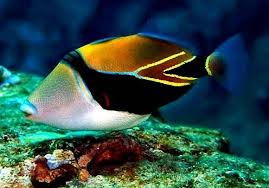
My next marvel was the improbable “humuhumunukunukuapua’a,” a name that is bigger than the critter itself. It’s a very colorful triggerfish, found along the coral reefs of Hawaii. Now, because the Hawaiian alphabet has only twelve letters, the words sometimes get a mite repetitive. But this one was truly absurd. I encountered it while watching an episode of my favorite boyhood show—The Little Rascals. Our Gang competes in a radio audition against several performers, including a crooner singing “I Want to Go Back to My Little Grass Shack,” complete with pint-size hula girls. The song featured the lyric “where the humuhumunukunukuapua’a go swimming by.” Imagine my breathless excitement when I actually found this word in an unabridged dictionary, though it took several attempts to locate it.
Then I made the acquaintance of a forty-five-letter monster, “pneumonoultramicroscopicsilicovolcanoconiosis,” a lung disease caused by the inhalation of very fine silica particles. Now that’s a mouthful—I mean, a lungful. Can you imagine a doctor diagnosing it? The patient would surely die of terror before the doctor completed the diagnosis.

My next beaut was “floccinaucinihilipilification,” which means “estimating something as worthless.” It was the longest word in the Oxford English Dictionary until “pneumonoultramicroscopicsilicovolcanoconiosis” eclipsed it in the second edition. The first recorded use of this word was in 1741 in the sentence “I loved him for nothing so much as his floccinaucinihilipilification of money.” Indeed! And this corker of a word made it into the Congressional Record in 1999, when Senator Jesse Helms proclaimed his floccinaucinihilipilification of the Comprehensive Nuclear Test-Ban Treaty.

My love affair with words deepened dramatically when I stumbled upon a complete, ten-volume set of the Oxford Universal English Dictionary on Historical Principles in the incinerator room of my grandmother’s apartment building in Brooklyn. Someone had discarded this precious trove. Imagine that! My Old World grandmother couldn’t quite understand why I refused to give her one measly volume, sharing the bounty. After all, I had ten! It was divided into A–Bro, Bro–Dec, Dec–Fit . . . and, of course, it was inseparable—and so was I, with it. How I treasured my dictionary! I took to reading it nightly, and I proudly, perhaps insufferably, flaunted the new additions to my vocabulary.

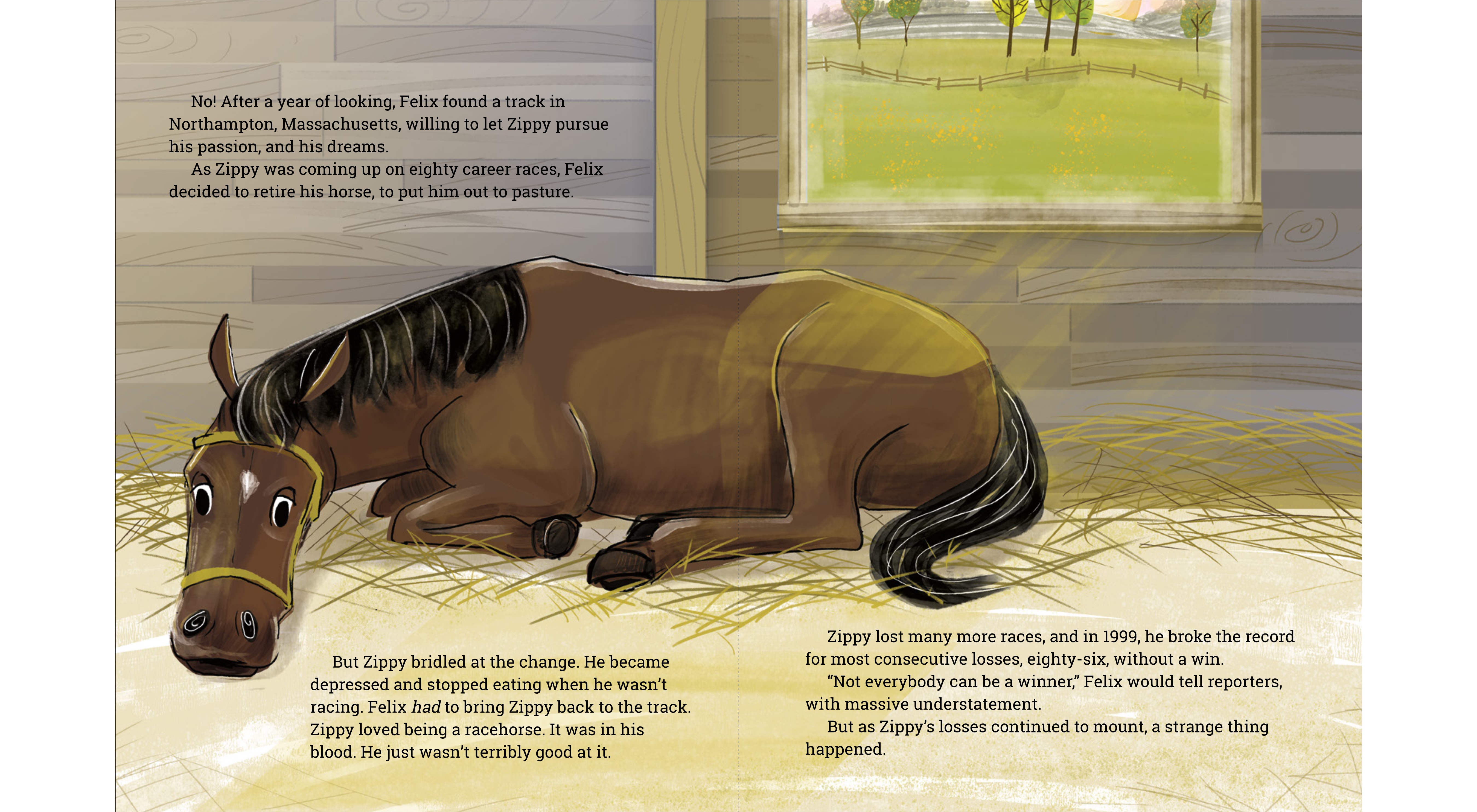
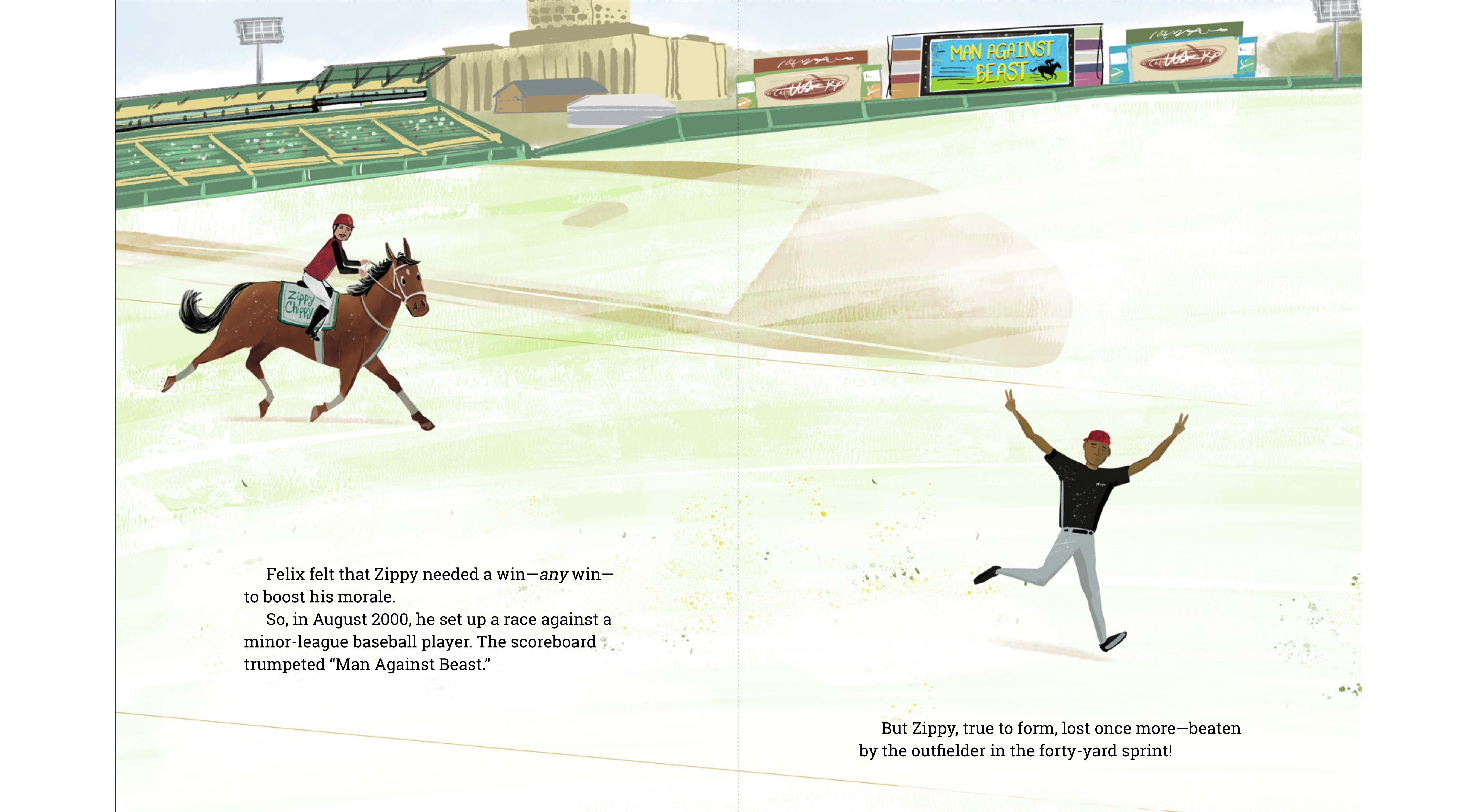
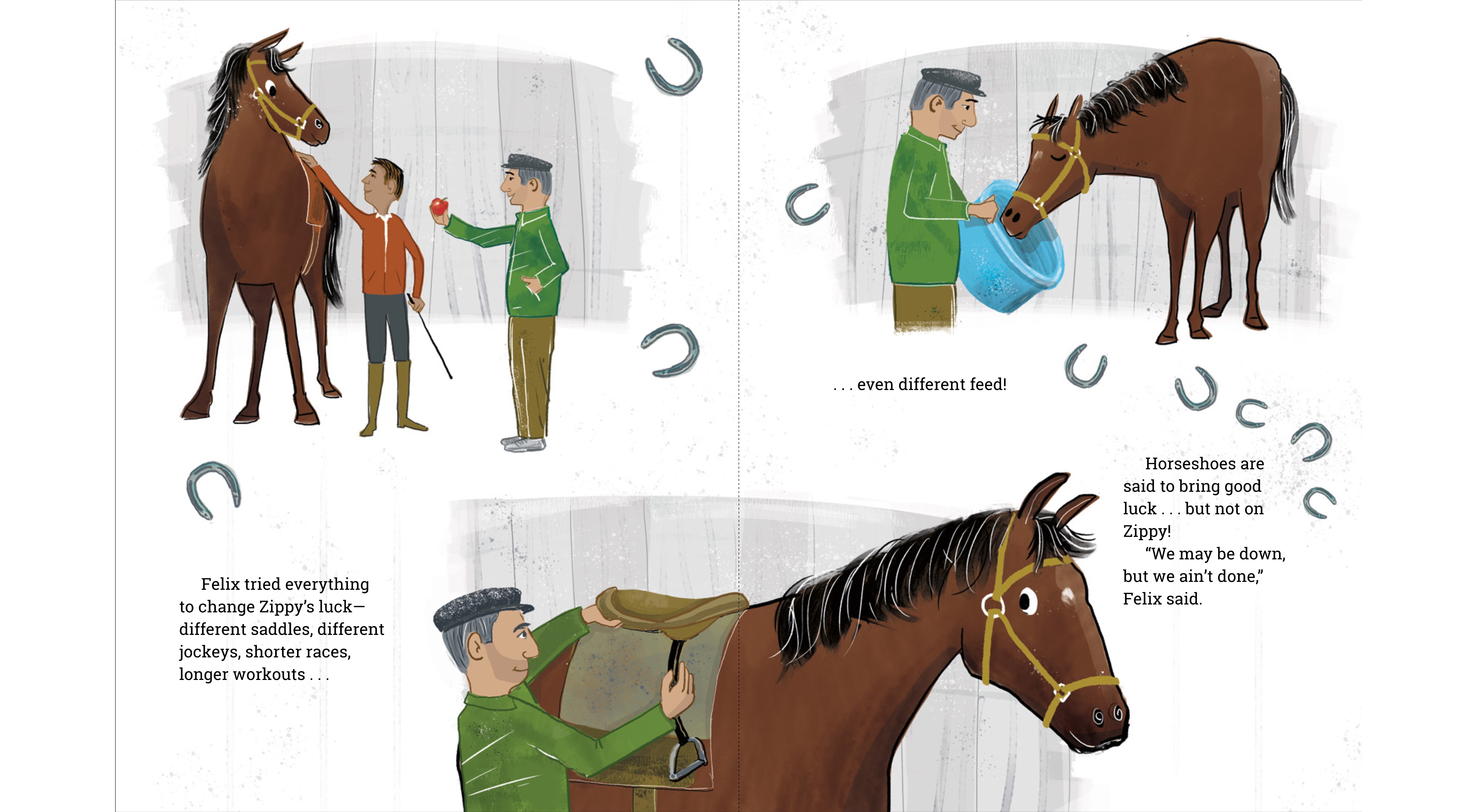
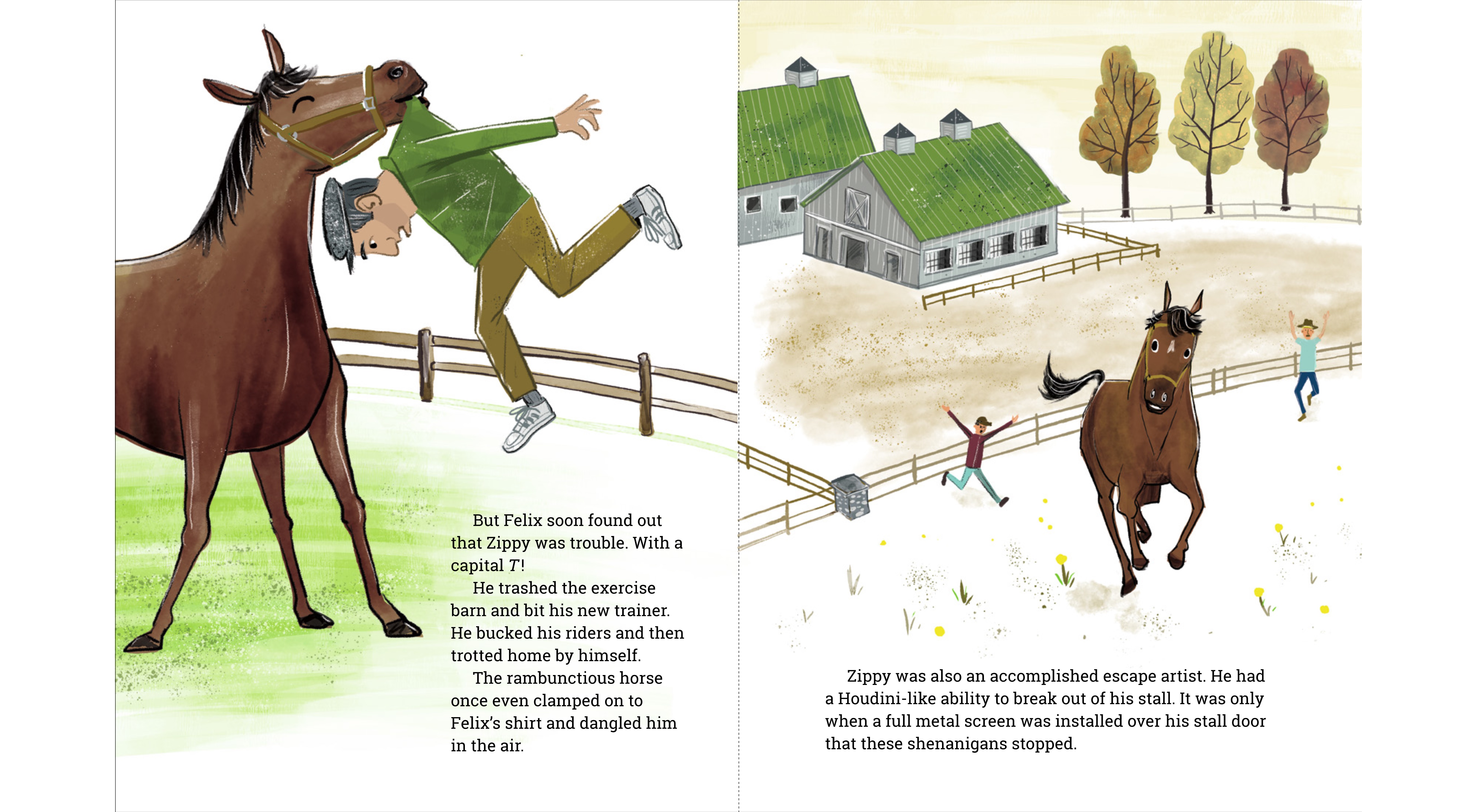
So it was only natural that I would pour my lifelong love of words and wordplay into my children’s books. I’ve made a point of introducing unfamiliar, though kid-friendly, words to young readers while also giving them a spoonful of wordplay. My brand-new children’s book, The True Story of Zippy Chippy: The Little Horse That Couldn’t, a heart-tugging, inspiring picture-book biography of a fabled racehorse, lovingly illustrated by Dave Szalay, enjoys a rich and rewarding vocabulary, with a large dollop of wordplay. Among the marvelous words you’ll find are “wafting,” “hapless,” “rambunctious,” “shenanigans,” “emblazoned,” “nuzzled,” “ballyhooed,” “heyday,” “vanquishing,” “zaniest,” and more, colorful words not often found in a picture book. These are words that are fun to say and they enrich the story of the beloved horse who ran 100 races and lost every one. And delicious, understated wordplay abounds. “Zippy bridled at the change,” “his losses continued to mount,” “to add a little horsepower,” “a running joke” are but a few examples.

Here are a few pages:
The inimitable Dr. Seuss coined scores of fantastic words, from “bar-ba-loots” to “zummers.” He, of course, gave us the term “grinch” and is credited with the first use of the word “nerd,” a creature from If I Ran the Zoo. His antic use of language makes his books so unforgettable. They resonate with parent and child alike, generation after generation. And they unleash readers.

I’m a great exponent of stretching youngsters’ vocabularies. They can puzzle out unfamiliar words within the story’s context. And if they’re flummoxed, they can always turn to a dictionary for assistance. My hope is that they will make these words their own as they develop a deep appreciation for language’s playful possibilities. The more words we know, the better we can communicate, the sharper our thinking will be, and the more equipped we’ll be for life’s challenges.

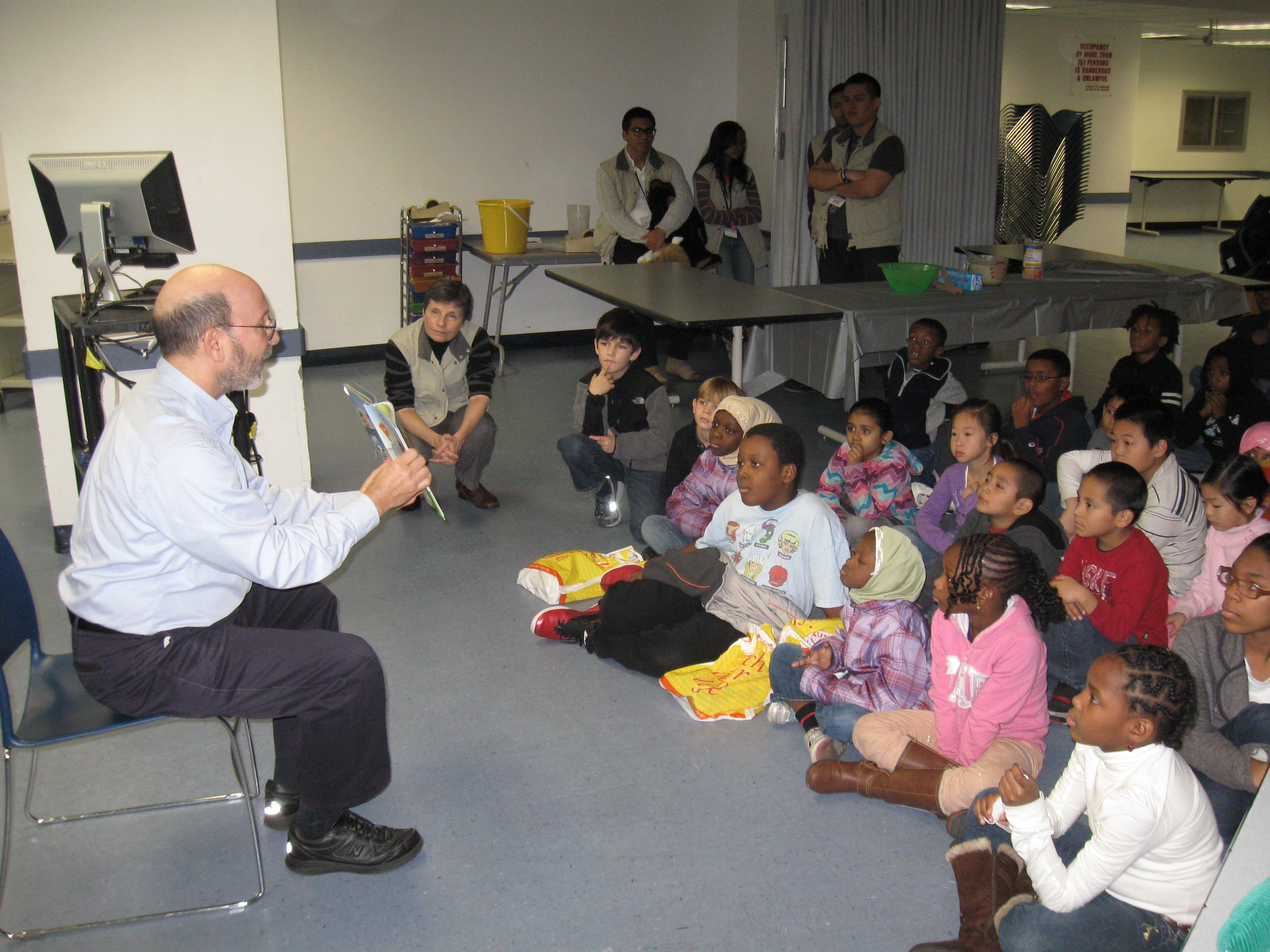
I regularly hear from educators and librarians about how my books never tarry on the shelves and how they show students how much fun a book can be. A great deal of this has to do with their exuberant use of language. Also, I’ve been blessed to have such talented illustrators with complementary senses of humor.

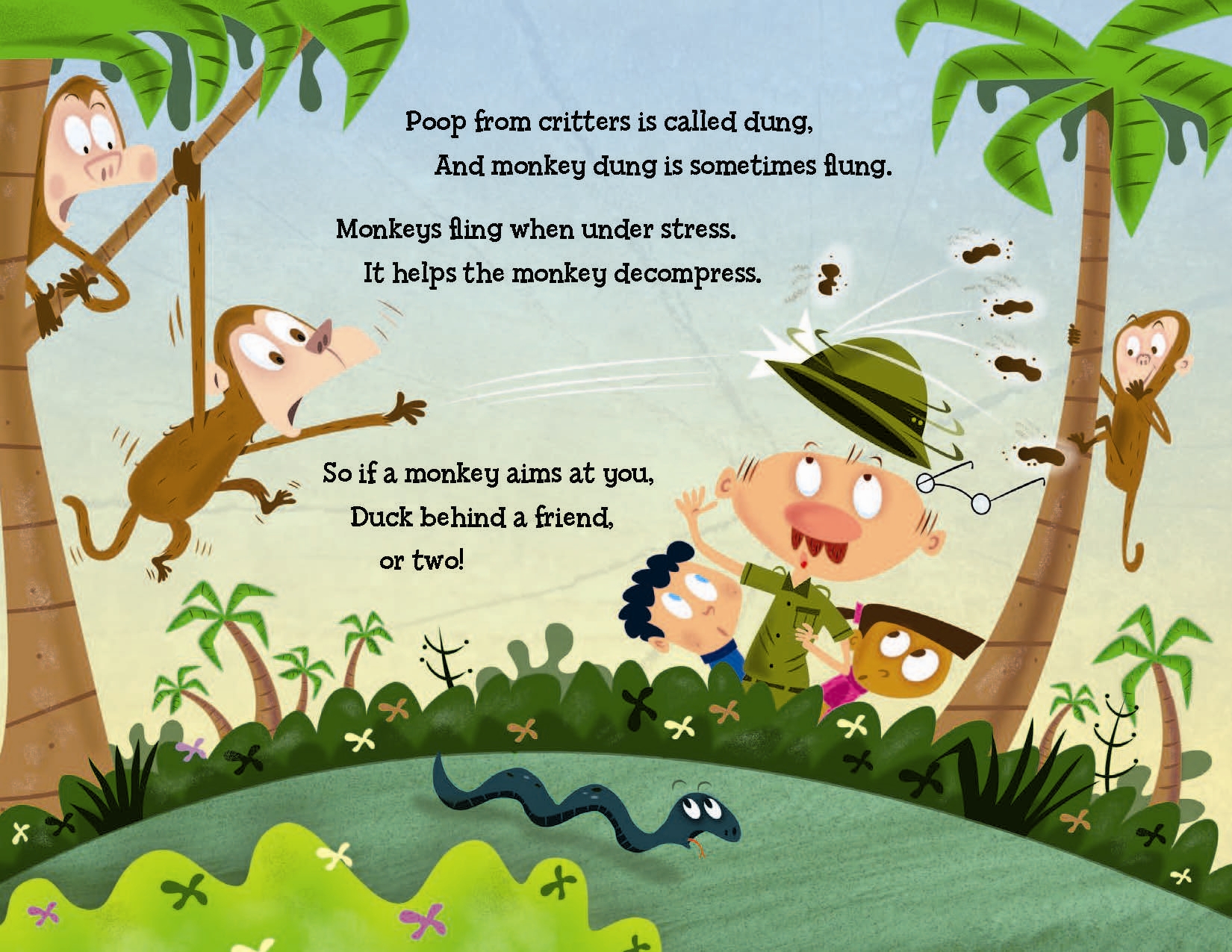
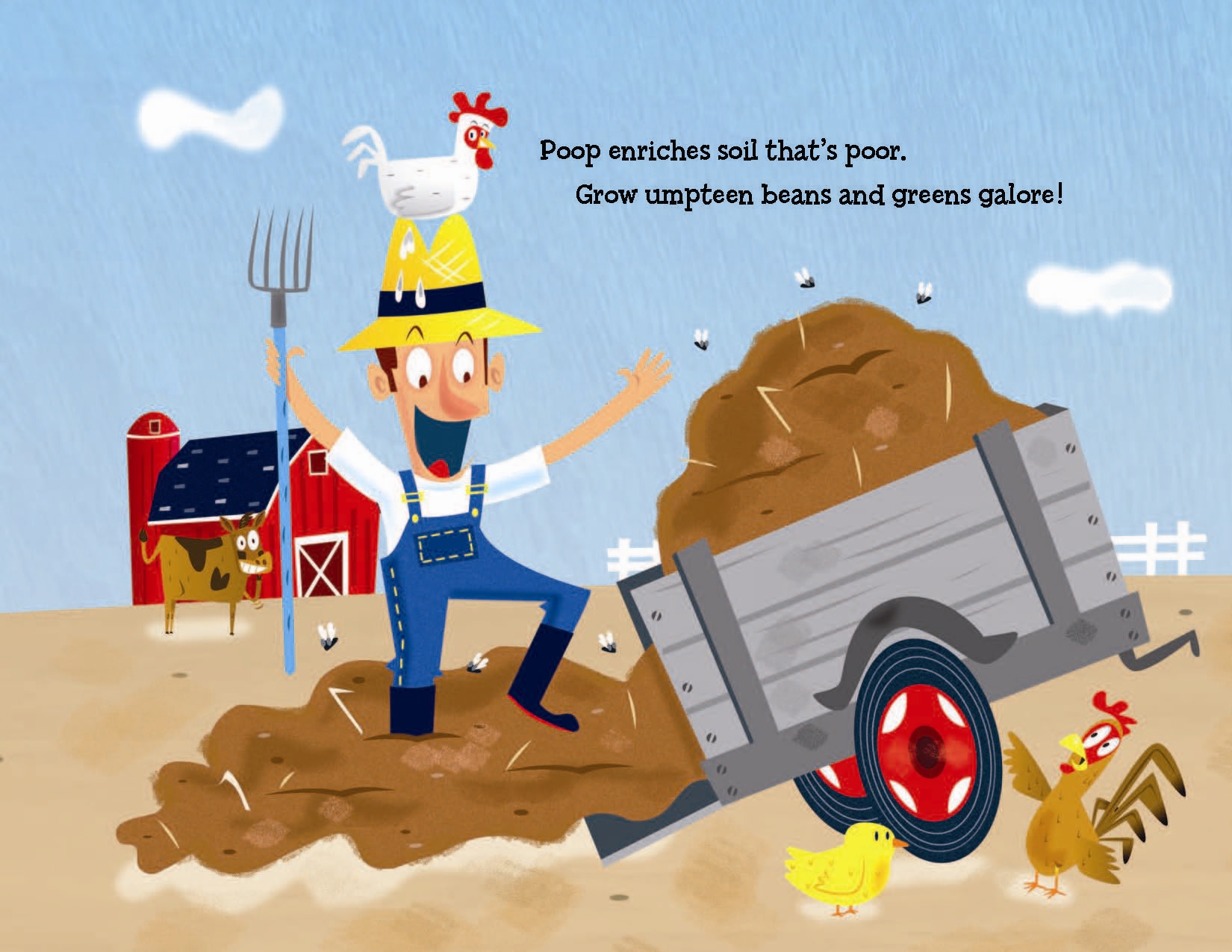
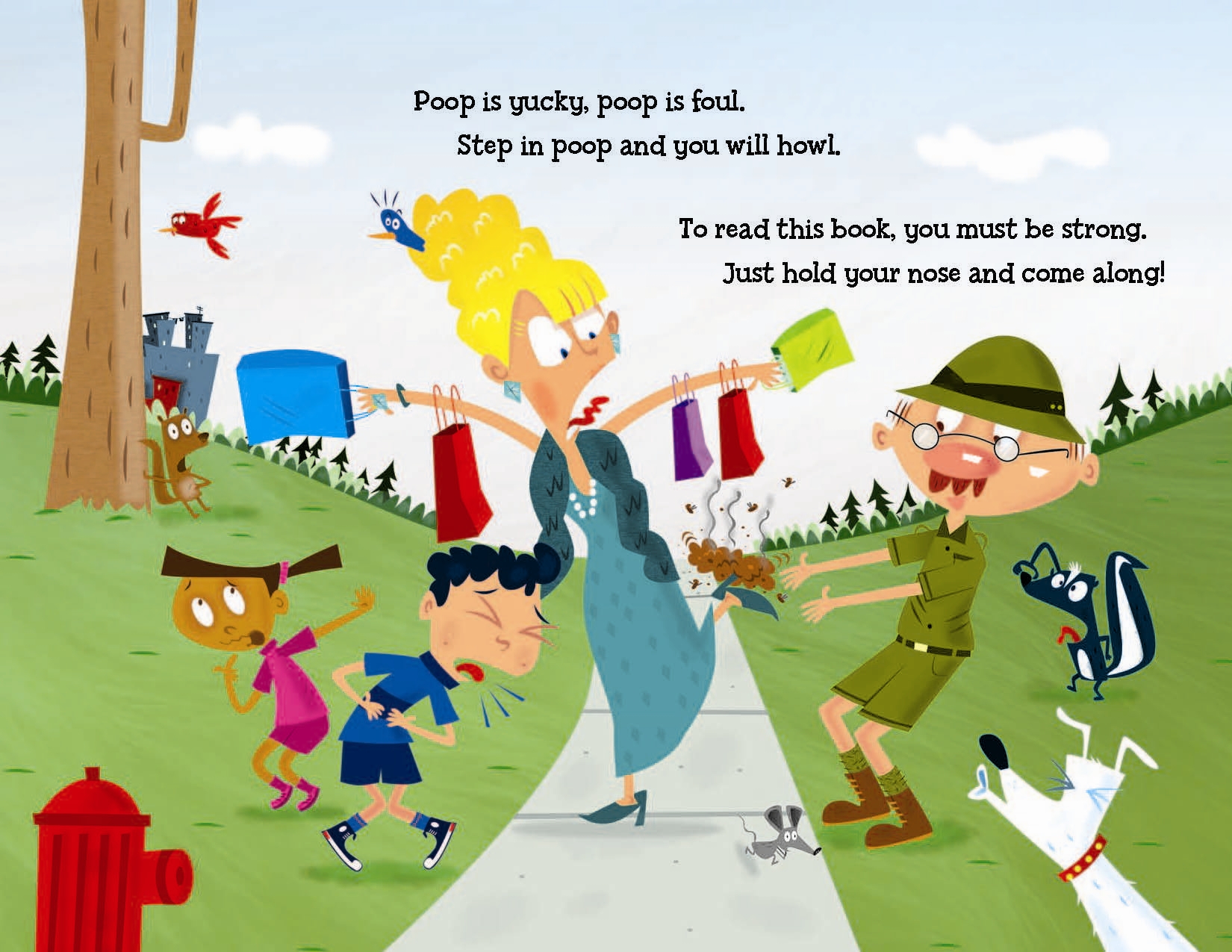
My “number two” picture book, Poopendous!, one of my five picture books in verse, has a portmanteau-word title that’s immensely fun to say. It’s a book that revels in humor and wordplay and is filled with joyful facts. I love asking students at my school appearances if the word “poopendous” can be found in the dictionary. And if not, how could I possibly use it for my title. Their responses never fail to delight me. The introductory couplet sets the stage for the inspired wackiness to come:

I’m Professor Pip Poopdeck. Welcome aboard!
We’re exploring a substance that most have ignored.
An icky-poo subject folks don’t care to visit.
Quite putrid and shocking and horrid . . . or is it?

Here are a few images from this fun book:
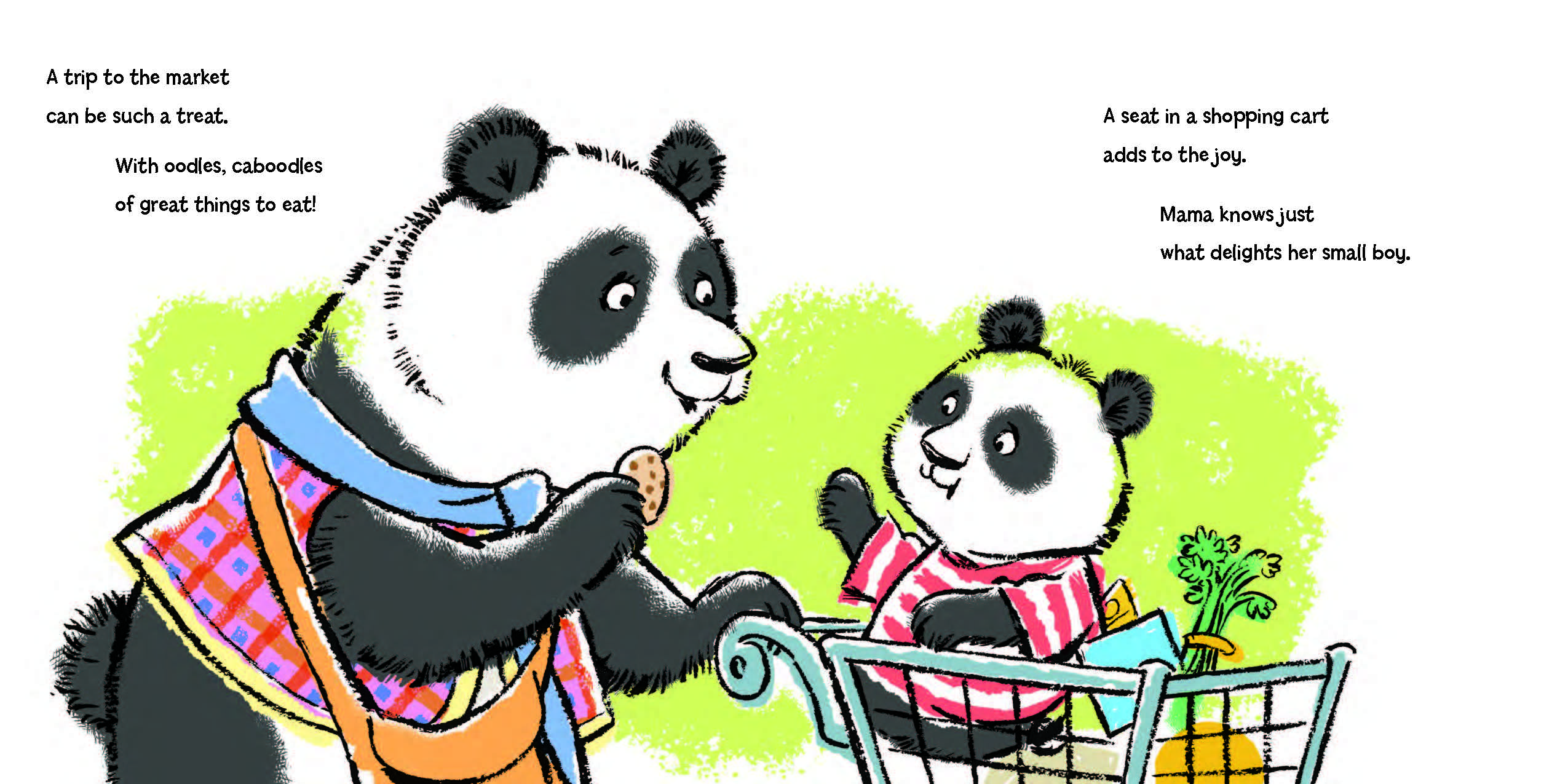
In Peter Panda Melts Down!, my first storybook, we meet a tantrum-tossing cub whose mama is struggling to avoid the mother of all meltdowns herself. I experimented with the use of a refrain, and surprise variations along the way. The refrain has an interactive element that pulls youngsters into the story. And it has some delightful, fanciful words as well. Here are a couple images:
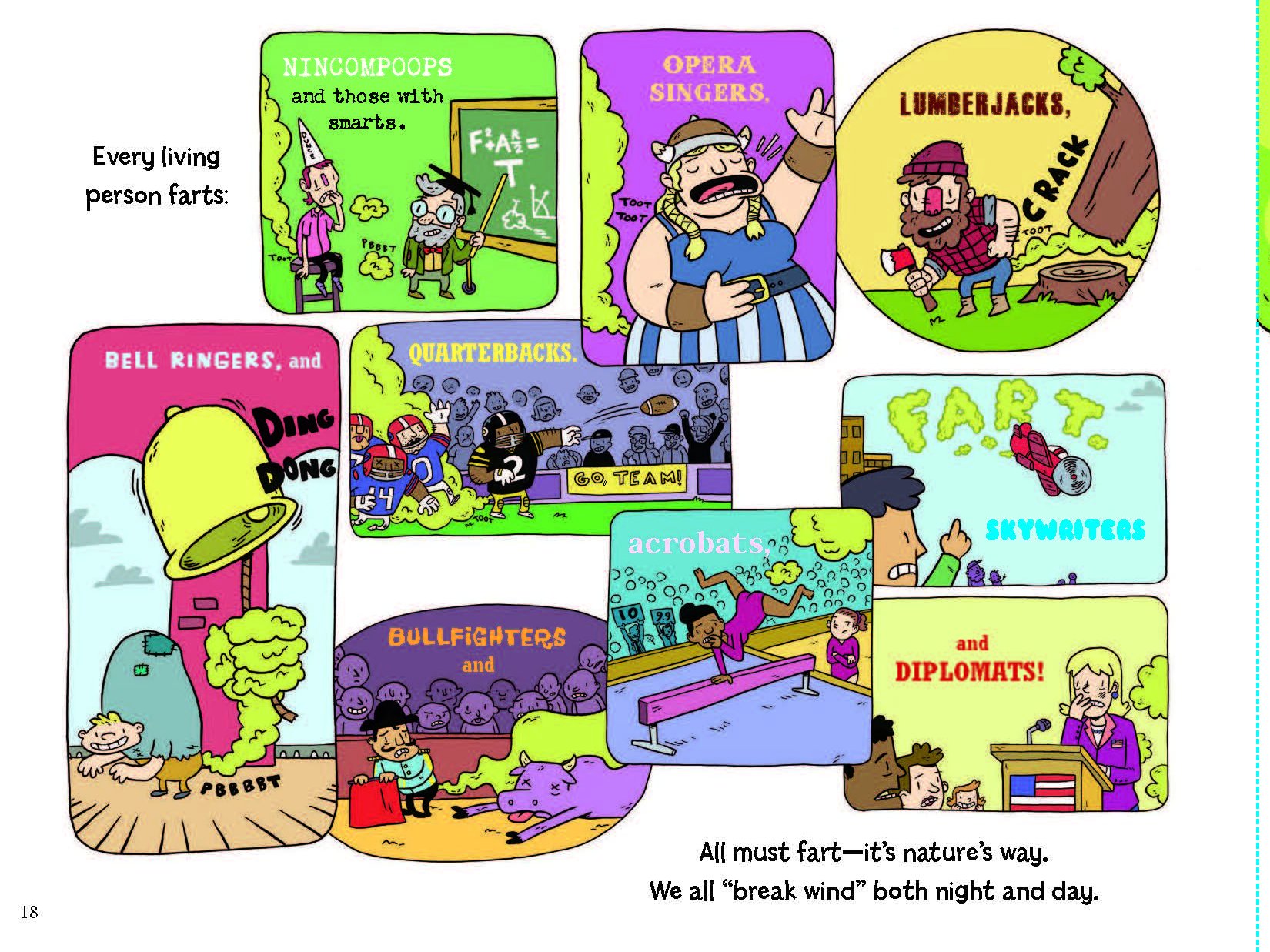
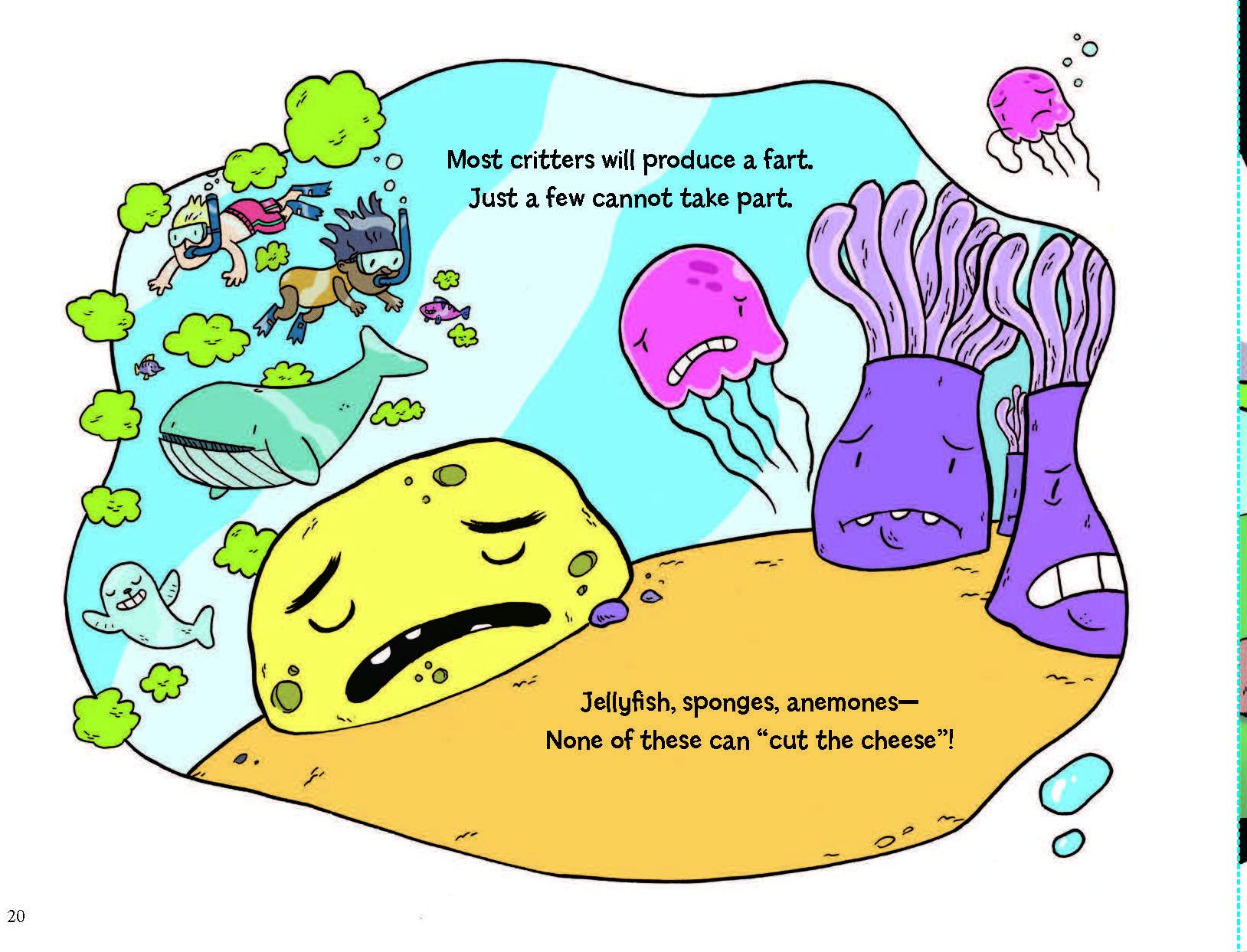
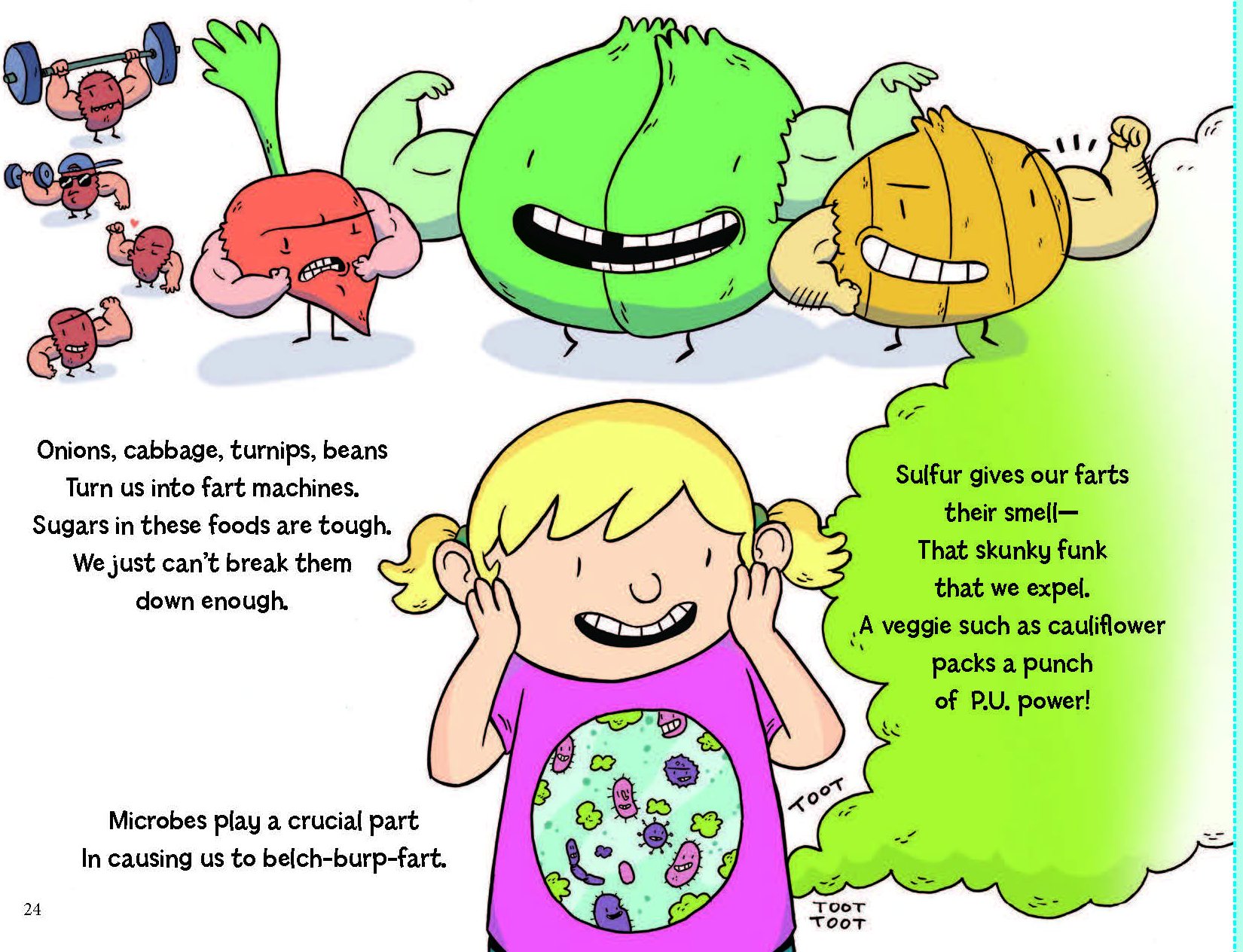
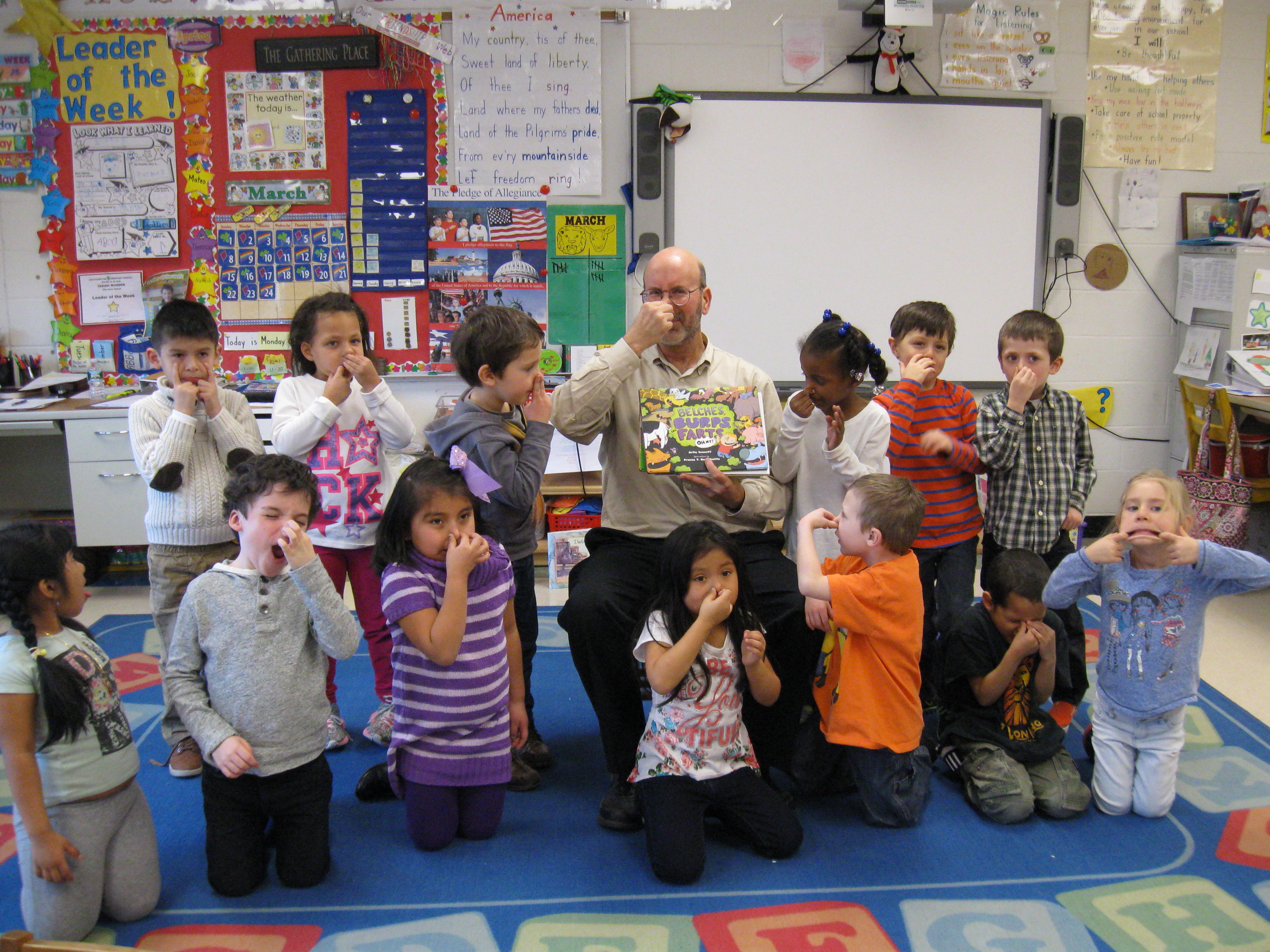
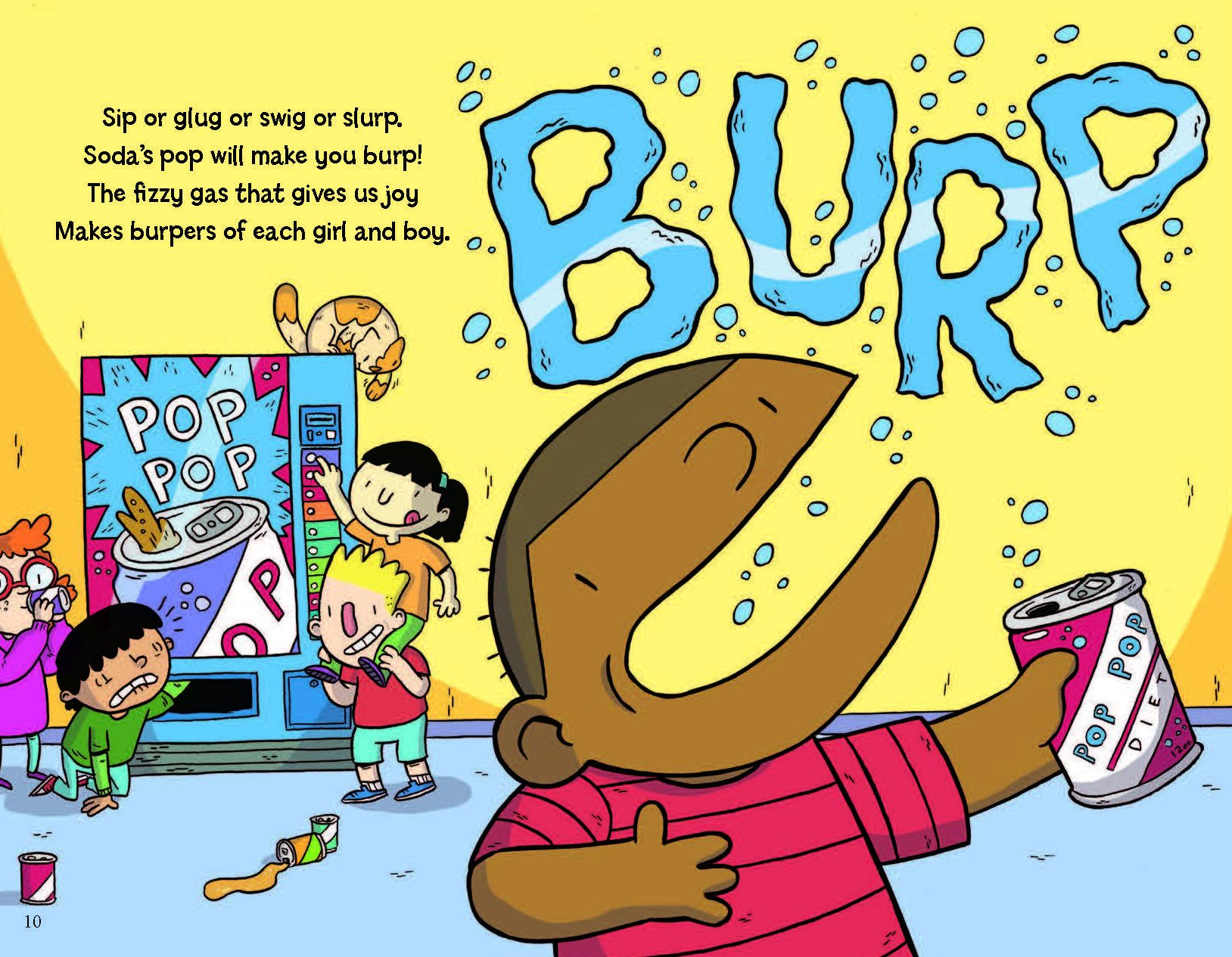
Belches, Burps, and Farts—Oh My!, whose title pays homage to a hilarious song from The Wizard of Oz, has more than its share of verbal merriment, as well as a panoply of incredible facts, all in a verse format. What sound do overly gassy cows make when they explode? Why, “cow-boom!” of course. And I was thrilled to work the word “nincompoops” into a couplet. One of my choicest nuggets can be found in this verse:

Can you belch your ABCs?
Demonstrate your ex-burp-tise!
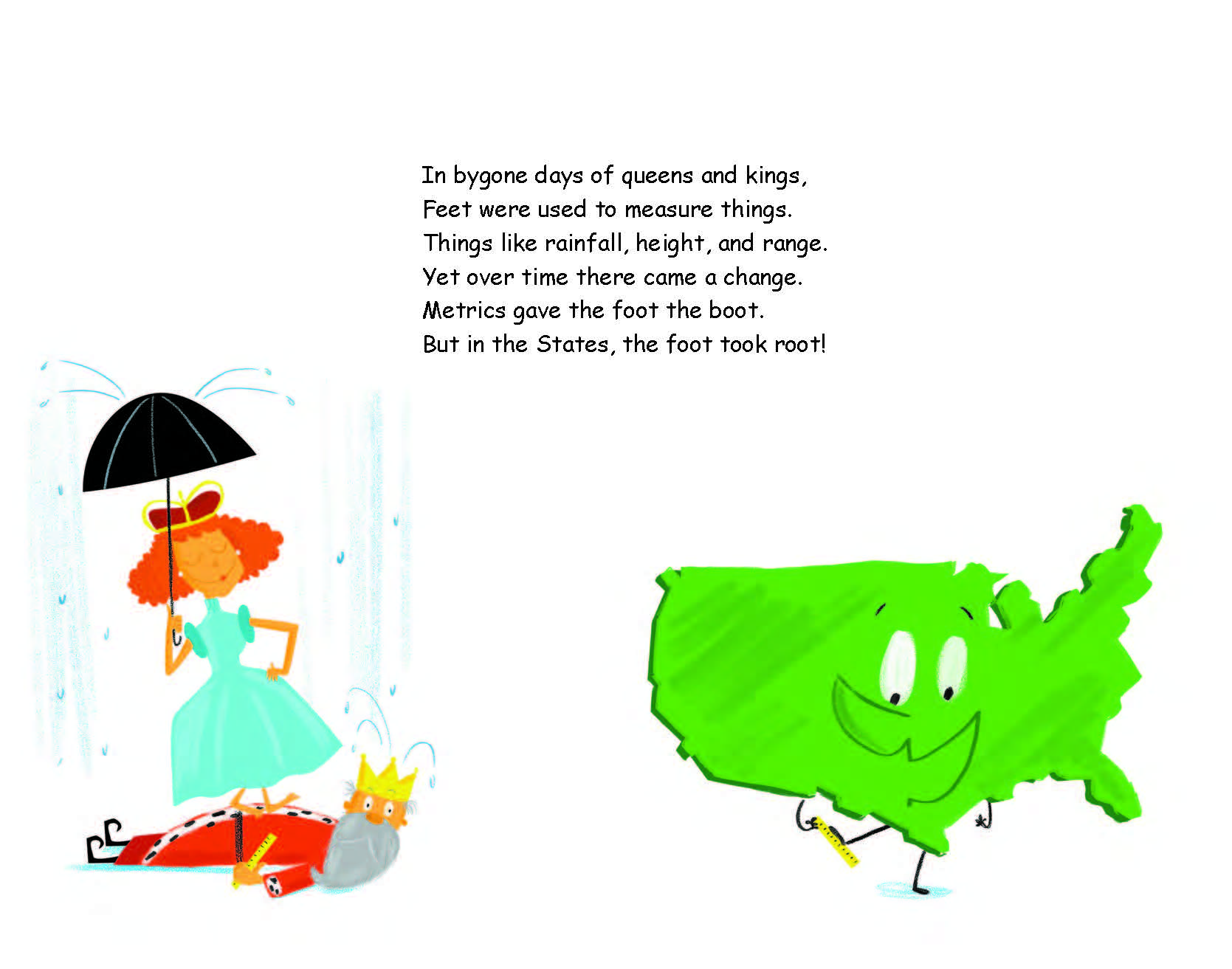
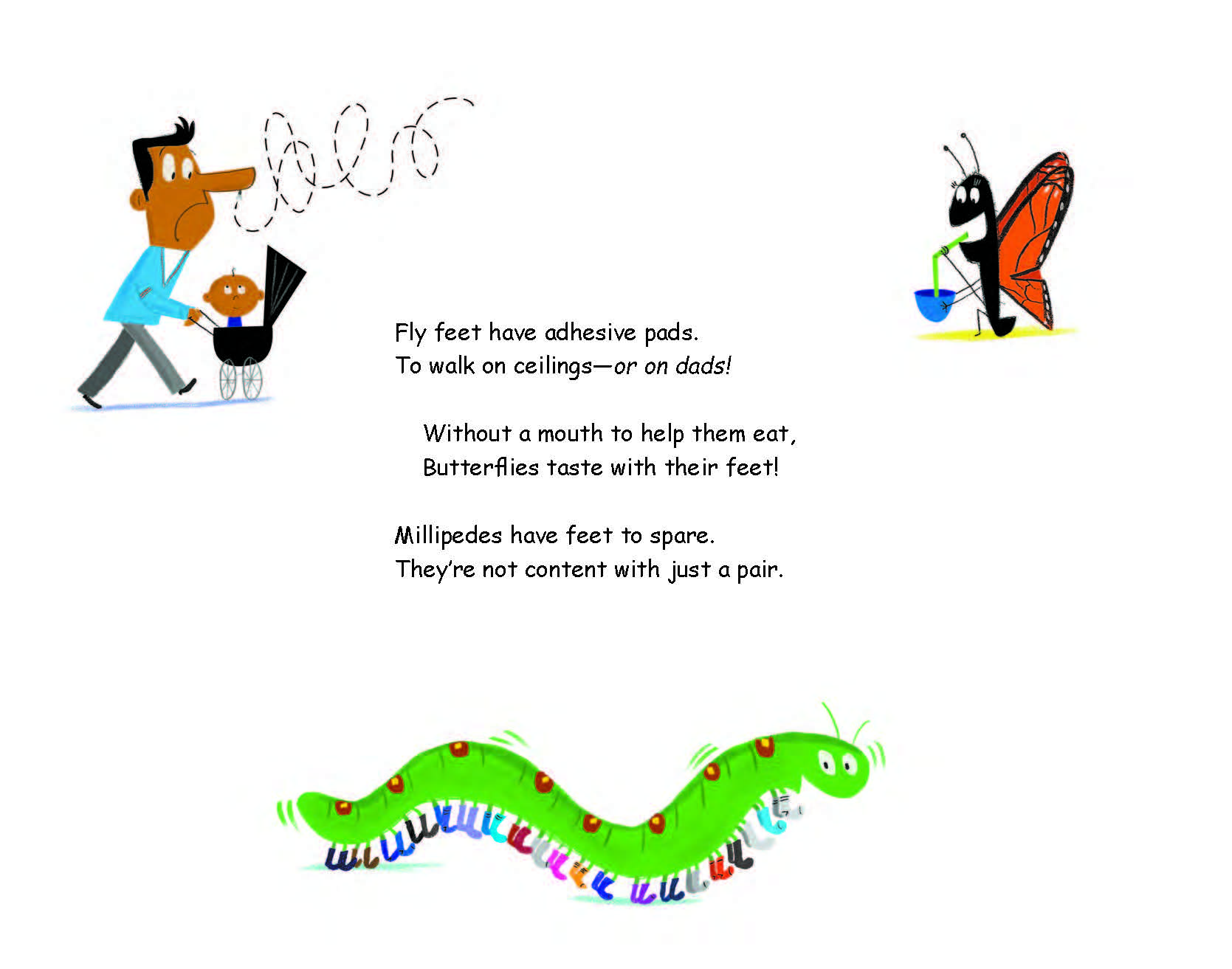
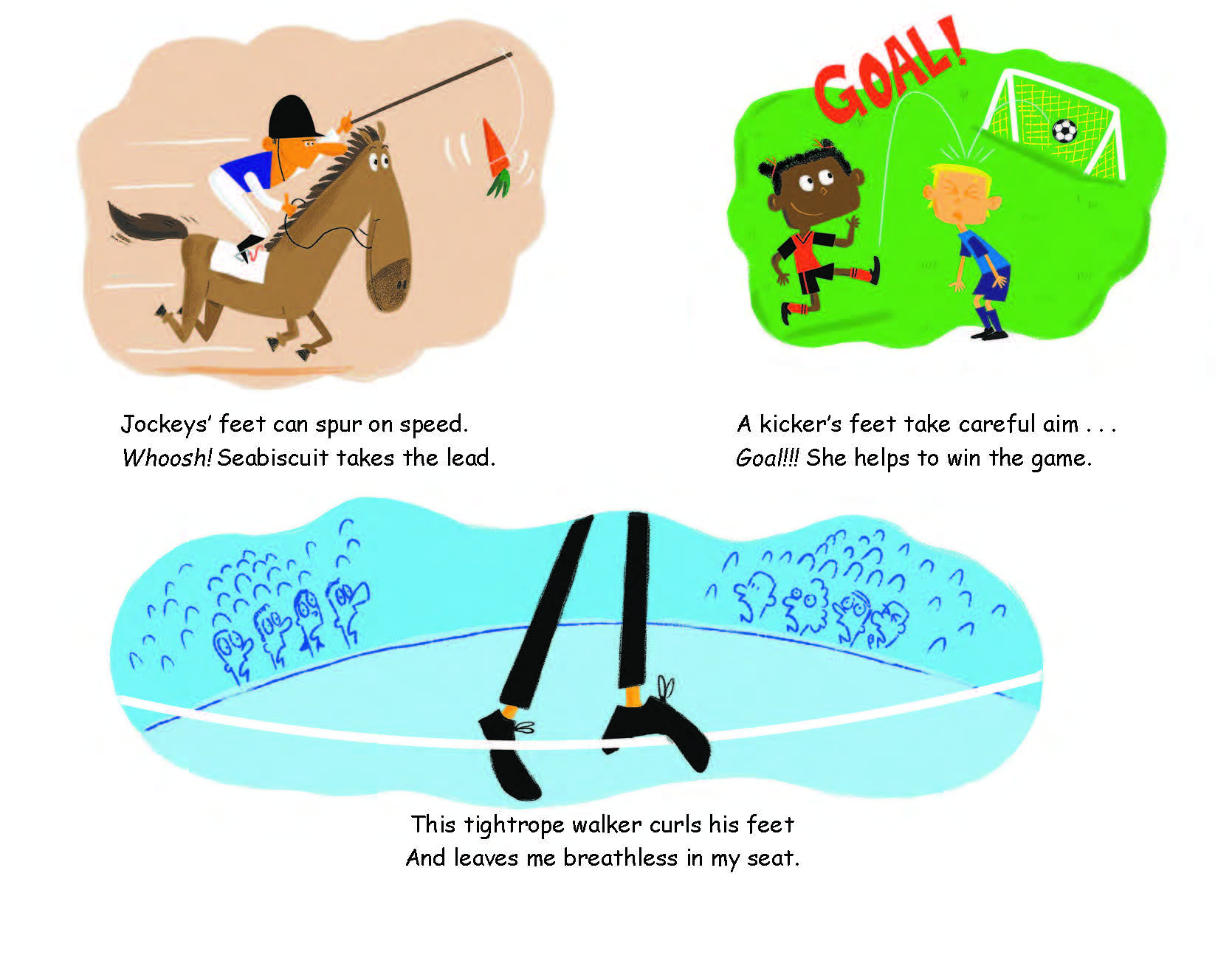
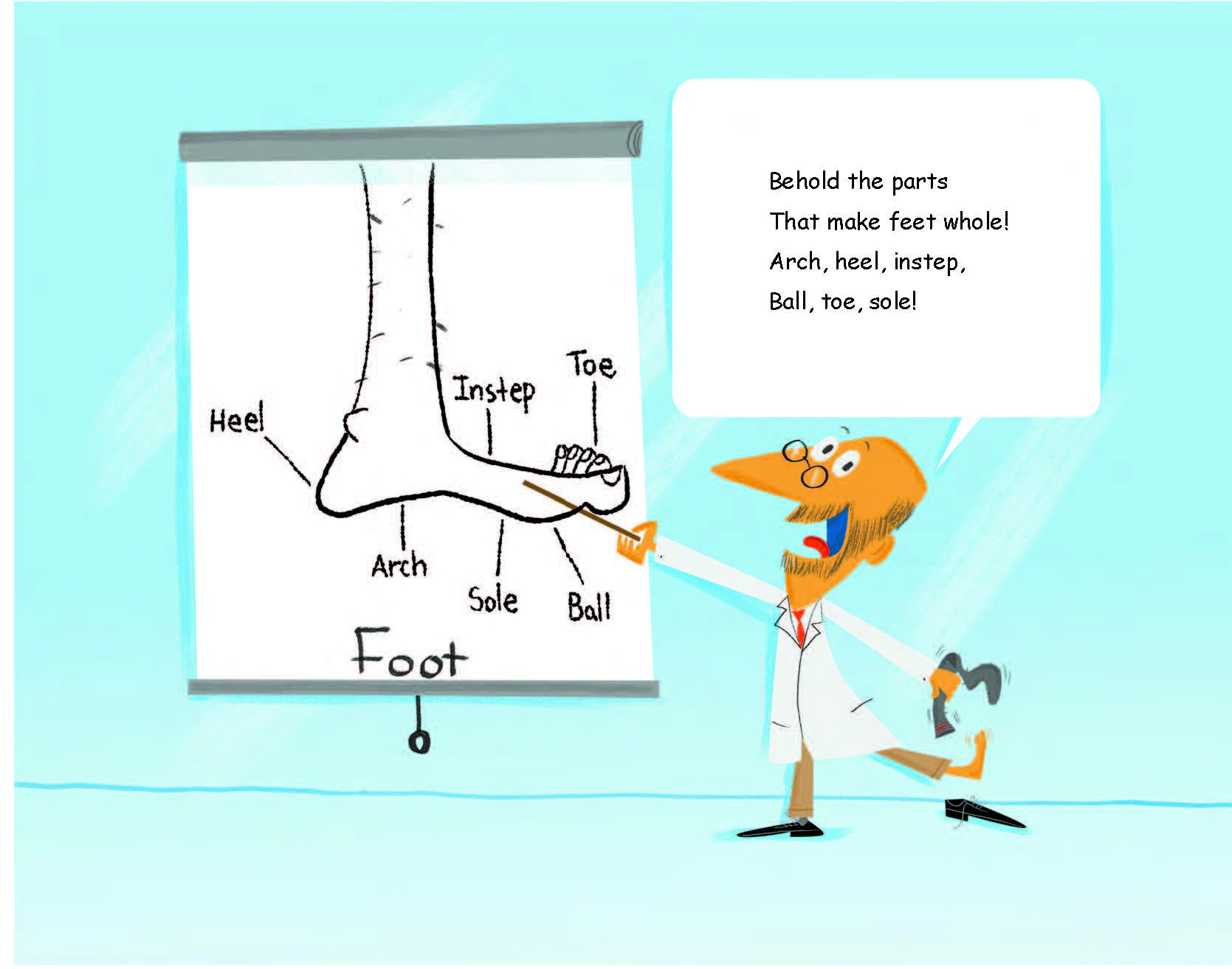
A very recent picture book, What’s Afoot! Your Complete, Offbeat Guide to Feet, published by a spanking-new startup publisher, boasts a punny title and a footload of humor. And like Belches, it features a two-page fact spread filled with amazing information. It begins with this amusing, pun-packed passage:

Dip your toes in.
Let’s explore
the world of feet.
Yes, FEET galore!
Your knowledge soon will be complete
when you . . .
get in step with all these feet!

Here is a sampling:
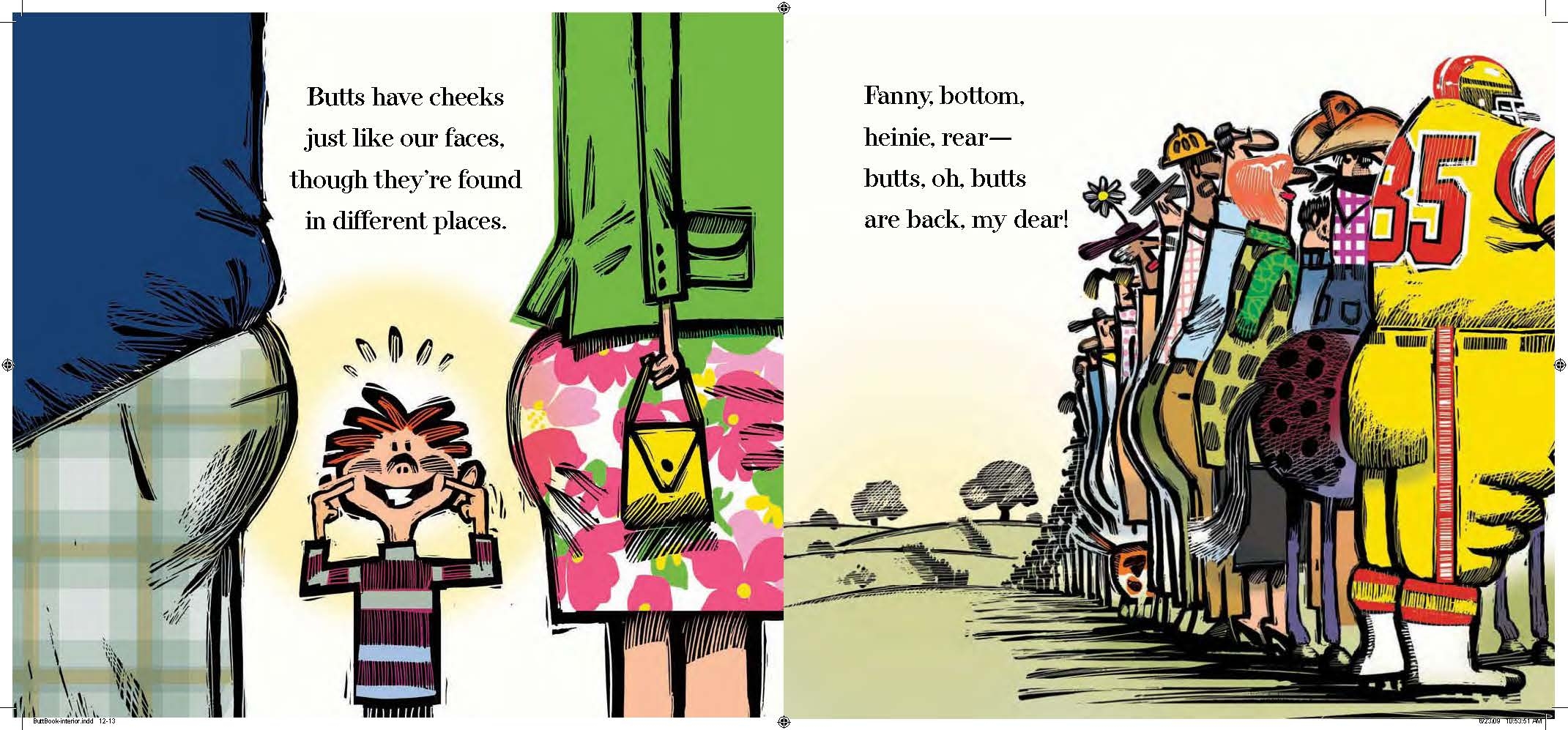
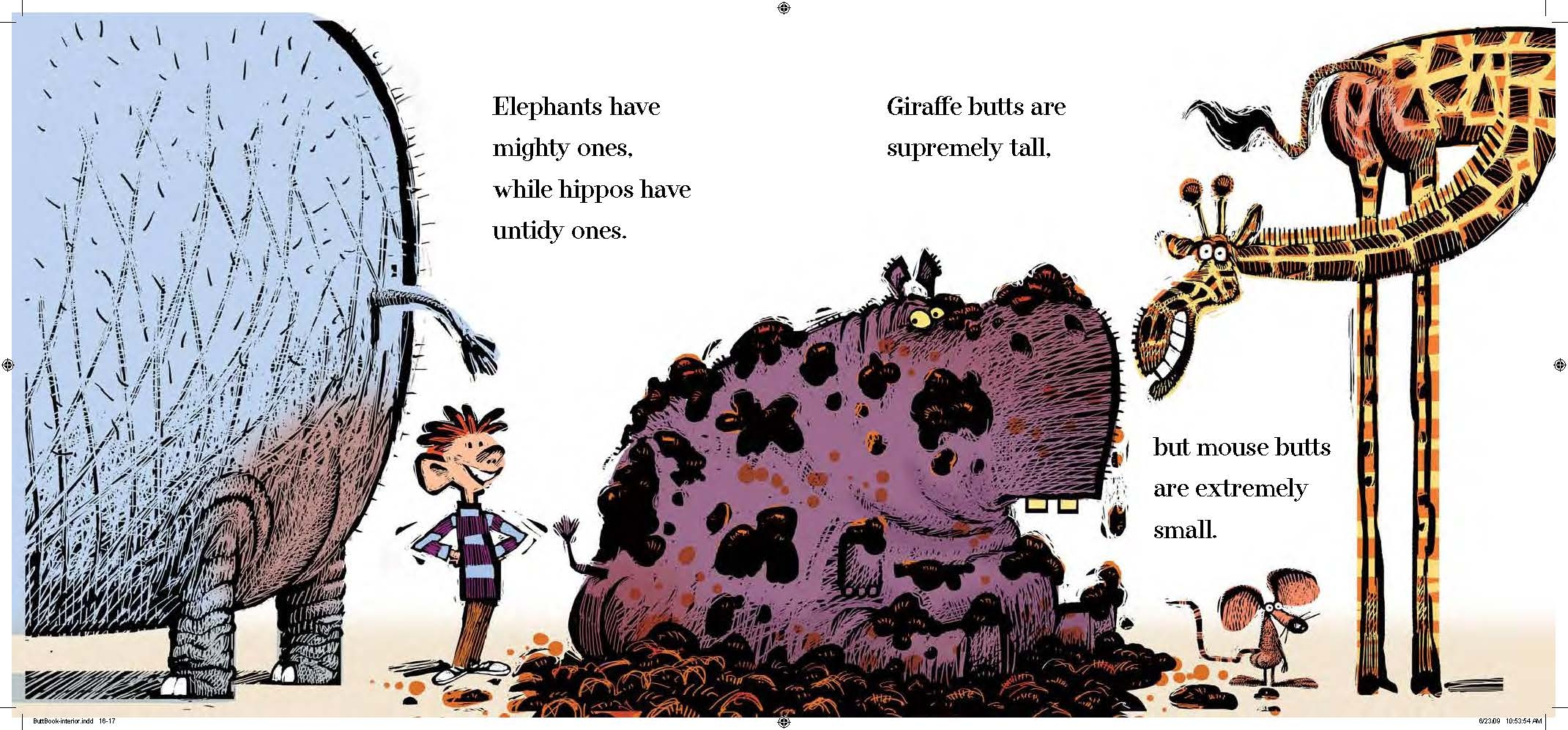
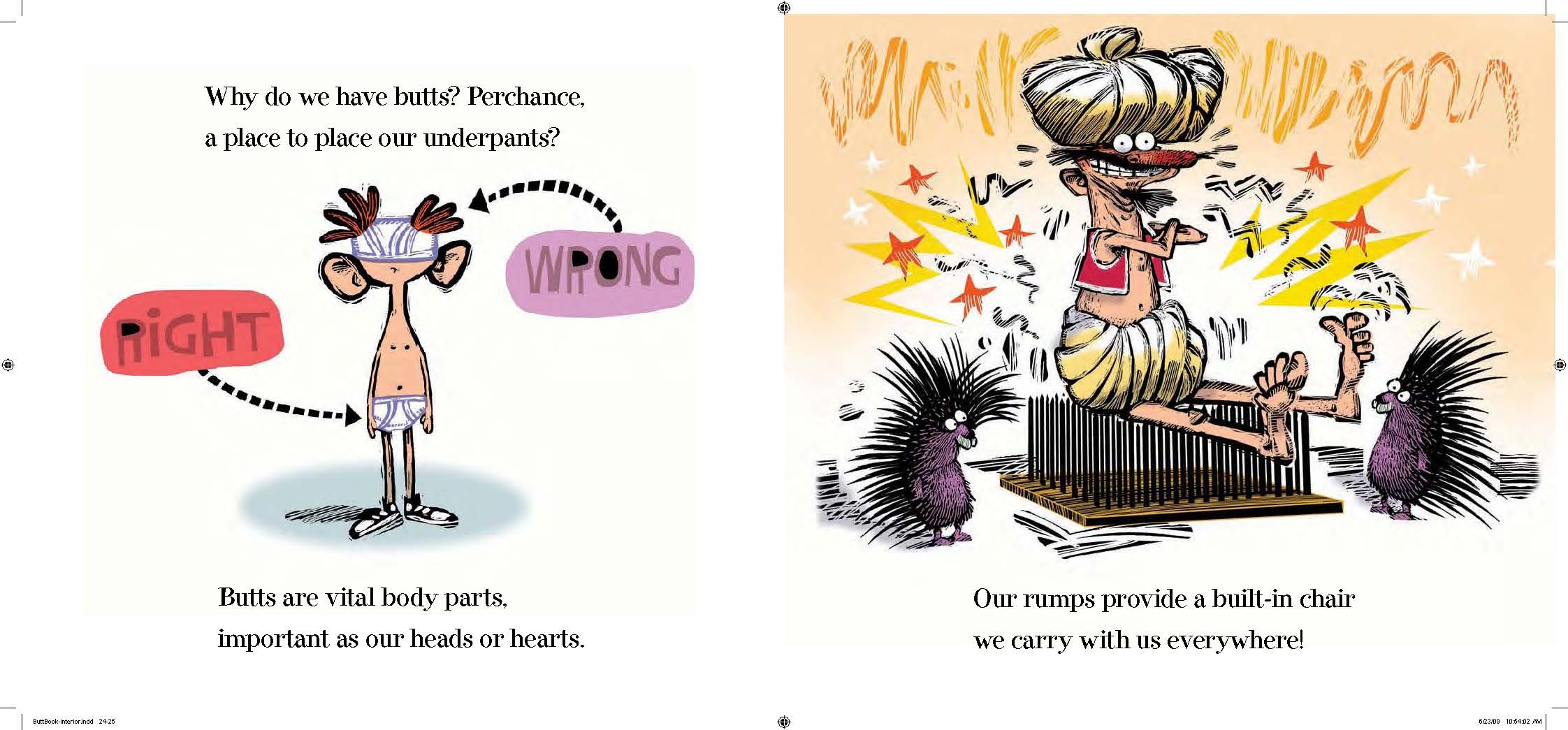
What I like to refer to as my first “mature” work, The Butt Book, which was modeled after Dr. Seuss’s The Foot Book, The Eye Book, and The Tooth Book, is a tongue-in-cheeks tribute to the posterior. It also has challenging words like “juts,” “zeal,” and the Shakespearean “perchance,” all, though, easily understood in context. Since we don’t have that many j and z words, I’m happy to introduce one of each, little words yet big ones. I recall tussling with my editor over including some possibly unfamiliar words. I dug in my heels and she eventually softened. While The Butt Book is teeming with humor, I’m most proud of the stirring finale, which culminates in this fun farewell flurry:

So respect your butt and listen, folks.
It must not be the butt of jokes.
Bottoms up! Hip, hip, hooray!
Our useful butts are here to stay.
Don’t undercut your butt, my friend.
Your butt will thank you in  . . . The End.

Here a few select spreads:

Thank you, Unleashing Readers, for the opportunity to share a word or two about me and my books! It’s been quite supercalifragilisticexpialidocious!
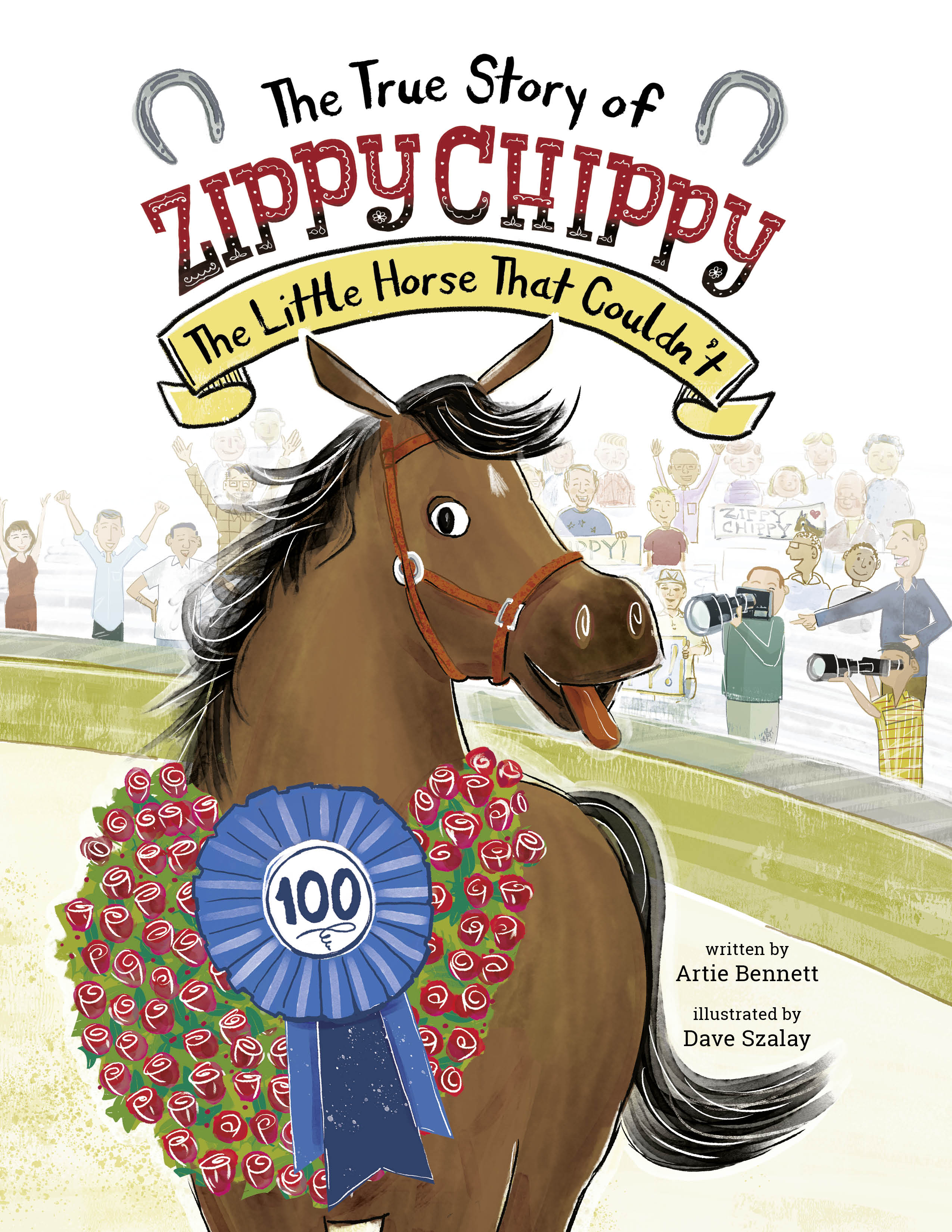
Illustrated by Dave Szalay
Published February 25th, 2020 by NorthSouth Books

About the Book: A true story about the famed racehorse who lost every race but won everyone’s heart.

The bell rings and they’re off! Zippy the racehorse—descended from legends—is destined for glory, but when the other horses bolt from the gate . . . Zippy stands still. When people try to pet him . . . he bites their hats and escapes from his stall. What’s an owner to do? Keep on trying! After all, Zippy has become part of Felix’s family—and a close friend of his little daughter. And after 100 straight losses, Zippy shows everyone that—win, lose, or draw—it takes guts to compete and that you can lose and lose and still be a winner. 
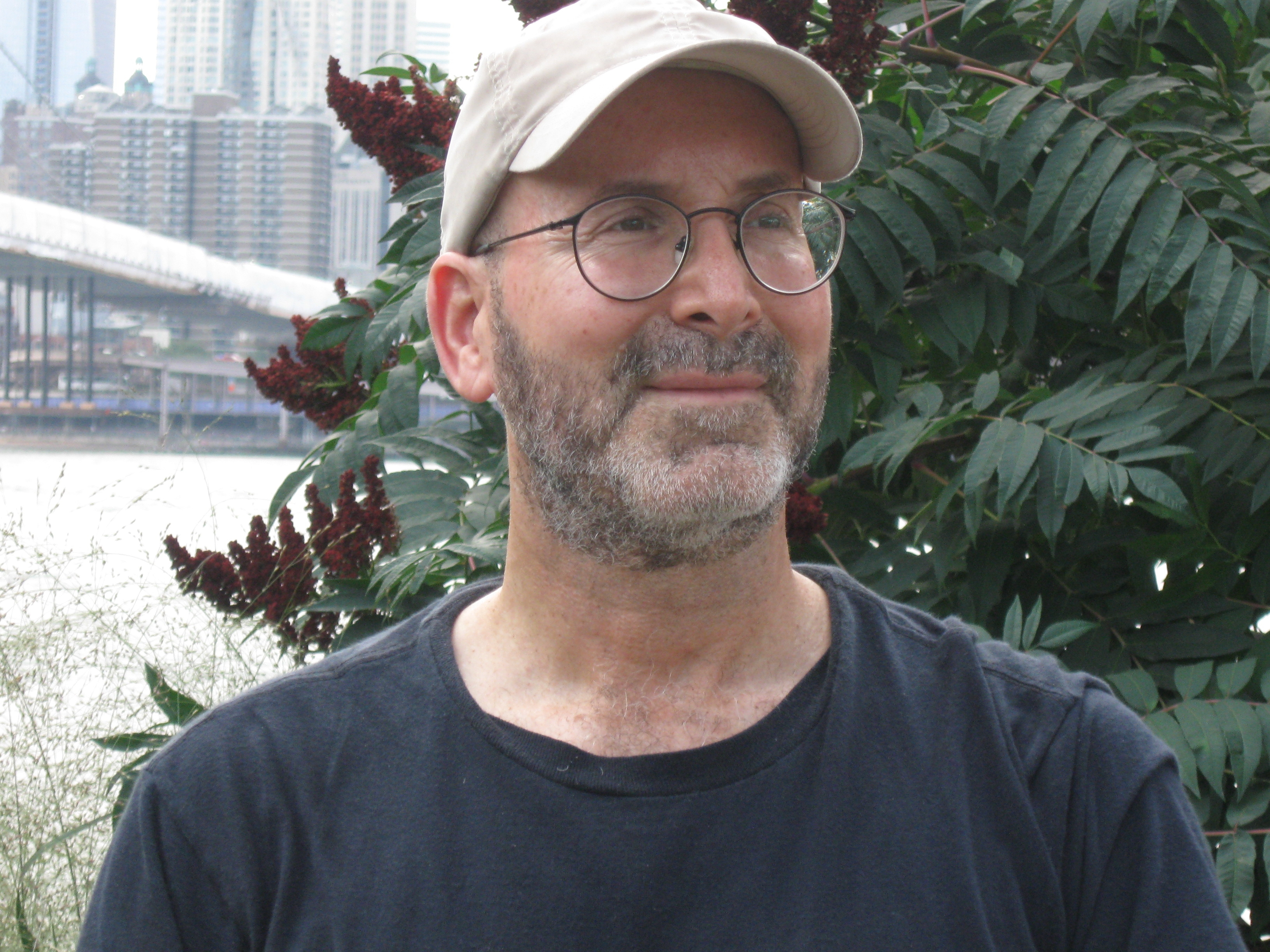

About the Author: Artie Bennett is an executive copy editor by day and a writer by night. He is the author of an inspiring picture-book biography of a hapless, though beloved, horse: The True Story of Zippy Chippy: The Little Horse That Couldn’t. He is also the author of a quintet of hilarious rhyming picture books: The Butt Book, his first “mature” work and winner of the Reuben Award; Poopendous!, his “number two” picture book; Peter Panda Melts Down!, an adorable departure from derrières and doo; the explosively funny Belches, Burps, and Farts—Oh My!; and his latest, What’s Afoot! Your Complete, Offbeat Guide to Feet, which is guaranteed to knock your socks off. And if that’s not enough, he’s the author of two riotous joke and riddle books: The Universe’s Greatest Dinosaur Jokes and Pre-Hysteric Puns and The Universe’s Greatest School Jokes and Rip-Roaring Riddles.

He and his wife, Leah, live deep in the bowels of Brooklyn, New York, where he spends his time moving his car to satisfy the rigorous demands of alternate-side-of-the-street parking and shaking his fist at his neighbors. The Show Me Librarian says: “Bennett’s use of rhyme is excellent; his stanzas flow and exude joviality in a manner that few writers since Dr. Seuss have truly mastered. Simply put, these books are a joy.” The Huffington Post says: “It appears there is no topic Mr. Bennett can’t make funny and educational.” Visit ArtieBennett.com . . . before someone else does!

Thank you, Artie, for sharing all of this fun word play!

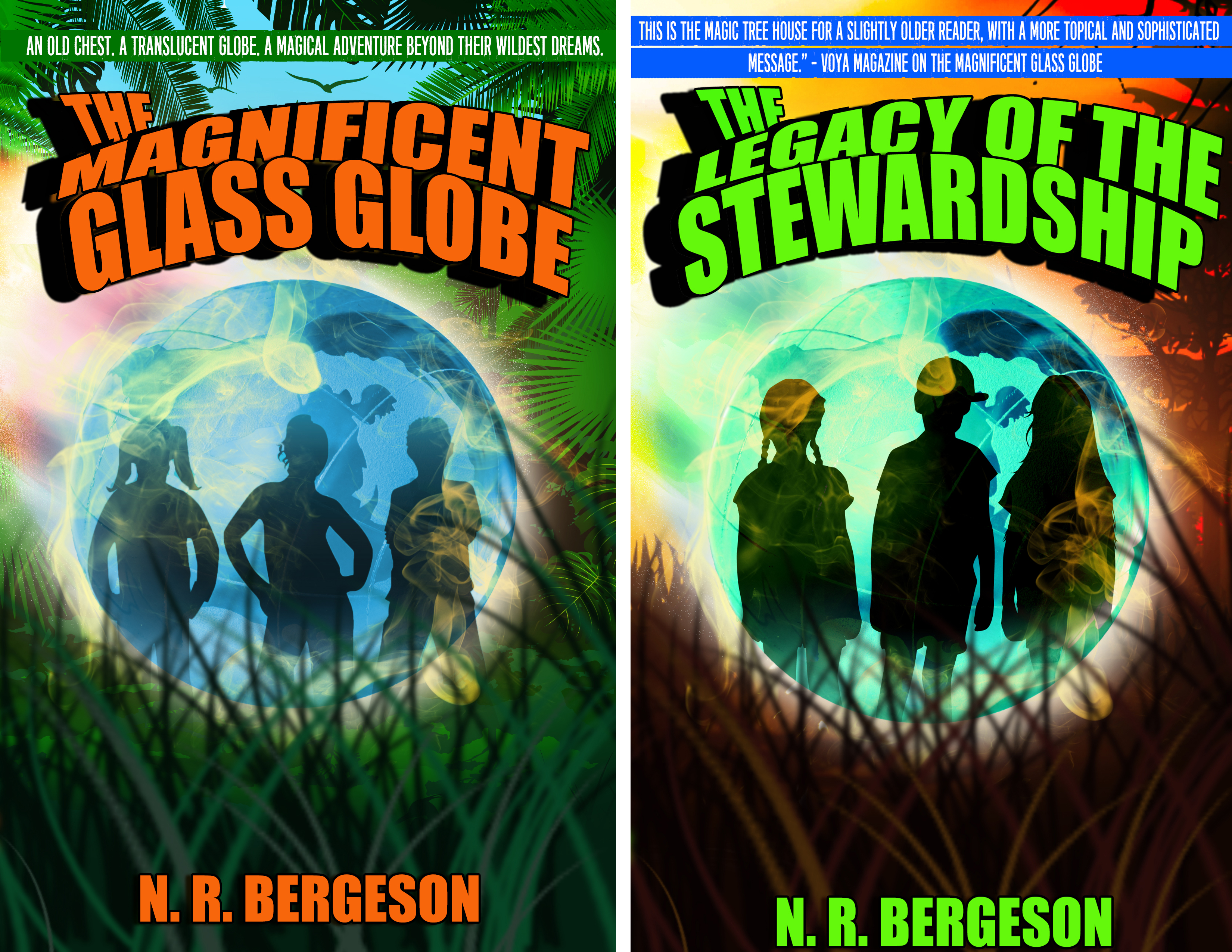
Author Guest Post: “Discovering the World Through Literacy” by N.R. Bergeson, Author of The Magnificent Glass Globe Series

Share

“Discovering the World through Literacy”

A few weeks ago, I attended parent/teacher conferences for my fourth-grade daughter and second-grade son. Things certainly have changed in the days since I was a kid. The quantitative information, evaluation methodologies, and other assessment criteria provide some pretty amazing data. These data not only help to give me a clearer picture of how my kids are doing. They also give me important insight as to where I, as a parent, am able to provide any needed, additional support.

As I’ve talked to a number of teacher friends, I’ve learned that while these data and information, are often very helpful, they can also be, at times, somewhat limiting. Much of these limits are tied to various federal requirements, state laws, and school board emphases. A lot of direction and input has been aimed at our schools. While they provide clear standards and quantitative systems of evaluation, they also can end up restricting what teachers can and can’t do. In addition, the added requirements often end up eating up the lion’s share of finite minutes in every day that a teacher has to, well, you know … teach.

One area that many teachers feel has gotten the “short end of the stick” in this new environment is social studies learning. Whether history, geography, sociology, or others, these bottomless subjects – subjects that relate so directly to the real world – end up getting put in second place to the traditional education areas of reading, writing, and arithmetic, as well as a renewed emphasis on strengthening STEM education topics such as science and computers.

Don’t get me wrong, I know that all of these are not only very important. They are essential in the world today, and in large part shape our success when it comes to society as a whole. But as one who studied the social sciences extensively, and who has spent most of my career in the field, I do wish my kids were learning more on these topics.

For me, the area of my greatest passion is anything associated with global education. Geography, cultures, foreign languages, geopolitics, and more. Since we all live on the same planet, I strongly believe that we are all better off when we know as much about it – and about the different groups of our fellow earthlings – as we possibly can. After spending a decade working as a U.S. diplomat, living in seven countries, and traveling to nearly seventy countries, this passion has only grown.

A few years ago, while discussing my desire for a greater emphasis on global education in schools, a teacher friend of mine offered up a novel idea – finding ways to teach about the globe through literacy (pun intended).

In many ways, this notion helped shape my vision for the “Magnificent Glass Globe” series. By writing age-appropriate fiction, keeping it fast-paced and entertaining, but at the same time packing it with tidbits of knowledge about the world, cultures, and real global issues, I realized just how much one could experience a place and expand their horizons when reading a book.

The idea wasn’t to make things too heavy handed. Not a preachy textbook disguised as an adventure. But realizing that both literacy and global education could indeed go hand in hand. Then putting the two together in real, meaningful stories about the world.

After all, our world is full of stories. Those stories relate to real groups of people. Those people live in real places. Those places have real histories, environments, and cultures.

At the same time, given the realities of today’s quantitative education focus on things like reading and literacy, I wanted to provide teachers with a tool that they could kill the proverbial two birds with one stone (or, as my bird-loving younger brother prefers I say, “feed two dogs out of one dish”).

My suggestion to writers is that, whenever cooking up a new story, they consider taking it as an opportunity to immerse readers in some corner of the social-science universe. Historical fiction is a great genre for this. So are cultural stories. Don’t shy away from digging into cultures and societies that may not be as familiar to you – that’s what research is for! Of course, follow the “nothing about them, without them” principle – when incorporating cultural variation into your stories, it is essential to get the input from those who truly hold identity within that culture. Luckily, there are millions of people around this world who are eager and willing to share their identity with you, and to help make sure that it comes out correct on the page.

My suggestion for teachers is to seek out good books that are filled with social and global topics. There are thousands of good examples out there. Teaching valuable topics like reading comprehension can take on another element of social understanding. The questions almost write themselves.

Finally, for readers, I encourage you to share what you are learning about the world in books. It can give others the chance to see that books are often more than just an entertaining jaunt through the lives of a set of characters. There is always a social foundation upon which our characters’ identities are built. This is valuable, real world information that can really make a difference as we get a better grasp on it.

It’s amazing how much one can truly learn through a story.

Book 1 Published April 4th, 2017
Book 2 Published March 3rd, 2020
by Tantrum Books

About The Magnificent Glass Globe #2: The Legacy of the Stewardship: Several months after their unexpected adventure in the Amazon, Ike is not happy. He’s tired of being picked on and being treated like a baby. But when the kids learn Anatoly has kidnapped a group of innocent children and is holding them ransom in the forests of Siberia, Ike knows he has to do something. But Anatoly demands a steep price; they must hand over the globe.

When Grandpa suffers a heart attack, Ike, Mary, and Helen decide to help the other kids. Reluctantly, they decide to use the globe once again. Only this time, they leave better prepared. Or so they thought. When they arrive in Russia, they quickly learn that their problems are much bigger than just Anatoly. When a mysterious group of people appear using a second globe, Mary is kidnapped, and now it is up to Ike and Helen to cross the vast country and find her.

About the Author: N. R. (Nils) Bergeson is the author of the “Magnificent Glass Globe” series. From an early age, he was fascinated with the wider world, prompting him to seek a career that would give him opportunities for ample adventure. This led N.R. to spend twelve years overseas – in Siberia, Romania, Colombia, Kazakhstan, Afghanistan, and Indonesia. He’s traveled to more than 65 countries with his wife, Emily, and their three young children. N.R.’s love for writing complements his globetrotting ways well. He hopes his writing will instill a desire in his readers to take advantage of modern opportunities to see the world, learn new languages, and expand their cultural experiences. We live in a wonderful world, and it’s just waiting for us to see it.

Instagram: @nilsbergeson
Facebook: Nils Bergeson
Twitter: @NRBergeson

Thank you, Nils, for the reminder to not forget about the social sciences!

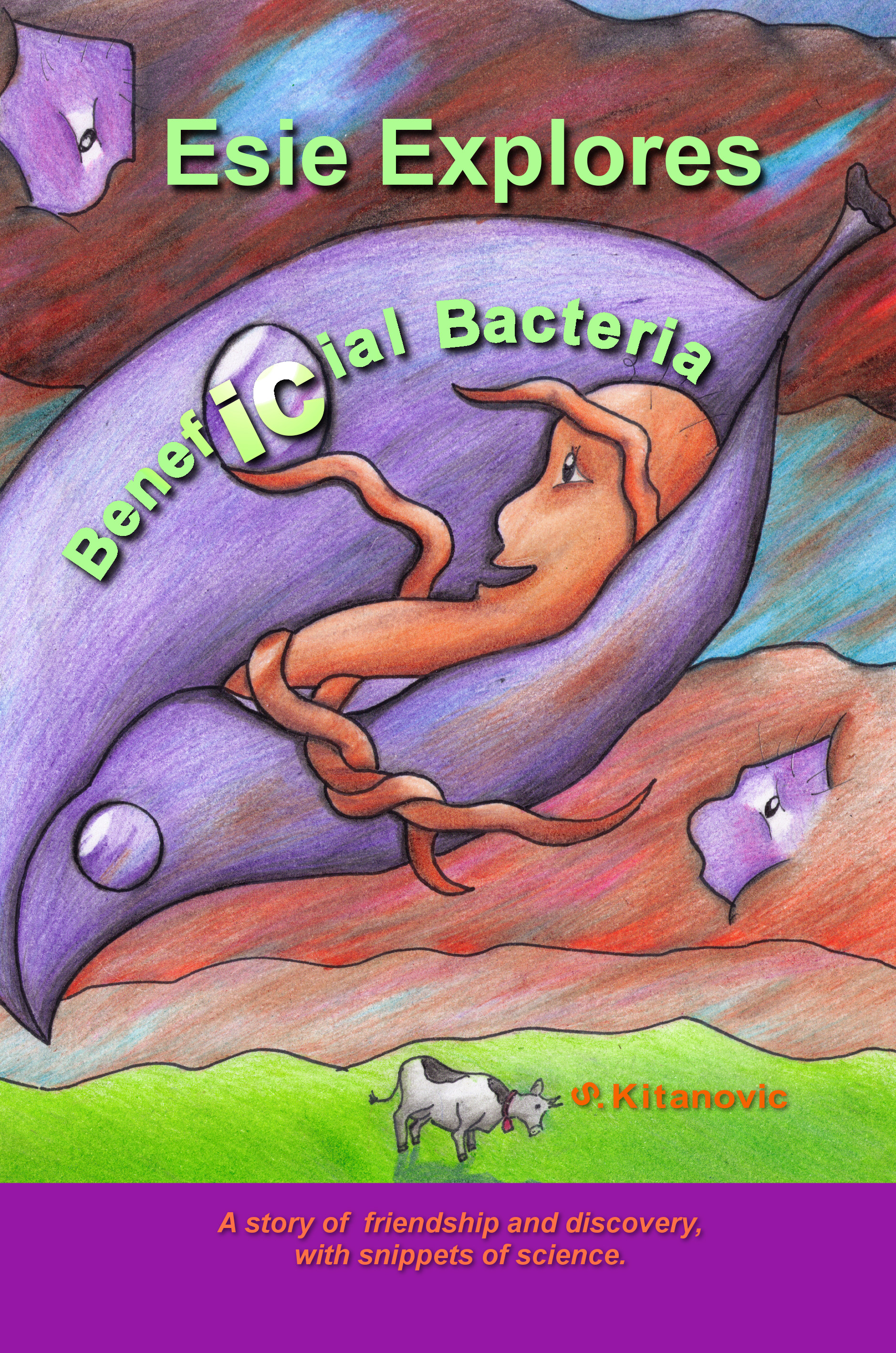
Author Guest Post: “Learning STEM Through Stories” by S. Kitanovic, Author of Esie Explores Beneficial Bacteria

Share

“Learning STEM Through Stories”

Germs. Colds. The importance of hand washing. What better way to convey these concepts to kids than through picture books? After all, anything too small for our bare eyes seems unreal, especially to kids. Picture books that educate kids about germs, and how they can protect themselves from getting colds and other illnesses, are important. Kids rarely encounter information, though, about bacteria that benefit humans and other living beings.

The first time I heard about some unusual beneficial bacteria—such as those that make deserts more fertile—was while teaching biotech courses at a community college. I was then also bringing to life an idea from my own student days, when I relied on bacteria as a research tool in a molecular biology lab. With their interesting features, such as taking up other species’ DNA and producing foreign proteins, bacteria seemed the ideal subjects of jokes for science students and scientists. To make them cartoon-worthy, I also planned to give the aspiring bacteria much-needed words and goofy faces.

But after including a few cartoons in a short-lived biotech newsletter at the community college, I wanted to move beyond bacteria in-jokes. I couldn’t help thinking that kids, too, might love to read and learn about the diverse beneficial bacteria that do many amazing things, such as produce food, decrease pollution, and make snow.

Teaching Science with Picture Books

Teachers are nowadays finding little time to teach science in schools. Recent statistics aren’t encouraging— according to the Report of the 2018 National Survey of Science and Mathematics Education (NSME+),  only 17% of K-3 grades receive science instruction on all or most days of the school year. In self-contained classrooms (where one teacher teaches reading, mathematics, science, and social sciences to one class of students), K-3 grades spend an average of 18 minutes per day on science. In a world where STEM permeates our lives more than ever, and promises many career options, such meager student involvement in sciences is concerning.

Time constraints greatly limit teachers’ approaches to science instruction. Engaging hands-on activities, such as experiments, require considerable time to prepare and perform. Yet even finding the time for hands-on activities may be insufficient for comprehensive science instruction. Some science topics are difficult, if not impossible, to teach through classroom experiments or demonstrations—including ecology—the study of plants and animals (and other organisms) in natural environments. Most beneficial bacteria are also unsuitable for hands-on study. Though some classrooms may have the resources to grow common (and harmless) microbes on a Petri dish, many beneficial bacteria require special growth conditions that scientist have yet to discover.

Despite the obstacles, some teachers are delivering complex science topics to kids. By introducing science-themed picture books to classrooms, and developing activities around picture book readings, teachers are simultaneously satisfying science and reading requirements for their K-3 grade students. Unsurprisingly, many of these picture books are nonfiction.

Yet fiction picture books with scientific themes are also finding their way into classrooms. Students have different learning styles and interests, and some prefer fiction. Taking this into consideration, educators Melissa Stewart and Nancy Chesley have identified fiction and nonfiction picture books with related themes. They’ve then designed engaging science lessons around selected fiction/nonfiction book pairs, as described in their “Perfect Pairs” books. Not only do their classroom-friendly lessons cover a wide range of scientific topics—they appeal to many students, as well.

Hybrid Picture Books: STEM Fiction

The line between fiction and nonfiction isn’t always solid, at least in children’s books. When nonfiction seeps into science-themed fiction books, such books may be described as “hybrids.”

In some hybrid books, anthropomorphized characters “explain themselves” through scientific facts. In “I, Fly: The Buzz About Flies and How Awesome They Are,” by Bridget Heos and Jennifer Plecas, the main character is a charismatic and undervalued fly. Page after page, the fly glorifies members of its species to a classroom of kids—who were preparing to study the more beautiful butterflies instead. Readers learn intriguing (and gross) facts about flies from the funny fly character, as it brushes the “lazy” butterflies aside.

Other hybrid books introduce scientific concepts through captivating stories, with few, if any, scientific facts quoted in the story itself. In “Scampers Thinks Like a Scientist,” by Mike Allegra and Elizabeth Zechel, the scientific method—a basic and rather dry concept—is explained through the creative problem-solving efforts of mouse Scampers. After a strange owl suddenly appears and deters Scampers and her fellow mice from feasting in their favorite garden, Scampers determines to find the (scientific) truth about the unwelcome, and possibly dangerous, newcomer.

While the value of using nonfiction picture books in science instruction is hardly questionable, scrutiny surrounds science-themed fiction and hybrid picture books. Can students truly learn from such books? How will they figure what’s fiction, and what’s not? And finally, how to label emerging science-themed hybrid books, which combine fiction with nonfiction? Categorizing these books and ensuring they’re easily found on library shelves is a challenge for librarians, too.

These questions were pondered last year in a lively Twitter discussion, when educator and writer Melissa Stewart suggested a name for science-themed hybrid literature: STEM fiction. As a trained scientist, I’ve also asked similar questions while writing my book, “Esie Explores Beneficial Bacteria.”  Yet teachers who include fiction or hybrid books in science lessons believe in the benefits of this literature, providing that students also read nonfiction books, and participate in classroom discussions to distinguish fact from fiction. How can authors of STEM fiction books facilitate learning in classrooms, as they strive to create stories that both entertain and educate?

Emphasizing the Facts in STEM Fiction

The title of my STEM fiction picture book, Esie Explores Beneficial Bacteria, is clear about the book’s topic—beneficial bacteria—which exist all around us, and enable life on our planet. The story and illustrations, though, are fiction—exploress Esie is a bacterium. After suffering insults from frightened humans, she embarks on a journey to learn more about herself. Along the way, Esie meets chatty bacteria who help answer her key question—Is she a beneficial bacterium, or a dangerous germ?

To create an engaging story, I’ve taken major liberties in depicting beneficial bacteria. The anthropomorphized bacterial characters are exaggerated in size and life span. Yet there are some truths in my interpretation of bacteria. Bacteria do “talk” with each other, but use chemicals instead of words. Bacteria do “see” their surroundings, but rely on senses other than eyes.

STEM fiction authors, such as Heos and Allegra, often complement their stories with scientific facts and activities in the back matter of their books. Some authors also include facts on other book pages, though keeping the facts separate from the story, as in “A Germ’s Journey,” by Thom Rooke, MD, and Tony Trimmer. To distinguish fact from fiction, and provide educational value—without diminishing enjoyment of the story—I, too, have included several features in Esie Explores Beneficial Bacteria:

  1. Front matter. Before immersing themselves in the story, readers can learn what’s fact, and what’s fiction. Addressed here are the most exaggerated elements of the story—bacterial communication, senses, size, and lifespan. Reading this section, though, is not required for comprehension of the story.
  2. Back matter. In addition to a glossary of scientific terms and an activity page, my back matter contains a “Cast of Characters,” which relates fictional characters to real-life bacterial species.
  3. One scientific fact per footer. The bottom portion of almost every page features a scientific fact, contained within a distinct purple band. Though each fact relates to bacterial characters shown on the same page, reading of facts is optional.
  4. Moderate use of scientific terminology in the story. To avoid overwhelming kids with too many new words, I’ve balanced the use of some “big” words, such as “beneficial,” with omission of other scientific terms. For example, I opted for “dangerous” instead of “pathogenic,” when referring to bacteria that cause disease.
  5. Clarification of scientific terminology in the story. Though defined in the glossary, some scientific terms are also explained in the story to avoid interruptions in reading.
  6. Limits on anthropomorphization. Bacterial characters sport no clothes nor any other human artifacts. On the book cover, main character Esie uses a water droplet for magnification, instead of a miniature magnifying glass.
  7. Simple artistic representation of the environment. Bacterial characters were deliberately over-sized with respect to their environment. This helps kids identify objects that bacteria encounter in nature, such as leaves, petals, and sand—as opposed to an unrecognizable microscopic view. Yet in an effort to limit size discrepancies, I kept the scenes simple—they contain few objects, and hardly any signs of human life.

By no means should STEM fiction books compete with nonfiction books in K-3 education. Like people, different books play different roles. With thoughtful design, though, STEM fiction books can do much more than merely entertain—they can draw in young readers to explore unfamiliar worlds, and serve as a valuable introduction to various scientific concepts and topics.

About the Book: Esie leaves her twin Es behind to explore a world teeming with beneficial bacteria. Could she be one of them? Or is Esie just a nasty germ, as some people say? On her rugged journey through air, water, and a cow’s guts, Esie meets new friends who help her find the answers she seeks.

“Kids that love science-themed books filled with fascinating facts will surely get a kick out of this one.” -The Children’s Book Review

About the Author: S. Kitanovic, PhD, became fascinated by microbes as a biology student, and later explored how bacteria “sniff out” their food in a lab at the University of Utah. She enjoys merging science, drawing, and storytelling in picture books to bring the fun of science to young audiences.

What do you think? Do you use or plan to use STEM fiction books to teach science?

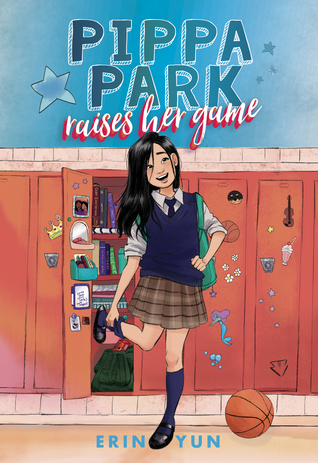
Author Guest Post and Giveaway!: “Something Old, Something New: Five Classics Reimagined as Middle-Grade Books” by Erin Yun, Author of Pippa Park Raises Her Game

Share

“Something Old, Something New: Five Classics Reimagined as Middle-Grade Books”

There’s something utterly compelling about reimaginings. It’s like meeting up with an old friend many years down the road—the familiar elements of the original are comforting even as the fresh twists and changes bring delight. When I was a kid, I used to go through phases where I was obsessed with certain books for months at a time, so finding reimagined stories were a perfect way for me to explore a single novel with endless iterations. Plus, retellings help introduce young readers to books they’ll likely encounter in high school. So, whether you’re looking for a new way to relive a favorite novel, trying to spark a kid’s interest in a book for later down the road, or simply seeking an amazing story, look no further than these five reimagined middle-grade books based on classic literature.

Midsummer’s Mayhem by Rajani LaRocca

Mimi comes from a big Indian American family and is used to feeling overshadowed by her talented older siblings. So, when a newly opened bakery hosts a baking competition, Mimi enters, determined to prove herself. Soon, her dad is consuming everything in sight, boys are obsessing over her older sister, and wild boars are popping up in the forests of Massachusetts. Full of both literal and figurative charm, this retelling of Shakespeare’s A Midsummer Night’s Dream is simply delicious . . . and had my mouth watering the entire time.

The Great Shelby Holmes by Elizabeth Eulberg

There is no shortage of Sherlock Holmes adaptions that exist—and for a good reason. There’s something so intriguing about the aloof detective with almost unbelievable powers of observation. In Eulberg’s take, Shelby Holmes might be able to solve any case in Harlem, but learning how to make a friend is one challenge that eludes the tiny sleuth. Told from the perspective of her new neighbor, John Watson, this book features a case of dognapping and is a cute, fun addition to the world of Sherlock Holmes-inspired works.  

Grump by Liesl Shurtliff

Whether or not you’re a fan of Snow White, you’re bound to enjoy the story of Borlen, a grumpy dwarf who dreams of living above ground. Readers will find themselves sympathetic toward Borlen even when he makes mistakes—such as entangling himself with the deceptively sweet Queen Elfrieda Veronika Ingrid Lenore (if only Borlen had noticed the acronym . . .). Plus, those who aren’t Snow White’s biggest fans will be delighted to find this Snow White is full of personality—a little bit bratty, but plenty charming, with the ability to make even a nickname like “Grump” sound endearing.

More to the Story by Hena Khan

Seventh grader Jameela Mirza aspires to be an award-winning journalist, so when she’s made features editor of her school newspaper, she’s delighted—despite clashing with the editor-in-chief, who continually strikes down her ideas. Even as Jameela struggles to make an article her Baba will be proud of, she must deal with his absence overseas and with her younger sister’s sudden illness. Inspired by Little Women and featuring a Pakistani American Muslim family living in modern-day Georgia, this heartfelt book shines due to Jameela’s realistic relationships (whether they be with her friends or family).

The Inquisitor’s Tale by Adam Gidwitz

Drawing parallels to The Canterbury Tales, The Inquisitor’s Tale begins in the year 1242 in a packed French inn, where, with the help of various patrons, we hear the story of three miraculous children: Jeanne, a peasant who receives visions; William, a monk with unnatural strength; and Jacob, a Jewish boy with healing powers. Gidwitz’s writing is filled with flecks of humor, and readers will delight in zany adventures (like curing a farting dragon) even as more serious stakes keep them flipping pages. Plus, the aesthetic of the book is just as rewarding as the prose—with beautifully stylized chapter openers, unique border art, and black-and-white images scattered throughout.

Published February 4th, 2020 by Fabled Films Press

About the Book:Readers will cheer on Korean American Pippa Park in this compelling middle grade reimagining of Great Expectations. Navigating friendships and cyberbullying at a new school, Pippa reinvents herself and discovers who she really is.

Life is full of great expectations for Korean American Pippa Park. It seems like everyone, from her family to the other kids at school, has a plan for how her life should look. So when Pippa gets a mysterious basketball scholarship to Lakeview Private, she jumps at the chance to reinvent herself by following the “Rules of Cool.”

At Lakeview, Pippa juggles old and new friends, an unrequited crush, and the pressure to perform academically and athletically while keeping her past and her family’s laundromat a secret from her elite new classmates. But when Pippa begins to receive a string of hateful, anonymous messages via social media, her carefully built persona is threatened.

As things begin to spiral out of control, Pippa discovers the real reason she was admitted to Lakeview and wonders if she can keep her old and new lives separate, or if she should even try.

Bonus Content: Discussion Questions, Author Q&A, and Korean Language Glossary and Pronunciation Guide

“Pippa is a magnetic heroine, funny and good-hearted.”―Booklist

About the Author:Debut author Erin Yun grew up in Frisco, Texas. She received her BFA in English from New York University and served as president of its policy debate team. This experience came in handy for her job as the debate consultant for the Tony-nominated Best Play on Broadway—What the Constitution Means to Me. Erin is a member of the Society of Children’s Book Writers and Illustrators and has written reviews and articles for BookBrowse. She currently lives in New York City, and yes—she used to play basketball as a middle grader!

Connect with Fabled Films Press and Pippa Park:

www.fabledfilms.com | www.pippapark.com

Twitter: @fabled_films | Author on Twitter: @ErinMYun

Facebook: @Fabled.Films.Press | Instagram: @fabled.films

Language Arts Educators Guide: https://pippapark.com/resources

Giveaway!

a Rafflecopter giveaway

Thank you, Erin, for sharing these fun retellings and introducing us to Pippa!

Authors Guest Post!: “Books That Build Empathy” by Katherine Rothschild and a Variety of Debut MG and YA Authors of 2020

Share

“Books that Build Empathy”

Books have the power to let us walk in someone else’s shoes—and to make us more empathetic to other people’s lived experiences in the world as we walk that path. Several authors whose books will be debuting in 2020 discussed the books that changed them, that made them cry, and that made them more empathetic to other people’s lives and struggles.

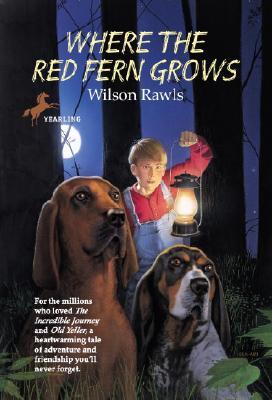
Where the Red Fern Grows

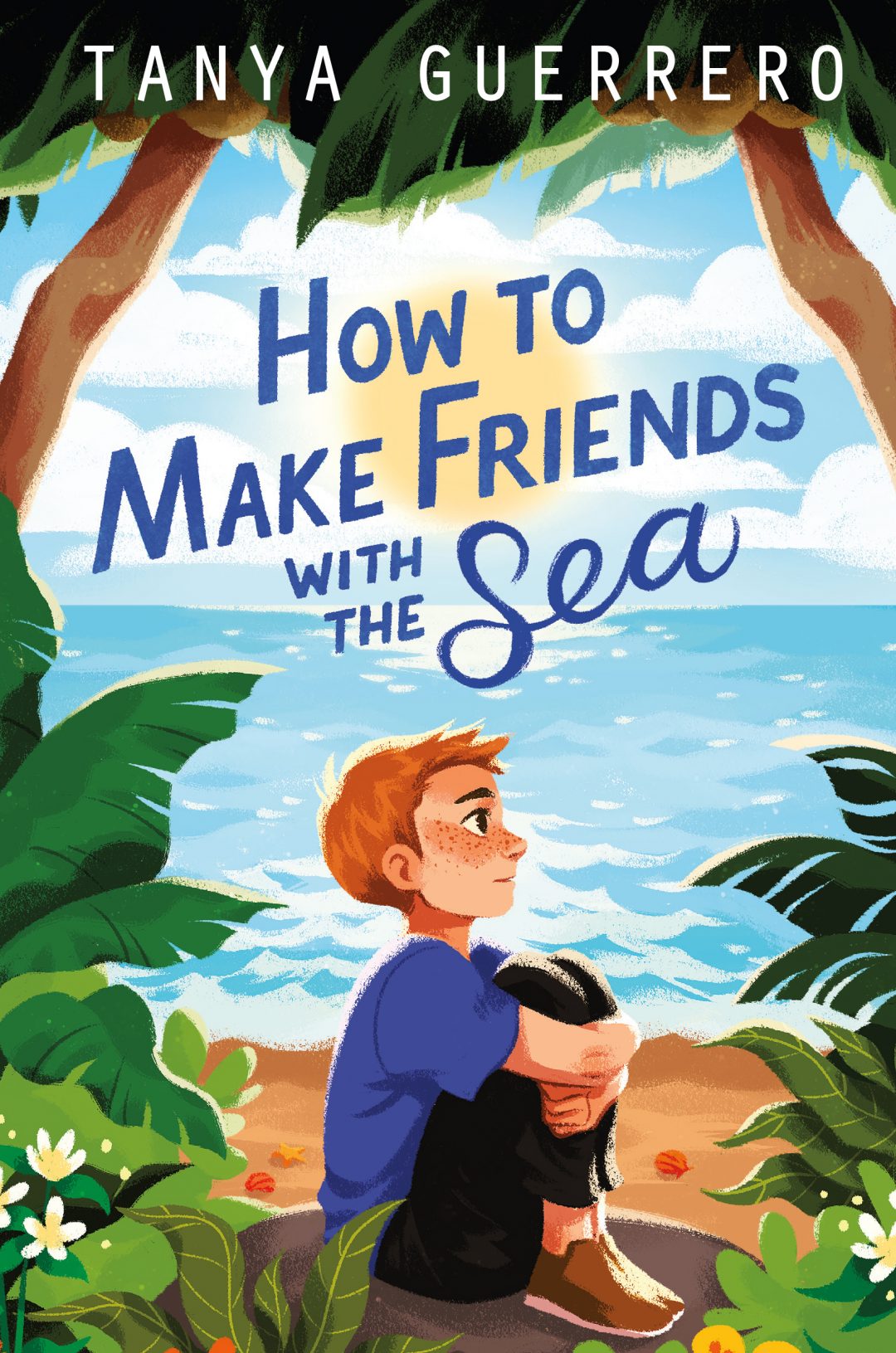
Against the backdrop of the Ozarks, ten-year old Billy raises two puppies into hunting dogs who grow to love and protect him at all costs. This classic read impacted several of the debut authors this year. Kit Rosewater, author of the forthcoming The Derby Daredevils, admits to secretly reading ahead when the book was assigned in school—and coming into class already an emotional wreck. “I was sobbing when we were still five pages out, to the point where the teacher sent me outside to catch my breath in the hall.” And Tanya Guerrero, author of How to Make Friends with the Sea, admits to “sobbing for an entire week” after reading this deeply moving tale. The book showed Guerrero “the power of great storytelling” and how close we can feel to the characters who come to life on the pages of a book.

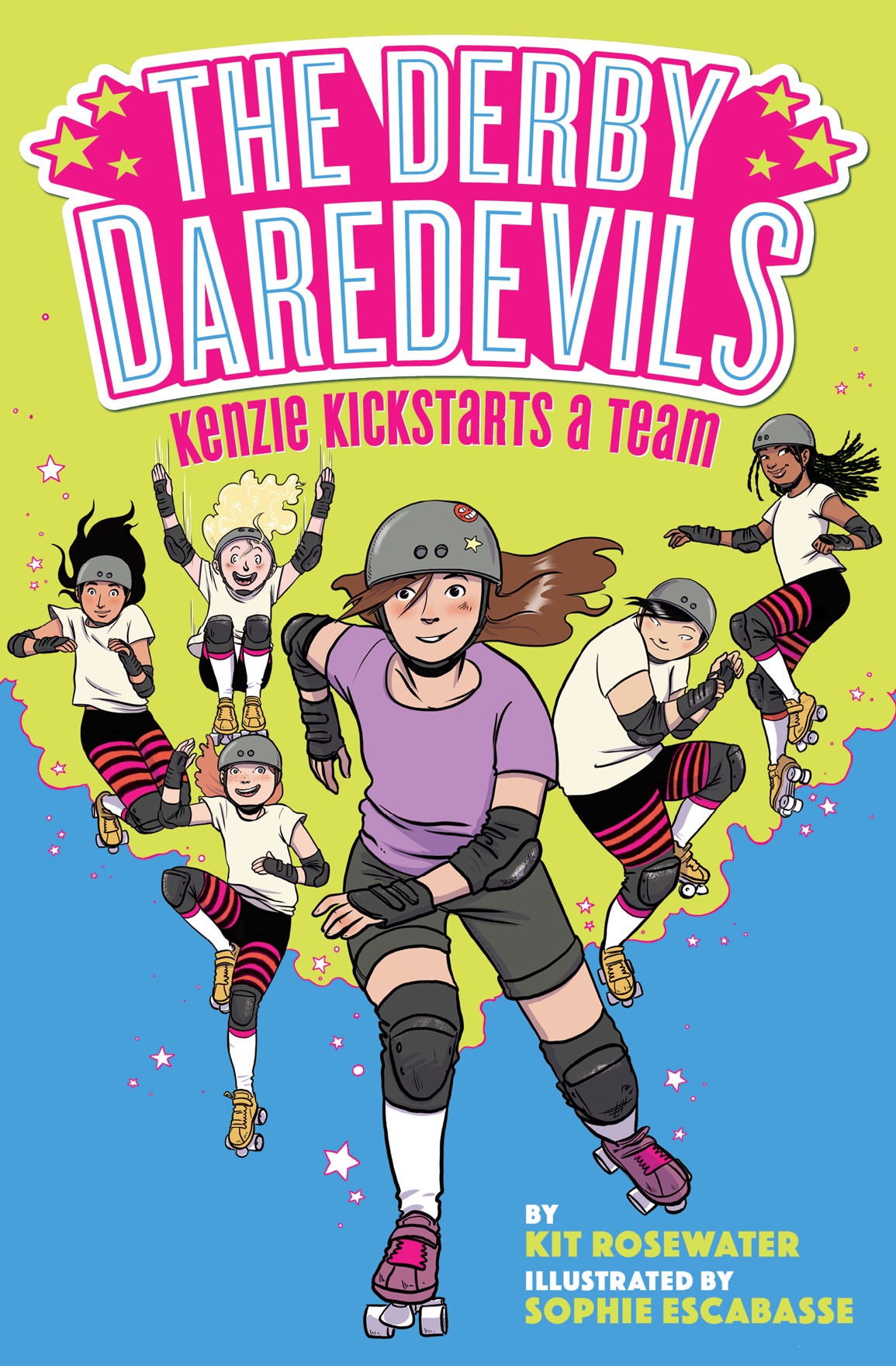
About The Derby Daredevils: Kenzie Kickstarts a Team: Kenzie and Shelly have been best friends for as long as they can remember. They hang out at the park, practice their super-secret handshake, and (most important) count down the days to their roller derby debut. It looks like their dream is coming true when Austin’s city league announces a junior league. But there’s a catch. To try out together, the Dynamic Duo will have to form a team of five players… in just one week!

As they start convincing other girls that roller derby is the coolest thing on wheels, Kenzie has second thoughts. Why is Shelly acting like everyone’s best friend? Isn’t she supposed to be Kenzie’s best friend? And things get really awkward when Shelly recruits Kenzie’s neighbor (and secret crush!) for the team.

About Kit Rosewater: Kit Rosewater writes books for children. Before she was an author, Kit taught theatre to middle school students, which even a world-renowned cat herder once called “a lot of work.” Kit has a master’s degree in children’s literature. She lives in Albuquerque, New Mexico with her spouse and a border collie who takes up most of the bed.

About How to Make Friends with the Sea: Pablo is homesick.

He’s only twelve years old, but he’s lived in more countries than he can count. After his parents divorced, he and his mother have moved from place to place for years, never settling anywhere long enough to call it home. And along the way, Pablo has collected more and more fears: of dirt, of germs, and most of all, of the ocean.

Now they’re living in the Philippines, and his mother, a zoologist who works at a local wildlife refuge, is too busy saving animals to notice that Pablo might need saving, too. Then his mother takes in Chiqui, an orphaned girl with a cleft lip―and Pablo finds that through being strong for Chiqui, his own fears don’t seem so scary.

He might even find the courage to face his biggest fear of all…and learn how to make friends with the sea.

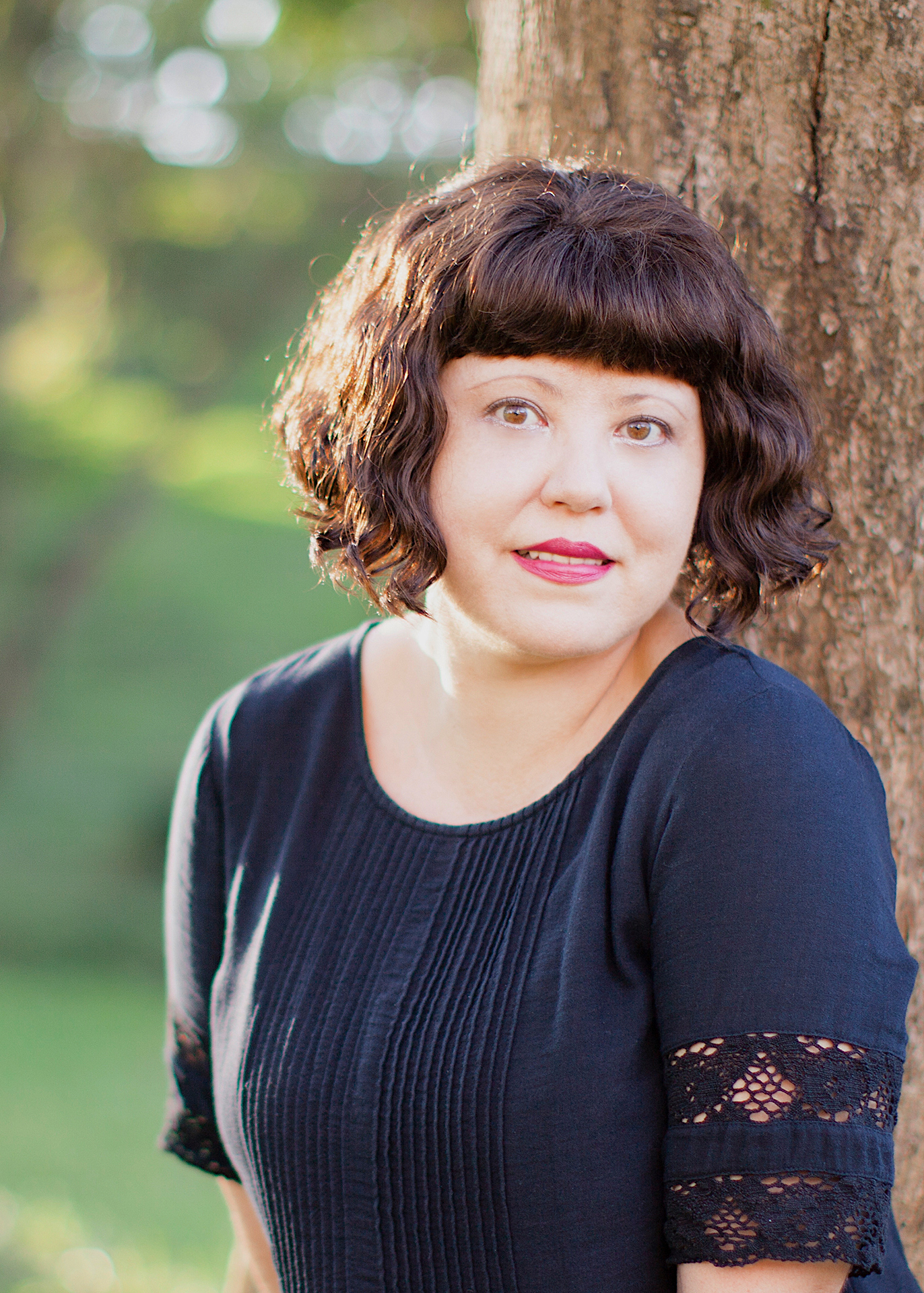
About Tanya Guerrero: Tanya Guerrero is Filipino and Spanish by birth, but spent her childhood living in three continents—Asia, Europe and North America. Upon graduating from high school, she attended Boston University, where she studied Screenwriting. Over the course of eleven years, she’s worked as a photo editor in children’s educational publishing, operated her own photo studio and freelanced as a writer.

Currently, she lives in a shipping container home in the suburbs of Manila with her husband, her daughter, Violet, and a menagerie of rescued cats and dogs. In her free time she grows her own food, bakes sourdough bread and reads lots of books.


Bridge to Terabithia

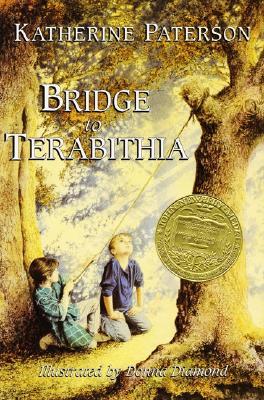
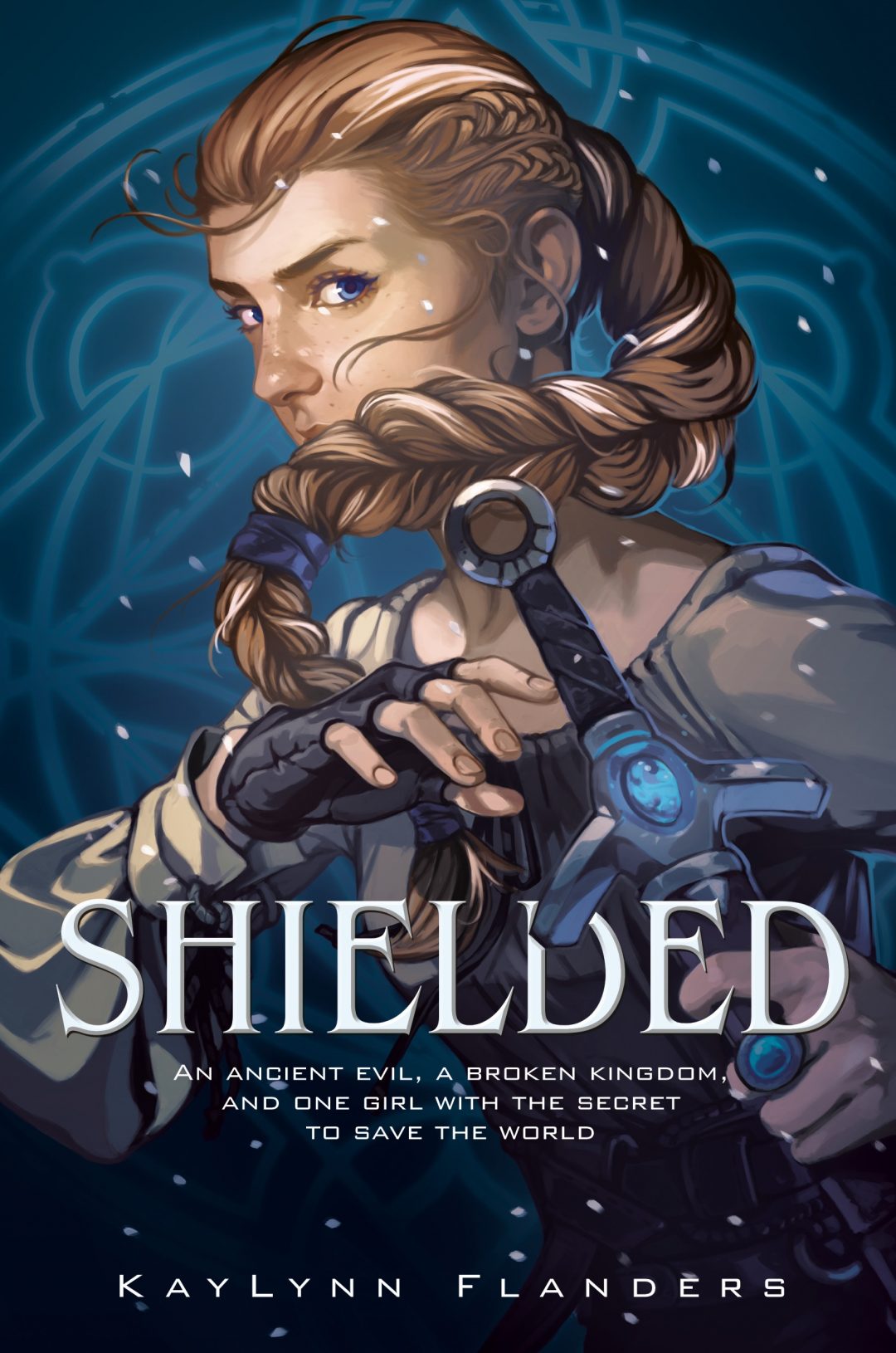
One of the most impactful books to the debut authors of 2020 was Bridge to Terabithia, the story of the friendship between neighbors Jesse and Leslie, and their escape into a magical forest realm where they are able to assert the independence and adventure but find emotional sanctuary. KayLynn Flanders, author of the forthcoming Shielded admits to this being one of the first books she ever truly sobbed after reading. And Tanya Guerrero admits to an equal amount of suffering and sadness upon reading. But although the book deals with intense grief and loss, the story and the fantastic realm of Terabithia offered much more. Flanders shares that “while [Terabithia] gutted me in fifth grade, my friends and I were inspired by it. Every recess, we’d cross part of the playground into our own Terabithia, with new adventures awaiting us every day.” The best books deal with the hardest things in life, but they also give us pathways to endure them.

About Shielded: For fans of Sorcery of Thorns and Furyborn comes a thrilling new fantasy about a kingdom ravaged by war, and the princess who might be the key to saving not only those closest to her, but the kingdom itself, if she reveals the very secret that could destroy her.

The kingdom of Hálendi is in trouble. It’s losing the war at its borders, and rumors of a new, deadlier threat on the horizon have surfaced. Princess Jennesara knows her skills on the battlefield would make her an asset and wants to help, but her father has other plans.

As the second-born heir to the throne, Jenna lacks the firstborn’s—her brother’s—magical abilities, so the king promises her hand in marriage to the prince of neighboring Turia in exchange for resources Hálendi needs. Jenna must leave behind everything she has ever known if she is to give her people a chance at peace.

Only, on the journey to reach her betrothed and new home, the royal caravan is ambushed, and Jenna realizes the rumors were wrong—the new threat is worse than anyone imagined. Now Jenna must decide if revealing a dangerous secret is worth the cost before it’s too late–for her and for her entire kingdom.

About Kaylynn Flanders: KayLynn Flanders is a graduate of Brigham Young University, with a degree in English Language and a minor in editing. When she’s not writing, she spends her time playing volleyball, reading, and traveling. She lives in Utah with her family, and thinks there’s nothing better than a spur-of-the-moment road trip. Her debut novel is Shielded.


Little Women

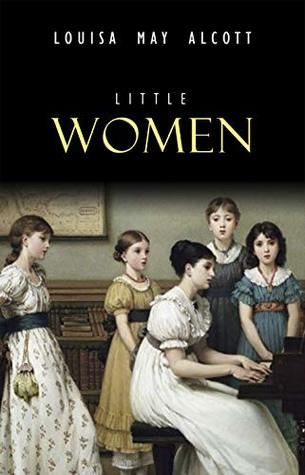
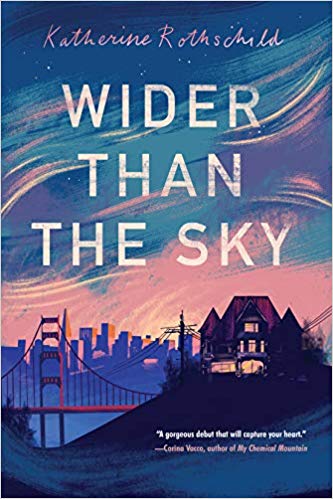
Many writers empathize with the character of Jo—and with her loss of her manuscript at the hands of her jealous and angry little sister, Amy. But we empathize with Jo for more than that moment of loss—Lorien Lawrence, author of the forthcoming The Stitchers, remembers empathizing with Jo because she felt “like I didn’t fit in…I remember crying my eyes out in that last scene with Laurie.” She identifies what makes this book so eternal, and what we all hope for when we write characters—that we make them emblematic of the way we struggle with society’s expectations, with what and who we love, and how to navigate those wild. waters. In my forthcoming book, Wider Than the Sky, I explore just this type of relationship—and ask how we can navigate complex feelings of love and disdain, of adoration and fear. Little Women will always be an example of how we learn to care for others, even from within the complexities of our desires.

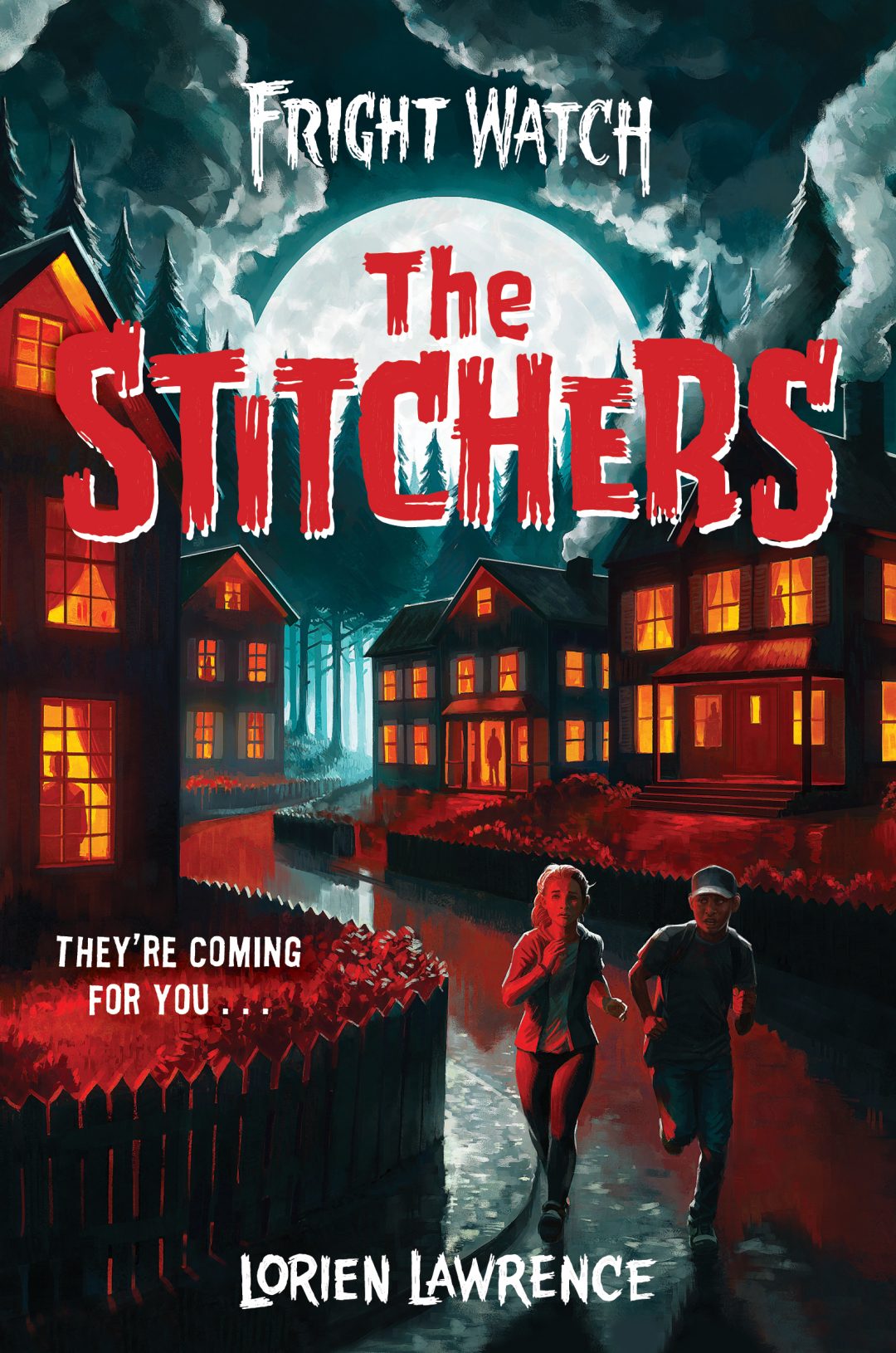
About The Stichers: Instinctive Quinn Parker and scientific-minded Mike Warren are two thirteen-year old friends who uncover a centuries-old-mystery that threatens their whole town. After learning the awful truth about their neighbors, ‘The Oldies’, and the gruesome secret of how they stay young, Quinn and Mike face a race against time to expose their neighbors before they become the next victims.

About Lorien Lawrence: Lorien Lawrence graduated with creative writing degrees from Wheaton College and Bath Spa University. After college, she lived abroad in England for a few years, before returning stateside and becoming a middle school English teacher. On weekends you can often find her exploring New England haunts, getting more inspiration for her novels.

About Wider Than the SkyWider Than the Sky follows the dual stories of twin sisters coping with the aftermath of their father’s sudden death. When their mother moves them to a ramshackle mansion in California, the twins discover that both parents were hiding secrets about their sexual identities

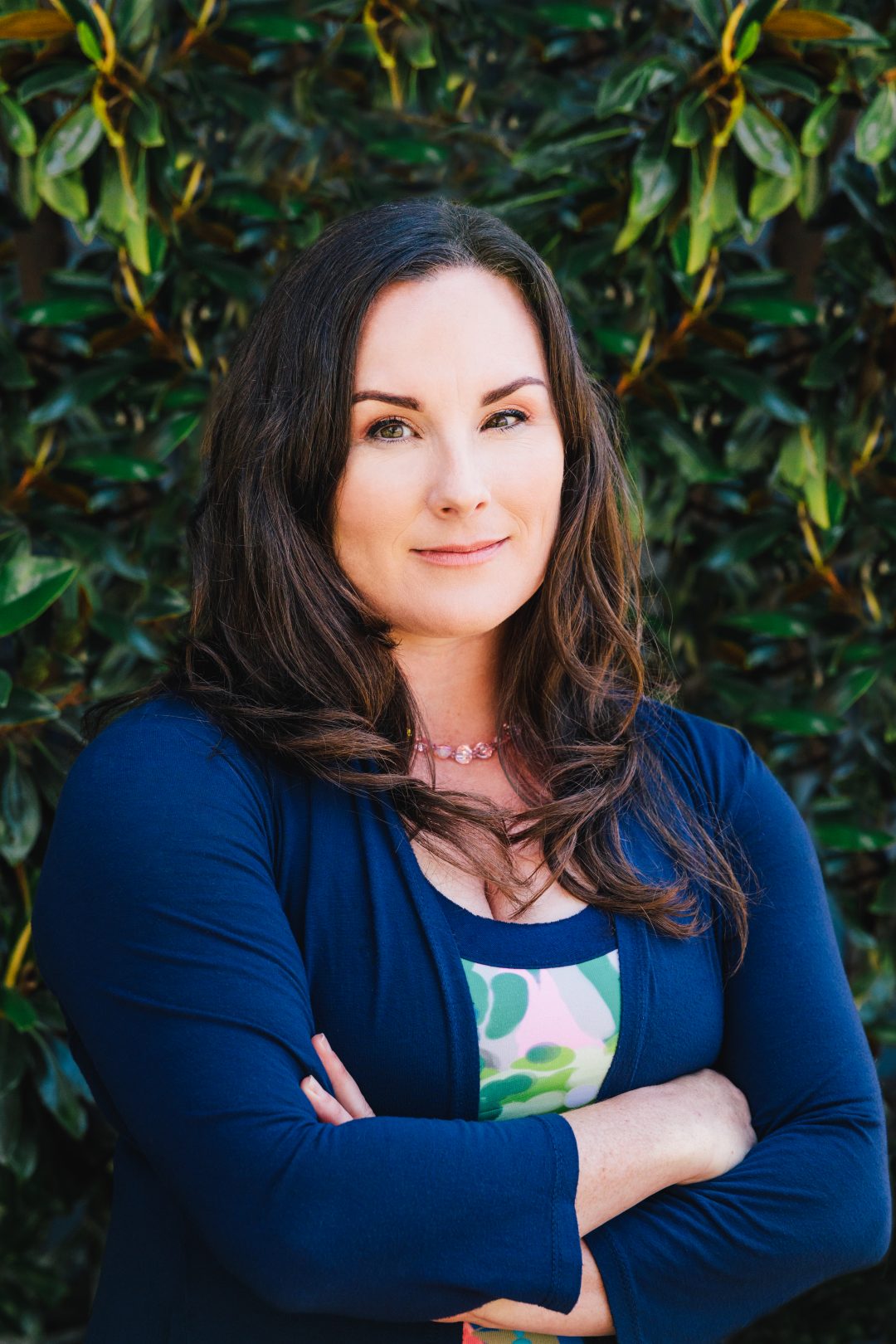
About Katherine Rothschild: Katherine Rothschild, MFA, PhD, is an English professor at St. Mary’s College, a former dance instructor, and an obsessive food truck-follower. Her first-person essays have been published by KQED/NPR and The San Francisco Chronicle, and her academic work is published by Purdue University Press. She has received artist grants from Vermont Studio Center and Kindlings Words. When she isn’t studying writing or classroom social justice, she’s hanging out by the lake with her family. Wider Than the Sky from Soho Teen is her debut young adult novel.


What books moved you, readers? What books made you more empathetic, more caring, more sensitive to others? What books can teach empathy?

Thank you to all the authors for sharing their choices and their upcoming books! Visit https://classof2k20books.com/ to learn more about these and all class of 2k20 authors and their books!

Excerpt and Giveaway!: Sabina: In the Eye of the Storm by Bella Kuligowska Zucker

Share

Sabina: In the Eye of the Storm
Author: Bella Kuligowska Zucker

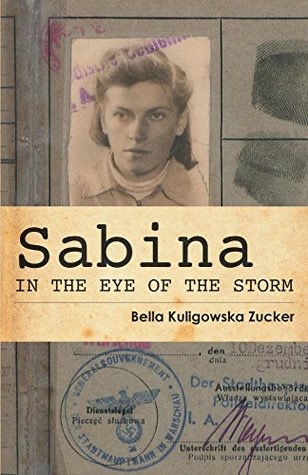
About the Book: In September 1939, Bella was a carefree teenager living in Serock, Poland when the German army struck. She was rounded up with her friends and family and sent to a series of grim Jewish ghettos. As loved ones were separated and lost through the war years, Bella survived by changing her identity. After stealing the birth certificate of a Catholic girl five years her senior, she became Sabina Mazurek. Then she went into the eye of the storm, Germany, where she believed she might be safest. Sabina is her story.

About the Author:Bella Kuligowska was born in Serock, Poland in 1925. Her family included her parents and five brothers; everyone worked in her parents’ bicycle business. After the war, she tried to find her missing family members. She discovered she was the lone survivor.

Bella met her husband Herman Zucker in Poland after the war. They emigrated to the US in 1951 with their oldest daughter and settled in Chicago, Illinois. Bella spent many years perfecting her English and writing skills to record this memoir. Bella passed away in 2007.

Excerpt: 

In 1940, Poland was becoming increasingly dangerous for Jews. In Serock, Bella’s hometown, the Jews had been forcefully moved to a ghetto, where they lived with scant resources in crowded conditions. Bella’s parents wanted to protect their family, as their future became more uncertain every day, and arranged for Bella to escape.

One afternoon that spring, my father came home with a stranger. My mother was sewing a shirt for papa by hand, and I was knitting a sweater from the material left over from the unraveled flour bags. Since curfew was coming, Abraham, Joseph, and Wygdor were all in the room too.

              “Mr. Wisniewski, this is my daughter, Bella.” My father spoke these words in Polish. Mr. Wisniewski nodded and looked me up and down like a customer about to make an expensive purchase.

              “Bella, say something to Mr. Wisniewski,” my father urged.

              I was still unsure of what was happening, but I did my father’s bidding. “Hello, Mr. Wisniewski,” I said uncomfortably, getting up from my seat on the cold hearth of the fireplace. “How do you do?”

              The man turned to my papa. “Fine. The girl looks ok, and she speaks Polish well.”

             “Papa?” I whispered, almost ready to cry. “What is going on?”

              My father explained that Mr. Wisniewski was a forester who lived not far from the ghetto and also owned a farm. With his help, I could escape by going to work for him. Mr. Wisniewski had come to check that I looked Polish enough and that I did not have a strong Yiddish accent.

              “Mr. Wisniewski will have documents made for you,” my father said. “He believes you can pass as a Christian on the other side. You must try to live as they do. Be a good girl. Don’t be scared, darling.”

              I shook with a mix of anticipation and fear. I could not imagine shedding my identity like this, becoming a Christian, practically overnight. How could anyone do that?

              Then I thought of someone who had done such a transformation – Lonka, the rabbi’s daughter from Serock, who had eloped with her Christian boyfriend on the eve of Yom Kippur. What a calamity it had been! The rabbi’s only child. She’d converted to Christianity and ran off on the holiest night of the year, Kol Nidrei.

              Suddenly, her story was inspiration.

              “I will do it,” I said. And I thought of a new name for myself. I would add a simple “Isa” to the start of my first name to make it sounds more Polish: Isabella Kuligowska. That’s who I would become while with the forester. But I promised myself and my family that I would never forget who I really was.

Excerpted from SABINA: IN THE EYE OF THE STORM Copyright © 2018 by Bella Kuligowska Zucker. Reprinted with permission. All rights reserved.

Giveaway!: 

a Rafflecopter giveaway

**Thank you Saichek Publicity for providing the excerpt and copies for review!!**

Author Guest Post: “Daylight” by Barbara Dee, Author of Maybe He Just Likes You

Share

“Daylight”

I hadn’t planned to write a MeToo story for middle grade readers.

I was waiting for my editor to get back to me with editorial notes for another middle grade novel I’d written, MY LIFE IN THE FISH TANK. My longtime publisher, Simon & Schuster, had offered me a two-book deal–FISH TANK plus whatever else I wrote next. Of course I was delighted with this deal, but also a little worried, because in winter 2018 I had no idea what that second book would be.

But as I waited for the editorial notes for Book #1, I had a lot of time to follow the news.

And all the news was about Harvey Weinstein and other famous men accused of sexual harassment–or worse–towards women with less power in the workplace.

Where did this behavior come from, I wondered. It couldn’t have started when these men were full-grown adults. It had to have an origin in boyhood, right?

I did some research online, reading articles by education experts that pinpointed sexually harassing behavior as originating in middle school. Seventh grade, these experts said. When I mentioned this to several teachers, they told me that actually, they saw it earlier–in fifth grade. Even in second and third.

I started thinking about own my middle school experience, how I’d taught myself to avoid taking the main staircase, which was where girls got groped. I thought about my daughter, who one day had asked me to drive her home from middle school, because she “didn’t like the bus.” At the time she didn’t tell me why, but later I learned that certain boys were “misbehaving” in a way that made her feel powerless and uncomfortable. And with only a driver on the bus to supervise, there was no adult to witness it, she thought.

I spoke to moms of current middle schoolers, who confided that their daughters had similar experiences. One of these moms suggested I interview a middle school psychologist in a nearby town who might be willing to speak candidly. So I reached out.

This school psychologist told me that sexual harassment happened in her middle school all the time. But typically “under the radar” of adults, she said–in the lunchroom, on the bus, at the lockers, where no adults are present. Usually she heard about it indirectly, not from the target of the harassment, but from the target’s friends, who were often confused and upset. She also heard about it when kids came to her about “friendship problems”–and with a little digging, discovered that one girl’s harassment was at the root of tensions within the group.

So by spring, I knew there was plenty of material for a middle grade novel. But was there one on this subject already on the bookshelf? There had to be, given the pervasiveness of the problem.

 It shocked me to discover that there wasn’t a middle grade book about sexual harassment–or  the middle school version of it, which included unwanted hugs, sitting too close, mean jokes about girls’ bodies. Of course, such microaggressions didn’t rise to the level of Harvey Weinstein-style assault. But for a girl going through puberty, self-conscious about her developing body, this behavior could be painful and humiliating. And when her protests were ignored or mocked, a girl’s self-esteem could plummet in dangerous ways.

 I started writing, telling myself that I was merely scribbling notes for Book #2 in the two-book deal, and that I’d turn to Book #1 as soon as I had my editor’s notes.

But Book #2 was getting written fast–so fast it felt like it was pouring out of me. I even had a title–MAYBE HE JUST LIKES YOU–which helped me to focus on the story I wanted to tell. And as the spring turned to summer, and Brett Kavanaugh was nominated to the Supreme Court, I realized that this book needed to come out as soon as possible.

I called my editor, Alyson Heller at Simon & Schuster, to ask if we could flip the order of the two books in my contract–if MAYBE HE JUST LIKES YOU could be published ASAP, a whole year before MY LIFE IN THE FISH TANK.

To my great relief, she agreed, even though that meant S&S would have to accelerate its production schedule for a book they hadn’t read and that I hadn’t even finished.

But I quickly did. It was surreal revising and doing copyedits for MAYBE HE JUST LIKES YOU while watching Dr. Christine Blasey Ford on television–but I was able to include her testimony about the sting of “the laughter” in MAYBE’s climactic scene. (I doubt many kids will pick up on it, but there it is.)

I’ve been overwhelmed by the outpouring of support for this book, the deeply emotional reactions it’s produced, the stories I’ve heard. I can’t say I’m happy to have written this story. It wasn’t easy to tell (despite the hopeful ending). But I am happy that this is a time when a book like MAYBE could have been written. And published. And read.

And I really hope the subject matter is discussed openly, in schools and around the kitchen table. Because as the #MeToo movement shows, exposing behavior to daylight is the only way to effect change.

Published October 1st, 2019 from Aladdin

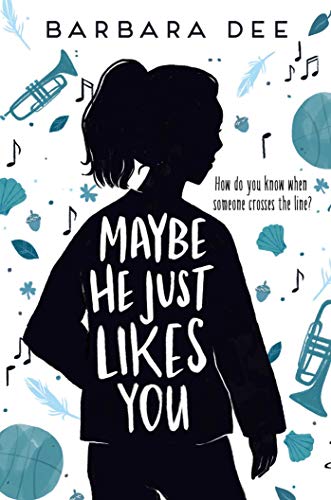
About the Book: For seventh grader Mila, it starts with an unwanted hug on the school blacktop.

The next day, it’s another hug. A smirk. Comments. It all feels…weird. According to her friend Zara, Mila is being immature, overreacting. Doesn’t she know what flirting looks like?

But it keeps happening, despite Mila’s protests. On the bus, in the halls. Even during band practice-the one time Mila could always escape to her “blue-sky” feeling. It seems like the boys are EVERYWHERE. And it doesn’t feel like flirting–so what is it?

Mila starts to gain confidence when she enrolls in karate class. But her friends still don’t understand why Mila is making such a big deal about the boys’ attention. When Mila is finally pushed too far, she realizes she can’t battle this on her own–and finds help in some unexpected places.

About the Author: Barbara Dee is the author of several middle grade novels including Maybe He Just Likes You, Everything I Know About You, Halfway Normal, and Star-Crossed. Her books have received several starred reviews and been included on many best-of lists, including the ALA Rainbow List’s Top Ten, the Chicago Public Library Best of the Best, and the NCSS-CBC Notable Social Studies Trade Books for Young People. Star-Crossed was also a Goodreads Choice Awards finalist. Barbara is one of the founders of the Chappaqua Children’s Book Festival. She lives with her family, including a naughty cat named Luna and a sweet rescue hound dog named Ripley, in Westchester County, New York.

Thank you, Barbara, for writing about this for middle schoolers! It is a topic that needs to be talked about; we’re glad this book exists!