Author Guest Post: “The Global Hunger and Migration Project” by Victor Hinojosa and Coert Voorhees, Authors of A Journey Toward Hope

Share

“The Global Hunger and Migration Project”

When we began the Global Hunger and Migration Project, we wanted to understand why some 850,000 children and families were leaving their homes in Central America and coming to the United States to request asylum.  The journey to the U.S. is incredibly long: between 1200 and 2500 miles from the most common border crossing in Mexico to most destinations at the U.S. border. It is also incredibly dangerous, and the refugees know the dangers long before they set out on the journey.  They know all about the horrors of La Bestia (the train they will hop aboard for some of the way) and the people waiting to rob them and take advantage of them along the way.  They all know people who’ve made the journey – they’ve heard the stories.  Yet they come anyway.  Why?

We’re still learning a lot about that.  We’re learning about violence in their home countries and terrible choices their families are making in attempt to keep them safe.  We’re learning about food insecurity and despair (and about drought and climate change that is causing some of it).

We’re also learning how hard it is to know something well.  And how important it is to do the hard work of knowing something well.  My students learned early on just how complex the crisis is and that in order to make a difference on one aspect of it, we needed to understand how that one thing fits into the bigger picture.  We’ve also learned that failure is part of the process and we’ve had great ideas that we just couldn’t quite  figure out how to get off the ground.  But you can’t let fear of failure stop you from trying.

We’ve learned that we can make a difference.  All of us. When we work hard and bring out talents and creativity and passions to a project, and work together, we can do more than we ever thought possible.  We’re convinced – even more convinced now than when we started – that we can help make things just a little bit better. And that’s enough.

Mostly we’ve learned that it begins with empathy.  With meeting people who’ve made the journey. Most often this comes from reading stories and interviews and accounts of the journey.  But a spring break service-learning trip let some of my students meet and interact with refugees who had already made it to the United States.  My students have learned that though these refugees come from other countries and have different experiences and may speak a different language and share a different culture, they’re not all that different from you and me.  And when you meet these children and families, well, you want to do the hard work of knowing the situation well and making a difference.

We wanted you to meet some of the amazing children we met. Nando and Alessandra and Rodrigo and Laura are a lot like the children we met in our studies.  We hope when you meet them you will find where you want to make a difference.  Most of my students, like most of you, will not spend their lives working with refugees. I hope they’ve learned to love learning, and to love using what they know in the service of others. What do you want to learn to do well? How will you help others?

Published July 7th, 2020 by Six Foot Press

About the Book: Every year, roughly 50,000 unaccompanied minors arrive at the US/Mexico border to present themselves for asylum or related visas. The majority of these children are non-Mexicans fleeing the systemic violence of Central America’s “Northern Triangle”: Honduras, El Salvador, and Guatemala.

A Journey Toward Hope tells the story of Rodrigo, a 14-year-old escaping Honduran violence; Alessandra, a 10-year-old Guatemalan whose first language is Q’eqchi’; and the Salvadoran siblings Laura and Nando. Though their reasons for making the journey are different and the journey northward is perilous, the four children band together, finding strength in one another as they share the dreams of their past and the hopes for their future. Written in collaboration with Baylor University’s’ Social Innovation Collaborative, A Journey Toward Hope is a celebration of their humanity and an ode to the power of hope and connection even in the face of uncertainty and fear.

About the Authors: 

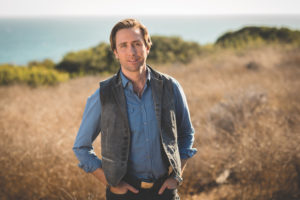
Victor Hinojosa, Ph.D., is Associate Professor of Political Science in the Honors Program at Baylor University where his primary research is in Latin American Politics and U.S.-Latin American relations. His articles have appeared in scholarly books and journals including Terrorism and Political Violence, Political Science Quarterly, the Journal for the Scientific Study of Religion, and the Mennonite Quarterly Review. Dr. Hinojosa currently directs the Global Hunger and Migration Project, a social innovation laboratory at Baylor University that is bringing together an interdisciplinary team of faculty and students to address the challenges of child migration from Mexico and the Northern Triangle of Central America (Guatemala, Honduras, and El Salvador).

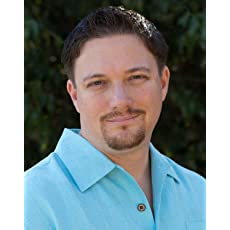
Coert Voorhees is the author the novels On the FreeIn Too Deep (2013 Junior Library Guild Selection), Lucky Fools (2012 Junior Library Guild Selection), and The Brothers Torres (2009 ALA Top Ten Best Books for Young Adults), as well as the picture book Storm Wrangler. He has been a Fulbright scholar in Chile and Visiting Writer in Residence at Rice University, and he now lives with his family in Houston, Texas.

Thank you for showing us how we can make a difference and what you are doing to do so also!

Author Guest Post: “The Truth Will Set You Free” by Andrew Avner, Author of Toro

Share

“The Truth Will Set You Free”

I’ve always had an affinity for Aesop’s Fables and Disney animated films. I suppose, in part, that’s why my debut Latinx middle grade novel Toro features talking animals as principal characters in a story suffused with moral lessons, conceived to entertain, inspire, and educate.

From age-old fables and fairy tales to Carlo Collodi’s Pinocchio to present-day fiction, lies and liars have always been present in children’s literature.

Lies are a part of the human condition, told, in the simplest terms, to seek pleasure or avoid pain. They can be used as both a sword and a shield, to prey upon or protect. The duality of lies never ceases to fascinate me. There are forgivable lies and unforgivable lies, harmless lies and harmful lies, selfless lies and selfish lies, big lies and little lies. To further confuse the matter, there are varying degrees of lies, gray areas, and subsets. There are survival lies, protective lies, cover-up lies, persuasive lies, lies by omission, and so on. Interestingly, the truth is singular in form—there’s only one truth—the truth. While some tales teach lessons by dealing liars their deserved punishments, others reward liars for using their cunning as a survival stratagem to outwit dangerous enemies.

Stories can help children understand the complex nature of lies and guide them to navigate those they will inevitably encounter, discern the good ones from the bad ones, and learn the value of honesty and the truth.

In my book Toro, Alicía Catalina Cortés is a Spanish cow who wants to run with the bulls in Pamplona to prove herself noble y bravo, which is noble and brave. Because she’s a cow, tradition and her overprotective father, Don Murciélago Cortés, forbid Alicía from the running of the bulls.

Diego Del Toro is a Spanish bull who’s always dreamed of becoming a star of the Texas rodeo. Because he’s a toro bravo, which is a fighting bull, tradition and his overbearing mother, Condesa Maria Del Toro, force Diego to run with the bulls.

When their paths cross, Alicía sees Diego as a means to an end. She tells him that four cowboys from Fort Worth, Texas are in Spain to recruit bulls for the rodeo (a lie). She promises to arrange a rodeo audition for him (another lie, as the cowboys are simply thrill-seeking tourists visiting Spain for the running of the bulls). In return, Diego allows Alicía to go to Pamplona in his place, disguised as him.

Alicía deceives Diego to achieve her goal of running with the bulls. At this point in the story, Diego is little more than a stranger to Alicía, and it’s easy for her to lie to him. Without understanding the consequences of her deception, her lies can initially be seen as cunning or resourceful, creative, and inventive. She’s not lying to hurt Diego. She’s lying to help herself, blinded by desire and fueled by imagination.

As the story progresses, Alicía grows closer to Diego, and her deception weighs upon her conscience. Her best friend and confidant, an Iberian lynx named Doña Madonna de Doñana, forces Alicía to face the grave repercussions of her lies. By misleading Diego, Alicía risks permanently ruining his life, robbing him of his dream of becoming a star of the rodeo and condemning him to a life in exile from his family for disgracing them by breaking their tradition of running with the bulls.

Alicía ultimately feels Diego is more important to her than her desire to run with the bulls. When her goal changes, her lies become a double-edged sword. The same lies that brought Alicía closer to what she thought she wanted, now drive Alicía further away from what she truly wants. Despite the terrible consequences she fears will befall her, Alicía chooses to embrace honesty and the all-conquering truth.

One of the underlying themes of Toro is that it’s best to be honest.

When a villain lies, we associate the behavior with villainy. But when a hero lies, we understand that even good people can make mistakes and be dishonest. Alicía is a flawed character who makes mistakes. However, she becomes an exemplary character when she takes responsibility for her mistakes, learns from them, and proactively makes amends.

Alicía’s lies teach children that actions and words should not always be taken at face value. Sometimes we must question another’s intentions, even if they’re as likable or central to our lives as a story’s protagonist.

Toro may be used as a starting point for conversations with children about honesty and how to handle situations regarding lies. The following are some additional thoughts to ponder or discuss after reading the book:

Try to identify all the lies in the story and determine which are told to seek pleasure versus avoid pain; e.g., though Alicía lies to Diego to seek pleasure by pursuing her goal, the first lie she tells in the story is intended to avoid pain by escaping a prearranged marriage to a character who will become the book’s central antagonist, Don Julián Hernández. Because of her lie, Alicía unknowingly sets the antagonistic force in motion.

Sometimes we lie to ourselves, as Don Julián lies to himself until story’s end. No good comes of this. Only when Don Julián accepts the truth can he find peace, happiness, and contentment.

Don Murciélago tells a protective lie to Alicía, but eventually he tells her the difficult truth. Could his lie be considered forgivable?

By masquerading as Diego, Alicía exhibits another form of lying, impersonation.

Doña Madonna—the embodiment of honesty and integrity—serves as Alicía’s moral compass and voice of reason. Notice her contrasting counterpart, Jesús de los Jabalíes. These are two of my favorite characters. They can look at the same situation and draw entirely different and opposed conclusions.

Lying and cunning are both deceptive, yet the former is considered a vice, the latter a virtue.

The truth always surfaces in Toro, often echoing the biblical adage “the truth will set you free.”

September 17th, 2020 from Black Rose Writing

About the Book: Alicía Catalina Cortés is a fast and fiery Spanish cow who desperately wants to run with the bulls in Pamplona—but since she’s a cow, tradition forbids her to partake in the fiesta of San Fermín. Through her journey, Alicía learns that to be noble and brave, she must follow her dream and her heart, even if it means defying tradition.

Andrew Avner’s debut Latinx middle grade novel Toro is a pocket testimonial to the female protagonist’s fight for equality and empowerment. It also represents and celebrates diverse experiences and identities.

Toro is set in the colorful backdrop of Pamplona, Spain during the fiesta of San Fermín and the running of the bulls, famed as one of the most exhilarating, dangerous, and spectacular events around the world. Ultimately, it’s a heartfelt, coming-of-age fable told from the cattle’s point of view. Like Charlotte’s Web, The Jungle Book, and Fantastic Mr. Fox, anthropomorphic talking animals drive the narrative.

About the Author: Andrew Avner graduated with honors from New York University’s Tisch School of the Arts with a Bachelor of Fine Arts in Film and Television. After working in Manhattan with Academy Award-winning producer David Brown, Avner relocated to Los Angeles to develop his own original material. He’s currently writing and producing short films for The Walt Disney Company while penning his next novel. To learn more about the author and his work, please visit: www.andrewavner.com.

Thank you, Andrew, for this post on honesty and inspiration!

Author Guest Post: “Getting Kids Interested in Science” by L.G. Reed, Author of The Science of Defying Gravity

Share

“Getting Kids Interested in Science” 

Your kid begs you to help her build a model of a volcano or a model airplane or experiment with chemistry. An impossible dream? I argue the answer is NO! Science is all around us and you can get your kids excited about exploring science with fun, easy projects that can be done at home.

Why bother getting kids excited about science? Because it can be a fun way to learn! I had a friend who was a propulsion engineer and she would go to schools to talk. Now, let’s face it, propulsion engineer sounds pretty dull – right? She started her talks by saying, “I blow things up for a living.” That got the kids attention! A career blowing things up sounded pretty darn cool. Well, among other things, science teaches us how things blow up, through chemistry and physics. Scientific processes do amazing things every day. Make it fun and your kids will love it!

  • Let’s start with a few basics. Science is broken down into disciplines, or categories: Biology, Chemistry, Physics, Earth Science, Geology. Some people would add space science (also known as astronomy and psychology

Kids may gravitate to one or the other. Here is a quick breakdown of the difference between them.

  • Biology – the study of life systems, including humans.
  • Chemistry – the study of the property of matter and how matter changes, along with the elements of the periodic table and how they interact to create materials, drugs, foods, fuels…
  • Physics – the study of the elemental rules that govern our lives on earth. Magnetism, Gravity, and how these forces effect matter.
  • Geology – the study of the structure of the earth.
  • Astronomy – the study of the planets, stars and the universe, and psychology –the study of the human psyche.

I you aren’t sure what area of science your child gravitates to (see I used a science term there to mean what they are pulled toward) that’s not a problem. Most aspects of science are addressed by more than one discipline.  Below are some experiments or projects kids can do at home to explore what interests them. You’ll want to be on hand to help.

Biology – Plant a sunflower seed. As it grows, observe how the flower head follows the sun or artificial grow light in a demonstration of heliotropism. Or plant a cucumber seed and place a stick or taut string beside the plant and observe how the tendrils wrap around the string. Which way do they go? Then have the kids do some research to understand why. This project takes a bit of time, as the seeds need to germinate and grow. Use the time to encourage your kids to read up on how a seed turns into a plant. Find this and more at the following website: https://www.shareitscience.com/search?q=tendrils

Chemistry – Start with a hardboiled egg. Place it in a container with vinegar. Let it sit for at least a day. It will get all fizzy and scuzzy. Then wash it off and watch as the shell dissolves. Vinegar, or acetic acid, has dissolved the shell, which is mostly calcium, leaving the egg underneath. Find this and more at the following website: https://www.3plearning.com/blog/simple-chemistry-experiments-kids-home/#Egg

Physics – Take four popsicle sticks and three rubber bands and make a catapult. See how far you can toss a coin or other light object. Does the weight of the object effect the distance or height it reaches? (use objects of differing weights) This one should be done with adult supervision as the rubber bands can break, or kids might decide to see whether it hurts to have a penny chucked at them. Check out the details and an illustrative video at this website: https://interestingengineering.com/7-diy-physics-experiments-that-will-impress-everyone

Geology – Using just corn flower and water you can make your own quicksand. This one is messy, so outside please! https://www.sciencekids.co.nz/experiments/quicksand.html

One last tidbit. Search Pinterest for SCIENCE PROJECTS FOR KIDS. And find links to loads of websites that contain interesting projects for you and your kids to explore the different areas of science. Couple the experiment with a discussion about what is happening and a supervised internet search for reasons to explain observations and you’ve got yourself an engaged, citizen-scientist in the making!

About the Author: Author and publisher, L. G. Reed believes stories that provide an artistic or relationship story along with a science focus can be an effective way to hook girls into STEM, especially at the earliest ages. She targets middle school because research has shown that these years are crucial to establishing girl’s interest in STEM topics.

Reed’s background in science and technology came from her career as an aerospace engineer, and her latest book THE SCIENCE OF DEFYING GRAVITY reflects that. She insists, however, that the book isn’t just about science. It’s about perseverance and curiosity — because every kid has those traits. Her goal is to spark their interest and get them to think that science and tech is something they can do.

Reed’s debut novel, The Maiden Voyage of the Maryann won the Cygnus Awards 1st Place – Women’s Fantasy/SciFi Category. Her second book, a middle-grade fantasy titled Sydney Porter: Dog Girl was an Amazon best seller.

Adding to her writing, she is channeling her love of books and writers into Keyes Canyon Press, an independent publisher focusing on middle grade and young adult fiction, and poetry for all ages.  Keyes Canyon Press seeks outstanding manuscripts that encourage reading and learning. Un-agented authors are encouraged to submit.

www.keyescanyonpress.com

Expected Publication: September 9th, 2020 from Keyes Canyon Press

About the Book: THE SCIENCE OF DEFYING GRAVITY is a middle-grade STEM based fiction. 11 yr old Cassie films her life. She loves movies and dreams of becoming a movie director in space. When her plans to go to Space Camp are derailed when her dad loses his job and she must win a science fair to earn a scholarship to attend. Spunk, a caring teacher, an engineering mentor and her friends keep her dream on track.

Contained within THE SCIENCE OF DEFYING GRAVITY is an actual science fair project, including tables and charts for kids to see. The project covers the four forces of flight—lift, thrust, gravity and drag—which are embedded in the fictional story but are factually accurate and have been verified by working engineers and engineering students.

“Useful, entertaining, and encouraging; will inspire confidence and an appreciation of science.” — Kirkus Reviews

“Tweens who enjoy making, building, and learning will get the most from this book about what it takes to become a scientist.” — Booklife Reviews

Thank you, L.G., for these fun science activities for kids!

Author Guest Post: “Supporting Teachers with #PointsforTeachers” by Alane Adams, Author of Witch Wars

Share

“Supporting Teachers with #PointsforTeachers”

As a children’s author and literacy advocate, I am a huge supporter of helping teachers succeed in the classroom. Last summer, while trolling on Twitter one night, I discovered a grassroots movement gaining momentum on social media. A young teacher in Texas, tired of having to spend money out of her own pocket to provide basic classroom supplies for her classroom had come up with the idea of posting her Amazon wishlist on social media, asking other teachers to help fund it and inviting them to do the same thing. This effort became known as #clearthelists and thousands of teachers began posting their lists and buying items off each other’s lists. A single book sent here, a box of colored pencils there. The simple joy they felt at empowering themselves to solve this problem by helping fellow teachers spread like wildfire and it quickly became a movement. I found one of these lists that night and bought the teacher a few items, quickly tweeted them back, and went to sleep. The next morning I woke up to hundreds of replies to my tweet from teachers all over the country. We quickly put our heads together at Rise Up, the literacy foundation I founded in 2008, and agreed we should try to help as many teachers as we could. Using humorous tweets, I quickly became known as the #gifqueen, and by the time fall had settled in, we had helped fund over 500 teacher wish lists.

After engaging with so many teachers on social media, I’ve come to see the many fundamental needs that go unfulfilled, and their determined passion to find a way to help their students. Teachers spend on average $400-$600 out of their own pockets to provide basic classroom supplies for their students ranging from pencils, dry erase markers, colored paper to glue sticks— a fact which is both heart wrenching and hard to fathom in one of the wealthiest countries in the world. Teacher’s lists are never ending because every year, the supplies are used up, and the needs start all over again. It’s not only tight school district budgets that make classroom funding sparse, but many low-income families are unable to afford the necessary school supplies for their children which means they show up to school without pencils or paper, putting the burden on the teacher to provide them with the tools they need. It’s easy to argue that it’s not their job but tell that to the teacher who’s heart breaks because her student doesn’t own a pencil. Replacing books is even harder with very few dollars allotted toward classroom libraries.

Since the global pandemic struck, we’ve seen a surge in requests for pandemic-related Back To School needs with teachers asking for remote learning tools such as document cameras and new laptops. Classroom needs are changing as well with a need for individualized containers to keep students supplies separate, along with increased sanitation supplies, face masks, hand sanitizer—all this is on top of their normal requirements. We at Rise Up tried to think of new ways to engage and help teachers meet the challenges ahead. I realized I had an enormous stockpile of unused credit card reward points sitting around that could easily be converted into Amazon dollars. Using reward points is easy on Amazon—all you have to do is register your participating rewards credit card—American Express, Citibank, Chase, and Discover are just a few they accept—and when you get to check out, you simply choose “use reward points” and the points value is deducted off your total. This inspired us to expand our efforts to help teachers clear their lists with a movement we call #PointsForTeachers. The goal is to educate individuals who would like to help but maybe don’t know how they can make an impact. We hope to encourage them to look at those unused reward points that are sitting idle on their credit card statements and reach out and find a teacher to help. It’s super simple and easy to make a big impact. All you have to do is follow these steps:

  • Register your card on Amazon at amazon.com/shopwithpoints.
  • Search for a teacher to help on Twitter using #pointsforteachers or #clearthelists.
  • Shop for items on the teacher’s list.
  • Use your points to pay at checkout!

To kick the program off we pledged 1 million reward points toward teacher’s wish lists. To date we’ve helped almost 200 teacher’s get back to school with essential items and we have many more to go before we run out of points. In addition, we registered with JustGiving so that individuals can donate their points directly to the Rise Up Foundation to help us supply classrooms. To donate your points, just go to JustGiving.com and search for Rise Up Foundation.

With everything that is asked of teachers during these challenging times, now more than ever, they need our support to get them the items they need to make a difference in the lives of their students. Won’t you join us in making a difference in the life of a teacher and their classroom today?

Witches of Orkney #3: Witch Wars
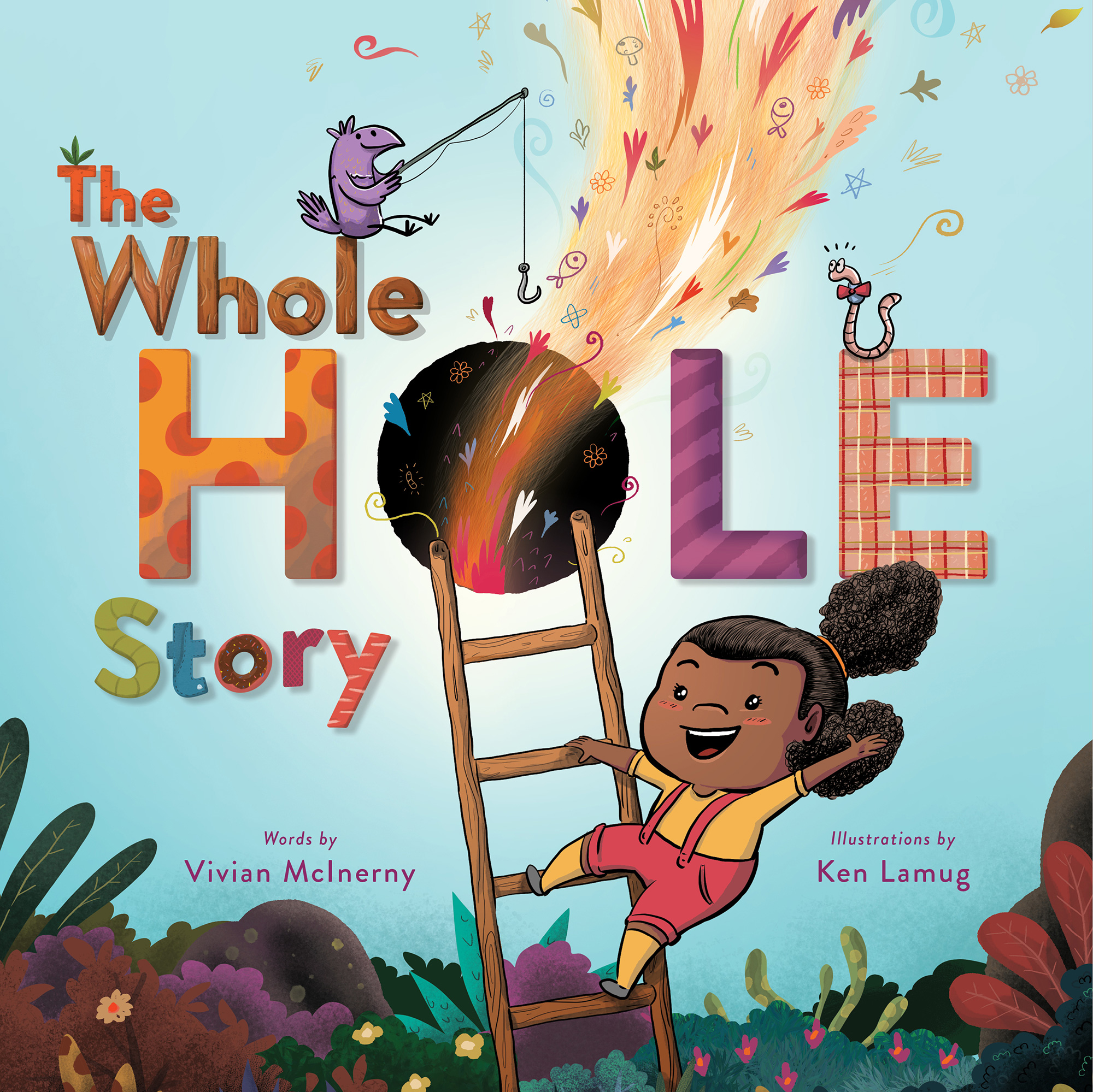
Expected Publication October 13th, 2020 by SparkPress

About the Book: Abigail’s second year at the Tarkana Academy has been an all-out disaster. She’s just unwittingly helped Vertulious, an ancient he-witch and powerful alchemist, destroy Odin’s Stone and restore his powers, and now all of Orkney is caught up in the threat of war as the witches prepare to destroy the helpless Orkadians. Determined to set things right, Abigail and Hugo set off for Jotunheim, the land of the giants, to find a weapon to restore the balance. All they have to do is track down the God of Thunder and convince Thor to turn his hammer over to them.

When their former-friend-now-foe Robert Barconian arrives with a band of dwarves, intent on stopping them, Abigail and friends must unite to prevent a war that will destroy them all. But has Abigail made the biggest mistake of all by trusting in the wrong ally?

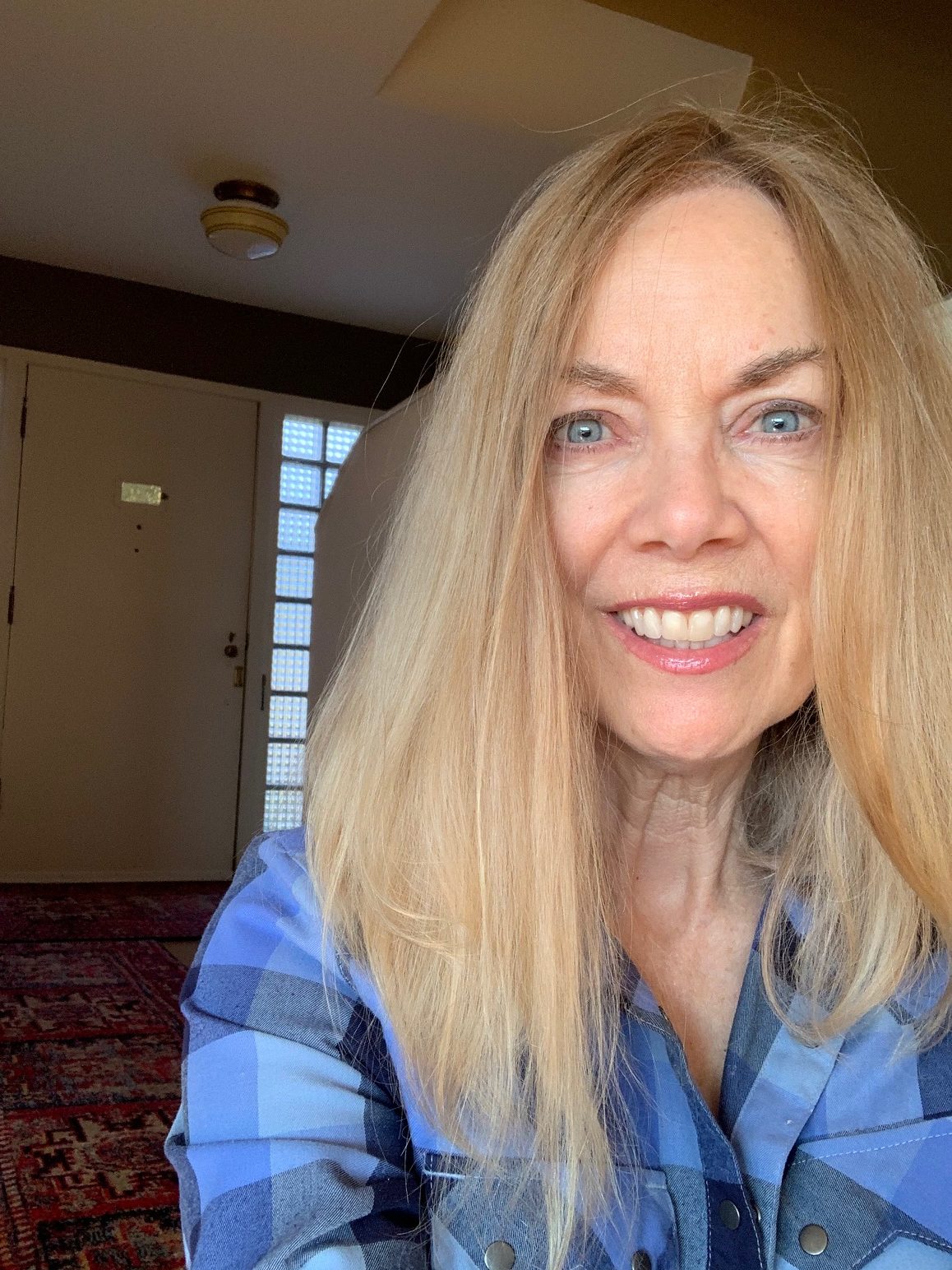
About the Author: Alane Adams is the author of award-winning titles that include the Legends of Orkney™ Norse mythology series for middle grade readers, the Witches of Orkney prequel series including her newest book Witch Wars out October 2020, and a series of historical picture books set in the 1920s including The Coal Thief. Alane’s newest Greek mythology series, The Legends of Olympus debuted Spring 2020 with The Eye of Zeus. Alane Adams and her books have been featured on BBC, Fox, the CW, Parade, Bustle, Today, People, and many more! When Alane is not writing or talking to kids in schools about Reading Is A Superpower, she’s out hiking somewhere in the world or hanging out with her three boys in Southern California. For more information, visit https://alaneadams.com or follow Alane on Facebook, Twitter and Instagram: @AlaneAdamsBooks.

About Rise Up Foundation: Rise Up Foundation strives to improve the lives of children and families living in poverty and difficult circumstances, as well as teachers and educators of young children. Rise Up supports literacy projects as a path toward improving the future prospects of children in underserved communities by making book donations, providing classroom support, and grant-making. In addition to literacy efforts, Rise Up works with organizations committed to defining and solving the problems that chronic poverty brings to children and their communities. For more information, visit https://riseupfoundation.org or follow on Facebook @Rise.Up.Foundation and on Twitter @RiseUpFdn.

Thank you, Alane, for showing how to support teachers during this tumultous times!

Neal Shusterman’s Visit to Kellee’s School

Share

On March 5th, Neal Shusterman came to visit my school!

My amazing principal set a goal for an author to visit our school each year and she started this tradition with Jennifer Nielsen visiting in December, 2018. Neal Shusterman continued the tradition and hopefuly in April, 2021 Nathan Hale will be visiting us. This tradition shows how important literacy is to my principal!

We were so excited for the visit, and we wanted our school to reflect our excitement:

Our library and school decorations were made by so many different students: everyone in an art class, 6th and 7th grade intensive reading students (Ms. DeLuca and Ms. Chacon’s classes), 7th grade language arts students (Ms. Rokaw’s classes), Advanced Academics students (Ms. Perez’s classes), my book club, my Student Literacy Leaders, and my library student assistants. My libray clark, Ms. Armstrong, and I made the Neal Shusterman unwound pieces signs.

You can see a tour of my library on Neal’s Instagram: https://www.instagram.com/tv/B97d71tgQsr/?hl=en!


Neal did a whole-grade presentation with each grade level. He did a Q&A format and students were so engaged as they drove the conversation. We learned about his upcoming books, movies, and TV shows as well as his inspirations, start as an author, and more!

At lunch, students who had read 3 or more of his novels were invited to a special event where Neal read a couple of chapters from an upcoming novel and then he hosted a writer’s workshop which was truly engaging!

Our AMAZING day ended with a signing line for any student, faculty/staff, or community member that wanted a book signed by Neal.

It was a perfect day! I am so lucky to have school and admin support in endeavors like this and the friendship and brilliance of authors like Neal Shusterman!

Signature

Author Guest Post: “Four Ways to Help Reluctant Readers” by Fleur Bradley, Author of Midnight at the Barclay Hotel

Share

“Four Ways to Help Reluctant Readers”

School is about to start back up—in fact, if you live in my neck of the woods in Colorado, school is already up and running again. Online or in-person remains to be seen for some, and some may prefer to homeschool. Which means as parents, we’re thrust into the role of educators.

It’s challenging, to say the least. After my youngest daughter struggled with reading, I decided to homeschool to help her, and discovered she has a reading disability. Where we lived at the time, there was no help in the way of special education—bottom line, I was on my own.

The upside: you know your kid best. The downside: because you’re the parent, your child is less likely to listen to you. I had to become an expert on reluctant readers, learning disabilities, and ways to ensure my daughter would read.

Here are four things that worked for me:

Start with choice

Okay, so there may be certain books that are part of classroom reading. But whenever possible, make what your kid reads a choice—even if (s)he picks the easiest book with the thinnest spine there is. Graphic novels, manga, comics, non-fiction (yes, even those Ripley’s Believe It or Not books) all count. In fact, if there’s a topic your child is interested in (say, sports, bugs, drawing), non-fiction is a great way to connect reading with what (s)he thinks is fun.

Use stepping stones

If you have a kid who really, really doesn’t want to read, and perhaps is reading below their grade level, you’ll need stepping stones. You can’t start with, say, The Bridge to Terabithia out the gate. Using choice where possible, start with a book that’s at a comfortable reading level for your child—it doesn’t matter where that is. Look for illustrated books, graphic novels, and high-interest books with possible pop-culture tie-ins (like books featuring favorite TV characters, comics, or non-fiction with photos).

Audiobooks are great, because your child will be able to hear someone else read the text while reading along themselves. It increases vocabulary, and helps with pronunciation as well.

Once you feel like your kid is improving, try introducing books that are just a level up from where they’re reading currently.

Oh, and as an added note: graphic novels are perfectly fine reading, no matter the reading level! I talk to parents and educators all the time who think that because of the heavily illustrated nature, graphic novels are lesser reading somehow. Here’s the truth: all reading will help your child get ahead—and in all other classes, too.

Read along

It may seem obvious (and you teachers will already be doing this) but for parents at home: try reading along with your child. Not only do you get to read some great books (children’s literature is booming, and has some amazing books), you also get to make an invaluable connection. When my husband was deployed in the military, my daughter and he read the same book, and would talk every few days about what they read. Not only did it allow them to stay close, my daughter’s reading (and math and science) improved exponentially because they were reading together. If you are a grandparent, this is also a great way to stay close to (perhaps far away) grandchildren.

Celebrate progress

You’ve given your child the choice, watched her or him improve… Now find a way to celebrate this progress! Particularly for a kid who has trouble reading, or started below grade level, it’s hard work to move from milestone to milestone. Imagine getting fit, and charting your progress as you walk longer on the treadmill—it’s like that. So celebrate! Try to make the celebration an experience rather than money or a gift when possible: maybe a movie night at home (you can pick one that was made after a book), a day outside, a picnic or other celebration. Your child worked hard—this deserves celebrating. And maybe, now (s)he’ll have a reason to aim for the next milestone…

My daughter is now grown, and has already finished college. I certainly helped her, but in the end, it was her hard work that got her there.

I now do librarian and educator talks on reaching reluctant readers, and like to end each session with why it’s so important to keep kids reading, by the numbers. So here goes, for my fellow statistics people:

  • Kids who read proficiently are five times more likely to graduate high school;
  • Twenty minutes of reading a day can get your childto their grade level;
  • Strong readers answer 66 percent more math questions correctly…*

I could go on a while, but I’ll simply say this in closing: that hard work to reach your reluctant reader? It’s worth it.

*Source: Renaissance (blog series, struggling readers)

Publishes August 25th, 2020 from Viking Books for Young Readers

About the Book: Hunting ghosts and solving the case before checkout? All in a weekend’s work.

When JJ Jacobson convinced his mom to accept a surprise invitation to an all-expenses-paid weekend getaway at the illustrious Barclay Hotel, he never imagined that he’d find himself in the midst of a murder mystery. He thought he was in for a run-of-the-mill weekend ghost hunting at the most haunted spot in town, but when he arrives at the Barclay Hotel and his mother is blamed for the hotel owner’s death, he realizes his weekend is going to be anything but ordinary.

Now, with the help of his new friends, Penny and Emma, JJ has to track down a killer, clear his mother’s name, and maybe even meet a ghost or two along the way.

About the Author: Fleur Bradley is the author of many middle-grade books aimed at reluctant readers, including the (spooky) mystery Midnight at the Barclay Hotel. Fleur is passionate about two things: mysteries and getting kids to read, and she regularly speaks at librarian and educator conferences on reaching reluctant readers. Originally from the Netherlands, Fleur now lives in Colorado Springs with her husband and two daughters, and entirely too many cats.

For more information on Fleur and her books, visit www.ftbradley.com, and on Twitter @FTBradleyAuthor.

Thank you, Fleur, for sharing your experience and advice with us and our readers!

Author Guest Post: “Why Reread?” by Dorothy A. Winsor, Author of The Wysman

Share

“Why Reread?”

Recently, someone on Twitter asked if people ever read a book more than once. The answer for me is, of course! But not all books. There are books I read only once and books I reread, often more than once. Thinking about that twitter question, I tried to look at books I reread and see if they have anything in common. I wanted to know what made me, at least, reread a book.

So I pulled three books off my shelf, almost at random. These days, if I have a book in physical form, it’s because I want to reread it. Otherwise I buy a less expensive and more easily stored e-book. The three books now on my desk are Jane Austen’s Pride and Prejudice, Lois McMaster Bujold’s Warrior’s Apprentice, and Megan Whalen Turner’s The Thief. So what common threads can I find in these very different books?

Pride and Prejudice by Jane Austen

I’ve loved Jane Austen since I was in the seventh grade, and it’s a love that’s aged well. I still love Elizabeth Bennet and Mr. Darcy. They feel real to me, and I see the shaping of their personal lives as something worth caring about. Critics are wrong to dismiss a finely wrought portrayal of domestic life as somehow trivial. Family and romantic relationships affect how happy any of us is.

Additionally, Austen valued character development in the moral sense. That is, her books make a claim that we are obligated to figure out what it means to be a good person and try to live up to that standard. Would we care for a sister, as Elizabeth cares for Jane? Can we exercise self control as Lydia does not? Can we overcome our pride and our prejudices to avoid harming other people and our own happiness?

Those things matter in Austen’s book, and they matter to me.

Warrior’s Apprentice by Lois McMaster Bujold

I’m making a big leap from a realistic novel published in 1813 to a piece of contemporary science fiction in The Warrior’s Apprentice. So let’s see if the qualities that make a book rereadable transcend era and genre.

For me, the major attraction of Warrior’s Apprentice isn’t the space battles; it’s the central character, Miles Vorkorsigan. Miles was born with a deformed body in a world where less than perfect infants were exposed and left die in the recent past. He compensates for his physical limitations with his considerable (and slightly twisted) cleverness.

Because Miles has to go about his military career in unexpected ways, he often surprises me, which I like. He also makes me laugh, and not always with him. He’s one of those people who gets things rolling and then finds himself chasing events that have spiraled out of control. Hence the title of the book, deliberately patterned after Goethe’s “Sorcerer’s Apprentice.”

The reason I can reread this book, and the others in this series, is that Miles continues to be interesting. I care about his struggles against a world where he doesn’t fit in.

The Thief by Megan Whalen Turner

Again, I’m jumping genres but only slightly. The Thief is a fantasy set in a quasi-Greek world that was originally published as a middle-grade novel, i.e. a book intended for readers 10 and up. Currently, it’s sold on young adult shelves, i.e. as a book intended for teen readers. Really, it’s unclassifiable. Every Megan Whalen Turner fan I know is an adult.

The Thief rewards rereading more than any other book I know. The first time I read it, I thought its central character, Gen, violated the principle that the protagonist must protag. That is, the central character must drive events. Gen seemed to be being dragged along by other people, and yet I was engaged anyway.

The second time I read the book, I read almost every incident differently than I had the first time. The book includes a big twist near the end, and often twisty books don’t work well on rereading because the twist doesn’t surprise the reader the second time. But I’ve never felt that way about this book, because that twist completely changed everything else about the story. It continues to surprise and delight me. Megan Whalen Turner is a magician of a writer.

Generalizations?

First, I assume different readers respond to different books, so my rereadable qualities may not be the same as someone else’s.

So am I able to draw any generalizations from this? Well, I repeatedly mention loving the characters. I’d guess that for most people, a plot draws them through the book the first time, but a book’s characters are what make them love the book and reread it.

I also seem to value clever characters and those who struggle to do something hard, whether that’s win a battle or sacrifice their own desires for the sake of someone else. I believe in the value of stories and what they have to tell us about the human condition and the human heart, and these books answer that belief.

Austen has a young woman as the central character, and the other two books have young men. I’ve heard other people say they only read books with either male or female protagonists, but that doesn’t seem to matter to me. I notice, though, that all the books I chose are by women. I have books by men on my reread shelf, but there are more by women. Is that a coincidence? I’m honestly not sure.

So what books do you reread? Why? What are the qualities that matter to you? Are they the same as mine? What books do you come back to again and again?

Publishing June 27th, 2020 from Inspired Quill Publising

“The Grabber is just a fright tale.”

Former street kid Jarka was born with a crooked foot and uses a crutch, but that no longer matters now that he’s an apprentice Wysman, training to advise the king. When poor kids start to go missing from the city’s streets, though, Jarka suspects that whatever’s causing the disappearances comes from the castle.

Now he needs to watch his step or risk losing the position he fought so hard to win… but when someone close to him becomes the latest victim, Jarka knows he’s running out of time.

His search takes him from diving into ancient history, to standing up to those who want to beat or bleed the magic out of him.

Will Jarka succeed in uncovering an evil long-hidden, or will he see friends and family vanish into the darkness?

About the Author:Dorothy A. Winsor writes young adult and middle grade fantasy. Her novels include Finders Keepers (Zharmae, 2015), Deep as a Tomb (Loose Leave Publishing, 2016), The Wind Reader (Inspired Quill, 2018), and The Wysman (June, 2020). At one time, Winsor taught technical writing at Iowa State University and GMI Engineering & Management Institute (now Kettering). She then discovered that writing fiction is much more fun and has never looked back. She lives in Chicagoland.

Thank you, Dorothy, at this look at rereading and its powers!
What books do you all love to reread?