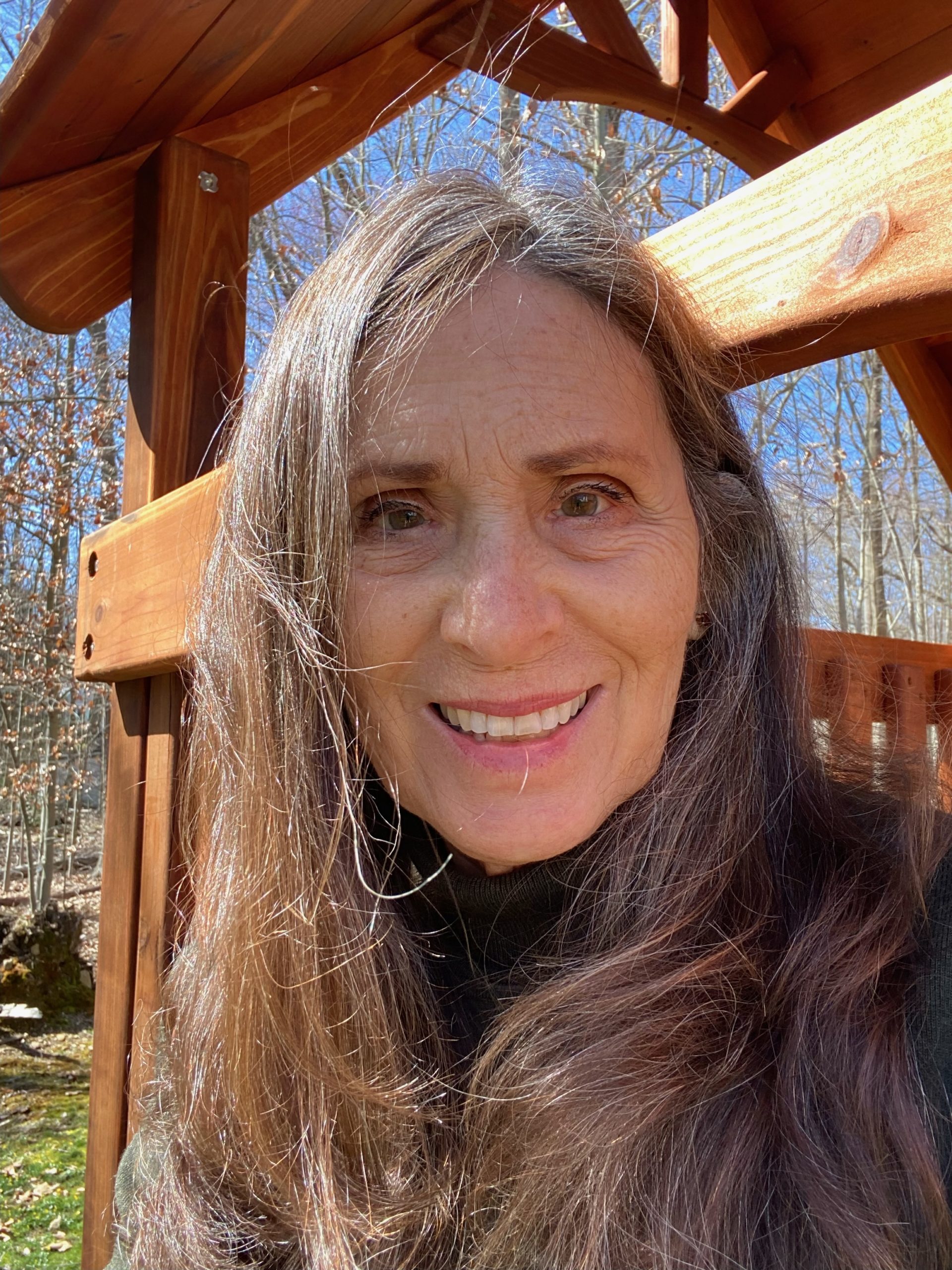
Author Guest Post: “Building Empathy” by Kim Taylor, Author of A Flag for Juneteenth

Share

“Building Empathy”

When I was a young girl, I was an avid reader. I did not have the distractions that are seemingly everywhere today. I picked up anything I could get my hands on, but I was most attracted to stories with a main character that was trying to find their place in the world. If the writing was very good, I was drawn into the story and felt deeply connected to the protagonist. I had the best of two worlds. I spent my formative years living in an apartment building in Brooklyn, and every summer I would go to sleep away camp in the Catskills. I loved the excitement of playing outdoor games with friends in our building’s courtyard, but always looked forward to the calming peace of the woods and lake at camp. It’s no wonder that I would seek out books with these familiar themes.

When I was doing research to prepare for writing my debut book A Flag for Juneteenth, I googled, listened to podcasts, and read books about slavery in America. I also looked at pictures of enslaved people which helped me to imagine their personalities and lives. One picture of a little girl that I found on the Library of Congress website seemed to embody the spirit of my heroine, and I kept her image in mind as I developed the character.

I wanted my main character’s name to be unusual, one that would be new to my readers. I envisioned this character to be a prophet, one who could bear witness to the announcement of the end of slavery as a legal institution in America and could also foretell a future free of bondage. I googled biblical female prophets and an image of a beautiful Black woman appeared on my screen. Her name was Huldah. As soon as I saw her, I knew that this would be the name of my main character. Eve, the name of Huldah’s baby sister, is also biblical. It is derived from a Hebrew word meaning “to breathe”, or “to live”. In my story Eve is an infant. She will have the opportunity to live her life without the burden of enslavement. One other character in my story has a name. Mr. Menard is the oldest man on the plantation. He has the last name of Michel B. Menard, the first plantation owner in Galveston Texas where my story takes place. I thought that it was important to demonstrate that enslaved people were often given the last name of their enslavers to erase any connection to their own family lineage.

I thought about ways to help young readers to be interested in an event in history that is rarely taught in schools, and to feel connected to a reality so far removed from their own. I knew that I would need to draw them in early in the story and decided to start with my main character feeling excited about her upcoming birthday celebration. Huldah is a mature, curious, insightful little girl. She has the very ‘grown up’ responsibility of caring for her baby sister during the day while her parents labor on the plantation. The reader meets Huldah for the first time on the day before her 10th birthday, which fell on a Sunday that year. Sundays were a day for rest and reconnecting with family and community. Huldah’s mom baked Huldah’s favorite tea cakes for her upcoming birthday, a luxury she may not have had time for when the long work hours started again the next day. The characters in my book are purposefully faceless. I am hoping that my readers will see themselves in the story and connect with the characters on a deeper level.

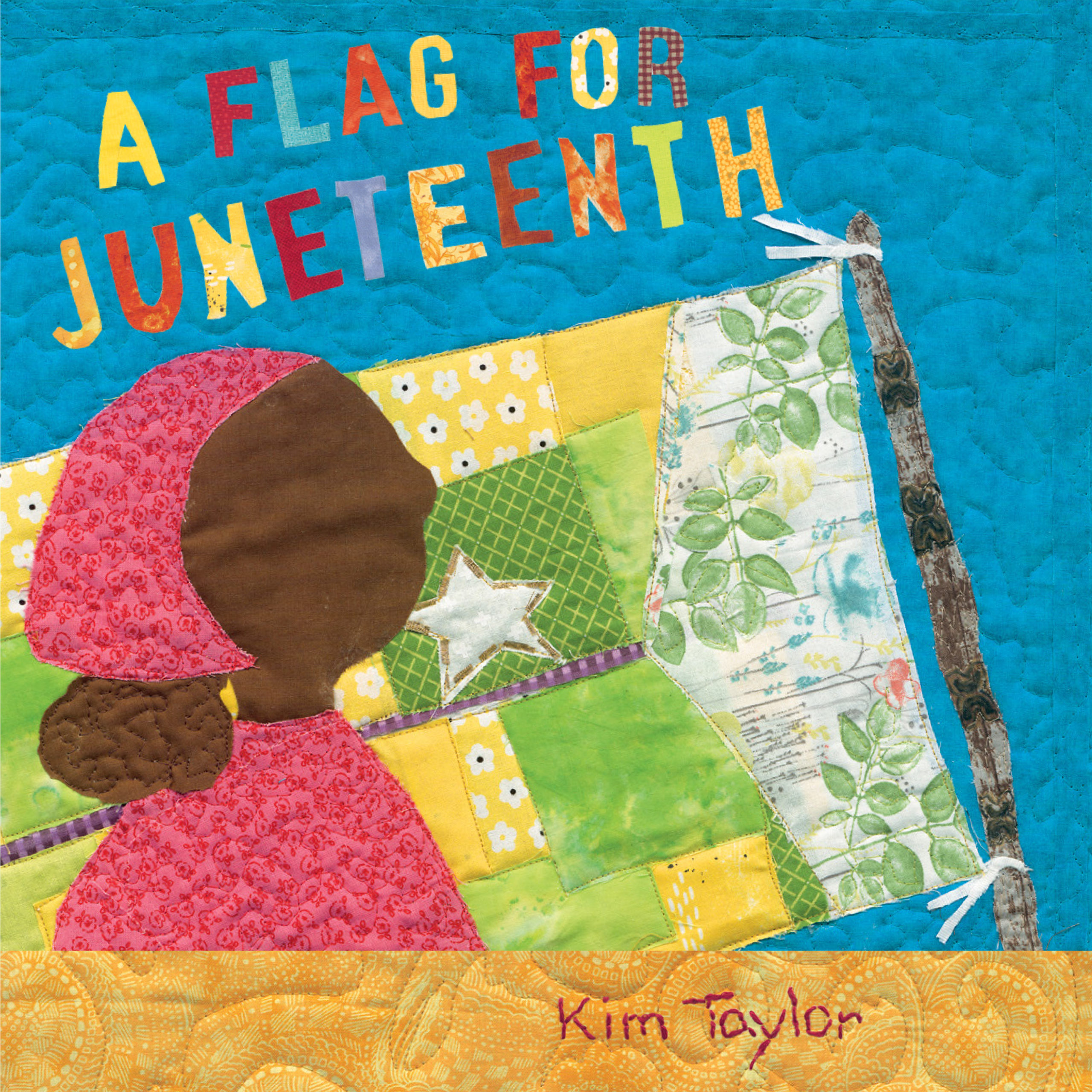
I am incredibly proud to have illustrated this book with quilting, an art form that was used by my ancestors to tell their own stories. When planning the illustrations, I tried to keep the text in mind, and made decisions about what aspects of the text I thought needed to be enhanced. For example, the first page describes tea cakes, a type of traditional cookie that enslaved people made using simple pantry ingredients. I thought that it was important to help my readers visualize a teacake, so I set out to create them using one of the brown fabrics from my stash that had some color variations. Teacakes were not fancy back then, but they were delicious and smelled amazing, so I used hand embroidered lettering to show the movement of the scent wafting through the air. The illustrations took a little over a year to create. It was an enormous undertaking and a very emotional journey. Because the people in this book have no faces, I had to figure out how to give Huldah depth and to showcase her personality in other ways. I also needed to make her consistent and recognizable in every illustration. That is no easy task when working with fabric on such a small scale! I remember telling a friend that I felt as though Huldah had become like a daughter to me. I felt a deep connection to the character.

When teaching about this troubling time in American history, I feel that is critical to highlight the beauty and resilience of African and African American people during their enslavement, as well as to showcase how important strong family and community ties was to them then and continues to be today. As educators we should not leave out what life was like for enslaved people when they were not laboring. Although difficult, these were people who did all that they could to connect with their immediate and extended families, and to build a sense of community despite such oppressive circumstances. By humanizing them we build empathy and help our young readers to see their commonalities rather than their differences. Hopefully this will encourage them to want to learn more about this significant time in American history.

Published

About the Book: This powerful title shares a unique story of the celebration of the first Juneteenth, from the perspective of a young girl. 

A Flag for Juneteenth depicts a close-knit community of enslaved African Americans on a plantation in Texas, the day before the announcement is to be made that all enslaved people are free. Young Huldah, who is preparing to celebrate her tenth birthday, can’t possibly anticipate how much her life will change that Juneteenth morning. The story follows Huldah and her community as they process the news of their freedom and celebrate together by creating a community freedom flag.  

Kim Taylor sets A Flag for Juneteenth apart from other Juneteenth books by applying her skills as an expert quilter. Each of the illustrations has been lovingly hand sewn and quilted, giving the book a homespun, tactile quality that will appeal to readers young and old.

Educators’ Guide: 

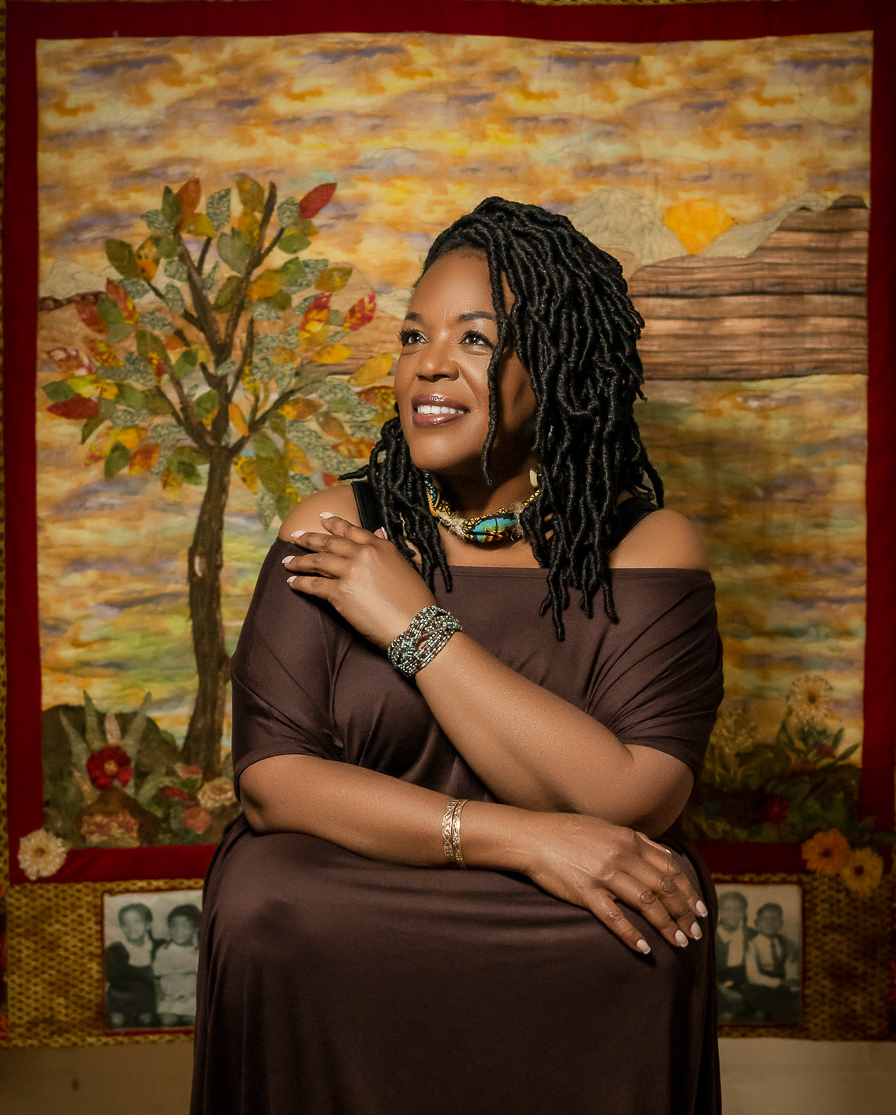
About the Author: Kim Taylor is a speech language pathologist and Department Supervisor at a large school for deaf children. She is also an expert quilter whose works have been exhibited at several venues throughout the Mid-Atlantic region. Kim’s quilts reflect African American life, and she tells stories through her materials. After researching the origins of the Juneteenth celebration, she created a Juneteenth story quilt which she has exhibited and presented in dozens of local schools. Realizing that many teachers and students were unaware of the holiday, she was moved to write this book. She lives in Baldwin, New York. 

To see more of Kim’s quilts, visit her website at MaterialGirlStoryQuilts.com or visit her on Twitter at https://twitter.com/comfortzne1.

Thank you, Kim, for this beautiful post about empathy!

Author Guest Post: “Small Things Lead to Social Emotional Learning” by Marsha Diane Arnold, Author of One Small Thing

Share

“Small Things Lead to Social Emotional Learning

In 2017, my husband and I survived Hurricane Irma in Lee County, Florida. 130 mph gusts right over our house! That same year, the Tubbs wildfire roared through Napa, Sonoma, and Lake County in California. My husband and I had moved from Sonoma county, where we’d lived 35 years, to Florida just a few years before. The fire destroyed the homes of a number of friends, including our goddaughter’s. Disasters seemed to surround us.

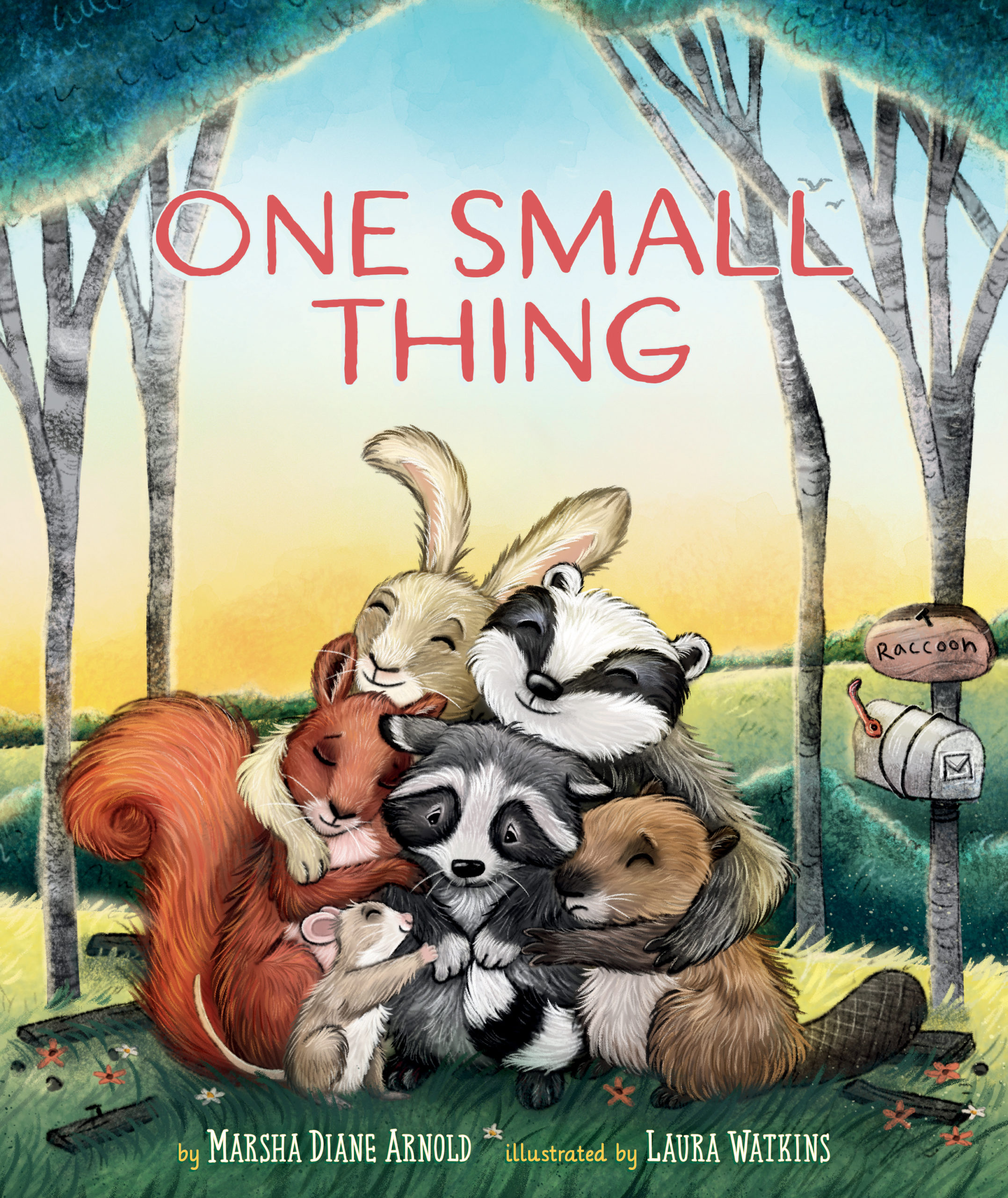
When Raccoon’s home is destroyed by lightning in One Small Thing, Mouse says, “It’s such a BIG catastrophe! And we’re so small.” Catastrophes can paralyze. Children can feel overwhelmed with concern and helplessness when they experience a natural disaster or when a calamity happens to someone in their community. One Small Thing offers examples of how each of us, child or adult, can use our energy and talent to spread kindness.

It’s especially important to spread kindness during difficult times, but it’s also important to spread kindness on a daily basis. Doing “one small thing” daily will help children understand their feelings, understand others’ feelings, and assist them in making empathetic decisions. Small actions daily will help them be ready to communicate and act when a “big catastrophe” happens.

After reading One Small Thing, you may wish to discuss a few of the questions found in the One Small Thing Activity Guide: https://marshadianearnold.com/activities-one-small-thing/.

*How did each animal feel when they learned about what happened to Raccoon
*Squirrel felt so sad, he couldn’t move. Do you ever feel there is too much to be fixed? Do you ever feel things are so hard or sad you may as well give up?
*Which animal felt they didn’t have anything to offer, that there was nothing they could do? (Mouse)
*How do you feel when something scary or bad happens?
*What makes you feel better when you are scared or sad?

After the discussion, have the children talk about “one small thing” they could do as a class.

Lead the children to try a couple of activities for others. Perhaps start with “one small thing” for animal friends.

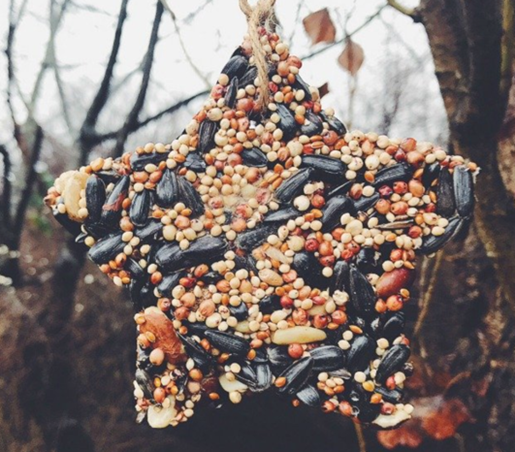
My educator friend is planning to read One Small Thing to a class and then work with them to make Cookie Cutter Bird Feeders. There are several slightly different “recipes” online; she plans to try this one. She hasn’t tried this yet, but folks who have say this will make several cookie cutter bird feeders.

Materials Needed

  • 2 cups small birdseed (Have extra in case you need to thicken the mixture more.)
  • 2 packets unflavored gelatin (8 gram packets)
  • 2/3 cup water
  • Spoon
  • Twine or Ribbon
  • (Plastic Straws, if using straws to poke the holes)
  • Cookie cutters – (Stars and acorns are fun.)
  • Baking sheets
  • Parchment paper

What to do

  1. Place parchment paper on baking sheets.
  2. Place cookie cutters on baking sheets. Set these to the side.
  3. In a mixing bowl place 2/3 cup boiled water and 2 packet of gelatin. You can also do this on a stove in a pan.
  4. Stir until the gelatin is dissolved, a minute or two.
  5. Stir in 2 cups birdseed until most of the liquid is absorbed.
  6. Tie a piece of twine or ribbon into a loop. (Some prefer to place a straw in the birdseed cookies to make a hole. After the cookies dry, the twine or ribbon can be pulled through and tied.)
  7. Fill a cookie cutter halfway with birdseed, using a spoon. Press the birdseed down with the back of the spoon.
  8. Push the tied part of string into the birdseed.
  9. Fill the cookie cutter with the rest of the birdseed mixture.
  10. Some place the cookie cutters in the refrigerator for a few hours to set. Others simply move on to drying.
  11. Dry the birdseed cookies overnight.
  12. Turn the birdseed cookies over and let the other side dry overnight.
  13. Carefully push the bird seed feeder out of the cookie cutter.
  14. Hang the birdseed cookies from tree branches or a bird feeding station.

Now you might have the  children brainstorm “one small thing” they could do as a class for a person. Is there an Assisted Living Residence or Retirement Community nearby that would appreciate colorful cards? You might choose a holiday like May Day and have the children draw colorful flowers on folded paper with a brief message like “Happy May Day!” or “May Basket” and their name.

These two activities seem like small things to do…but that is the point. They are small, but lots of small things add up to something wonderful. May the gentle, cozy message of One Small Thing add to the social emotional learning canon and to kindness, all around.

Educators and parents can find more activities in the One Small Thing Activity Guide on my website, here: https://marshadianearnold.com/activities-one-small-thing/.

Published May 9th, 2023 by Beaming Books

About the Book: After Raccoon’s home burns down in a lightning storm, his friends don’t know what they can do to help. Squirrel, Beaver, Mouse, Badger, and Rabbit all go back to their own homes, trying to focus on something other than Raccoon’s tragedy. But each animal discovers one small thing they can do for Raccoon–and it turns out that each small act may not be so small after all.

One Small Thing is a gentle and powerful look at how small actions can make a big impact.

About the Author: Called a “born storyteller” by the media, Marsha Diane Arnold is a picture book author of 24 books, with over one million books sold.  Her books have garnered honors like Best First Book by a New Author (Heart of a Tiger), Smithsonian Notable (The Pumpkin Runner), and Dolly Parton’s Imagination Library (Roar of a Snore). Her bilingual Galápagos Girl won the Green Prize for Sustainable Literature. Lights Out, about light pollution, has been praised by the Dark Sky community as well as the children’s lit community and was a finalist for the SCBWI Golden Kite Award for Picture Book Text.

Marsha enjoys sharing her love of story through school visits, manuscript consultations, her Writing Wonderful Character-Driven Picture Books e-course, and especially by reading to her four grandchildren.

Growing up on the Kansas prairies, Marsha lived in Northern California for most of her life. Now she lives with her husband in southwest Florida, near the Caloosahatchee River and her daughter’s family and only a short flight from her son’s family. Besides creating stories, her favorite activities are scuba diving and snorkeling, hiking, traveling, gardening, and climbing trees.

You may learn more about Marsha, her books, and her world, at www.marshadianearnold.com.

Thank you, Marsha, for these activities and the focus on kindness!

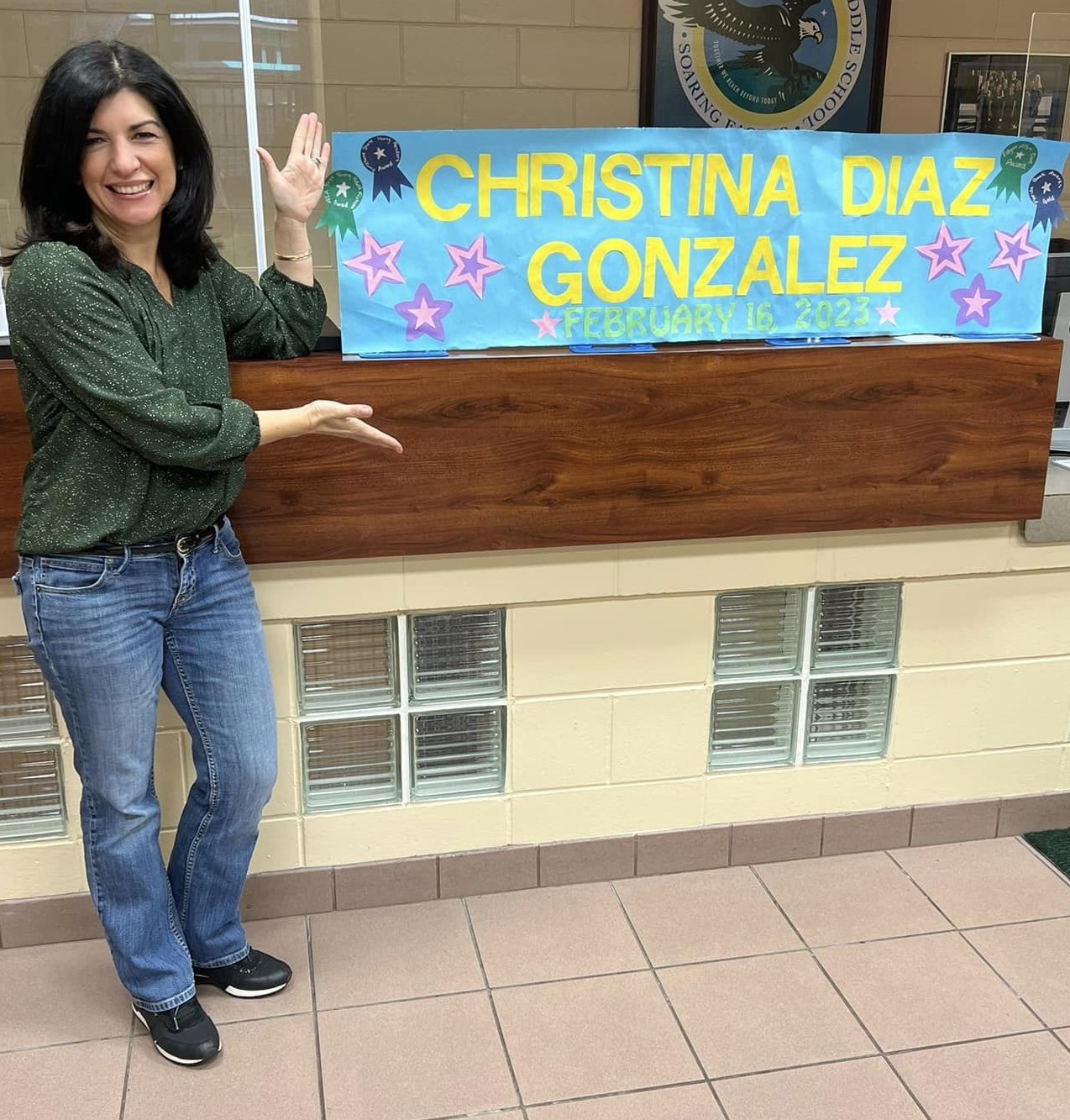
Student Voices: Christina Diaz Gonzalez’s Visit to Kellee’s Middle School

Share

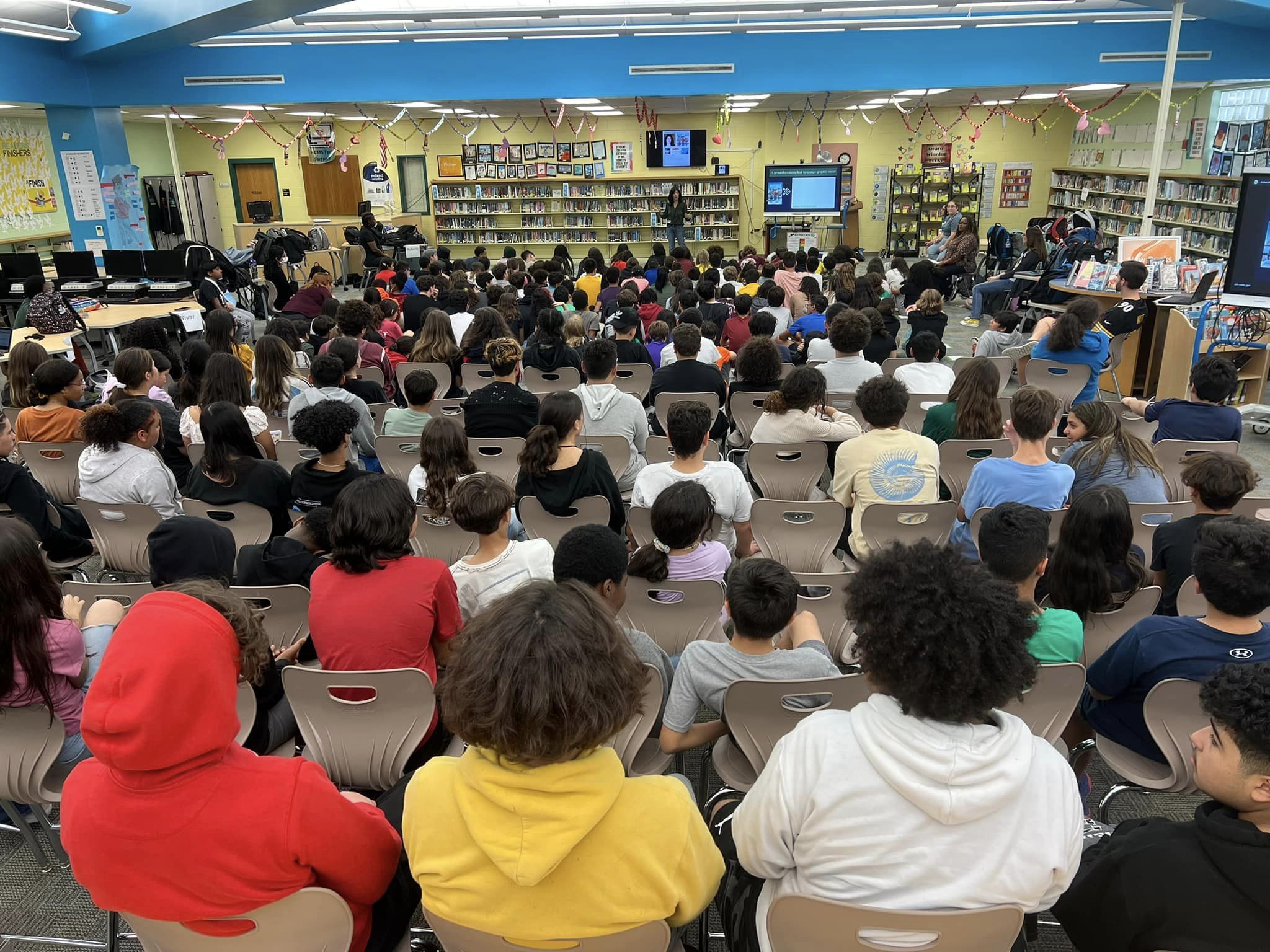
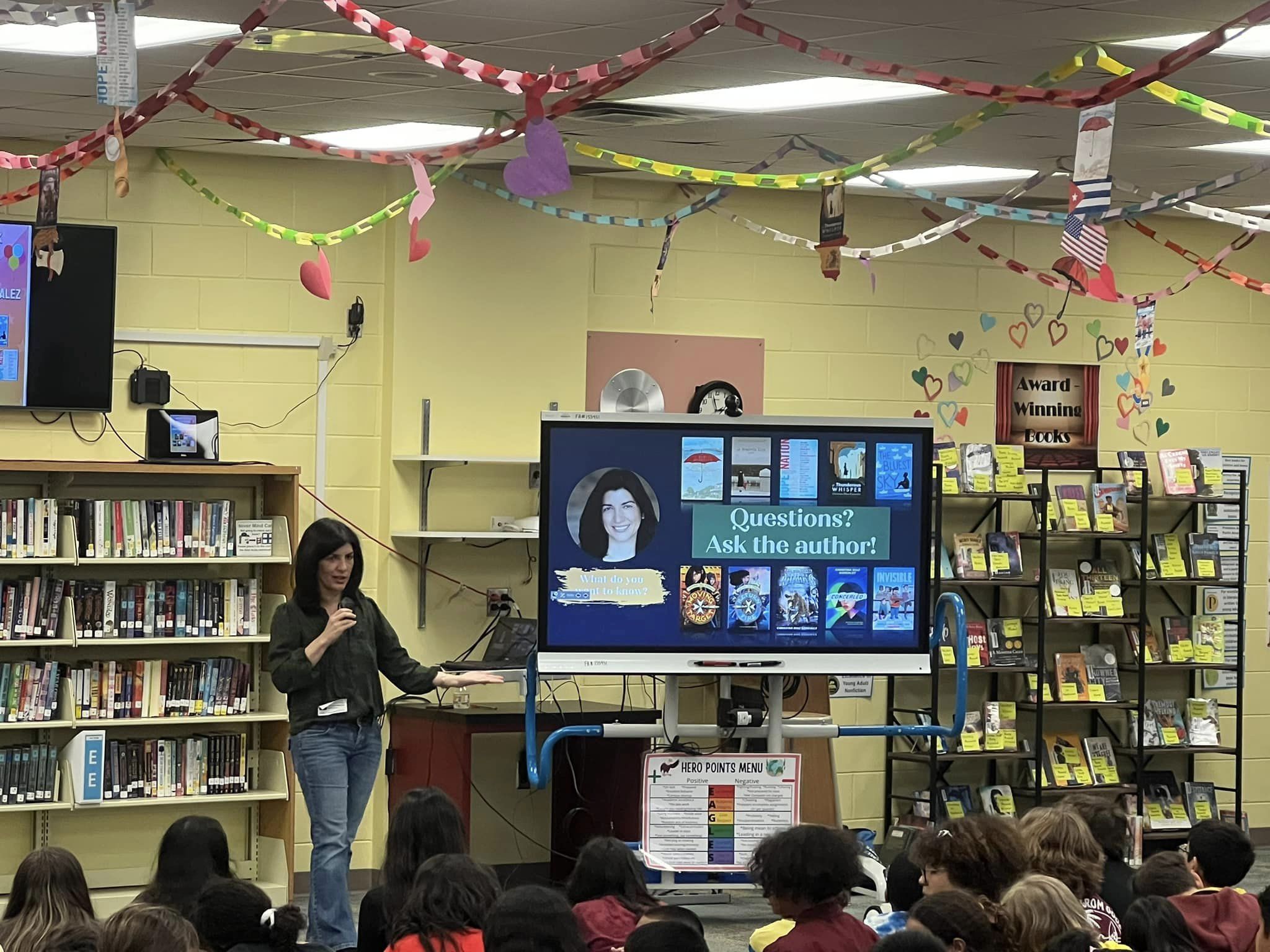
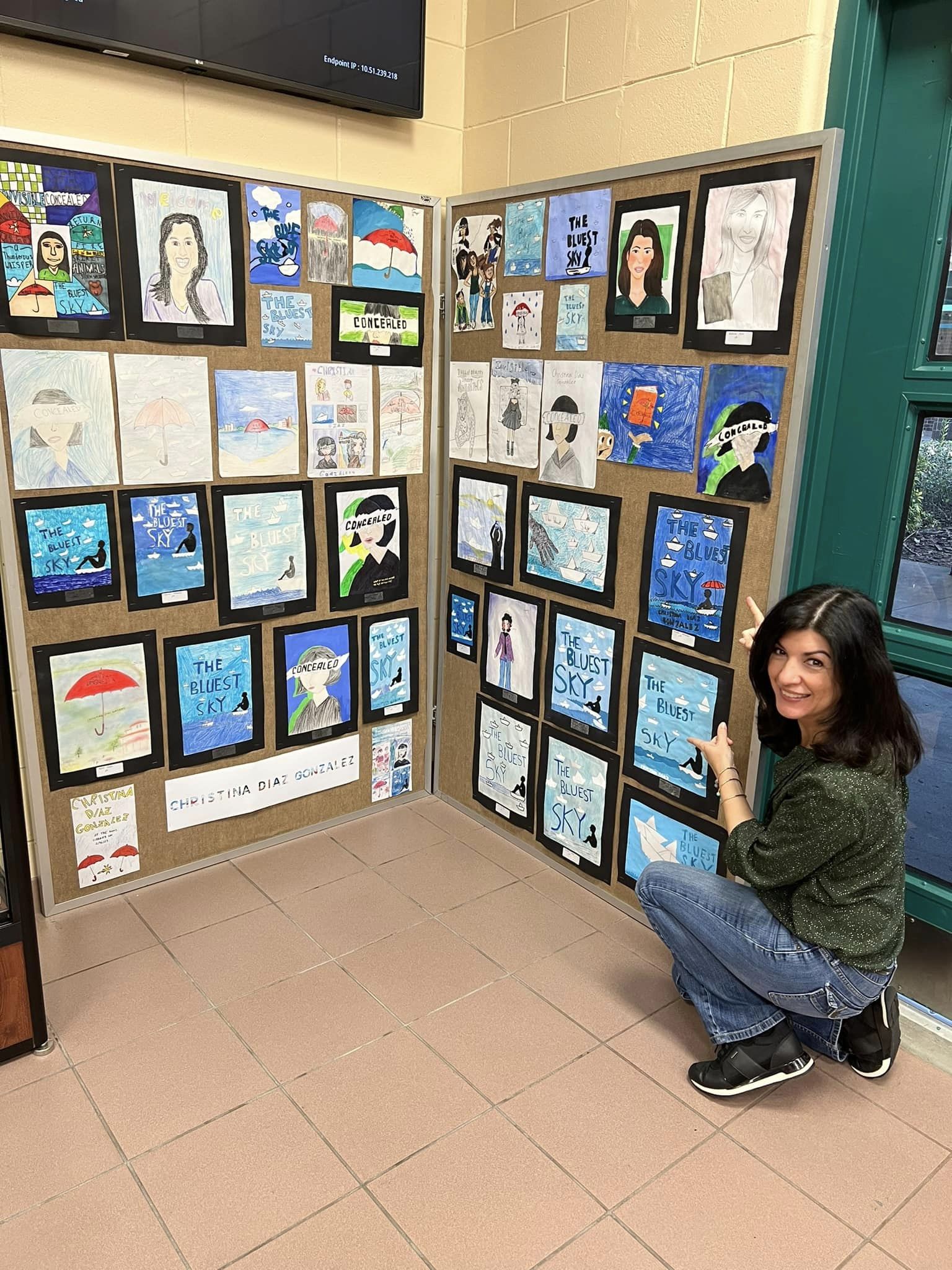
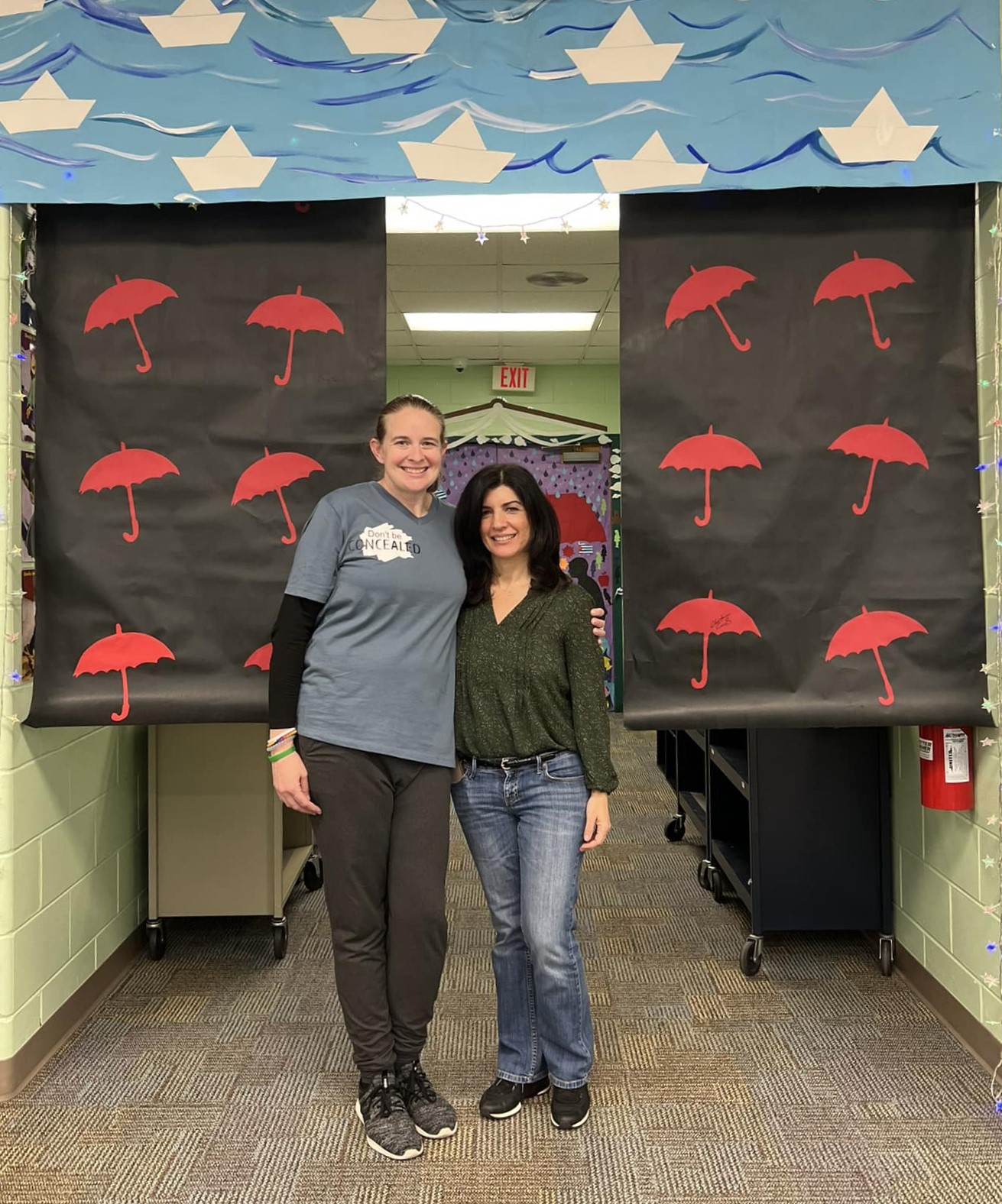
I am so lucky because my principal began an initiative at my school where we get to have an author visit our school yearly (2022: Nathan Hale, 2020: Neal Shusterman, 2019: Jennifer A. Nielsen). The author sees all students in the school, so it is a great community literacy event for my school, and I love being able to bring this experience to all 1200+ students each year!

This year, we hosted Christina Diaz Gonzalez!
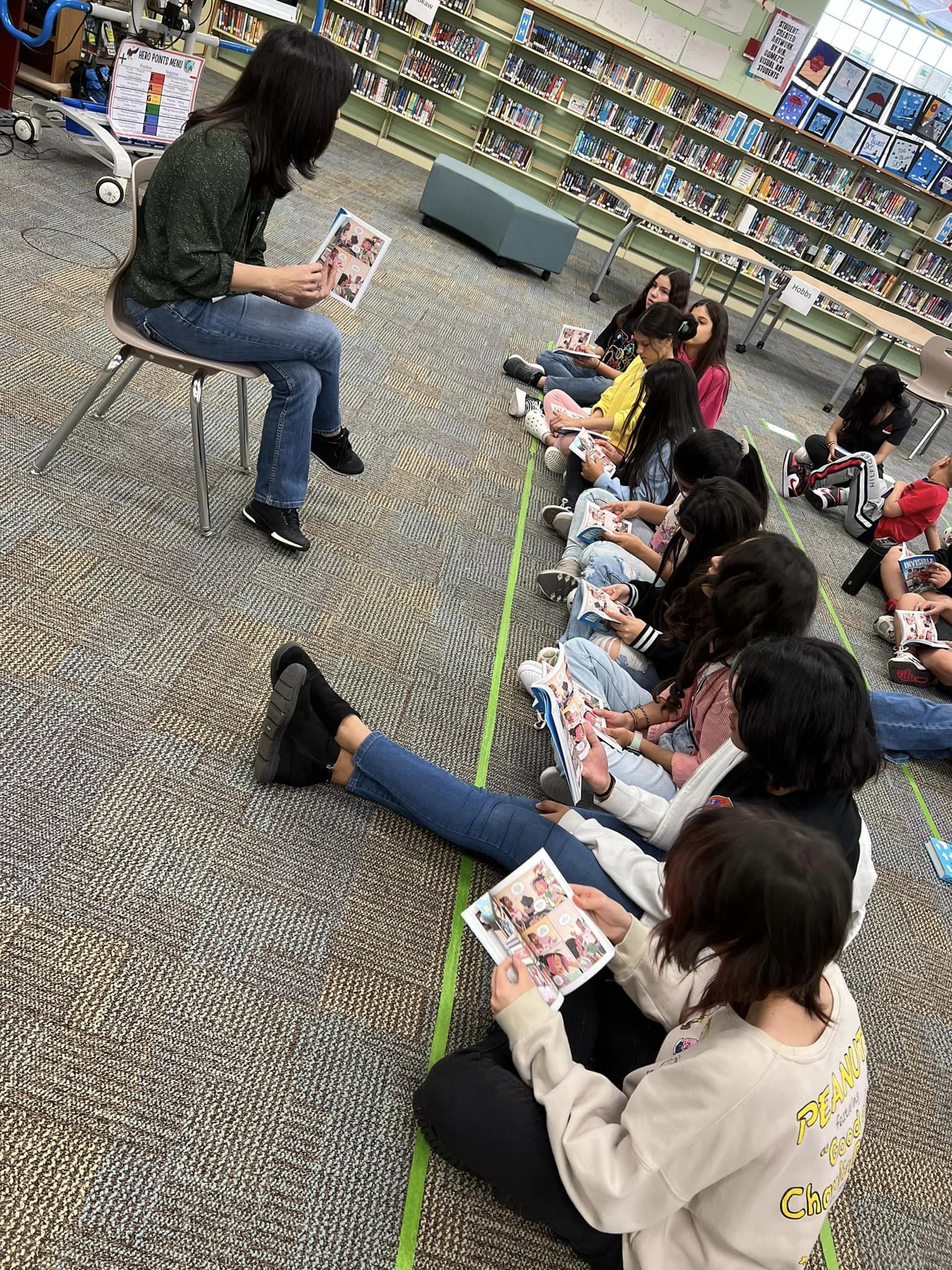
The visit was phenomenal and included 5 presentations for approximately 240 kids, book signings, and a small presentation in Spanish for our emerging bilingual students who have been in the US for a year or less. It was all such an amazing experience!

Here are some reflections from my students from after the visit. I asked them to think about what they learned, what they enjoyed, how they were impacted, or anything else they wanted to share:

  • The Christina Diaz Gonzalez visit was something I will cherish forever. I learned to normalize authors and realize how authors are real people and how they’re not magical beings with neverending ideas. I enjoyed how she managed to keep the presentation light and sweet but as well as interactive, she made me interested in so many more of her books!…I love how she reminds us how important Hispanic Representation is. These author trips are something I will forever cherish when I go to High School. Thank you for putting the effort and time into doing this Mrs. Moye! I really appreciate it!
  • [The visit] impacted me because it showed me that I could accomplish my dreams.
  • I learned that you can pursue whatever you like and you should be passionate about what you want to do.
  • I learned a lot from her visit to our school, and it was really cool! I learned about how it could be a struggle to write a book, and how 1 book or author can inspire someone. I really liked how she got to answer my question, and how a lot of people cared to ask many questions which made it even more detailed and fun to listen to stories. I feel like it impacted me, and some other people, to encourage them to be an author. I am currently writing a book, and her amazing books are encouraging me to finish my book. I am so glad she came because it was really cool to see an author explain and show about writing books.
  • I’m glad she came because her whole presentation was just amazing, I liked that I had the opportunity to meet her and I liked the tips she gave us and of course, the stories that she told us.
  • I am glad she came because in my other school we never got a visit like this one.

  • Well, I really enjoyed how much Christina Diaz Gonzalez was like an everyday person. You see famous people on the back of book covers, and their names on movie posters, and things like that. You expect them to be a different way. You expect them to be different from everybody else. But that’s obviously not the case seeing as many actors, authors, and directors all act just as normal as everyday people. Christina Diaz Gonzalez seemed just as normal as me and I respect her a lot for this.
  • I very much enjoyed how she let us ask questions, and I liked the questions that the kids asks.
  • This visit also made me think differently about books like how you can relate to a story really easily or learn something new every day.
  • From the Christina Diaz Gonzalez visit, I learned that being an author is harder than people may think. I enjoyed that she was fun. She spoke in a way where you can’t really get too bored or bored at all and she showed us those cool trailers of her books. This impacted me by meeting someone who’s Cuban. I don’t ever meet any others that are Cuban.
  • I learned that she has a similar childhood to some of the people at the school that don’t know how to speak English or understand it. I’m glad she came because the whole school knew about her books and to be able to see those students that were so excited to meet her happy and to get to know her more.
  • What I learned from yesterday was that Christiana Diaz Gonzalez is an inspiring author that uses her family to help write her books, which I enjoyed. It inspired me to try to write my own stories about my family. I am glad she came to HCMS because she has a difficult past, and I have had one too.
  • During the part where she was talking about her very first story that she had written, it made me think about how creativity really does come from anything. A little thought can slowly grow and grow, it just needs a little bit of effort added into it, so that impacted me to open my eyes and “see beyond” generic ideas.

As you can see, Christina’s visit was highly engaging and inspiring. I would highly recommend her for a school visit!

Signature

Author Guest Post: “Every Child Needs Space to Play” by Mark Angelo, Author of Can We Play Baseball, Mr. DeMille?

Share

“Every Child Needs Space to Play”

A few years ago, I was visiting my brother Chris in Los Angeles, where we spent several days recalling memorable stories from our youth. We shared lots of laughs, but one story in particular that we fondly remembered took place in 1958 and centered around our search for a nearby place to play ball. As kids, my brother and I were passionate about the game of baseball. We loved the Dodgers, who had just moved to L.A. from Brooklyn, New York.

Chris suggested I write the story down and that eventually led to the publishing of my most recent illustrated children’s book, Can We Play Baseball, Mr. DeMille?

Writing the story brought back many great memories, not the least of which was an unforgettable encounter with perhaps the greatest and most legendary person in film. But going through the process of producing the book also made me even more cognizant of how my childhood search for a field to play ball influenced my later work as an environmental advocate and a proponent of outdoor spaces for all to enjoy.

The neighborhood I lived in as a boy was beautiful, but it was also located in the hills. There were very few appropriate and accessible places to play ball. In addition, public parks were too far away for young kids like us to get to on our own.

It was those circumstances that ultimately led us to Mr. DeMille’s backyard which, rightly or wrongly, became the “the field of our dreams.”

Fast forwarding to current day, I’ve long believed that from a city planning perspective, we should do everything possible to ensure that residents— especially kids— have nearby access to sports fields and places to play ball. In addition, ensuring that more natural parks are readily accessible to all is a key issue. Many youngsters don’t get exposed to nature and the outdoors as much as we’d like, particularly in cities. The alternative often becomes screen-time for children. If not used thoughtfully and moderately, we know from research this can have detrimental effects on both mental and physical health. After all, how can a kid get excited to play outside if they don’t have the space?

For those that read Can We Play Baseball Mr. DeMille, my hope is that the story of a young boy’s love for a game and his dogged determination to find a place where he and his friends can play, will make you smile and inspire young ones. To this day, while watching my own grandchildren play ball, I still find myself thinking back on occasion to those early days and the field of my youth that had such an impression.

The book has several elements to it, including a sense of nostalgia along with a slice of classic Hollywood history. But just as importantly, it has an environmental message that highlights the fact that accessible outdoor spaces are good for all of us, both young and old. From parks to sports fields, they provide active and passive recreational opportunities, contribute to our improved health and well-being, and make our communities better places to live!

Illustrated by Patricia & Robin DeWitt
Published January 30, 2023

About the Book: Set in 1958, a young boy and his friends want to be baseball players just like their Dodger idols. There’s just one problem: they don’t have a field to play in.

Luckily, the kids know a secret. There’s a mansion around the corner with a yard big enough for an entire ball field and the hedge surrounding it has a gap just big enough to crawl through. Apparently, the owner is a big-time Hollywood mogul. He won’t mind a few ball games, right?

This sensational true story of a young boy’s encounter with a Hollywood legend is rich with youthful determination and summer fun, highlighting how every child needs space to play.

About the Author: Mark Angelo has been a baseball fan since he was a little boy! He is also a globally renowned river conservationist and the founder of World Rivers Day, now celebrated by millions of people in over one hundred countries. Among his many accolades, Mark is a recipient of the Order of Canada, the country’s highest honor. His acclaimed best-selling debut picture book, The Little Creek that Could, is the true story of a stream that came back to life. Through his work with groups such as the Outdoor Recreation Council of BC, Mark has been a long-time advocate for outdoor spaces for all to enjoy. Can We Play Baseball, Mr. DeMille?, about a young boy’s search for a place to play ball, recounts an actual experience from his childhood. Mark lives in Burnaby, British Columbia, Canada with his wife, Kathie.

For more information on Mark, please visit: https://www.canweplaybaseballmrdemille.com/

Thank you, Mark, for this focus on play and its importance!

Blog Tour, Giveaway, and Author Guest Post!: Let Nonfiction Sing by Margarita Engle, Author of Destiny Finds Her Way: How a Rescued Baby Sloth Learned to be Wild

Share

Welcome to the

Destiny Finds Her Way

Blog Tour & Giveaway!

To celebrate the release of Destiny Finds Her Way by Newbery Honor winner Margarita Engle, blogs across the web are hosting guest posts from Margarita as well as the book’s photographer, Sam Trull, who is also the co-founder and Executive Director of the Sloth Institute — a sloth rescue organization based in Costa Rica. Join us for a journey behind the scenes of how these two amazingly talented women teamed up to bring this inspiring, true story to readers everywhere and learn more about sloths and the work being done to protect them.


Let Nonfiction Sing!

by Margarita Engle

Destiny Finds Her Way is a book I feel honored to have written. When I saw Sam Trull’s beautiful photos of Destiny the sloth, I decided to visit the Sloth Institute in Costa Rica. There, I had the chance to witness Sam in action, rescuing baby sloths and teaching them how to live in the wild. The experience was inspiring.

I wanted to write Destiny’s story in a way that might inspire young readers to learn more about wildlife conservation. The tropical rain forest has its own rhythm, and poetry is musical language. However, nonfiction is usually presented in a more detailed prose style. I decided to combine poetic devices with facts. The first device I used is onomatopoeia, where words resemble their real-life sources. Examples are the eee, eee, eee of darting squirrel monkeys, and ah, ah of a frightened baby sloth. Instead of rhymes at the ends of lines, I included words with vowels that rhyme. In ‘macaws squawking,’ all the “a “sounds rhyme. I’m sure readers will be able to find many other parts of the story that sound musical.

Readers will also discover the other senses—sight, smell, touch, taste, as well as sound. In addition, movement is an important aspect of the story’s musical nature. I hope words like scratched, swayed, and climbed will help make Destiny’s journey come to life in a joyful, dancelike way. There is nothing more celebratory than knowing she is now healthy and free in the wild!

Buy | Buy on Bookshop.org | Add to GoodReads

About Destiny Finds Her Way

(ages 4-8, Hardcover Picture Book, National Geographic Kids Books)

Newbery Honor winner Margarita Engle and photographer and Sloth Institute Executive Director Sam Trull team up to bring the inspiring and true story to life of how Destiny, a motherless baby sloth, sightless in one eye and rescued by Sam in the Costa Rican rain forest, defies the odds, overcomes her obstacles of limited sight and learns the skills she will need to return to her wild, forest home.

Without her mother to protect her or teach her, Destiny is found and taken to a rescue center in Costa Rica. The little sloth soon befriends other orphaned sloths. Her poor eyesight, however, makes it hard for her to keep her balance. Eventually Destiny begins to use all of her senses to explore the world around her. But can she learn to climb? Can she master the other skills she needs to survive on her own? And will Destiny be brave enough to return to her wild, forest home?

In addition to learning about Destiny and her journey, readers are immersed in the world of sloths and sloth rescue in this uplifting story about overcoming obstacles and believing in yourself.

About the Author:

Margarita Engle is the Cuban-American author of many verse novels, memoirs, and picture books, including The Surrender Tree, Enchanted Air, Drum Dream Girl, and Dancing Hands. Awards include a Newbery Honor, Pura Belpré, Golden Kite, Walter, Jane Addams, PEN U.S.A., and NSK Neustadt, among others. Margarita served as the national 2017-2019 Young People’s Poet Laureate. She is a three-time U.S. nominee for the Astrid Lindgren Book Award. Her most recent books are Rima’s Rebellion, Singing With Elephants, and Destiny Finds Her Way. Her next young adult verse novel is Wings in the Wild, and her next picture book is Water Day.
Margarita was born in Los Angeles, but developed a deep attachment to her mother’s homeland during childhood summers with relatives on the island. She studied agronomy and botany along with creative writing, and now lives in central California with her husband.

Website | Instagram | Facebook | Twitter

About the Photographer:

Sam Trull has been a photographer and a wildlife biologist for decades. After many expeditions to Madagascar, West Africa, and Central America, in January 2013, she settled in Costa Rica, where she co-founded and is the executive director of the Sloth Institute. Her first photo book, Slothlove, was published in April 2016.

Website | Instagram

About the Sloth Institute:

The Sloth Institute (TSI) is a nonprofit organization located in Costa Rica with the mission to enhance and expand the welfare and conservation of sloths through rescue, rehabilitation, release, research, and education. In addition, TSI works on targeted conservation projects to improve the safety and quality of sloth habitats and teaches other rescue centers how to better care for and release their sloths. TSI believes that all sloths were born to be wild and deserve that second chance at freedom.


Website | Instagram | Facebook | Twitter

GIVEAWAY

  • One (1) winner will receive a copy of Destiny Finds Her Way
  • US/Can only
  • Ends 3/18 at 11:59 pm ET
  • Enter via the Rafflecopter below
  • Visit the other stops on the tour for more chances to win!

a Rafflecopter giveaway

Blog Tour Schedule:

March 6th Pragmatic Mom

March 7th Heise Reads and Recommends

March 8th Mom Read It

March 9th Unleashing Readers

March 10th Imagination Soup

Author Guest Post: “Good Teachers” by Lynn Katz, Author of Chester and the Magic 8 Ball

Share

“Good Teachers”

There’s no shortage of children’s literature featuring horrible, cruel, nasty educators. Unfortunately, ineffective and sometimes down-right mean teachers are part of the educational landscape. Most people have their own personal stories about teachers who abused their power, meted out extreme punishments, or used more subtle strategies to belittle or marginalize their students. My 6th-grade teacher compared me unfavorably to my two older sisters. In front of my classmates.  Daily. She was relentless. Her behavior took its toll on my self-esteem and my love for school, but in the end, that teacher was the reason I decided to pursue a career in education. I vowed to be the most nurturing, patient, fun-loving, creative educator—everything my 6th-grade teacher was not. As educators and parents, we needn’t shy away from books that include mean-teacher-characters such as Miss Minchin from A Little Princess, by Frances Hodgson Burnett, Miss Trunchbull from Roald Dahl’s Mathilda, and the Juvenile Detention Warden from Holes by Louis Sacher. Those novels provide windows for middle-grade readers, reassuring them that they are not at fault or alone when adults abuse their power.

Fortunately, most teachers do not abuse their power; they care deeply about their students’ well-being and achievement. They work hard every day to build relationships, trust, and a love of learning. So, where are the novels that feature characters who are amazing teachers?  And not only those kooky picture book characters who drive magic school buses or turn into swampy substitutes when Miss Nelson goes missing. Middle-grade readers need to read about teacher characters who model respect, curiosity, nurture creativity and a deep love for learning.  I try to include both good and deeply flawed teachers in my contemporary novels. In Chester and the Magic 8 Ball, my main character’s math teacher, Mr. Burnett, injects self-deprecating humor, Dad jokes, and plenty of fun into his classes. He encourages student collaboration and conversation. He helps his young mathematicians understand the real-world applications of math.  He’s patient and kind, gives helpful feedback by using rubrics instead of grades, and has earned the respect of his students.

As part of my teacher-resource packet, I’ve included several questions and enrichment activities, designed to help readers analyze the characteristics of both effective and ineffective teachers. Here are some examples:

COMPARE/CONTRAST: Georgia’s math teacher, Mr. Burnett, is different from her 5th-grade teacher, Mrs. Robins. Compare/contrast those two teachers. What are some of Mr. Burnett’s traits and quirks that his students appreciate? Would you want a teacher like Mr. Burnett? Why or why not?

RUBRICS: Georgia’s unhappy with the pass/fail system for Chester’s pet therapy training program. Create a rubric to help your pet (your parent, sibling, or teacher) improve their behavior.

Here are some other titles, some old, some new, featuring teacher characters who make us proud to be educators and who exemplify the best of our profession.

Wonder by R.J. Palacio: Auggie’s English teacher, Mr. Browne, maintains an inclusive classroom and uses many effective teaching strategies. He will always be remembered for his monthly “precepts.” Starting the year off right in September, Mr. Browne teaches his students the most important life lesson and value: “When given the choice between being right or being kind choose kind.”

Mr. Terupt series by Rob Buyea: This young, new teacher is brimming with good intentions and energy. He focuses on teaching his students about personal responsibility, and he earns the love and respect of even the most challenging students. One of Mr. Terupt’s students put it this way: “This year, for the first time in my life, I started thinking school could be fun.” And who wouldn’t appreciate a fun teacher?

The Way I Say It by Nancy Tandon: Mr. Simms is Rory’s new 6th-grade speech and language teacher, helping him with his articulation challenges and supporting him as he navigates friendships, bullying, and middle-school life. The fact that Mr. Simms is also a cool guy who uses unorthodox strategies, plays the guitar, and relates to his student’s interest in boxing legend Muhammad Ali, makes this book and this memorable teacher extra-entertaining and inspirational.

Published February 9th, 2023 by Black Rose Writing

About the Book: Twelve-year-old Georgia is convinced her toothless, rescue dog can tell the future with a spin of her Magic 8 Ball. She wants to believe Chester when he reassures her that the “outlook is good” for her parents’ troubled marriage. But when it becomes a matter of life or death, Chester stops cooperating, and Georgia must learn the difference between probability and magic.  She’s determined to increase the odds of a happy ending by relying on her own powers. This contemporary novel with a hint of magical thinking, explores serious topics with sensitivity, humor, and heart.

About the Author: Lynn Katz is a former teacher, curriculum writer, and school principal. She is a member of SCWBI and her local Board of Education. Her first novel, The Surrogate, a domestic thriller for adult readers, explores the psychological profile of a young, would-be mass shooter, and the high school teacher who tries to help him. Chester and the Magic 8 Ball is her first middle-grade novel. www.lynnkatzauthor.com

Thank you, Lynn, for this wonderful look into great teachers in books!

Author Guest Post: “Using Fiction to Understand and Enrich Non-Fiction” by Kimberly Behre Kenna, Author of Artemis Sparke and the Sound Seekers Brigade

Share

“Using Fiction to Understand and Enrich Non-Fiction”

When I was a young student, I found history boring. Back then, it required lots of memorization and comprehension of readings that felt flat to me, dry as the age-old dust they were steeped in. Years later, a gifted teacher flipped the switch—she introduced the personal stories behind historical figures and events and BAM! I was hooked. Learning about Hatshepsut’s struggles as one of the few female Egyptian pharaohs, or Wangari Maathai’s crusade to teach African women to plant trees and claim their independence and power, excited me and provoked lots of questions. I imagined what it’d be like to be those women and face those challenges. This led me to research more and to care more, which then led to greater retention of concepts and the desire and ability to share them with others.

            As a fifth-grade teacher, I sought ways for my students to step into the shoes of others so they too could attempt to feel some of the pain, passion, and motivation of historic figures. In my classroom, we did this through writing projects, dramatic interpretations, and culminating performances. For instance, during our exploration of ecology, we read picture book biographies of environmentalists, including those who were not scientists. How did Pete Seeger’s singing and songwriting impact the Hudson River? Simon Rodia built the Watts Towers in Los Angeles from recyclables. How did he do this when he didn’t speak English? We cast a broad net so students could see that the preservation and rehabilitation of the natural world could be approached in many ways, and, most importantly, it could include them.

As we examined local problems affecting Long Island Sound, we wondered how environmentalists from the past might attempt to solve them. Each student chose one environmentalist and wrote a monologue which they presented to the rest of the class in costume, using props to introduce themselves. Students also took part in a popular activity called History Speaks, a mock talk show that got kids to think more deeply about what motivated these environmentalists. As host, I facilitated a conversation between the “guests,” students impersonating ecologists, and the audience of other students who asked them questions. Why did MaVynee Betsch give up her career in opera to save American Beach in Florida from development, even when she got so sick she couldn’t eat? How did Chico Mendes stay brave in the face of his attackers as he worked to protect the rainforests in Brazil? Kids learned how to craft deep interview questions. Those representing the ecologists had to think on their feet, often answering them by extrapolating from facts that they already knew. Sometimes their answers or their body language caused the audience (or host!) to debate whether they spoke the truth, another useful discussion when it comes to teaching how to research. This seemingly simple, playful activity encouraged critical thinking and active listening.

The resurrected ecologists also participated in a roundtable discussion to brainstorm a list of creative ways that they, as a team, could alleviate one of Long Island Sound’s problems. They experimented with combining strategies used in the past with newer present day ideas. Could George Washington Carver’s ideas about soil conservation possibly apply to saving Connecticut’s shoreline? How would he and Jacques Cousteau interact as team members? Finally, using notes gathered from all these activities, students wrote stories about resurrected dead ecologists who helped confused modern day activists solve problems around Long Island Sound and shared them with younger students. Other times, groups wrote a story as a script, built props, and then performed it for an audience. With their deep research into the history of environmentalism, students armed themselves with enough knowledge to become passionate environmental activists themselves.

Using the imagination to extrapolate on what we know as fact is a fun and enlightening practice that promotes rich discussion, enhances the development of empathy, and allows kids to practice ways of assessing “the truth.” The strategies that I used in my classroom and the memories of my explorations with students were the seeds for my middle-grade novel, Artemis Sparke and the Sound Seekers Brigade, whose protagonist conjures up ghosts of environmentalists to help her save her beloved salt marsh sanctuary. I hope readers gain respect for the legacies we’ve been gifted by those who are no longer with us and are inspired to consider how their own legacy can be a gift to future generations.

Published February 2, 2023 by Fitzroy Books

About the Book: When Artemis Sparke has had it with humans, she heads to the nearby salt marsh to hang out with the birds, plants and mollusks who don’t make a big deal of her stutter. The shoreline sanctuary is predictable, unlike her family and friends, and the data in her science journal proves it. But one day that data goes haywire, and her bird friend RT confirms it: the salt marsh is dying. Artemis discovers that the historic hotel where she lives with her mom may be part of the problem, but speaking up would mean confronting the cranky hotel owner who happens to be her mom’s boyfriend and boss. Artemis conjures up help from deceased ecologists, and as she works to untangle their clues, she finds family secrets that could be the key to saving the salt marsh. An empowering read about the importance of finding your voice, “Artemis Sparke” will strike a chord with kid activists everywhere. 

About the Author: After years as an adolescent and family counselor, and then as a fifth grade teacher of ecology and language arts, Kimberly Behre Kenna returned to school for her MA in creative writing from Wilkes University. Her middle-grade novel, “Artemis Sparke and the Sound Seekers Brigade” was a finalist and received Honorable Mention in the 2019 Tassy Walden New Voices in Children’s Literature Competition, and will be published by Fitzroy Books in 2023. Another book in her Brave Girl Collection, “Jett Jamison and the Secret Storm” is forthcoming from Black Rose Publishing. A third in the collection, as yet unpublished, won second place in The Institute of Children’s Literature 2022 MG Mystery First Pages Contest. Her poems and short stories have been published in American Writers Review, Mused, Plumtree Tavern, and Rubbertop Review. Her full-length play, “Ana’s Hummingbird,” was given a staged reading at The Dramatists Guild in NYC. She’s a member of SCBWI and PEN America, and now devotes herself to writing full time. Connect with her at www.kimberlybehrekenna.com

Thank you, Kimberly, for this great post showing that connection between fiction & non-fiction!