Top Ten Tuesday: Ten Places We Want To Visit (After Reading Books)

Share

top ten tuesday

Top Ten Tuesday is an original feature/weekly meme created at The Broke and the Bookish. The feature was created because The Broke and Bookish are particularly fond of lists (as are we!). Each week a new Top Ten list topic is given and bloggers can participate.

 Today’s Topic: Ten Places We Want To Visit (After Reading Books)

Books can transport you, but these are the places we’d actually like to go to.

Ricki

Some of the places I wanted to visit in our book vacation post were Europe, Africa, Salinas (California), the Seven Kingdoms, and Pullman’s multiverse. I can most certainly think of five more. 🙂

1. The back of my wardrobe

C.S. Lewis created magic in the back of his wardrobe, so I want to see if I can go exploring in mine.

2. An old-fashioned locomotive

Brian Floca’s Locomotive is an incredible picture book that shows the complexity of steam engines. I want to visit one and explore.

3. Arches National Park

Edward Abbey’s Desert Solitaire was one of the best books I read in college. The way Abbey captures the beauty of this park in his nonfiction text will make you want to go there to see it for yourself.

4.  Midnight Gulch

If you haven’t read Natalie Lloyd’s A Snicker of Magic, I recommend you drop everything and read it. It is the most spindiddly, magical books I have ever read.

5. America (Road Trip Style)

From Travels with Charley by John Steinbeck to Amy and Roger’s Epic Detour by Morgan Matson, books always seem to make me want to go on a road trip across America. Anyone want to join me on a book-themed road trip? Kellee?

Kellee

I touched on the real places I would love to visit based on the setting of a book on our book vacation post, so I thought today I’d post about fictional places I would like to visit.

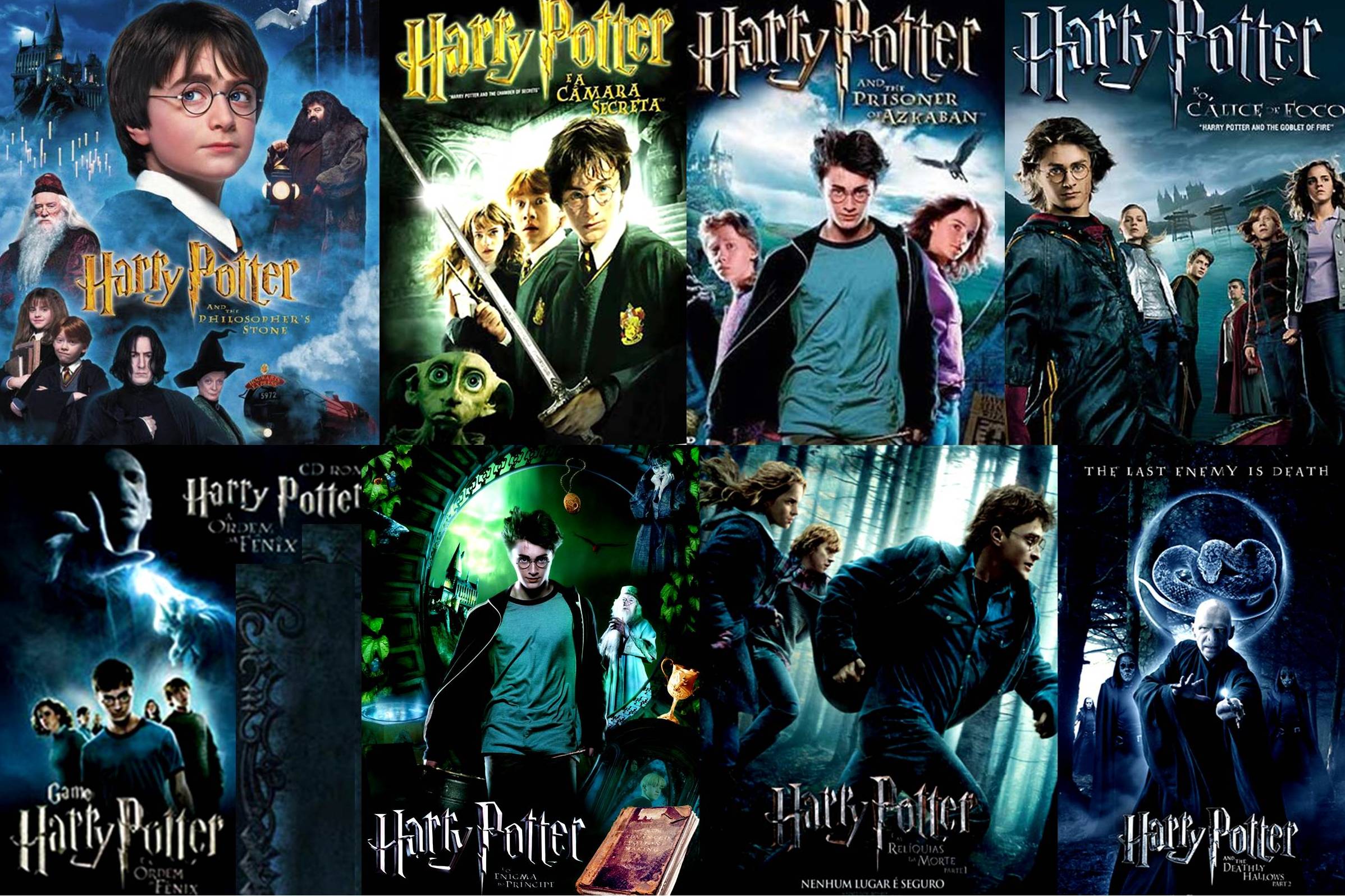
1. Hogwarts (and Diagon Alley)

I don’t think I need to elaborate. It’d be so cool!

2. Rabbit Island from Rabbit Island by Jake Parker in Explorer: The Lost Islands edited by Kazu Kibuishi

Well, first: talking rabbits. Second, in the end they have such a great society. Third, the island is beautiful. Fourth, robots!

3. Kingdoms in Hero’s Guide books by Christopher Healy

I would love to visit the fractured fairy tale world of Healy’s. Although there are some trolls, witches, etc., many of the towns would be so much fun to visit.

4. Under water society (without all the issues) in Dark Life by Kat Falls

How amazing would it be to live underwater?!

5. Airships from Matt Cruse series by Kenneth Oppel 

In Oppel’s books, airships are like cruise ships in the sky. I would love to be able to go fly in one of them.

Where would you love to visit? 

RickiSig and Signature

On the Road to a Dissertation!

Share

dissertation1

This year, I am beginning my third semester as a doctoral student, and it is frightening! Last year, I dappled in scholarly journals and worked very hard, but reality hadn’t quite set in yet. This year, I enrolled in a dissertation proposal course which is phenomenal. The professor excellently scaffolds and organizes the proposal in manageable chunks—she warns us that we would be making difficult decisions, but this will push our limits. The organization of the class has been very helpful to me, but I realize I have an immense amount of work ahead of me this year. Fortunately, I have an incredibly supportive husband, family, best friend, blog partner, and most important—advisor. I discussed my concerns with each of them, and they all expressed their strong support and confidence in me. Their encouragement pushed me to realize I can do this.

This Sunday in particular, my husband took my (adorable, gleeful, accident-prone, and giggly) son to visit extended family, and I worked. I kept my caffeine and snacks at the ready, and I didn’t leave my chair for five hours (okay, I did take a few bathroom breaks). It was joyful to get straight, uninterrupted hours to study—my mother-in-law, mother, and aunt have been helping with this too. The problem with reviewing literature in a field? I found excellent articles about my topic, and then, as I read these intriguing articles, they cited other articles, so I found those. As I looked through those articles, I found more that were equally important. As my list of “Articles I Need” kept growing and growing, I became worried. I began to wonder if I would ever possible feel done reading all of the research in the field.  My advisor assured me that reading every single article in a field (particularly with new journal issues being published each month) is impossible, but with my obsessive, Type-A personality, I want to read each and every article! I want to be sure I have read every possible study and article about the subject, but the problem is, there are branches upon branches of articles about other subjects that run parallel to my research. Each time I find a new, parallel subject, I think, “Oooooh! Neat!” and then I get lost searching for and reading articles about that subject matter that, while it aligns with my research, is not truly necessary. In research terms, they call this, “beyond the scope” of my research. Because I am very passionate about my topic, I can’t help but want to read it all.

I am grateful for all of the support from my family and friends for helping me find this very fascinating work. I have always loved to learn—and I used to bemoan the fact that I couldn’t be a lifelong student (and still pay the bills). I learned so much from my students when I was teaching, but it was different from taking classes and conducting research with fancy IRB approval. As I was reflecting this weekend, I realized that by doing research, I will be a lifelong student as I learn from the participants in my study, and while I regret that I can’t read every article that is “beyond the scope” of the research subject of my dissertation, I am not locked into this particular study forever. If I want, I can really go rogue and research something drastically different! The next study I design can be in that forbidden “beyond the scope” zone of what I am researching today. And these possibilities make me strangely giddy with excitement.


If you are a middle or high school English language arts teacher (or know any of these folks), I would truly appreciate your help distributing the message below for my dissertation study! Thank you!!!

I am seeking middle/high school English teachers for a brief research survey. For more information, click: https://uconn.co1.qualtrics.com/SE/?SID=SV_7U0gerNF8XslNpH. I would greatly appreciate it if you shared this post with other teachers!


RickiSig

Top Ten Tuesday: Ten Books For Readers Who Like Character Driven Novels

Share

top ten tuesday

Top Ten Tuesday is an original feature/weekly meme created at The Broke and the Bookish. The feature was created because The Broke and Bookish are particularly fond of lists (as are we!). Each week a new Top Ten list topic is given and bloggers can participate.

 Today’s Topic: Ten Books For Readers Who Like Character Driven Novels 

If you prefer character drive novels, these books are for you!

Ricki

1. Fire by Kristin Cashore

fire

Cashore’s first book, Graceling, is plot-driven (but also with good character development). Often, people find Fire to be much slower than Graceling, and I think this is because it is so beautifully constructed to reveal the inner depth of the characters.

2. If I Stay by Gayle Forman

if i stay

Much of this book takes place in Mia’s head, but it captured my attention from the first page to the last. Forman’s writing is very lyrical.

3. brown girl dreaming by Jacqueline Woodson

brown girl

Woodson’s autobiographical brown girl dreaming is another phenomenal, character-driven text. You won’t be able to put it down. This book holds a special place in my heart.

4. The Evolution of Calpurnia Tate by Jacqueline Kelly

evolution

Years after reading this book, I still feel like I am being embraced in a warm hug when I think about it. This historical fiction doesn’t have a lot of plot, but the character development will blow you away.

5. Dr. Bird’s Advice for Sad Poets by Evan Roskos

dr bird's advice for sad poets

This book is very character-driven, but unlike the others I listed, it also has quite a bit of plot. That said, I felt I knew James Whitman like he was a brother/son after reading this book. It was one of my all-time favorites, and I am consistently recommending it to others.

Kellee

By definition, character driven novels are “stories where the emphasis is on characterization, inner conflict, and relationships,” so my choices are all books where the biggest changes and conflict can be found in the characters.

1. The Giver by Lois Lowry

giver

Whenever my students begin reading The Giver in their language arts class, I always hear, “Miss, why is this book your favorite, it is so slow!” I then have to talk to them about how some books are character driven and not plot driven. We then start talking about Jonas and what is going on with him, and VOILA! they get into the book.

2-6. All of the 2014 AEWA Finalists and Winner

eleanor jumped winger milkofbirds openly

All of the books we honored this year are amazingly written character driven novels. Each is very unique but focuses on identity. (I know it is kind of a plug, but really almost all of the Walden books while I was on the committee are amazing novels that usually have a character-driven focus.)

Which books would you recommend?

RickiSig and Signature

On the Run: Fugitive Life in an American City by Alice Goffman

Share

on the run

On the Run: Fugitive Life in an American City
Author: Alice Goffman
Published: May 1, 2014 by University Of Chicago Press

Summary: Forty years in, the War on Drugs has done almost nothing to prevent drugs from being sold or used, but it has nonetheless created a little-known surveillance state in America’s most disadvantaged neighborhoods. Arrest quotas and high-tech surveillance techniques criminalize entire blocks, and transform the very associations that should stabilize young lives—family, relationships, jobs—into liabilities, as the police use such relationships to track down suspects, demand information, and threaten consequences.

Alice Goffman spent six years living in one such neighborhood in Philadelphia, and her close observations and often harrowing stories reveal the pernicious effects of this pervasive policing. Goffman introduces us to an unforgettable cast of young African American men who are caught up in this web of warrants and surveillance—some of them small-time drug dealers, others just ordinary guys dealing with limited choices. All find the web of presumed criminality, built as it is on the very associations and friendships that make up a life, nearly impossible to escape. We watch as the pleasures of summer-evening stoop-sitting are shattered by the arrival of a carful of cops looking to serve a warrant; we watch—and can’t help but be shocked—as teenagers teach their younger siblings and cousins how to run from the police (and, crucially, to keep away from friends and family so they can stay hidden); and we see, over and over, the relentless toll that the presumption of criminality takes on families—and futures.

While not denying the problems of the drug trade, and the violence that often accompanies it, through her gripping accounts of daily life in the forgotten neighborhoods of America’s cities, Goffman makes it impossible for us to ignore the very real human costs of our failed response—the blighting of entire neighborhoods, and the needless sacrifice of whole generations.

Review: Inspired by a college course in her sophomore year, Alice Goffman seeks an ethnographic experience in inner-city Philadelphia. She gets a part-time job tutoring an African American girl, Aisha, and soon befriends the boys of 6th Street (pseudonym). Mike adopts her as a younger sister, and she comes to live with these boys—studying their every move. This quality piece of ethnographic research is a page turner. While it reads a bit more like a book than a scholarly publication, readers can glean her methodological approach through the footnotes. Goffman’s mission is clear. She wants readers to understand the inequities these African American boys of 6th Street face, and she shows how the criminal justice system (both law enforcement and the justice/prison system) are not working. I was ashamed at the actions of the police, specifically, and think this is very educational to readers of all ages, particularly in the wake of the racially based crimes that we consistently see in the news.

Teacher’s Tools for Navigation: This book is written for adults, but I think it would be very educational for high school students. I would use excerpts of this text to show students the realities of life on 6th Street in Philadelphia. It could be used to better understand crimes in the news, to teach inequity, to examine class issues, to understand the drug trade, and to fight racism. It would be eye-opening for students. While teaching this, I would also consider pairing it with Malcolm Gladwell’s review.

Discussion Questions: What can we do to stop the injustice of the court system? How is it flawed?; What role does race play in this text?; Was Goffman too close to the subjects of her ethnography? Do you think this affected her portrayal of 6th Street? What are the positives and negatives of this approach of qualitative study?

We Flagged: “To be on the run is a strange phrase for legally compromised people, because to be on the run is also to be at a standstill.”

“Thus, the great paradox of a highly punitive approach to crime control is that it winds up criminalizing so much of daily life as to foster widespread illegality as people work to circumvent it. Intensive policing and the crime it intends to control become mutually reinforcing. The extent to which crime elicits harsh policing, or policing itself contributes to a climate of violence and illegality, becomes impossible to sort out.”

Read This If You Loved: Punished: Policing the Lives of Black and Latino Boys by Victor M. Rios; The New Jim Crow: Mass Incarceration in the Age of Colorblindness by Michelle Alexander 

Recommended For:

  closereadinganalysisbuttonsmall classroomlibrarybuttonsmall

RickiSig

Top Ten Tuesday: Books that Were Hard for Us to Read (Due to Their Content)

Share

top ten tuesday

Top Ten Tuesday is an original feature/weekly meme created at The Broke and the Bookish. The feature was created because The Broke and Bookish are particularly fond of lists (as are we!). Each week a new Top Ten list topic is given and bloggers can participate.

 Today’s Topic: 

We found these books difficult to read because of their content.

Ricki

1. Endgame by Nancy Garden

endgame

The bullying and brutality by his peers leads a young man to enter his school with a semi-automatic gun. This book was difficult to read because Garden brilliantly crafts the text so the reader feels the boy’s actions might be justified—even though no school shooting is ever justified. The ounce of doubt makes the reader feel like a terrible person for even understanding the boy’s reaction to the bullying.

2. Nothing by Janne Teller

nothing

This is the most depressing book I have ever read. Pierre-Anthon reminds us of how insignificant we are and that nothing really matters. Yet, it is a phenomenal book that I recommend to everyone. It is one of the best books I have ever read.

3. Inexcusable by Chris Lynch

   inexcusable

He is a good kid, but he makes a horrible decision that is inexcusable. This book is award-winning, and I think the poor GoodReads ratings reflects just how difficult it is to stomach its contents.

4. The Child Called It by Dave Pelzer

a child called it

Any book about child abuse is very difficult to read, but this one still gives me the shivers. I felt so much anger toward Dave’s mother in this memoir.

5. On the Run by Alice Goffman

on the run

How are we failing as a society? This ethnographic book sheds light on the issues of mass incarceration of African American males and makes readers uncomfortable about their own privilege.

Kellee

I second Ricki on A Child Called “It”. I read the whole series, and Dave Pelzer’s story is devastating.

1. Lessons from a Dead Girl by Jo Knowles

dead girl

The story of how even though someone is dead they can still haunt you.  This book still haunts me.

2. Forgive Me, Leonard Peacock by Matthew Quick

leonard

Leonard is saying good bye to everyone who is important to him because today, his 18th birthday, is going to be the last day of his life.

3. Tweak: Growing Up on Methamphetamines by Nic Sheff & Beautiful Boy: A Father’s Journey Through His Son’s Addiction by David Sheff

tweak beautiful boy

So tough to read about a young boy’s descent into drugs from his and his father’s point of view.

4. Stained by Cheryl Rainfield

stained

Sarah Meadows is kidnapped then repeatedly raped, and abused by her captor. These, obviously, are quite frightening situations to read about. I almost picked Room, but I think Stained was tougher to read because it is from the abused’s point of view.

5. But I Love Him by Amanda Grace

I Love Him

A story of a teenage abusive relationship. This, along with other books about this subject, are so tough to read, but are so important to have available for our teens.

Which books were difficult for you to stomach?

RickiSig and Signature

Frank! by Connah Brecon

Share

KidsLogoORIGINALFILE

Frank!
Author: Connah Brecon
Published: September 30, 2014 by Running Press Kids

Publisher Summary: Frank is a bear who is always late. He has very good reasons, like the morning he found himself challenged to a charity dance-off, or the time he had to rescue a family of bunnies from a huge, smelly ogre. Frank’s teacher is not impressed—until a giant zombie lizard king attacks the school, and the friends he made on his diversions help him find a way to save the day.

Half the fun of this book is in the details: the watch repair shop signs that reflect Frank’s tardiness, the growing reactions of each of Frank’s classmates, the three pigeons that follow Frank through the story. Brecon’s crisp characters layered with crayon-like lines creates a bold, kinetic style. This hip, zany story about tall tales and the importance of community will appeal to children and parents with a penchant for the unpredictable.

Ricki’s Review: The illustrations of this book are whimsical and fun. Kids will surely be inspired to want to create their own artwork. This is a fun story that will leave classrooms of students in giggles. Brecon’s imagination shines. This text incorporates some great details and will allow for fantastic conversations in classrooms about responsibility.

Kellee’s Review: Like Ricki said, the illustrations were so wonderful! They are really what moves this text to the next level although Frank himself is just such an eccentric character also. The book does take a crazy, fun twist in the middle which will definitely keep kids’ attention. I do love the theme of helping out that shines throughout the book. This is an important theme to discuss with kids, and this book doesn’t make it boring while discussing it.

Teacher’s Tools for Navigation: Frank gives a variety of clever reasons for being late. Kids might imagining bizarre, silly reasons for being late and hang these pictures around the room. Responsibility is a very important lesson for young children, and I can imagine teachers and students referencing Frank’s story whenever a student doesn’t act responsibly.

Discussion Questions: Why is Frank always late? What is an excuse?; What does it mean to be responsible?; When is the best time to hold dance parties?

We Flagged: “It wasn’t that Frank was rude or unreliable. Nor was he a dawdler or a meanderer. He just liked to help out.” (p. 2-3)

Book Trailer: 

Read This If You Loved: Stuck by Oliver Jeffers, I Want my Hat Back by Jon Klassen, Caps for Sale by Esphyr Slobodkina, The Very Busy Spider by Eric Carle

Recommended For:

   classroomlibrarybuttonsmall

Signature andRickiSig

Top Ten Tuesday: Our Fall To-Be-Read Lists

Share

top ten tuesday

Top Ten Tuesday is an original feature/weekly meme created at The Broke and the Bookish. The feature was created because The Broke and Bookish are particularly fond of lists (as are we!). Each week a new Top Ten list topic is given and bloggers can participate.

 Today’s Topic: 

We can’t wait to read these books this fall!

Ricki

1. Gracefully Grayson by Ami Polonsky

gracefully grayson

I have heard such wonderful things about this book, and I plan to read it very soon!

2. El Deafo by Cece Bell

el deafo

Everyone is raving about this book!

3. Lies We Tell Ourselves by Robin Talley

lies we tell ourselves

This nonfiction book looks excellent. I have been meaning to read it for some time.

4. Torn Away by Jennifer Brown

torn away

I will read anything by Jennifer Brown. It doesn’t hurt that the premise of this book looks great, too!

5. Ways with Words by Shirley Brice Heath

ways with words

Many people have told me that this classic text is a must-read for English teachers. It is an ethnography, and I can’t wait to read it!

Kellee

Funny enough, I always have such a hard time doing these TBR posts! I have a huge TBR list, and I very rarely plan too far ahead. These are some books I really want to read and maybe I’ll get to them this fall.

1. Grasshopper Jungle and 100 Sideways Miles by Andrew Smith

grasshopper jungle miles

Love Andrew Smith’s books and EVERYONE is talking about these.

2.  Fish in a Tree (and One for the Murphys!) by Lynda Mullaly Hunt

fish

These books are raved about, and I have been lucky enough to meet the kind Lynda Mullaly Hunt. I need to get to her books.

3. Death by Toilet Paper by Donna Gephart

toilet paper

Um, the title! And it is supposed to be good!

4. The Wrenchies by Farel Dalrymple

wrenchies

Some of the words I’ve seen to describe this one is “trippy,” “gory,” “appalling,” “fascinating,” messed-up,” “interesting,” etc. I am so intrigued!

5. Explorer: Hidden Doors edited by Kazu Kibuishi

hidden

I enjoy everything Kazu Kibuishi writes or compiles, and I am sure this is going to be no different.

Which books are on your fall to-be-read list?

RickiSig and Signature