Freedom Summer by Deborah Wiles (Ricki’s Review)

Share

freedom summer

Freedom Summer
Author: Deborah Wiles; Illustrator: Jerome Lagarrigue
Published: January 1, 2005 by Aladdin

Summary: 

John Henry swims better than anyone I know.
He crawls like a catfish,
blows bubbles like a swamp monster,
but he doesn’t swim in the town pool with me.
He’s not allowed. 

Joe and John Henry are a lot alike. They both like shooting marbles, they both want to be firemen, and they both love to swim. But there’s one important way they’re different: Joe is white and John Henry is black, and in the South in 1964, that means John Henry isn’t allowed to do everything his best friend is. Then a law is passed that forbids segregation and opens the town pool to everyone. Joe and John Henry are so excited they race each other there…only to discover that it takes more than a new law to change people’s hearts.

Review: I rarely review picture books or texts that weren’t published recently. For me, the blog is a place for me to highlight newer books (whenever possible). I love picture books, but Kellee often reviews them, and I love young adult literature, so those are often the titles I review. After I read this book, I couldn’t wait to blog about it because it is easily one of the best picture books I have ever read and is worthy of the praise it receives. Set in the 1960s South, this moving, lyrical text depicts the Civil Rights Movement through the eyes of a child who just wants to adventure with his friend. The messages are powerful, and I plan to purchase it to read again and again with my son. After we read this as a family, my husband and I wondered if it was a work of nonfiction because it felt so very real to us. 
You can view Kellee’s review of Freedom Summer here.

Teachers’ Tools for Navigation: The most obvious choice would be to use this text to teach about diversity, discrimination or the Civil Rights Movement. I would also love to pair this with The Other Side by Jacqueline Woodson. Students would find great value in comparing and contrasting the imagery and messages of these two texts. I could also see it being paired with texts like To Kill a Mockingbird by Harper Lee. More than anything, this is a book about the power of friendship.
Discussion Questions: How do these boys view their world differently from the adults around them?; Why might the author have chosen to end the text the way she does? What message does it send?; How do the illustrations support the readers’ understanding of the text?
We Flagged: 

“John Henry’s skin is the color of

browned butter.

He smells like pine needles after a

good rain.

My skin is the color of the pale

moths that dance around the porch

light at night.

John Henry says I smell like a just-washed sock.

‘This means war!’ I shout.”

Read This If You Loved: The Other Side by Jacqueline Woodson, Something Beautiful by Sharon Dennis Wyeth, Goin’ Someplace Special by Patricia C. McKissack

Recommended For:

  readaloudbuttonsmall closereadinganalysisbuttonsmall classroomlibrarybuttonsmall

RickiSig

Top Ten Tuesday: Top Authors We’ve Only Read One Book From But NEED to Read More

Share

top ten tuesday

Top Ten Tuesday is an original feature/weekly meme created at The Broke and the Bookish. The feature was created because The Broke and Bookish are particularly fond of lists (as are we!). Each week a new Top Ten list topic is given and bloggers can participate.

 Today’s Topic: Top Authors We’ve Only Read One Book From But NEED to Read More

The one book was so good, we need to get our hands on more!

Ricki

1. Classic: Harper Lee

I know I am cheating, but really, why can’t she write more books? I would read them all!

2. Professional Development: Kelly Gallagher

I loved Readicide, and I hear that Deeper Reading is more practical and useful, so I need to get my hands on it!

3. Young Adult: Janne Teller

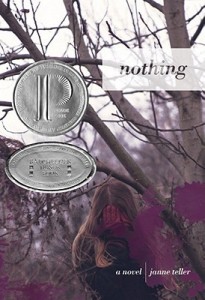
I thought Nothing was absolutely brilliant. I would love to read more books by her, but I am afraid of being disappointed! I hold her in such high esteem!

4. Children’s: Deborah Wiles

Now that I’ve discovered Freedom Summer, I am eager to read Revolution and her other books.

5. Adult: Anne Lamott

Bird by Bird is a great book that has stuck with me through the years. I’ve heard from many people that Operating Instructions is a great book for new moms. You hear that, Kellee? That is us!

Honorable Mention (because I feel inadequate if I don’t do what Kellee does): R. J. Palacio. I didn’t include a middle grade author because I was only allowed five selections, but I loved Wonder and would love to read more!

Kellee

1. Matt de la Pena

I have met Matt de la Pena a few times, and he is such a nice and intelligent person. I have only read The Living though, so I know I need to read all of his books (and I know Ricki loves them as well).

2. Michael Harmon

Under the Bridge has been a pretty big hit with my 8th grade boys over the last couple of years (and I liked it too), so I would love to see what his other books are like.

3. Leslea Newman

October Mourning was beautiful. I look forward to reading more by her.

4. Markus Zusak

Although I have read The Book Thief, I hear often that I should read I Am the Messenger.

5. Allan Wolf

The Watch That Ends the Night is one of my favorite novels-in-verse, and when I met Allan Wolf I loved his passion. I will definitely be reading more of his books.

Honorable Mentions. Jay Asher, Guadalupe Garcia McCall, Gary Schmidt, Meg Rosoff, Patricia McCormick

Which authors are you interested in reading more of? 

RickiSig and Signature

Teaching Young Adult Literature Today: Insights, Considerations, and Perspectives for the Classroom Teacher, Edited by Judith A. Hayn and Jeffrey S. Kaplan

Share

Teaching Young Adult Literature Today

Teaching Young Adult Literature Today: Insights, Considerations, and Perspectives for the Classroom Teacher
Edited by Judith A. Hayn and Jeffrey S. Kaplan
Published: March 15th 2012 by Rowman & Littlefield Publishers 

GoodReads Summary: Teaching Young Adult Literature Today introduces the reader to what is current and relevant in the plethora of good books available for adolescents. More importantly, literary experts illustrate how teachers everywhere can help their students become lifelong readers by simply introducing them to great reads smart, insightful, and engaging books that are specifically written for adolescents. Hayn, Kaplan, and their contributors address a wide range of topics: how to avoid common obstacles to using YAL; selecting quality YAL for classrooms while balancing these with curriculum requirements; engaging disenfranchised readers; pairing YAL with technology as an innovative way to teach curriculum standards across all content areas. Contributors also discuss more theoretical subjects, such as the absence of lesbian, gay, bisexual, transgender and questioning (LGBTQ) young adult literature in secondary classrooms; and contemporary YAL that responds to the changing expectations of digital generation readers who want to blur the boundaries between page and screen.

Review: This informative text is divided into the sections, “Where Has YAL Been?,” “Where is YAL Now?” and “Where is YAL Going?” I very much appreciated the expertise of the scholars who wrote each chapter. 

While each chapter was organized a bit differently, the research is solid. In one chapter, Laura A. Renzi, Mark Letcher, and Kristen Miraglia discuss LGBTQ Young Adult Literature in the Language Arts Classroom. I appreciated their recommendations for infusing LGBTQ texts into the school setting with recommendations tailored to the range of community environments: hostile, ignorant/open, open/accepting, and open. The texts were well-matched with the aims of bringing LGBTQ texts into focus. 

Another chapter I loved was “Crossing Boundaries: Genre-Blurring in Books for Young Adults” by Barbara A. Ward, Terrell A. Young, and Deanna Day. They give solid examples of authors who blur genres, making readers question genre classifications as a whole. These authors show the awesomely innovative authorship within the field of YAL.

Steven T. Bickmore writes a well-informed chapter about best-selling adult novelists who write YA fiction. He divides his piece into two sections–writers of adult best-sellers or pulp fiction and writers with literary accolades in adult fiction. I very much enjoyed his insight about this phenomenon. 

While I only highlight three chapters in this review, I must say that each chapter was special in its own way. The book begins with the history and background of YAL, and it ends with chapters about where the field is heading. As a researcher of this field, some of the information was not new to me, yet I learned much from the scholars of the text, whose extensive research is reflected in each chapter.

We Flagged: “[T]eachers need to gain insider perspectives by reading the books presented to their students. As a result, a wider range of quality adolescent literature will reach the hands of adolescents, and teachers will become increasingly confident about the merits of teaching with YAL”(Elliott-Johns, Chapter 3, Teachers as Readers of YAL section).

Read This If You Loved: Articles from The ALAN Review, Young Adult Literature in the 21st Century by Pam B. Cole, Literature for Today’s Young Adults by Alleen Nilsen & Ken Donelson

RickiSig

Blog Tour, Review, and Author Guest Post!: Be a Changemaker: How to Start Something That Matters by Laurie Ann Thompson

Share

NF PB 2014

Nonfiction Picture Book Wednesday and BE A CHANGEMAKER Blog Tour!

Nonfiction Picture Book Wednesday is hosted by Kid Lit Frenzy and was started to help promote the reading of nonfiction texts. Most Wednesdays, we will be participating and will review a nonfiction text (though it may not always be a picture book).
Be sure to visit Kid Lit Frenzy and see what other nonfiction books are shared this week!

Be a Changemaker

Be a Changemaker: How to Start Something That Matters
Author: Laurie Ann Thompson
Expected Publication: September 16, 2014 by Simon Pulse/Beyond Words

Goodreads Summary: We’ve had the civil rights movement and the women’s movement—now it’s time for the youth movement.

When Divine Bradley was seventeen, he just wanted a safe place to hang out away from gangs and violence, and Team Revolution was born. At age eleven, Jessica Markowitz learned that girls in Rwanda are often not allowed to attend school, and Richard’s Rwanda took shape. During his sophomore year of high school, Zach Steinfeld put his love of baking to good use and started the Baking for Breast Cancer Club.

Gone are the days when kids were supposed to be “seen and not heard.” Today, youth everywhere are rising up, building new organizations, and creating the changes they want to see in their communities and around the world. Be a Changemaker gives readers the tools and confidence they need to affect real change. Readers will learn how to:

– Research ideas
– Build a strong and passionate team
– Create a business plan
– Enlist a savvy adult
– Plan events
– Work with the media
– And more!

Plus, profiles of youth-led social organizations show readers that it’s never too early to become a changemaker.

Ricki’s Review: My favorite aspect of this book is the way it is organized. The chapters and headings are very clear, and it moves in a fluent, understandable manner. Thompson provides very informative, necessary lessons about honing and fine-tuning leadership skills. Some of the sections I liked most were the tips about leading meetings (from standard operating procedures to icebreaker activities), the sample business plan with budgetary advice, the ways to make money (with grants and marketing tips), and the speaking skills (particularly the section about elevator pitches). Across the country, more and more states are requiring the development of advisory groups for high school students to learn life skills. This text would be perfect for this setting. I can also see the text working well in a business or entrepreneurship class. The best part about the way this book is set up is the fact that teachers can assign chapters to groups or teach the portions of the text that matter most to their syllabi or curricula.

Kellee’s Review: I was blown away by how much this book impacted me as I read it. I want to do something right now, so I know that this book will impact young readers. Like Ricki, I was fond of how it was organized. It is ultimately a step-by-step book for leadership, planning, and making a difference in the world.

What I liked the most about the book, though, was the “Profile” sections where actual groups started by kids were highlighted. This really connected it to real life and showed the reader that being a changemaker is definitely something that anyone can do.

Teachers’ Tools for Navigation: We recommend using this book for jigsaw discussions. This would maximize instruction and allow students to access all parts of the text. If you are unfamiliar with jigsawing, learn how to use this discussion technique here: http://www.jigsaw.org/steps.htm.

Throughout the book, there are steps to brainstorming, reflecting, and journaling in a “venture journal” to help plan the steps to becoming a changemaker. The activities Thompson lay out would be a really deep activity to do in a classroom.

Discussion Questions: What is a problem that you see in our society? In your life? What steps could you take to help solve or alleviate this problem?; Which of the highlighted organizations started by fellow kids did you find the most intriguing? How could you help this organization?

We Flagged: “How many times have you complained about something but done nothing to fix it? Or noticed something and thought, Someone should do something about that? We all have those thoughts sometimes. And it’s okay, because none of us can solve every problem we encounter. But guess what…you’re someone. And when you set your mind to it, you absolutely can do something that matters.” (p.1)

Read This If You Loved: The 7 Habits of Highly Effective Teens by Sean Covey; Don’t Sweat the Small Stuff for Teens by Richard Carlson

Author’s Guest Post: 

Recommended For: 

 classroomlibrarybuttonsmall closereadinganalysisbuttonsmall readaloudbuttonsmall

Guest Post by Laurie Ann Thompson

10 Ways Young People Can Make a Difference 

There are many ways for people of all ages to make a difference in their communities and around the world. Here are some ideas that can be adapted to a variety of different age groups and interests.

  1. Collect money. Gather funds to support a cause by placing collection cans in stores, having a penny drive at school, participating in a fundraising walk, etc. Kids (or their parents) can also create a page on a crowdfunding website like com. Either way, friends and family can be great sources of support.
  2. Collect goods. Organize ways for people to donate goods like food drives, donation bins in retail outlets, school supply collections, etc. Most nonprofits maintain a wish list of needed items. Or, kids can go the other direction by finding a cause that can use their excess goods. Last Halloween, for example, a student at my children’s school had the kids bring in their extra candy, which he then sent to U.S. troops stationed overseas.
  3. Donate gifts. Ask for donations to be made to a favorite charity in lieu of presents. Kids can quickly and easily collect a significant amount of money or goods, while also spreading awareness for the chosen cause. It’s a win-win!
  4. Make something. Many young people enjoy making things they can then donate or sell. Can they knit? Hats or scarves for the homeless are much appreciated. Do they make jewelry? Maybe they could sell it at a farmer’s market or on com to raise money. Almost anyone can make no-sew fringe-tie fleece blankets, which are great for animal shelters and child services organizations. And don’t forget the tried-and-true lemonade stand—or a new twist on the same idea!
  5. Form a club. If there’s something one kid is passionate about, chances are others will be, too. A club can help someone find other like-minded individuals as well as recruit others to the cause. Many of the most successful organizations I profiled in Be a Changemaker started when one kid joined with a few classmates to form a simple club at school.
  6. Start a petition, or sign one. These can be done on paper and delivered in physical form, or they can be rolled out online via websites like org or whitehouse.gov. For inspiration, check out how a high-school student got Gatorade to remove flame retardants from its sports drinks, or how grade-school kids are trying to get Dunkin’ Donuts to stop using Styrofoam cups. Kids can also check out existing petitions and sign the ones they support (or ask their parents to).
  7. Write letters. Even young kids can make their opinions known by writing letters to their government officials, local newspapers, magazines they read, companies whose products they use, etc. Against how chickens are treated in factory farms? Write to KFC and McDonald’s and let them know! Kids can multiply their impact by recruiting others to write letters, too.
  8. Get involved. Many governments and companies have a youth advisory board to help them understand the issues affecting their teen constituents or consumers. Most schools have a student council and/or appoint student representatives to the school board. Youth may not always get voting rights, but at least they’ll have a chance to voice their opinions about the issues that affect them. The adults in charge might not otherwise know the full impacts of their decisions.
  9. Check with local organizations and/or the nearest United Way to find appropriate organized opportunities to volunteer, or make your own. You may have to get creative, but the potential is boundless. Anyone can pick up trash at their local park or beach, many retirement homes welcome young performers, some animal shelters will allow the public to come in and socialize the animals, or perhaps an elderly neighbor would probably appreciate help with the yard work. Everyone has skills: they just need to find a place to put them to good use.
  10. Read! Obviously, reading can provide kids with facts and practical knowledge. But studies have also shown that reading builds empathy, an essential element for making a positive difference. Whatever kids (or adults!) choose to read, they’re sure to be expanding their world views, analyzing new ideas, and growing as human beings. So, when they’re not out there changing the world, make sure they have time to enjoy a good book. 

Be a Changemaker: How to Start Something that Matters, is loaded with advice, hands-on exercises, and examples for middle-school or high-school kids who want to take these ideas further, plus profiles of young people who already did.

laurieannthompson

Laurie Ann Thompson comes from a family of entrepreneurs and small business owners. She has worked at IBM, Intel, and Microsoft, and she co-founded a successful internet startup. In addition, she has led a regional nonprofit professional organization and volunteered with Ashoka’s Youth Venture, which supports teens with big ideas. This is her first book. She lives with her family in the Pacific Northwest. Visit her at LaurieThompson.com.

Follow all of the stops on the blog tour!:

Mon, Sept 8
Sally’s Bookshelf
Tues, Sept 9
Girl Scout Leader 101
Wed, Sept 10
Unleashing Readers
Thurs, Sept 11
Teen Librarian Toolbox
Fri, Sept 12
The Nonfiction Detectives AND Kirby’s Lane
Sat, Sept 13
The Styling Librarian
Mon, Sept 15
NC Teacher Stuff
Tues, Sept 16
The Hiding Spot
Wed, Sept 17
Kid Lit Frenzy
Thurs, Sept 18
GreenBeanTeenQueen
Fri, Sept 19
A Foodie Bibliophile in Wanderlust
Sat. Sept 20
Elizabeth O. Dulemba
Teen Librarian’s Toolbox is creating a free downloadable workshop guide for libraries and classrooms for the book that will be available on Laurie Thompson’s website in late October.

Signatureand RickiSig

**Thank you to Barbara at Blue Slip Media for providing copies for review**

Top Ten Tuesday: Top Ten Underrated Books

Share

top ten tuesday

Top Ten Tuesday is an original feature/weekly meme created at The Broke and the Bookish. The feature was created because The Broke and Bookish are particularly fond of lists (as are we!). Each week a new Top Ten list topic is given and bloggers can participate.

 Today’s Topic: Top Ten Underrated Books

Books we love that need more recognition!

Ricki

1. Freedom Summer by Deborah Wiles

I discovered this picture book this week. Okay, it won an award, so it isn’t underrated. BUT, when I wrote about it on the IMWAYR post, so many people said they hadn’t heard of it. This is one of the best picture books I have ever read!

2. Ten Little Fingers and Ten Little Toes by Mem Fox

I just wrote about this book yesterday! I think it is the perfect picture book to read to a child. It seems simple, yet it emanates worldliness and love.

3. Thrice Told Tales: Three Mice Full of Writing Advice by Catherine Lewis

If I could have it my way, this would be the go-to book for every English teacher. Rather than teaching out of textbooks, this book could be creatively used to teach literary terms to students. Each page displays a different literary term, and the mice cleverly define each the terms within the context of the nursery rhyme.

4. Making the Match: The Right Book for the Right Reader at the Right Time, Grades 4-12 by Teri Lesesne

If you want to get kids reading, this book has phenomenal advice. I recommend it to any teacher who wants techniques to match readers to books. I am not sure if it is underrated, but because I recommend it so often to teachers, I am going to add it to my list. 🙂

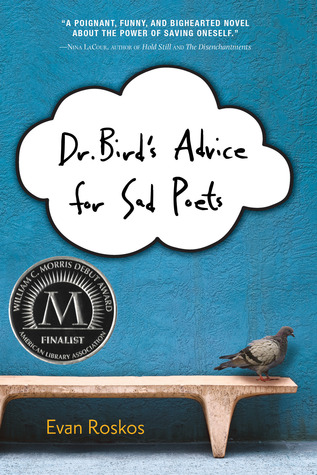
5. Dr. Bird’s Advice for Sad Poets by Evan Roskos

I was blown away by this book when I read it this year. I know it received the Morris Award, but I wish I heard it referenced more, and I find it to be underrated. It is absolutely brilliant and belongs in every classroom.

Kellee

Picking only 5 books was really tough. There are so many great books out there that deserve to have more readers.

1. The Berlin Boxing Club by Robert Sharenow

Just one example of many amazing historical fiction books that are not in enough hands. Berlin Boxing Club is such a unique book, and so well written.

2. Curseworkers series by Holly Black

This is a great series that I felt fell by the wayside during the whole dystopian hype. (And the audiobook is phenomenal!)

3. Airborn and Half Brother by Kenneth Oppel

I put these books on a lot of my favorite book lists because I am a huge fan of Kenneth Oppel. His books in general deserve more credit.

4. Jumping off the Swings and Living with Jackie Chan by Jo Knowles

These two books are some of the best YA I read in the last year. Jo Knowles has a way of writing about tough subjects in a very accessible way. (See You at Harry’s is another example.)

5. Ginny Rorby books

I know I talk about her all of the time, but I really love her books. Read what I think about them and Ginny here, here, here, here, here, and here.

Which books do you think deserve more credit? 

RickiSig and Signature

Teaching Critical Theory to ALL Students

Share

Critical Encounters in High School English

Commentary on Deborah Appleman’s Critical Encounters in High School English: Teaching Literary Theory to Adolescents

This professional development text made me reconsider my teaching philosophy. I’ve used lenses before. In my college credit course (for high school students), I asked students to use nonfiction and fiction as lenses to view other texts. It felt academic, and I believe my students benefited from this skill, but Appleman takes theory a step beyond what I was doing. As a graduate of English Education, critical theory was familiar to me, but I always felt as if I had to teach theory in a hidden way. We talked about gender, but I never told students they were using critical theory.

For most teachers, critical theory is important for advanced placement, high school English classrooms. Appleman provides scaffolding and proves that theory can be used in grades 6-12 and for all levels. Her materials are accessible and engaging.

According to Appleman, teachers should use literary theory as critical lenses to help students understand the ideologies inherent in texts (p. 3) and use skills of reading and writing to come learn about the world (p. 2).  When students read, there are multiple contexts at play, and she provides theoretical grounding and examples of various lenses for teachers: reader response, privilege and social class, gender, post colonialism, and deconstruction. Each lens has its own chapter in her book.

Students bring their own contexts to their reading of a text, so using critical theory allows them to view the literature through a different lens. Reading, interpretation and criticism are all important skills, and too often, teachers “relegate only the reading to students” (p. 6), and through Appleman’s suggestions, we give students authority and power.

No matter how uncomfortable it feels, students should learn to question the notion of a single truth and show the multiplicities that exist in reading. “Meanings are constructed; we create meanings that are influenced by who we are and what we are culturally; historically; psychologically; and, in the case of the Baker version of Miss Muffet, vocationally” (p. 20). Reading allows students to gain perspective of other lenses and theories, but also of their own lives, where the text acts as an equal partner with the reader (p. 31).

There are a plethora of activities and lessons for teachers in the appendix of the book. This book is extremely practical, and I felt as if I could immediately employ the ideas in the classroom, given the resources Appleman provides. I highly recommend this text to teachers.

Top Ten Tuesday: Book Characters Who Would Be Sitting At Our Lunch Table

Share

top ten tuesday

Top Ten Tuesday is an original feature/weekly meme created at The Broke and the Bookish. The feature was created because The Broke and Bookish are particularly fond of lists (as are we!). Each week a new Top Ten list topic is given and bloggers can participate.

 Today’s Topic: Top Ten Top Ten Book Characters Who Would Be Sitting At Our Lunch Table

We are back at school, and we can’t wait to dine with these characters!

Ricki

I decided to go the food route because I love to eat!

1. Strega Nona from Strega Nona by Tomie dePaola

BRING ON THE PASTA!

2. Sal and his mother from Blueberries for Sal by Robert McCloskey

Kuplink, kuplank, kuplunk! Let’s enjoy blueberries together!

3. Lucy Knisley from Relish by Lucky Knisley

Hopefully, we can convince Lucy to bring some of her homemade treats for us.

4. The Caterpillar from The Very Hungry Caterpillar by Eric Carle

Just because it is famous and likes to eat as much as I do, I would love for the caterpillar to join us. We will have some tasty treats available!

5. The setting of Cloudy with a Chance of Meatballs by Judi Barrett

An excellently depicted setting can be like a character. I would like to eat in the setting that exists in the first few pages of this book (before things got crazy, of course).

Kellee

I went a bit different with this than Ricki. I decided to think about what teachers I would like to eat lunch with now.

1. Miss Stretchberry from Love that Dog by Sharon Creech

Miss Stretchberry really knows how to reach students, had some amazing ideas, and is overall such a wonderful teacher.

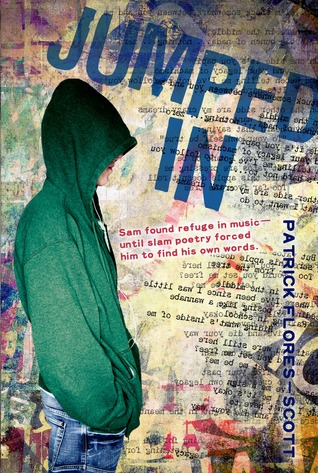
2. Miss Cassidy from Jumped In by Patrick Flores-Scott

Miss Cassidy wouldn’t let Sam and Luis disappear. She obviously cares about all of her students, and that is a type of teacher I would want to hang out with.

3. Mr. McQueen from Bluefish by Pat Schmatz

Mr. McQueen helps Travis and other struggling readers realize that they aren’t stupid, and that reading isn’t an anomaly but something they can do. I would love to talk to him about his strategies.

4. Miss Movado from The Summer of May by Cecilia Galante

Miss Movado doesn’t give up on May when everyone, including May, has given up on her. She changes her life in one summer.

5. Mr. Browne from Wonder by RJ Palacio

I love Mr. Browne and his precepts, and really makes his students think (though makes it fun). I’d love to pick his brain.

Who would you invite to your lunch table?

RickiSig and Signature