Student Voices: Reading Benefits from Julianna G. and Merida W.

Share

Reading Benefits

“Impacts of Reading on Writing” by Julianna G., 8th grade

Introduction

Writing is usually one of the most common subjects taught in school. You either love it or hate it. Starting off writing can sometimes be difficult. Alas, reading can help. From reading a lot of books over the years, it’s helped me write a lot more efficiently.  It’s even better when you have a wide selection of reading since each is unique and gives you a different style to help you find your own.

Essays

When writing essays, reading non-fiction books helps get a reference or a kind of idea on how to structure information and elaborate more. Since introductions and conclusions are hard sometimes for a lot of people.

I started picking up patterns when it comes to writing them from reading these types of books. What I’ve noticed is that they always try to allude in some form of a way to what the section is going to be about by bringing up something big or using appeals to bring attention to something. Like when I was reading Bobby Darin: A Life author Michael Starr started the book by introducing what Bobby meant to him with an anecdote. That helped me get a better idea on how anecdotes work so I can use them in my introductions. 

Even reading articles helps since they’re formatted similarly to an essay. Just using them and noticing ways that ideas are stated and elaborated helps give an idea on how to write.

Stories

Not only can reading help write essays, it helps write stories.  As many know, stories are based on something. I enjoy reading the series of authors I like. For example Rick Riordan. So over the years I’ve picked up tricks and ways to write or emphasize events. Like when he tries emphasizing or when a character is speaking a different language he uses italics to show this.

Also when reading classic novels like The Outsiders or The Modern Prometheus (Frankenstein) it helps with new vocabulary since they were written at different points in history, it lets you gain the vocabulary to use when writing which helps you sound more professional or more accurate to the time period your story takes place . For instance the word tuff  which means cool was used in The Outsiders when talking about Ponyboys wounds. I’d never heard of this word until reading the book so it gave me a new word to use. 

As well, each author has a different writing style and reading various books from various authors helps get reference and a way to learn them which can help when you’re writing. Even when you’re reading you’ve gotta use your imagination so it helps you picture the characters.  Since it helps you practice imagination it would help you imagine your own stories in which you picture your own characters to write.

Vocabulary

Reading can also help you with vocabulary. The national library of education found that “there is empirical evidence that, for older children and adults, much learning of new words occurs through exposure to written texts.” 

I’ve personally learned a lot of new words from texts like The Great Gatsby. I learned words like privy which means not something generally known so it’s something I can use now to sound professional. One of my friends was reading a book about phobias and learned Hippopotomonstrosesquippedaliophobia which is the fear of long words. They used words when writing a short story about a kid that fears long words. So each time you read a new book with different vocabulary the more widespread your vocab is for when you write.

Conclusion

Reading and writing go hand in hand. The more you read the better you get at writing and the more techniques you pick up. From writing essays to writing stories, you learn more each time. So what will you write next?


“Benefits of Different Genres” by Merida W., 8th grade

Everyone has their own favorite genre to read in books, but if you already have a favorite genre, what’s the point of reading others? The type of category a book is in or what the topic is, may seem pretty insignificant, however, certain genres can effectively impact certain areas of thinking more than others. Similar to how different fruits/vegetables are all good for your health but one fruit or vegetable might provide you a better source of a certain vitamin/micronutrient than another fruit or vegetable can. Here are some different genres and what area of thinking/learning they can improve.

  • Fantasy: Books in these genres enrich imagination and thus creativity. This is because they allow readers to think about other worlds/scenarios and “magical and mystical” characters and creatures that might not be in the current world so far. These books can be used as inspiration when creating stories or in creative writing.
  • Sci-Fi (Science Fiction):  These books also enrich creativity and imagination, similar to Fantasy, however, they’re usually more focused on futuristic, high-tech, and advanced systems or devices. Given that they are more focused on futuristic ideas, these books are also a great inspiration for those trying to invent/innovate, those writing about futuristic stories, or just anyone focused on possible futures, potential solutions to be used in the future, and futuristic problem solving.

  • Historical Fiction: These types of books often inform the reader about historical events and go in depth about it. This is because reading about how a character dealt with past events can give the reader a deeper understanding of how other (real) people may have felt and how impactful the event was. The characters in the books may share a similar experience or circumstance with the readers (even if it’s not exactly the same), allowing readers to remember it more because of the relatable bond they might have with certain characters.

  • Thriller/Horror and Mystery: Books with these genres require readers to think critically and analytically to “figure out who is guilty” since readers need to keep track of clues and use reasoning in order to predict the correct suspect or the culprit. Reading many of these books and trying to figure out the complex clues/hints can make readers more able to spot important hints and recognize patterns within investigations or simply issues regarding day to day life!

  • Non-Fiction and Biographies: Although this one is quite obvious, these books inform readers more about a subject and give facts about the subject. Providing knowledge that may be important in other topics.

  • Romance: These types of books foster empathy and expression in readers, as well as improving emotional intelligence. Reading these books can help expose readers to deep intimate bonds and (healthy) relationships,and thus, help readers understand them more. These books can also encourage other people to act respectful and well in their relationships

  • Poetry & Drama: Books in these categories improve comprehension, analyzing skills, and even emotional intelligence. To figure out and interpret the meaning, readers have to carefully analyze the poem or drama piece. After continuous practice of this, readers will be better at analyzing writing pieces in general and more efficient in comprehending other writing pieces’ meanings. Most drama and poem books also express human emotions or go in depth with emotions and feelings, therefore, exposure to these books will allow the reader to recognize such emotional patterns, understand them and potentially know what to do.

All genres are important and impactful in their own way. This was meant as a guide to teach you about how different genres can impact you and your thinking/learning processes with no bias or hate towards any of the genres shown. This was also written in hopes of promoting different genres and encouraging readers to read diverse ranges of genres.


Thank you so much to my student voices today and their look at some benefits of reading!

Student Voices: Reading Benefits from Alexa S., Maddie M., Brenda O., and Cecilia G.

Share

Reading Benefits

“Psychological Benefits of Reading” by Alexa S., 7th grade

Reading helps us with many things, and many of them have to do with psychology, so today I am here to tell you some of the amazing psychological benefits of reading.

What Is Psychology? And what does it have to do with reading?

Psychology is the study of the human mind and behavior. Now that you know that, you might be asking yourself, what does the human mind have to do with reading? Well, most people don’t read books out loud, they read it in their minds. Here is where psychology connects with reading, books positively affect our brains. Some help with mental health challenges and diseases, basically depending if the book is good or not. While many people might feel like reading is boring, it actually helps you distract yourself from daily worries and problems, almost as if taking a break from the world surrounding you. Suddenly all you care about is if the main character in the book is going to be killed or survive the killer.

What studies show

A study published in 2016 from Yale University shows that “people who read 3.5 hours per week or more, lived 23 more months than an average person who doesn’t read.” Which shows that reading can improve your life, and time on earth. The study was performed with around 3,635 people, they were all separated into three different groups, the ones who didn’t read at all, the ones who read for 3 and a half hours, and those who read more than 3 and a half hours, they all had to answer “How many hours did you spend last week reading books?”. “More than 12 years later, those who read at least 3 and a half hours per week were proved to be 17% less likely to die, and the ones who read the most were 23% less likely to die” People who read books were scientifically proven to have an average of 2-years longer life-span, than those  who didn’t read at all.

Reading books reduces stress

Many different studies have shown that reading books reduces stress and narrative transportation, which just means getting really involved in the book, that you feel things like happiness, sadness, and others. Reading books usually helps people with the way they deal with their problems, reading encourages people to use their strengths, and re-enforces their sense of identity. “Reading about positive psychology actually helps with psychological resilience.” Says the article. “Resciliency” is just a big word for how people recover quickly from adversity. Positive psychological resiliency could help maintain good mental and social connections. Some literacy articles show that books sometimes stimulate the person’s inner positive thoughts and feelings, which could lead to a better mental health and an upswing in their lifestyles.

Conclusion

In conclusion, reading has many important psychological benefits that can help improve our minds. It can reduce stress, increase focus, and help us understand other people’s feelings and perspectives. Reading also strengthens our imagination and helps us get distracted from our daily worries and stress. Because of all these benefits, taking time to read, even if it’s just once in a while, can make a big difference in our daily lives, like living longer. So, picking up a good book every now and then is a great habit that can help us grow and feel better overall.


“The Importance of Reading to Children” by Maddie M., 8th grade

I’d like to consider myself an avid reader, and I have been that way since a young age. In fact, a key memory from my early childhood is going to the library and attending storytime. You might think that reading with or to young children is just another way to entertain them. However, there are many benefits, such as improving cognitive development and fostering a relationship between the reader and the child. 

Cognitive Development

To start, one benefit of reading to children is that it supports their cognitive development. Studies show that children who are exposed to reading and books before entering preschool are more likely to succeed in their later education and have a larger vocabulary. This could mean that if you don’t introduce reading to your child early on, they may have a harder time reading and learning in general once they enter school. Furthermore, the Child Mind Institute says, “By reading to your child starting at a young age, even before they’re able to communicate verbally, you help lay the neurological groundwork for effective language use and literacy. That’s partly because books expose children to vocabulary and grammar that they wouldn’t normally hear.” To elaborate, reading to your child, especially books about real-world situations or unique topics, can teach them more words. For example, a book about the zoo would have more unique words that children wouldn’t hear in day-to-day conversations. 

Strengthening Relationships

In addition, reading to children strengthens and fosters relationships between the reader and the child. Raleigh Pediatrics says that infants’ hearing their parents’ voices while reading to them promotes their emotional well-being and strengthens their attachment to their parents. So, reading to your child can improve their ability to handle tough situations in the future and build resilience to stress. Secondly, Dr. Phillips states, “The physical contact that you get from being held by your parent while you’re reading actually helps to engage neurons in the brain, which make kids more receptive to the language and the cognitive stimulation that they’re getting from that experience.” This shows how family bonding time can actually become a learning opportunity!

Resources

Need assistance with incorporating books into your routine or want to reach out to an expert?

1000 Books Before Kindergarten is a non-profit charity. Their goal is to improve children’s reading skills by encouraging them to read 1000 books before entering kindergarten. Many communities and libraries in the United States and Canada have established this program. 1000 Books Before Kindergarten even has its own app where you can track the books you read. Their website is 1000booksbeforekindergarten.org.

Additionally, Reach Out and Read is a non-profit organization. During a child’s well visits, they work with parents and teach them important things, such as the best way to hold a book when reading to their child. They offer advice and vital information about why it is important to read to children. During visits, they provide the family with a free book to take home. They offer these books in 38 different languages! Their website is https://reachoutandread.org.

Final Thoughts

In conclusion, reading to children is important and has many benefits. These benefits include the ability to strengthen the relationship between parents and children and the added cognitive development. There are many organizations to assist with this task, like Reach Out and Read and 1000 Books before Kindergarten. Additionally, since I was read to a lot as a child, I can say that it has made me love reading and has definitely influenced my life and who I am now. So, whether you and your child are at library storytime or reading the Percy Jackson books, make sure to educate the future leaders of our world!

Sources

James, Sini. “Benefits of Starting Reading at a Young Age.” Www.nationwidechildrens.org, 4 Nov. 2022, www.nationwidechildrens.org/family-resources-education/700childrens/2022/11/benefits-of-starting-reading.

“Benefits of Reading to Your Children | Raleigh Pediatrics.” Raleigh Pediatrics, 8 Oct. 2025, raleighpediatrics.com/importance-of-reading-to-children/.

Sheldon-Dean, Hannah. “Why Is It Important to Read to Your Child?” Child Mind Institute, Child Mind Institute, 19 Jan. 2023, childmind.org/article/why-is-it-important-to-read-to-your-child/.


“How Can Books Help Distract Us From Real Life?” by Brenda O., 7th grade

Some people may think that books can only help you learn how to read, BUT that is definitely not the case. Reading books has way more benefits than just learning how to read, but do you know them? In this article, we are going to talk about some ways that books can help us live our lives better.

If you have any economic issues, family issues, or something stressing you, read a book, maybe even an audiobook. Reading a book can distract you and take you to another world, a world where you can concentrate on another person’s story and your own. Just for a moment, try to read a book, complete it, and see just how interesting it can be to get out of your own story and start another. It’s good to sometimes forget about reality, it can be a way of learning about another point of view, or just looking for entertainment.

Reading can also help you fall asleep. There are thousands of books that talk about relaxation or are relaxing. Another way can be silencing your thoughts with a good story. Sometimes, I have trouble sleeping because my thoughts keep me awake, so a solution I found was reading a book before sleeping. The book made me stop overthinking stuff and forget my problems, and made me think about the story and how it could end, or how I need to read the other series of it. 

“Reading promotes mindfulness, or the ability to live in the moment. It pulls our attention away from unwanted or worrying thoughts and helps to focus on the present.” It’s a quote from Henry Ford Health telling us how reading can also promote mindfulness, which means that you are more aware and present in the real world and are able to enjoy the good things in life and ignore the negative things.

Reading has helped me a lot with stress and tuning out negative thoughts, and I’m sure that it has helped a lot of other people, so it can help YOU! The real world can indeed be scary or stressful, so just take a moment to read a book and see how wonderful it is to take your mind off what is happening and relax.


“How Reading Books Can Help You on Your Daily Life by Cecilia G., 8th grade

Reading books is an interesting way to learn and help with your mental health, not only you will be learning so much you will also see improvement in many occasions in your daily life. There are many reasons why reading can help you develop in your daily life and help you in many situations, not only at school but everywhere else.

  • Reading reduces stress

Studies show that reading daily can help you get more relaxed and reduce stress. A study by the University of Sussex demonstrated that six minutes of silent reading can reduce stress levels by 68 per cent. (source)

  • Reading helps with sleep

Reading can help with many health problems that may be showing up in your sleep. The main reason is the decrease in stress, anxiety and muscular tension associated with reading. Helping you relax and unwind before sleep can make a difference in being able to push aside anxious thoughts and allow your consciousness to drift off. (source)

  • Builds vocabulary

Reading can not only help with learning new words, it also keeps children interested in all the new things they are learning about. Reading aloud with children allows for exposure to sophisticated language and content that might be above their independent reading level, but not above their interest level.  (source)

  • Helps building memory

It can help your brain with your memory since your brain actively encodes and stores information, creating new connections between neurons. Visualizing scenes, characters, and details from a story engages the brain’s sensory regions, enhancing memory retention through vivid mental imagery. (source)

  • Strengthens writing skills

When reading you can learn new vocabulary which for children, reading offers them a window into how authors write. It offers a study in different genres, styles, tones, and use of different vocabulary words. (source)

  • Improves critical thinking skills

When children spend a lot of time reading, they strengthen their ability to think about something from another point of view and to problem solve for someone outside of themselves. Finding solutions to a character’s problem helps children to think through other issues around them with similar discernment. (source)

  • Strengthens your brain

One 2020 study found that increased gray matter in the left superior temporal cortex part of the brain was associated with better reading performance in children. Gray matter plays a role in cognitive function. (source)

In conclusion, reading does a big part in your life. By helping with improving your mental health, thinking skills, vocabulary, and many other reasons listed above. Reading can not only be entertaining and fun as a hobby, it can also make your life a lot better by giving you many sorts of help.


Thank you so much to my student voices today and their look at the benefits of reading!

It’s Monday! What Are You Reading? #IMWAYR 6/1/26

Share

It’s Monday! What Are You Reading?
For readers of all ages

It’s Monday! What Are You Reading? is a weekly blog hop we host which focuses on sharing what we’re reading. This Kid Lit version of IMWAYR focuses primarily on books marketed for kids and teens, but books for readers of all ages are shared. We love this community and how it offers opportunities to share and recommend books with each other.

The original IMWAYR, with an adult literature focus, was started by Sheila at Book Journeys and is now hosted by Kathryn at The Book Date. The Kid Lit IMWAYR was co-created by Kellee & Jen at Teach Mentor Texts.

We encourage you to write your own post sharing what you’re reading, link up below, leave a comment, and support other IMWAYR bloggers by visiting and commenting on at least three of the other linked blogs.

Happy reading!

Bold_line

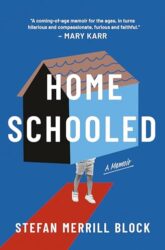
Wednesday: Sofia’s YA Book Nook: Homeschooled by Stefan Merrill Block

Friday: Student Voices: Reflections on the Current State of the World from Livie S. and Edie M.

**Click on any picture/link to view the post**

Bold_line

Kellee

It is my day, but I was not able to post; however, you can always learn more about any of the books I’ve been reading by checking out my read bookshelf on Goodreads.

Ricki

This is my week off; see you next week!

Bold_line

Wednesday: Penguin Random House FIFA World Cup Round Up

Friday: Student Voices: Reading Benefits from Alexa S., Brenda O., Cecilia G., and Maddie M.

Bold_line

Link up below and go check out what everyone else is reading. Please support other bloggers by viewing and commenting on at least 3 other blogs. If you tweet about your Monday post, tag the tweet with #IMWAYR!

 Signature andRickiSig

Student Voices: Reflections on the Current State of the World from Livie S. and Edie M.

Share

Reflections on the Current State of the World

What prohibits schools from having an active school library? by Livie, 7th grade

Most schools around the United States have a library, but it’s even better if they have an active one. Libraries are essential for student growth in their education. There are many reasons that affect a school library’s ability to do this though. Currently in the United States, there have been many budget cuts and natural events that have had an impact on the library society. In this blog post, I will be discussing many aspects that have an effect on school libraries, and what an active school library consists of

Why Libraries are Important

We are all told that libraries are important at some point or another by various people but the question still remains: WHY? They boost student learning and help to build a closer school community. Libraries are fundamental in the growth of a student and their school career. Studies have proven this, from 2007-2008 having more school libraries that host events like literacy week and are an active part in the well-being of the school, test scores increased drastically, the typical student that would usually be seen getting a 70-80 on standardized literary tests was now seen getting a 90-100. 

Defining the Term

What does it mean by active school library? Active school libraries are libraries that are taking part in school functions such as literacy night. It could also be things as little as taking into consideration what books students would want to read. By taking into consideration I mean having books in libraries that are not only new but also interesting. These are just many ways to define what an active school library really is. 

Budget Cuts

A lot of libraries across America are suffering from budget cuts. This is not just limited to school libraries but does have an effect on them. On Monday, February 10th, 2025, President Trump signed an executive order at the White House that would mandate the reduction of seven governmental agencies, one of which included the IMLS (Institute of Museum and Library Systems) and the Department of Education. The IMLS is a government agency that regulates and funds the country’s libraries and museums while the Department of Education ensures that schools across the country are giving their students what they need. Reducing these agencies means making them smaller, which in turn would mean cutting libraries all across the U.S. This is very important to schools because some of their libraries fall under the category of being cut in the reduction. Seminole County Schools in Florida are primarily without librarians because of this. Yes, while the students still have access to libraries, many do not have an actual librarian or dedicated full-time staff in the library. This affects having an active school library because how can there be events if there is no dedicated librarian to set up events. On another note, because of the ILMS and DOE funding being cut, several school libraries are without a clerk, deeply affecting the library setting because now all jobs are placed on the librarian’s shoulders. 

Expectations of Student Learning

While all of this is happening students are still expected to get high test scores. If students do not have the adequate resources at their usage how is it fair to expect this. It is scientifically proven that students with access to resources in a school library perform higher on tests. Many books in the library would have words a student may not have seen before and that is to their benefit; it leads them to ask questions or even look it up. This helps students grow their vocabulary and comprehension skills. Nonfiction books exist to inform people about the real world. While fiction is a great escape from reality… reality is still there and students, and especially adults, need to be informed. History books are especially crucial to make sure that history does not repeat itself (although that may be happening). 

Expectations on Librarians Themselves

Sometimes, or rather most times, librarians are expected to be more than just a librarian. They are expected to host many events throughout the year, such as setting up picture day, distributing laptops, state testing, and even writing the school newsletter. These jobs by themselves wouldn’t be too much to ask of a staff member because most of them happen at different times throughout the year but to also expect librarians to maintain the inviting atmosphere of the library and be an educator within the school while doing these tasks every week/month is unreasonable. While picture day and distributing laptops is not a weekly thing, yearbooks and weekly newsletters are. The librarians may also be asked to sub for other classes if that class is without a sub thus leaving the library unable to be attended or open on that day. Essentially, librarians are being treated not as teacher with a daily job but as disposable. You shouldn’t ask a teacher to stop teaching that day’s lesson just because they needed some copies made or someone to handle behavior, but sadly that is what is happening to most librarians across the U.S. Most libraries are called a media center because the title makes it so that the librarians can be called media specialists, expanding the jobs they can be asked to do. 

Statistics: Decrease in Librarians

Covid has had a big effect on the school librarian population. A study was done in 2020-2021 to reflect this and here are some of the facts from this study. 

  • 29.5% of schools across America reported not having librarians or not having a designated staff member for the library. 
  • Seven out of ten charter schools are without a full time librarian
  • 37.8% of western schools were without librarians, while southern schools had 22.2% of schools without librarians. 
  • Smaller schools (less than 200 students) were more likely to have their library cut
  • Bigger schools (2,000+ students) had an increase in the number of schools without librarians 10.8% to 16.3% 
  • 34.9% of city schools reported no librarian
  • 29.5% of town schools had no librarian
  • 57% of combined schools (k-8, k-12) had no librarian or library program at all
  • 33.8% of hispanic schools had no librarians
  • 32.5% of poverty serving schools (schools that their main population are students living in poverty) are without a librarian
  • The states with the highest percentage of schools without librarians are: Alaska(55.2%), Minnesota(50.6%), Hawaii(50.2%), West Viginia(50%), Michigan(49.9%). 

These facts are quite sad because literacy is an important part of student learning. Librarians are the fundamental base for a good library and without them libraries are unable to thrive as much as a library with a librarian.

Comparatives

Examples of an active school library and what it looks like:

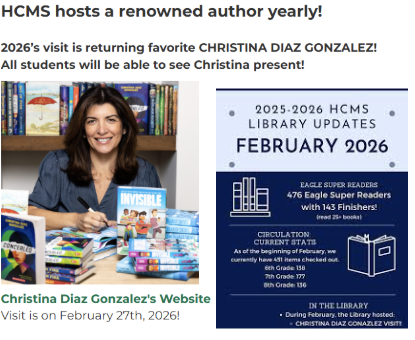
Hunter’s Creek Middle School (the school I go to) has one of the most active school libraries I can think of and one of the most active school librarians. Yes, I am a little biased but there is evidence to support this. Every year we have an author visit the school, this year we had three, but we still have at least one every year. This is to “advertise” reading to the students. As students visit the author in their ELA classes they get an in person talk with the author. I, for one, have certainly been encouraged to read these authors’ books after I have seen them. Another example is that we host literacy night every year for the coming author to encourage their books. We have rooms set up around the campus that are related to the author’s books. This year, we invited the 5th graders from their elementary school so that they could walk around the school and get familiar with our campus. We also have a Google form where students can fill out what books they would like to see in our library. Although, it does take some time to get these books in the library, the books almost always end up in our library. On another note, there is a reading challenge called Eagle Super Reader that is a paper that you fill out with twenty-five books you’ve read throughout the year and get prizes plus an end of year party. This really encourages kids to read because who wouldn’t want to skip school for a day and hang out in the library? This is just a little bit of the whole lot Ms. Moye does for our library and our school. All of these things and events she sets up all help make reading a little more fun for the students. They help to encourage students to read more, expanding their vocabulary and making them more educated. This is one example of an active school library and its effect on the students of which it serves.

Conclusion

In a nutshell, active school libraries are an excellent resource to have but there are certain obstacles that lessen one’s ability to do so. Such as budget cuts and the absence of a full-time librarian. There are schools that have been able to pull this off though, and that has greatly impacted student learning and reading capabilities. All in all, having an active school library is an amazing thing that I hope more students will get the opportunity to have in their educational careers.

Is The Hunger Games our future? by Edie, 8th grade

After reading Layla N.s’ post from last year (https://www.unleashingreaders.com/29146) I was inspired to expand, in light of more recent events (mid 2025-now) like issues regarding much more pressing matters. Such as a major increase in wrongful/ unjust (no fair trial) or violent deportations and racism by ICE (Immigrations and Customs Enforcement), there has also been an increase homelessness and inadequate housing all over the world that was not discussed in the previous post. There has also been another development since the first post; the announced Patriot Games happening summer 2026, which provide many parallels to The Hunger Games universe. The Hunger Games is a dystopian book series converted into movies. Here is a short summary of the plot: There are 12 districts in the country of Panem (originally 13 districts, just like the original 13 colonies!). The Capitol controls all of the districts, in an elected dictatorship type of way, and Panem (the country with all the districts/where The Hunger Games take place) is run with an extremely tyrannical government. Each district provides something for the Capitol, however they cannot trade with other districts, and are forbidden to leave the one they were born in.. Except if they are reaped. The reaping was installed after the districts rebelled against the Capitol and failed, as a punishment for them. The reaping is a part of The Hunger Games, in which the reaping is how they get there. To remind them that the Capitol is always stronger, but also to remind them how “generous” they are. I will explain more of The Hunger Games in their comparison section to the upcoming Patriot Games, but for now that is where I will end the summary. The 3 topics during this post are: Law Enforcement, The Hunger Games vs. The Patriot Games, and Quality of Life. 

Law Enforcement

In this section of the post I will be showing and comparing the law enforcement in The Hunger Games vs. The law enforcement in the U.S.. Starting off, the image on the upper right shows people protesting against ICE (Immigration & Customs Enforcement). President Trump thought this was un-American and deployed the National Guard (to go against their own country!), just because of people simply exercising their 1st amendment rights. The image below shows a similar circumstance, but in The Hunger Games. Peacekeepers (who are the law enforcement in the books), are holding back people protesting against The Hunger Games (also fighting against their own country). 

Continuing to the images on the left, both show law enforcement officers holding down protesters, who were later shot dead by those same officers. The one on top shows Alex Pretti, who was filming a detaining by ICE, and mere minutes later, was killed by them. He approached a vehicle with his phone, recording a conflict (he was not prior involved in) with ICE agents. After the person ICE was having a conflict with ran into Alex for safety during the protest, the ICE agent took him as a threat. The agent immediately pepper sprayed him to the ground, and more ICE agents held him and started hitting him. Once the agents removed his (Alex Prettis’) legal carrying firearm, they decided he was still a threat; beaten and bloodied. They then brought out one of their own guns and shot him 10 times.The image below that shows an unnamed man in The Hunger Games series being lifted up on stage, and later shot, because he used a sign of rebellion: lifting the 3 middle fingers and whistling a tune from their district (the same district where a 12 year old girl got murdered in The Hunger Games: District 11). The constitution most likely does not matter/ no longer exist in The Hunger Games universe and it was probably legal for Peacekeepers to do this. It is not legal today. Though the 2 situations are awfully similar: murdered because of protesting. Why are our Constitutional rights slowly disappearing?

The Hunger Games v.s The Patriot Games

“The Patriot Games” “The Hunger Games”. One. Word. Off. The Patriot Games is an event President Trump announced for 2026, to celebrate America’s 250th year of freedom from Great Britain. They require 1 male and 1 female tribute from each state. These tributes for being the top high school student athlete in the state (you read that right; high school; children). Then, they will go to the capital (D.C.) and fight for their (the Capitals) entertainment, and it is unstated whether this will continue annually. The Hunger Games was created by the capitol after the districts lost a rebellion/war to them. It was to show them that they were superior, and was like an annual punishment. The rules were that 1 male and 1 female (ages 12-18) will be reaped (chosen) from each territory. Reaping day was on July 4th/Americas’ Independence Day. The parallels are obvious. 1 male and 1 female child selected from each territory to go fight in the Capitol, for the Capitols enjoyment. Now what happens to the tributes in the Patriot games who do not win is unstated, whether they get anything, or just go home. Luckily it is not a fight to death scenario , but the winners are bathed in riches just as the victor in The Hunger Games. These rules play into what the Capitol stated in The Hunger Games, ruling that the games are used to show that they will always be more powerful, and then the winner being shown mercy and money is a reminder of their “generosity”.

Quality of Life

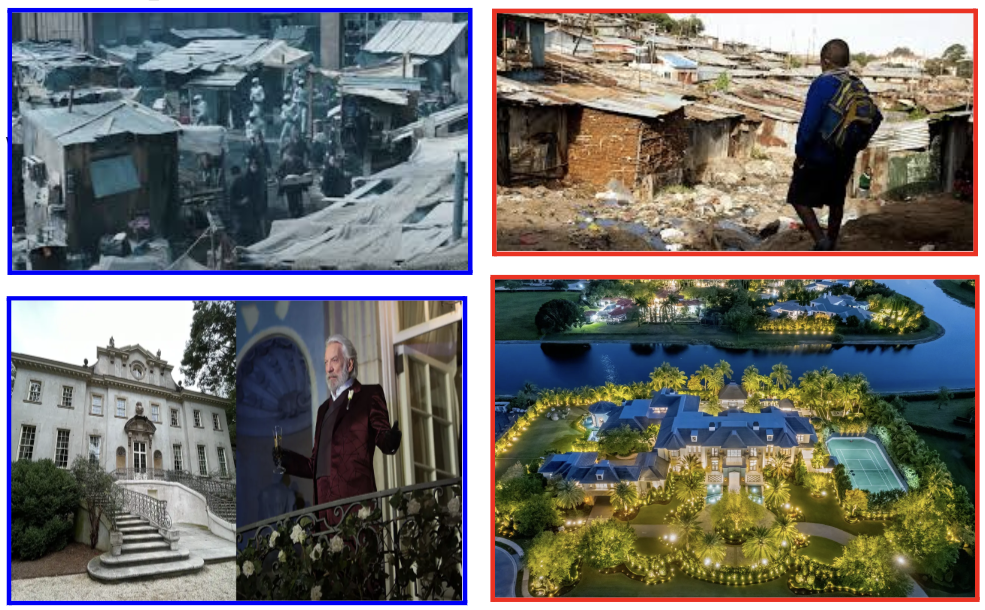
Next, quality of life in the world now versus quality of life in the districts. Starting off, world hunger is a very prominent issue and affects almost 1/10th of the population. Homelessness affects roughly 3% of the world population. These problems lead to awful living in many countries (as shown in the image on the upper right). In the districts from The Hunger Games, specifically district 12, we see lots of horrible living conditions along with many people starving. We even see this in the main character herself (Katniss Everdeen), nearly starving to death, simply because her district didn’t get enough rations for the winter. We also see people living on the streets, or in extremely small and damaged homes (upper left photo), much like present day poverty which affects 9% of the population. Through these we see many similarities with the way people live in these 2 worlds; on the worse side of it.

Now with people on the better side; I am going to compare citizens in the Capitol of Panem, and the billionaires of our world. The amount of rich people in Panem compared to the amount of people in the districts (living in lesser quality of life) is miniscule, yet they rule the country. They usually have ridiculously pricey houses, and outfits (lower left photo). The billionaires in our world are also extremely few (3000 out of more than 8 billion people!). Our billionaires normally have expensive extravagant clothing and homes (lower right), much like the capitol people. Though in small quantities, they have huge influences on our world, through them affecting political standpoints with money. The people who donate are in the 100s; yet every single one of them could obviously spare some of their money that could make a huge difference, but somehow, they are taxed less.

Conclusion

When reading or watching The Hunger Games( or if you haven’t read or watched the series, I hope this post convinced you to do so) you sided with the resistance to The Games/ Capitol right? Why are people still supporting the current state of our country and world when they can clearly see where we could be headed? The similarities between the two universes ( our Earth and The Hunger Games world) are apparent. As of right now, the amount of states in the U.S. who support this is decreasing, but there are still some who will do nothing but praise our way of life. Like in Mockingjay (3rd book in The Hunger Games) in District 2, where loyalty to the Capitol runs deep, they were the last one to surrender and join the rebellion, before the resistance stormed the Capitol. It will take time, but I believe eventually everyone will join the resistance just like in Mockingjay and overthrow our upcoming tyrannical government. Suzanne Collins ( author of The Hunger Games) has said, she only writes when she has something to say. Now this raises a lot of “when will” questions, when will everyone join the resistance? When will we start listening to Suzannes’ writings? When will The Hunger Games become our reality?

Thank you so much to my student voices today and their look at the state of our world!

Author Guest Post: “How Fiction Provides a Safe Place for Young Readers to Explore Celebrity, Fame and Fandom” by Mima Tipper, Author of Channeling Marilyn

Share

“How Fiction Provides a Safe Place for Young Readers to Explore Celebrity, Fame and Fandom”

When I began writing my YA paranormal fantasy novel Channeling Marilyn, I wasn’t thinking of celebrity or how young people relate to fame and fandom. Through drafting a book that included Marilyn Monroe’s spirit as a main character, however, I grew more and more convinced that fiction could provide a safe place for young readers to explore these concepts. With fiction, young people are able to experience the lives of characters from their safe reader position. And how great for those readers to have the possibility of exploring fame and fandom from the shoes of a fictional or fictionalized celebrity in a completely made-up story? The magic of fiction, too, is that it allows those readers draw their own conclusions about whether the experience felt positive or negative.

In Channeling Marilyn, part of the inspiration behind the book was me acknowledging the fact that even though Hollywood superstar Marilyn Monroe has been dead for over 70 years, a huge number of fans are still obsessed with her and her films. That fandom spoke to me. I wanted to look more deeply at it—at the why of it. Because these Marilyn fans are not necessarily young people, I became even more interested in the possibility that focusing on a celebrity like Marilyn Monroe could be an inspired bet for a YA audience: to take a celebrity from long ago, and imagine how her persona and her fame could affect a young person, and tell that story.

My main character, seventeen-year-old Lexa, is one of those non-obsessed with Marilyn Monroe people, yet via the story—no spoilers—she becomes aware of Marilyn, and then encounters Marilyn’s well-known allure. Ultimately, Lexa is not immune to the power of Marilyn (after all, her influence on pop culture is everywhere), and that’s where Marilyn’s fame comes into play in the story. That is also the place where Lexa’s teen sensibilities reflect what I’ve come to learn are documented observations about how young people relate to the concepts of fame, celebrity and fandom.

Between social media and reality tv, everyone is obsessed with celebrity these days—their own and that of others. For most people, the fascination is merely a diversion, but let’s look more closely at some reasons young people fixate on celebrities. Common Sense Media points out, “Celebrity obsessions are a natural part of growing up. As kids enter adolescence and begin forming their identities, they begin to seek out media figures for cues on how to look and act… Tweens in today’s media environment can feast on an endless supply of information.”

This observation didn’t surprise me, or that celebrity crushes for young people are deemed by some authorities to be a natural and even potentially positive aspect of growing up. Dr. Alan Ravitz of New York’s Child Mind Institute states: “As kids individualize themselves from their parents, which is a natural part of development and growing up, they try to establish psychological and emotional independence … No matter the culture, they need somebody to look to, aside from their parents, for guidance and a model for becoming an adult. In our culture, this is often a sports figure, an actor, or a pop star.” In recent articles in both Psychology Today and at www.modernrecoveryservices.com, writers agree with Dr. Ravitz’s statement, going a step further to suggest that in our modern world, fandoms often provide a positive and inclusive community for teens.

These observations suggest a teen’s fascination with a celebrity is most likely harmless: Harmless until people—young or older—take their fandom too seriously. In a recent article in The Teen Mag on how fans feel about their celebrity crushes, journalist Arrohi Shah says, “When a celebrity looks like us, loves like us, or struggles like us, it validates our own experiences. It’s not just about them– it’s about what they represent to us. But we often forget that what we see is carefully constructed: behind every photo is lighting, editing, media training, or even cosmetic enhancement. If even they need help to appear that way, why do we hold ourselves to those impossible standards?” Even more harmful, the Common Sense Media article goes on to point out that a young person’s fixation on a celebrity can, “… go to extremes that have a negative impact. They may spend all their money to try to look like their favorite stars. They may engage in risky body alterations to imitate them. Or they may actually inflict physical harm on themselves … to demonstrate the depth of their feeling.” In the Modern Recovery Services article, it’s noted that, “For teens already struggling with heavy psychological burdens, being a member of a toxic fandom can intensify their trials. It can be particularly tough for fan girls, who often face more scrutiny and pressure than boys because toxic fandom communities tend to be sexist.” And, “The development of parasocial relationships—one-sided relationships in which fans feel deeply connected to a celebrity based on illusions of intimacy—is another way fandom can become unhealthy. Teens might start to believe they have a special connection with a pop-culture icon, which can lead to unrealistic expectations and crushing heartbreak when their fantasies inevitably don’t come true.”

Fandoms have always existed, but it’s perhaps due to the wealth of information now available on social media that heightens and intensifies the celebrity adoration teens experience today.

The darker sides of teens’ relationship to celebrity, fame and fandom reveal where fiction could come in, providing that safe space for young people to explore these concepts outside of social media, without the baggage of an actual celebrity crush or of belonging to a fandom community.

In Channeling Marilyn, Lexa has the opportunity to see Marilyn Monroe as a real person, not as a celebrity. To see her as a human being who makes mistakes, who has needs, who wants friendship and love. Through the fictional lens of Marilyn’s spirit coming back as a kind of fairy godmother to Lexa, the book avoids the cliché of more common storylines like: Marilyn’s rugged early years, her abuse by handlers, her physical and mental health, her lack of privacy, her dealing with fans, etc. Instead, this story is about Lexa bonding with Marilyn as a spirit, and Marilyn guiding her through a tough time. And, wonder of wonders, through the power of fiction, Lexa is able to help Marilyn’s spirit move forward on her journey, too.

Bibliography

Leno, Michele, PhD, “The Healing Power of Pop Culture Communities” www.psychologytoday.com July 17, 2024, The Healing Power of Pop Culture Communities | Psychology Today

Shah, Aarohi, “Why are we so obsessed with Celebrity Drama? The Psychology Behind our Obsession” https://www.theteenmagazine.com  May 8, 2025. Why Are We so Obsessed with Celebrity Drama? the Psychology Behind Our

“Should I be Concerned about My Kid’s Celebrity Obsession?” www.commonsensemedia.org June 4, 2020 Should I be concerned about my kid’s celebrity obsession? | Common Sense Media

“The Psychology of Fandom—Pop Culture’s Influence on Teens” www.modernrecoveryservices.com The Psychology of Fandom – Pop Culture’s Influence on Teens

Why Teenagers Obsess Over Pop Stars?” www.childmind.org May 5, 2011, Why Teenagers Obsess Over Pop Stars – Child Mind Institute

Publishes June 1st, 2026 by She Writes Press

About the Book: Seventeen-year-old Lexa Donovan’s timid, plus-size life goes sideways when the spirit of Marilyn Monroe takes up residence in her body.

High school senior Lexa Donovan longs to be more than a bit player in her own drab life—and when she’s chosen to be part of her school’s spring production of Bus Stop, she thinks her wish has come true. But her thrill turns to panic when she’s tapped to play the leading role, sexy showgirl Cherie. One thing tall, plus-size Lexa knows for sure is that she is the exact opposite of the most famous Cherie ever: sex-goddess Marilyn Monroe.

Lexa wants out before she makes a fool of herself in front of everyone. But then something entirely unexpected happens: the spirit of Marilyn Monroe appears, ready and willing to be Lexa’s personal acting coach. Before the curtain rises on opening night, Lexa and Marilyn learn to trust their own hearts and act on what each truly needs to move forward—in life and in death.

About the Author: Half Greek, half American, Mima Tipper and her writing reflect her heritage—a little bit old-country, a little bit rock and roll: one foot wandering through the dreamy realms of myths and faerie tales, the other running on the solid ground of fast-paced, contemporary story. She earned her MFA in Writing for Children and Young Adults from Vermont College of Fine Arts, and is the award-winning author of the YA novel Kat’s Greek Summer (SparkPress, ISBN-9781684633067). Mima has also published YA fiction in Hunger Mountain and Sucker Literary Magazine. Her novel Kat’s Greek Summer was the 2025 silver medalist for YA fiction in the 2025 Moonbeam Children’s Book Awards, her YA short story “A Cut-out Face” received an honorable mention from Hunger Mountain’s Katherine Paterson Prize, and her work-in-progress version of Channeling Marilyn came in second place for Paranormal Romance in the Chesapeake Romance Writer’s annual Rudy contest. Beyond devoting most of her time to writing, Mima helps at Inklings Children’s Books in Waitsfield, Vermont, volunteers at her local library, and is committed to promoting literacy and supporting the writing community. Currently, Mima lives in Vermont with her family; find her at www.mimatipper.com.

Follow Mima Tipper on social media:
Facebook: @mimatipper | X/Twitter: @meemtip
Instagram: @mimatip  | Substack: @mimatipper

Thank you, Mima, for this thought-provoking look at a topic that affects many teens!

Student Voices: Reflections on School from Faten I., Ajani G., and Amber D.

Share

Reflections on School

“Student Literacy Leaders at HCMS” by Faten, 8th grade

As students we have very important jobs, one of these jobs is being helpful to others. One way me and many other students fulfill this trait is by taking a class called student literacy leaders.

What are student literacy leaders?

Student literacy leaders are students a part of Ms. Moye’s library class. As student literacy leaders, we help around the library by shelving books, doing a daily task (my class does recycling), doing fun projects, and checking out books to students, spreading the love of literacy, etc.

What does our daily routine look like?

  • At Hunter’s Creek Middle School we take pride in reading and logging on beanstack, so usually when we get to the library, we will start the day by logging 10-15 minutes on beanstack.Once we finish logging on beanstack me and my class mates will go and do our daily task.The daily task for my period is recycling. Me and my classmates will go around the library, collect all of the recycling and take it to the bins outside to the recycling. On Wednesdays we will do our Wednesday shelf. Wednesday shelves are when each student gets a shelf and every Wednesday we need to check them to make sure everything is organized and put in the correct place. Once we finish everything we might work on assignments we have, help around the library, or if there is nothing that needs to be done Ms. Moye will let us work on something for another class or give us free time.

Some projects we’ve done this year.

Every year we have an author come to our school to visit and give us a presentation. As student literacy leaders we help Mrs.Moye and Ms.H prepare for this visit by making projects and posters to put around the library and the school. Every year we have a door decorating contest, and this year for the library each period was in charge of making a certain part for the door. The door was based on Christina’s books. My class period got the books Return Fire and Moving Target. Every period needed to decorate a circle based on things that represented the book. Here’s a photo of the door:

We also had an individual project where we needed to make something that represented Christina or her books. Some people made posters, some people made drawings, some people (including myself) made dioramas. Here’s a picture of mine:

Me and my classmates have also worked on other projects together like coming up with games for students to play for literacy week, painting and decorating the main door of the library, and creating posters to hang up around the school encouraging reading and promoting some good books.

What does being a student literacy leader mean to me,and others?

Being a student literacy leader is so important to me because it’s not just about helping around the library, but it’s also learning how to be responsible, and learning how to help others with the right advice and patience.Taking this class has taught me so much. My reading skills have improved, the amount of books I’ve read has gone up drastically, and my ability to work with  others, especially bigger groups has gotten much better. Students around the school get to enjoy a comfortable and welcoming environment to read, and they also are able to get answers to the questions they might have. The students also get to partake in the fun activities we help put together for them. By student literacy leaders helping to maintain the library, we are also helping encourage other students to come check out books and enjoy reading.

All students in our school make a great and big impact, but student literacy leaders are a bit different. We are role models to many other students, and we help maintain the library, one of the most known places in our school where everyone comes to hangout and checkout books.

Being a student literacy leader is something so special. Getting to see other students happy, being in a welcoming place with beautiful diversity and decoration is such a lucky privilege because not too many schools get blessed with that. It helped me come a long way and I’m sure it did with many other students too.


“Things I Think Other Schools Should Have in Their Library that the HCMS’s Library has” by Ajani, 7th grade

  • Make a website on where to recommend books

The HCMS Library has a Google Form where students can recommend books to the librarian so they can get it for the student and other students too. Not all students have interest in the books that a library provides, and maybe there’s a couple of students who all want the same book/series and the school library does not have it.

  • Providing schools supplies

Some students may run out of supplies in the middle of the school year without knowing and then might not be able to get any, but in HCMS library there are pencils, pens, and bookmarks. It’s not much but it still helps and might come in handy for a student.

  • A system to look for books

Not every kid is gonna be able to find a book easily, that’s why in HCMS there is an app where you can type in a book or a genre and it will show you where it is and you can go find it. There should also be labels on the book and the app so they know where to find it exactly, and the books should be in order and not mixed up so it’s not mixed up and not being able to find them.

  • Author visits

Author visits can inspire students to become authors, and give some other students ideas for what they want to do in the future. The author explains deeper into the books that they made to show us the true meaning of this book, they also give us ideas on how to make a book, In 2026 Ms. Moye had Mark Oshipr, Christina Diaz Gonzalez, and Lindsay Currie come to HCMS for author visits! During Christina Diaz Gonzalez’s visit, she had explained that making a book doesn’t have to be as hard as it seems; she made a book from seeing a middle schooler going to Starbucks recently and ordering each drink with a different name so she made Concealed out of this idea beause it is about a girl and her parents who are in the Witness Protection Program, so she changes her name often so nobody knows her true identity. This book really made me interested in making books, and author visits in other schools could possibly give other students the same impact.

  • Supporting all students

Not alls tudents are the same identification, race, etc., and they might not always feel safe, but at HCMS, including the library, we have posters and signs showing that all are welcome and protected and for them to know it’s okay to be who they are.

  • Decorations

How would you feel if you had to go to school and see plain walls and colors that feel like they are screaming at you? It wouldn’t really feel nice. Being able to walk in a library that looks happy instead of just plain colors is so nice. People wouldn’t feel safe or welcome if a library just looked like a prison, it should look more colorful so students and teachers would not be scared to walk in.

  • Better chairs and outcome

Students may be unfocused on something when sitting in a chair that has no support and is uncomfortable for them. At HCMS, chairs in the library are more supportive and comfortable. Students are able to read in comfortable seats and not be distracted. Even changing the “normal” chairs leads to a good outcome. There will be more focusing in schools if they can take away the distractions from uncomfortable chairs.

We can help the students in our schools, we just need to think about what can help and make a good outcome for them.


“5 Habits That You Can Make Outside of School that Can Help Make School Better” by Amber, 8th grade

A school day can feel long and stressful but small changes in routines can make a difference. Students can create a more positive and productive school experience. These five changes that I will be talking about  would make the school day better and more organized for many students, including myself.

1. Use School Apps to Keep on Track

School Apps like Canvas, ClassLink, and Skyward help students keep track of assignments, grades, and announcements to keep them more on task and more organized. I use Canvas every morning/afternoon to check what’s due and what I have to do, and I use ClassLink to get into all my school apps quickly and efficiently! I feel way more organized and less stressed doing this and I would advise others to do the same to help them reach their full potential.

2. Set Alarms to Stay on Track

Students can set alarms for waking up, leaving for the bus, starting homework, taking breaks, checking messages, and getting ready for bed.This habits make you feel more put together and make you spend your day more productive and efficiently.

I use alarms after school to remind me to start homework, because if I don’t, I get distracted easily. I set an alarm at 5:00 PM to start my homework, and even though it’s simple, it helps me stay consistent.Alarms help students become more responsible and start a routine where they are staying consistent, not wasting any time bedrotting and feeling guilty for it.

3. Prioritize Healthy Habits

Eating a good breakfast improves energy and mood. I’ve noticed that on days when I actually eat breakfast, I feel more awake in class and feel more focused on my school work.Studys have shown that was the case too, that’s why teachers always advise students to eat before they take a test so they are more focused and do well.

Getting enough sleep or taking screen free breaks can help students refocus. These small choices make a big difference in how students feel throughout the day, ending their night with a smile on their face knowing they had a great day and many more ahead. Some healthy habits I do are putting down my phone at night so I can be well rested in the morning, so I can be more awake (especially in algebra).

4. Spend More Time Outdoors

Being outside reduces stress, increases creativity, and improves mood. Sometimes after school, I take a quick walk before starting homework, and it helps me.Fresh air helps students refresh after long periods of sitting in class. Outdoor learning can also make schoolwork feel more enjoyable.Some ways I get more outside in a school week is to go to my friend’s house or take a walk to the park.

5. Practice Positivity

Students who use positive thinking perform better academically and handle stress better.

One thing that helps me is celebrating small accomplishments can improve motivation. Positivity also spreads to others, helping others feel more included and welcome. There was this time where I was having a bad day and someone decided to make a random act of kindness, that made my day so much better than it was.You might regret being rude to someone, but you will never regret being nice to someone.

Conclusion

Improving the school day doesn’t always require big changes. By using school apps, setting alarms, building healthy habits, spending time outdoors, and being more positive. These habits help students feel more confident and make their school day/after school better.


Thank you so much to my student voices today and their reflections on school!