Author Guest Post!: “The Pressure to Rhyme” by Tammi Sauer, Author of Mary Had a Little Glam

Share

“The Pressure to Rhyme”

I have been writing picture books for more than a decade. I’ve written about cowboys, chickens, and aliens. I’ve written about monsters, princesses, and sharks. Up until now, though, each and every book of mine was written in prose. I had no intentions of ever writing a rhyming picture book, and I was completely happy with that.

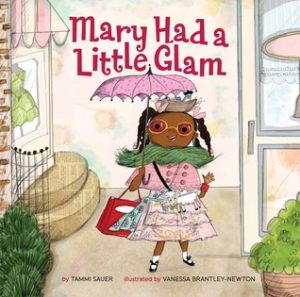
Then a title came to me. Mary Had a Little Glam. It was a title that was so irresistible, I knew I had to write that book. The potential for this character made my heart pound. I loved Mary before I even knew her story. But I had a problem. A doozy of a problem. I was scared to write in rhyme.

Many people write in rhyme, but few truly excel at it. Oftentimes, rhyme is forced, slanted, and just plain bad. I knew that if I wanted to write a rhymer, I had to make sure every syllable, word, and line was just right. Yikes.

As I worked, however, I grew to enjoy this challenge more and more. I studied books by Linda Ashman, Sudipta Bardhan-Quallen, Samantha Berger, Jill Esbaum, Kim Norman, and Corey Rosen Schwartz. I went on long walks and pounded out the meter of the nursery rhyme “Mary Had a Little Lamb” as I looped around and around my neighborhood. I shared drafts with many wonderful writers, asked for their feedback, and put it to good use.

I also had a secret weapon—Lane Fredrickson’s website, RhymeWeaver.com. In a clear and upbeat manner, Fredrickson offered everything I needed to know about rhyme, rhythm, and meter. She made it seem doable! I highly recommend RhymeWeaver.com to anyone who wants to write in rhyme as well as anyone who wants to teach rhyme in a way that is both easy-to-understand and fun.

Tammi Sauer Headshot

About the Author: Tammi Sauer is a full time children’s book author who also presents at schools and conferences across the nation. She has sold 28 picture books to major publishing houses including Disney*Hyperion, HarperCollins, Houghton Mifflin Harcourt, Penguin Random House, Simon & Schuster, and Sterling. In addition to winning awards, Tammi’s books have gone on to do great things. Chicken Dance, The Musical is currently on a national tour, Nugget & Fang was a featured book at the 2015 Scholastic Book Fair, and Your Alien, an NPR Best Book of 2015, was recently released in Italian, Spanish, Korean, and French which makes her feel extra fancy.

You can learn more about Tammi and her books at tammisauer.com.

mary had a little glam

Mary Had a Little Glam

About the Book: This little Mary has STYLE! In this fun take on Mother Goose, fashion-forward Mary helps some of childhood’s most beloved characters go glam. From the kid who lives in a shoe (and dons some fab footwear, too) to Jack, who breaks his crown but gets a great new one, Mary’s school friends look fantastic in their finery. But are they now too well dressed for recess? Not to worry—Mary always shows her flair for what to wear!

Mary Had a Little Glam debuts in August. Kirkus recently gave it a starred review. My favorite part of the review states, “Pinkalicious + Fancy Nancy + Eloise = Mary, the diminutive, precocious, brown-skinned queen of glam.” I am also proud of these words: “Sauer’s rhythm never falters.” Ooh. La. La.

Thank you, Tammi, for this post, and thank you, Lauren, for connecting us with Tammi! 

RickiSigand Kellee Signature

Author Guest Post!: An interview by Anna Olswanger, the author of Greenhorn, with Tom Whitus, the director who adapted her book to film

Share

An interview by the author of Greenhorn with the director who adapted her book to film

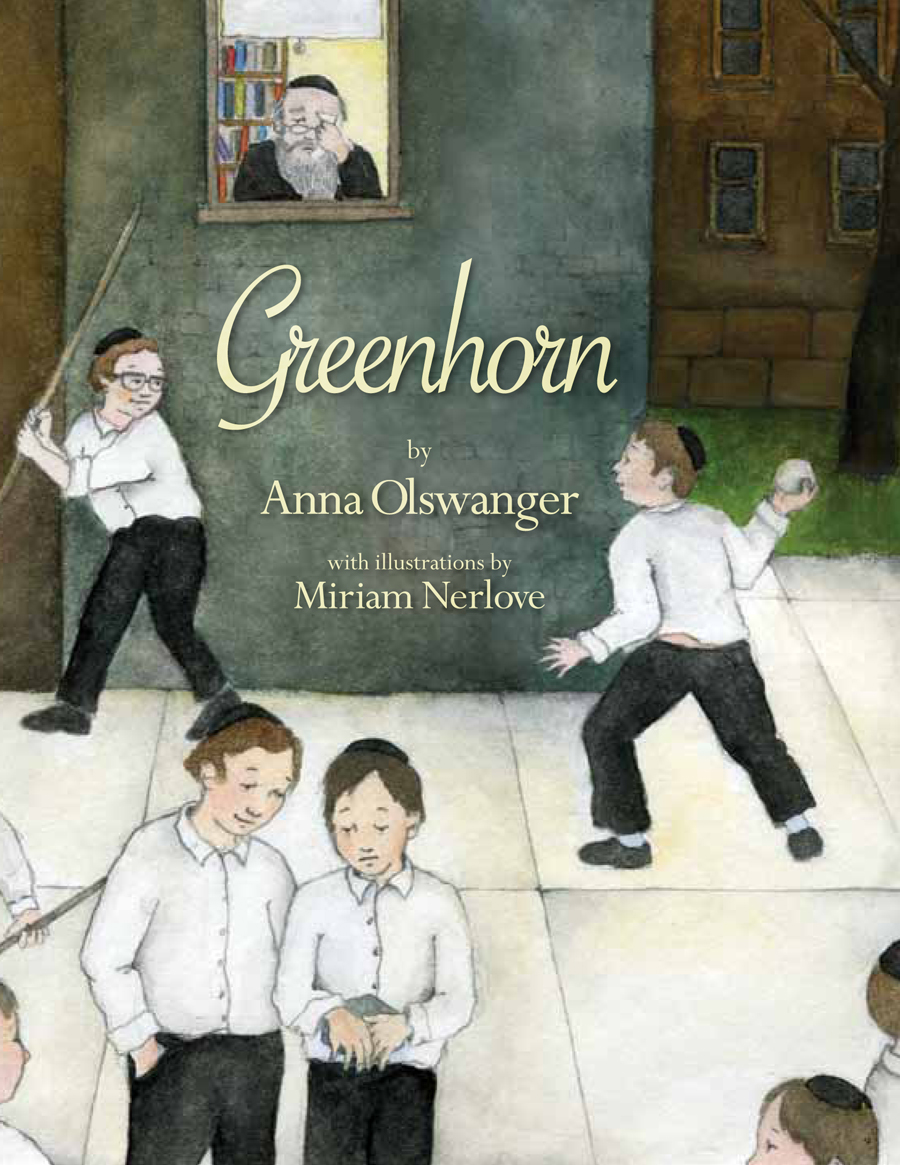
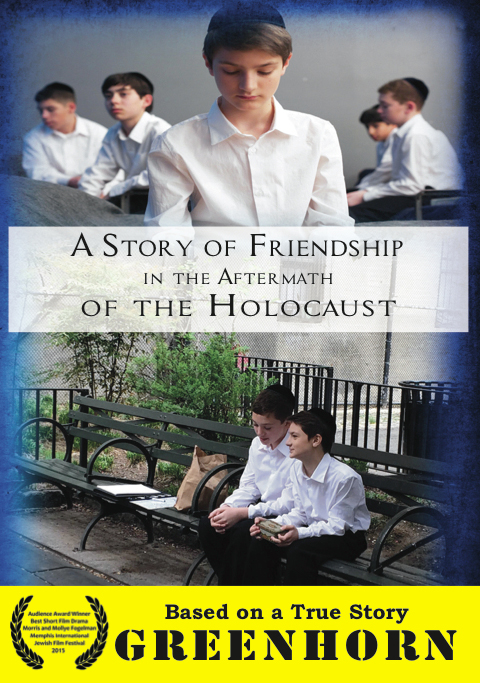
In 2014 I co-produced an independent film adaptation of my middle grade novel Greenhorn, the story of a young Holocaust survivor who arrives at a Brooklyn yeshiva in the 1940s with only a small box that he won’t let out of his sight. The film, like the book, concerns bullying and disabilities and is based on a true story.

The film version of the book premiered in late 2014 at the Landmark NuArt Theatre in L.A. and at The Museum of Tolerance in New York. It was named the 2015 Audience Award Winner for Best Short Film Drama at the Morris and Mollye Fogelman International Jewish Film Festival in Memphis and subsequently aired on public television in Tennessee and Kentucky.

I’ve always wondered what caught the eye of the film’s director Tom Whitus, who wrote the screenplay. Tom is not Jewish and none of his family perished in the Holocaust, so what about the novel made him want to adapt it to film? The following is my short interview with Tom about Greenhorn:

Anna: What first struck you about the book?

Tom: The story is about friendship and loyalty—and standing up to bullies. These are all themes that are as important today as they were in 1946.

Anna: Why did you want to adapt the book to film?

Tom: As much as I respect the power of reading, I knew that the film would give us an opportunity to tell the story on a larger scale. And, since I felt it was important story to tell, I hoped the film would give us a chance to tell the story to a broader audience.

Anna: What did you see as the challenges to filming it?

Tom: The biggest challenge was going to 21st Century New York City to make a film set in 1946. Fortunately, much of New York has architecture of that period, so it was just a matter of framing out all the signs of a modern city. Casting was a challenge as well, finding the boys brought up in a modern world who could look and act like the yeshiva students of 1946. We found some very talented actors to bring those roles to life.

Anna: Are you satisfied with the end result?

Tom: Yes—with this caveat. Whenever I watch the film, I always come across a scene where I say, “I could have done that better.” Still, given our constraints, I think we made a very nice film.

Anna: What do you think the film achieves that the book couldn’t?

Tom: As I said before, I think it reaches a broader audience. There are people out there who will watch the film but might not ever take the time to read the book (though I honestly think you can read the book in less time than it takes to watch the film). That said, the film brings the characters to life.

Anna: Do you think the film is important?

Tom: This is a very important film for many reasons: It is imperative that we remember the Holocaust and the toll it took; we need to remember and mourn the victims of the Holocaust and celebrate those who survived to tell the story; friendship and loyalty can overcome small minded people; and finally, those who are different—those who stutter, those who suffer from tragedy—need to be accepted and loved, not shunned and made fun of.

Anna: Why do you think young people should see the film?

Tom: I think it will help them understand what others have gone through, and how friendship, loyalty and bravery can change the world.

Greenhorn cover-full

Anna Olswanger is the author of Greenhorn and Shlemiel Crooks, a Sydney Taylor Honor Book and PJ Library Book. She has been a literary agent since 2005 and lives in the metro NYC area. Visit her online at www.olswanger.comGreenhorn was published in 2012 by NewSouth Books in hardcover and ebook.

Karen Cushman, Newbery Medalist, called the novel “a tender, touching celebration of friendship, family, and faith.” David Adler, winner of the Boston Globe-Horn Book Honor Book for Nonfiction, called it “a heartwarming and heartrending story of friendship and tragedy.”

As an aid to teachers and librarians, the publisher NewSouth posted a Classroom Guide for the book on its website: http://www.newsouthbooks.com/greenhorn/greenhorn-classroom-guide.pdf

The guide has curriculum tie-ins to the Holocaust, Judaism, World War II, Heroes and Heroines, U.S. and New York History, World History, Historical Fiction, Friendship, Community, and Family.

Greenhornfilmcover

TMW Media distributes the film version of Greenhorn and has posted a discussion guide for the film online at www.tmwmedia.com/newtmw/teachers_guides/L4812DVD.pdf.

You can view the film’s trailer at www.youtube.com/watch?v=pNo5tx3q_3c.

Greenhorn is an important film and book, so thank you to Anna and Tom for sharing it with us! Also, what a fascinating process to learn about!

Kellee Signature andRickiSig

Author Guest Post!: “Jackie Robinson Overcomes” by Geoff Griffen, Author of Brooklyn Bat Boy

Share

“Jackie Robinson Overcomes”

When Jackie Robinson took the field as a member of the Brooklyn Dodgers on April 15, 1947, he not only changed baseball, he changed American history. We justly remember him as a civil rights pioneer who integrated Major League Baseball, but his remarkable story also touches on a number of topics middle grade readers will find interesting, timely and relevant to their own lives.

As a former sportswriter who now teaches at the elementary school level, I wanted to find a way to communicate what can be positive about sports to middle grade readers. The answer was obvious – the Jackie Robinson story. As I researched my book, Brooklyn Bat Boy, historical fiction about Robinson’s 1947 season told through the eyes of the Dodgers 12-year-old bat boy, I was reminded of how important Robinson’s legacy is in a variety of ways.

In developing curriculum to go with the book, I tried to focus on how the Jackie Robinson story is interesting to middle grade students because it has a hero, good triumphs over evil, there is a day of celebration, his story has relevance to things still happening today and the story can be used to teach about bullying, friendship and teamwork. Best of all – it’s got baseball!

A Hero To Root For

Kids love heroes and Jackie Robinson is a classic example of what it means to be a hero. He faced an incredibly difficult situation and through courage and determination emerged victorious while also helping to make the world a better place. His story is historically important on a number of levels.

He changed an American institution in 1947, years before the Civil Rights milestones of the 1950s and 60s. As Martin Luther King, Jr., said of Robinson, “He was a sit-inner before sit-ins, a freedom rider before freedom rides.”

When releasing his documentary Jackie Robinson, in the spring of 2016, filmmaker Ken Burns said of Robinson, “I would argue that he is the most important person in the history of American sports and he is one of the greatest Americans who’s ever lived – period.”

Good wins! Good wins!

The Jackie Robinson story is one of integration overcoming segregation, diversity overcoming racism, acceptance overcoming bias, one season of change overcoming decades of stubbornness, one man’s determination overcoming a chorus of doubters. It was a time when America made a positive change for the better. In short, it’s a feel-good story where kids will find themselves rooting for Jackie Robinson.

April 15

Major League Baseball celebrates Jackie Robinson Day every year on April 15. Every player on every team wears a jersey with the number “42” – the number Robinson wore with the Dodgers. It’s also the only day to see anyone in a “42” jersey because the number has been retired for all teams in MLB, something that has never been done for any other player.

It’s always fun for students to be able to build towards a special day that relates to what they are studying, and Jackie Robinson Day makes for a fun goal date. It’s also a great day to schedule a special activities or events.

From 1947 to 2016

While things have improved significantly in American race relations since 1947, any glance at the news of today will show that there is still plenty of work to be done, and there are still lessons to be learned from the Jackie Robinson story as we move forward. Elementary school students will vary in their ability to understand today’s events or their own attitudes about diversity, but learning about someone who dealt with these issues before can give them a way into understanding their own feelings and views.

Bullies, Buddies and Teammates

Any definition of bullying can be applied to what Jackie Robinson went through. In 1947, he withstood racial epithets, death threats and pitchers throwing at him, yet still found a way to show courage and earn respect without resorting to violence. While middle grade readers might not understand how his actions set a template for non-violent resistance in the Civil Rights Movement in coming decades, they will definitely be able to understand how fans, opposing players and even teammates who initially opposed Robinson came to cheer him. Many things that he went through can create great discussion moments in the classroom about bullying, the effects bullying has on other people, ways to help stop bullying, what it means to be a friend and what it means to work as a team.

By the Way, There’s Baseball

Did I mention baseball? It’s more enjoyable to study any subject when you add baseball to the mix.

Jackie Robinson is not only a pivotal figure in American history, he is also a hero whose story can still have relevance and meaning for children today.

Griffin Shot 6 Small

About the Author:

Geoff Griffin has worked as a teacher, lawyer, journalist and editor. He has over 20 years of experience writing for a variety of newspapers and magazines. He has had a number of essays published in anthologies and is co-host of the award-winning Travel Brigade Radio Show and Podcast. Brooklyn Bat Boy is Griffin’s first work of fiction.

Pageflex Persona [document: PRS0000026_00089]

Brooklyn Bat Boy

About the Book: 

Bobby Kelly is a 12-year-old Brooklyn boy who loves playing stickball in the street with his friends and cheering for the Dodgers. Bobby’s dream of being part of the Dodgers comes true in 1947 when he lands the job of bat boy for the team. There’s just one thing Bobby’s not sure about. The Dodgers are planning to do something that has never been done before. An African-American named Jackie Robinson will be playing for Brooklyn. Bobby isn’t sure how to feel about it, especially since members of his family and kids in his neighborhood don’t like the idea. In order to truly become part of the Dodgers, Bobby will have to learn to accept Robinson as a member of the team and learn from his example. This fictional story looks at an important point in baseball history from a young person’s perspective and highlights the time period, including using popular slang from the East Coast in the 1940s.

Thank you, Geoff, for this post! We love baseball and had so much fun reading it!

RickiSigand Kellee Signature

Author Guest Post!: “Teaching Was a Lot More Than Following a Lesson Plan” by P. E. Yudkoff, Author of Packing Evil

Share

“Teaching Was a Lot More Than Following a Lesson Plan”

My experience as a teacher only spans forty-five minutes. In the spring of my senior year of high school at the end of a long, lazy lunch period I heard my named called in that firm voice of Mr. Hutchins that made everything he said sound like a command. He asked if I were free during the next period “to help him out.” As I said, everything he ever said to me sounded like an order, and this time was no different. So, I was free regardless of the fact I was going to meet up with friends.

The help I was to render was to take charge of a 7th grade English class. The teacher had been called away for reasons that were never disclosed to me, and I was instructed to follow the day’s lesson plan and keep the students in their seats. From the tone of Mr. Hutchins’ voice I gathered that keeping my charges in their seats was of paramount importance. “Just follow the lesson plan. Have them read the story, then go through the discussion points. And take attendance.” He handed me a folder. Inside, a dozen mimeographed sheets (in fast fading blue ink), and one typed page with ten or so questions.

Introductions were simple. I told the class who I was. They each told me their name.

Taking attendance was easy. I passed around a sheet of paper for them to sign.

Then it all went downhill.

I handed out the mimeographed story about a boy rushing through his chores so he could go to the county fair. Somewhere along the way he didn’t latch a gate and a cow (or maybe it was a goat) wandered out and devoured the neighbor’s garden. His time at the fair is ruined by a run-in with a bully, but fortune smiles on the boy when he learns that none other than the bully is blamed for the unlatched gate. Of course, the boy takes responsibility for the roaming cow and transforms the bully into a friend.

I asked the class to read the story. Within seconds one kid calls out he’s already read it, half the class groans and ask why they have to read anything since their “real” teacher isn’t there, and the other half is silent, either staring out the window or at the floor.

I wouldn’t call the next forty minutes a nightmare. Tiring, exasperating, difficult, chaotic all come to mind now. Even so, I did give it the old high school try and blundered on with the lesson plan. (I must admit I quickly gave up on keeping them in their seats. Two boys ended up perching on the heating registers.)

It quickly became apparent that the interest level, reading skill level, conversational skill level, and wakefulness level were as varied as the number of kids in the class. Nothing I could do or say could keep the entire class focused on the lesson plan. The only one who was learning anything related to English class was me: I now fully grasped the meaning of the idiom herding cats.

Despairing how I was going to get through the entire period, and nervous that Mr. Hutchins might pop in, I finally caught a break when one boy loudly called out that the protagonist was an idiot for letting the bully off the hook. I asked if anyone else agreed. They all answered in the affirmative. Even the silent ones! This was a straw I had to grasp. Remembering a long ago assignment (I think it was 6th grade with Mr. Cain.), I proposed we write a different ending to the story. To my surprise they liked this idea and after some discussion it was resolved that we would reverse much of the story. I wrote a sentence on the chalk board and invited a boy up to rewrite it, changing verbs, nouns, adjectives, adverbs as he saw fit.

Of course, the class was noisy, and a bit disorderly, as students took turns rewriting sentences with the help of their classmates. But they were engaged. I think we got through four or five sentences. I did have one moment of actual teaching when I pulled off the shelf a Roget’s Thesaurus and instructed the boys how to navigate it to find antonyms.

After class I returned the folder with the attendance sheet to Mr. Hutchins. He thanked me. I should have thanked him. Even though I had already been a student for more than a dozen years, I learned that day that teaching was a lot more than following a lesson plan.

About the Author: P. E. Yudkoff is the author of The Kylxon Chronicles. When he is not writing he is often tinkering with animation or creating designs for 3D printing. Away from the computer Yudkoff enjoys a good hands-on building project or a leisurely walk with the family dog, Josie. Visit his website at: peyudkoff.com

Packing Evil

Packing Evil

About the Book: Thirteen-year-old Pack’s world is turned upside down when he discovers an old pair of shoes that magically makes him very smart. But Pack begins to suspect there’s more to the shoes than increased brainpower. Soon, voices pop into his head offering all kinds of advice. Some of it helpful and some of it very dangerous, but none explaining what they’re doing in his head. When a neighbor mysteriously disappears, suspecting foul play Pack and his best friend, Sydney, start to investigate. Pack’s new skills and power come in handy, but soon the magic reveals a vile side. Sydney fears the changes she sees in her friend as he strays down a villainous path. But Sydney’s a tough girl, and she’s not giving up her best buddy to a ratty pair of weird, old shoes without a fight!

Giveaway for Packing Evil!: http://www.thechildrensbookreview.com/weblog/2016/07/packing-evil-book-one-in-the-kylxon-chronicles-book-giveaway.html/

Book Trailer:

Thank you, P. E., for this post! We had a lot of fun reading about your teaching experience!

RickiSigand Kellee Signature

Author Guest Post!: “Building Stories with Words” by John E. Stith, Author of Deep Quarry, Manhattan Transfer, and others

Share

“Building Stories with Words” 

The writing life is filled with challenges. Early on it might be the need to sell that first story. Later you could be irked that Hollywood picked that actor to play your protagonist.

Today’s focus is the early stage, where stories are being rejected too often, or some of your Amazon reviews mention grammar.

“I can always hire an editor,” you might say, and I would reply, “But you want to be a writer. You build stories with words. You have to know how to use the only tools you have.”

In fiction, when you get one detail wrong, and then another, readers start to doubt you. That undermines your entire job. And when you misuse words, readers start to wonder, “If this writer hasn’t yet spent the time to master basic use of words, how will the writer handle far more difficult stuff, like creating compelling characters and generating a satisfying ending?” Word misuse is a red flag.

What readers want from a story covers a spectrum, but most readers are going to notice, either subliminally, or directly, if you make spelling or grammar errors. I’m not talking about the rare typo, but the actual and consistent misuse of words.

Here are highlights from the list of problems I see most frequently in workshop manuscripts or books published by impatient writers who haven’t yet learned the craft.

***

Emphasis is typically not indicated with ALL CAPS. Don’t use the comic-book style of multiple exclamation points. (Use ! or ? or whatever’s applicable; avoid ?!, ??, !!, and variations.)

Avoid dialect. Show different speech patterns and word choices in ways that are easier on the reader.
“Aggravate” means to make worse, not to irritate.
“All right” is preferred over “alright.”
“Alot” isn’t correct when you mean to say, “A lot of the…”
“Anxious” isn’t the same as “eager.”
“Awhile” means “for a while.” “For awhile” means “for for a while.”
“Farther” is for distance; “further” is for metaphorical use or to mean “additional.”
“Grey” is the British spelling; “gray” is the U.S. version. Use all US spellings for the US market and all British spellings for the British market. Arbitrarily mixing them makes you look inexperienced or pretentious.
Watch out for misusing “hopefully.” “Hopefully the tree will survive” is wrong unless the tree truly is hopeful.
“It’s” means “it is.” “Its” is possessive.
Look up “lie” and “lay” if all country songs sound grammatically correct to you. Look them up anyway.
If you’re tempted to write “close proximity” look up the meaning of “proximity.”
“Return back” is redundant. Use “return” or “go back” but don’t try to get them both into the sentence.

Hyphenate compound modifiers, but “ly” adverbs don’t take hyphens.

Almost always, starting a sentence with “so” is superfluous.

Be careful with gerund phrases, e.g. “Dialing the phone, I broke a nail.”  Unless you add a qualifier such as “before” or “after,” “while” is implied at the start of the gerund phrase. (While dialing the phone, I broke a nail.”) If you mentally put in the “while” you’ll probably find it harder to mistakenly complete the sentence with an action that does not happen concurrently. To belabor the point: “Dialing the phone, I asked the store what time they opened,” is wrong because the events are sequential, not concurrent. For sequential actions put “after” at the beginning.

Here’s a good example from Dan Brown’s ANGELS & DEMONS. “After parking the cart on the wide lawn directly behind St. Peter’s Basilica, the guard escorted Langdon and Vittoria up a stone escarpment to a marble plaza off the back of the basilica.” (He uses the old-fashioned–most would say sexist–technique of last name for male and first name for female, but the gerund usage is correct. A less careful writer would have skipped the “after.”)

Use “said” ninety percent of the time, or more, for dialogue (or omit speech tags); using your thesaurus for substitutes just calls attention to the substitute. Write dialogue clear enough that you don’t have to resort to writing things like: “You always get the good ones,” she said enviously.   Don’t use a substitute that doesn’t actually mean “say.”

Look carefully when you’re reading published fiction by a pro to see how dialogue is punctuated.
WRONG: “Hello,” he laughed.
RIGHT: “Hello.” He laughed.
RIGHT: “Hello,” he said with a laugh.

Set off direct address with commas.
WRONG: “Yes sir.” “Hello Frank.”
RIGHT: “Yes, sir.” “Hello, Frank.”

Think about the huge difference between these two lines:
“Let’s eat, dad.”
“Let’s eat dad.”

Semicolons can join related and complete sentences; don’t use them to join fragments. Semicolons are not interchangeable with commas.
WRONG: “The mist was clearing, Samantha could tell it was going to be a beautiful day.”
RIGHT: “The mist was clearing. Samantha could tell it was going to be a beautiful day.”

Don’t splice complete sentences together with commas. Don’t just guess when to use a semicolon (and don’t sprinkle apostrophes around just in case if you haven’t learned how to differentiate between contractions, plurals, and possessives.)   Use the serial comma (the last comma in the previous sentence and AKA the Oxford comma) because sometimes it really matters and being consistent helps clarity. Newspapers don’t use them, and newspapers have other stylistic ways they differ from fiction. Newspapers also use single quotation marks, where in fiction the double quotes are used–except when the sentence itself is in quotation marks.
WRONG: The car was advertised ‘as-is.’
RIGHT: The car was advertised “as-is.”
RIGHT: “The car was advertised ‘as-is,'” Sally said.

Additional note on the serial comma. The whole point of normally using the serial comma is for clarity, especially in the rare cases when the sentence is correct without it. For example: “The menu included the choices of pancakes, waffles, fish and chips.” If you normally use the serial comma correctly in other instances, the reader will know the omission of the serial comma here indicates the last choice on the menu is fish and chips, not chips.

Be consistent with singular and plural. “He” is singular, as is “she.” “Their” is plural. Some new writers try to avoid sexist writing merely by substituting “their” for “his” for instance, and some new writers just don’t understand the issue. With no more effort, any sentence can be written gender-neutral without introducing grammatical errors. Example:
OLD: A writer should express his own opinions.
WRONG: A writer should express their own opinions.
NEW: Writers should express their own opinions.

***

Some new writers are tempted to skip the basics, or they succumb to the perception that they need to get out lots of books instead of great books, or they make marketing errors like ending a book with a cliffhanger to get people to buy the next.

Don’t.

Some of your potential audience might not give you a second chance.

John, Crested Butte, 2011, cropped

About the Author: John E. Stith is a Nebula Award nominee for Redshift Rendezvous (Ace Books). His backlist is being reissued by ReAnimus Press during 2016 and 2017. Find him at http://www.neverend.com, on Facebook at https://www.facebook.com/john.e.stith, and on Twitter @JohnEStith.

John Stith

Thank you, John, for this post! We, as English and reading teachers, couldn’t agree with you more. 

Kellee Signature andRickiSig

Author Guest Post!: “An Enterprising Young Reader” by Steve Hockensmith, Co-Author of Nick and Tesla’s Solar-Powered Showdown

Share

“An Enterprising Young Reader”

Throughout the 1970s, every polyester-clad television program director in Evansville, Indiana, did me a huge favor: They chose not to show Star Trek on their channel. At the time, this seemed like a gross injustice to me – the kind of thing that would (and did) make a budding young nerdling (which is what I was) shake a flabby fist at the heavens and cry “Why, God, why?” But looking back, I can see that my hometown TV stations, by choosing The Beverly Hillbillies and Mr. Ed over Star Trek, where steering me away from TV and toward my destiny.

Books.

I discovered Star Trek during a visit with my grandparents in Louisville, Kentucky. Louisville seemed to get all the cool shows Evansville didn’t: Voyage to the Bottom of the Sea, Lost in Space, Wild Wild West, etc. etc. Which was why I had to be pried from the TV set kicking and screaming for every family meal.

My kicking and screaming was loudest for Star Trek, the coolest of the cool. Trek was different for a few reasons. First off, it was objectively good (most of the time, anyway), something that couldn’t be said of monster-of-the-week silliness like Voyage to the Bottom of the Sea. And second, even though this was in the days before DVDs or even VCRS, I could take Trek home with me.

My grandmother, you see, in addition to having access to way cooler adventure shows (not that she cared), was also a bargain hound. And in one of her many garage sale sorties she bought (for reasons I never learned) a battered old copy of Star Trek 3 by James Blish. Star Trek 3 has nothing to do with the movie Star Trek III: The Search for Spock. The film would come later. Star Trek 3 is a collection of short story adaptations of Trek scripts. So while it would be years before I actually got to see classic episodes like “The Trouble with Tribbles” and “The Doomsday Machine” on TV, I could see them in my mind’s eye whenever I opened the book.

Thanks to Star Trek 3, I knew Trek could always be found on the greatest TV station around: my brain. So I began to explore strange new bookstores. Seek out new libraries and new yard sales. To boldly go where every Trekkie in Evansville had to go: to books.

From 1977-ish to 1985-ish, I read a lot of Star Trek novels. And I got more out of them than a mental rerun of a favorite show. I got adventure and escape. I got a respect for science and teamwork and diversity. I got new ideas and new hope. And I got a doorway.

My interest in Star Trek led to an interest in science fiction in general. Which led to an interest in novels in general. Which led to an interest in writing in general. Which led a career in writing.

Which led to here: me promoting (in an incredibly roundabout way) my new science-based middle grade mystery by reminding teachers that inspiration can come in surprising packages.

How many librarians rolled their eyes when I asked if there were any Star Trek books to check out? How many teachers shook their heads when I said I wanted to skip the pre-approved “classic” and do my book report on science fiction fare like The Adventures of the Stainless Steel Rat or Dune Messiah?

I’ll tell you how many. None. I was never discouraged from reading Star Trek tie-in books or SF novels. Or comic books, for that matter. Back in the day, all three were the Rodney Dangerfields of the library – no respect! – yet they opened up new worlds for me. Thank god no one told me they shouldn’t.

What are today’s literary Dangerfields? Manga? Twilight-inspired YA? Online fan fiction? Romance novels? I hope students are being encouraged to boldly pursue whichever might strike their fancy.  The results could be out of this world.

Nick and Tesla 6 Cover_72dpi_120715

Nick and Tesla’s Solar-Powered Showdown: A Mystery with Sun-Powered Gadgets You Can Build Yourself
Authors: Steve Hockensmith and Bob Pflugfelder
Published May 10th, 2016 by Quirk Books

About the Book: Kid inventors Nick and Tesla Holt have outsmarted crooks, spies, and kidnappers. Now they have to crack their biggest mystery yet: Where the heck are their parents? To outwit the criminal mastermind who’s holding their parents hostage, the twins will need all their brainpower, the help of their eccentric Uncle Newt, and an assortment of homemade solar gadgets. Will the Holt family be reunited? Or will a hijacked solar satellite beam down doom from the skies? This adventure – the sixth in the exciting and unique “Nick and Tesla” series – includes instructions for creating a solar-powered hot-dog cooker, alarm, secret listening device, and model car, plus a nighttime signal cannon that fires illuminated ping-pong balls.

Hockensmith Steve_N&T

About the Author: Steve Hockensmith is a New York Times best-selling author and an Edgar Award finalist. His books include Pride and Prejudice and Zombies: Dawn of the Dreadfuls, The White Magic Five and Dime, Holmes on the Range and six “Nick and Tesla” middle-grade mysteries. His coauthor for the “Nick and Tesla” books, “Science Bob” Pflugfelder, is an elementary school teacher in Newton, Massachusetts. A fan of science since the age of six, he promotes Random Acts of Science through instructional videos, public presentations, workshops, and appearances on national televisions shows including Jimmy Kimmel Live, The Dr. Oz Show, and Live! with Kelly & Michael.

Thank you, Steve, for your reminder that there are many different ways to find your passion!

Kellee Signature andRickiSig

Author Guest Post!: “When You’re Not ‘The Pretty One'” by Rose Mannering, Author of Roses: The Tales Trilogy, Book 1

Share

When You’re Not “The Pretty One”

Fairy tales are full of beautiful maidens and handsome princes. There’s something whimsical, charming and a bit boring about this. I suspect that most of us don’t feel drop dead gorgeous one hundred percent of the time in our day-to-day lives and these fairy tale princesses and princes can therefore seem unrelateable and a bit annoying.

In my YA fantasy series, The Tales Trilogy, I set out to invert this. I wanted my fairy-tale-inspired characters to be unusually featured – they are clever and kind (sometimes) – but outcasts because of the way they look. I wanted them to embody how we often feel inside: that we are strange and different to everyone else.

In the first book in the series, Roses, Beauty is cruelly named because she is, in fact, not beautiful. With white hair and silver skin, she is freakish-looking and an oddity. Unlike the Beauty from Beauty and the Beast, the appearance of the main character of Roses causes strangers to scream (and not in a good way). Making Beauty not classically beautiful allowed me to bring depth to her character in other ways (she’s independent, prickly and defensive) and, I think, it makes her much more accessible and understandable to the reader.

Similarly, in the second book in the series, Feathers, my main character, Ode, is not particularly handsome. He has a big nose which he inherited from his father and is overall quite plain-looking. Feathers is a retelling of Swan Lake which originated from Russian folklore, and the main character, Ode, is a shape shifter who can transform into a swan. However, this is far from a good thing and alienates him from the rest of his tribe (who do not trust Magic). Ode’s physicality is a source of frustration and shame and I think that sadly, this is a universal feeling. However, my hope is that Ode’s acceptance of his gift and the way that he looks, will encourage readers to feel the same way. Like Beauty, Ode is not ‘the pretty one’ but it certainly doesn’t hold him back.

My favorite characters in literature are also not ‘the pretty’ ones. That’s not to say that they are ugly, which is subjective anyway, but I rarely have a character that I like and empathize with, who is ‘the pretty one’ in a story. Lizzie Benet in Pride and Prejudice, for example, is the second-class beauty to her sister, Jane, who everyone deems to be the real stunner. In I Capture the Castle, it is the narrator, Cassandra, who I really love and again, she is the plainer counter-part to her sister, Rose, who has the male leads chasing her for affection. Scout in To Kill A Mockingbird is also not the primed, beautiful Southern Belle that she is expected to be, but a spikey tomboy and engaging because of it.

I love that the worth of these characters is not reliant on their physical appearance – they are interesting and endearing because of who they are rather than what they look like. In my own work I have tried to emulate this and the third and last in The Tales Trilogy will be no different!


Roses_cover

Roses: The Tales Trilogy, Book 1

About the Book: A dark rendition of the classic fairy tale Beauty and the Beast!

She bears no name. Her silvery appearance is freakish to the numerous inhabitants of Sago, the cosmopolitan capital of Pevorocco in a fantasy realm. With her mother vanishing at the instance of her birth, she is sent to live with the cruel, rich Ma Dane, where she is punished daily for something, though she knows not what. Tauntingly named Beauty, she flees Sago in a violent uprising that sets out to massacre all Magics and journeys to the furthest point of the country.

But Beauty cannot hide in the grassy Hillands forever. Before long, the State officials find her and threaten to take her back to war-torn Sago where death surely awaits. In a midnight blizzard she escapes them, running into a deep, enchanted forest to a great and terrible beast who will bargain for her life.

But can Beauty accept Beast? Eternity is a long time.

Feathers: The Tales Trilogy, Book 2 will be coming out July 5, 2016!

Rose Mannering Headshot

About the Author: Rose Mannering has been writing ever since she can remember. Diagnosed with dyslexia aged eight, she never let it stand in the way of her love for books. She signed her first publishing contract when she was nineteen and she writes under the names Rose Mannering and G.R Manneirng. She currently resides in the UK and her favourite things in life are books, dogs and tea.

Thank you to Rose for this wonderful post. 

Thank you to Cheryl at Skyhorse Publishing for connecting us with Rose!

RickiSigandKellee Signature