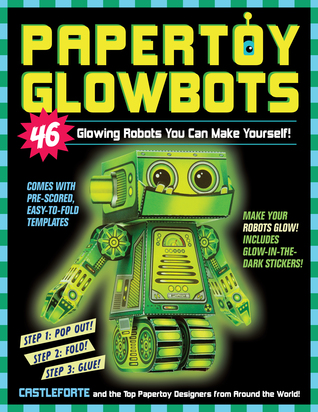
Author Guest Post!: “Robots are Awesome!” by Brian Castleforte, Author of Papertoy Glowbots: 46 Glowing Robots You Can Make Yourself!

Share

“Robots are awesome!”

Robots are awesome! But they are nothing without the creativity! When I was a kid, er, when I was a younger kid, I would create these wonderful robot costumes out of all sorts of random things – cardboard boxes and tubes wrapped in tin foil, old vacuum cleaner parts, and some not so old parts (thanks Mom), wires and hangers, light bulbs and flashlights, batteries, broken toys, metal, plastic, wood, paper, Play-Doh… You get the idea.

As an adult, er, as a big kid I still love to create all kinds of wonderful things, especially monsters and robots, be they costumes or paper toys. Designing my robots for Papertoy Glowbots was a lot of fun. There’s imaging the robots and then engineering the paper shapes, illustrating the skins, writing the stories and bios, naming them; it’s so much fun stepping into the challenge and experience of so much creative play. Like being a little kid again, I can’t help but imagine my bots getting into grand three dimensional adventures beyond the flat pages of my books. In the hearts, minds and hands of kids of all ages, there can be robot dance parties led by Big Fun and DJ Waveform, sending Sparxy and Traxx into space to search for life in distant galaxies, pitting The Bionic Yeti against Glitch Hardware in the robot battle of the century! Oops! My imagination is getting a little carried away there. You see, there is never a shortage of creativity inside us, we need only let it out.

As you can see, creativity is key. It is the driving force behind everything we think, say and do and ultimately create. This is what is meant by the expression “thoughts are things.” And it’s what makes us human.

So what will you create today? Remember it only takes a single piece of paper to jumpstart your imagination. I suggest you roll up your sleeves and dig in. You can start by creating papertoy monsters and robots from my books – with your kids or even without them. Trust me you aren’t the first “big kids” to play with my books. It’s fun. And it’s good for you. Good for your brain and fine motor skills, and it’s good for your inner child. And even better for inspiring the same kind of playfulness for the kids in your life.

Whether it’s a papertoy or working on your own creation, don’t forget you still have so many wonderful gifts of creativity waiting to be unwrapped and shared with the world. Gifts only you can create. And you’ll never know what those wonderful creations are until you get started.

So get glowing and get creative. The kid in you is waiting.

papertoy-glowbots

Papertoy Glowbots
Author: Brian Castleforte
Published August 23rd, 2016 by Workman Publishing Company

About the Book: Origami meets amazing creatures in a book of paper craft fun!

Papertoy Glowbots introduces 46 robots that have the added cool factor of lighting up, whether using glow-in-the-dark stickers that come with the book or light sources like flashlights, Christmas tree lights, and electric tea lights.

The 46 die-cut paper robots are created by Brian Castleforte, author of Papertoy Monsters, along with the hottest papertoy designers from around the world. Meet the robots and read about their entertaining backstories in the front, then turn to the card stock section in the back to build them. The templates are die-cut and ready to pop out, fold, and glue. Bold, colorful graphics ensure the robots look as amazing in the daytime as they do with the lights off.

About the Author: Brian Castleforte is an artist and graphic designer who has created cutting-edge graphics for Nike, Sony, Warner Brothers, MTV, and others. He is the creator of nicepapertoys.com, the first and only papertoy social network, and also created Papertoy Monsters. His work can also be found at Castleforte.com and on Twitter @castleforte.

Thank you to Brian for his creativity-inspiring post!

Kellee Signature andRickiSig

Author Guest Post!: “The Complexity of the Teenage Experience” by Robert Wilder, Author of Nickel

Share

“The Complexity of the Teenage Experience”

About a dozen years ago, I brought the writer Tom Perrotta to the school where I teach. Tom’s novel Little Children had just been published to much acclaim so, in addition to assigning the work to my eleventh graders, I offered to lead a book group with parents. Since I work at an independent school, I’m fortunate enough to have the freedom of teaching contemporary literature in addition to inviting authors to visit my classes. Some fairly controversial works have entered my syllabus, but I was very surprised at some of the parents’ reaction to Little Children. They were agitated by the extramarital affairs in the novel and questioned whether the book should be read by their own (not so little) children. I realized that since this novel was set in a community not unlike ours, it hit a bit too close to home. I asked Tom to address the parents, and he offered them the story of his own reading life and how, by tackling challenging fiction, he was able to develop a relationship with his own mind. He didn’t defensively argue that most internet-fluid teenagers had access to far racier material. Instead, he highlighted the benefits of thoughtful art to young minds.

As a teacher and a writer, I think often of Tom’s talk. We are in such a fearful and reactionary time that I worry that complex and challenging reading can be easily reduced to trigger warnings or quotes pulled out of context. Many people don’t give the young mind the benefit of the doubt and allow apprentice readers to decide if a book is right for them. In my twenty-five years of teaching, I’ve never seen a book do any harm. In fact, I’ve noticed how literature has ignited teenagers or connected to a voice deep inside a boy or girl. Every year, I teach Junot Diaz’s The Brief Wondrous Life of Oscar Wao, and I usually get one or two parent complaints. I offer to meet with the parent to discuss Diaz’s novel and the possibility of assigning a different text only after the parent has finished reading Oscar Wao in its entirety. In the nine or so years I’ve been teaching Oscar, I have yet to have one of those meetings.

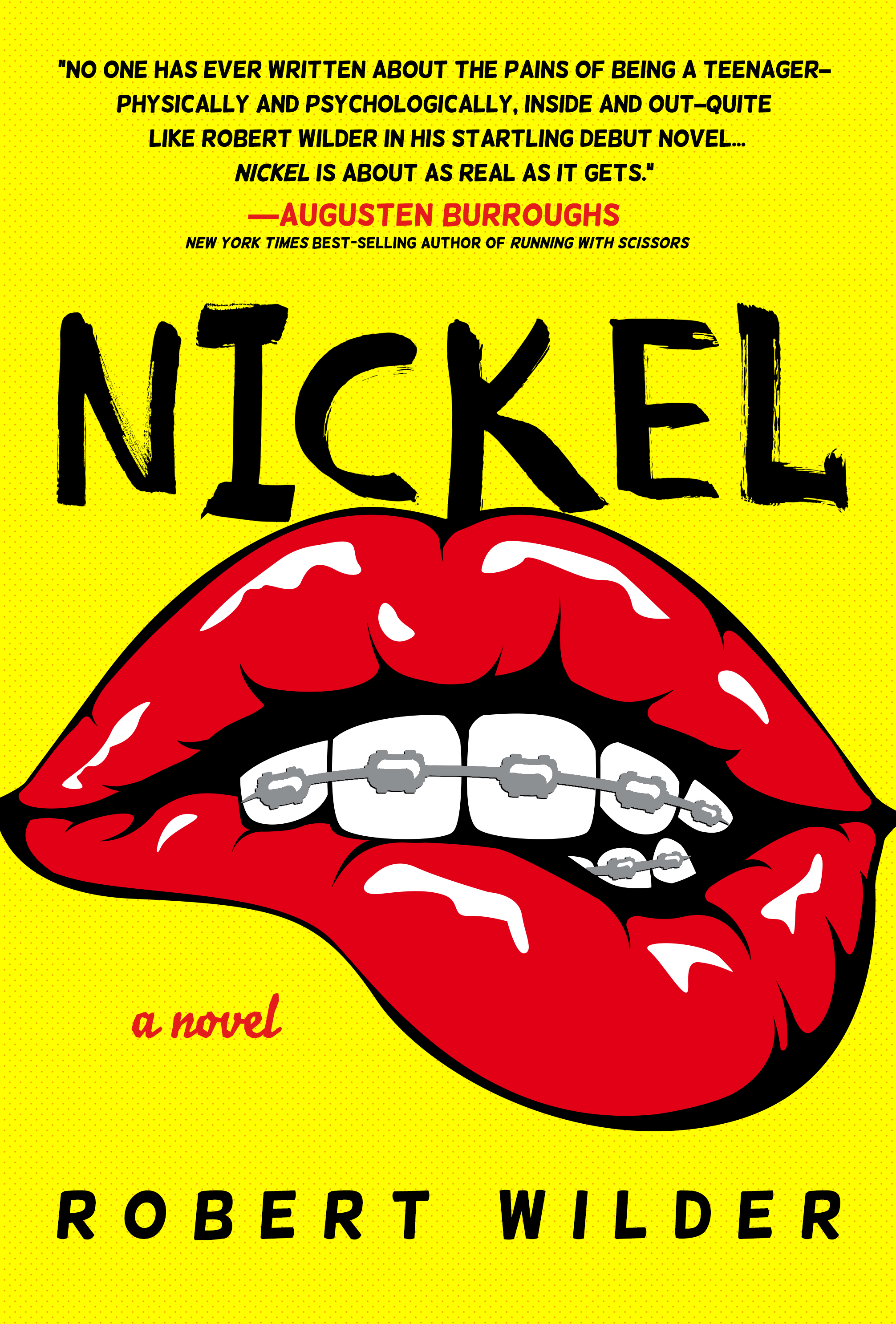
I’ve been thinking about this topic a lot since I wrote NICKEL. I really wanted to capture the truth around the characters of Coy and Monroe and not worry about trigger warnings or censorship. I have spent thousands of hours around teenagers and read tens of thousands of pages of their work, and I didn’t want to simplify or diminish the complexity in the teenage experience. Not all of the thoughts, words, and actions of any individual are safe, harmless, or politically correct. We need to look at the whole of any book the same way we look at the whole child. Anything less would be detrimental to their identity and our own understanding of the world.

nickel hi res cover

About the Book: A STORY ABOUT LOVE, LOSS, AND LOYALTY. Being a teenager is hard enough without your mother in rehab and your slightly inept stepfather doing his best not to screw things up. But at least, Coy has Monroe. Coy is a quirky teenage boy and his best friend Monroe is a girl who is just as odd and funny and obsessed with 80’s culture as he is. So when Monroe comes down with a mysterious illness, his inner turmoil only grows. As Monroe gets sicker and Coy gets a girlfriend from another social crowd, the balance tips and Coy has to figure out how not to give up on his friend, his family, or himself. Nickel is a hilarious, heartbreaking and honest portrayal of the complicated world of being a teenager today.

RWilder-GR-author-photo

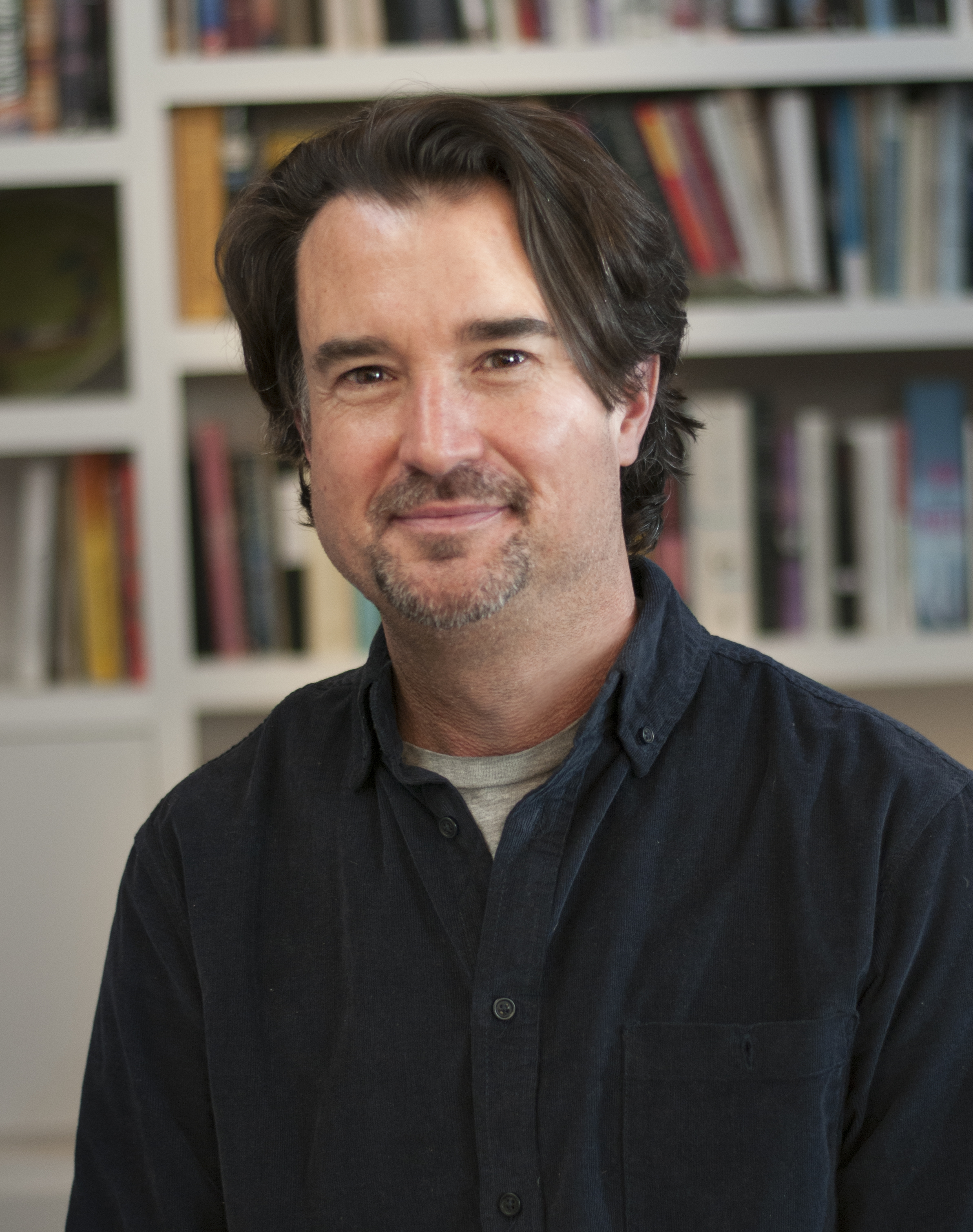
About the Author: Robert Wilder is the author of two critically acclaimed essay collections, Tales From The Teachers’ Lounge andDaddy Needs A Drink, both published by Delacorte Press. His young adult novel, Nickel, was published by Leaf Storm Press in 2016.

A teacher for twenty-five years, Wilder has earned numerous awards and fellowships, including the inaugural Innovations in Reading Prize by the National Book Foundation. He has published essays in NewsweekDetails, SalonParentingCreative Nonfiction, plus numerous anthologies and has been a commentator for NPR’s Morning Edition. Wilder lives in Santa Fe, New Mexico.

Website. www.robertwilder.com
Facebook: https://www.facebook.com/RobertTWilder/
Twitter: https://twitter.com/RobertTWilder
Instagram: https://www.instagram.com/robert.t.wilder/

Thank you Robert for this post on respecting the teenagers in our life!

Kellee Signature andRickiSig

Author Guest Post!: “How a Novel Can Save Our World” by Kristina McBride, Author of A Million Times Goodnight

Share

“How a Novel Can Save Our World”

I was scrolling through my newsfeed recently and caught an article about gymnast Gabby Douglas. She’s a beautiful example to so many young women in our world—at twenty-years-old, she’s barely out of her teens, yet she’s an Olympic hero. Which means she’s in the limelight. This is a cause for celebration, but it’s also a moment to take cover, because people facing that much publicity will oftentimes also be hit with a wave of judgment and scrutiny. I won’t even get into the comments I’ve read about her physical appearance, how so many people have suggested that she change aspects of her beautiful self. That part is so crazy, I suppose I shouldn’t have been surprised to see the haters getting worked up over Gabby’s stance on the podium as she stood with her teammates to accept the gold medal in the 2016 all-around competition. But I was surprised. Shocked, even. All of this makes me wonder who we have become as a society, why so many of us are so quick to judge.

Gabby might not have been smiling through every moment of the National Anthem, and she may not have stood at attention with her hand on her heart for the duration, but that young lady deserves respect and honor during one of the greatest moments of her lifetime. None of us—not one—know what was going on in her mind as she stood up on that podium. She was probably exhausted. She was likely overwhelmed. She may have been thinking of someone she’d lost, wishing they were there to see her shine. Her mind was probably in a million different places as she stood alongside her teammates. And none of us will ever understand. We are walking our own individual paths, different from that of Gabby Douglas, and we all need to show some compassion, some loving kindness, and give it a rest.

This is a motto that I’ve tried to live by for years now. I’m human, after all. I judge, too. At times, it’s a gut-level reaction. If I like something, I label it good. If I don’t, it’s bad. The thing about this, though, is that most of us don’t like things that we fear. And we often fear things simply because we don’t fully understand them. This can cause unrest and friction where peace and harmony might exist if only there were a more mindful approach. If those haters in the Twittersphere had calmed their itchy fingers long enough to think—really think—about what it might feel like for Gabby Douglas to stand up on that podium, to consider her youth as well as all that she had gone through to get to that moment, they might have experienced the appropriate reverence and awe.

This line of thinking helped drive the plotline and character development in my latest novel, A Million Times Goodnight. I wanted to showcase a character who was the target of hatred within his community, a character who had been shunned for something only he truly understands, someone who would push my main character to her limits and cause her to look at the world from a whole new perspective.

Hadley Miller’s best friend Penny was killed in a tragic accident just one year ago. On the anniversary of Penny’s death, Hadley goes to The Witches’ Tower to visit Penny’s memorial, and she runs into Josh Lane. Josh is an outcast, shunned by all for his role in Penny’s death. He was the only one present the night she died, which means he’s the only who really knows what happened. Yet everyone blames him. It’s the easiest choice, after all, a nice, tidy ending to a horrific event. Except that nothing’s ever that easy. Josh has secrets. And the story of Penny’s death has more layers than anyone could possibly imagine. As the book progresses, Hadley is forced to learn the true story, as well as face the emotions that arise when she realizes the part she played in the rejection Josh has faced since that fateful night.

So many books offer this type of twist, one in which a reader believes they understand a character, but soon learn they had only been scratching the surface, that there are hidden truths that explain and motivate everything a character thinks, says, and does—the good, the bad, and the ugly.

I think of Hannah Baker in Thirteen Reasons Why by Jay Asher, Kirby Matheson in Violent Ends by Shaun David Hutchinson (and a whole slew of other YA authors), Melinda Sordino in Speak by Laurie Halse Anderson, Margo Roth Spiegelman in Paper Towns by John Green, Auggie Pullman in Wonder by RJ Palacio, and so many others.

This is true in life as well. We only know a person as well as they allow us to know them. And then, we only know them through our own lens, using the one-of-a-kind perspective that we bring to the table based on the collective experiences we, as individuals, have amassed over the course of our lifetime. Something that I label as good could very well be viewed as bad in the eyes of many others. It’s this universal truth that so many of us forget as we walk through our days, interacting with others. Very few things are completely black or white, good or bad, right or wrong.

If it were possible for everyone’s life story to be known and understood in the flash of time that it takes for two people to lock eyes, there wouldn’t be so much hatred in the world. If we really took the time to know one another, we might just understand the things we fear, and then we might offer a compassionate hug instead of barbed words.

As teachers, we prepare many lessons. If we can add just one more—a life lesson about humanity—it would be amazingly powerful. It’s kinda sweet to think that this can be accomplished through the use of books. This won’t require slaving over a new unit, I promise. As you introduce your next class read, simply ask your students to keep track of the judgment they feel for each character. Then ask them to note how those judgments change as they move through the beginning, middle, and end of the book. How did those judgments change as they uncovered the truth of who those characters really are, deep down. Focus a discussion on what motivated the shift in perspective, and how this can be applied to the people who surround them in their every day lives. Through the analysis of a novel, using a fictional character to exemplify the layers that every human is made of, you might just help save a life, a community, or possibly, our world.

A Million Times Goodnight_cover-REVISED

About the Book: A teen Sliding Doors. One choice creates parallel dual narratives in this romantic contemporary mystery-thriller perfect for fans of Just Like Fate and Pivot Point.

One Night. Two Paths. Infinite Danger.

On the night of the big Spring Break party, Hadley “borrows” her boyfriend Ben’s car without telling him. As payback, he posts a naked picture of her online for the entire senior class to see.

Now Hadley has a choice: go back to the party and force Ben to delete the picture or raise the stakes and take his beloved car on a road trip as far away from their hometown of Oak Grove, Ohio, as she can get.

Chapters alternate to reveal each possible future as Hadley, her ex-boyfriend, Josh, and her best friends embark on a night of reckless adventure where old feelings are rekindled, friendships are tested, and secrets are uncovered that are so much worse than a scandalous photo.

McBride, Kristina - A Million Times Goodnight (2)

About the Author: Kristina McBride has published three novels for young adults – The Tension of Opposites, One Moment, and A Million Times Goodnight.  Her fourth novel, The Bakersville Dozen, will be released July 2017. Kristina is a former high school English teacher and yearbook advisor, as well as an adjunct professor at Antioch University Midwest and Wright State University. Kristina has a thing for music, trees, purses, and chocolate. You might be surprised to learn that Kristina was almost kidnapped when she was a child. She also bookstalks people on a regular basis. Kristina lives in Ohio with her husband and two young children. You can learn more at www.kristinamcbride.com.

Thank you to Kristina for this very thought-provoking and important post!

Kellee Signature andRickiSig

**Thank you to Cheryl at Skyhorse Publishing for setting up the guest post!**

Blog Tour and Author Guest Post!: “Stepping Back Into History: From 9/11 to the Cuban Crisis in the Second World War” by Sandy Brehl, Author of Bjorn’s Gift

Share

“Stepping Back Into History: From 9/11 to the Cuban Crisis in the Second World War”

Today is the fifteenth anniversary of September 11, one of the most horrific days in the history of the United States.

Where were YOU that morning?

What were YOU doing when the planes hit the towers? Or the Pentagon? Or that field in Pennsylvania?

Those of us who can answer those questions likely do so with a catch in our throats and a twist in our guts. It’s hard to view events of intense personal significance as “history”, but that’s exactly what they are for our young learners.

History.

Middle grade students are too young to have direct memories of this day as a lived experience, and yet it shaped the world in which they live.

Donalyn Miller wrote a sensitive and insightful post about using picture books, novels, and nonfiction titles to provide young readers with visceral experiences that can make history come alive and lend some context to their current reality. If you missed her post on Nerdy Book Club on August 21, take the time to read it, please.

Link: https://nerdybookclub.wordpress.com/2016/08/21/its-a-wide-world-by-donalyn-miller/

Nonfiction and academic texts convey facts, but picture books and historical novels can serve as portals to the past, time machines that allow young people to step into a virtual/personal experience of events beyond their lives.

Established readers respond eagerly when picture books are read aloud, and the right book can provide an intense shared experience to launch further readings, even with difficult topics. Then literature groups can choose from a range of well-written historical novels, providing young learners with a deeper and wider world-view.

Such visceral engagement through books can transform history from dry facts into recognition of ourselves in other people’s lives and loves and longings. As Ricki noted in her August 11 review of The Memory of Things, by Gae Polisner, these are books “about being human.”

Books offer similar connection and impact even when the past is more distant. Events from history move beyond campaign rants or score-keeping video games when books create a virtually-lived memory.

During the current political campaign the phrase “finger on the button” as been used in discussing both presidential candidates’ suitability for office. Reading Gayle Rosengren’s Cold War on Maplewood Street allows readers to experience the minute-to-minute-terrifying threat of an all out nuclear war through the eyes of a young girl and her family. Today’s uncertainties may center on potential terrorist threats, but the internal processing of those equally real anxieties surrounding the Cuban Missile Crisis are similar.

Picture books work well to introduce an even more distant era, World War II. The nonfiction picture book Irena’s Jar of Secrets written by Marcia Vaughan and illustrated by Ron Mazellan, depicts a remarkable woman, Irena Sendler. At only 29 years old she took daring risks in Polish ghettos, saving nearly 2,500 Jewish children from death camps and eventually reuniting them with surviving relatives after the war’s end.

One Thousand Tracings: Healing the Wounds of World War IIwritten and illustrated by Lita Judge, is a post-war story based on real events. It depicts a young American girl whose family worked to provide shoes for survivors and displaced persons in Europe when millions were facing destitute conditions. This might well spark projects by readers aimed at assisting modern refugees and displaced persons through a school-based project of some kind.

Novel study groups have many quality options but should certainly include Lois Lowry’s remarkable Number the Stars for those who have not yet read it. Its success has allowed obscure facts about brave Danes helping thousands of Jews escape to neutral Sweden to become more widely known.

The stories of the German occupation of Norway, despite its claim of neutrality, are even less well known. Snow Treasure, by Marie McSwigan, has remained in print since it released in 1942 and continues to be a popular read-aloud. Brave resistance and survival during those oppressive years in Norway are portrayed in Mary Cassanova’s The Klipfish Code and Margi Preuss’s Shadow on the Mountain.

After writing Odin’s Promise (2014), which is set in Norway during the first year of the long German occupation, I began hearing from readers who all but demanded a sequel to learn what happened to Mari and her family during the ensuing years until the war ended.

That’s exactly what historical fiction is meant to accomplish. Readers far removed from that time and place became invested in the history and the fictional characters. Even though it was written as a stand alone title, I had no choice but to dive back into research, interview people who had lived through those times, and explore what would be in store for Mari, her family, and her village. Their journey spanned four more years, so their stories became a trilogy.

And now book two, Bjorn’s Gift will release on October 5. In the second and third year of the occupation Mari confronts greater challenges and threats, many from escalating war but some from her own internal struggles. She faces timeless questions about why friends change, who can be trusted, and how to make choices when right and wrong no longer feel as clear cut as they have been in the past.

Whether it comes to recent events or ancient history, picture books and novel studies invite us to walk through open doorways to the past, allowing readers to view their own questions and experiences through the eyes of other times, places, and points of view. They remind us, as Ricki said, that we’re all human.

Screen Shot 2016-09-04 at 11.00.54 PM

Cold War on Maplewood Street by Gayle Rosengren

Irena’s Jar of Secrets by Marcia Vaughan

One Thousand Tracings by Lita Judge

Number the Stars by Lois Lowry

The Klipfish Code by Mary Casanova

Shadow on the Mountain by Margi Preuss

Snow Treasure by Marie McSwigan

Odin’s Promise by Sandy Brehl

Bjorn’s Gift by Sandy Brehl


author.brehl

About the Author: Sandy Brehl is a retired educator and active member of SCBWI (Society of Children’s Book Writers and Illustrators). When she’s not reading and writing, she enjoys gardening. She lives in the Milwaukee area and invites you to visit her website (www.SandyBrehl.com) to learn more about ODIN’S PROMISE and BJORN’S GIFT. Sign up for quarterly newsletters to stay informed about future releases (including MARI’S HOPE), and special events and offers. Twitter: @SandyBrehl, https://www.facebook.com/sandy.brehl

Contact: Sandy@sandybrehl.com

Sandy shares a blog about middle grade historical novels with three other authors: http://TheStoriedPast.org

Also blogs about picture books at http://UnpackingPictureBookPower.blogspot.com and @PBWorkshop on Twitter

BJORN'S GIFT.2016.Brehl

About the Book: Bjorn’s Gift is the second book in the Odin’s Promise middle-grade historical novel trilogy set in Norway during World War II.

In Bjorn’s Gift, young teen Mari faces growing hardships and dangers in her small village in a western fjord during the second and third years of German occupation, as German troops and local Nazi supporters move closer into her family’s daily life, and her classmate Leif becomes active in the Norwegian Nazi youth party.

Mari struggles to live up to her brother Bjorn’s faith in her as she becomes more involved in risky resistance activities, trusting only her family and a few close friends.

Across Norway, oppressive laws are imposed in the months from Fall 1941 to early 1943, with dire local consequences.

Difficult decisions force Mari to admit that many things in life are not easily sorted into good or bad, and she is forced to wonder if Hitler will ever be defeated . . . and whether the occupation of Norway will ever end.

The series is ideal for dog lovers, for Norwegian Americans and other European-Americans whose ancestors were involved in resistance movements in World War II, and for all who enjoy reading stories about World War II history.

Bjorn’s Gift releases on October 5, 2016. Advance sales begin in September. Book three, the conclusion of the trilogy, is Mari’s Hope, scheduled to release in 2017.

Odin’s Promise, the first book in the series, was published in 2014.

Crispin Books, an imprint of Crickhollow

http://www.sandybrehl.com

Follow Bjorn’s Gift on the Tour!:

September 1           Interview with Todd Burleson at GROG blog: http://groggorg.blogspot.com

September 7           Review: Stephanie Lowden at golowd, a blog about teaching and books https://golowd.com

September 11         Guest post Unleashing Readers (Ricki and Kelley) https://www.unleashingreaders.com

September 14        Review by Erik at This Kid Reviews Books, https://thiskidreviewsbooks.com

September 19        Review, Suzanne Warr, at Tales from the Raven, for MMGM: http://suzannewarr.com

September 20       Olivia and Oscar- review of ODIN’S PROMISE at Kid Book Reviewer: http://www.kidbookreviewer.com

September 27        Olivia and Oscar- review of BJORN’S GIFT at Kid Book Reviewer: http://www.kidbookreviewer.com (reminder- giveaway ends Sept. 30.

September 29        Alex Baugh review at The Children’s War https://thechildrenswar.blogspot.com

October 3                 Jenni Enzor MMGM with review and interview http://jennienzor.blogspot.com

October 5                 MomReadIt- Review by Rosemary https://momreadit.wordpress.com

October 7                 Trisha P at Mindjacked http://trishap00.blogspot.com

October 11                Guest post Rochelle Melander http://writenowcoach.com/blog/

Thank you, Sandy, for this wonderfully researched and insightful post!

RickiSigand Kellee Signature

Blog Tour with Author’s Guest Post!: Hey A.J., It’s Saturday! by Martellus Bennett

Share

heyajblogtourbanner

heyajbookcoverimage

Title: Hey A.J., It’s Saturday!
Author: Martellus Bennett

Summary: A.J. Is an imaginative girl who finds another world that is strangely right downstairs in her kitchen. So strange there’s already a feast, breakfast being served by creatures and beasts.

Oh! What is going in this kitchen of hers? Pancakes! Waffles! Scrambled eggs! And a Jamaican Giraffe?

Breakfast will never be the same. Ever!

About the Author: Martellus aka The Black Unicorn is a BIG dreamer. He lives in a magical house with his wife Siggi and daughter Jett in where everything comes to life when it gets dark or there’s food on the table ( which is pretty much all the time). He’s usually a bit overwhelmed by all of the creatures bouncing around knocking things over in his head and in his house, but that’s nothing a creative ninja can’t handle. Marty received his PhD in awesomeness from the highly prestigious Orange Dinosaur University where his focus was coloring outside of the lines and making stuff with his creative and funny bones. The A.J series is inspired by his daughter Austyn Jett (A.J.) and their adventures together.

Oh yea, He’s a Pro Bowl Tight End for your favorite NFL team.

Learn More about Marty and A.J.: 

www.heyaj.com

Twitter

Instagram

And find the app on iTunes and the Google Play Store.

Author’s Guest Post!: It was a hot fall day, early September in Houston, Texas, and I could hear my friends having a wonderful time through my bedroom window. I couldn’t see what they were doing because my view was blocked by the large tree that stood at attention in our front yard, but I didn’t need to see them to know they were having an awesome time. There was laughter, the sounds of high fives, and some loud arguing over who was out and who was cheating.

I knew those arguments all too well. I was known to talk myself out of all types of situations and into the championship game of whatever it was that we were playing on any given day. I was known as the boy with the gift of gab. But on this bright, sunny fall afternoon, I wasn’t talking my way into any championships. In fact, I wasn’t talking to anyone outside of my bedroom. I was grounded! And what I had done was something I couldn’t talk myself out of. I had the gift of ‎gab, but my mom had the gift of punishment‎.

I was on lockdown—no TV, no hide and go seek, no tag, no catch. I couldn’t even leave my room. Mom made my brother deliver my food to my bedroom like I was a prison inmate. The nerve of this lady! “Is this what a mother’s love was?” is what I thought to myself. ‎I mean, all I had done was set off enough stink bombs in the school’s cafeteria to make a skunk faint.

Seriously, did I the 12-year-old Martellus Bennett really deserve to be under house arrest for that? No one was hurt, no animals were harmed, there was just a stench that quickly spread through the entire school. No huge deal.

The worst part was that I realized it had to have been my arch nemesis Jimmy Carter who ratted me out, because no one else saw me do it. I was actually grounded because of Jimmy Carter, not the stink bombs. It was Jimmy’s fault.

So there I sat, trapped in my room with no video games and nothing fun to occupy my time. I had to make do. After finishing up about 4 sets of 15 prison-style push ups,‎ I was burnt out. I laid back and stretched across my bed, arms and legs spread, making a giant X on the bed as if I was marking the spot where the treasure of my boredom could be found. I stared at the spinning ceiling fan, letting it hypnotize me until my head rolled back and my eyes found the decorative bookshelf against the wall full of old books, dust and creepy China dolls. Upside down, I read the green spine of a book. It read Hatchet by Gary Paulsen.

I had read books before, ‎but those were school assignments. I was always a pretty good student. English and creative writing were my best subjects, followed by P.E and science. So I was a good athlete and a good student. In all honesty, it was partly because I had to earn good grades in order to play sports, since the state of Texas had just created a “no pass no play” rule. If you didn’t pass your classes, you didn’t get to play any sports.

I rolled over backwards and did a backflip out of my bed, but I missed my landing and fell back into the wall, shaking the bookshelf and causing dust flakes to fall like snow on a nice winter day. I grabbed the shelf by its rails to stop it from falling over, then I quickly grabbed the book Hatchet. It had an image of a hatchet over a forest with a small shadow of a wolf in the bottom right-hand corner. It also had a medal on it, which meant it was a winner of some award. I jumped into the bed and cracked it open.

I heard my Mom yell: “Martellus, you better not be having fun up there! You’re grounded!”

I rolled my eyes.

Then I heard my mom say, “Don’t you roll your damn eyes at me.”

How did she know?

I looked around to see if Jimmy Carter was in my room‎, snitching again. “Can’t trust nobody,” I thought to myself. Then I said quietly: “Me, roll my eyes at you, my beautiful and talented mother? I would never do such a thing.”

My mom replied with a southern woman’s “Mmhmmm!”

I turned the first page and began to read. Before I knew it, I was on page 30, then page 75, and so on. The sun had turned into the moon in the sky. I was in the forest, with Brian Robeson trying to survive. I too panicked when the plane crashed, and I felt the water as I, well, Brian swam to shore. Stranded. Alone in the forest with a Hatchet. I only made my way back into the real world when I heard a knock at my bedroom door.

It was the prison guard, my brother Mike delivering my dinner. I had forgotten to eat in the real world, but I do remember the first true meal I celebrated with Brian when we caught our first fish. It was delicious. Ironically, we were having catfish for dinner at my house, how fitting. I wish I could have shared my meal with Brian. I just knew he was hungry. I was a part of the world Gary Paulsen created, and it was amazing.

That was the day I discovered that I could never truly be grounded. I could travel anywhere in the universe with books. People actually created places that I could only go to in stories—what a wonderful concept!

I was no longer trapped in my bedroom. I was stranded on in a forest with a hatchet, learning to survive in a room with no friends or games to play. This was the first time I went on a great adventure without ever leaving the house.

Needless to say, as I got older I fell in love with the places authors could take us to, and the adventures they could take us on. And I wanted create those worlds for others, too. I had so many ideas, so many stories to tell—which is why I am here today writing this blog. That 12-year-old boy who was grounded has written his first book. It’s called, Hey A.J It’s Saturday!

I hope that it takes you on a great adventure and ‎inspires you all to dream bigger and imagine more!

Make sure to go visit other stops on the blog tour!

Jen at Teach Mentor Texts – 8/16
Niki at Daydream Reader – 8/17
Michele at Mrs. Knott’s Book Nook – 8/18
Jessica at Little Lake County – 8/19
Linda at Teacher Dance – 8/20
Kellee and Ricki at Unleashing Readers – 8/21

Author Guest Post!: “Courting the Reluctant Writer” by Michele Bacon, Author of Life Before

Share

“Courting the Reluctant Writer”

Disclaimer: I am not a certified teacher. In fact, I am in awe of anyone who can teach classes of students every single day. I lack the patience, training, and wherewithal to do the work you do. Thank you!

I have the good luck to instruct young writers through workshops in schools, bookstores, libraries, and writing clinics. I love helping young writers discover their voices and tell their stories. To that end, I’ve collected a bag of tricks to help draw out reluctant writers. To help you court reluctant writers, I’m sharing three:

Spelling, grammar, and punctuation don’t matter.

Students with ADHD, ASD, dyslexia, and a slew of other challenges, often feel throttled by proper spelling and grammar. Take away the mechanics of grammar, and you’re left with story.

So let go. Not forever, but for now. Removing those restrictions lets students write freely. It helps them find their voices and the stories they’re eager to tell.

I know grammar is important. (Full disclosure: Grammar may be my first love.) But while I’m nurturing young writers, I tell them to forget that “stuff.” Ignore the mechanics. Save grammar for another week. Every writer needs a copyeditor, anyway.

Show—don’t tell—teens that their voices are unique.

I use this every time I host a writing workshop for teens or tweens. After talking a little about voice and perspective, I explain that talking about writing gets you nowhere. You have to write.

I assign a scene—the same scene—to every student. The exercise is short and sweet—7-8 minutes of writing—and I write along with them. When time’s up, students share, and I respond with positive comments about how each piece is unique.

Reluctant writers aren’t the first to share, but after three or four students read their scenes, everyone gets the picture: you are unique. No one can write from your perspective.

This is especially effective if I read my own piece and cite details students included but I neglected or forgot. Never underestimate the power of being wrong.

Fan fiction is your friend.

This is my very favorite trick. I preface this exercise with a disclaimer about plagiarism. Nothing—nothing—is more freeing to a reluctant writer than writing in a world he already loves.

Hogwarts is already a fully-imagined school, complete with hidden passages, secrets, and hundreds of interesting students. Imagine you, a muggle, woke up in Harry Potter’s dormitory and had to fake your way through potions with Snape.

What if you had boarded Eleanor & Park’s yellow school bus as a fellow student? Show me their relationship and your bus ride through your own eyes.

If you were Trunchbull, how would you next thwart Roald Dahl’s Matilda? (This is particularly fun for late elementary school writers.)

Instead of struggling to imagine a scene, students start with Hogwarts, Rainbow Rowell’s vivid characters, or the evil Trunchbull’s avarice. Fan fiction is freeing, because the hardest work is done. Using a scene, character, or setting from a beloved book, students also come to writing with passion.

I love working with students to build characters, find their stories, or strengthen their prose. But those workshops—all of them—are infinitely easier if students are passionate. If they’re bought in, they’re digging deeper, focused, and ready to tell the best versions of their stories.

And then, eventually, I ask them to do more.

The thing is, the Harry Potter saga is (mostly) over. Roald Dahl has been dead more than 25 years. Eleanor & Park are good to go…but who is this new character my student has created on Eleanor & Park’s bus? Why is he watching Park court Eleanor instead of focusing on his own interests? What’s happening at his house?

That student has created a new character, sparked by fan fiction. What’s more, the spark and the passion will stay with that student. Insert that new character in a new scene, and the passion is still there. What’s more: sharing their passions will ignite new passions in their peers—inside the classroom.

Everyone wins.

I’m on the lookout for more tricks, but these three consistently inspire students to write; I hope one of them resonates with you.

*with great thanks to Jo Rowling, Rainbow Rowell, and Roald Dahl

Michele Bacon Headshot

About the Author: Michele Bacon writes contemporary fiction for adults and young adults. Most of her stories begin as ideas scrawled on random scraps of paper, stuffed into pockets or joining her computer-bag detritus. Life Beforeis her debut novel. Michele lives in Seattle, Washington, with her husband and three small children.

Life Before

Life Before

About the Book: Seventeen years is a long time to keep secrets, so Xander Fife is very good at it: everyone believes he has a normal family. If he can just get through this summer, he’ll start his real life in college with a clean slate–no risk, no drama, no fear.

Xander’s summer plans include pick-up soccer, regular hijinks with friends, an epic road trip, and—quite possibly— the company of his ideal girlfriend, the amazing Gretchen Taylor.

Instead of kicking off what had promised to be an amazing summer, however, graduation day brings terror. His family’s secrets are thrust out into the open, forcing Xander to confront his greatest fear. Or run from it.

Armed with a fake ID, cash, and a knife, Xander skips town and assumes a new identity. In danger hundreds of miles from home, one thing is clear: Xander’s real life is already in progress and just getting through it isn’t enough.

Thank you, Michele, for this post, and thank you, Cheryl, for connecting us with Michele!

RickiSigand Kellee Signature

Author Guest Post!: “How an Author Deals with Not Writing Something New” by Jordan Elizabeth, Author of The Escape from Witchwood Hollow

Share

“How an Author Deals with Not Writing Something New”

I started telling stories as an infant.  My maternal grandmother recorded them for me on cassettes and would later write them down.  This went on until junior high (I had horrible handwriting) when I got my first computer.  After that, no one could stop my writing flow.  I whipped out stories like it was nobody’s business.

Short stories.  Novels.  The words flowed off my fingertips into the keyboard, messy handwriting thrown to the wind.

After high school, I set myself a goal.  Every night, I would write at least one chapter.  It is thanks to that goal that I now have 27 completed manuscripts and 9 published works.  Nothing could stop my writing streak.  I would lock myself into my bedroom and not come out – and not talk to anyone either – until I had completed that day’s chapter.

Okay, so nothing could stop my writing…except a pregnancy.  Not having the energy to write, losing that writing zone, was a blow.  I’d been sick before, but I’d always pushed myself to do at least a paragraph (it usually turned into my chapter).  Suddenly, I had no will to write.

It wasn’t a lack of motivation exactly.  It seemed to be a lot of things.  Stress, fear, exhaustion.  I would sit down at the computer, and when I pushed myself to do one paragraph, that’s all I got.  One paragraph.  One really crappy paragraph.

My characters reminded me of the characters in another of my books.  The setting was like the setting in yet another book.  I didn’t know where to take the story.  Such roadblocks had never happened before, and of course that just added onto my already huge array of negative emotions.

A writer has to write.

Right?

Wrong.  A writer has to be involved in books, but not necessarily writing.  I became depressed, feeling as if my writing career was crumbling, and I took that proverbial step back to reflect.  It sounds cliché, but it worked.  For me, at this point in time, writing wasn’t working, but I had to stay involved.  Since I wasn’t turning out new work, I could take a look at the old.

I called up one of my old manuscripts and gave it a fresh edit.  It wasn’t as tiring as writing something new and I could fully immerse myself in the fantasy world.  Pleased with this new edit, I let the story go into the world, and wouldn’t you know it found a home with a publisher?  The book is KISTISHI ISLAND, due to be released October 27, 2016 from Clean Reads.

I am now in the middle of editing another work.  Before, I would finish one and dive right into the next.  It feels great to explore these old worlds and beloved old friends without the guilt of not writing something new.  Yes, I am totally guilt free now about not writing and that is one less negative emotion on my plate.

People have told me being pregnant means I can eat anything I want without feeling guilty.  I have no urge to pig out yet (maybe that comes later?).  I’m changing that idea around into, “Being pregnant means I can edit all I want and not write without feeling guilty.”  I’ll get back into writing later.  For now, I have old manuscripts to keep me company.

DSC07793

About the Author: Jordan Elizabeth, formally Jordan Elizabeth Mierek, writes down her nightmares in order to live her dreams. With an eclectic job history behind her, she is now diving into the world of author. It happens to be her most favorite one yet. When she’s not creating art or searching for lost history in the woods, she’s updating her blog, Kissed by Literature.  Her published works include ESCAPE FROM WITCHWOOD HOLLOW, TREASURE DARKLY, BORN OF TREASURE, COGLING, RUNNERS & RIDERS, VICTORIAN, GOAT CHILDREN, and KISTISHI ISLAND.

Escape from Witchwood

About the Book: Everyone in Arnn – a small farming town with more legends than residents – knows the story of Witchwood Hollow: if you venture into the whispering forest, the witch will trap your soul among the shadowed trees.

After losing her parents in a horrific terrorist attack on the Twin Towers, fifteen-year-old Honoria and her older brother escape New York City to Arnn. In the lure of that perpetual darkness, Honoria finds hope, when she should be afraid.

Perhaps the witch can reunite her with her lost parents. Awakening the witch, however, brings more than salvation from mourning, for Honoria discovers a past of missing children and broken promises.

To save the citizens of Arnn from becoming the witch’s next victims, she must find the truth behind the woman’s madness.

How deep into Witchwood Hollow does Honoria dare venture?

Thank you Jordan for the reminder that writing isn’t only writing something new!

Kellee Signature andRickiSig