Author Guest Post!: “How Kids Can Stop Thinking and Make Better Life Choices” by Roger Ziegler, Author of Hannah Grace and the Dragon Codex

Share

“How Kids Can Stop Thinking and Make Better Life Choices”

Dreaming and imagination are fundamental to solving practical problems, in school, at home or in the office. Both big problems and everyday ones.

One of the challenges the lead character in my book Hannah Grace and The Dragon Codex faces, is how does she know she’s making the right decision?

She wants to do good, be good, but how do you know? For Hannah it comes down to trusting her imagination and heart. When she does this, things usually go well, when she doesn’t, they go kerflewy.

So what is Hannah learning? In everyday life when we don’t know the answer we usually say, “let me think about it,” or we encourage kids to “think hard” to find a solution. But this kind of problem solving is like using a hamster on a running wheel to power a jet plane.

As the great scientist and mystic Albert Einstein said, “we cannot solve our problems with the same thinking we used to create them.”

We need more fire power to make better decisions and life choices. Where do we get it? From our heart and our gut. Our feeling and sensing centers.

One of the greatest pleasures of my life as a child, and now, is playing with my imagination, feeling out a situation. When I do, it makes my writing much better and my daily life easier.

When we connect the triangle of heart, gut and mind to make decisions, we engage our “Power Trio” and make better life choices.

These skills are not only for adults; they are essential for children. And great news, kids are usually naturals at this. We only need to encourage them to go in the direction they’re already heading.

Getting kids out of our adult habit just “thinking about it,” is one of the best things we can teach them.

Encouraging children to make decisions using their heart, mind and gut “Power Trio,” may help when they’re 20 or 30 or 40 years old and in a crisis. They’ll have developed skills and won’t need to reach for a self-help book that tells them to engage their heart and gut more.

Stop thinking. You’ll be better off. As the great sage Yoda said, “Do or do not. There is no ‘try’.”

So then, what do you do instead?

How To Make Better Decisions By Not Thinking About It

ASK, “HOW DOES IT FEEL?” INSTEAD OF “WHAT DO YOU THINK?”

Kids are experts in expressing their feelings and playing with their imaginations. Imagination, in my experience, comes mostly from a feeling, not from our heads.

Instead of only “thinking hard” about a solution to a math or science or English problem, make it a game. Ask the child to look at the big picture. Have them compare the problem or the situation to something in their own life. An event, their family, things they have or want. Let them use their big picture skills to solve the problem.

BE HERE NOW

It’s a cliché, but it’s a cliché for a reason. Become aware of what is actually happening right now. Not what you think is happening, or what you wish was happening, but what is actually taking place.

Take a moment to stop your thoughts and notice, just notice, what you see and hear and experience that. This alone can bring about an awareness of options that weren’t there before.

Kids are generally much better at this than adults. Usually, all you need to say to a child is, “stop thinking for a moment,” and they usually get it.

Older kids already conditioned to “think about it,” make take more training.

TAKE A DEEP BREATH

Another cliché and yet, still one of the best ways to stop yourself and kids from over-thinking and making bad choices.

A simple deep breath in and longer breath out, can do wonders to stop the chattering mind and cool the situation. Give peace a chance, bro!

VISUALIZE

Cliché number 3? See and imagine your success as having already taken place before you begin. See yourself making the basket before you take the shot. What does it look like and feel like?

Imagine organizing the numbers correctly before you solve the math problem. And then practice this. These things, like anything worth having, take time.

Just because you imagine yourself sinking the basket doesn’t mean it will happen the first time or every time. But I’m betting it will happen much more often than if you don’t imagine that it already happened.

Which leads us to the next better decision skill for children.

DON’T QUIT

We all face obstacles when doing something new or even when we’ve done it 10,000 times. Allow yourself to make mistakes and keep going.

Discouraging children when they are beginning something new, is the biggest killer of success and imagination in my opinion.

KEEP IT A GAME

This is fun. If we turn the above steps into dry, boring, abstract lessons, we’ve missed the point. The goal here is to let our heart feelings and gut senses play free. Your true feelings will always result in more fun and enjoyment, and better results for you and the people around you.

In my book Hannah learns this, after many, many struggles to fight it.

I’ll end with our friend Einstein; “When I examine myself and my methods of thought I come to the conclusion that the gift of fantasy has meant more to me than my talent for absorbing positive knowledge.”

Just something to think about.

hannah-grace

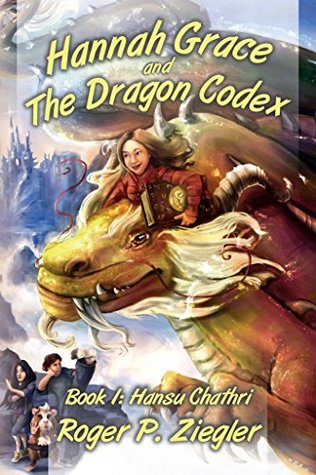
Hannah Grace and the Dragon Codex
Author: Roger P. Ziegler
Illustrator: Nicole Ales
Published May 12th, 2016

About the Book: When an ancient book of wisdom is stolen, 11-year-old Hannah Grace and her karate besties must discover their true powers and rescue the book before Big Evil takes over the Universe.

Magic, positivity, adventure (and a sumo wrestling guinea pig), await readers in the first book of this coming of age fantasy series. It’s perfect for all kids who love to get lost in worlds of wonder and imagination.

Every day after school, Hannah Grace does her homework and practices karate with her father John. But one morning when Hannah wakes from a strange dream where she sees an ancient and mysterious book, she’s more than a little shocked when her dad reveals an amazing secret; it’s The Dragon Codex, the most powerful book ever created and he needs Hannah to find it before Big Evil gets it and takes over the Universe!

Suddenly, Hannah, who can barely remember her homework, is thrown into a much larger world of magic and danger–and a whole lot of people are counting on her.

Hannah’s got it covered though. Actually, she has no idea what to do, but she’s not giving up just yet.

Filled with mysteries, demons and a sumo wrestling guinea pig, Hannah Grace and The Dragon Codex is a fun, thrill-ride adventure about discovering the power inside you.

151025_PS183_family

About the Author: Roger long ago rejected the sensible (and sane), advice of his parents to be a lawyer or doctor and became a writer instead. He’s been a journalist, taxi driver, actor, theater producer, collection agent and so much more!

He’s received writing awards from the New York State Press Association and the Physicians for Social Responsibility. Roger coauthored the Amazon “beast” selling humorous self-help book Pee On It and Walk Away: How to Deal with Difficult People. Life Lessons from Superdog Abby, www.peeandwalk.com.

Roger is a third-degree black belt in Seido karate and has a wonderful, magical nine-year-old daughter. Roger likes fudge.

This is his debut novel.

Thank you to Roger for this post we can use to remind our students to think, breathe, and assess.

Kellee Signature andRickiSig

Author Guest Post!: “How can Fiction Help us Cope with our World?” by Katelyn Detweiler, Author of Transcendent

Share

How can fiction help us cope with our world?”

It hurts to read the news these days.

It hurts my brain, it hurts my heart. I can only read so much before I have to tune out, move on with my day. It’s not that I don’t want to know and understand what’s going on in our country and in our world—I do, of course I do. Awareness is the first step at enabling any kind of change. But still, I have a mental and emotional limit. There is only so much suffering my brain can absorb.

The speed of the news is part of it—every day a revolving flow of red letter, all cap headlines. We expect that in 2016; the Internet and social media have buoyed our expectations for fresh, compelling content. We mindlessly pick up our phones all day, refreshing our feeds: Instagram, Twitter, Facebook, repeat. Our phones are with us as soon as we wake up in the morning, right before we close our eyes at night. Even without directly checking news sites, the news reaches us, always. Our friends are talking about the latest shooting, the latest bombing, gun laws and foreign policies. Everyone has an opinion—and that’s great. It’s how it should be. Conversations are necessary, and the best way for each and every one of us to keep on learning, to keep on pushing and evolving our perspectives.

But what is our emotional limit? Week after week, day after day, it’s something new, something equally or more shocking than we’ve seen before, more graphic and uncensored. More real.

I worry that I’m becoming numb.

The names and faces fade so quickly. Too quickly. When the violence in Orlando happened, I felt sick, heartbroken that my own book, TRANSCENDENT, targets that same city. In my book, Disney World is the target—fiction that blurs scarily close to reality.

But already, just a few months later, Orlando and Pulse feel so long ago. We’ve had so much tragedy to face since then. We read the names, we stare at the faces. We try to imagine their families. We wonder about the life they’ll now never get to live. And then the next day, or the next week, there are new faces. The old faces, unintentionally, unconsciously, are hazier. Less vivid.

No place is immune. Orlando could be any city, every city. This is our reality now. We need some outlet for our fear—we need to find a way to still have hope.

So what can we do when we see too much, feel too much? How can teens in particular cope, begin to process and understand what is happening in their world—their present and their future?

For me at least, I turn to books. Fiction, stories, people and places who are only real in my imagination. Because sometimes it takes stepping out of reality, the day to day, to understand what is actually happening around me, and my place in it.

Books… they slow us down. They show us new perspectives, challenge our beliefs. In reading we can intimately identify with characters, individuals—like people we know, and more importantly, like people we don’t yet know. People we’ve never met in our small towns, or even in our big cities. But even in the differences, we (at least in a good book) can see things in them that speak to our own lives, our own fears and dreams.

Through books we question, we learn, we grow.

And, hopefully, we leave each story with a new understanding of our real world—a new appreciation of all the beautiful people in it—and a renewed sense of hope. Because more hate will not solve our problems. More hate will never solve anything. There is common ground that connects all of us, the deepest core of what makes us human. Books can help us—enable us to appreciate our similarities, and to celebrate what makes us all unique.

We can all be pieces of the solution. We can take the negative and react in positive ways—turn the bad news to good. We don’t have to give up, give in. It’s a message that’s important for our young people especially: Reach out to others. Help your community. Talk to someone new. Start small.

Because small things become big things, and big things can change our world.
transcendent-cover-image-high-res

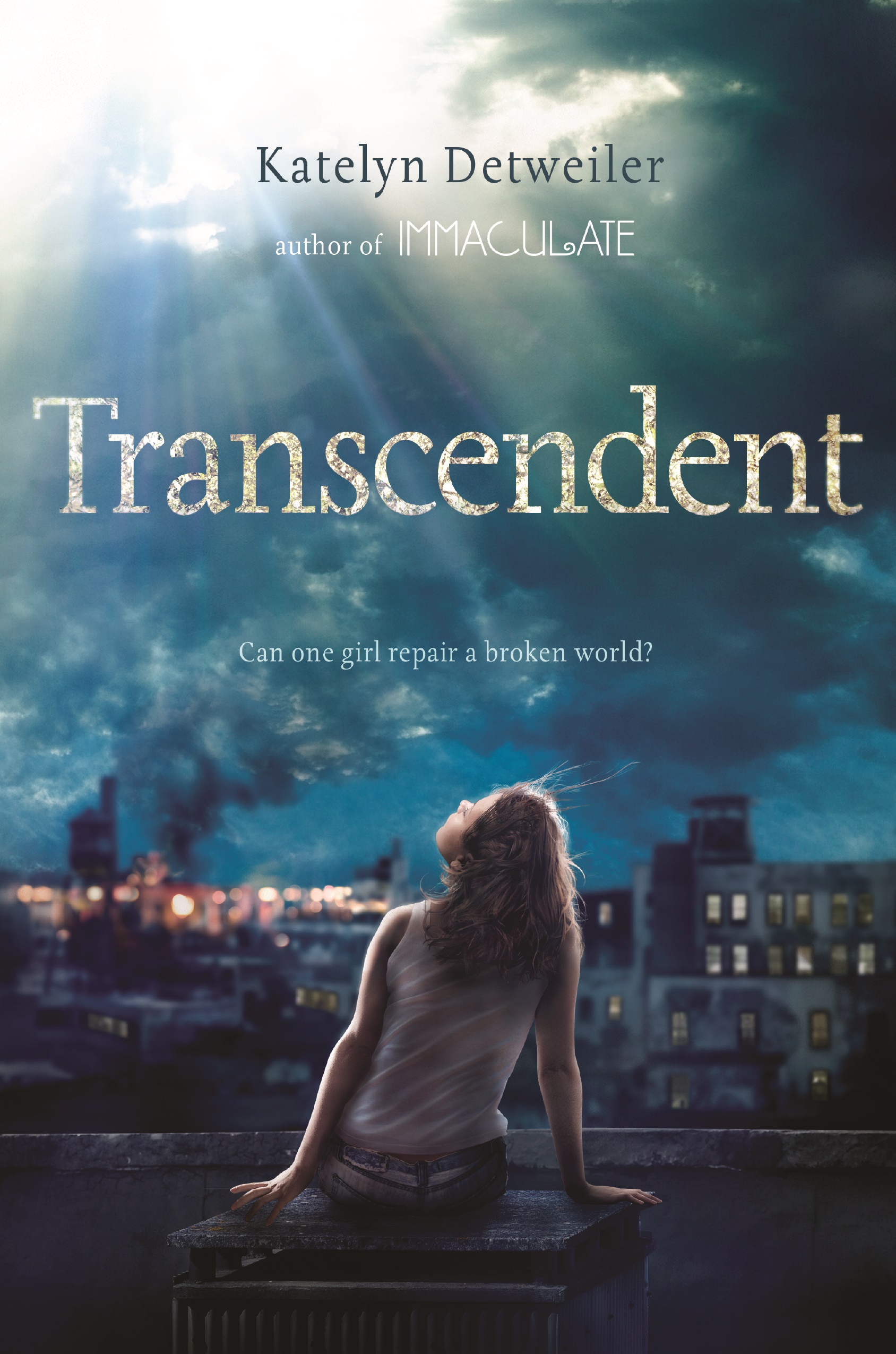
Transcendent
Author: Katelyn Detweiler
Published October 4th, 2016 by Viking Books for Young Readers

About the Book:  A beautiful work of magical realism, a story about a girl in the real world who is called upon to be a hero.

When terrorists bomb Disney World, seventeen-year-old Iris Spero is as horrified as anyone else. Then a stranger shows up on her stoop in Brooklyn, revealing a secret about the mysterious circumstances surrounding Iris’s birth, and throwing her entire identity into question. Everything she thought she knew about her parents, and about herself, is a lie.

Suddenly, the press is confronting Iris with the wild notion that she might be “special.” More than just special: she could be the miracle the world now so desperately needs. Families all across the grieving nation are pinning their hopes on Iris like she is some kind of saint or savior. She’s no longer sure whom she can trust—except for Zane, a homeless boy who long ago abandoned any kind of hope. She knows she can’t possibly be the glorified person everyone wants her to be… but she also can’t go back to being safe and anonymous. When nobody knows her but they all want a piece of her, who is Iris Spero now? And how can she—one teenage girl—possibly heal a broken world?

About the Author: Katelyn Detweiler was born and raised in a small town in eastern Pennsylvania, living in a centuries-old farmhouse surrounded by fields and woods. She spent the vast majority of childhood with her nose in a book or creating make-believe worlds with friends, daydreaming about how she could turn those interests into an actual paying career. After graduating from Penn State University with a B.A. in English Literature, emphasis in Creative Writing and Women’s Studies, she packed her bags and made the move to New York City, determined to break into the world of publishing. She worked for two years in the marketing department of Macmillan Children’s Group before moving in 2010 to the agency side of the business at Jill Grinberg Literary, where she is currently a literary agent representing books for all ages and across all genres.

Katelyn lives, works, and writes in Brooklyn, playing with words all day, every day, her dream come true. When she’s not reading or writing, Katelyn enjoys yoga, fancy cocktails, and road trips. She frequently treks back to her hometown in Pennsylvania, a lovely green escape from life in the city, and her favorite place to write.

Q&A WITH KATELYN DETWEILER

How did you come to write TRANSCENDENT?

My earliest, vague conception of the book was that it would start with an unprecedented tragedy, a state of international heartbreak and desperation so raw that the world would be at a total loss for what next—looking to anything, anyone, to bring stability or clarity or hope. I knew, too, that whatever the tragedy would be, it had to center on children. We can all recall how we felt when we heard about Sandy Hook. A mass shooting is horrifying no matter who the victims are—but targeting children? I couldn’t stop watching the news updates, staring at the faces of the students who’d been killed, thinking about the futures they would never have, the families left behind.  It was this memory that guided me here—the question of what could be so completely awful that people might actually stand still. Might remember, might keep remembering. For TRANSCENDENT, I chose a bombing. Disney World. I knew that my mind would have to go to dark places, that things had to get worse before they could get better. But it felt necessary to me, starting these conversations—and it feels more necessary, more relevant today than ever.

Did you write it with the 15th anniversary of 9/11 in mind?

It was completely unintentional, though the timing seems hugely important to me now. I was in high school when the towers were hit. It felt like such a terrible, extraordinary, surreal event at the time. It was the beginning—to my mind, at least—of a new era of terrorism, of that terrible state of wondering what awful tragedy would hit next. Teens today don’t know another reality outside of our current world; they’ve grown up in a place where acts of terrorism and mass shootings have become the norm. I was especially horrified when the Pulse shooting happened, to think that I’d targeted Orlando, too, in this book. But really, by the time it publishes, who knows how many other cities could be on the list of victims? No place is immune. Orlando could be any city, every city. This is our reality now. We need some outlet for our fear—we need to find a way to still have hope.

One of the big themes in the book is hope and forgiveness overcoming hate and despair. Can you talk more about that and why it’s so relevant for young people today?

It’s hard sometimes to not react to hate with more hate. To blindly lash out, hurt whoever hurt you, ensure justice is served. We see this in our personal lives. And we see it so often on an international scale—the fear that terrorism causes, the desperation. The feeling of weakness that can morph into something quite ugly, spawn intolerance for people who look a certain way, talk a certain way, pray a certain way. People desperately seek a target, someone to point a finger at—even if that blame is unjust, irrational. But we cannot sink to that level. More hate will not solve the problem. More hate won’t make terrorism go away. Young people are still just formulating their opinions about the world, about others—struggling with who they are, who they want to be. They are still figuring out the role they’ll play in the world, their responsibilities—“Can I make a difference?” How they learn to find answers to these questions helps to shape and strengthen their identity, their (our) future.

Is it important for people to believe in miracles and to have faith in difficult times?

I believe that in difficult times more than ever, people look for something bigger—they want to believe that the world is not as black and white as it seems, that there is hope to be found beyond our everyday existence. Faith isn’t necessarily about believing in God, or any god, some supreme being up in the clouds. It can be, sure, for some. But it can also be about trusting in yourself, in your family and/or your friends, in the love you choose to surround yourself with, the connections you make with the world around you. There’s a quote that opens IMMACULATE, attributed to Albert Einstein:  “There are only two ways to live your life. One is as though nothing is a miracle. The other is as though everything is.” I love this idea—this thought that we’re just too jaded to realize how many tiny miracles are around us every day, even in the ugliest, darkest times. Life is a miracle. We’re miracles. We’re more than just our cells and our DNA.

This story, like your previous book IMMACULATE, is centered on a virgin birth. Why did you choose to explore that topic? Is TRANSCENDENT a religious book?

I’ve been fascinated by the idea of a pregnant virgin in contemporary times for years now, ever since I was a teenager and asked my own mom: would you believe me if I said I was a pregnant virgin? She said yes. She would believe me. It stuck with me, the idea that faith—whether it be in a supreme being, or in a person you love and trust dearly—can be so all encompassing. That we can still believe in something that defies all science and reason. I would say that, at this point in life, I am spiritual more so than religious, and I think the book reflects this perspective. Spirituality—to me—is believing in more than the orderly scientific rules of our world, even if we can’t explain it, even if there’s no doctrine to help us better understand. My goal for both books was to explore and question with respect for all sides; I wanted there to be something for everyone, to find the commonalities that unite people of different faiths (or no faiths) rather than the differences.

Why was it important for this story to take place in Brooklyn?

I knew from the outset that I wanted the backdrop of Brooklyn—that a more sheltered, traditional small town wouldn’t do. Iris didn’t just grow up reading about the wider world in books or hearing about it on TV. She’s experienced it firsthand. She’s been exposed to all different kinds of people, seen lives and cultures that are so different than hers. This felt necessary to me in building a protagonist who was comfortable enough—empathetic enough, compassionate enough, bold enough—to step up to the plate, to be a voice of change. I grew up in a small town (surrounded by fields and woods rather than people and skyscrapers) and moved to NYC eight years ago, Brooklyn specifically for the last few. Living here has heightened my awareness of the world. A lot of things were so much more theoretical to me before—poverty and homelessness, for example. Different religions, different races, different cultures. I wanted a true microcosm for this story, a more accurate, complex representation of our world.

What role do race and privilege play in the book?

Privilege is key in all threads of the novel. To start: Disney is attacked because of the vast privilege it represents. This is not a park, a destination, for everyone. This is for a select, elite group. A fairytale that is unobtainable to so many—a tangible way of separating out the haves and the have-nots.

Iris herself is an upper middle class white teenager in Brooklyn. Though she’s open minded and aware of the disparity around her—volunteering at a soup kitchen, engaging with the homeless—she’s still very much in her own bubble. Iris’s Brooklyn is the version we see across the media: farmers markets and organic everything, beautiful old brownstones, hip, industrial-looking bars and restaurants, pretty white people with beards and buns and bicycles. Iris has accepted this privilege as normal, more or less, until for the first time the guarantees of her life come into question. Iris ends up at a homeless shelter; she’s confronted by a side of Brooklyn that she’d only glimpsed at surface-level before. Iris must question basic assumptions about herself—and others—as she struggles with how to reorient her life.

Do you think there’s value in exploring these ideas fictionally, vs. conversations that start from live news, internet articles, social media, etc. around current events?

Our perception of current events today is so heavily influenced by the speed of news, the internet and social media generally, the constant demand for fresh, compelling content; we’re blasted with horrific tragedies every week—becoming increasingly graphic and uncensored, as evidenced by the streaming video we saw of Philando Castile, dying after being shot by a cop. Week after week, day after day, it’s something new, something equally or more shocking than we’ve seen before. We’re becoming so numb—the names and faces fade so quickly. Already, Orlando and Pulse feel so long ago. We’ve had so much tragedy to face since then. Our brains can only absorb so much pain and suffering. I think it sometimes takes stepping *out* of our reality—our day to day—into literature (or movies, TV, etc.) to fully process our thoughts, to make sense of how we feel, what role we could possibly have in change. Books slow us down, show us new perspectives, challenge our beliefs. In reading we can intimately identify with characters, individuals—see something in them that speaks to our own lives, our own fears and dreams. And, hopefully, we leave books with a new understanding of our real world—and a new resilience.

Thank you Katelyn for this hope-filled and truthful post!

Kellee Signature andRickiSig

Blog Tour with Author Guest Post and Giveaway!: Ornaments of Love by Sharlin Craig

Share

I’m sure I’m not alone when I say Christmas is my favorite time of the year. And when it comes to kids, the majority of them probably agree. Sure, the kids are excited because Santa comes and brings them presents, but also because there’s a festive feel in the air. People tend to be happier and smile more during the holiday season. Fun activities abound during the season between Thanksgiving and Christmas such as parties, baking cookies, decorating the tree, reading favorite Christmas books, singing Christmas carols and so much more.

I was inspired by my own happy family experiences growing up and also by my husband and now 9-year-old daughter to write my debut children’s book titled, “Ornaments of Love”.  It’s a story about a mom and dad who get too busy over the Christmas season to find the time to decorate the tree with their 10 year-old-daughter, Ayana.  As the story evolves, the family is pulled together by an unexpected, serendipitous event.

As a teacher, why not integrate some of the fun and excitement of the holidays into the classroom setting? Below are some ways of utilizing the “Ornaments of Love” story with this purpose in mind:

English Language Arts: Poetry related to family theme or holiday-(Can be about Christmas or a different holiday if the child doesn’t celebrate Christmas i.e. Hanukah/Ramadan/Chinese New Year, etc)

Cinquain

Christmas (2 syllables)
Family time (4 syllables)
Presents, Decorations (6 syllables)
Laughter, Smiles, Cookies, Music (8 syllables)
Happy (2 syllables)

Haiku

I love Christmas time (5 syllables)
Believe, Joy, Hope, Love, Faith, Peace (7 syllables)
Celebration time (5 syllables)

I am Poem

I am (two special characteristics) (happy and excited)
I wonder (something you are actually curious about) (when we’ll decorate the tree?)
I hear (an imaginary sound) (Rosie bark)
I see (an imaginary sight) (a bare Christmas tree)
I want (an actual desire) (to decorate the tree with my family)
I am (the first line of the poem restated) (happy and excited)
I pretend (something you actually pretend to do) (that they’re decorating the tree right now)
I feel (a feeling about something imaginary) (lonely)
I touch (an imaginary touch) (an ornament)
I worry (something that really bothers you) (that it will be this way each year from now on)
I cry (something that makes you very sad) (because I want to do this with them)
I am (the first line of the poem repeated) (happy and excited)
I understand (something you know is true) (that they’re busy)
I say (something you believe in)  (that I want to spend time with them)
I dream (something you actually dream about) (of many happy Christmases)
I try (something you really make an effort about) (to decorate this tree by myself)
I hope (something you actually hope for) (that they’ll come help me soon)
I am (the first line of the poem repeated) (happy and excited)

Acrostic-(A poem, word puzzle, or other composition in which certain letters in each line form a word or words.)

O ld
R egal
N ew
A nimals
M e as a baby
E nchanting
N ativity
T welve days of Christmas

Character analysis-Open Mind Portrait

Students considers the thoughts that each character in the story is having.

Student creates a portrait surrounded by characters’ thoughts in thought bubbles.

Writing Prompts– Here are some creative writing prompts and journal ideas teachers can use during the month of December:

-A wonderful Christmas or Holiday memory
-If I owned a toy store
-What does ‘Peace on Earth’ mean to you?
-A letter to Santa about a friend who has been very good this year
-Why we should have the Christmas spirit all year long
-What I want to do over the winter holiday
-My vacation at the North Pole
-If I could give a gift to the world, what would it be?

Ornament Hunt Game-For homeschoolers or teachers who have Christmas trees set up in the classroom, teachers can have students write a description down for each ornament that will be going on the tree. While the children aren’t in the room, the teacher can hang the ornaments on the tree and when the students return, they can play a game finding each ornament and checking  them off their lists.

Social Studies: Celebrating Christmas around the world: “Ornaments of Love” can be used as one example of how Christmas is celebrated in the United States. This provides a gateway for learning about how other cultures around the world celebrate Christmas. This can also open a discussion about cultures that don’t celebrate Christmas and what holidays they do celebrate.

Science: Investigating Christmas trees

-Have students look at a real, mini Christmas tree and describe the color and branches. Discuss how the tree’s leaves stay green in the winter because Evergreens are adapted to survive the cold weather, how most Evergreen trees do not have regular leaves, how they are needles or really hard leaves, with a thick-skin, and how they have an ‘antifreeze’ chemical in the leaf to keep it from freezing.

-Explain how they produce chlorophyll year round, which helps with photosynthesis and therefore keeps the Evergreens green all year long.

– Have the children smell the tree, feel it and describe the texture. Show them the roots and talk about how the roots absorb the water. Have them measure the tree: the height, width, length of the branches and width of the leaves. Older children can produce a graph of the data. Look at the leaves through a magnifying glass and discuss what they find.

Visual Arts:

-Students can design and create ornaments out of various materials available in the classroom.

-Students can create an original cover for “Ornaments of Love” with the cover including the title of the book and the author.

-Coloring Pages: The teacher can copy coloring pages from the “Ornaments of Love Coloring Book” and have the students color them. Colored pencils or crayons can be used and students can practice the art of shading darks and lights within the pictures.

Performing Arts:

-Students may break into groups of 3-4 (Ayana, Mom, Dad and Rosie) and select a portion of the book to reenact.

-Students may select class members to represent characters in the story and interview them.

ornoflovecover

Ornaments of Love Description: A touching Christmas story with glowing illustrations, Ornaments of Love is a story to cherish for years to come. A beautiful tale of Ayana, an endearing ten-year-old who excitedly anticipates that special time of year when the entire family joins together to decorate and admire the Christmas tree.

But sadly this year is different. Ayana realizes that her mom and dad are far too busy with everything else to enjoy the tree with Ayana. Then, something unexpected happens and the family is brought together with tenderness and joy.

Filled to the brim and overflowing with charming moments, gentle humor, and timeless illustrations, this beautiful story is a wonderful reminder of what’s important not only during the Christmas season, but every day of our lives. Ornaments of Love is destined to become one of your favorite holiday stories. One that will remain in your heart forever.

colbook-frontcover

Ornaments of Love Coloring Book Description: This beautifully designed coloring book is a companion or stand-alone book to the original Ornaments of Love picture book. It contains not only the complete story of Ornaments of Love, but also provides 21 full-size coloring pages for artists of all ages. The Ornaments of Love coloring book was created to bring families together at Christmas time. It provides families a perfect way to reduce holiday stress by spending quiet time coloring pages that showcase angels, bells, stars and much more.

Coloring pages range from easy to difficult, perfect for all family members!

Additional complimentary coloring pages are available to print online with the purchase of the coloring book.

Make this a special gift for your loved ones by also purchasing the original Ornaments of Love picture book with full color illustrations.

Three coloring pages are available on Sharlin’s website for preview: http://www.sharlincraig.com/

colbook-example

sharlin

About the Author: Sharlin Craig, a Detroit native who now resides in southern California with her husband and daughter, is dedicated to writing inspirational children’s books that touch the spirit of her readers. A graduate of Oakland University, she’s taught music to children for several years while also writing music and lyrics. She’s combined her love for children and writing into authoring her debut children’s Christmas picture book, Ornaments of Love.

Sharlin believes that with the right surroundings and daily encouragement, children are boundless. She’s passionate about helping children feel understood and empowered through her books and hopes that her stories make them smile.

Giveaway!

a Rafflecopter giveaway

Don’t miss out on other blog tour stops!

Thursday, Oct. 27th: This Mom’s Delight (Review)
Tuesday, Nov. 1st: K&A’s Childrens’ Book Reviews (Review & Giveaway)
Thursday, Nov. 3rd: Amanda’s Books and More (Review & Giveaway)
Friday, Nov. 4th: Mamitales (Review & Giveaway)
Saturday, Nov. 5th: Christy’s Cozy Corners (Review, Guest Post-‘My Favorite Ornament Memories’ & Giveaway)
Sunday, November 6th:: Unleashing Readers (Guest Post-‘Integrating Ornaments of Love into the Classroom Setting’ & Giveaway)
Monday, November 7th: The Write Chris (Author Interview & Giveaway)
Wednesday, November 9th: This Mom’s Delight (Guest Post-‘Affirm Your Child’s Worth by Spending Time with Them’ & Giveaway)
Friday, November 11th: All Done Monkey (Post-‘10 Ways to Make the Holidays Special’, Review & Giveaway)
Monday, November 14th: Connie M. Huddleston (Monday Morning Indie: Review & Interview)

 Thank you so much Sharlin for the guest post that will definitely be useful to many teachers coming this winter!

Kellee Signature andRickiSig

Author Guest Post!: “How History Revealed the Environmental Story Behind D is for Dudley” by Ron Chandler, Author of D is for Dudley & Other Nature Tales

Share

“How History Revealed the Environmental Story Behind D is for Dudley”

As a nature writer I have always been interested in the outdoors and in how people use the resources found there.  So it was no different when I became fascinated by sea turtles.  Originally, I thought it would be a good story to discuss how different locations handle their nature areas (i.e., states like Massachusetts and Florida have robust programs to protect sea turtles and the beaches that have become their habitat).  Then I realized it would be a better story to tell how the use of a land area has changed over time.  The land area in question in the story, D is for Dudley, is Maryland’s Eastern Shore.  Currently, it is an area the has a lot of small towns and farms that use modern agriculture techniques.  But I wondered, How has this area changed in the last 150 years?  So in the story the main characters, Valerie and Doug, obtain their great grandfather’s diary, which reveals what Tilghman Cove was like a long time ago.  This post will disclose the techniques that I used to unlock that secret.

At one time every area of the country was pristine with untouched landscapes and wild animals roaming everywhere.  So I decided to first do research at the local libraries in Easton and Salisbury, Maryland.  There I found books retained in special collections that documented the exploits of early explorers.  Captain John Smith, the English explorer, was the first European to sail in the Chesapeake Bay.  I read his narratives of the areas he explored to get a baseline assessment.  Then I looked at how the agriculture industry has changed on the Eastern Shore.  Now the main crops are corn and soybeans, but 150 years ago the main crops were wheat and tobacco.  In my story I decided to have an entry in the great grandfather’s diary about how he rolled tobacco bales from his farm to the tributary of the Chesapeake Bay to be picked up by a larger ship.  This research technique also disclosed several facts I could not use (i.e. wheat milled on the Eastern Shore was transported to Valley Forge to help feed George Washington’s troops during the Revolutionary War.).

My second research technique was to look at how current events repeat themselves and thus, effect the environment.  For instance, floods are generally regarded as bad.  But flood  waters carry silt that replenish areas used to farm crops.  In my research of current events, I discovered that about once every five years, a stray manatee from Florida will swim up the East Coast and then the Chesapeake Bay.  When the weather turns cold, the manatee will swim back south.  So I figured that if a stray manatee can do that now when there is a lot of coastal pollution, then what was it like 150 years ago.  So I put a scene in the story about manatees.

Third, no story is realistic without accurate descriptions.  To obtain this I visited several untouched nature areas.  In Maryland, I spent time at visiting the Pocomoke River, which is a tributary of the Chesapeake Bay.  This area is largely protected and has wetlands and forests along the river which are virtually similar to the landscape that Captain John Smith explored.  I also visited  Blue Spring Park in Florida to get a close-up look at manatees.

Finally, I took a look at how people talked about their environment 150 years ago.  For example, the term “wetland” is a modern term.  Back then people would talk about marshes and swamps.  I also looked at their use of dialect.  This research can be done by reading old letters from early  settlers or by listening to the old letters read in documentaries (i.e., programs about the Civil War and other historical events).  Then as a final step, I completed a lexicon of the language and terms used back then.

So these four steps (book research, current event research, field trips, and looking at the use of language) can unlock the historical story behind any developed area.

d-is-for-dudley

D is for Dudley & Other Nature Tales
Author: Ron Chandler
Published November 2nd, 2015

About the Book: This middle grade reader will raise environmental awareness. The title story is about a brother and sister relying on their wits to try to save the largest terrapin in Tilghman Cove from being hunted by fishermen. The book contains ten other short stories about boys trying to find courage or understand the outdoors and girls struggling to realize their dreams.

ron-chandler

About the Author: Ron Chandler is a freelance writer from Baltimore, Maryland. His short stories and poems have been published in over 30 literary magazines including The Binnacle – University of Maine at Machias, Blueline – SUNY Potsdam, Capper’s, Pink Chameleon, Storyteller, and Toasted Cheese.

Thank you to Ron for this key to research!

Kellee Signature andRickiSig

Author Guest Post!: “Everybody has a Story” by Beth Vrabel, Author of A Blind Guide to Normal

Share

“Everybody has a Story”

Everybody has a story.

As a writer and a reader, I know this to be true.

Write what you know.

This is another tenet that has stuck with me through my career with writing, especially as I moved from being a lifestyle columnist to a fiction writer. After all, is it any surprise that this girl (picture) wrote a book about a picked-on dorky fourth-grader? PACK OF DORKS, my debut novel, released in 2014.

Lucy’s story reflects many of my experiences as a 10 year old wondering if I’d ever make it to the “cool table” at the cafeteria. Only whereas fourth-grade me wallowed in dorkdom, Lucy stands up to her frenemies and bullies. Even better? She finds others to stand with her. With her “pack,” Lucy realizes she’s exactly where she wants to be. I gave Lucy the ending I wish I had been brave enough to give myself.

nerdybeth

I’m proud of PACK OF DORKS, but shortly after it was published, I have to admit I also was embarrassed by the personal connection.

I was determined that my next book would be different. It’d be completely imaginative and new and unrelated to my own life. And do you know what happened?

Everyone died.

By page seventeen, all of my characters gave up the ghost. Again and again and again. My husband suggested I start writing short stories instead.

I stopped being embarrassed. I started being scared.

Scared that the only stories inside me were ones connected to my own life. Scared that I wasn’t original or fresh or, frankly, all that creative. And, like many of us do when we’re scared, I ran away from what frightened me—those personal connections. I still hadn’t learned my lesson that a bully must be faced head on, even when that bully is comprised of your own thoughts.

Luckily, something saved me.

As I recently shared in Albinism InSight magazine, shortly after we knew PACK OF DORKS would be published, my daughter asked me for help finding a book.

She wanted to read a book that dealt with a shared experience.

My daughter has albinism, like Alice. My girl’s albinism is mild—you probably wouldn’t recognize it in her when you met her. Her hair is strawberry blonde and her skin pale. Her eyes, like the eyes of everyone with albinism work differently and she is mildly visually impaired.

But we couldn’t seem to find a book, or even a movie, where a character had albinism yet wasn’t creepy, mystical or evil. Nowhere could we find a book about a regular girl who learns, grows, has friends and happens to have albinism.

Go ahead, give it a shot. Type in albinism—or worse, albino—into a popular bookseller’s website. I did and found the following:

  • A dystopian young adult series in which people with albinism take over the world, destroying the lives of the “pigmented.”
  • A crime mystery in which the sinister villain and art thief is called The Albino.
  • A book about a young “albino detective” who is able to psychically solve cases.
  • A story about an “albino witch” who uses her powers to force apart two lovers.

It made me angry. It broke my heart.

My husband and I work hard to show our daughter that though she was born with this challenge, it does not define her. She has more in common with everyone else than this one thing that might set her apart. We tell her again and again that everybody faces challenges.

And today my girl is 13, an avid reader, a brilliant student and, making me the most proud, one of the kindest people I know. We know albinism is beautiful.

That’s why is so frustrating to see it portrayed in such ugly ways.

And so I stopped running from my own connections; instead, I leaned into them.

I wrote the story I wanted my girl to have. A story about a 12-year-old girl named Alice. She’s smart and kind, capable and caring, brave though often overwhelmed. And she happens to have albinism.

Alice scouts out stories in her new town and proves to the townspeople, her family, and, most importantly, herself that blindness is just part of who she is, not all she can be.

It’s gotten great reviews. In fact, The International Literacy Association named it the winner of its intermediate fiction prize, which is a tremendous honor.

But the reviewer whose opinion means most to me has the bedroom next to mine.

And my daughter loves the book. She read it chapter by chapter as I wrote it. Her enthusiasm propelled me to dig deeper and shine a light on other issues too often buried in children’s literature.

Let me be very clear that my daughter and Alice are different. My daughter has her own story, just like each of us, one that’s hers to share whenever and however she’d like.

Everyone has a story.

My stories reflect me.

And here’s the irony—writing stories that mirror my heart has allowed me to write characters I never would’ve dreamed possible.

Characters like Richie Ryder Raymond. You’re introduced to this wise-cracking, witty and clever boy in STINKVILLE. Richie gets his own book in A BLIND GUIDE TO NORMAL, releasing Oct. 11 through Sky Pony Press.

blind-guide-revised

Due to a childhood cancer, Richie has an artificial eye and low vision in his remaining eye. I don’t have a lot in common with a 14-year-old boy, let alone a cancer survivor.

But I do know how scary it is start something new. I know what’s like to want something you can’t ever have. I know what it’s like to be awkward and cover it with humor.

Once again, I relied on those shared experiences—and a lot of research—to live through my characters. I realize now doing this makes my stories original, keeps them fresh and requires creativity.

beth_vrabel_final-4

About the Author: Beth Vrabel is the award-winning author of A Blind Guide to Stinkville (winner of the 2016 ILA Award for Intermediate Fiction), A Blind Guide to Normal, and the Pack of Dorks series. She can’t clap to the beat or be trusted around Nutella, but indulges in both often, much to the dismay of her family. Please visit her online at www.bethvrabel.com, on Twitter @beth_vrabel, or on Instagram @authorbethvrabel.

Thank you, Beth, for this outpouring and important post!

Kellee Signature andRickiSig

Author Guest Post!: “I Am An Unlikable Heroine” by Brianna R. Shrum, Author of How to Make Out

Share

“I Am An Unlikable Heroine”

Molly Ringwald sits in library detention, opposite Ally Sheedy, losing it over life and love and the particular unfairness of being a teenage girl. And there is a very specific injustice in it. “If you say you haven’ t [had sex] ,” Sheedy says, “you’re a prude. If you say you have, you’re a slut.”

“You’re so conceited, Claire,” says Anthony Michael Hall, because Ringwald revels in popularity. Ally Sheedy hides in the shadows, the least conceited of them all, and they call her a freak for it. Condemned if you do, condemned if you don’t. Give Judd Nelson one victorious fist pump as the credits roll, and BAM. You’ve got a hero. And every terrible thing he ever said up to that point just dissipates.

Is anything more important, more subversive, for people to read in a classroom than an unlikable girl?

We grow up in school reading Holden Caulfield, Jay Gatsby, Odysseus, and the message is clear: you boys, made of snakes and snails and puppy dog tails, show your teeth and the world will remember you for a hundred years. But what about the girls? Be sweet and good and kind and nurturing, and the world may not remember you…but the boys sure will. Boys who conquer the world are active. Flawed. Anti-heroes. Girls in stories can take the world by the scruff of its neck, and they are unlikable.

The thing I have most consistently found, in regards to Renley, the protagonist of my novel, How to Make Out, is that she is unlikable. Man does she make some mistakes. And she makes some BIG ONES, and makes them with gusto! And to that theme, I say, “You are right.”

But here’s the thing: I am unlikable. I was unlikable when I was 10 because I loved The Backstreet Boys, and the Backstreet Boys were trash pop. I was unlikable when I was 14 because I played basketball and wore high-cut puppy dog shirts that went up to my throat and did nothing to show off my curves, and didn’t I want to be a girl? I was unlikable when I was 16 and showed up to school with a hickey on my neck. I was unlikable when I was 18 because I got married, and at 21 because I had a baby and those choices were ridiculous. I was unlikable at 22 because I worried too much about the highlights in my hair and wore skirts everywhere, and lord, isn’t that vain? I was unlikable at 25 because I wore Hogwarts t-shirts and played video games but didn’t know what exactly happened at hour 2, minute 17 of a 70-hour game and so I was a fake geek girl. I am unlikable at 26 because I have blue hair and daydream about tattoos.

I am an unlikable heroine.

GIRLS are unlikable heroines.

Wouldn’t it have been amazing to have grown up in a classroom library just FULL OF US?

Wouldn’t it have been incredible for the boys to see that sometimes they can be made of sugar and spice? And that sometimes girls can have snakes and snails running through their veins too?

How delightful a thing, to grow up surrounded by people of EVERY gender who make mistakes, and who live.

How incredible to be given permission to not judge your worth and validity by being likable.

How to Make Out Revised 9781510701670

About the Book: Sixteen-year-old Renley needs three thousand dollars for the math club’s trip to New York City, and she knows exactly how to get it: she’s going to start a how-to blog where people pay for answers to all of life’s questions from a “certified expert.” The only problems: 1) She doesn’t know how to do anything but long division and calculus. 2) She’s totally invisible to people at school. And not in a cool Gossip Girl kind of way.

So, she decides to learn to do . . . well . . . everything. When her anonymous blog shifts in a more scandalous direction and the questions (and money) start rolling in, she has to learn not just how to do waterfall braids and cat-eye makeup, but a few other things, like how to cure a hangover, how to flirt, and how to make out (something her very experienced, and very in-love-with-her neighbor, Drew, is more than willing to help with).

As her blog’s reputation skyrockets, so does “new and improved” Renley’s popularity. She’s not only nabbed the attention of the entire school, but also the eye of Seth Levine, the hot culinary wizard she’s admired from across the home-ec classroom all year.

Soon, caught up in the thrill of popularity both in and out of cyberspace, her secrets start to spiral, and she finds that she’s forgotten the most important how-to: how to be herself. When her online and real lives converge, Renley will have to make a choice: lose everything she loves in her new life, or everyone she loves in the life she left behind.

Brianna Shrum Author Headshot

About the Author: Brianna Shrum lives in Colorado with her high-school-sweetheart-turned-husband and two uber-hyper, superhero-obsessed little boys. She thinks chai tea is proof of magic in the world, and loves all things kissy, magical, and strange. She’d totally love to connect with you, so you can find her online at briannashrum.com or saying ridiculous things on Twitter @briannashrum.

Thank you Brianna for this important conversation-starting post!

Kellee Signature andRickiSig

**Thank you to Cheryl at Skyhorse Publishing for setting up the guest post!**

Author Guest Post!: “Alaska Smokejumpers” by Mark Thiessen, Author of Extreme Wildfire: Smoke Jumpers, High-Tech Gear, Survival Tactics and the Extraordinary Science of Fire

Share

fire-prevention-week

“Alaska Smokejumpers”

Imagine jumping out of a perfectly good airplane, deploying your parachute and landing at a very remote campsite. Except before you get a chance to enjoy camping, you have to fight a forest fire. That’s the job of smokejumpers and it’s unlike any other job in the world.

This summer I spent 4 weeks photographing smokejumpers for National Geographic Magazine working out of Fairbanks, Alaska. It’s a vast and remote landscape where the only way you can get to fires is by air. Most of these fires are caused by lightning. Thunderstorms roll through the landscape and pepper the forest with lightning bolts. The top of a tree may explode sending burning branches to the ground. They might sit there and smolder for a few days until the weather becomes hot, dry and windy. Then thin streams of white smoke rise up to the sky. These few smoldering branches are now burning and setting the neighboring trees and bushes on fire.

In Alaska it’s often a commercial or patrol aircraft will spot these new fires and radio the dispatch office. If these fires are in remote places far from any road, they call in the smokejumpers. Planes and parachutes are the fastest way to get firefighters to the scene.

Once a plane of smokejumpers is circling the area, they are looking out the windows trying to figure out where they will land and how they will approach each fire. After a “lightning bust” there will be many fires taking off at the same time. Right now they are small. That’s the idea, jump on them when they are small before they grow and require a lot more resources to put out.

Out they go….their parachutes burst open to slow their decent.  One by one they drop into a meadow or clearing and hopefully not into any trees. Loads of cargo are parachuted to the same drop point. In these boxes are chain saws, axes, shovels, and extra food. The smokejumpers tents, sleeping bags, and extra clothes are all held in pockets of their jump suit or in their personal gear bag hanging on their waist.

On the ground they quickly get out of their jumpsuits, grab their tools and attack the fire. Starting at the heel where it is the coolest, they work their way towards the head. In Alaska during the summer the permafrost has melted and the ground is wet just below the surface. They use a unique tool called a “beater”, which looks like a mud flap attached to a flexible pole.  They literally beat the flames down into the wet ground below. It doesn’t take much and works really well. As they work their way along the flank towards the head, they stay near the black area that has already burned, which is the safest place. There is always a chance the fire will blow up on them. Wildland firefighters have a saying, “Keep one foot in the black and you’ll always come back.”

When the fire gets knocked down, it could be in the wee hours of the morning. But in Alaska it never gets dark in the summer because it’s too far north. Exhausted from a hard day’s work, they eat their dinner, pitch their tents and reflect on what an amazing day it’s been.

extreme-wildfire

Extreme Wildfire: Smoke Jumpers, High-Tech Gear, Survival Tactics and the Extraordinary Science of Fire
Author: Mark Thiessen
Published August 30th, 2016

Ripped straight from this summer’s headlines, renowned National Geographic photographer and wildfire expert Mark Thiessen brings young readers right into the flames with Extreme Wildfire: Smoke Jumpers, High-Tech Gear, Survival Tactics and the Extraordinary Science of Fire (ages 8-12).  Featuring Thiessen’s adrenaline-filled first-person narrative and breathtaking photographs, readers can almost feel the impending heat and experience what it’s like to work side-by-side with the heroes who keep the world’s forests and their inhabitants safe.

In one moment, there’s a simple spark, and then roaring flames surge 200 feet into the air, devouring forests. Trees, from root to canopy, are burned to the ground. Airtankers and helicopters hover above, executing an air attack. Brave firefighters, equipped with flame resistant suits, leap from helicopters onto the treetops and descend to the blazing forest floor.

In this book, young readers will learn about the ecological impacts of wildfires, the ins and outs of fire science including tactics for prevention and containment, cutting-edge technology used to track wildfires and predict fire behavior, and about the impressive skill, survival tactics, and bravery required to control a wildfire. Also included are “Fire Facts,” Thiessen’s fascinating “Notes from the Field” and page after page of photographs’s from Thiessen’s 20+ years of photographing fires up close.

From a searing expanse of flames in Russia to barreling blazes in California, no wildfire is too extreme for Mark Thiessen.  Based in D.C., he has traveled across the globe investigating dangerous infernos and working alongside courageous firefighting teams. Mark is available for interview and can talk about his why his idea of a vacation is placing himself in the middle of blazing fires, fire prevention techniques and tips and the effects of fires on the environment and wildlife.  Here is a terrific video featuring Mark and his adventures: http://video.nationalgeographic.com/video/wildfire-photographer

extreme-wildfire-8-9

extreme-wildfire-10-11

extreme-wildfire-12-13

Thank you to Mark for this truly important post!
And thank you to Karen from Media Masters Publicity for helping set up the post!

Kellee Signature andRickiSig