Author Guest Post: “Celebrate Biodiversity: Life + Variety = Biodiversity” by Laura Perdew, Author of Biodiversity: Explore the Diversity of Life on Earth

Share

“Celebrate Biodiversity: Life + Variety = Biodiversity”

From smelly stinkhorn mushrooms to hardy tardigrades, and towering sequoia to soaring condors, and creepy anglerfish to the Hercules beetle, Earth is home to MILLIONS of known species of plants, animals, fungi, bacteria, and microorganisms of all shapes and sizes. Scientists estimate there could be millions (if not billions) more species that have not yet been identified.

Biodiversity is present everywhere on the planet including some pretty extreme places: near volcanoes, at the deepest parts of the ocean, in the sand, in hot springs and mud pots, in the ice, and even under the ice. And consider this – wherever you are at this moment you are in the company of hundreds or maybe even thousands of other species growing, squiggling, flying, reproducing, wriggling, feeding, and thriving.

Biodiversity: Explore the Diversity of Life on Earth explores genetic, species, and ecosystem biodiversity and how each species, no matter how large or how small, has a role to play. It is all CONNECTED. As John Muir once wrote, “When we try to pick out anything by itself, we find it hitched to everything else in the Universe.”

These interconnections make our planet mighty, yet also fragile and vulnerable. Writing and researching Biodiversity gave me an increased appreciation for the amount, variety, and complexity of life on our planet. Unfortunately, I am also now even more aware of the many threats to biodiversity. The time for action is now. To quote Dr. Seuss, “Unless,” he wrote in The Lorax in 1971, “unless someone like you cares a whole awful lot, nothing is going to get better, it’s not.”

My hope is that the book will inspire wonder in kids and raise awareness.

Wonder leads to caring (hopefully a lot!).

And if kids care, they will act.

Starred review from Booklist:

“By book’s end, readers will truly understand what biodiversity is, its importance to the health of the planet, and humans’ impact on the complex natural systems where it thrives.”

Activity: Explore Biodiversity

To start the discussion about biodiversity, generate a list as a group of five examples of each of the following: plants, animals, fungi, bacteria, and microorganisms. This list will ultimately spark conversations. Next, challenge students to research and discover one species of plants, animals, fungi, bacteria, and microorganisms they’ve never heard of. To generate even more interest, challenge them to find the most unique or bizarre species they can. Their findings can be shared in any number of formats, including a museum-style gallery walk, an online slide show, or a “show and tell.”

Questions for discussion:

  1. What are the similarities between the all plants discovered? What are the differences?
  2. What would happen if one of the animals students researched disappeared?
  3. What role do the fungi play in the ecosystem?
  4. Bacteria are often thought of as something to get rid of. What do you think the larger results of this might be?
  5. How do you feel about the microorganisms all around you?

Activity: Get Involved

There are many ways for students to get involved to support biodiversity. One is to protect or create new habitats.

Today, the populations of pollinators are in decline, especially butterflies and bees. Much of this is due to habitat loss and poisoning as a result of pesticide use in agriculture. To support pollinators, conservationists are encouraging people to plant pollinator gardens at home, work, school, and in the community.

Start by identifying a place where kids can plant a garden. If space is an issue, consider using a large pot or a planter outside a window because they will attract pollinators too! The next step is to research the types of pollinators in your area. Then research types of plants that these pollinators are attracted to. Try to find a variety of plants that flower throughout the spring, summer, and fall. Perhaps go talk to a local expert or invite one into the classroom. Draw plans for the gardens and plant in the spring. As the garden grows, record observations about the growth and about the species that visit the garden.

Questions for discussion:

  1. How many different species have you observed in your garden? Do certain pollinators like specific types of flowers?
  2. There is a lot going on above the soil. Did you ever consider what is going on below the soil? What kinds of species may be living there? Are they harmful to the garden or helpful?
  3. What would it take to launch a local effort to create pollinator gardens? Could you educate neighbors about planting their own gardens? Can you convince the school to set aside a larger area for a garden? How about in the community?

Activity: Celebrate Biodiversity!

Understanding and appreciating biodiversity are a critical part of the effort to protect it. Kids can play a key role in raising awareness about the threats to biodiversity. Have kids create a piece of visual art that celebrates biodiversity. It can celebrate the biodiversity around the world, just in your community, unseen biodiversity, or biodiversity in a single ecosystem. Each student should choose their own medium – painting, sculpture, collage, photograph, or whatever interests them. The goal is to create a piece that celebrates the variety and value of life on Earth, and to make others stop to think as well.

Consider places where the artwork can be displayed – in the school, community centers, churches, other gathering places, or even online. Invite family and friends to view the pieces. International Day for Biological Diversity is May 22, but, of course, you can celebrate any day.

Questions for discussion:

  1. As you worked on your piece, did you slow down and spend more time thinking about biodiversity?
  2. What was the reaction to the pieces from others?
  3. Have you been inspired to do even more to raise awareness of the issues facing biodiversity? What else can you do?

More teaching resources for Biodiversity at https://nomadpress.net/wordpress/wp-content/uploads/2018/07/Biodiversity-Classroom-Guide.pdf.
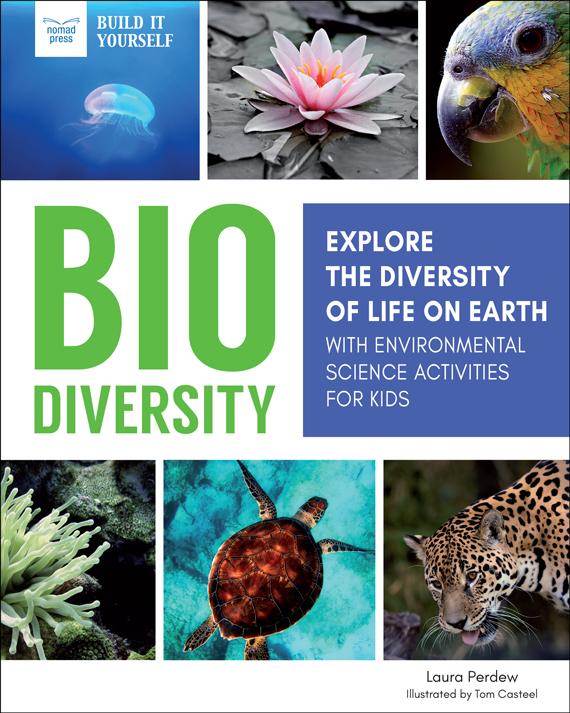
Biodiversity: Explore the Diversity of Life on Earth with Environmental Science Activities for Kids
Author: Laura Perdew
Illustrator: Tom Casteel
Published March 5th, 2019 by Nomad Press

About the Book: From the tallest tree to the smallest microbe, Earth is home to more than 1.5 million known species of plants, animals, fungi, bacteria, and microorganisms. And scientists estimate there could be millions, if not billions, more that have not yet been identified!

Biodiversity: Explore the Diversity of Life on Earth with Environmental Activities for Kids introduces middle schoolers to the evolution of life on Earth, beginning with the first single-celled organisms that emerged 3.8 billion years ago to the complex, multi-celled organisms that exist today and make up the tree of life. Biodiversity is found everywhere on the planet—on land, in the water, and even in extreme environments such as ice and volcanoes. There are actually entire microbiomes beneath our feet, in puddles, and even in our belly buttons!

Biodiversity includes hands-on STEM activities and critical thinking exercises to encourage readers to consider the threat to biodiversity and figure out ways to be part of the solution. Fun facts, links to online primary sources and other supplemental material, and essential questions take readers on an exploration of the incredible biodiversity on Earth.
About the Author: Laura Perdew is an author, writing consultant, and former middle school teacher. She has written more than 15 books for the education market on a wide range of subjects, including the animal rights movement, the history of the toilet, eating local, and the Great Pacific Garbage Patch. She is a long-time member of the Society of Children’s Book Authors and Illustrators. Laura lives in Boulder, Colorado.

Website: lauraperdew.com

Thank you, Laura, for this wonderful post about our amazing Earth!

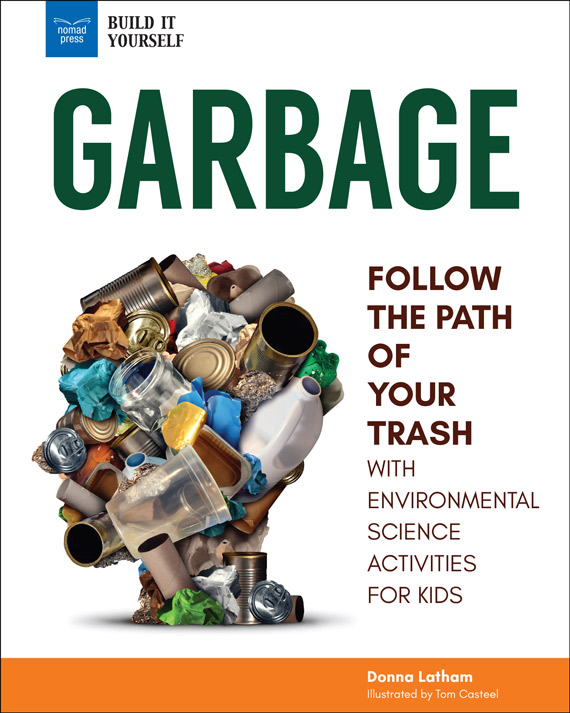
Author Guest Post!: “Talking Trash” by Donna Latham, Author of Garbage: Follow the Path of Your Trash with Environmental Science Activities for Kids

Share

“Talking Trash!”

Life with kids is pretty busy, and it can be easy to forget to consider the environment with every purchase we make. Bottled water, individual snack packages, and upgraded devices all seem like the standard price we pay for being parents and educators in modern society, but in fact, the garbage we produce from this lifestyle has an impact that lasts far longer than—or just as long as—a laminated piece of child’s artwork.

What have you tossed in the trash today? A gnawed apple core? A plastic straw? A tattered handbag? A piece of furniture?

We throw tons of garbage away every day. Anywhere you find people, you’ll find garbage—mounds and mounds of it. A gyre of plastic trash floats in the middle of the ocean. Garbage is even marooned on the surface of the moon.

Usually, we don’t realize how much stuff we throw away. In just one year, an average family of four in the United States churns out 6,351 pounds of waste. That’s enough to fill a three-bedroom house to the ceiling.

And where does all that trash go? It doesn’t simply disappear, as much as we’d like to think so. Even the stuff that gets lugged to the landfill requires a careful process of sorting and arranging so that the runoff and off-gassing doesn’t make us ill. Or it might get burned and filtered to reduce the amount of toxins that are released into the atmosphere.

But still—our oceans fill with plastic, which gets eaten by marine life. Our highways and back roads are lined with litter. Our beaches are minefields of trash.

However! Through effort and education, we can make a difference and be part of the cleanup. And we owe it to our kids to model behaviors that will result in positive changes to the world—such as reducing the amount of trash we create! While the three R’s of Reduce, Reuse, and Recycle are critical in our quest to make Earth healthy, there’s another R of equal importance—Rethink. Rethink the way you make purchases and the way you use what you have. This is an incredibly important lesson for kids to see acted out on a daily basis.

To help, try these environmental activities with the children in your life!

TRACK YOUR TRASH

What’s in your rubbish? For one week, track and record every item your family discards. Be very careful because trash can contain broken or sharp objects.

  • Use a scale to weigh three large empty plastic tubs. Record the weights in a science journal.
  • Reuse cardboard, index cards, or scratch paper to make three labels for the tubs: “Trash,” “Reusable,” “Recyclable.” Attach the labels to the tubs.
  • For one week, become your family’s garbage collector. Put on rubber gloves to rummage through every item of trash. Be on the lookout for broken or sharp items and handle with care. Categorize each as trash, reusable, or recyclable. Place each article in the appropriate container.
  • At the end of the week, weigh each tub of stuff. Subtract the original weight of the empty tub from the total and record how much waste each tub has.
  • Compare and contrast your totals with those published by the EPA. Did each person in your household produce about 31. pounds of garbage, which is the national average?
  • Challenge your family to cut down your amount of garbage. Rethink your trash choices. What can you reuse or recycle, instead of discarding? If you get a composter, you can compost food waste.
  • A month from now, try this activity again to observe your success. Are your results different?

TO DYE FOR!

Has your old T-shirt seen better days? No need to let it die. Dye it instead! Next time your family boils colorful veggies, don’t dump the water. Use it to brew natural dyes the way colonists and pioneers did. Then, use those dyes to jazz up your shirt and give it new life.

Choose your color. Beets will make red. Carrots produce orange. Gold onions make yellow, red cabbage produces purple, and spinach gives you green. Put the vegetables in a pot, cover with water, and boil them. Drain the liquid and strain out any solid bits. Store the liquid in a glass jar until you’re ready to dye the shirt.

Before you use your colored liquid, you’ll need to make sure the dye will set in the fabric. Pour 4 cups of cold water and 1 cup of vinegar into a large pot. Place the T-shirt into the mixture. Then, put the pot on the stove and simmer the shirt for a full hour. Check on it now and then to make sure the mixture doesn’t boil away. After an hour, remove the shirt and rinse it in cold water.

Now you’re ready to work with your dye. Return the pot and T-shirt to the stove and pour in the colored water. Simmer again. When you are happy with the color of the shirt, turn off the heat. Wear rubber gloves to handle the shirt because dye stains skin. The color will dry a few shades lighter than it looks in the pot. Hint: When it’s time to launder your shirt, wash it separately in cold water. The dye will last longer and won’t stain anything else.

JUNK MAIL BEAD NECKLACE

It’s fun to get a card or package in the mail. But junk mail? Not so much. You don’t ask for junk mail, but it shows up anyway. It’s usually advertising materials such as catalogs, flyers, credit card applications, and even CDs. One credit card company sends out materials in a fancy gold box with a plastic window, two Styrofoam bumpers, and five individual flyers inside! According to the New York University School of Law, most families in the United States receive 848 pieces of junk mail annually. About 46 percent is never even opened. Many people toss it straight into the trash, so about 5.6 million tons of the stuff clogs landfills.

Reuse junk mail to create colorful trash-to-treasure paper beads for a necklace.

Hint: Reuse clasps from broken jewelry. You can also string pearls, beads, and charms along with your completed paper beads.

Collect all the mail your family receives for one week. Make one pile of regular mail and one of junk mail. Tally the number of pieces in each, and record your totals in your science journal. Weigh each pile and jot down those totals. How do they compare?

Place the junk mail into categories of your choice. For example, make piles of catalogs, advertisements, flyers, or magazine subscription offers. How many pieces are in each pile? Note your findings.

Now it’s time to reuse! First decide how long you’d like your necklace to be. Measure a length of thin cord or fishing line and cut it.

Create a template with a piece of cardboard. Draw a triangular shape 1 inch wide at its base and 6 inches long. Cut out the template and use it to trace about 30 strips on glossy paper from your junk mail. Cut out the strips. If you discover later that you need more beads, then come back to this step.

Firmly wrap the wide end of the first strip around a wooden skewer or chopstick and roll the strip toward the pointed end. The tighter the paper, the more decorative the bead. When you have about 2 inches of bead left to roll, use a glue stick to swipe the remaining length.

Finish rolling the bead and hold it firmly in place until the glue sets. Carefully remove the bead from the stick and set aside. Repeat with all the strips until you’ve made all the beads.

For strong, durable beads, seal them with a coat of decoupage glue, or Elmer’s glue with water added. This makes a nice finish. You might find it’s easier to apply glue if you place each bead back on the skewer tip first. After applying the glue, set each bead aside to dry.

Tightly tie a metal clasp to an end of the fishing line. When the beads are dried and feel firm to the touch, string them on the line. Once the line is completely full, tightly attach the other clasp. Enjoy your junk mail jewelry!

Discussion questions:

Why does it matter where our garbage goes after we throw it out?

Do you produce more inorganic or organic waste?

How has garbage dumping changed throughout history?

What role do landfills play in solid-waste management?

How does hazardous waste cause problems in landfills and the environment?

How will you recycle and reduce to limit what you dump into the waste stream?

How can you use creativity and ingenuity to reuse items?

How will you challenge yourself to recycle more?

How can you rethink choices to develop a waste-reduction action plan?

About the Author: Donna Latham is an award-winning author and playwright. She is the author of Amazing Biome Projects You Can Build YourselfBackyard Biology Investigate Habitats Outside Your Door With 25 ProjectsDeciduousForestsDesertsGarbage Investigate What Happens When You Throw It Out With 25 ProjectsNorah JonesOceansRespiration and PhotosynthesisSavannas and Grasslands, and Tundra. She is a member of the Society of Children’s Book Writers and Illustrators and the Society of Midland Authors. She lives in Batavia, Illinois. Website: donnalatham.com

About the Book: That potato chip bag you tossed in your trash can this afternoon—where does it go when it leaves your house?

Garbage: Follow the Path of Your Trash with Environmental Science Activities for Kids invites middle graders to investigate the world of trash! The average American produces more than four pounds of trash every day—multiply that by 300 million people and you’ve got a lot of garbage! Where does it go? How does it break down? What are the challenges of dealing with so much waste? What can we do decrease the amount of stuff we are throwing away? Garbage explores questions like these while encouraging kids to think about the choices they make that generate garbage in the first place.

Try these hands-on environmental projects!

  • Investigate a mini midden
  • String a junk mail bead necklace
  • Snag air pollution on a stick-it can

More information including free teacher resources at https://nomadpress.net/nomadpress-books/garbage/ 

Thank you to Donna for her important and thought-provoking post!

Author Guest Post!: “Why Mix Fantasy and History?” by Angie Smibert, Author of Bone’s Gift and Lingering Echoes

Share

“Why Mix Fantasy and History?” 

The Ghosts of Ordinary Objects series is a bit hard to categorize. Set in a small Appalachian coal mining community in 1942, both Bone’s Gift and the newest book, Lingering Echoes, mix history with a bit of folklore, mystery, and fantasy/magical realism.  Just as her little community is being changed by World War II, Bone Phillips (12) is going through some changes of her own. She’s coming into her Gift, as her Mamaw calls it. Many people in her family have special ability, or Gift. Bone’s is the ability to see the ghosts—or stories—inside ordinary objects. And she needs to use her Gift—which she’s none too happy about—to solve a few mysteries. Why mix fantasy, mystery, and/or magical realism with history (or vice versa), particularly with middle grade readers?

Lately, I’ve been asked this question a lot! My answer has a few parts. First, these are the kind of stories I love. I adore stories that mix genres, such as fantasy and history (or even alternate history) Think The Book Thief, Jonathan Strange & Mr. Norrell, The Night Circus, The Discovery of Witches, or the Golem and the Jinni. When I was much younger, I devoured everything Anne Rice or Chelsea Quinn Yarbro wrote. And I started those books for the magicians, witches, and vampires but stayed for the history–much like today’s middle grade readers do.

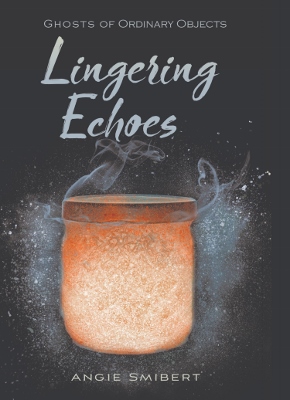
Secondly, several teachers and librarians have told me they appreciate these series for this very reason. Many kids might not pick up a straight historical novel—but they would devour one that had a mystery, fantastical, and/or scary element. In Lingering Echoes, for instance, Bone has to use her Gift to solve the mystery of an object—in this case a jelly jar—that has a power all its own. All around her, though, World War II is being waged on the home front as well as in battlefields far away. Hopefully, readers will come for the fantasy and mystery and stay for the history!

But, finally, fantasy isn’t just something to draw the readers in. For me, fantasy (and science fiction, too) is essential to what I like to read and write. Fantasy explores and evokes a sense of wonder, which we all desperately need. Children are born with that sense of wonder, a mixture of curiosity and awe about the world. As we get older, though, we tend to lose that sense. And that process of de-wonderfication (just made that up!) starts in the middle grade years. (At least, I think it does.) So, I like to mix fantasy with history (and vice versa) to remind readers (and myself) that magic can even be found in the ghosts of ordinary places, past and present.

Note: On my website, I have a number of lesson plans and activities as well as historical info for teachers and librarians:  https://www.angiesmibert.com/blog/?page_id=1861

Read about Bone’s Gift at https://www.unleashingreaders.com/?p=15806.

Summary: Bone has a Gift. When she touches certain objects, images wash over her, and she sees stories—the joyful, surprising, or even terrifying events that occurred as someone gripped those objects.

So when Bone’s best friend, Will, brings her an object unlike any other Bone has encountered, he asks her to tell him its story. It’s the jelly jar he inherited from his father—the same jelly jar his father clutched during the coal-mining cave-in that killed him.

Bone only has to put her hand near the jar to feel the strange power in it, to see flashes of her friend—who has been mute for as long as she can remember—talking with his dad. And when Will opens the empty jar, sounds float out.

This jar isn’t just a witness to history; it’s something more, something dangerous. Could it have a Gift of its own? In this second haunting installment of The Ghosts of Ordinary Objects series, Bone must use her wits and her Gift not only to uncover the truth but to make sure Will isn’t sucked away by long-forgotten memories.

About the Author: Angie is the author of the middle grade historical fantasy series, Ghosts of Ordinary Objects, which includes Bone’s Gift (2018), Lingering Echoes (2019), and The Truce (2020). She’s also written three young adult science fiction novels: Memento Nora, The Forgetting Curve, and The Meme Plague. In addition to numerous short stories, she’s published over two dozen science/technology books for kids. Angie teaches young adult and speculative fiction for Southern New Hampshire University’s creative writing M.F.A. program as well as professional writing for Indiana University East. Before doing all this, she was a science writer and web developer at NASA’s Kennedy Space Center. She lives in Roanoke with a goofy dog (named after a telescope) and two bickering cats (named after Tennessee Williams characters), and puts her vast store of useless knowledge to work at the weekly pub quiz.

This series is really a fascinating look at a the past with a dash of fantasy! Thank you, Angie, for this look into your creative process!

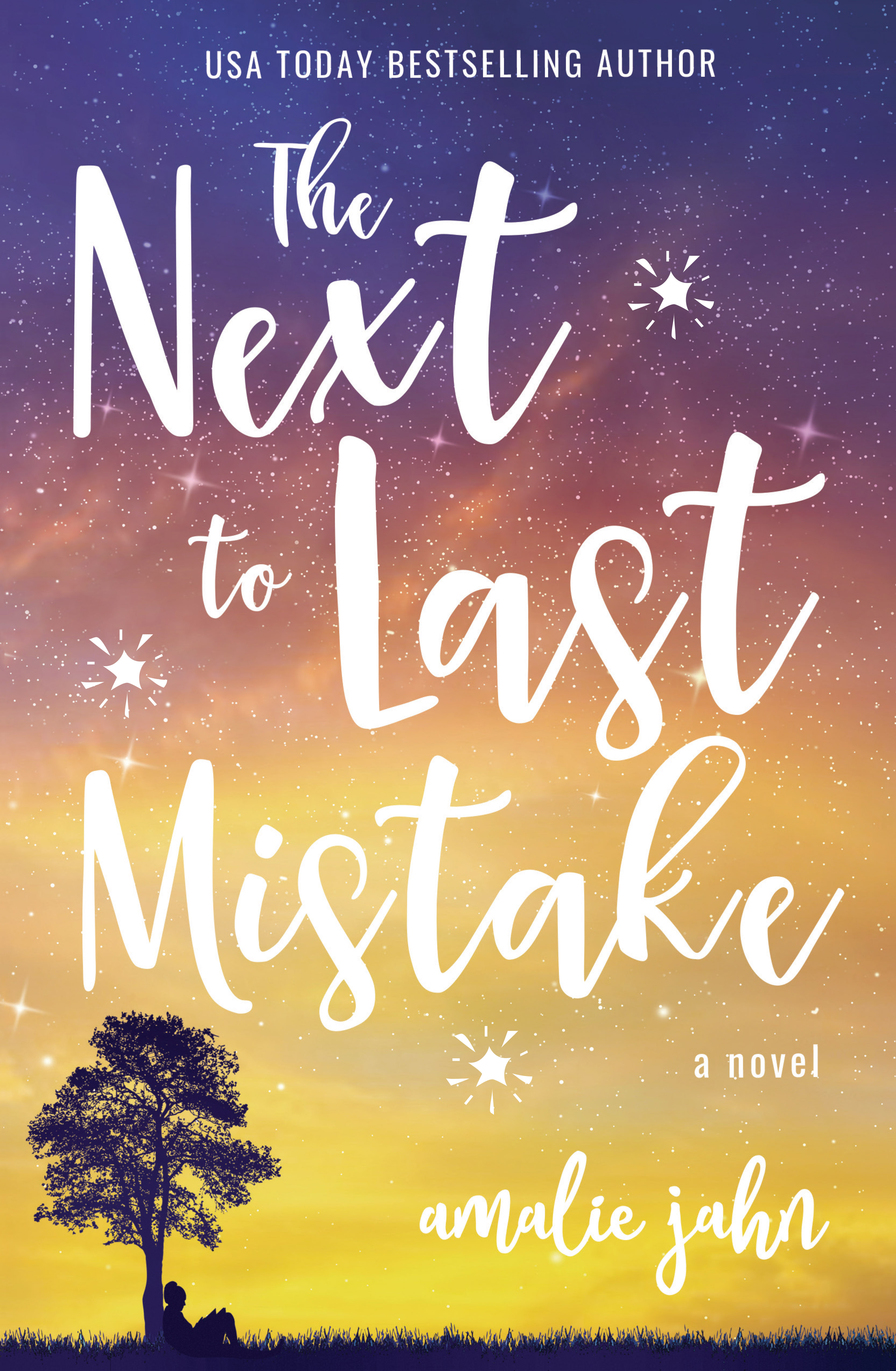
Author Guest Post!: “Fostering Kindness and Empathy Through Literature” by Amalie Jahn, Author of The Next To Last Mistake

Share

“Fostering Kindness and Empathy Through Literature”

Kindness, at its very essence, is the quality of being friendly, generous, and considerate. Of course, these are all qualities we should all strive to exhibit, but as much as we’d like to think that kindness is something inherent in our society, quite the opposite is true.

Many studies suggest human nature drives us to be competitive instead of kind. It makes sense, since ultimately our very existence is tied to one simple goal: survival based on competition for resources. Our planet has a finite number of these life-sustaining resources so it seems obvious that, as a species, we would do whatever was necessary to make sure we secure enough of those resources for our own survival.

Unfortunately, kindness is actually quite counterintuitive to that.

Because let’s face it, if there are only three apples but four hungry people, what would compel anyone to share with someone else?

The answer, of course, is empathy.

Those people who recognize their own hunger in others are more inclined to share than those who don’t.

Although we are driven to survive through competition, we are also wired to empathize with one another. Empathy is a learned behavior, though the capacity for it is inborn. Think about empathy as an innate ability that needs to be developed. This quality is what ultimately gives us our humanity, but empathetic responses don’t just happen spontaneously. They need to be fostered, and because they aren’t necessarily our ‘go-to’ reaction, this is especially true for those of us who are wired for self-preservation.

Research shows people who value friendships, their social connections, and are embedded in their networks are more likely to display empathy than those who consider themselves outsiders. There’s a caveat to this, of course, and it’s that these empathetic people are inclined to reserve their kindness for the friends who are most like they are. While they show great consideration for the friends they understand, there’s often a limit when it comes to extending that kindness to those they see as “other.”

I believe, if we want to encourage empathy, the first step is to stop dwelling upon these differences and focus instead on those things in life which makes us the same.  In essence, we need to embrace the common human experience.

Love, loss, friendship, fear … these are all things every human experiences in life.  When we realize that, regardless of age, color, religion, or socioeconomic status, we are all far more alike than we are different and begin to celebrate those things that bind us instead of belaboring the minutia tearing us apart, we’ll be able to achieve our purpose in life – which is to care for one another and to be kind. 

This begins with feeling vested in the lives of other people.  When we focus on our differences, it’s difficult to experience empathy.  However, when we realize just how tethered to one another we truly are, we can begin to see through the veil which separates us and imagine other people’s lives as mirrors of our own.

I firmly believe that simple exposure to other people’s stories through literature will inevitably foster empathy and the capacity for kindness. Because, let’s face it, we all tend to be kindest to people who are most like we are, but if we can see ourselves in people who are different from us and understand that most human experiences are largely universal, we’ll start choosing kindness over competitiveness in our everyday lives. Books are tremendous tools in our arsenal for fostering kindness among the diversity of our world.

Books give us the opportunity to experience life through other people’s stories which often promotes understanding. When we spend 300 pages getting to know a person and their story, we’re more inclined to imagine ourselves in their shoes and empathize with them.

The empathy we develop through reading will inevitably breed kindness in the real world. The connections established inside the stories make it easier to identify and honor the fundamental truths behind our differences.

And when we understand and embrace our differences, kindness becomes our default setting.

About the Author: “Masterful character development and story lines woven with the common threads of human experience make Amalie’s novels relatable to both young and old alike. Her ideas are born from the passions of her own heart which she uses to share her vision of the world with her readers.”

​USA Today Bestselling author Amalie Jahn is the recipient of the Literary Classics Seal of Approval and the Readers’ Favorite Gold Medal for her debut novel, The Clay Lion. Her latest novel, The Next to Last Mistake, is a character-driven YA contemporary about cows, the power of female friendships, and finding your place in the world. She is a contributing blogger to the Huffington Post and Southern Writers Magazine, as well as a finalist in the 2015 Kindle Book Awards. A TED speaker, human rights advocate, and active promoter of kindness, she lives in North Carolina with her husband, two children, and three extremely overfed cats. 

About the Book: The Next to Last Mistake speaks to the beauty and richness that fills life when we cross race and culture to find common ground, forge new friendships, and challenge our own world view. Amalie’s novel speaks to a deep need in today’s America and will inspire young readers to reexamine the relationships in their lives.

Tess Goodwin’s life in rural Iowa is sheltered and uncomplicated. Although she chooses to spend most of her free time playing chess with her best friend Zander, the farm-boy from next door, her skills as a bovine midwife and tractor mechanic ensure that she fits in with the other kids at West Hancock High. But when her veteran father reenlists in the Army, moving her family halfway across the country to North Carolina, Tess is forced out of her comfort zone into a world she knows nothing about.

When Leonetta Jackson is assigned as her mentor, she becomes Tess’s unexpected guide through the winding labyrinth of cultural disparities between them, sparking a tentative friendship and challenging Tess to confront her reluctant nature. As the pieces move across the board of her upended life, will Tess find the acceptance she so desperately desires?

Thank you to Amalie for this post that truly embodies much of what we believe about how reading can help change the world!


Author Guest Post!: Classroom Activities with Anything Can Happen in Mrs. Whynot’s Room by Jayne Peters

Share

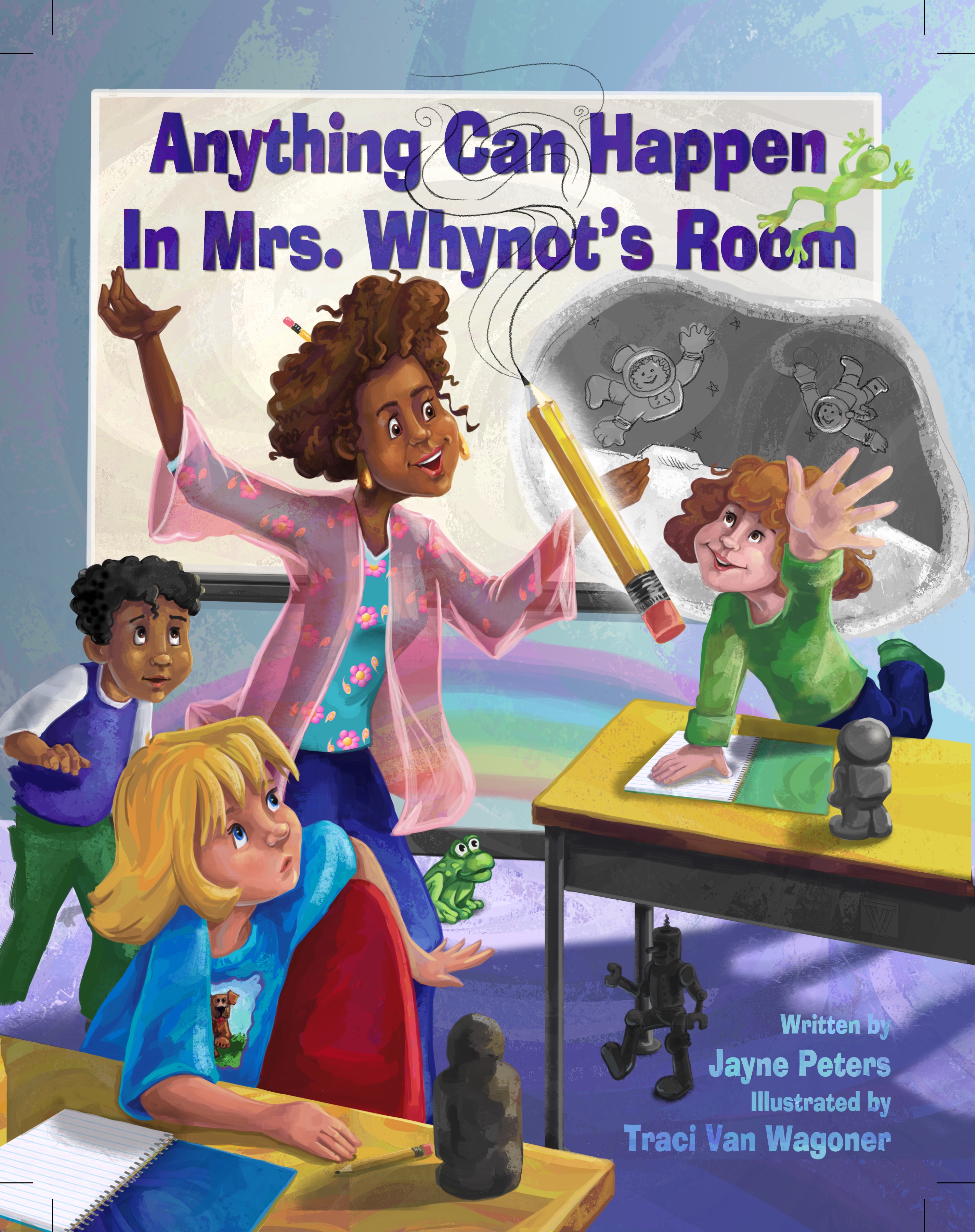
Anything Can Happen in Mrs. Whynot’s Room
Author: Jayne Peters
Illustrator: Traci Van Wagoner
Published October29,2014 by Puddle Duck Publishing

Summary: In Mrs. Whynot’s classroom writing is magical; pencils hover and clay characters come to life. But… everyone has something they find difficult and Marcy is no exception. She would like to do ANYTHING but write. She has NOTHING to write about. By talking to her classmates, playing with words and listening to stories Marcy realizes she has lots of tales to tell.

Classroom Ideas Written By the Author: 

To the reader, once a book has been published, writing can seem magical and easy. (Disclaimer: There is some magic in Anything Can Happen in Mrs. Whynot’s Room) However, writing is the product of many hours of thinking, talking, questioning, observing, reading, and imagining with a huge amount of perseverance, grit and love. These are some of the skills our students need to further their creative journey and their love of reading and writing.

So let’s start with the first hurdle. Everyone, at one time or another, struggles with capturing ideas to write about. Mrs. Whynot, in Anything Can Happen in Mrs. Whynot’s Room, generates excitement and urges her students to think differently. She encourages discussion and creativity when she hands each student a hunk of clay that can be molded into any character they’d like. She wants them to write about everyday things and to use their imagination. Students learn they have full control over their story and that anything can happen as long as they can convince their reader.  Mrs. Whynot gives some good advice when she says, “Write about what you know! Write about what you do! But most importantly, write about what you love!”

Read Aloud: Discussion Questions

Before Reading

Look at the cover

  1. Who are the author and illustrator?
  2. What do you notice?
  3. What do you think the book will be about?
  4. What characters would you expect to find in the story?
  5. Do you think Mrs. Whynot’s name was chosen for a reason?

Read the back cover

Synopsis: In Mrs. Whynot’s classroom writing is magical; pencils hover and clay characters come to life. But… everyone has something they find difficult and Marcy is no exception. She would like to do ANYTHING but write.  She has NOTHING to write about. By talking to her classmates, playing with words and listening to stories, Marcy realizes she has lots of tales to tell.

  1. What do you know now?
  2. What is one thing you find difficult?

During Reading

  1. Page 4: Look at the door. It says “Imagination Required”.  What does that mean?
  2. Page 4: Why did the author use the word trudged? If she used skipped, walked, ran, plodded, etc… would they mean the same thing? Discuss the importance of using verbs that carry the message you want as an author.
  3. Page 15: What do you think the grayed illustration represents? (Could she be imagining herself restless and tired as she tries to come up with an idea? Could she be thinking that her ideas are so boring, everyone has fallen asleep?
  4. Page 29: “She bounced up to the whiteboard and whirled around to face the class.” Discuss how Marcy is feeling now. What words did the author use to help you understand how she feels?
  5. Page 32: Talk about the gray bubble. (Do you think she is continuing her story that she shared with the class?)

After Reading

  1. Was the title an appropriate one? Why or why not? What would you call the book if it was your story?
  2. Can anyone make connections to Marcy? (Text to self, text to text or text to world)
  3. Make a list like the one below with the students as you discuss all of the things Marcy did to help her become more comfortable and confident writing:
  • Molding a clay character
  • Talking about and listening to ideas
  • Creating an authority list
  • Making an “All About Me” collage
  • Getting ideas from other stories and changing them to suit your writing
  • Becoming a word sleuth
  • Carrying a writer’s notebook everywhere so that you can write down ideas
  1. Have students:
  • create an “authority list” in their writer’s notebook listing all of the things they know about or like
  • create an “All About Me” collage to jumpstart their ideas
  • keep lists of interesting words as they are reading or listening to others. Interesting verbs can be especially useful.
  • Talk about their writing ideas and tell lots of oral stories
  1. Teach students to “Show Don’t Tell” when they write. When we read we often need to infer (read between the lines) so when we write we need to show the reader what is happening instead of telling them.
    Example: (Page 12) Marcy gulped, her hands began to sweat, and she stammered, “But I can’t write.” How is Marcy feeling? Nervous? Afraid? Unconfident? That’s way more interesting than if I just said: Marcy was nervous. “But I can’t write,” she said.
  2. Page 24: We hear the beginning of Larissa’s story. Challenge students to finish it. I would love to hear about the mischief Herman gets himself into
  3. Pages 31-32: Finish Marcy’s story for her. Figure out what the promise was her dad made to the witch and write about it.
  4. Traci Van Wagoner did an amazing job illustrating Anything Can Happen in Mrs. Whynot’s Room. Learn more about her: https://tracivanwagoner.blogspot.com/ https://www.tracivanwagoner.com/
  5. Have students mold their own clay characters and use them in their next story.

About the Author:  Jayne Peters is an elementary school teacher/ literacy mentor who has taught in Nova Scotia for twenty-five years. As a child she loved sneaking up on tadpoles, late night reading under the covers and spending time at the cottage. Today, she loves watercolor painting, sunny days and country music. She currently lives in a house filled with red heads, loves molasses on “Grampy’s” homemade bread and wants the covers to stay neatly tucked in at night. When she isn’t teaching, reading or writing you will find her practicing yoga and spending quality time with her family. She is the author of Messy Jessy, Messy Jessy Get’s Active and Whispering Wings (available both in French and English). Jayne lives in Lantz, Nova Scotia, with her husband and their three children. Visit her website at http://puddleduckpublishing.com

About the Illustrator: Illustrator Traci Van Wagoner holds degrees in illustration from Utah State University and in toy design from the Fashion Institute of Technology in New York City. A longtime member of SCBWI, Van Wagoner has illustrated many children’s books, and her work appears in magazines, newsletters, and on toys and games. When not painting, she is designing and developing games with her husband at Imagine That! Design, gardening on her roof, or walking her dog in the BIG city. Her motto is live, laugh, and learn.

Thank you, Jayne, for your great classroom ideas with your book!

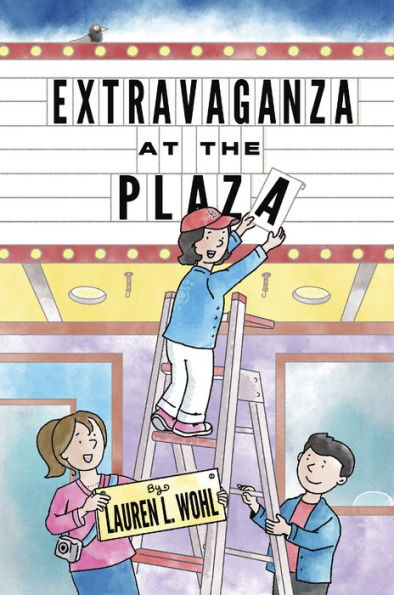
Author Guest Post!: “The Writing Process” by Lauren L. Wohl, Author of Extravaganza at the Plaza

Share

“The Writing Process” 

Over the course of a career in children’s book publishing, I’ve had the opportunity to hear many wonderful authors speak about their “process” – how they approach that intimidating blank page – whether a notebook, a sheet of paper in a typewriter, or the screen on a computer.  Where do you begin? And then what?

The clearest answer for me was a comment Walter Dean Myers made in a speech. “Writers write,” he said.  That is the literary version of “just do it!”  When you have an idea that’s taken hold of you, start writing.  What you write probably won’t make it into the final version of your project, but it will help you exercise your writing muscles and fire up the connection between your thoughts and your fingers. While doing that, some good sentences will emerge; characters will introduce themselves to you; plots will begin to take shape.

This is not to say that you shouldn’t be thinking about all these elements, too – not just waiting for them to tap you on the shoulder.  Make notes.  Do research.  Ask questions of yourself and search for answers.  All of this becomes the soil your story needs to grow.  But keep writing through it all.  That’s the only way I know of to discover the voice that is right for this particular story – and voice is the hardest part to explain, or force, or fake.

For the three novels in my Raccoon River Kids series of chapter books, I started with a place – a small town where kids have lots more freedom than they do in cities – a place where they can hop on their bikes and go by themselves – even when they are as young as seven or eight — to a friend’s house or venture into the center of town with a park as its centerpiece, a community center, and an old town hall where the doors are always open.

That was the beginning. My early writing was about the town itself, but as I described its geography and places, I began to envision the children who would be at the center of the novels: a third-grade boy and his best friend, a third-grade girl. There was a third boy. too. He stood outside of things and had only contrary remarks about the other children’s plans.  I didn’t know why at first, and I knew I would have to explain it – first to myself, then to my characters, and finally to my readers, of course.

As I developed Raccoon River and the characters in my early unstructured doodling, I also found the voice for these books.  At first I thought I would have the older sibling of one of the characters be the narrator, but it became complicated.  She couldn’t be everywhere the kids were. And, if she had to be involved in everything that they did, the children could never keep a secret from her. And secrets are important to children of this age – I didn’t want to take that option away from “my kids.”

I decided on an omniscient narrator who could get into everyone’s head; a teller who could be behind the scenes and in front of them simultaneously; a non-judgmental, trustworthy observer with a sympathetic view and faith in the characters.

With all these puzzle pieces to manipulate, I started to write. I always begin at the beginning. Opening chapters are important to me.  Wiser authors have told me that I should never get attached to the opening I write.  They universally agree that as the story progresses, beginnings often need to be changed, or moved elsewhere, or simply dropped.  I’m sure that’s true, but I can’t get going until I have at least my opening scene written.

Writers have also advised me not to polish any writing until the entire first draft is written. Again, I’m sure this is good advice.  But I find it impossible not to fix something that isn’t working – whether it’s an ugly phrase, a bad choice of a word, or an entire episode that is … well … wrong.  The first thing I do when I return to a work-in-progress is read what I wrote the last writing session.  And make changes, sometimes big ones, sometimes little tweaks.  That gets me back into the voice of the story.

I write mostly chronologically.  But not always.  If some later adventure has been working itself out as I take walks or make dinner or watch the news, I write it out of order. I figure it will fit in somewhere.  Mostly it does.

When I have a good portion of the whole written, I step away for several weeks.  I might jot down notes if any random ideas come to me, but I don’t put them into the manuscript.  I try to remove myself from the story for a while.  When I return to it, there’s a strange sense that it was written by someone else, which allows me to see things more clearly.

The result of this round is a new manuscript.  I can move chapters around, clarify motivations, polish language, deepen my characters, and strengthen the logic in the plot that will lead readers through the novel.

At the round three stage, I work on chapter endings and beginnings to be sure the story flows through smoothly.  I look for secondary themes to amplify. I examine the actions of the characters and how they speak for consistency. Similarly, I check for character traits or habits that help identify one from the next for readers. Because these are chapter books for relatively new readers, I make sure there’s not too much description but that there is enough so young readers can find themselves in Raccoon River and put themselves into the story.

And again, I step away from what I am now thinking of as “a book” for a while.  If it holds together when I return some weeks later, then it’s ready for some feedback.  And that’s when the process starts all over again.

About the Author: Lauren L. Wohl has had a long career in children’s book publishing. She has a degree in Library Science and has been an elementary school librarian. She served as Director of James Patterson’s ReadKiddoRead program, taught writing at the college level, and now consults with several publishers and literary agencies. Stories she’s been reading in newspapers and seeing on television news programs about children stepping up to make kind, generous, and important contributions to their communities inspired her chapter books about the Raccoon River Kids: Blueberry Bonanza and now Extravaganza at the Plaza. She is also the author of a picture book, A Teeny Tiny Halloween, illustrated by Henry Cole and Zooapalooza, coming August 2019. A native New Yorker, Lauren enjoys life in her new hometowns of Lenox, Massachusetts and Miami Beach, Florida.

About Extravaganza at the Plaza (Raccoon River Kids #2): “It isn’t fair that our town doesn’t have its own theater,” eight-year-old Hannah complains. 

A lot of thinking, planning, dreaming, and list-making, and Hannah–along with the kids of Raccoon River–are up to their ears in a brand new project: saving the town’s old abandoned Plaza Theater. But first, they have to get a look inside. And it’s spooky in there-spider webs and creaky floors, and one slowly-swaying curtain. Can Hannah and her friends save the plaza? 

Lauren L. Wohl tells a story of determination and hard work, cooperation and more than little bit of luck where the kids of a small town make a real difference in their community, the first sequel to BLUEBERRY BONANZA in the RACCOON RIVER KIDS ADVENTURES series. Mark Tuchman illustrates the action with characterful drawings that enrich the tale.

Thank you, Lauren, for your post–it was fascinating to learn about your process!

Guest Post: The Most Banned and Challenged Books of the Past Five Years

Share

From Olivia Biggs (Senior Editor, Pixl Parade, Find her on Twitter): Did you know that some books have actually been banned in America? That’s right! Even in the land of the free, parents and educators have been known to push popular books out of libraries and schools, some of which later became required reading. Even today, thousands of parents petition and challenge popular books for a variety of reasons, both reasonable and unreasonable. This infographic takes a deeper look at the most banned and challenged books of the past 5 years, and why they were challenged in the first place!

The recent library problem child is Thirteen Reasons Why by Jay Asher, which, due to the recent Netflix series inspiring instances of self-harm among young adults, met an uproar from parents in 2017, despite the fact that the book has been around for about ten years.

Another book upsetting parents is The Absolutely True Diary of a Part-Time Indian by Sherman Alexie, which discusses poverty, alcohol, violence, sexuality, and bullying. It’s a critical darling, wining numerous awards and high reviews, but that doesn’t stop parents from trying to pull it from shelves a decade after its release.

An increasing and uncomfortable number of books under attack have LGBTQ+ content, gender identity themes, and transgender characters. These themes might make parents uncomfortable, but their fairly necessary for making a younger generation of LGBTQ+ teens comfortable with themselves.

Don’t worry about banned books being uncomfortable. If you’re worried about recommending troublesome books for required reading, just look at top 10 most banned books of all time, which includes classics from 1984 to Of Mice and Men to The Great Gatsby – all known to be required reading for high school students!

Books expand our horizons, teach us how to think in different ways, and show us totally different perspectives, as they should. Banning books doesn’t allow people to experience new thoughts and ideas! Let’s all do better by allowing us to be more open to each other and not allowing books to be banned from libraries and schools.