Student Voices: Reflective Opinions About Books vs. Movies, BookTok, and Becoming a Reader from Raegen B., Luiza N., and Ernesto G.

Share

Reflective Opinions About Books vs. Movies, BookTok, and Becoming a Reader
“Are Books Really Better Than Movies?” by Raegen B., 7th grade

It has been a debate for a long time when books started getting adapted into movies, as to whether the books were better or the movies were better.
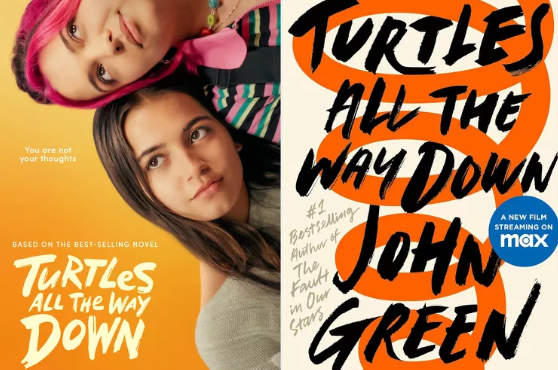
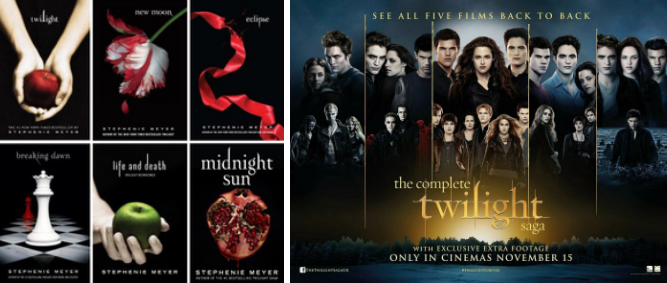
People say that the books are better than the movies because without the books, the movies wouldn’t have anything to go off of, they have more detail, and have all the original information without anything being cut.

However, some people say that the movies are better because they have visuals for people to see the story unfold.

Opinions from real students

Why are the books better than the movies? (all said from real students)

“They give a lot more emphasis on the characters than the movies do; a lot of movies only show certain characters once or in one scene.” -Leonardo V.

“The movies are based on the books so that makes the books more accurate and because of this, the books cannot be messed up. -Makena A.

“Books take more time developing like the characters and key parts of the story. You understand the story better because of this.” – Valiya T.

“You get to hear more thoughts in the books than the movies.” – Layla N.

“They have more description of the story and characters and how they feel; you can also create the scenarios in your head.” – Marianne P.

“The books are usually have more detail and are the original idea that the movies are based on.” – Veronica O.

“They get to be more detailed and they don’t have a time or page limit on how long the book can be.” – Luiza N.

“There’s more details, more indications that we don’t get in the movies, more content, and there’s more content to enjoy than in the movies.” – Maya D.

Why are the movies better than the books? (all from real students)

“If done right, it lets you think more about the visual of the story. For example, when you watch the movies, you can see what the characters and setting look like. But when you read the books, a lot of times, you only focus on the plot.” -Makena A.

“You can actually hear the characters and their tone of voice, their facial expressions, and the setting of the movie.” – Neyla A.

My opinion

Now, I might have a biased opinion on this topic because I am a bookworm, but I think that the books are better than the movies. First of all, without the books, the movies wouldn’t have a story to film or make. Not to mention that they are constantly changing how the characters look.
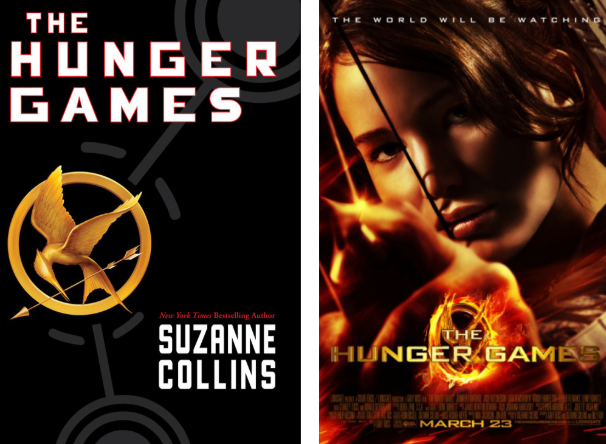
A big example of this is in the Hunger Games. Not a lot of people know this, but in the books, Katniss is supposed to have olive skin and grey eyes. However in the movie, she’s white, and has brown eyes.
It’s understandable to not be able to find exact actors that look exactly how the characters are described in the books, but some movies have successfully done this. To stay on topic of the Hunger Games, in the movie, The Ballad of Song Birds and Snakes, Coriolanus Snow is described as having blonde hair and blue eyes, and the actor chosen, had blonde hair and blue eyes. So, it is possible for the producers to hire people who look like how characters are described in the books.
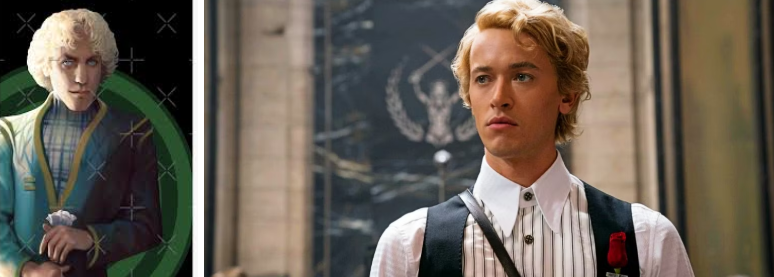
So we know that it is possible for producers and movie directors to get look-alikes.

Another big example of movie producers and directors getting characters wrong is in the Harry Potter movie series. One main thing that they got wrong is Harry’s eyes. In the books, Harry’s eyes are described as being green and “having his mother’s eyes.” But, Daniel Radcliff has blue eyes which isn’t that much of a big deal if you think about it, but it actually is. Like I mentioned before, Harry is constantly being told that “he has his mother’s eyes” in both the films and the books. But, in the Deathly Hollows movie, in Snape’s memories, we see Lily (Harry’s mom) in his memories and there’s even a close up of her eyes and they aren’t even blue to match Daniel’s eyes; the young actress chosen had brown eyes. You would think that they’d try and get an actress with blue eyes to match the already screwed up main characters eyes right? 
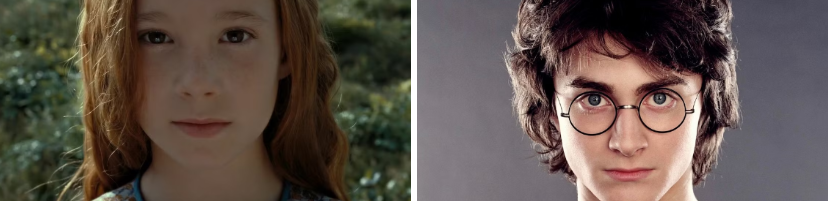
But, what do you think? Are the books really better than the movies?


“Problems with BookTok” by Luiza N., 7th grade

BookTok, a large community on the TikTok app where people come together to share their love for books. What started as a fun place for readers to engage with each other, is now a controversial topic of conversation. From its rise in popularity back in 2020, BookTok has developed serious problems. Said problems range from the readers inside the community, to authors, and the writing itself. 

One main issue with the community of BookTok is how it promotes overconsumption. The rich influencers of TikTok like to show off their huge, beautiful collection of books. Now this doesn’t exactly sound like a huge problem at first, but it is. Most of the books shown off in these collections are only for aesthetic purposes. A big number of influencers are not actually reading any of the books they are buying, but instead using them as a way to garner views and influence public opinion. By promoting such collections they not only make commission for themselves, but also encourage buying books in bulk from massive corporations, such as Amazon, who profit from exploiting workers and produce excess waste. The more unrealistic bookshelves are promoted on BookTok, the worse this problem will become. 

Another big problem in the BookTok community is its romanticization of the “idea” of reading, instead of reading itself. A couple months ago it “came out” that many BookTokers were skipping over main paragraphs of the book, mostly only reading the dialogue. While some do this to reach an unobtainable goal of books read throughout the year, some simply do not actually enjoy the act of reading. They are inspired by influencers on TikTok to have a certain aesthetic, to appear intellectual. A problem I, personally, have with this is that they are not even reading what could be considered “good literature”. Instead of reading well thought out books, meant to genuinely entertain, inform, or even persuade the reader, they are reading (really skimming) one-dimensional books with poor writing, story pacing, and plot, often made by money-hungry corporations and authors, contributing to the next problem I found with the BookTok community. 

Recently, authors on tiktok have started to write basically the exact same stories. This is not about the many plagiarism controversies of BookTok, but about the repeated tropes and world building found in its popular books. Authors have taken notice of how much BookTokers like certain tropes. For example, the trope “enemies to lovers”, a tag with 2.7 million posts, and many more views, on TikTok. Due to the insane popularity of enemies to lovers, the trope has started to be inserted into many books, some authors/companies even going as far as to mark their books enemies to lovers when they are not. This becomes an issue when books start blending together. Readers are not encouraged to explore new topics, but instead read the same thing over and over. There is a negative impact on both readers who are not discovering other tropes and stories they might like, but also authors who dare to to be creative, writing something they are genuinely passionate about. Of course, authors on BookTok are not the only ones to be blamed for this issue, but also readers. The more these books are read and shown off, the more these books will continue to be published and rewritten. BookTok should strive to be a community filled with innovation and creativity, not the regurgitation of the same stories. 

Although BookTok may have some good qualities, it is important to acknowledge the issues within the community, be it overconsumption, romanticism, or even plagiarism. If these issues can be talked about and known, I believe BookTok can return to what it once was. Providing readers with an environment to discuss, recommend, and share literature. 

Sources:


“The Struggles of Reading Books for Non-Readers” by Luiza N., 7th grade

Reading books can seem like a fun and easy task for most people, but for some, it can be a challenge. First, the struggle of books can be due to there being a lack of encouragement at home and at school, it may also be attributed to them being constantly forced to read which can deprive them of enjoyment. Furthermore, reading can also be associated with school work or an obligation which is one of the main reasons that people dislike reading.

According to the National Institutes of Health, they have found that encouragement at home is associated with children’s motivation to read. In addition, studies done by Readingrockets.org, have proved that when reading material is made relevant or encouraged to students, they are far more likely to become “Engaged & competent readers”. Thus, encouragement plays an important role in students’ motivation to read. Similarly, pleasure and entertainment is one of the various motives for reading books. However, Pewresearch.org suggests that reading enjoyment has dropped and reached the “Lowest level since the 1980’s” in American children. This lack of interest and pleasure for reading can be attributed to academic pressures and social media which is why less people are reading books. Nevertheless, Social media in general can also be a big struggle for Non-Readers to overcome due to kids and teenagers being “Glued to their screens” every day which results in them preferring to play video games or watch videos instead of choosing healthier or more productive activities such as reading.

As a previous “Non-Reader,” myself, here are some ways people can incorporate reading frequently in their daily agenda: 

  • Spend 10-15 minutes reading and add a couple minutes each day. 
  • Explore different genres and don’t be loyal to just one genre.
  • Read a mixture of short and long books
  • Don’t stick with a book that you strongly dislike and find a new book that you like.
  • When given the opportunity to choose between your phone or read a book, dedicate some time to reading a book.
  • Lastly, take breaks whenever you feel like you’re getting bored or tired.

Finally, changing bad habits or your opinion or emotions on something is a gradual process. So take your time and be patient when reading books.  Always remember that “A book is a gift that you can open again and again”-Garrison Keillor.


Thank you so much to my student voices today and their look at these popular book point of views!

It’s Monday! What Are You Reading? #IMWAYR 8/25/25

Share

It’s Monday! What Are You Reading?
For readers of all ages

It’s Monday! What Are You Reading? is a weekly blog hop we host which focuses on sharing what we’re reading. This Kid Lit version of IMWAYR focuses primarily on books marketed for kids and teens, but books for readers of all ages are shared. We love this community and how it offers opportunities to share and recommend books with each other.

The original IMWAYR, with an adult literature focus, was started by Sheila at Book Journeys and is now hosted by Kathryn at The Book Date. The Kid Lit IMWAYR was co-created by Kellee & Jen at Teach Mentor Texts.

We encourage you to write your own post sharing what you’re reading, link up below, leave a comment, and support other IMWAYR bloggers by visiting and commenting on at least three of the other linked blogs.

Happy reading!

Bold_line

Thursday: Sofia’s YA Book Nook: Under the Same Stars by Libba Bray

Sunday: Author Guest Post: “Building Writer’s Voice” by K. Ibura, Author of Tempest

**Click on any picture/link to view the post**

Bold_line

Kellee

Young Adult

  • The Great Misfortune of Stella Sedgwick by S. Isabelle: I love love love love Stella Sedgwick! I love that she speaks her mind, that she wants more than the society wants for her, that she isn’t a runner, that she would rather walk away from something than stoop to a level beneath her, and that she is just so sassy! This historical fiction romance is more than just a romance (though it is a great romance, too!), it is about changing how others view you just because of the color of your skin and for being who you are despite what others want you to be. I am so glad I read this book.

Middle Grade

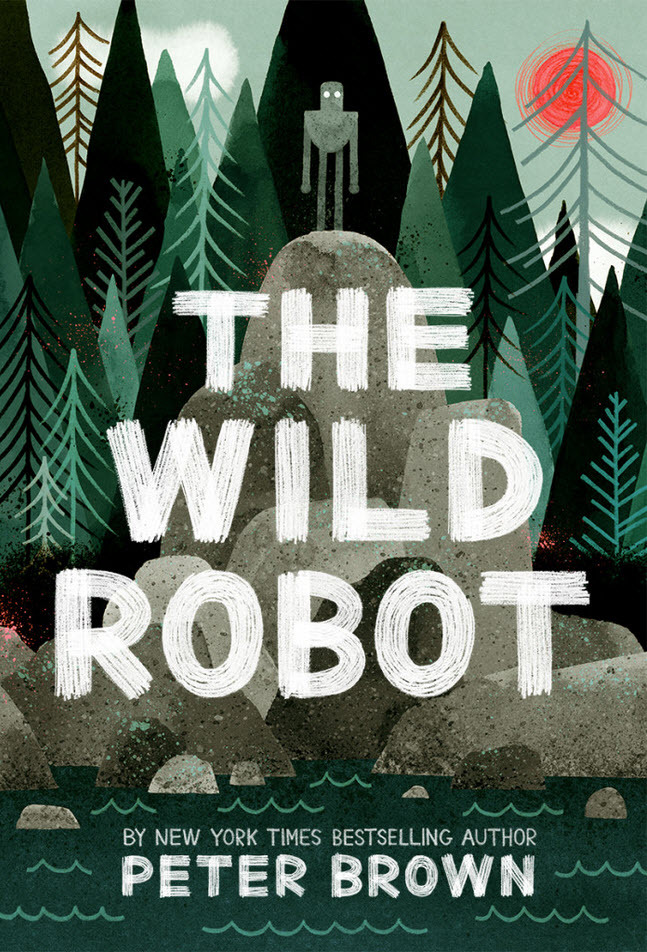
  • The Wild Robot series by Peter Brown: I reread the first Wild Robot book so I could read the rest of the series, and I am so glad I did! I loved Roz after just reading the first one, but Roz becomes so much more in the next two books. She becomes what people should strive to be. Peter Brown’s series is full of adventure and heartfelt moments and are just such a pleasure to read.
  • The Deadly Fates (The Conjurverse #3) by Dhonielle Clayton: I LOVE THIS SERIES! Truly, stop hyping up the boy wizard book, let’s hype up this magical book instead! I don’t want to spoil too much, but this book take us into Ella’s 3rd year at the Arcanum where she continues to show that Conjurers belong, even with the tension between Marvellers and Conjurers reaching a breaking point in society.

And you can always learn more about any of the books I’ve been reading by checking out my read bookshelf on Goodreads.

Ricki

This is my week off; see you soon!

Bold_line

Kellee

Bold_line

Wednesday: Student Voices: Reflective Opinions About Books vs. Movies, BookTok, and Becoming a Reader from Raegen B., Luiza N., and Ernesto G.

Sunday: Author Guest Post: “Co-Authoring a Novel” by Amie Kaufman & Meagan Spooner, Author of Lady’s Knight

Bold_line

Link up below and go check out what everyone else is reading. Please support other bloggers by viewing and commenting on at least 3 other blogs. If you tweet about your Monday post, tag the tweet with #IMWAYR!

 Signature andRickiSig

Author Guest Post: “Building Writer’s Voice” by K. Ibura, Author of Tempest

Share

“Building Writer’s Voice”

On a television show I watched once, there was a curvy girl trying out for a ballet program. She got cut almost immediately. Her ballet teacher gave her a wig and told her to audition under another name. She quickly got cut again. Her ballet teacher sent her in under a third name. Someone who was watching said, “This is madness. They saw her, and she got cut.” The ballet teacher said, “They didn’t see her. She’s auditioning with all these skinny girls and they see that she has the biggest thighs and the biggest hips and they cut her. They aren’t actually seeing her. Eventually, she’ll go in with a group of girls and someone else will have big thighs, then they will see her.”

This statement blew my mind. How many times have we been rejected from an opportunity, not based on merit but on some external bias beyond our control? And how many times have we taken that judgment to be a ruling on our talent (or lack thereof) rather than a prejudice against our being. Students fight this battle of perception on a daily basis. I have a colleague who is working in an afterschool program. There are two boys in the program who are constantly getting in trouble together. One of them, however, has a behavior plan and goals that the adults in his life are monitoring. The other boy has nothing. She asked, “Why doesn’t this boy have a plan too?” The head of the program said, “Because we don’t care about him.” He laughed when he said it, but it was true. Two troublemakers, but one was seen as redeemable and one was not. We internalize the judgments that are made on us—but we have no idea what biases may be at play when people are reacting to us. That was really all the ballet teacher in the TV show was looking for. She wasn’t pushing to have her student selected, she was pushing to have the biases stripped away so her student could be seen. Isn’t that what we are all looking for?

As humans we all need relationships in which we are authentically seen, valued and appreciated, but being seen can be a really tricky proposition. For the main character in my YA novel Tempest, being seen is dangerous. Born with the power to control the wind, Veronique grows up knowing that there are threats to her life and her freedom. To keep her safe, her grandmother insists that she hide, but a life of hiding is limiting—and safety based on hiding can quickly become a trap. Over the course of the novel, Veronique learns how to face the forces that are hunting her—and she learns how to face herself and fully embrace her power.

The dangers of being seen may not be life-threatening for all of us, but very early in our lives, we learn how closely judgment is tied to visibility. Being seen means opening ourselves to being criticized. For the entire first half of my career, being seen was an intensely uncomfortable sensation. I didn’t like sharing pictures of myself or personal information about myself. And, the idea of sharing my work—my raw, unpolished, initial drafts—was excruciating. I remember years ago when a magazine editor asked me to submit an article. I told her I didn’t know where to begin. She told me to write a draft off the top of my head and send it to her unedited. I looked at her like she was crazy. She said, “I know sharing your work at such a raw stage feels strange, but I think the first draft holds power.” It was painful for me to even consider turning over a first draft of anything. With MASSIVE reluctance, I shared my first draft with her. The process unfolded just as the editor said it would. She gave me some guidance and I completed the piece.

Fast-forward 12 years. An editor asked me for an essay. I was willing but busy. I sat down and banged out a draft in two hours. I sent it to her without reading it over even once. “I need to edit this piece,” I wrote, “but please review it and let me know if this is what you’re looking for.” I trusted that she could see the essence of the essay in the draft, she could read the bones and I could fill in the flesh later. She reviewed it and affirmed that it was exactly what she was looking for. She gave me a deadline to turn in edits. I made some tweaks and the work was done.

The difference between these two experiences was about a decade of writing. When I was less developed as a writer, I was more rigid and more controlling about my work. Now, I’m happy to hear critique and insight. I welcome new suggestions and perspectives. And I don’t mind sending out an underdeveloped draft for feedback. I believe it is because more experience = more confidence. More confidence = less need for every single thing I write to be perfect.

The biggest thing artists need as they are developing their voices, as well as when they are maturing to deeper and deeper levels of mastery, is the willingness to follow their ideas. So often, the need for perfection stops people from bringing their ideas to life. Willingness and acceptance are the biggest barriers to developing skill and identity as a writer. The only way to grow is to make mistakes, to write clumsily, and to discover the potholes of storytelling. When we are willing to be imperfect, we learn the rhythm of writing more quickly. We must also accept that all writers have both gifts and challenges. No matter how much mastery we gain, we are constantly called to both acknowledge our imperfections AND validate our writing

But how do we get there? If seasoned writing requires time and space, and for so many evolving writers, just staring at the blank page sparks vulnerability and the intense desire to hide, what do we do? Evolving writers need frequent, low-stakes practices that build fluidity and confidence into their writing. It’s a huge gift to offer people—both grown-ups and students alike—the space to play freely and explore creatively. In his excellent Free Play: Improvisation in Life and Art, Stephen Nachmanovitch draws on Buddhist philosophy to talk about the tendency of humans to compare ourselves to others. Nachmanovitch defines the “fear of ghosts” as our habit of measuring ourselves against the talents and directives of our “teachers, authorities, parents or the great masters.” That’s why writing assignments that are not graded, that are short, and that are frequent can give growing writers a little bit of breathing room.

When guiding developing writers, it’s important to remember that for so many people, writing just feels like setting themselves up to be judged. When we share our writing, negative marks can validate self-criticism and strengthen our certainty that our writing voice is faulty and our efforts are useless. If the only focus in writing is the right way to structure a sentence or a paragraph or a paper or a story, we lose our own personal relationship to writing. We rob ourselves of the ability to personally connect to the work and discover our own reasons for writing. The academic side of writing is essential, but without valuing the uniqueness of our voices, we can end up frozen and afraid to write. Finding value in our own writing style is essential— it’s not just about healthy esteem, it is literally the key to forward motion. We all need to learn about topic sentences and paragraphs, but we also need support and guidance to celebrate our authorial voice, just as it is.

Published June 24th, 2025 by Qull Tree Books

About the Book: In this lyrical and epic contemporary novel with magical fantasy elements, a girl must learn to master her powers over the wind before a sinister secret organization finds her. Perfect for fans of Legendborn A Song Below Water, and Vespertine.

After Veronique’s parents died, her grandmother raised her on a farm in rural Louisiana. For sixteen years, it’s just been Veronique, MawMaw, and an ocean of trees. That’s because Veronique has a secret—one MawMaw has warned her she must always keep safe.

Veronique has the power to control the wind.

But when MawMaw falls ill, Veronique is forced to move to New Orleans to live with family she never knew she had. New Orleans is a far cry from her old quiet life, but Veronique finally gets her chance for a normal life—one with school, friends, and even love. But when her new life threatens her ability to control her powers, she quickly learns that the world is bigger and more dangerous than she’d ever imagined. Veronique must uncover what MawMaw was trying to protect her from before it’s too late.

About the Author: K. Ibura is a writer and visual artist from New Orleans, Louisiana. The middle child of five, she grew up in a city full of music and culture, a neighborhood full of oak trees and mosquitoes, and a home full of art and activism. She has written two short story collections for adults: Ancient, Ancient—winner of the James Tiptree Jr. Literary Award—and When the World Wounds. Her debut novel and first book for young people, When the World Turned Upside Down, was published in February 2022. Find her online at kiburabooks.com.

Thank you, K, for this thought-provoking and inspiring post!

Sofia’s YA Book Nook: Under the Same Stars by Libba Bray

Share

Sofia is a 13-year-old brilliant reader who aspires to be a book reviewer. Since she was 8 years old, on select weeks, Sofia shares her favorite books with other young people her age! She is one of the most well-read youth that we know, so she is highly qualified for this role!


Dear readers,

Let me introduce you to… Under the Same Stars by Libba Bray! A fantastic historical fiction novel that keeps you on the edge of your seat! This book is told from three locations in time, one in a small town in Germany during WWII, another in West Berlin in the 1980s, and the last one in Brooklyn, during COVID. All of these settings are told in third-person omniscient narration, meaning you get to see these worlds through the eyes of, essentially, an all-knowing cloud, which knows all the characters’ feelings and tells the story that way. I read this book with my mom, in our book club, and it was amazing to discuss all of the important events happening in this book! I would highly recommend finding someone to read Under the Same Stars with, since it helps you dig deeper into the themes and meaning of the story. We loved this book and I hope you do too!

Goodreads Summary

It was said that if you write to the Bridegroom’s Oak, the love of your life will answer back. Now, the tree is giving up its secrets at last.

In 1940s Germany, Sophie is excited to discover a message waiting for her in the Bridegroom’s Oak from a mysterious suitor. Meanwhile, her best friend, Hanna, is sending messages too—but not to find love. As World War II unfolds in their small town of Kleinwald, the oak may hold the key to resistance against the Nazis.

In 1980s West Germany, American teen transplant Jenny feels suffocated by her strict parents and is struggling to fit in. Until she finds herself falling for Lena, a punk-rock girl hell-bent on tearing down the wall separating West Germany from East Germany, and meeting Frau Hermann, a kind old lady with secrets of her own.

In Spring 2020, New York City, best friends Miles and Chloe are slogging through the last few months of senior year when an unexpected package from Chloe’s grandmother leads them to investigate a cold case about two unidentified teenagers who went missing under the Bridegroom’s Oak eighty years ago.

My Thoughts

Under the Same Stars is an amazing novel, which led me to think more deeply about how history connects to our current lives, and what we can learn from it. I love that this novel is told from three different perspectives, since it makes the story a lot more interesting and complex, although at the beginning, my mom found the perspectives a bit difficult to follow; though as we kept on reading, this problem went away, as the storylines became more connected and we began to remember the characters better. I love that this book always kept me and my mom on our toes, we were always making theories about what could happen next, and mostly being surprised when something else happened! Out of all of the characters, I think Jenny was the most fun to talk about with my mom. Her actions were always so irrational that we couldn’t help discussing what we would have done, and what potentially caused her to act that way. Along with its detailed characters, Under the Same Stars is also written beautifully. The way that Libba Bray puts moments into words is spectacular, adding complexity and emotion into the story. My favorite quote is “Don’t die in the waiting room of the future”(Bray 68), which I find very inspirational and motivating.

Under the Same Stars was so good that my mom and I took it on vacation and still finished it on time, which is very unusual for us. This book just kept on getting more exciting so we had to keep on reading! Additionally, if you appreciate when a book has a nice cover, when you take the sleeve off of Under the Same Stars, which we did so it wouldn’t get ripped on the flight, there is a beautiful golden tree on the front! The tree is so detailed, and fits with the gorgeous red tree rings on the unbound edges of the book! This book has received a handful of compliments, which has never happened to another book I have read! I will embed a photo below so you can see! Under the Same Stars is an amazing book that both my mom and I loved, so I hope you will enjoy it too!

I would recommend Under the Same Stars for ages 14+, because of the difficult topics, advanced reading level, and the complex storyline. Some of the more difficult topics in this book include WWII, the COVID pandemic, George Floyd, homophobia, violence, and death.

**Thanks so much, Sofia!**

It’s Monday! What Are You Reading? #IMWAYR 8/18/25

Share

It’s Monday! What Are You Reading?
For readers of all ages

It’s Monday! What Are You Reading? is a weekly blog hop we host which focuses on sharing what we’re reading. This Kid Lit version of IMWAYR focuses primarily on books marketed for kids and teens, but books for readers of all ages are shared. We love this community and how it offers opportunities to share and recommend books with each other.

The original IMWAYR, with an adult literature focus, was started by Sheila at Book Journeys and is now hosted by Kathryn at The Book Date. The Kid Lit IMWAYR was co-created by Kellee & Jen at Teach Mentor Texts.

We encourage you to write your own post sharing what you’re reading, link up below, leave a comment, and support other IMWAYR bloggers by visiting and commenting on at least three of the other linked blogs.

Happy reading!

Bold_line

Wednesday: Student Voices: Understanding Depression & Books About Mental Health from Maya D. and Tatiana S.

Sunday: Author Guest Post: “Finding Inspiration in Video Games” by Julie Kagawa, Author of Fateless

**Click on any picture/link to view the post**

Bold_line

Kellee

It is my week off! You can always learn more about any of the books I’ve been reading by checking out my read bookshelf on Goodreads.

Ricki

I am going to be away for a few weeks because I am releasing censorship study findings!

Bold_line

Thursday: Sofia’s YA Book Nook: Under the Same Stars by Libba Bray

Sunday: Author Guest Post: “Building Writer’s Voice” by K. Ibura, Author of Tempest

Bold_line

Link up below and go check out what everyone else is reading. Please support other bloggers by viewing and commenting on at least 3 other blogs. If you tweet about your Monday post, tag the tweet with #IMWAYR!

 Signature andRickiSig

Author Guest Post: “Finding Inspiration in Video Games” by Julie Kagawa, Author of Fateless

Share

“Finding Inspiration in Video Games”

“Inspiration” is a very popular word within the writing world. The question “where do you get your inspiration?” is easily the most commonly asked question any writer or author will receive. I think inspiration is different for every author. For me, much of my inspiration comes not from books or movies, but from video games. I’ve been a huge gamer ever since I was a kid playing Super Mario bros. on my Nintendo. And over time, as consoles have gotten even better and game graphics have evolved to movie-like quality, I continue to be immersed in the stories, characters, and worlds of certain games. The phrase “video games will rot your brain” sounds very hollow to me, as all the elements of a good story can be found within a video game world. You become engrossed in these stories and characters because you are the one controlling them. You are the one going through all their hardships, trials and challenges right alongside them. You journey with them, fight with them, discover with them and, in some cases, find love with them.

And if a video game can break your heart or make you feel intense joy because of something that happened to the characters, then it has achieved full emersion, something that all authors should strive for in their own books. I remember the games that did this to me. A few special titles, where I was not okay at one point in the game. Even today, Final Fantasy X will never fail to make me tear up at its heartbreaking conclusion. When I first played it, I sobbed like a baby after the credits rolled. But you can’t just watch the finale of FFX and get it; you have had to have gone through everything with the characters to understand the significance of what was sacrificed at the end. Watching just the end is like flipping to the last page of a book to see what happens. You have to experience the entire story to understand.  In a similiar vein, the ending of Dragon Age: Origins had me smiling and feeling all was right with the world, because the two characters you had been rooting for the entire game finally (if you made certain choices) got their happy ending. (There is also a tragic, “ultimate noble sacrifice ending” as well, which I appreciate just as much, but for this purpose we’ll go with the happy ending.)

So, video games have played a huge part in me becoming a writer. Which brings us to FATELESS, a tale about theives, assassins, curses, and ancient gods, set against the backdrop of a harsh desert world. Think Dune and The Mummy vibes. And while both of these stories did play a small part in creating the world of FATELESS, I owe the largest inspiration to a video game series called Assassin’s Creed.

I think what I loved most about Assassin’s Creed was the world. Throughout the whole series, you are given this massive open world to explore, journey through, and live in. The world feels alive; from bustling city streets to sprawling rooftops to temples that seem to touch the sky, you could move through this world and feel like you were a part of it. I also loved the assassins—their Order, their code (“We work in the dark to serve the light”), even their clothing: the distinguishable red and white outfits that subtly changed throughout the series but still stayed true to the original.  The plot was complex and mind-bending, especially in the earlier games, but it was the world and the characters themselves that fascinated me.  Their individual stories kept me playing, kept me immersed, long after I would have gotten bored of endless repetitive missions where I had to assassinate yet another nameless captain of an outpost.  Whether it was Ezio’s desperation to save his family, Kenway’s journey of self-discovery and redemption, or the ill-fated love between an assassin and their sworn enemy (a templar), the stories presented in Assassin’s Creed are as old as time. And they played a huge part in shaping the world of FATELESS and its characters, especially the two main protagonists, Sparrow and Raithe. One is a thief, the other an assassin. Their stories and fates become entwined with each other’s, as they race to stop the rising of an awakened god that will destroy their world. And, just like the characters in Assassin’s Creed, they are individual souls trying to stand against a far greater darkness.

I could wax poetic about the virtues of video games for hours, but I will end this post with this. For me, gaming has been a huge part of my life, and has definitely shaped me as a writer. So, the next time you hear the phrase “video games will rot your brain,” remember that at least one book might not ever have been written, were it not for the hours spent sitting in front of a screen, playing a video game series about assassins.

Published July 15, 2025 by HarperCollins

About the Book: Deep in the forgotten city of the Deathless Kings, an ancient relic of untold power waits—for one bold enough to steal it.

When seventeen-year-old Sparrow joined the Thieves Guild she made a vow of binding loyalty to their cause. So when a mission comes along from The Circle, a group of mysterious, dangerous beings who control the Thieves Guild from the shadows, Sparrow is determined to cement her place in the guild.

What ensues is a death-defying adventure that has Sparrow and her band of thieves venturing into the heart of the forgotten city of the Deathless King. The fate of Sparrow, her companions, and Raithe, the enigmatic yet alluring assassin Sparrow is forced to join forces with during their quest, all hang in the balance as they find themselves battling ancient forces within the tombs and facing the unwavering hold of fate.

Perfect for fans of Alexandra Bracken and Sabaa Tahir, this new fantasy trilogy from New York Times bestselling author Julie Kagawa will sweep readers into a bold and exciting new world, where a twisted game of destiny has far-reaching consequences.

About the Author: Julie Kagawa is the New York Times, USA TODAY and internationally bestselling author of The Iron Fey, Blood of Eden, The Talon Saga and the Shadow of the Fox series. Born in Sacramento, she has been a bookseller and an animal trainer and enjoys reading, painting, playing in her garden and training in martial arts. She lives in Kentucky with her husband and a plethora of pets. Visit her at www.juliekagawa.com.

Thank you, Julie, for showing how inspiration comes from anywhere someone finds passion!

Student Voices: Understanding Depression & Books About Mental Health from Maya D. and Tatiana S.

Share

Understanding Depression & Books About Mental Health

**Trigger Warning: This post has discussions of depression, mental health, and suicide though also looks at how to find help**

“Understanding Depression” by Maya D., 7th grade

men·tal health
Noun
A person’s condition with regard to their psychological and emotional well-being.

de·pres·sion
Noun
Feelings of severe despondency and dejection.

Understanding Depression

Depression is a persistent feeling of sadness, loss of interest and loss of pleasure in activities. This feeling continues for many days and heavily interferes with a person’s quality of life. 

Depression can affect anyone, regardless of age, race, status and education. It’s the most common mental illness in the US. Depression can be caused by a wide variety of things like genetic, biological, environmental, and psychological factors. 

According to National Institute of Mental Health symptoms include:

  • Persistent sad, anxious, or “empty” mood
  • Feelings of hopelessness or pessimism
  • Feelings of irritability, frustration‚ or restlessness
  • Feelings of guilt, worthlessness, or helplessness
  • Loss of interest or pleasure in hobbies and activities
  • Fatigue, lack of energy, or feeling slowed down
  • Difficulty concentrating, remembering, or making decisions
  • Difficulty sleeping, waking too early in the morning, or oversleeping
  • Changes in appetite or unplanned weight changes
  • Physical aches or pains, headaches, cramps, or digestive problems without a clear physical cause that do not go away with treatment
  • Thoughts of death or suicide or suicide attempts

According to National Institute of Mental Health effects on mood include:

  • Increased anger or irritability
  • Feeling restless or on edge
  • Becoming withdrawn, negative, or detached
  • Increased engagement in high-risk activities
  • Greater impulsivity
  • Isolating from family and friends
  • Inability to meet responsibilities or ignoring other important roles

Not everyone might experience the same symptoms, and varying amounts of symptoms in varying degrees. 

Depression is different for everyone but there are main two types:

Major Depression

Loss of interest, depressed mood, lasts for around two weeks.

Persistent Depressive Disorder

Symptoms of depression are less intense and last longer for at least two years.  

It’s highly recommended to talk to a health care provider if symptoms persist. 

What Can I Do to Help Myself? 

Generally treatment is the best option. But some things you can do to help manage according to National Institute of Mental Health are:

  • Try to get physical activity. Just 30 minutes a day of walking can boost your mood.
  • Try to maintain a regular bedtime and wake-up time.
  • Eat regular, healthy meals.
  • Do what you can as you can. Decide what must get done and what can wait.
  • Connect with people. Talk to people you trust about how you are feeling.
  • Delay making important life decisions until you feel better. Discuss decisions with people who know you well.
  • Avoid using alcohol, nicotine, or drugs, including medications not prescribed for you.

Many things affect one’s mental health most importantly, it is from biological and psychological factors but it can also be from social factors including, but not limited to, sleep, diet, relationships, age and beliefs. Did you know the seasons of the world can have a huge sway on mental health and increase risk of depression? This phenomenon is called S.A.D. or Seasonal Affective Disorder. This type of depression is not considered clinical. 

Summertime Sadness

-While not as common as Winter Depression, Summertime is increasingly common for students to experience feelings of hopelessness.The heat and humidity can feel never ending and oppressive. This causes some people to isolate themselves and stay in air conditioning. This can also lead to excessive use of social media, lack of movement and may develop unhealthy eating habits. 

-The isolation is well…isolation. This can lead to a lack of social interaction. Humans are social creatures and life can be a bit easier when you share a burden. Especially when school is out, people may not see their friends as often. 

-A healthy body benefits the mind, your brain is a part of your body after all. Getting vitamin D and remaining active is great for boosting your mood and self-security. 

During summer there’s much emphasis on people’s bodies. Stores sell thinner clothes with less coverage, swimsuits are marketed very often. All this focus on looks inevitably leads to insecurity. -The lack of social affirmations can worsen insecurity. 

-When you’re in school you establish a routine. Then suddenly schools out. The grounding security of a routine is disrupted. For many this can be the trigger of a depressive episode. Not having something to wake up for everyday can be unmotivating. 

-Summer is a great time to host events, attend festivals and go shopping for the new summer items. Your time in this season may not be as enjoyable when you miss out on activities because your wallet cant afford it. This leads to increased feelings of FOMO and may also contribute to not being able to hangout with those you value. 

Tips to Combat Summertime Sadness 

Remember it’s okay to struggle. We’re all human and go through things. Take small steps if you have to. Nothing will change unless you at least try. 

  • Make efforts to stay social, call up that friend you haven’t seen in a while, go out with your family, join a club. 
  • Spend time outside. Take a walk, bring a hat or sunscreen maybe. Go for a jog. Head to the park. Read outside. Play sports. 
  • Take care of your body. Eat at least one fruit a day. Snack on a salad. STAY HYDRATED!!! Maintain your hygiene. 
  • Establish a routine and give yourself something to look forward to. 

Be patient with yourself, it’s easier said than done. 


“Books About Mental Health” by Tatiana S., 8th grade

Most times when people think of children and teens, they’ll think about an always happy, energetic, loud group of people. This isn’t always the case, however. As our young group gets older, they experience new challenges that may be hard to overcome. This can cause anxiety, eating disorders, and sometimes, even depression. There are many books out there that talk about this, but some of them don’t put it into the perspective of a child. I’ve read these 3 amazing books that have taught me what it’s like for someone around my age to experience these mental health issues. I hope you try them out and learn something new!

Delicates by Brenna Thummler

This book was extremely good at displaying what it’s like to be an outsider. Unlike the 1st book, Sheets, where we follow the main protagonist, Marjorie Glatt, we now follow a character who was just hiding in the shadows. Eliza Duncan is odd. She has no friends, was held back a grade, and likes to photograph potential ghosts. She’s the perfect target for bullies. The bullying really messed with her mental health. She fell into depression, barely ever wanting to leave her room, not interacting with her family. It even got to the point where she didn’t want to do what she loves most. It didn’t get better, either. She had thoughts of self-harm. To see an adolescent go through all of this was truly heartbreaking, but also eye-opening. It allowed me to see what bullying does to someone and see how these mental illnesses affect someone’s day to day life.

Just Roll with It by Veronica Agarwal

This book was great. We follow a young Maggie, who’s starting middle school. When I first read the book, I was confused. I didn’t understand why she continuously needed to roll a dice to determine her next move or why she had to flip a lightswitch a specific number of times. As the book continued, I saw that she had OCD and anxiety. However, Maggie didn’t. Her family guided her down the right path to therapy and she was able to learn about what she was dealing with. It was interesting to see how she learned more about herself and these illnesses and how she persevered through them. To have a supportive family or group of people like that is such a good thing to have when struggling with something like that.

Sink or Swim by Veronica Agarwal

This is the 2nd book to Just Roll with It and I truly loved this one. Instead of Maggie, we follow Ty, a swimmer who recently recovered from an arm injury. It was clear to see from the beginning that Ty was struggling with anxiety. The book was great at displaying this. It was as if Ty was fighting with himself or drowning in water. Because of his anxiety, he struggled to do what he loved most: swim. His friends helped him, however, and he got his spark back. I’m closest in age with Ty as he’s in 7th grade and seeing what anxiety was like for him was very relatable.

Thank you so much to my student voices today and their look at mental health and books that may help those struggling!