Student Voices: Visual Reflections on School Shootings by Two of Kellee’s 2017-18 Middle School Students

Share

After Parkland, school shootings and any topic associated with them was often talked about in my classroom. Students needed someone to talk to about everything that was going on. They also had to mourn, as Parkland seemed too close to home for us, and the lives lost were grieved by all of my students. When I allowed students to write a blog post, these two sixth graders asked if they could write about school shootings and how they need to stop. And I am posting it now as the next school year starts, to keep the conversation going–this needs to stop. Here is how they reflected:

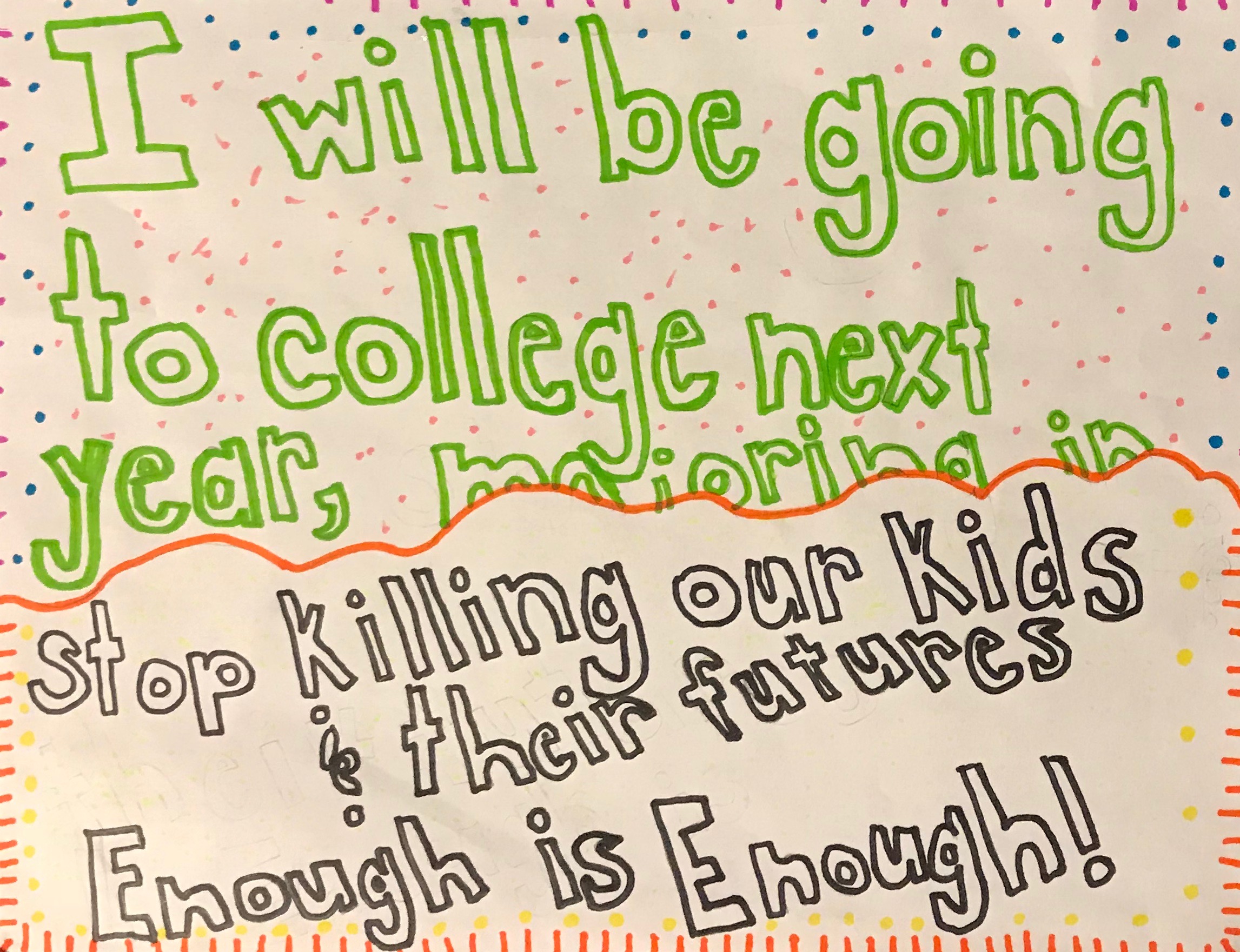
Visual Reflections on School Shootings by Sasha M. and Maelynn A. (6th graders)

Facts found during research:

  • On an average day, 96 Americans are killed by guns.
  • America’s gun homicide rate is more than 25 times the average of other high income countries.
  • Black men are 13 times more likely than White men to be shot and killed with guns.
  • There are nearly 13,000 gun homicides a year in the United States.
  • Seven children/teens 19 and under are killed with guns in the U.S. on an average day.
  • There have been 22 shootings involving schools since January, 2018 (as of the end of May, 2018).
  • 187,000+ students have been exposed to gun violence at school since Columbine.
  • As of mid-March, 2018, 12,752 students have been present at school shootings.
  • There are school shootings in small and large towns.
  • Targeted shootings are far more common than indiscriminate slaughter (64.5% to 22.3%).
  • Our country has about 250 million guns.
  • Students who were victims of school shootings can suffer from post-traumatic stress disorder that can be cripling.
  • Black students make up 16.6% of school populations, but experience shootings at 2x the rate of other students.
  • It is now safer to go to war than to be at school (in 2018).
  • Kids SHOULD NOT be afraid to go to school.

Resources:

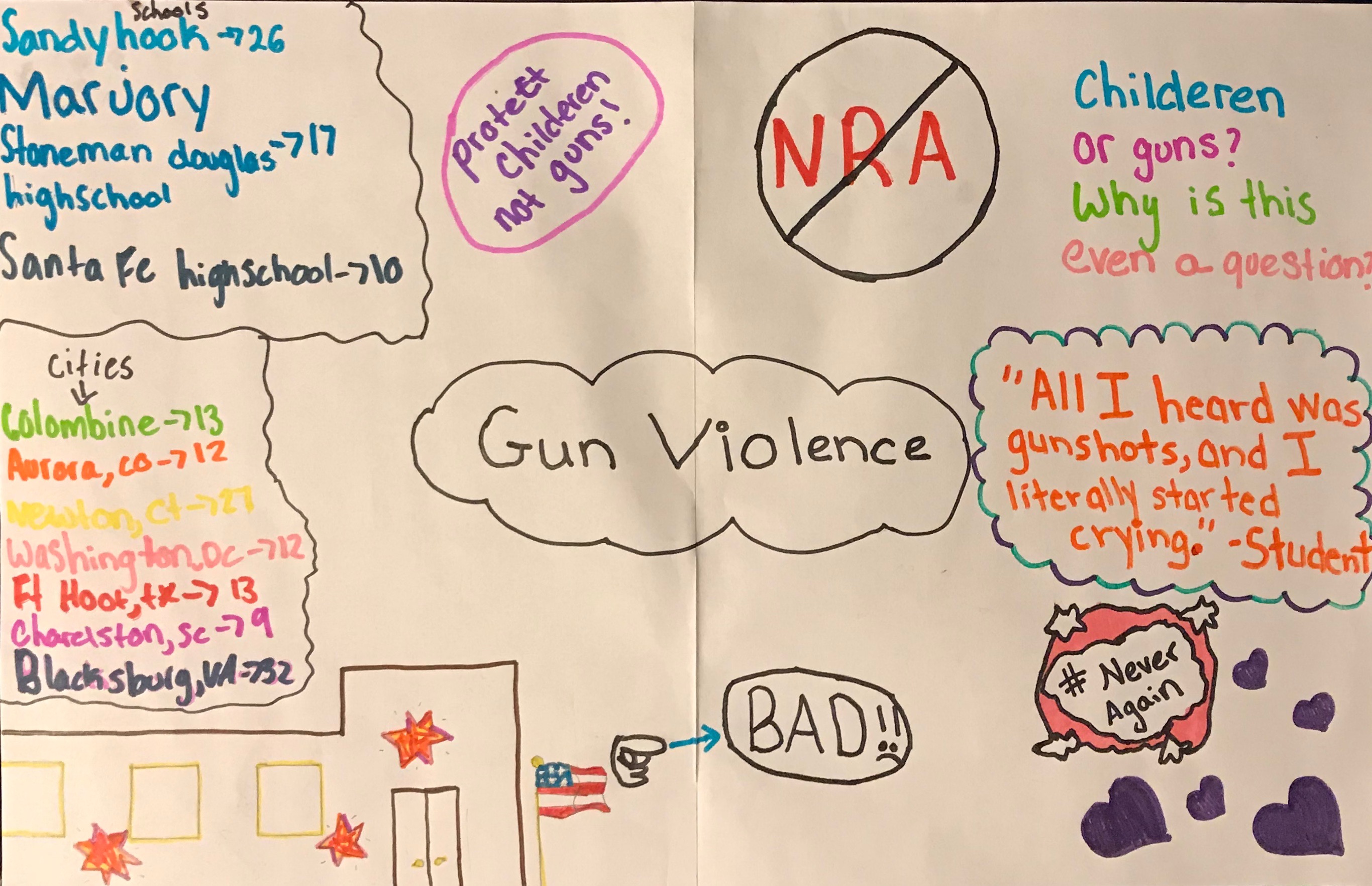
This poster includes quotes from protest posters and students speaking out. We also put the schools and cities along with the causalities to raise awareness that this is a problem that is occurring way too often.

This is a remake of a poster that somebody made for a protest though we improvised a bit to make our own version.

Thank you to my wonderful students, Sasha and Maelynn, for sharing! This is a topic that is too close to home for all of us

Things We Do Over the Summer (Educators DO Work During the Summer!)

Share

Ah. Summer is here! That means teachers are going to nothing for the next nine weeks, right?!
NO! Here are just some of the things we’re up to this summer during our “free” time.

(We ended up combining our lists because there was a lot of overlap; some are for one of us but most are for both–it turns out that we do a lot of similar summer prep!)

Attend the Future Problem Solvers International Competition

Write common final exams for the school district

Plan curriculum and write syllabi

Attend the American Library Association Annual Conference

Blog!

Read for pleasure

Read professional books that we never get to all year

Read all of the journals we’ve gotten all year and have not had time to read

Write teaching guides

Answer emails for questions about summer reading and course-related questions

Go into school when test scores come in to analyze them

Meet with counselors to help with reading and language arts scheduling

Meet up with teachers who want to chat about curriculum or books before the start of the school year

Professional Learning Community pre pre-planning days

Host a Summer Book Club

Start planning for NCTE and ALAN presentations

Leadership Team meetings planning for pre-planning

See past students who are in town for the summer from college

Take part in Twitter Chats with my PLN for e-PD

Go to doctor and dentist appointments

Go to the bathroom whenever we want (Ricki admits that this has become possible year-round now that she teaches college)

Submit a book proposal

Read dozens of books seeking new material for course adoption

Write manuscripts for publication (Publish or perish at the college level, right?)

Meet with colleagues to plan and streamline college courses

Write dozens of letters of recommendation for preservice teachers seeking jobs

Review for academic journals

What are you doing this summer during your “free” time? 

 and

Teaching Tuesday: Things I Wish I’d Known as a Beginning Teacher

Share

Teaching is hard. I don’t pretend that I am an expert. I operate under Tom Newkirk’s idea that each year, we should change at least 5% of our teaching, and after several years, these changes are exponential. I am always trying to do better and be better. In the section below, I share a few of the things that I learned as a beginning teacher. However, I want to emphasize that I am always learning and growing.

*Let me start by saying that I learned many of the items below in my teacher preparation program. Many of them didn’t quite sink in until I had been teaching for at least a few months.*

1. Initiation and Closure are very important.

Getting students into the mood of your class is important to frame their thinking. Further, I learned quickly that closing class quickly with the homework assignment isn’t enough. Students will leave class unsure of what they learned. I dedicate at least five minutes (ten to fifteen, if possible) to frame and close class and ask students, “So What?” I try to make this as student-centered as possible.

2. Learning Targets (or Objectives) are critical. Posting them is helpful.

I try to start and end each class by asking a student to read the learning targets posted on the board aloud. This allows me to talk about the day’s objective and how we will meet (or how we met) it.

3. Every Learning Target (or Objective) should have a matching assessment.

Even if it means walking around and informally checking in with students, I learned that it is important to measure whether the students met the learning target by providing an (SMALL) assessment each day. Often, this came in the form of an exit slip or an artifact that emerged from classwork.

4. Differentiation is Easier than We Imagine It To Be

Differentiation seems scary. I imagined this dark day where I was creating 5 forms of every test and assignment. But differentiation is really about student-centeredness. It’s allowing students choice in process and product, it’s allowing students to choose texts that match their learning needs and interests, it’s grouping students purposefully, it’s creating a classroom environment that supports individualized learning.

5. When We Need To Get Students’ Attention, Talking Louder Is Not the Answer

I respect students’ voices. If a student is talking, I ask students to stop talking and listen. The same goes for me. If I am giving directions, it is important to wait until everyone is focused. Everyone should respect those who are speaking (and hopefully, this isn’t me, most of the time!).

6. Write Everything on the Board

Directions, homework, etc. Working with a co-teacher, I learned that if I am saying it out loud, it helps students to have it written on the board, too. This is particularly helpful for students with special needs and for students who are emergent bilinguals.

7. Ask for Help

I always tell students, “If you feel it, steal it. (And cite it.)” Teaching is about sharing, so we learn and grow together. Ask colleagues for ideas and search the internet. Adapt ideas to become your own.

8. Take Home a Few Papers at a Time

If you take them all, they will likely remain in your teacher bag. Taking home small chunks makes grading feel less overwhelming.

9. Stagger Your Assignments

Don’t assign the same due date for all of the essays and projects for all of your classes.

10. Ask for Student Feedback

And be open-minded to their criticism. This is how I grow.

11. Find Your Personal Learning Community Online and Find the Positive Energy within Your School

Find your people. Feed off of each other’s positive energy. Ignore the negativity within your school.

12. Keep a Drawer of Happy Things

If a lesson doesn’t go well, open the drawer and eat the chocolate and read the thank you notes from students.

13. Be Flexible

As much as I may have loved my pre-planned lesson plan, I often have to adapt it to fit students’ needs. I learned that it was important to pay close attention to them and adapt the lesson as it occurred.

14. Student-Centered Learning

While I might want to do a unit on a theme, my students might not be interested. As I learn from them, I try to shape unit themes and topics to meet their interests.

15. Learn About Students

I start the year by asking students about themselves, and I ask them to share dialogic journals to stay connected with them and show them how much I value their voices and learning needs. In my calendar, I make notes about their sports games or activities, so I am reminded to ask them how it went. I care deeply about my students, and I try to remind them of this through my attention to their lives.


What have you learned that you wish you knew as a beginning teacher?

Teacher Appreciation Week: Teachers Who Inspired Us #ThankATeacher

Share

Teachers Who Inspired Us

Kellee

I’m very lucky to have many graduate level teachers that helped give me such a solid foundation during my first few years of teacher. Then, when I started teaching I couldn’t have asked for a better mentor who would never answer my questions, only would question me back, teaching me to reflect and learn. And now I am surrounded by so many teachers that mold and shape and inspire me. But it is my high school senior high school English teacher that means more to me than any other teacher I’ve had. I originally shared my story about her here on Unleashing Readers in June, 2016, but I cannot not share it enough.

Ms. Haley

I was a straight A student in middle school, but when I moved to Lakeland, FL a month into 9th grade, I struggled with much, including school work. I just didn’t find joy in school any more. I’m just glad that teen Kellee kept a goal in mind (I WAS going to college!), so I kept my GPA enough to still be doing okay. But I definitely wasn’t a stand out student; however, I was still a bit cocky because I knew I didn’t have to work hard to get by. But then I entered Ms. Haley’s classroom.

Let me give you a bit of a background on Ms. Haley. By the time I had her, she was 82 years old and had been teaching for over 60 years. She was teaching in a building named after herself. She was Lawton Chiles’s English teacher. She didn’t get married because she was “too smart” to be a wife. She took off two weeks in December every year to travel to an international destination. She showed the “Romeo & Juliet” movie that had a breast in it. She meant everything she said and said anything she wanted to. She was a legend.

Right away, Ms. Haley and I butt heads. She was not going to put up with what I’d been giving my other teachers. For some reason, she decided to not ignore me, to not put up with my C+ work, and to challenge me. And I took her challenge. I don’t remember exactly what happened (I was probably passing a note or talking in class), but I got in big trouble, and I remember her talking to me and telling me that I wasn’t dumb, and that I had a chance to be something. That I was an excellent reader and writer. That I had a real future. I’d always known I’d go to college, because that’s what you do…, but I’d never had a high school teacher tell me that I was exceptional at something. This easy statement from her to me changed everything. I let her TEACH me instead of just talk at me. And that woman could teach; I am forever lucky to have spent a year with her, and I chose English as a degree because of her. There is a chance that I would have continued down a very different path without her.

(To learn more about Hazel Haley, visit The Ledger article about her, the NPR segment about her, and her obituary.)

Ricki

Wendy Glenn

This woman inspires me personally and professionally. Before I entered the teaching program at the University of Connecticut, I knew about Wendy. Her positive reputation was far-reaching. My peers and I were, quite simply, enamored with her pedagogical prowess. She taught in ways that were inspirational. Wendy showed she cared deeply for us, and we cared deeply for her. Several of us joked that Wendy was “Mama Glenn.” She was fiercely protective of our needs and helped us throughout the program in anything that we needed.

When I became a high school teacher, I thought of her daily. After speaking with other graduates, I realized that I was not alone. We agreed that we were constantly “channeling Wendy” as we worked to develop responsive, engaging lessons. She welcomed us to join her during presentations at local and national conferences, and we all gathered to learn and grow through professional development. It didn’t matter which cohort we came from. We’d all had her as a professor, and we felt a sense of unity because of this. After six years of teaching, I realized that I wanted to go back to school for my doctoral degree. After asking Wendy a few hundred questions, I took a big gulp and applied.

In the four years that I worked toward my Ph.D., Wendy met with me weekly. She listened to every concern and question I had, she wrote with me, she helped me learn about the world of academia, and she taught me so much more than I could name in a blog post. I would not have gone back to earn my doctoral degree if Wendy hadn’t been so wildly inspirational to me. It was the best decision I have made, and I am so grateful for this woman’s impact on my life.

I hit the jackpot, and we both work in Colorado at different universities. This means that I am fortunate to be able to continue working with this woman by my side. I recognize that this makes me the luckiest woman alive!

Who is a teacher who inspired/inspires you?
And remember, say thank you to teachers. It means more than anything else.  

 and

Teaching Tuesday: Random Thoughts From a Teacher Circulating During Testing

Share

Approximately 480 minutes of my life over the last couple of weeks has been circulating a room while students took their standardized tests. I not only accumulated approximately 20,000 steps, I had many random thoughts. Here are some of them:

Exercise

  • Does circulating a room in a regular circle or a zig-zag pattern give more steps in one lap? (Zig-zag.)
  • What ways could I get extra exercise while circulating and not being distracting?
    • Answers: Toe raises/calf raises, squats, glut squeezes, wall sit, standing crunches, seated leg raises, standing leg curl, lunges, and I’m sure there are more!
  • Do I get more steps on testing days than on normal days now that we have Lanschool to monitor computers instead of having to circulate our rooms as much? (Yes.)

Technology

  • Since the world is so technologically embedded, is testing students on a computer the best even though some studies have found that reading paper-based texts is still more efficient?
  • Are these studies ignoring the future? Isn’t it counter productive to focus on how the past may have been better when the world is moving in a forward, not a backwards, direction?
  • Instead of saying that one-on-one or technology isn’t as good as ____, couldn’t we instead just teach students how to use new tools as well as we were taught to use the old? For example, there are many complaints about kids not knowing how to take notes; why don’t we teach them? Or kids not knowing how to research; why don’t we teach them? We were taught to do those things. Just because kids are technology natives doesn’t mean they don’t need to be taught the best ways to use the tools.

Change

  • So many adults say things about “kids these days,” but weren’t we “kids these days” at some point? Doesn’t every generation complain about the changes in the next generation?
  • Isn’t change what makes the world get better?
  • Just because things are done differently doesn’t mean they are bad.
  • For example, the SAT is now more text-based instead of random vocabulary and analogies–that is pretty awesome! And I wish it was like that when I took it.
  • Some change isn’t necessary though. Was our education system so bad when I went through it? The push for “rigor” is so intense now pushing kids into AP classes as early as 8th grade, but I feel like that takes away the growing up part and doesn’t give kids the foundation needed to be successful.
  • And what happened to kids having the chance to be kids?!

Disney

  • The Little Mermaid came out when I was 7 which was 29 years ago. Hundred and One Dalmations came out about 28 years before The Little Mermaid, so how old 101 Dalmations seemed to me is how old The Little Mermaid seems to them.
  • Frozen came out when these kids were 7. Elsa and Anna are their Ariel. These girls had princesses that were pretty kick butt to look up to their whole life while Ariel changed EVERYTHING about her for a man.
  • Or it could be looked at as Ariel had a dream and wouldn’t give up until she attained it and wouldn’t let others tell her she couldn’t do it.
  • Belle changed Disney princesses though. Except for Pocahontas, ever since Beauty and the Beast, the princesses are more than just someone looking for a man.
  • Was the book that Belle was reading during the song “Belle” her own story and the song writers were putting in dramatic irony for the audience?

Science and Pop Culture

  • If we now know that dinosaurs are more related to birds than reptiles and it is pretty common-scientific knowledge, why hasn’t the look of dinosaurs in pop culture changed? For example, a new Jurassic Park is coming out, but the dinosaurs still look like how we thought they looked before.
  • Though I do know that it takes a very long time for pop culture to catch up with science. For example, Curious George is still called a monkey even though in the 1940s or so the distinction between apes and monkeys were found, and scientifically I think everyone would agree that he is an ape.
  • Monkeys and apes are different animals and people can just not figure out the difference. We don’t get pachyderms or canines or felines or other groups of animals confused, why do we get primates confused?
  • But I wish big companies and movies wouldn’t help spread the ignorance. For example, Coca-Cola should be ashamed of themselves for spreading the ignorance that penguins and polar bears live in the same area. (P.S. They don’t! Not even the same hemisphere!)
  • This must be how Neil Degrasse Tyson feels about, well, everything.

What random thoughts do you have while monitoring testing (or any other time)? 

Teaching Tuesday: Grading is Complicated: Ruminations of an English Teacher Educator

Share

“Grading is Complicated: Ruminations of an English Teacher Educator”

My students (future secondary English teachers) have a lot of questions about grading. They wonder if effort should count. They wonder if an emergent bilingual who works dang hard on three drafts of an essay should receive the same grade as another student’s essay, which is better. They wonder if in the grading process, after looking at other student work, it is fair to go back and change a previous student’s rubric evaluation. They wonder if we need to use rubrics for everything. They wonder if rubrics are too limiting of intellectual freedom.

My students are brilliant, and they ask complex questions that don’t have definite answers.

Let’s take them one-by-one. I invite readers to push back on any of the comments. I don’t have the answers, and I am often wondering if I need to reimagine my conceptualizations of grading.

Should effort count?

I believe that effort should count. The book that we read (Wormeli’s Fair Isn’t Always Equal) argues that effort shouldn’t count. For me, that’s conceiving of grades in simplistic ways. English language arts, as a subject area, cannot be quantified. I think that multiple drafts should count. If we are to accommodate the varying needs of students in our classrooms, we need to consider effort. A student who has a learning disorder who works dang hard and produces draft after draft to improve an essay should get some credit. Not counting effort standardizes grades in ways that might be harmful to learners. I argue that we need to individualize students’ learning progress. We need to know our students, and then we can evaluate whether the paper earns the A. Does this dilute grading systems? It sure does. But are we in this field to actually help students improve their writing or reading, or are we in this field to calculate GPAs and circle the grade of an 81 on a written essay (something that can hardly be quantified)?

Let’s complicate it even more:

Emergent bilinguals. If we don’t include effort and don’t focus on students’ personal improvement in their reading and writing, wouldn’t emergent bilinguals who are just learning a new language fail repeatedly? For me, this is an easy-to-see example of why effort does need to factor into the grading process.

Rubrics

I hate them, but I also recognize their importance. I think it’s critical that students know how they are going to be evaluated. We need to show them rubrics before they start brainstorming. On the other hand, rubrics are wildly limiting on creativity and intellectual freedom. By creating rubrics, we automatically tell students exactly what they are looking for. I know that folks argue that they create rubrics that are very open. No matter how open a rubric is, it limits students’ creativity to go in a wildly different (and potentially incredible) direction. They are teacher-focused rather than student-focused. My solution to this is the provision of rubrics that are student-generated (as a whole class, most often) and as open as possible. I continually remind my students that I would excitedly invite a different approach to the assignment, and I invite them to see me if their vision seems to conflict with criteria on the rubric. The students and I collaboratively develop expectations, and it is my hope that this process will not restrict their visions.

Grading with Rubrics

A student asked the smart question—if I grade a student’s work according to a rubric and then read other students’ work and realize that I evaluated the first student’s work wrong, can I redo the rubric? I am very conflicted about this issue. If you didn’t even know how to evaluate the first student, how would they know how to earn an “A.” For me, this means that the assignment expectations weren’t clear enough. I told my students that they are welcome to go back and redo the grading process, but they might rethink how students might be more firmly aware of the assignment expectations. The solution here, in my opinion, is that students always need to be given the opportunity to revise. No summative assessment should ever be a definitive final grade, and students should always be able to revise their work to improve their reading and writing skills. An argument against this might be, “But an employer wouldn’t allow a worker to revise their writing!” My response to this is, “Classrooms aren’t businesses. Classrooms are designed to foster learning.”

What complications do you have with grading? 

Teaching Tuesday: Teaching My Son to Read (by Ricki) Part II

Share

“Teaching My Son to Read” (by Ricki) Part II (Part I Post: Here)

Forging On

Thank you all for the wonderful advice in the comments section of my last post. I purchased the Mem Fox book and continually remind myself that read-alouds are the most powerful tool to teach a child to read. This has alleviated the pressure, and I feel your company when I roll my eyes when someone mentions, “So when do you think you’ll teach him to read.” In my mind, looking at pictures is reading.

His Pride

But he is really excited about reading. His uncle, who follows this blog, asked him about his reading when we were video-chatting. Ever since then, my son will say things like, “I am going to show Uncle ___ that I read this page.” He’s started feeling a sense of pride in his reading skills.

“Reading Books”

I am not crazy about this term. But my son has started calling the books he reads his “reading books.” (I am not sure what he considers the other books.) It’s provided him the onus of saying things like, “Let’s do all reading books tonight,” or “I don’t want to do any reading books tonight.” Like I said, the term makes me itch a bit, but it’s his term, and I am trying not to use my critical educator framing on him. I am letting him drive the car, and I am focusing intently on not pushing him. If he wants to read and takes pride in the process, I will continue to support it. If not, I will let it go.

More Books

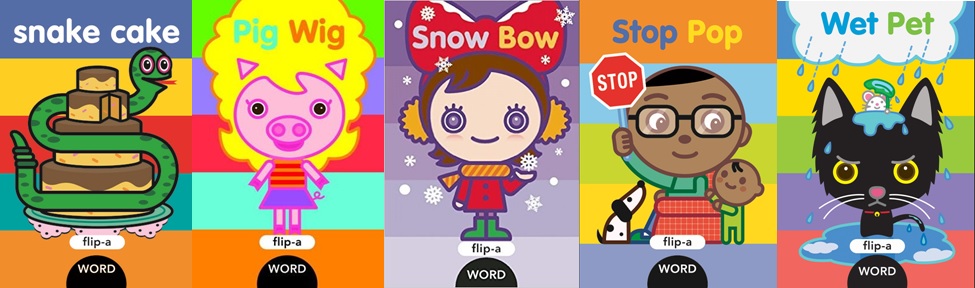
He’s gotten really into the Flip-A-Page series. I brought one home from the library, and he wants more, more, more. (They market all of the books in the series on the back cover.)


These books are really fun (for me, too!). Essentially, they work with the concept of word families. So for the first book pictured, it will introduce the sound of “ake” and then there are cut-outs on the page for both the word and the images. As the reader turns the page, the “ake” sound is repeated, and part of the picture is repeated. My son loves to flip back and forth to look at the transformation. It’s pretty ingenious and highly entertaining for both of us.

More Traditional Early Readers

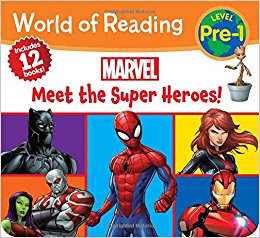
My son received a bookstore gift card for Easter, and he came upon the Avengers books in the early reader section and wanted them.

I’ll be honest. I would never consider buying these books for my son on his own. Leveling books drives me bonkers (see this anti-lexile post). When he said, “Please can I get this one!” instead of the magnificently beautiful, new picture book that was on the display, I paused for a beat. I knew what was likely in these books, Page 1: “I am superman.” Page 2: “I shoot webs.” But then I remembered my critique of the educators who don’t allow kids to read freely. So we got them. This is how he chose to spend his gift card, and he couldn’t be happier. We are reading the simplistic, obvious descriptions of the superheroes each night. They are improving his reading skills, for sure, and he’s in love with the Marvel illustrations as we read. And I’m improving. I’m reminding myself that kids read what they are interested in. While I may find these books to be soul-crushing in its simplicity and while I may find these books to be wildly boring, my son is avidly devouring them. He begs to read them over and over, and he’s simultaneously loving how they are teaching him new words. I recognize that I must be true to my reader/teacher philosophy that we should let kids read what they want to read.

What’s Next?

As corny as this may sound, I’m not sure. I am letting him be the guide.

RickiSig