Colorado State University
Dr. Ricki Ginsberg
COURSE DESCRIPTION
This course focuses on adolescence and the reading, analysis, and understanding of young adult literature. Some of the themes we will explore include: the body and mind, culture, (dis)ability, gender, grief, intersectionality, race, sexuality, and social class. Because the course is designed primarily for future English teachers to prepare them to examine issues of adolescents/ce, we will also consider supportive practices for teaching young adult texts critically in the classroom. This course will allow us the time and space to (re)consider our perspectives of adolescence. The reading and coursework is designed to be both rigorous but rewarding.
REQUIRED TEXTS
Required, Whole Class Texts:
Alexie, S. (2007). The absolutely true diary of a part-time Indian. New York, NY: Little, Brown.
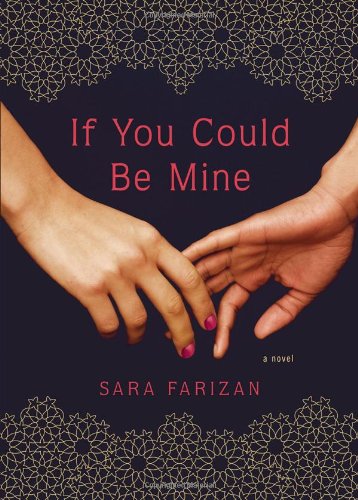
Farizan, S. (2013). If you could be mine. Chapel Hill, NC: Algonquin.
Nelson, J. (2014). I’ll give you the sun. New York, NY: Speak.
Roskos, E. (2013). Dr. Bird’s advice for sad poets. New York, NY: Houghton Mifflin Harcourt.
Saenz, B. A. (2012). Aristotle and Dante discover the secrets of the universe. New York, NY: Simon & Schuster.
Schrefer, E. (2012). Endangered. New York, NY: Scholastic.
Sepetys, R. (2011). Between shades of gray. New York, NY: Speak.
Shusterman, N. (2007). Unwind. New York, NY: Simon & Schuster.
Thomas, A. (2017). The hate u give. New York, NY: Balzer + Bray.
Woodson, J. (2014). Brown girl dreaming. New York, NY: Nancy Paulsen.
Yang, G. L. (2006). American born Chinese. New York, NY: First Second.
Zentner, J. (2016). The serpent king. New York, NY: Ember.
Literature Circle Group Text (Disability and the Body):
You will select this text during the first week.
Anderson, L. H. (2009). Wintergirls. New York, NY: Penguin Group.
Draper, S. (2010). Out of my mind. New York, NY: Atheneum.
Van Draanen, W. (2011). The running dream. New York, NY: Ember.
Palacio, R. J. (2012). Wonder. New York, NY: Knopf.
Gemeinhart, D. (2015). The honest truth. New York, NY: Scholastic.
Stork, F. X. (2008). Marcelo in the real world. New York, NY: Scholastic.
Lindstrom, E. (2015). Not if I see you first. New York, NY: Poppy.
Sloan, H. G. (2013). Counting by 7s. New York, NY: Puffin.
STUDENT LEARNING OUTCOMES
- Analyze and critique a wide range of adolescents’ literature across genre and form (as evidenced in the reading portfolio, classroom discussions, and Book Bistro conversations).
- Examine research and theories of adolescence through a range of scholarly sources and (re)consider our own assumptions (as evidenced in the discussion of the Youth Lens and in the Scholarly Journal Article critique).
- Evaluate the purpose of literature that is written explicitly for adolescents and the value of using this literature for classroom instruction (as evidenced in each course requirement, particularly the Leading a Class Discussion assignment).
- Explore the ways in which adolescents’ literature can be highly political in nature (as evidenced in the selected required texts and the focused discussions and classroom activities in weeks 14 and 15).
COURSE REQUIREMENTS AND GRADING
The outside work for this course adheres to the instructional time equivalent to the federal credit hour definition of 2 hours of outside work for each contact hour. As such, you can expect to do approximately 5 hours of outside work each week. Much of this time will be dedicated to the course reading (required and free choice). I will not accept assignments after they are due. Please wait 24 hours to dispute a grade.
1. Free Choice Reading Portfolio (25%)
You will be required to read a total of 3,000 pages of books written for and about adolescents.
The portfolio will reflect this work and must include:
- A cover sheet listing the books and total number of pages that you read. If you prefer to keep track by hand, feel free to print the book log available on Canvas. At the bottom of your cover sheet, please include a signed honor statement that indicates that you read all of the pages that you list on this page.
- A one-pager for each of the books that you read. Examples of one-pagers will be provided in class. The only requirement is that the one-pager must fit on one side of a piece of paper. Please complete these one-pagers as you read. You will be showing them to your peers during Book Bistro meetings.
Selecting texts:
- Select texts from a variety of authors, forms, genres, subjects, and marketed age levels. Do not read over 1,000 pages of the same author, genre, or form.
- Do not read a classic text unless it was expressly written for adolescents. For example, To Kill a Mockingbird and Catcher in the Rye were written for adults, but The Chocolate War and The Contender were written for adolescents. Check with me if you are unsure whether a text is traditionally considered to be a YA text.
- Do not read books that were written for adults (Crichton, Grisham, King, Steele, etc.). You may, however, read books that are very popular, free choices among adolescents (e.g. Books on the Alex Awards lists).
- Consult adolescents, librarians, the adolescent literature collections at the Morgan Library and 322 Eddy, ALA Award lists, and other published listings of texts. The Fort Collins libraries have great collections. Ask your peers what they are enjoying, and share books with each other. I will make ever attempt to flood you with books that you might be interested in reading, and I will bring a rolling classroom library to most classes.
- ENJOY what you are reading. I typically use a 50-page rule. If I am not enjoying a book after 50 pages, I put it down. Please use whatever system works for you and keeps you reading. You can (and should) count the pages of unfinished books toward the 3,000-page requirement.
2. Class Participation (20%)
I cannot emphasize enough the importance of your participation in class. You are expected to read the entire required texts before you come to class. I am not a fan of reading quizzes, but I need to know that you are doing your homework. As such, you will complete a reading quiz at the beginning of many classes. If you are late or absent, you will miss this assignment for the week. Your literature circle presentation will also be included in this grade.
3. Leading a Class Discussion (in pairs) (15%)
You will sign up with a peer to lead an hour-long discussion of one of the required texts. You and your peer can decide how to structure the class time and activities. You do not need to focus your discussion on the weekly topic listed in the schedule. The only requirements are: a) you will give a 5-minute reading quiz at the beginning of the hour, and b) you will lead a discussion of the reading for some portion of the time. You and your peer will grade the reading quizzes and return them to me the following class.
4. Book Bistro Participation (10%)
You will participate in five scheduled Book Bistro meetings. You will be in charge of leading one of these meetings and inspiring conversation around the books that the members in your group are reading. You will sign up to lead the meeting in the beginning of the semester.
5. Scholarly Journal Article Critique (in pairs) (10%)
Working in pairs, you will read and critique a scholarly journal article about young adult literature or adolescence. I will help find this article. You will present your findings, complete with a handout, to the class. Your presentation should last between five and ten minutes and can include discussion.
6. Final Exam (20%)
You will design a project for the final exam that meets your personal and professional needs and passions. I will provide suggestions from previous courses that I have taught, but I recommend that you design a project that you will find exciting. We will dedicate some class time to help you determine, workshop, and independently work on this project, but you will complete most of the work outside of class. You will present your project during the university-sanctioned final exam time. The exam is scheduled for Monday, December 11, from 4:10pm-6:10pm.
7. Graduate Students Only (10%, overall grade calculated out of 110%)
In an effort to help you organize and synthesize your thinking about your Master’s thesis or project, you can choose to write five annotated bibliography entries (choose a combination of the require texts—novels and articles—for this course plus texts of your own choosing.
OR
You can design a similar project tailored to your needs. Please see me early in the semester to discuss this course requirement and to solidify your choice. This work is due to me on December 3, 2017.
8. Honors Credit Only (10%, overall grade calculated out of 110%)
Those who seek honors credit will be required to read five advanced reader copies (galleys) of texts within (not in addition to) their 3,000 page required. They will complete five book reviews in the form of blog posts. If these students choose, I can publish these blog posts on www.unleashingreaders.com, and this work can be featured as publications on their resumes. Please see me if you are seeking honors credit.
Grade Overview
- Free Choice Reading Portfolio (25%)
- Class Participation (20%)
- Leading a Class Discussion (in pairs) (15%)
- Book Bistro Participation (10%)
- Scholarly Journal Article Critique (in pairs) (10%)
- Final Exam (20%)
As per University policy, I use +/- grading. Calculations on a 4.0 scale are: A+ = 4.0; A = 4.0; A- = 3.667; B+ = 3.334; B = 3.00; B- = 2.667; C+ = 2.334; C = 2.00; D = 1.00; F = 0.00
POLICIES
Attendance Policy
Attendance is critical for your success in this course. I expect you to be punctual. Absences beyond two per semester will result in a grade deduction of ½ grade, as this is equivalent to over a week of missed classes. For instance, if you earn an A in the course but miss three class sessions, your grade will reduce to an A-. You will also miss reading quizzes, which will impact your grade. Please see me with any concerns about your attendance. Excused absences will not count against your grade, and these will include participation in University-sanctioned activities, as well as participation in religious holidays and observances. If you will be absent for an excused reason, please see me in advance of class or email me at least one day in advance.
It is respectful to email me prior to class if you will be absent. This will help me (and your peers who are presenting) adjust class plans and groups accordingly. Please do not sign up to present on a day that you anticipate you will be absent for an excused purpose.
Academic Integrity and Student Conduct
The course will adhere to the Academic Integrity Policy of the Colorado State University General Catalog and the Student Conduct Code. Do not plagiarize. Any student who plagiarizes or cheats on any assignment in this course faces penalties that may include an F on the assignment or an F in the course.
Cell Phones and Computers
Please remember to turn off your cell phone before coming into class. That means no text messaging during class. Please be respectful about your computer use and do not surf the internet or check emails while in class. Abuse of this policy will result in a lower classroom participation grade.
Safety, Reporting and Resources:
CSU’s Discrimination, Harassment, Sexual Harassment, Sexual Misconduct, Domestic Violence, Dating Violence, Stalking, and Retaliation policy designates faculty and employees of the University as “Responsible Employees.” This designation is consistent with federal law and guidance, and requires faculty to report information regarding students who may have experienced any form of sexual harassment, sexual misconduct, relationship violence, stalking or retaliation. This includes information shared with faculty in person, electronic communications or in class assignments. As “Responsible Employees,” faculty may refer students to campus resources (see below), together with informing the Office of Support and Safety Assessment to help ensure student safety and welfare. Information regarding sexual harassment, sexual misconduct, relationship violence, stalking and retaliation is treated with the greatest degree of confidentiality possible while also ensuring student and campus safety. CSU’s Discrimination, Harassment, Sexual Harassment, Sexual Misconduct, Domestic Violence, Dating Violence, Stalking, and Retaliation policy designates faculty and employees of the University as “Responsible Employees.” This designation is consistent with federal law and guidance, and requires faculty to report information regarding students who may have experienced any form of sexual harassment, sexual misconduct, relationship violence, stalking or retaliation. This includes information shared with faculty in person, electronic communications or in class assignments. As “Responsible Employees,” faculty may refer students to campus resources (see below), together with informing the Office of Support and Safety Assessment to help ensure student safety and welfare. Information regarding sexual harassment, sexual misconduct, relationship violence, stalking and retaliation is treated with the greatest degree of confidentiality possible while also ensuring student and campus safety.
Any student who may be the victim of sexual harassment, sexual misconduct, relationship violence, stalking or retaliation is encouraged to report to CSU through one or more of the following resources:
- Emergency Response 911
- Deputy Title IX Coordinator/Office of Support and Safety Assessment (970) 491-1350
- Colorado State University Police Department (non-emergency) (970) 491-6425
For counseling support and assistance, please see the CSU Health Network, which includes a variety of counseling services that can be accessed at: CSU Health Network (http://www.health.colostate.edu/). And, the Sexual Assault Victim Assistance Team is a confidential student resource that does not have a reporting requirement and that can be of great help to students who have experienced sexual assault. The web address is: Sexual Assault Victim Assistance Team (http://www.wgac.colostate.edu/need-help-support).
Accommodations
If you are a student who will need accommodations in this class, please do not hesitate to make an appointment to see me to discuss your individual needs. Accommodations must be discussed in a timely manner prior to implementation. A verifying letter from Resources for Disabled Students may be required before any accommodation is provided.
COURSE SCHEDULE
Week 1 What is Adolescent Literature? and Introductions
08/21 Introductions, Select Literature Circle Texts
Read: The Youth Lens article and the Book Bistro article
Watch: “The Danger of a Single Story.”
Begin: Your choice reading. Anticipate reading about 150 pages of choice per week, and you will be successful.
08/23 Histories and Definitions of Adolescents’ Literature
Resources for Finding and Using YA Literature
Draw table numbers for Book Bistro, Sign up to lead class.
Read: The Absolutely True Diary of a Part-Time Indian
Week 2 Identity Part I
08/28 Discuss The Absolutely True Diary of a Part-Time Indian
08/30 The Absolutely True Diary of a Part-Time Indian
Read: American Born Chinese.
Bring: All of your book pages thus far to share in class.
Week 3 Identity Part II
09/04 NO CLASS: LABOR DAY
09/06 American Born Chinese
Book Bistro #1
Read: The Serpent King
Week 4 Family and Friendship
09/11 The Serpent King
09/13 The Serpent King
Read: Aristotle and Dante Discover the Secrets of the Universe
Week 5 Sexuality
09/18 Aristotle and Dante Discover the Secrets of the Universe
09/20 Aristotle and Dante Discover the Secrets of the Universe
Read: I’ll Give You the Sun
Week 6 Negotiating Death and Grief
09/25 I’ll Give You the Sun
Research project proposal due
Bring: All of your book pages thus far to share in class.
09/27 I’ll Give You the Sun
Book Bistro #2
Read: Dr. Bird’s Advice for Sad Poets
Week 7 Mental Health
10/02 Dr. Bird’s Advice for Sad Poets
Bring: One text that you’ve loved and enjoyed this semester.
10/04 Dr. Bird’s Advice for Sad Poets
Midway Book Talks
Read: Between Shades of Gray
Week 8 Adolescents Across Time and Place: Part I
10/09 Between Shades of Gray
10/11 Between Shades of Gray
Read: Endangered
Week 9 Adolescents Across Time and Place: Part II
10/16 Endangered
Bring: All of your book pages thus far to share in class.
10/18 Endangered
Youth Lens looking across all texts???
Book Bistro #3
Read: Brown Girl Dreaming
Week 10 Adolescents in the “Real World” (Nonfiction)
10/23 Brown Girl Dreaming
10/25 Brown Girl Dreaming
Read: Unwind
Week 11 Adolescents in the Imagined Worlds (Fantasy and Science Fiction)
10/30 Unwind
11/01 Unwind
Read: Literature Circle Text
Week 12 Disability and the Body
11/06 Literature Circle Text of Choice (See first page of syllabus)
Bring: All of your book pages thus far to share in class.
11/08 Literature Circles
Book Bistro #4
Bring: Anything you need for your literature circle presentation.
Week 13 Disability and the Body
11/13 Literature Circle Presentations
Read: If You Could Be Mine
11/15 No Class (Ricki at NCTE) – Independent Reading and Work on Final Project
Thanksgiving Break; No Class; November 20-24, 2017
Week 14 The Politics of Adolescence
11/27 If You Could Be Mine
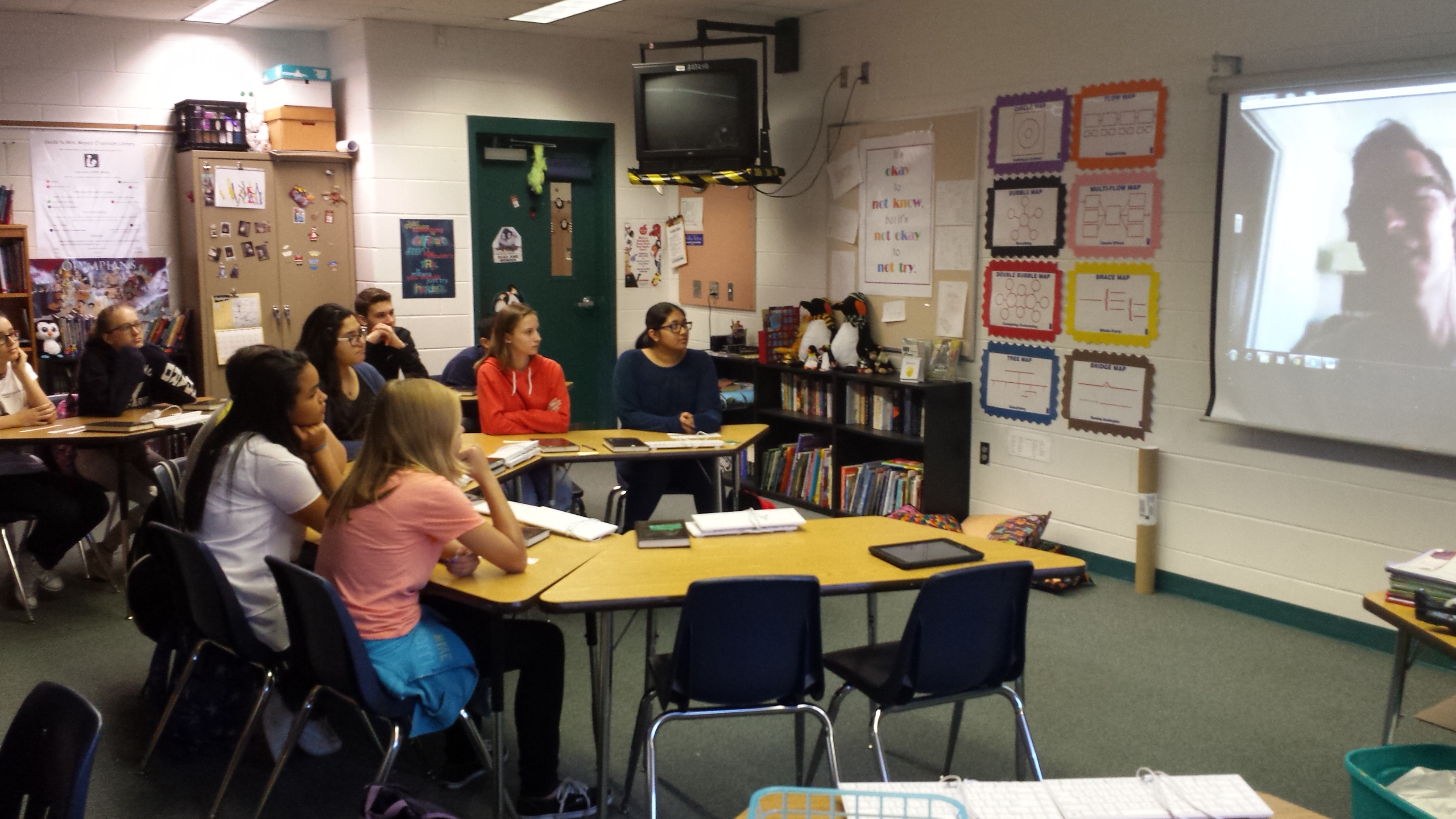
11/29 If You Could Be Mine, Skype with Sara Farizan
Read: The Hate U Give
Graduate Students: Paper Due Next Class
Week 15 Adolescents as Agents
12/04 The Hate U Give
Bring: Your completed Reading Portfolio
12/06 The Hate U Give
Book Bistro #5
Week 16 Final
12/11 Final Exam Presentations