Author Guest Post: “Co-Authoring a Novel” by Amie Kaufman & Meagan Spooner, Authors of Lady’s Knight

Share

“Co-Authoring a Novel”

The number one question that we get asked when we do book events is: how do you co-author a novel?

Even now, over a decade since our first co-authored novel hit the shelves, we find ourselves a little baffled by the ubiquitousness of that question. We get asked it at every event, in every interview, whether we’re talking about a co-authored book or one we’ve written solo. For us, writing together comes so naturally that we find the fascination with the process a bit confusing. At first, we even struggled to answer reader questions on that front because we couldn’t quite figure out why people kept asking us that question.

“But what happens when you disagree?” asked one reader, insistent. “Which one of you has the final say?”

We just eyed each other across the signing table, realizing that we had no answer for that. We never disagree.

To those of you now reading on with some skepticism: yeah, you’re not wrong. Of course we disagree, but the point is we never disagree in ways that put us on opposite sides of an issue. We actually learned very early on in writing our first book together that if we disagreed about what should happen next in our story, or what a character would say, or how the relationship arc would go, what was actually happening was that we were both wrong. Or, rather, we were both right—but going about listening to our instincts the wrong way. Amie thinks it has to be A, Meg thinks it’s obvious that it should be B – what’s really going on is that we’ve both missed the fact that the right answer is really the hidden, secret option C.

For instance, Amie might think the next scene ought to be full of action, but Meg thinks it ought to be a romantic scene. It’s not because one of us is wrong and one of us is right, it’s because actually what we’re picking up on is that neither of us has the perfect next scene. So we talk about why Amie feels the need for a fight scene—we need to see the characters showing off their strengths, perhaps—and why Meg feels more pulled toward romance—because we need to see the characters becoming closer, and cementing their bond. And it turns out that the perfect scene for both those things is actually a scene where they confront an obstacle together in a way that binds them and shows them being good at what they do.

Writing with a partner in a full, 50/50 split of the responsibilities requires the ability to set aside ego in favor of the book. It took us many years to figure out why this seemed to come naturally when it struck so many others, usually budding artists and young writers themselves, as strange. “I could never do that,” we keep hearing from readers. “Give up control that way!” But the truth is that any good, healthy relationship between friends (or anyone, really) demands that you value the strength of your connection over whatever project you might be embarking upon. From the very beginning, we always said that if writing together ever started threatening our friendship, we would simply stop. The friendship mattered most.

When we began writing Lady’s Knight, Amie suggested that we try a new way of outlining the book. Meg was a bit resistant to it, because that’s not how we’d worked before, and it wasn’t what came naturally to her, but we gave it a go and it turned out to be the perfect way of approaching this book. With the plot largely decided upon in advance, it meant that we could pour ourselves into the joyful anachronistic world-building, witty dialogue, and pretty much every joke we’ve ever wanted to put into a book we were writing.

Each book is a little different in terms of how we go about writing it, but Lady’s Knight was an exercise in joy and healing from the very beginning. Conceived of during the height of the pandemic, when we were all confined to our homes and wondering how many years it would be before we could see our loved ones in person again, this book just became our happy place. We’d call each other from opposite sides of the planet, bursting with ideas and jokes, laughing and writing them down as fast as we could.

We wrote about a girl who dreams of being a knight, and a noblewoman who finds herself put up as the prize for a tournament—and rather than waiting for someone to save her, she decides to engineer her own salvation. Each of the girls learn a lot about themselves, during the adventure that ensues. We learned a lot about ourselves, writing them.

We wrote this book to delight each other—whether it was breakfast on the balcony with plates of delicious pastries, a makeover scene with incredible fashion, a breathless rush through the castle after a falling-out, or the satisfaction of skewering a sexist old man (only verbally, don’t worry), we always came back to what we loved. We told a story from our hearts, and in pursuit of joy.

There’s a beautiful merging of egos, when you write something with someone you deeply trust, and even though this was our eighth book together, there was still a special kind of magic as we watched all our ideas merge into a very special “secret option C.” This book ended up being the best of both of us, and a love letter to our friendship, and it was such fun to write.

Published June 3rd, 2025 by Storytide

About the Book: An undeniably fierce, unforgettably funny, unapologetically queer feminist romp through the England of medieval legend. Bestselling and acclaimed authors Amie Kaufman and Meagan Spooner bring readers along on an epic quest for valor, freedom, and, above all, love. A Knight’s Tale meets the Lady Jane series, with a dash of The Great!

Gwen is sick of hiding—hiding the fact that she’s taken over her father’s blacksmithing duties, hiding her attraction to girls, hiding her yearning for glory as a knight.

Meanwhile, Lady Isobelle of Avington, queen bee of the castle, has never once considered hiding who she is—until now. She’s been chosen as the grand prize in the Tournament of Dragonslayers, to be given to whichever knight can claim her hand. And for the first time in her life, she can’t talk her way out of trouble.

When Isobelle discovers Gwen’s knightly ambitions, they hatch a scheme together—Gwen will joust in the tournament, disguised as Sir Gawain. Winning means freedom for Isobelle, and glory for Gwen. Losing means… well, let’s not go there.

One thing’s for sure: Falling in love was never the plan.

But the best laid plans…are often trampled all over by dragons.

About the Authors: Amie Kaufman is a New York Times and international bestselling author of young adult and middle grade fiction and the host of the podcast Amie Kaufman on Writing. Her multi-award-winning work is slated for publication in over thirty countries and has been described as “a game-changer” (Shelf Awareness), “stylistically mesmerizing” (Publishers Weekly), and “out-of-this-world awesome” (Kirkus Reviews). Her series include the Illuminae Files, the Aurora Cycle, the Other Side of the Sky duology, the Starbound trilogythe Unearthed duology, the Elementalstrilogy, and The World Between Blinks. Her work is in development for film and TV and has taken home multiple Aurealis Awards, an ABIA, and a Gold Inky, made multiple best-of lists, and been shortlisted for the Prime Minister’s Literary Awards. Raised in Australia and occasionally Ireland, Amie has degrees in history, literature, law, and conflict resolution and is currently undertaking a PhD in creative writing. She lives in Melbourne with her husband, daughter, rescue dog, and an extremely large personal library. Learn more about her and subscribe to her newsletter at amiekaufman.com.

New York Times bestselling author Meagan Spooner grew up reading and writing every spare moment of the day while dreaming about life as an archaeologist, a marine biologist, or an astronaut. She graduated from Hamilton College in New York State with a degree in playwriting. She’s traveled all over the world, to places such as Egypt, Australia, South Africa, the Arctic, Greece, Antarctica, and the Galápagos Islands, and there’s a bit of every trip in every story she writes. She currently lives and writes in Asheville, North Carolina, but the siren call of travel is hard to resist, and there’s no telling how long she’ll stay there. She’s the author of Hunted and Sherwood and the coauthor of the award-winning Starbound Trilogy (These Broken StarsThis Shattered World, Their Fractured Light) and the Skylark Trilogy (Skylark, Shadowlark, Lark Ascending). In her spare time she plays guitar, plays video games, plays with her cat, and reads. meaganspooner.com

Thank you, Amie & Meagan, for sharing your process!

Author Guest Post: “Building Writer’s Voice” by K. Ibura, Author of Tempest

Share

“Building Writer’s Voice”

On a television show I watched once, there was a curvy girl trying out for a ballet program. She got cut almost immediately. Her ballet teacher gave her a wig and told her to audition under another name. She quickly got cut again. Her ballet teacher sent her in under a third name. Someone who was watching said, “This is madness. They saw her, and she got cut.” The ballet teacher said, “They didn’t see her. She’s auditioning with all these skinny girls and they see that she has the biggest thighs and the biggest hips and they cut her. They aren’t actually seeing her. Eventually, she’ll go in with a group of girls and someone else will have big thighs, then they will see her.”

This statement blew my mind. How many times have we been rejected from an opportunity, not based on merit but on some external bias beyond our control? And how many times have we taken that judgment to be a ruling on our talent (or lack thereof) rather than a prejudice against our being. Students fight this battle of perception on a daily basis. I have a colleague who is working in an afterschool program. There are two boys in the program who are constantly getting in trouble together. One of them, however, has a behavior plan and goals that the adults in his life are monitoring. The other boy has nothing. She asked, “Why doesn’t this boy have a plan too?” The head of the program said, “Because we don’t care about him.” He laughed when he said it, but it was true. Two troublemakers, but one was seen as redeemable and one was not. We internalize the judgments that are made on us—but we have no idea what biases may be at play when people are reacting to us. That was really all the ballet teacher in the TV show was looking for. She wasn’t pushing to have her student selected, she was pushing to have the biases stripped away so her student could be seen. Isn’t that what we are all looking for?

As humans we all need relationships in which we are authentically seen, valued and appreciated, but being seen can be a really tricky proposition. For the main character in my YA novel Tempest, being seen is dangerous. Born with the power to control the wind, Veronique grows up knowing that there are threats to her life and her freedom. To keep her safe, her grandmother insists that she hide, but a life of hiding is limiting—and safety based on hiding can quickly become a trap. Over the course of the novel, Veronique learns how to face the forces that are hunting her—and she learns how to face herself and fully embrace her power.

The dangers of being seen may not be life-threatening for all of us, but very early in our lives, we learn how closely judgment is tied to visibility. Being seen means opening ourselves to being criticized. For the entire first half of my career, being seen was an intensely uncomfortable sensation. I didn’t like sharing pictures of myself or personal information about myself. And, the idea of sharing my work—my raw, unpolished, initial drafts—was excruciating. I remember years ago when a magazine editor asked me to submit an article. I told her I didn’t know where to begin. She told me to write a draft off the top of my head and send it to her unedited. I looked at her like she was crazy. She said, “I know sharing your work at such a raw stage feels strange, but I think the first draft holds power.” It was painful for me to even consider turning over a first draft of anything. With MASSIVE reluctance, I shared my first draft with her. The process unfolded just as the editor said it would. She gave me some guidance and I completed the piece.

Fast-forward 12 years. An editor asked me for an essay. I was willing but busy. I sat down and banged out a draft in two hours. I sent it to her without reading it over even once. “I need to edit this piece,” I wrote, “but please review it and let me know if this is what you’re looking for.” I trusted that she could see the essence of the essay in the draft, she could read the bones and I could fill in the flesh later. She reviewed it and affirmed that it was exactly what she was looking for. She gave me a deadline to turn in edits. I made some tweaks and the work was done.

The difference between these two experiences was about a decade of writing. When I was less developed as a writer, I was more rigid and more controlling about my work. Now, I’m happy to hear critique and insight. I welcome new suggestions and perspectives. And I don’t mind sending out an underdeveloped draft for feedback. I believe it is because more experience = more confidence. More confidence = less need for every single thing I write to be perfect.

The biggest thing artists need as they are developing their voices, as well as when they are maturing to deeper and deeper levels of mastery, is the willingness to follow their ideas. So often, the need for perfection stops people from bringing their ideas to life. Willingness and acceptance are the biggest barriers to developing skill and identity as a writer. The only way to grow is to make mistakes, to write clumsily, and to discover the potholes of storytelling. When we are willing to be imperfect, we learn the rhythm of writing more quickly. We must also accept that all writers have both gifts and challenges. No matter how much mastery we gain, we are constantly called to both acknowledge our imperfections AND validate our writing

But how do we get there? If seasoned writing requires time and space, and for so many evolving writers, just staring at the blank page sparks vulnerability and the intense desire to hide, what do we do? Evolving writers need frequent, low-stakes practices that build fluidity and confidence into their writing. It’s a huge gift to offer people—both grown-ups and students alike—the space to play freely and explore creatively. In his excellent Free Play: Improvisation in Life and Art, Stephen Nachmanovitch draws on Buddhist philosophy to talk about the tendency of humans to compare ourselves to others. Nachmanovitch defines the “fear of ghosts” as our habit of measuring ourselves against the talents and directives of our “teachers, authorities, parents or the great masters.” That’s why writing assignments that are not graded, that are short, and that are frequent can give growing writers a little bit of breathing room.

When guiding developing writers, it’s important to remember that for so many people, writing just feels like setting themselves up to be judged. When we share our writing, negative marks can validate self-criticism and strengthen our certainty that our writing voice is faulty and our efforts are useless. If the only focus in writing is the right way to structure a sentence or a paragraph or a paper or a story, we lose our own personal relationship to writing. We rob ourselves of the ability to personally connect to the work and discover our own reasons for writing. The academic side of writing is essential, but without valuing the uniqueness of our voices, we can end up frozen and afraid to write. Finding value in our own writing style is essential— it’s not just about healthy esteem, it is literally the key to forward motion. We all need to learn about topic sentences and paragraphs, but we also need support and guidance to celebrate our authorial voice, just as it is.

Published June 24th, 2025 by Qull Tree Books

About the Book: In this lyrical and epic contemporary novel with magical fantasy elements, a girl must learn to master her powers over the wind before a sinister secret organization finds her. Perfect for fans of Legendborn A Song Below Water, and Vespertine.

After Veronique’s parents died, her grandmother raised her on a farm in rural Louisiana. For sixteen years, it’s just been Veronique, MawMaw, and an ocean of trees. That’s because Veronique has a secret—one MawMaw has warned her she must always keep safe.

Veronique has the power to control the wind.

But when MawMaw falls ill, Veronique is forced to move to New Orleans to live with family she never knew she had. New Orleans is a far cry from her old quiet life, but Veronique finally gets her chance for a normal life—one with school, friends, and even love. But when her new life threatens her ability to control her powers, she quickly learns that the world is bigger and more dangerous than she’d ever imagined. Veronique must uncover what MawMaw was trying to protect her from before it’s too late.

About the Author: K. Ibura is a writer and visual artist from New Orleans, Louisiana. The middle child of five, she grew up in a city full of music and culture, a neighborhood full of oak trees and mosquitoes, and a home full of art and activism. She has written two short story collections for adults: Ancient, Ancient—winner of the James Tiptree Jr. Literary Award—and When the World Wounds. Her debut novel and first book for young people, When the World Turned Upside Down, was published in February 2022. Find her online at kiburabooks.com.

Thank you, K, for this thought-provoking and inspiring post!

Author Guest Post: “Finding Inspiration in Video Games” by Julie Kagawa, Author of Fateless

Share

“Finding Inspiration in Video Games”

“Inspiration” is a very popular word within the writing world. The question “where do you get your inspiration?” is easily the most commonly asked question any writer or author will receive. I think inspiration is different for every author. For me, much of my inspiration comes not from books or movies, but from video games. I’ve been a huge gamer ever since I was a kid playing Super Mario bros. on my Nintendo. And over time, as consoles have gotten even better and game graphics have evolved to movie-like quality, I continue to be immersed in the stories, characters, and worlds of certain games. The phrase “video games will rot your brain” sounds very hollow to me, as all the elements of a good story can be found within a video game world. You become engrossed in these stories and characters because you are the one controlling them. You are the one going through all their hardships, trials and challenges right alongside them. You journey with them, fight with them, discover with them and, in some cases, find love with them.

And if a video game can break your heart or make you feel intense joy because of something that happened to the characters, then it has achieved full emersion, something that all authors should strive for in their own books. I remember the games that did this to me. A few special titles, where I was not okay at one point in the game. Even today, Final Fantasy X will never fail to make me tear up at its heartbreaking conclusion. When I first played it, I sobbed like a baby after the credits rolled. But you can’t just watch the finale of FFX and get it; you have had to have gone through everything with the characters to understand the significance of what was sacrificed at the end. Watching just the end is like flipping to the last page of a book to see what happens. You have to experience the entire story to understand.  In a similiar vein, the ending of Dragon Age: Origins had me smiling and feeling all was right with the world, because the two characters you had been rooting for the entire game finally (if you made certain choices) got their happy ending. (There is also a tragic, “ultimate noble sacrifice ending” as well, which I appreciate just as much, but for this purpose we’ll go with the happy ending.)

So, video games have played a huge part in me becoming a writer. Which brings us to FATELESS, a tale about theives, assassins, curses, and ancient gods, set against the backdrop of a harsh desert world. Think Dune and The Mummy vibes. And while both of these stories did play a small part in creating the world of FATELESS, I owe the largest inspiration to a video game series called Assassin’s Creed.

I think what I loved most about Assassin’s Creed was the world. Throughout the whole series, you are given this massive open world to explore, journey through, and live in. The world feels alive; from bustling city streets to sprawling rooftops to temples that seem to touch the sky, you could move through this world and feel like you were a part of it. I also loved the assassins—their Order, their code (“We work in the dark to serve the light”), even their clothing: the distinguishable red and white outfits that subtly changed throughout the series but still stayed true to the original.  The plot was complex and mind-bending, especially in the earlier games, but it was the world and the characters themselves that fascinated me.  Their individual stories kept me playing, kept me immersed, long after I would have gotten bored of endless repetitive missions where I had to assassinate yet another nameless captain of an outpost.  Whether it was Ezio’s desperation to save his family, Kenway’s journey of self-discovery and redemption, or the ill-fated love between an assassin and their sworn enemy (a templar), the stories presented in Assassin’s Creed are as old as time. And they played a huge part in shaping the world of FATELESS and its characters, especially the two main protagonists, Sparrow and Raithe. One is a thief, the other an assassin. Their stories and fates become entwined with each other’s, as they race to stop the rising of an awakened god that will destroy their world. And, just like the characters in Assassin’s Creed, they are individual souls trying to stand against a far greater darkness.

I could wax poetic about the virtues of video games for hours, but I will end this post with this. For me, gaming has been a huge part of my life, and has definitely shaped me as a writer. So, the next time you hear the phrase “video games will rot your brain,” remember that at least one book might not ever have been written, were it not for the hours spent sitting in front of a screen, playing a video game series about assassins.

Published July 15, 2025 by HarperCollins

About the Book: Deep in the forgotten city of the Deathless Kings, an ancient relic of untold power waits—for one bold enough to steal it.

When seventeen-year-old Sparrow joined the Thieves Guild she made a vow of binding loyalty to their cause. So when a mission comes along from The Circle, a group of mysterious, dangerous beings who control the Thieves Guild from the shadows, Sparrow is determined to cement her place in the guild.

What ensues is a death-defying adventure that has Sparrow and her band of thieves venturing into the heart of the forgotten city of the Deathless King. The fate of Sparrow, her companions, and Raithe, the enigmatic yet alluring assassin Sparrow is forced to join forces with during their quest, all hang in the balance as they find themselves battling ancient forces within the tombs and facing the unwavering hold of fate.

Perfect for fans of Alexandra Bracken and Sabaa Tahir, this new fantasy trilogy from New York Times bestselling author Julie Kagawa will sweep readers into a bold and exciting new world, where a twisted game of destiny has far-reaching consequences.

About the Author: Julie Kagawa is the New York Times, USA TODAY and internationally bestselling author of The Iron Fey, Blood of Eden, The Talon Saga and the Shadow of the Fox series. Born in Sacramento, she has been a bookseller and an animal trainer and enjoys reading, painting, playing in her garden and training in martial arts. She lives in Kentucky with her husband and a plethora of pets. Visit her at www.juliekagawa.com.

Thank you, Julie, for showing how inspiration comes from anywhere someone finds passion!

Student Voices: Looking At Characters from Favorite Books from Omayma H., Abigail D., Cassie W., Ethan S., and Gabriela T.

Share

Looking at Characters from Favorite Books

“Top Ten Favorite Book Couples” by Omayma H., 8th grade

Romance in books is special. Readers feel connected to characters as they experience love and challenges. Whether it’s enemies to lovers or friends to lovers, here are my top 10 favorite book couples. (Note: These couples are NOT in order.  I can’t pick!)

Powerless – Kai and Paedyn
Trope: Enemies to Lovers

Kai and Paedyn come from two different social classes. Kai, the prince and the future Enforcer of Illya, and Paedyn, an illegal ordinary, who lives in the slums. They aren’t supposed to meet, not when Peadyn is supposed to be hiding from Kai and his job as the enforcer to get rid of all ordinaries. But when Kai gets into trouble in the slums, Paedyn saves him without really knowing who he is, and that results in her getting chosen for the purging trials, all because she saved the prince. Now, Kai and Paedyn have to compete in the trials against each other. But instead of becoming rivals and hating each other, they form a relationship of teasing, pretend hatred, and care. They help each other through the trials, slowly falling for each other at the same time. Despite a small problem that happens in their relationship, Kai and Paedyn grow to trust and love each other through the trilogy. Facing challenges to be with each other, but always caring for each other.

The Cruel Prince – Cardan and Jude
Trope: Enemies to Lovers

Fae and mortal, prince and outcast. Carden and Jude were enemies from the beginning, ever since Jude and her sisters were brought to faerie when they were small. Carden, the youngest and meanest of the kings’ children, had always seemed to have something against Jude. Though during the progression of the series, Jude and Carden get closer as they work together and fall in love. Their relationship is filled with heartfelt words, filled with adorable nicknames, confessions, and teasing. Not to mention supporting each other all the time. Their sharp banter hints at a growing attraction. Cardan’s harshness hides sensitivity, while Jude’s strength draws him in. Their journey shows that love can develop even in rivalry.

The Selection – Maxon and America
Trope: Friends to Lovers

Maxon and America’s relationship starts as a friendship. They get to know each other during the Selection competition. America enters the Selection for other reasons, but begins to have real feelings for Maxon. Maxon is kind, understanding, and supportive. America struggles with her feelings and her past. They share sweet moments and face challenges together. They learn to trust each other. Their relationship is built on friendship, respect, and a growing romantic bond as they navigate their world. Both of them face hard challenges, but are always there for each other. Filled with sweet first times and love like no other.

The Inheritance Games – Jameson and Avery
Trope: Friends to Lovers

Jameson and Avery’s relationship begins as a friendship. They work together to solve puzzles and uncover secrets in a game set by Jameson’s grandfather for Avery’s inheritance. As they spend time together, they develop a strong connection and trust. Jameson is protective and supportive of Avery, while she brings out his softer side. Their bond grows as they face challenges, leading to deeper feelings for each other. No matter what challenges they face, both of them stay by each other’s side and help each other no matter what. 

Percy Jackson and the Olympians – Percy and Annabeth
Trope: Friends to Lovers

Percy and Annabeth’s relationship begins as a friendship, but it slowly develops into something deeper. They face many adventures and challenges together as demigods, supporting and protecting each other along the way. Their bond is built on trust, loyalty, and mutual respect. They also share a lot of playful banter, which adds a fun dynamic to their connection. Over time, their feelings grow, and they become a strong couple, always there for one another through thick and thin. 

Shatter Me – Aaron and Juliette
Trope: Enemies to Lovers

Aaron Warner and Juliette’s relationship is intense and complicated. At first, they are enemies, with Warner being a powerful figure who represents the world Juliette is trying to escape. However, as they spend more time together, they start to understand each other’s struggles. Warner reveals his softer side, showing he cares for her deeply, while Juliette learns to trust him. Their relationship evolves from hatred to a deep emotional connection, filled with passion and support as they face challenges together. At the end, they become a strong couple who help each other heal and grow.

Once Upon a Broken Heart – Jacks and Evangeline
Trope: Enemies to Lovers

Jacks and Evangeline’s relationship starts with them as enemies. Jacks is mysterious and often manipulative, while Evangeline is strong and wants to protect herself and her loved ones. As they spend time together, they begin to understand each other. This leads to unexpected feelings between them. Despite the tension and challenges they face, their connection grows stronger. They learn to trust and care for one another, turning their rivalry into a romantic relationship.

Caraval – Julian and Scarlet
Trope: Enemies to Lovers

Julian and Scarlet have a strong friendship that grows into a romantic relationship. They start by supporting each other and face challenges together. As they spend time together, their trust in each other deepens, and they develop romantic feelings. Throughout their journey, they help each other grow and overcome obstacles. Even though their relationship has some problems like lies and hidden secrets, they learn to trust each other.

Keeper of the Lost Cities – Keefe and Sophie
Trope: Friends to Lovers

Keefe and Sophie are close friends with a complicated relationship. They start as friends and build a strong bond based on trust and support. Keefe is playful and brings fun to their friendship, while Sophie is serious and focused on her tasks. Their differences balance each other. They understand one another and help each other with challenges. As they go on adventures together, their feelings for each other deepen. Overall, their relationship includes friendship, loyalty, and growing emotions. Keefe had feelings for Sophie from the beginning, and even so, Sophie was oblivious to it all and had her own crush. And despite it not being him (and also feeling all her emotions, which makes it harder), Keefe always supported her and was happy for her no matter what. And when she finally realized her feelings for him, Sophie did not wait to tell him, hoping he still felt the same, which started this relationship.

Carval – Donatella and Legend
Trope: Enemies to Lovers

Donatella and Legend have a complicated relationship that changes throughout the story. At first, they seem like enemies because they have different goals and backgrounds. As they spend more time together, they start to understand each other better. Tella sees that Legend is more than just mysterious and manipulative, and Legend appreciates Tella’s strength and determination. Their relationship has tension and challenges, but they learn to trust and care for each other despite their differences.


“Thoughts on Characters from my Favorite Graphic Novels” by Abigail D., 7th grade

The Tryout by Christina Soontornvat

I’m making my thoughts on  Christina because I love her story and how much of a good impact she made in this book. She’s the kind of girl with confidence in everything she does which I admire so much.

Ghost by Raina Telgemeier

I’m making my thoughts on Catalina because I love how much she inspired her little sister. I’ve noticed this in every book but this one is my favorite yet. I enjoy their relationship and how Raina was the best role model she could be.

Logan Likes Mary-Anne! by Ann M. Martin

I’m making my thoughts on Mary-Anne because at first in the story she was really shy around new people but as the story went on she progressed to be herself more and even when she would be embarrassed she always had someone by her side and Mary-Anne wasn’t afraid.

The Squad by Christina Soontornvat

I’m making my thoughts on Megan because when Christina was going through a really hard time in this book, Megan stood by her side and never left. She was an amazing friend toward Christina which I love most about Megan.

Drama by Raina Telgemeier

I’m making my thought on Cassie because I love how she has a love and passion for theater/drama because it suits her incredibly well which makes the story so much better, In my opinion when you can see that in a story the actually have a passion for what they do, it makes the story 10x better.

Sisters by Raina Telgemeier

I’m making my thoughts about Amara because while they were on a road trip they all got to spend quality time with each other and even though it got to a point where they got tired of each other, Amara was always making the story more and more interesting for me.

Smile by Raina Telgemeier

I’m making my thoughts on Raina because when her teeth got ruined, she thought that she didn’t look pretty and she was in a lot of pain but later in the story she learns that she’s pretty no matter what and doesn’t let that define who she is. Meanwhile her teeth end up looking so much better in the end!

Guts by Raina Telgemeier

I’m making my thoughts about Raina’s mom because in this book Raina was so afraid of sickness and she was very overwhelmed but her mom was by her side attempting to make her feel better and was really trying to the best of her abilities for her daughter.

Real Friends by Shannon Hale

I’m making thoughts on Jen because I feel like her perspective on things is real and genuinely takes things seriously. She has a whole group of friends but doesn’t know if some of them could be real or not is a big determination that is important to realize.

New Kid by Jerry Craft

I’m making thoughts on Jordan because when he moved to a whole new place and school he was very shy and didn’t have any friends but soon enough he made friends. I love how he also had an amazing passion for drawing and how much he admired it.


“10 Characters I’d Be Friends With in Real Life” by Cassie W., 8th grade

Percy Jackson from Percy Jackson and the Olympians by Rick Riordan

Percy would do absolutely anything for his friends, he is very funny, and his mom is arguably the best book mom out there. Who wouldn’t want to be friends with him?

Molly Frost from Dress Coded by Carrie Firestone

Molly stands up and does something when her friends aren’t being treated right. I want to be more like Molly and speak up more.

Apollo/Lester Papadopoulos from The Trials of Apollo by Rick Riordan

Lester is dramatic and sassy,(I mean when you get cast down to Earth from Mount Olympus, who wouldn’t be?) which is a lot like me, so I think we would have fun together.

Marlee Tames from The Selection by Kiera Cass

Marlee is a very fun and happy person to be around. She knows how to turn a bad situation into a good one. I really like being around people that are happy, so me and Marlee would have lots of fun together.

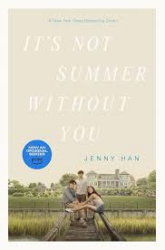
Taylor Jewel from The Summer I Turned Pretty by Jenny Han

Taylor is a very good friend to Belly. Even when they are fighting, Taylor still loves Belly and helps her through her problems. I would love to have Taylor as a friend.

Hazel Levesque from The Heroes of Olympus

Hazel is very sweet and she has been through a lot, so I really want to be her friend and comfort her.

Annabeth Chase from Percy Jackson and the Olympians

Annabeth is very smart and she likes designing things. I also like design, so we could talk about design and she could help me with Geometry.😭

Bianca Di Angelo from The Titan’s Curse

Bianca is someone who would do anything for her brother, and I would also do anything for my family. I think our brothers would get along well because my brother likes Pokemon and Nico likes Mythomagic.

Bronwyn Rojas from One of Us is Lying

Bronwyn would not give up until she found out how Simon died. I also like investigating things and figuring out how things happen.

Harper Lancaster from 12 to 22

Harper is a big fan of Taylor Swift and likes makeup. I also like those things, so I think we would have a good time together.


“Books That I’d Want to Be the Main Character In” by Ethan S., 7th grade

The Wild Robot Protects by Peter Brown

The main character in this book is so interesting, she was able to lead a whole group of fish and whales and basically the whole ocean to destroy a ship that was producing a lot of pollution which was killing a lot of sea life. I would want to be Roz (the main character) in this because I would want to know how it would feel when your whole family is dyeing and you had to do something to stop it. 

Wings of Fire: The Dragonet Prophecy by Tui T. Sutherland

I’d love to be the main character in Wings of Fire because getting to be Clay, a dragon with a big heart and hidden strength, sounds amazing. He’s brave even when he’s scared, and he cares deeply about his friends, which I really admire. Being part of a secret prophecy and going on wild adventures would make life so exciting. I think it would be incredible to discover who I really am while helping save the world. Plus, flying and breathing fire? That’s just awesome.

The Liars Society by Alyson Gerber

I’d like to be the main character in The Liar Society because Kate is fearless, clever, and never gives up, even when the truth is buried deep. She’s willing to risk everything to solve a mystery and stand up for her best friend, which I really admire. Being in her shoes would be intense, but also thrilling—I love the idea of uncovering secrets and outsmarting people who think they can get away with lies. Kate’s loyalty and determination make her someone I’d want to be. Plus, who wouldn’t want to wear a pink hair ribbon and take down a secret society?

A Rover’s Story by Jasmine Warga

I’d love to be the main character in A Rover’s Story because getting to explore Mars and learn new things every day sounds incredible. Even though I’m a robot, I start to feel emotions, which makes me unique—and I think that’s something really special. I’d get to help people by sending back important information, and that would give my journey a real purpose. It might be lonely out there, but I’d still feel connected to the humans who believe in me. Being curious, brave, and learning what it means to care—that’s the kind of adventure I’d want to have.


“Top 5 Best Book Characters” by Ethan S., 7th grade

While reading books, there is always that one character that gets you attention. Whether it’s for their good acts and intentions, or even for their sense of humor, these characters are often loved by all. Here are my top 5 favorite book characters:

  1. Celeste Newsome – The Selection series

Although Celeste is one of the main “villains” in the first book, she has grown a lot throughout the series. She has shown guilt by what she has done wrong, and changed to be a better person after the selection, even though life had other plans for her.

  1. Cammie Morgan – Gallagher Girl series

Cammie is a brave, smart character, who is determined to do everything for what she believes in. She and her friends use what they learned to protect their sisterhood and investigate Cammie’s first love.

  1. Lina – Love & Gelato

Lina shows how good her heart is by attending to her deceased mother’s last wish, even though it was something she did not want to do. By moving to Tuscany with her long lost father and visiting Italy with her new friend ren, she shows bravery to end up discovering a secret that will change everything she knows.

  1. Melody Brooks – Out of My Mind (series)

Melody is the definition of bravery and determination, after everything she went through. Diagnosed with Cerebral Palsy, her life started out as a challenge since the beginning. It was hard for her to make friends because of her disability, but even then, she was able to prove herself into making a national TV competition. She says that although her body might be broken, she is not.

  1. Paedyn – Powerless

Paedyn is brave and fights for her survival everyday. Being an ordinary, she has to live in the shadows and steal in order to survive. After making a good deed, she is given the place in the Purging trials, a deadly battle that could make her rich, or dead. She sacrifices everything and goes to these trials, where unexpected things happen.


Thank you so much to my student voices today and their look at characters in books they love!

Author Guest Post: “What Would It Take to Love a Snake” by Sunya Mara, Author of Embrace the Serpent

Share

“What Would It Take to Love a Snake”

.I’ve always been afraid of snakes. They give me the primordial heebie-jeebies—a fear so deep in my blood that I’m sure my ancestors are recoiling, too. But, one day, I saw this king snake in my backyard — an enormous, black-and-white striped, insanely long creature — and for some reason, a little voice in my head said: what would it take to love a snake?

I had been tinkering with this idea of a girl who made magic jewelry, but it was at that moment that Embrace the Serpent really had a spark. Jewels and snakes go together often in fairytales—there are too many examples to name, but I’m particularly fond of “The Snake Prince” and “Muchie-Lal”—and I started wondering why. Why do fairytale serpents have bejeweled palaces? Why does a queen’s ruby necklace turn into a snake, and the snake into a prince? Why does a bride have to embrace a hundred-headed snake for an entire night without letting go, to save her bridegroom? Why do they go together, the things we covet and the things we fear?

One thought kept nagging at me. It’s a simple one: both snakes and jewels are found deep in the earth, hidden from sight.

That idea inspired me. That something could be lurking just beneath your feet—something that could be wonderful, or dangerous. And you can’t know which it is unless you’re brave enough to seek it out, to reach into the dark, the unknown, and take hold of it.

Saphira, the main character in Embrace the Serpent, is a girl who’s so afraid of the world that she lets someone else take the credit for the magical jewelry she makes. But, she doesn’t realize that her work is so extraordinary that powerful people are paying attention, including the Serpent King. That idea, of being afraid to claim your work as your own, and therefore limiting yourself to a cage of your own making—that became the crux of Saphira’s character.

She’s tested when the Serpent King sends his cleverest huntsman to find the best jewelsmith in the world, and he realizes that the unassuming little apprentice is the true genius behind these extraordinary works. Unfortunately, his scrutiny leads others to discover her, and sets of a chain of events that leads to Saphira making a dangerous deal with the Serpent King: she’ll help him, if he’ll give her the means to hide forever.

And that’s where the unlikely romance begins. As they journey together, pretending to be newlyweds, they begin to see each other as more than a means to an end. Both Saphira and the Serpent King have something to hide, and I wanted to capture the feeling of guarded people slowly opening up to each other, and finding that under the fear, there’s something to love.

Who we love shows us who we are. And sometimes who we really are is a surprise to ourselves—in a good way. Sometimes being loved changes the beloved.

That feeling of transformation—of becoming stronger because you have something or someone to be strong for—was the thing I most wanted to explore with this story.

Some of the books and movies that have been a touchstone for this story include Howl’s Moving Castle by Diana Wynne Jones, Sailor Moon by Naoko Takeuchi, Pride and Prejudice by Jane Austen—all these have one thing in common, which is that the main character undergoes a radical transformation because they found a reason to be braver in loving someone else. I found those stories powerful, especially in the context of a world that seems increasingly self-centered and fearful.

Fear can be good, because it keeps us alive, but it also can keep us stagnant. You can only be sure no one will hurt you if you’re all alone, that you’ll never say something wrong if you never speak at all, and that nothing horrible can happen to you if you never leave the house—but centering fear seems like such a shame, when there are so many wonderful things to embrace instead.

That, I think, is what Embrace the Serpent is about. It came out of me as an antidote to fear. It reminded me of the power of delight, of choosing to be strong enough to care. I hope that if you choose to give Embrace the Serpent a chance, that Saphira and the Serpent King’s love story will take care of you the way it took care of me.

And, the funny thing is, I still think about that king snake. In a way, it gave me this book, and the adventure of writing it. It changed me for the better, and I’m grateful to it.

And I wonder, what would it take for you to love a snake?

Published June 24th, 2025 by HarperCollins

About the Book: “An exquisite jewel of a book.” —Ava Reid, #1 New York Times bestselling author of A Study in Drowning

In this sweeping romantic fantasy, a dangerous deal binds a young jeweler’s apprentice to the mysterious Serpent King in a marriage of convenience, thrusting her into a deadly game between the cunning, fearsome ruler and his rebellious huntsman. Perfect for fans of The Wrath & the Dawn and Once Upon a Broken Heart!

The Serpent King is the most eligible bachelor in the land: a monster with dark and terrible magic and the ruler of the last free kingdom. Riches and power await his future bride—but so does a life forever trapped in the games of court.

That fate is eighteen-year-old Saphira’s worst nightmare. Ever since the Empire made her an orphan, she’s found freedom in being invisible. So despite her rare gift for harnessing the magic in gemstones, she lets an unscrupulous jewelsmith take credit for her increasingly sought-after work.

But when the king sends his most clever huntsman to find the best jewelsmith of all, the spotlight lands on Saphira. Faced with choosing between falling into the Empire’s grasp or marrying a monster, she chooses the latter — even if it means getting increasingly caught between her cold, serpentine husband and his cunning, handsome huntsman.

About the Author: Sunya Mara grew up in six different cities across five different states and now calls Los Angeles home. She studied film and business at the University of Southern California and went on to write and illustrate at Kobe Bryant’s Granity Studios. When not telling stories, she spends her time haunting old movie theaters and staring at museum walls.

Thank you, Sunya, for sharing your fear that became power in this post!

Author Guest Post: “Scared Safe: How Horror Literature Can Comfort Young Readers” by Ann Dávila Cardinal, Author of You’ve Awoken Her

Share

“Scared Safe: How Horror Literature Can Comfort Young Readers”

When people learn what kind of young adult novels I write, I often get the comment, “Oh, I can’t read horror. I’m too scared!” I always respond with, “Oh, me too! I’m so afraid, I’m medicated!” I usually get a confused look in reply, “But . . .you write horror?”

I know, it doesn’t make a lot of sense at first glance, but I’ve always loved scary stories, even when I was quite young. My three older brothers usually had Creature Features on, a weekly television broadcast of cult horror movies, and my mother was always reading some gothic horror novel or another, so I was right there asking them all my questions, peeking at the screen from between my fingers. Yes, these things gave me nightmares, but no, that didn’t stop me. After many years of being a horror fan, I began my writing career with a young adult novel about the Latine boogeyman entitled Five Midnights. From that point on, I was hooked. After writing in this genre for over ten years and meeting a lot of other writers and readers, I’ve come to realize that a lot of us are like this: these stories scare us too, but we also find comfort from reading, watching, or listening to tales of the macabre. I have a theory why, at least in my own case.

Like many childhoods of that time, mine had its traumas. I was the fifth of five children, with sixteen years between me and my eldest sibling, and for five of my first eight years my father was dying of ALS. As you can imagine with all that was going on for my fairly large family, I often went unnoticed, quietly sitting in the background as my brother George watched Invasion of the Body Snatchers, or listening in on conversations about my father’s disease that were not appropriate for my young years. After my father passed, with only two of us kids left at home, my mother turned to alcohol for comfort. Me? I started buying horror comics, reading about dolls that came alive at night and killed their owners, corpses that rose from the grave to exact revenge. I was drawn to these dark tales because they made my difficult life seem bearable, particularly those that featured kids who, like me, had no autonomy, no voice, but when faced with the most unimaginable horrors they managed to triumph in the end. Weird as it was, those stories made me believe that there was hope, because though my young life sucked, at least there weren’t zombies breaking down the front door of our home. I am clearly not alone in this response; in fact, I came to find that it is supported by studies as well.

In his paper entitled, “Scaring away anxiety: Therapeutic avenues for horror fiction to enhance treatment for anxiety symptoms, behavioral scientist Coltan Scrivner, PhD states, “Horror media may provide a unique avenue for individuals to manage anxiety by offering controlled exposure to fear, opportunities for cognitive engagement, and experiences of mastery over negative emotions.” He goes on to talk about the benefits of “scary play” for juveniles, “Much of human play takes place in the cognitive playground of a fictional world. Through fictional play, people can learn what a particular situation looks like and imagine how they would react and deal with it. As with more physical types of play, cognitive play with fiction can also serve as a rehearsal for negative emotions and how to manage them.” So, horror stories give young readers an opportunity to practice their responses to trauma in a safe and fictional environment.

During a recent interview I was asked how writing horror for teens differs from writing horror for adults. My answer is always the same: hope. When you’re writing for young people, you’re writing for a vulnerable population. You have responsibility toward your readers. With adults, you don’t have to consider audience at all, you just write. And in the case of adult horror, it can be as dark, violent, or disturbing as you’d like. But with young people, I feel that even the darkest stories should end with a certain amount of hope, and, perhaps, agency for the young protagonists. But along the way, the road can be pretty dark: today’s youth can take it.

In any young adult novel, it is partially our job as writers to throw as many roadblocks at our main characters as possible, sometimes in the form of trauma or truly horrific things, because, put simply: conflict makes for a more interesting story. The more conflict, the better. No one wants to read about someone’s perfect life, because I don’t believe anyone actually has one. It would seem empty. I often think about the first time I read the Lord of the Rings. I couldn’t stand the fact that Frodo and Sam continued to encounter unspeakable evil for thousands of pages, and I gnashed my teeth for hours at a time. I was like, “Just let them throw the damn ring into the fire already!” But it kept me turning pages. No one wants to read a version where they’re magically flown to Mount Doom, Frodo doesn’t have an internal battle with evil but rather just tossed it into the lava, middle earth is saved in the first fifteen minutes, and there was much rejoicing. Rather, it is the act of overcoming that elevates a tale to one that we love and reread over and over. And it is these kinds of stories that almost always end with hope.

So, whether or not you are someone who enjoys horror, you will probably encounter a student or other young person who expresses interest in books of the scary persuasion. What I’d like to ask of you, is this: don’t assume about the child is drawn to these kinds of stories because they are receding into darkness, but rather consider that they might be trying to claw their way out of it, and books of this kind help them do just that. Because in the darkness of horror, young readers often find the light they need to face the real world.

I certainly did. And I turned out alright. (Well, more or less. 😉

Published June 17th, 2025 by HarperCollins

About the Book: Fans of You’re Not Supposed to Die Tonight and Your Lonely Nights Are Over will love this thrilling YA horror about a string of disappearances and “accidental” drownings in the Hamptons, the changing relationship between two best friends, and their desperate attempt to not be the next victims of a Lovecraftian monster terrorizing the coastline.

Gabi should be thrilled to be visiting his best friend for the summer. But with its mansions, country clubs, and Ruth’s terrible new boyfriend, Frost Thurston, the Hamptons is the last place he wants to be. And then Gabi witnesses a woman being dragged under the ocean by what looks like a tentacle . . .

When no one—not the police or anyone else—seems to care, Gabi starts to wonder if maybe the beachside town’s bad vibes are more real than he thought. As the number of “accidental” deaths begins to climb, the Thurston family name keeps rising to the top. And what’s worse is that all the signs point to something lurking beneath the water—something with a hunger for blood.

Can Gabi figure out how the two are intertwined and put an end to the string of deaths . . . before becoming the water’s next victim?

About the Author: Ann Dávila Cardinal is a writer and part-time bookseller with an MFA in writing from Vermont College of Fine Arts. Her young adult horror novels include You’ve Awoken Her, Breakup from Hell, and Five Midnights and its sequel, Category Five. Ann lives with her husband in a little house with a creepy basement and is always on the lookout for parts of monstrous creatures floating in the Vermont rivers as Lovecraft wrote about. Visit her online at anndavilacardinal.com. 

Thank you, Ann, for sharing the research behind the need for horror!

Author Guest Post: “Not If But When” by Madeleine Roux, Author of A Girl Walks Into a Forest

Share

“Not If But When”

If you haven’t heard of Sarah Wynn-Williams, she’s the Meta whistleblower who dropped bombshell after bombshell about the harmful practices of social media titans like Facebook and Instagram. In April of this year, she detailed to the U.S. Senate Judiciary Committee how these sites would target vulnerable teens, sending them ads for beauty products after they deleted a selfie or made posts indicating they were sad or depressed. I’ve understood for a long time that companies are not our friends, and that social media has become unbelievably toxic, but still, these revelations filled me with a special kind of anger.

Even at our lowest, even when we’re expressing self-doubt, fear, or vulnerability, the message is obvious: if you were a little bit more beautiful, would this still be happening? Maybe you wouldn’t feel so rejected if your skin texture was gone. Don’t you think he would still be your boyfriend if you had fuller lips? You won’t delete selfies after slathering your face in blah, blah, blah… It’s exactly this kind of pressure to be beautiful, presentable, consumable—even at our lowest points—that inspired Valla’s story in A Girl Walks Into the Forest.

I shouldn’t say it’s the only inspiration, because that’s just one of hundreds. This book is the natural outcome of someone born a woman just trying to exist in culture steeped in patriarchal ideas about what it means to be feminine. Valla’s journey started when I was picked on in middle school for not shaving my legs, when I went to an anticipated dinner at a date’s house and was immediately criticized, put down, then told menacingly there was a gun in the cabinet. This book began when I shared these experiences with other women, and heard either agreement or their far worse, far more damaging memories. I don’t have the word count to list out the rest, but I’m sure you get the idea.

At the beginning of A Girl Walks Into the Forest, Valla is a girl who believes that her beauty will protect her. She is traded to a wealthy Count living in a dangerous forest; their marriage will mean prosperity for her village. The deal is very simple—Valla will be a lovely, compliant bride and the Count will lavish her people with enough supplies to survive in an unforgiving place. Things fall apart quickly for Valla, who is grievously wounded and scarred on the trip to the Count’s castle. (I’m sure Facebook would gleefully inform her that this new exfoliating scrub could make those scars fade overnight!!!) Because she is no longer perfect, the Count no longer wants her in the same way, and we watch Valla discover her strength, her power, and how her pain and struggle are connected to that of other women and girls.

I hope the message of this book is clear by the time you reach the end of it—your beauty and compliance will protect you until they don’t, and it’s not a matter of if you become a Valla but when.

Published June 10th, 2025 by Quill Books

About the Book: For as long as she can remember, Valla’s been told her beauty would give her a life most people only dreamed of. So when the mysterious Count Leonid calls on her to be his betrothed, Valla jumps at the chance to leave her small, bleak village. The only thing standing in her way? The journey through the dangerous Gottyar Wood that many don’t survive.

Filled with deadly and cunning creatures, the Gottyar immediately delivers on its reputation with an attack that leaves Valla injured; her face torn to shreds. Barely making it to the castle in one piece, Valla is relieved to finally be safe. But things have changed. Valla’s face is no longer beautiful. And the Count is not happy…Valla thought making it through the Gottyar was a victory, but when she sees what awaits beyond the palace walls, the true battle begins. In this ruthlessly female-forward narrative that borrows from the best of horror, fairy tales, and folklore, a chewed-up-and-spit-out heroine must lean on the brutality of nature and her biggest fears in order to win back what’s she’s been robbed of: her life.

Madeleine Roux profile image

About the Author: MADELEINE ROUX is the New York Times and USA Today bestselling author of the Asylum series, which has sold over a million copies worldwide. She is also the author of the House of Furies series, and several titles for adults, including Salvaged and Reclaimed. She has written for Star Wars, World of Warcraft, Critical Role, and Dungeons & Dragons. Madeleine lives in Seattle, Washington with her partner and beloved pups.

Thank you, Madeleine, for this thought piece!