
“Why Middle Grade Readers Need Gothic Stories”
In second grade I discovered a new book in my school’s library, In a Dark, Dark Room. Inside this little book was a story of Jenny, who always wore a green ribbon around her neck, and spoiler alert, it ended with her taking off the ribbon. I felt a delicious shiver down my spine at the last line: “and Jenny’s head fell off.”
WHAT!
In a world of Laura Ingalls Wilder, Carolyn Keene, and The Babysitter’s Club, this was new for me, and I knew I needed more. I immediately retold the story to my friends, one of whom was named Jenny and didn’t appreciate the nightmares. I couldn’t get enough.
Through stories with ghosts and candlesticks and billowy nightgowns and grand staircases and cobwebs dangling from chandeliers I discovered the power of gothic tales to delight and terrify. While the monsters are fun and fantastical, the themes are deadly serious.
The first time I read Bram Stoker’s Dracula I remember setting down the book and wondering how his original audience, who knew nothing of vampires, would have reacted. The story had a seemingly innocent core wrapped in gore: nineteenth-century propriety blushing at the intimacy of a bedside vigil. I was mesmerized by the gruesome terror juxtaposed with the purity of good versus evil. I rooted for the heroes to work together to defeat the demon.
When my son was in middle school I gave him a copy and he gamely tried to plow through but petered off when Jonathan Harker was still trapped in the castle in Transylvania. I thought, “What if I could make this story more accessible for him? What if these characters were teens living in Georgia?” So I did. Girl of Lore introduces my favorite gothic characters to the group of readers who maybe need them most of all.
Middle grade readers need gothic stories. Perhaps no other type of story resonates more with the unease and turbulence of burgeoning adolescence, a time when the world feels strange, we question our sanity, and we struggle with the creeping suspicion that something is wrong with us. Characters in gothic literature deal with outside forces like ghosts and the undead while battling inside struggles like “what if I’m crazy” and “what if things aren’t okay.” Through the pages of gothic books, readers can process death, mortality, and the darker side of human nature in a safe, healthy way.
Gothic literature creates an atmosphere of mystery and suspense, a threatening feeling, and fear of the unknown. You know, kind of like navigating friend group drama, changing schools, test anxiety, and unrest at home. Often there’s a feeling of isolation, maybe physical isolation or internal isolation. In Girl of Lore, my main character, Mina, struggles with maintaining friendships, feeling different, and the longing to connect with family. She processes all of this in the mysterious, spooky, gothic setting of her hometown.
I had a blast creating Mina’s town of London, Georgia, and now it’s your turn!
Gothic writing exercise: turn your hometown into a gothic setting
Step one: Pick a building or area of your town and describe it like a gothic novel would.
Often you’ll hear that in gothic literature, the setting is a character in the story. The places the characters live and work can feel alive and menacing. They often are filled with decay, overgrown cemeteries, crumbling castles or estates. Architecture details are important, with gables, eaves, maybe even a turret or gargoyle. Secret passageways abound.
When I created my fictional town of London, Georgia, I spent time in the communities around where I lived, exploring cemeteries, walking around lakes and town squares, and touring Victorian houses with sprawling porches, gingerbread trim, and dormer windows. As I began to describe the setting for Girl of Lore, I pulled in shadows, draped cobwebs, and enhanced the spooky details to give London a Southern gothic feel.
“They stared at [SPOILER ALERT] from a safe distance, noticing its peeling paint and steep roof plunging down. The rickety porch looked rotted through, with weeds growing up between the spaces of the boards. The house was dark, but Mina thought she saw a curtain flutter.”
Step two: Picture the flora and fauna in your town.
Describe how the animals creep or slither, how the plants and trees decay. In what ways are they sinister or threatening?
My London for Girl of Lore is set in Georgia where I live, so I thought about how my own backyard spills into a marsh filled with wildlife like snakes and armadillos. I noticed the way vines entangle the trees, choking them. Where I live is lovely, but when I saw it through a gothic lens, it became the perfect setting for a ghoulish tale, with skittering, creeping animals and arachnids.
“Arthur let out a whimper when he nearly walked into the three-dimensional web of a massive Joro spider, her delicate legs perched in the middle of her creation, waiting for dinner.”
Step three: Add a supernatural or psychological element.
Is there a ghost lurking somewhere? A town legend? A tragic element? Is someone wailing?
Supernatural elements like ghosts, family curses, and shadowy monsters often show up in gothic stories. Sometimes the power of nature itself threatens danger. The monsters aren’t always vampires or creatures of the night. They can also come in the form of psychological trauma like mental illness, obsession, and manipulation.
“As she hurried home past the church, past the cemetery, she heard a growl in the bushes along the sidewalk. Mina turned on her phone flashlight and shined it toward the growl. Three shadows loomed in the cemetery, watching her. The hair on the back of Mina’s neck stood up.”
The concept for Girl of Lore began when I wondered what it would be like if characters from Bram Stoker’s Dracula went to high school in small town Georgia. Make your own gothic story. Turn your town into a gothic setting, add the monsters of your choice…and see what happens!
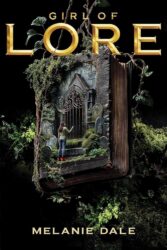
Publishing April 21st, 2026 by Aladdin
About the Book: A girl who’s used to battling the monster of her own mind discovers there’s a sinister evil lurking in her small town in this atmospheric paranormal novel that’s perfect for fans of Tracy Wolff and Maggie Stiefvater.
Stories of dark magic and even darker creatures have always swirled about Mina Murray’s town of London, Georgia. Mina knows they aren’t true—and are likely perpetuated only to drive the quirky tourist-trap ghost tours of downtown—but that doesn’t stop her from collecting the stories and drawing them in her sketchbook. Something about the possibility of real monsters helps her deal with the monster in her own head: her OCD, which convinces her danger lurks everywhere.
But when a body is found drained of blood and a classmate goes missing, Mina is thrust into a tangled web of London secrets…that she seems to be at the center of.

About the Author: Before embracing her love of monsters and sneaking into Mina’s fictional world, Melanie Dale published a bunch of nonfiction books, shambled around as a zombie on TV, and survived cancer. She’s written episodes for the anthology horror television series Creepshow and over a decade of essays for Coffee + Crumbs. While she has won no awards for literature, she won a Halloween costume contest one time and still feels pretty stoked about it. When she’s not writing, she’s teaching yoga or battling her own brain. She lives in the Atlanta area.
Thank you, Melanie, for this wonderful writing activity as well as the plea for middle school dark(er) books–I know many of my middle schoolers would agree with you!

What a fun writing activity!!