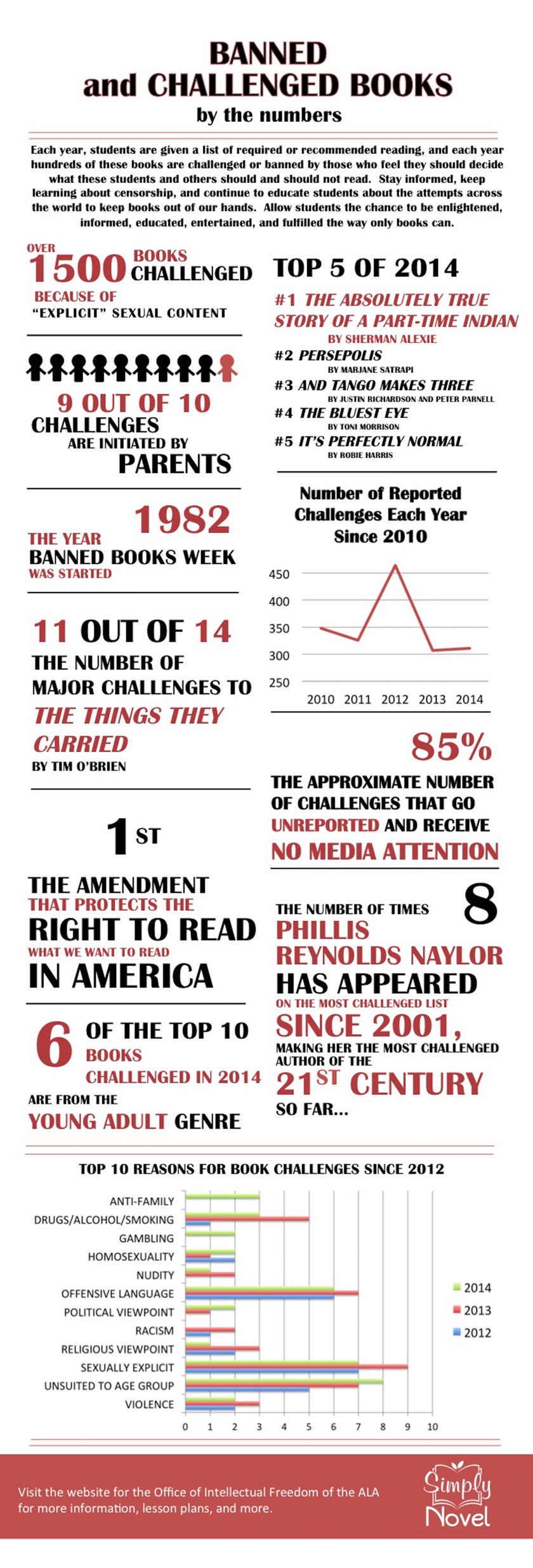
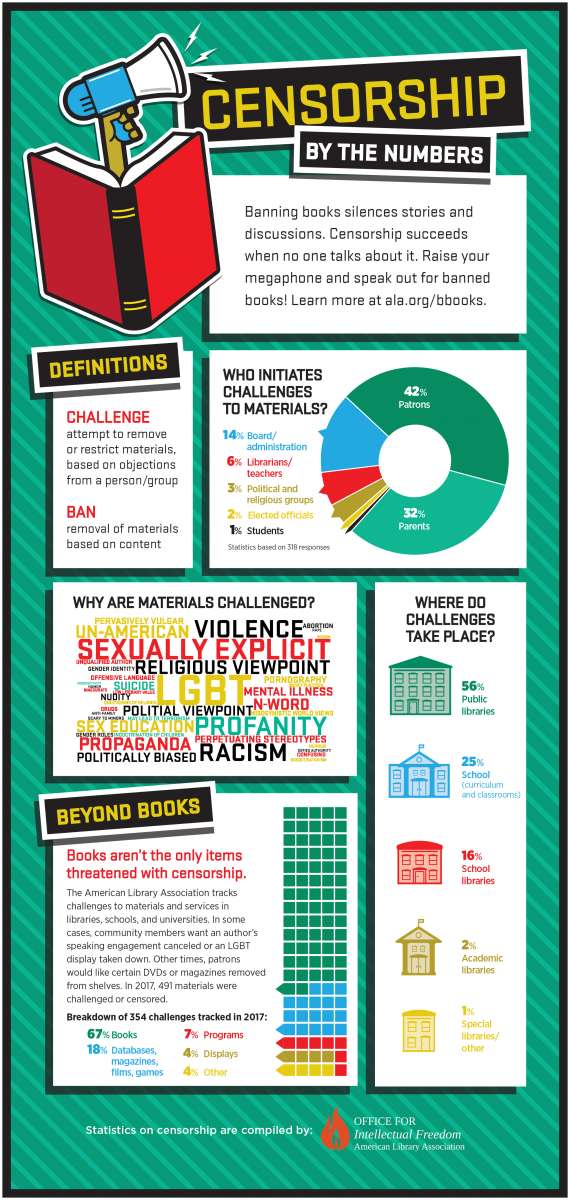
From Olivia Biggs (Senior Editor, Pixl Parade, Find her on Twitter): Did you know that some books have actually been banned in America? That’s right! Even in the land of the free, parents and educators have been known to push popular books out of libraries and schools, some of which later became required reading. Even today, thousands of parents petition and challenge popular books for a variety of reasons, both reasonable and unreasonable. This infographic takes a deeper look at the most banned and challenged books of the past 5 years, and why they were challenged in the first place!
The recent library problem child is Thirteen Reasons Why by Jay Asher, which, due to the recent Netflix series inspiring instances of self-harm among young adults, met an uproar from parents in 2017, despite the fact that the book has been around for about ten years.
Another book upsetting parents is The Absolutely True Diary of a Part-Time Indian by Sherman Alexie, which discusses poverty, alcohol, violence, sexuality, and bullying. It’s a critical darling, wining numerous awards and high reviews, but that doesn’t stop parents from trying to pull it from shelves a decade after its release.
An increasing and uncomfortable number of books under attack have LGBTQ+ content, gender identity themes, and transgender characters. These themes might make parents uncomfortable, but their fairly necessary for making a younger generation of LGBTQ+ teens comfortable with themselves.
Don’t worry about banned books being uncomfortable. If you’re worried about recommending troublesome books for required reading, just look at top 10 most banned books of all time, which includes classics from 1984 to Of Mice and Men to The Great Gatsby – all known to be required reading for high school students!
Books expand our horizons, teach us how to think in different ways, and show us totally different perspectives, as they should. Banning books doesn’t allow people to experience new thoughts and ideas! Let’s all do better by allowing us to be more open to each other and not allowing books to be banned from libraries and schools.