“Two Words That Can Help with Writer’s Block in Students!”
Imagine, you’ve just announced an end-of-school year creative writing assignment for your students. You are expecting a positive response given your school just hosted a local author who talked about the writing process or your class just finished an inspiring novel. Besides, all students want to express themselves, right? And in creative writing, there are no wrong answers and so this should be a slam dunk assignment.
Then the arms shoot up into the air.
“What can we write about?” Anything, you respond.
“Can it be about space aliens?” Yes.
“How about super heroes?” Absolutely.
Can I write about myself?” Sure. This is your assignment. Be creative and have fun.
This is going really well. The students are as excited as you are about this assignment. But when you walk down the row of desks to check on their progress you notice that several notebooks or laptops remain blank. These students defend their lack of progress by saying that they have nothing to write about. They don’t know how to start. Even the students who started strong complained of writer’s block. “I don’t know what to write next. I’m stuck.”
If this scene plays out in your classroom, it is time to let them in on the creative writing secret that has launched stories and even writing careers. It was certainly key to my middle grade time travel series, Roger Tarkington and the Magic Calendar. The creative writing secret I refer to is what I call the what if technique. In my view, what if are the two most important words in creative writing.
The origin of my middle grade time travel series started as a what if. My toddler son was obsessed with calendars. About the same time, he was given a children’s magic kit with a cartoon magician featured on outside of the kit box. It got me thinking: what if the magic wand was used to turn the calendar magic? Thus started my journey with Roger Tarkington and his adventures at Jefferson Middle School.
While I can’t be certain, I would imagine that many stories started using what if.
What if a boy were trapped inside a video game (Trapped in a Video Game)? What if a student with a face deformity went to school for the first time (Wonder)? What if a boy was stranded alone in the woods (Hatchet)? Asking what if can help turn an ordinary situation, such as playing a video game, hiking in the woods, or going to school, into an intriguing premise for your next story.
Answering the what if question often leads to more questions. For example, how did a boy end up in the woods by himself? Perhaps the author used what if to come up with options, such as: What if he got lost by taking the wrong trail? What if he was on a school or Boy Scout outing and got separated from the group? What if the small plane he traveled in crashed in the middle of the woods?
I went through several what if scenarios before I settled on the premise of Roger Tarkington and the Magic Calendar. Originally, I was focused on the magic wand from the magic kit. I looked around my son’s playroom and asked a series of what if questions. What if the magic wand brought my son’s stuffed animals to life? I liked that idea, but it was too similar to the movie, Toy Story. What if the magic wand was used to turn my toddler son into a grown man? No, I wanted to tell a children’s focused story and so I opted against that idea. It wasn’t until I saw my son sitting near the magic kit while looking through a wall calendar that I came up with the premise of a magic calendar that allows someone to repeat days of the week by touching inside the calendar day. The idea matched my interest in writing about everyday school life, but with a fun time travel-like twist.
Inevitably, writer’s hit snags in their story. The what if technique is a great place to start in overcoming what seems like impossible roadblocks. During this brainstorming, I write down every what if answer, especially the silliest ones. If nothing stands out, I come back to the sheet of paper later and reread the answers. If nothing else, you’ll get a good laugh. However, this review often triggers new what if answers, sometimes ones that combine elements of two different answers.
The what if technique forces writers to face the creative problems they face with action. The technique also shifts the focus from negative thinking (i.e., I don’t have any ideas, I have writer’s block) to possibility simply by framing the roadblock as a question.
So does the what if technique solve every writing problem? Of course not. What if won’t motivate you to write, it won’t help with sentence structure or spelling, and it won’t address writer doubt or fatigue. However, the what if technique and similar writing strategies can help writers at any level or writing stages to address challenges and find solutions so that writers can get to the two next important words in creative writing: the end.
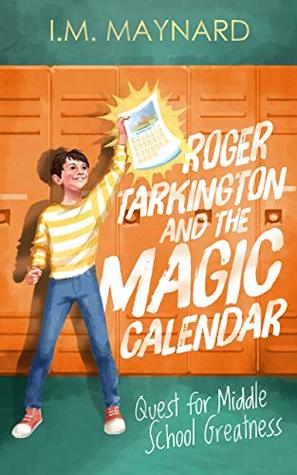
About the Book: Meet Roger Tarkington.
The almost 11-year-old has a plan for middle school greatness. A perfect plan that—lasts for all of about five minutes. 286 seconds, to be exact.
It’s all ruined when Kyle-the-Vile Brossman appears unexpectedly on the first day of school. Making matters worse, Kyle pledges to make Roger’s year miserable, just like he did at Bellingware Elementary School.
Roger’s unlucky start to sixth grade turns magical when his calendar turns into a time travel portal that allows him to repeat days.
Influenced by his Middle School Greatness Tip #31 (Don’t wait for it to happen, make it happen), Roger devises a new plan to use his magic calendar to beat Kyle, clearing his path to middle school greatness.
Foolproof plan for middle school success, right? Maybe in real life, but remember, this is middle school!
Will Roger succeed in using his magic calendar to standout at Jefferson Middle School and achieve middle school greatness?
Or will he fall under the constant attacks from Kyle and the unexpected, everyday obstacles of middle school?

About the Author: I.M. Maynard is the author of the Roger Tarkington and the Magic Calendar middle grade time travel series. The first book in the series, Roger Tarkington and the Magic Calendar: Quest for Middle School Greatness, was released in 2020. The second book in the series, Roger Tarkington and the Magic Calendar: Surviving Middle School, was released in 2021. I.M. Maynard is currently working on the third and final book in the series. When he isn’t writing, I.M. Maynard enjoys reading. HIs favorite contemporary authors include Louis Sachar (Holes), Stuart Gibbs (Spy School), Gordon Korman (Jackpot), and Chris Rylander (The Fourth Stall). Born and educated in the Midwest, I.M. Maynard now lives on the East Coast with his wife and son, who was the inspiration for the middle grade series. Learn more about I.M. Maynard at https://www.maynardauthor.
Thank you, I.M., for this post showing how to help students get those creative juices flowing!