
“The Child Who Feels Different: What They Need from Adults in the Room”
Have you ever looked back on the reel of your life and realized there was one scene, one moment that would shape the foundation of your story?
The first time I realized something was off. I was in kindergarten. Our teacher asked us to pull out our rulers and draw a straight line. I was left-handed so I tried to stabilize the ruler with my right. But as I pressed down, the ruler wobbled and when I looked down, my line was jagged. Everyone else’s lines were perfectly straight.
This moment has stayed with me not because of the jagged line but because of what it revealed. It was the first time, I understood that my hands and body moved differently, It was the first time I realized I had a neurological condition, that was known as Cerebral Palsy.
Years later when I replay this moment in my mind, I realized it was symbolic of my first lesson in truth ,that life itself is a jagged line.
The jagged line became a metaphor I didn’t know I was drawing, a preview of how my life would unfold. Cerebral Palsy taught me that control is an illusion, but effort that’s sacred.
The effort that lives between two kingdoms where ability and limitation meet in quiet negotiation.
Growing up as I engaged in activities at school, I spent years trying to make my line look like everyone else’s . I learned to hide the spasticity in my hand, to steady It under the table, to move slower, to pretend the imbalance was not there. I was confused. I didn’t understand what I was feeling. Was I bad, was I wrong, was I weak?
This was a very lonely pursuit. I spent many years of my life trying to erase the evidence. Severing these parts, only to have to confront them later.
This story is symbolic because it was the first time I experienced feelings that I did not understand. I did not understand whyI was different. Looking back on my formative years, knowing what I know now, I realize that something was missing.
I learned many important skills in school :how to read, how to write, how to calculate, but I was never taught how to understand the emotions that I felt in that moment in kindergarten, the zingers that echoed through my heart and body. So I pushed these feelings away and tried even harder to hide.
I do not want our children today to have to get by as I did. I want them to know that school can be a place where emotional understanding is prized just as much as academic achievement.
As I look back on this moment in Kindergarten, I recognize now that my children’s book, The Seasons of Little Tree, embodies the growth that prevailed throughout my life. This experience reflects the quiet roots that were growing beneath the surface long before I could see them, roots that sustained me through seasons of uncertainty, loneliness, and self-discovery.
Little Tree is the translation of my name in Farsi, and the child I once was.
Little Tree looks around and wonders why she doesn’t measure up. She questions why others seem stronger, taller, more capable. She watches the world reward what is obvious while the quiet work happening beneath the soil goes unnoticed. Like so many children, she mistakes difference for deficiency because no one has yet given her the language to understand otherwise.
That is why I wrote this story.
Not because every child has cerebral palsy, but because every classroom holds children carrying something unseen. A learning difference. Anxiety. Grief. A disability. Family struggles. Loneliness. The quiet fear that they are somehow “less than.” Children rarely have the words to explain these experiences. Instead, they express them through behavior, withdrawal, perfectionism, frustration, or silence.
As psychologists, we know that children do not simply need instruction. They need recognition. They need adults who notice and recognize, who can help them make sense of what they are feeling before those feelings become the stories they tell themselves about who they are.
When I think back to that jagged line, I don’t wish someone had drawn it for me. I wish someone had helped me understand what I was feeling as I looked down at it.
That conversation would not have changed my cerebral palsy, but it may have changed how I understood myself.
Teachers have opportunities like this every single day. Often, they are not the big moments that become memorable. They are the quiet ones, the child who hesitates before raising a hand, the student who tears up over a small mistake, the child who never seems to join the others at recess. These moments ask us to look beneath the behavior and wonder what roots are growing underneath.
My hope is that The Seasons of Little Tree becomes an invitation: for teachers, parents, counselors, and caregivers, to recognize children more deeply.
Because every child is growing roots we cannot see.
And sometimes, the smallest tree in the forest is quietly becoming the strongest one of all.
Five Books for the Child Who Feels Different
These are picture books I’d put in the hands of any teacher who wants to open the conversation – books that hold complexity without rushing toward a tidy resolution.
-
The Invisible Boy by Trudy Ludwig – A quiet boy on the edges of his classroom becomes visible when one act of kindness shifts everything. This book is less about the child who is different and more about what it costs to be unseen. Teachers often find it works as well with the witness as it does with the child who recognizes themselves in Brian.
-
Bitsy Bat, School Star by Kaz Windness – A little bat starts school doing everything “wrong-wrong-wrong” until she finds a way to shine that is entirely her own. Three starred reviews. Written by an autistic author-illustrator, this one earns its place because it doesn’t just celebrate difference – it shows the exhaustion of trying to do things the way everyone else does them first.
-
Maybe Just Ask Me! by Katie Mazeika – Mazie wears an eyepatch and a head scarf on her first day at a new school. Her classmates don’t ask; they invent wild rumors instead. What makes this book stand out is that Mazie isn’t waiting to be rescued – she’s building the courage to tell her own story. A strong read-aloud for conversations about disclosure, curiosity, and why it matters to go to the source.
-
Becoming Vanessa by Tami Charles – On her first day of school, Vanessa’s clothes are too bright, her feather boa has too many feathers, and even her name feels too hard. She wants to shrink herself into something simpler. Then her mother tells her what her name means. I include this one because the turning point isn’t someone else accepting Vanessa – it’s Vanessa learning that her name, and everything it carries, was chosen with intention.
-
The Seasons of Little Tree – I wrote this one, so I’ll speak to it plainly: I needed this book when I was five years old. It follows a small tree learning that belonging doesn’t require sameness, that growth happens in seasons, and that a winter that looks like nothing is happening is still a form of becoming. For children who are moving at a different pace, taking a different shape, or simply trying to find their place on the page.
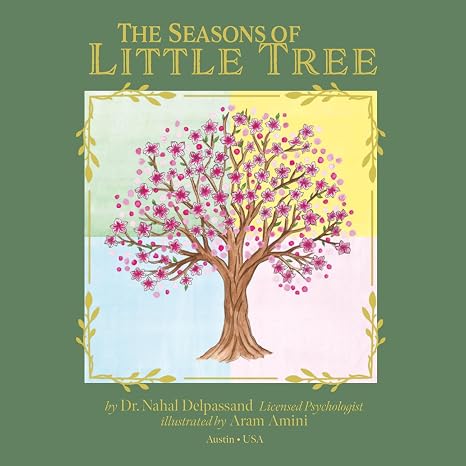
The Seasons of Little Tree
A Children’s Book About Growth, Change, Resilience, and Becoming
Author: Dr. Nahal Delpassand
Illustrator: Aram Amini
Self Published April 1st, 2026
About the Book: The Seasons of Little Tree by Dr. Nahal Delpassand, beautifully illustrated by Aram Amini, is a heartfelt children’s book about identity, disability, emotional growth, and discovering your strength through life’s changing seasons. Inspired by real lived experiences, this beautifully illustrated story follows Little Tree through the changing seasons as she discovers that growth is not always visible — and that strength often comes from the roots we quietly nurture beneath the surface. What This Story Offers Themes of resilience, self-acceptance, and belonging Gentle conversations about difference and emotional growth A calming, meaningful bedtime reading experience Rich, full-color illustrations inspired by nature and cherry blossoms A Story That Grows With You Written for readers ages 0–99, The Seasons of Little Tree resonates with children and adults alike. Through poetic storytelling and immersive artwork, readers are reminded that every season of life holds meaning — even the difficult ones. Like roots beneath a tree, the most important parts of us are often the parts no one else can see. Perfect for families, educators, therapists, caregivers, and anyone navigating change, this timeless story is a celebration of hope, perseverance, and becoming.

About the Author: Dr. Nahal Delpassand is a licensed psychologist, speaker, and author based in Austin, Texas, serving clients across 40 states through PSYPACT. She is the author of the debut children’s book The Seasons of Little Tree. Her work centers on emotional literacy, self-esteem, and what it means to stay rooted in yourself through uncertainty and change. She lives and practices through her signature philosophy, Rooted in Self.
Thank you, Dr. Delpassand, for sharing your story and your book!

1 thought on “Author Guest Post: “The Child Who Feels Different: What They Need from Adults in the Room” by Dr. Nahal Delpassand, Author of The Seasons of Little Tree”