
“Planting the Seed: Why Sharing Stories with Diverse Representation in Medicine and STEM Matters for Children”
I remember that day as if it were yesterday—the day I found out becoming a doctor was possible and, quite frankly, a real option. Oddly enough, it was when I was a college student. I asked a career counselor, based on my interests and grades, how I could find my purpose in life (not just a job). I explored what service I hoped to give to the community and what I hoped to gain, which, again, was a sense of purpose. When he shared his first instinctive suggestion of a career in medicine, it shocked me.
I later realized I was incredibly stunned not because of the type of job he recommended, but because the reason I had never thought of it myself came from never seeing anyone who looked like me in it. It was not because of the responsibility or the difficulty of the path to medicine, but because the idea literally had not occurred to me. Growing up, I did not see any physicians of color in my community, nor did I have any family members who pursued this career. I did not read about it in books. It was rarely portrayed in the media. Without realizing it, I had internalized the idea that this was not a space meant for someone like me. It was a hidden barrier I did not realize was there.
That was the day I secretly vowed to myself that if I ever made it, I would do what I could to advocate for this—to show that, yes, diverse representation in medicine and STEM matters.
Today is a different time. The landscape is slowly changing, with shows such as Doc McStuffins, a young Black girl who imagines herself as a doctor caring for her stuffed animals. Children can also see characters like Shuri in Marvel’s Black Panther, a brilliant young woman scientist and engineer whose inventions power the fictional nation of Wakanda. Whether we realize it or not, these characters model to children of color and diverse backgrounds that, yes, this is possible. These characters may seem small in the grand scheme of things, but they carry enormous power in the media. They introduce children to possibilities they may not otherwise imagine. Yes, you can do this, and the world can be your oyster. Yes, you could be an athlete or a singer, but you could also be an engineer or even a doctor. Representation does something subtle but profound: it expands the imagination.
When children see someone who looks like them in a role in science, leadership, or healing, the question shifts from “Can someone like me do this?” to “How do I get there one day?”
This matters in medicine and STEM fields, where diversity remains limited in many spaces. As a tall woman of color, I was often expected to be a basketball player, but that was not my passion. I loved science and later grew to love the idea of becoming a doctor. Now that I am in the medical field, the research still shocks me with how low diversity remains. A 2023 article by the Association of American Medical Colleges (AAMC) reported that 5.7% of the U.S. physician workforce is Black/African American, and Hispanic physicians comprise approximately 6.9%, despite these groups representing 13.6% and 19.1% of the U.S. population, respectively.
There are many articles that explain why diversity in medicine matters, noting that it directly improves patient outcomes, reduces health disparities, and expands access to care for underserved populations. Beyond the statistics, representation matters because it shapes identity. When children are asked, “What do you want to be when you grow up?” many learn about these careers through what they see and what they can imagine. Whether they realize it or not, their identity is already forming, and it begins when a child first imagines who they might become.
For some children, that vision comes easily because the path is visible everywhere—in their neighborhoods, classrooms, families, television shows, and books. For others, that path seems hidden until someone shines a light on it. That is why stories are so important. Stories can be that light.
When we write books, create media through television and movies, provide mentorship, or simply share our journeys through reflection, we are doing more than telling personal stories. We are planting seeds—seeds that may grow years later into a future scientist, engineer, researcher, or physician who once needed someone to show them that the door was open. For me, that door opened with a single conversation.
Now, through storytelling and representation, I hope to help open it for someone else—maybe a young boy or girl who simply wants to pursue something different from what they feel the world is offering them based on how they look.
References:
- Boyle, P., By, Boyle, P., Writer, S. S., & 12, Jan. (2023, January 12). What’s your specialty? new data show the choices of America’s doctors by gender, race, and age. AAMC. https://www.aamc.org/news/what-s-your-specialty-new-data-show-choices-america-s-doctors-gender-race-and-age
- Heath, V., & Price, C. L. (2025). Addressing health disparities: How having a more diverse biomedical workforce can contribute to addressing health disparities in communities that are often underrepresented in the healthcare system. British Journal of Biomedical Science, 82. https://doi.org/10.3389/bjbs.2025.14973
- Rosenkranz, K. M., Arora, T. K., Termuhlen, P. M., Stain, S. C., Misra, S., Dent, D., & Nfonsam, V. (2021). Diversity, equity and inclusion in medicine: Why it matters and how do we achieve it? Journal of Surgical Education, 78(4), 1058–1065. https://doi.org/10.1016/j.jsurg.2020.11.013
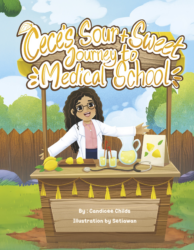
Publishing May 7th, 2026 by Book Baby
About the Book: From a young age, Cece had her heart set on learning new things, and discovering how she could make a positive impact on the world. As she grows up, her passion for helping others intensifies and she sets her sights on a big dream – attending medical school to become a doctor. But Cece‘s path to her goal is filled with both sweet victories and sour setbacks. As the saying goes, “When life gives you lemons, make lemonade.”
Through the highs and lows of her journey, Cece learns that failure is not the end, but a vital part of the process. In this heartwarming story, children will be inspired to embrace life’s sour moments, and find the sweetness that comes from never giving up and staying true to their dreams. Join Cece as she teaches young readers valuable lessons about overcoming obstacles and staying hopeful, no matter how tough the journey gets.
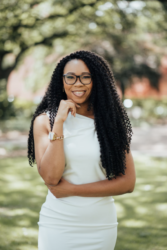
About the Author: Dr. Childs is passionate about sharing her story and, more importantly, wants to encourage any and everyone to find their passion and pursue their dreams – no matter how big or small. She has hope to encourage, empower and uplift any person who wants to truly work in their purpose. As a passionate author, she understands the importance of uplifting others through her words, actions, and creative works. In the future, she hopes to inspire and educate others by writing several books and becoming a podcaster. As a Christian, she also explores many ideas that embrace the role that spirituality plays in a person’s life.
Her hometown is the beautiful city of Savannah, GA. She has three degrees: a Bachelor of Science degree in Chemistry with a minor in Spanish from Valdosta State University, a Master of Healthcare Administration degree from Georgia Southern University, and a Doctor of Medicine degree from Augusta University – Medical College of Georgia. She has two certifications in nutrition and personal training from the National Academy of Sports Medicine.
Learn more about Candicee Childs here.
Follow Candicee Childs on social media:
Twitter/X: @candicee_childs_md | Instagram: @candicee_childs_md
Thank you, Dr. Childs, for this post!!

1 thought on “Author Guest Post: “Planting the Seed: Why Sharing Stories with Diverse Representation in Medicine and STEM Matters for Children” by Dr. Candicee Childs, Author of Cece’s Sour and Sweet Journey to Medical School”