Love Letters to the Dead by Ava Dellaira

Share

love letters to the dead

Love Letters to the Dead
Author: Ava Dellaira
Published: April 1st, 2014 by Farrar, Strous, and Giroux

Summary: It begins as an assignment for English class: Write a letter to a dead person. Laurel chooses Kurt Cobain because her sister, May, loved him. And he died young, just like May did. Soon, Laurel has a notebook full of letters to people like Janis Joplin, Amy Winehouse, Amelia Earhart, Heath Ledger, and more; though she never gives a single one of them to her teacher. She writes about starting high school, navigating new friendships, falling in love for the first time, learning to live with her splintering family. And, finally, about the abuse she suffered while May was supposed to be looking out for her. Only then, once Laurel has written down the truth about what happened to herself, can she truly begin to accept what happened to May. And only when Laurel has begun to see her sister as the person she was; lovely and amazing and deeply flawed; can she begin to discover her own path.

Review: Fans of The Perks of Being a Wallflower will fall in love with this story. After her sister’s death, Laurel feels broken. I just wanted to reach in the book and give her a big squeeze. As she writes letters to the dead, she grows and learns more about herself. While most high schoolers may not have experienced a loss like Laurel’s, I think every teen will be able to see themselves in her. Her characterization is authentic and honest. I am including several passages (below) from the book. Rather than describe the power of this book, I want you to get lost in Dellaira’s words.

Teacher’s Tools for Navigation: It may seem a rather obvious assignment for this book, but I think students would truly learn about themselves by writing letters to the dead. I would probably pair this with a mini-research assignment. For example, Laurel knows background information about the people she writes to. She uses this knowledge to make connections to her life.

Discussion Questions: How does Laurel grieve? How does this differ from her parents’ grieving processes?; What commonalities exist across the people Laurel writes to? What specific connections does she make with them?; Do you think Laurel is ready for a romantic relationship? Why or why not?

We Flagged: I can’t help myself. Enjoy the beautiful quotes below. I apologize that there aren’t page numbers, but I wrote the location in the e-book!

“Maybe if I can learn to be more like her, I will know how to be better at living without her.” (Loc 185, 5%)

“I think a lot of people want to be someone, but we are scared that if we try, we won’t be as good as everyone imagines we could be.” (Loc 1651. 43%)

“When we are in love, we are both completely in danger and completely saved.” (Loc 1763, 46%)

“Truth is beautiful, no matter what the truth is. Even if it’s scary or bad. It is beauty simply because it’s true. And truth is bright. Truth makes you more you. I want to be me.” (Loc 1969, 51%)

“I have found that sometimes, moments get stuck in your body. They are there, lodged under your skin like hard seed-stones of wonder of sadness or fear, everything else growing up around them.” (Loc 2153, 56%)

“A friend is someone who gives you total freedom to be yourself—and especially to feel, or not feel. Whatever you happen to be feeling at any moment is fine with them. That’s what real love amounts to—letting a person be what he really is.” (Loc 3117, 81%).

Read This If You Loved: The Perks of Being a Wallflower by Stephen Chbosky, If I Stay by Gayle Forman, Twenty Boy Summer by Sarah Ockler, The Sky is Everywhere by Jandy Nelson

Recommended For:

litcirclesbuttonsmall classroomlibrarybuttonsmall

026F3FBCC8C3913BD3A4D3F6920340D5

Author Guest Post!: Why Characters Who “Lose Their Way” Win My Heart by Michele Weber Hurwitz, author of The Summer I Saved the World… in 65 Days

Share

Why Characters Who “Lose Their Way” Win My Heart by Michele Weber Hurwitz

My best friend in eighth grade announced one day that she had planned out her life. After college, she said, she’d have a successful career in marketing, marry either a doctor, lawyer, or dentist, have three kids, two dogs, lots of shoes, and a really nice house. I remember she turned to me and asked, “What about you?” I mumbled something along the lines of hoping to pass the algebra test that week, then went home and asked my mom what marketing was.

My friend was—and still is—a determined, strong-minded person. Resolute, dogged, doesn’t let any of life’s setbacks get in her way. While she was traveling along her planned path, ticking things off her list, I was, to put it mildly, stumbling. At times, careening. Not exactly sure where I was going or what I wanted, it took me a while to figure things out. (Sometimes, I still am.)

Although there were moments I looked at my friend’s smooth road and cursed my bumpy one, I realized something recently, and it has to do with a favorite quote taped above my writing desk:

“Sometimes losing our way is the best and most beautiful route home.”

A bumpy road can be viewed one of two ways: full of aggravating twists and turns, or filled with life lessons. And, if you voted for #2, there’s a bonus: the joy of the unexpected. With all due respect to my friend — who got everything, including a dentist — there’s something to be said for plans that don’t work out. In fact, I’ve learned that when you ‘lose your way’ and go down an entirely different path, although it may be frustrating at first, it often turns out to be a more gratifying journey, and perhaps, the one that was meant to be.

I read a lot of middle grade novels because that’s what I write. Hands down, the characters who win my heart—and stay with me long after I finish the last page—are those who lose their way. The ones who are beset with obstacles they never saw coming. The ones who struggle and fret and feel like they’re never going to be okay, then brush themselves off, get back up, and learn how to navigate the storm.

Characters like Auggie in The Junction of Sunshine and Lucky, by Holly Schindler, who crumbles when she learns her dilapidated home might be condemned, then figures out a creative way to repair not only her house, but change her entire town’s idea of what is beautiful.

Or Delphine in Rita Williams-Garcia’s P.S. Be Eleven, who struggles to make sense of different adults’ conflicting perspectives of what it means to not grow up too fast.

And Zoe in Linda Urban’s A Crooked Kind of Perfect, who dreams of playing a baby grand piano at Carnegie Hall but instead is given an organ. Her quirky family presents even more complications, but resilient Zoe is able to find perfection in the most imperfect situations.

The main characters in my two middle grade novels stumble and lose their way big time.

Calli, in Calli Be Gold, not only loses her way, she feels completely out of place as the untalented member of a super achieving family. But when she befriends a second grade boy with some issues and discovers what she’s good at (helping someone in need), she prompts her family to rethink what it means to achieve.

Nina, the protagonist in The Summer I Saved the World…in 65 Days, is unsure of herself, confused, and somewhat adrift during the summer after middle school. Taking some advice from her eighth-grade history teacher, she decides to do 65 anonymous good things for her family and neighbors each day of the summer to find out if doing good does any good. Can her efforts change things? Maybe…except people react in ways Nina didn’t envision and life in her quiet cul-de-sac gets a little messed-up.

One of my favorite scenes is when a suspicious neighbor with an overactive imagination calls the police after a few of the good deeds, and Nina questions why she even started her project in the first place. Her journey over the summer definitely brings some unexpected twists and turns that she’s forced to navigate.

When I think about why I love books like this, I realize that it’s not only the satisfaction of seeing how these characters eventually work things out, it’s also that Calli and Nina, as well as Auggie, Delphine, and Zoe bring readers like me, and countless others, an important gift: the knowledge that we’re not alone. A connection. That others lose their way too.

When we witness how the characters adapt, overcome obstacles, change, and grow, this gives us the inspiration and hope that we can handle our own problems. If they’re okay in the end, then we will be too.

It’s probably no surprise that I love to walk. I find that it helps my writing immensely. Something about moving around outside loosens up my brain and allows me to think more clearly. For years, I’ve followed the same route in my neighborhood, but lately, I’ve started to turn on different streets. I never fail to see something new and interesting—a strange house, a mysterious garden, a unique-looking person. More often than not, this changes my day.

And always, the route back home is more beautiful.


Michele-author-pic3

Michele Weber Hurwitz is the author of The Summer I Saved the World…in 65 Days (Wendy Lamb Books/Penguin Random House, April 2014), and Calli Be Gold (Wendy Lamb Books/Random House 2011). She lives in a suburb of Chicago with her husband and three children. If she’s not writing or walking, she’s mostly likely eating chocolate. Find her at micheleweberhurwitz.com and on Twitter @MicheleWHurwitz
Be sure to check out Michele’s books:

Calli-paperback SUMMER final cover image (2)

RickiSigand Signature

Ricki’s Bookish Bucket List

Share

50

 After writing our Bookish Bucket List as one of our Top Ten Tuesday, we learned about Love At First Book’s 50 Bookish Things You Must Do Before You Die . We immediately knew we had to participate. Today, I will post 25 items on my bookish bucket list, and tomorrow, Kellee will post her list! You can also see other lists by checking out Love At First Book.

1. Read all of John Steinbeck’s books. He is my favorite classic author.

2. Visit The Steinbeck House restaurant. Eat and be merry!

header_steinbeck_house

3. Read all of the books that match the movies in my Netflix queue. Then, I can actually watch them instead of having them linger in the queue.

4. Continue to attend the ALAN Workshop until I am physically unable to do so (e.g. on my deathbed).

alan

5. Go on a  road trip around the country, visiting all of the major famous author’s houses. Attend every tour.

6. Clear out my TBR list. Ha. Ha. Ha. Imagine?

7. Visit my old high school to thank my teachers for helping me love to read.

8. Get Henry (my son) a library card.

9. Sign up for the mommy-baby reading sessions at our library.

10. Read every Shakespeare play.

11. Try to read at least one NYT bestseller book a month.

12. Read more middle grade books.

13. Finish my YA novel and submit it to be published.

14. Be asked by Amazon to be a Vine member.

15. Attend the ALA Youth Media Awards.

16. Write a children’s book.

17. Host a bookish party!

18.Participate in BookCrossing.

19.Write more thank-you notes to authors.

20. Spend more time spreading the word of the blog!

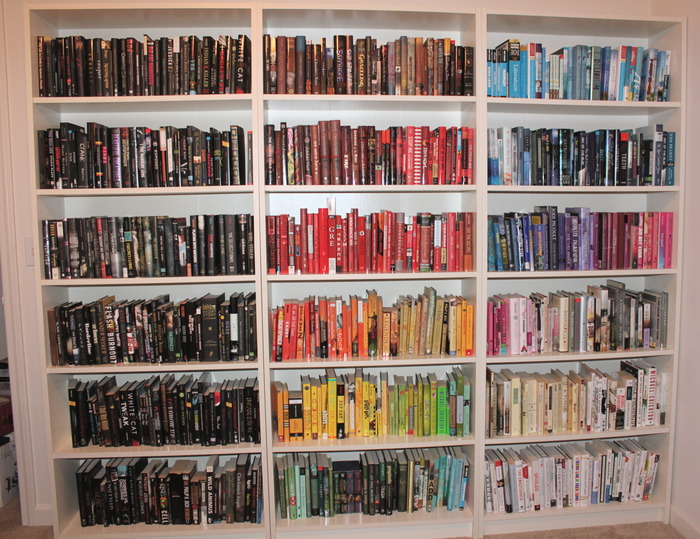
21. Finish color-coding my bookshelves (three down, one to go!)

22. Have my students over for a book-giving party.

23. Name all of my children after great authors.

24. Host more book giveaways on the blog.

25. Become much more active on Twitter. The bookish crowd is awesome!

RickiSig

The Fox in the Library by Lorenz Pauli

Share

the fox in the library

The Fox in the Library
Author: Lorenz Pauli
Illustrator: Kathrin Schaerer
Published August 1st, 2013 by NorthSouth

Summary: Fox didn’t come to the library to read a book–he came to catch a mouse! But  Mouse offers the fox a book, Fox gets all sorts of creative new ideas.  Like eating chickens!  Until Chicken points out that chicken bones are dangerous. But then all the animals must band together when the chicken eating, hating-Farmer walks into the library.

Review: I am a sucker for books about bookstores, books, and libraries. I imagine this is the same for all book lovers. The illustrations in this book are bright, and it was very fun to read it to my son. I don’t think you can read too many books about books to kids. They need to understand that there is a world of books out there, and going to the library is cool! Some books lend themselves to silly voices—and this is certainly one of those books. The mouse even mocks the fox for calling the library a “lie-berry.” I suspect that kids won’t ever forget the pronunciation after hearing this book.

Teacher’s Tool For Navigation: This would be a great book to read to children before a trip to the library. It would stir their imaginations and make them excited to discover all of the creatures that may lurk while they visit.

Discussion Questions: How does Mouse outsmart the fox?; What do the animals learn in their trip?; What kinds of books appeal to each of the animals?


We Flagged: “‘Nothing here belongs to you,’ Mouse said with a giggle. ‘You can only borrow things here. And I’ll never be yours. This isn’t the forest; this is the library'” (6).

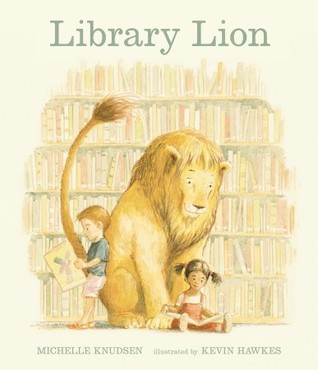
Read This If You Loved:  Library Lion by Michelle Knudsen, Wild About Books by Judy Sierra, The Boy who was Raised by Librarians by Carla Morris, Tomas and the Library Lady by Pat Mora

Recommended For: 

readaloudbuttonsmall classroomlibrarybuttonsmall

RickiSig

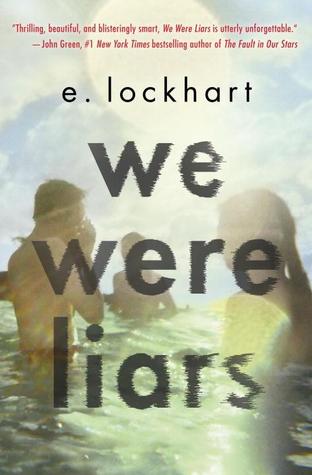
We Were Liars by e. lockhart

Share

we were liars

We Were Liars
Author: e. lockhart
Expected Publication: May 13th, 2014 by Delacorte

Summary: A beautiful and distinguished family.
A private island.
A brilliant, damaged girl; a passionate, political boy.
A group of four friends—the Liars—whose friendship turns destructive.
A revolution. An accident. A secret.
Lies upon lies.
True love.
The truth.

We Were Liars is a modern, sophisticated suspense novel from National Book Award finalist and Printz Award honoree e. lockhart.

Read it.
And if anyone asks you how it ends, just LIE.

Review: I can’t tell you anything about this book without giving anything way, and I would never do that to you, so let me just say this—this is a book that I will remember forever. It is haunting and sent chills up my spine. I was sucked into the story of this beautifully screwed up family with too much money for its own good.

Teacher’s Tools for Navigation: This would bridge beautifully with The Great Gatsby. There are so many parallels, and I can’t write them here, or I will give away too much of the plot. The figurative language in this title is also stunning. English teachers will go gaga over the pages upon pages of text that can be used for close reading. It made me want to go back to teaching English!

Discussion Questions: What does this story teach us about humanity?; What drives each of the family members?; What does Gat’s character add to the story?; How does lockhart unravel the plot? What makes her an effective writer?; What is the message of this complex text?

We Flagged: “If you want to live where people are not afraid of mice, you must give up living in palaces” (Chapter 40).

Please note: The above quote is from the Advanced Reader Copy. The chapter numbers is included instead of page numbers because the e-reader did not provide page numbers. The quotes may change when the book is published.

Read This If You Loved: The Great Gatsby by F. Scott Fitzgerald, I Will Save You by Matt de la Peña, If I Stay by Gayle Forman

Recommended For:

closereadinganalysisbuttonsmall litcirclesbuttonsmall classroomlibrarybuttonsmall

RickiSig

Each Kindness by Jacqueline Woodson (Ricki’s Review)

Share

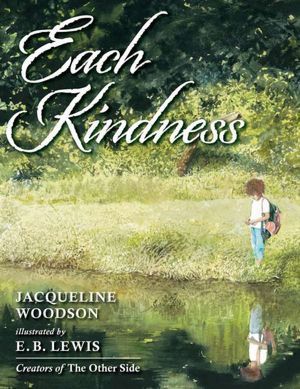
Each Kindness

Each Kindness
Author: Jacqueline Woodson
Illustrator: E.B. Lewis
Published October 2nd, 2012 by Nancy Paulsen Books

Summary: Each kindness makes the world a little better

Chloe and her friends won’t play with the new girl, Maya. Maya is different–she wears hand-me-downs and plays with old-fashioned toys. Every time Maya tries to join Chloe and her gang, they reject her. Eventually, Maya plays alone, and then stops coming to school altogether. When Chloe’s teacher gives a lesson about how even small acts of kindness can change the world, Chloe is stung by the lost opportunity for friendship, and thinks about how much better it could have been if she’d shown a little kindness toward Maya.

This unforgettable book is written and illustrated by the award-winning team that created The Other Side and the Caldecott Honor winner Coming On Home Soon. With its powerful message and striking art, it will resonate with readers long after they’ve put it down.

Review: This is a beautiful story that would be FANTASTIC for the classroom. Students of any age can learn from this book, and I would read it to my class on the very first day of school. It is easy to get caught up in drama and gossip, and Jackie Woodson reminds us how hurtful this can be. I am so glad that I own a copy of this book. I plan to read it to my son very often because the lessons are so important, and the story is simply stunning. Usually, I don’t review a book that Kellee has also reviewed on Unleashing Readers, but I couldn’t help but share my thoughts about this incredible text.

Teacher’s Tool For Navigation: I would be remiss if I didn’t direct you to Kellee’s post about this book. She did a fantastic activity with her class that used multi-flow maps.

One of my favorite parts about this book is that it doesn’t have a happy ending. I would love to discuss this with students–why might this be? Is Woodson teaching us something? Then, we might explore other books that don’t have happy endings and discuss why authors might do this intentionally and how it might impact readers’ feelings about the books. Students are notorious for disliking sad endings, so I think this would provoke much discussion.

This book can be both preventative and reactionary to bullying issues in the classroom/school community. While I would read it at the beginning of the school year, I could also see it as an effective tool for teachers who are having issues with bullying during the school year.  This book makes us want to be better people.
Discussion Questions: Why is Chloe so mean to Maya?; What do we know about Maya? Why do you think Woodson characterizes her this way?; Why does this book end in an unhappy way? What does it teach us?; How might we spread kindness?

We Flagged: “And on that first day, Maya turned to me and smiled. But I didn’t smile back. I moved my chair, myself and my books a little farther away from her. When she looked my way, I turned to the window and stared out at the snow” (6).

Read This If You Loved:  Unicorn Thinks He’s Pretty Great by Bob Shea, Endgame by Nancy Garden, Thirteen Reasons Why by Jay Asher,  The Silver Linings Playbook by Matthew Quick, Burn by Suzanne Phillips, The Perks of Being a Wallflower by Stephen Chbosky, Twisted by Laurie Halse Anderson, Everybody Sees the Ants by A.S. King, The Spectacular Now by Tim Tharp, Inexcusable by Chris Lynch

Recommended For: 

readaloudbuttonsmall classroomlibrarybuttonsmall 

RickiSig


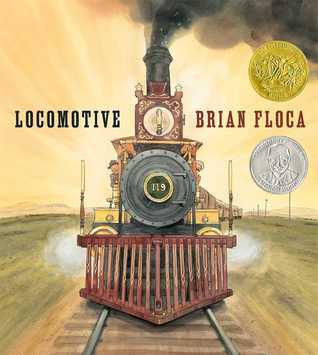
Locomotive by Brian Floca (Ricki’s Review)

Share

locomotive

Locomotive
Author and Illustrator: Brian Floca
Published September 3rd, 2013 by Atheneum Books for Young Readers

Goodreads Summary: The Caldecott Medal Winner, Sibert Honor Book, and New York Timesbestseller Locomotive is a rich and detailed sensory exploration of America’s early railroads, from the creator of the “stunning” (BooklistMoonshot.

It is the summer of 1869, and trains, crews, and family are traveling together, riding America’s brand-new transcontinental railroad. These pages come alive with the details of the trip and the sounds, speed, and strength of the mighty locomotives; the work that keeps them moving; and the thrill of travel from plains to mountain to ocean.

Come hear the hiss of the steam, feel the heat of the engine, watch the landscape race by. Come ride the rails, come cross the young country!

My Review: Filled with a beautiful array images (watercolor, ink, acrylic, etc.), this incredibly well-researched book takes readers on a journey through the summer of 1869. It took my husband and me three nights to read this title to our son because we needed to pause and take in its magic. After I closed the last page of the book, a library copy, my husband looked at me and mouthed (because our son was asleep), “Let’s buy this one.” There is a wonderful balance of factual information about the train and lyrical language that brims with gorgeous figurative language. This book is a standout and well-deserving of the accolades it has received.
**A special thanks to Kellee, who texted me that I had to read this one. You can read her review here.**

Teachers’ Tools for Navigation: I would use this text in any grade level. I envision the eager eyes of elementary school students as their curiosity is piqued… middle schoolers, suddenly interested in trains and this time in our history…or high schoolers, researching the different parts of the train and learning how effective figurative language can be in writing. This book would be a great mentor text to teach creativity. The layout of the pages is so very purposeful, which pave the way for great classroom discussions.

Discussion Questions: How does Brian Floca grab the readers’ attention? How is his writing purposeful?; In what ways does Floca manipulate language?; How does the second person point-of-view add to the story?; What does this book teach us? Go beyond the obvious.; How do the pages differ in their visual appeal? Why do you think this is?

We Flagged:

Rather than including a quote here, I wanted to show you a few of the gorgeous spreads with this book. These pages are pulled from images posted on Amazon.

locomotive1 locomotive2 locomotive4 locomotive3

Read This If You Loved: The Polar Express by Chris Van Allsburg

Recommended For: 

readaloudbuttonsmall closereadinganalysisbuttonsmall classroomlibrarybuttonsmall

RickiSig