
“My Hope”
My newest book, Risk, Resilience and Redemption: A Miraculous Holocaust Story, is the story of two people who survived Hitler’s Final Solution. The paperback book is a narrative version of the YA graphic novel We Survived the Holocaust: The Bluma and Felix Goldberg Story, which was published in September 2022. Both books detail the harrowing journey two young Polish Jews, from their capture and forced labor as slaves to their eventual liberation, marriage, and emigration to the United States. But the book is much more than their personal story. It explores the widespread antisemitism Bluma, Felix, and millions of others faced in Nazi Germany.
The narrative raises important issues I believe every student should understand. In my talks to middle and high school students reading Risk, Resilience, and Redemption, I begin by asking a series of questions:
- Who knows what the Holocaust was?
- Who knows who Adolf Hitler was?
- Who knows how many Jews died during the Holocaust?
- Who knows the names of the other groups that collaborated with Nazis to target the Jews?
- Who knows what propaganda is?
- Who knows what antisemitism means?
It is these last three questions that have students stumped.
It has been my experience that public education has given short shrift to the Holocaust, leaving many students with little knowledge about this horrific time in world history. For example, a 2025 Claims Conference survey found that “41 percent [of millennials] believe that substantially less than 6 million Jews were killed [two million or fewer] during the Holocaust.” I began asking social studies teachers I knew why our students are so apparently lacking in essential knowledge about the Holocaust, and the answer I consistently received was, “We don’t have the time.” But as a colleague of mine once said, “It’s not about time; it’s about priority.”
And that is what drives my work today: making the Holocaust a priority by connecting it to the skills and awareness students need most in this era of misinformation.
So how do we make teaching the Holocaust a priority? I think one way is to provide students with opportunities to learn by hearing directly from survivors themselves, using the media/technology students already pay attention to. In other words, we can reach out to them using social media sites such as TikTok and YouTube. For example, 21-year-old Dov Forman used TikTok to tell his great-grandmother’s survival story, and the clips received millions of views. My decision to tell the Goldberg story as a graphic novel was my acknowledgment that graphic novels, a medium that has exploded in growth and popularity, are yet another way to reach students.
In my presentations to students, I also try to make them aware, if they aren’t already, that some rhetoric and actions in 2025 closely resemble actions taken by Nazi Germany in the 1940s. I have to remind them that history repeats itself. In the graphic novel, there is an image of Bluma’s family running from their burning home, frantically trying to survive after the Nazis entered their small town in Poland in 1939. When my illustrator first showed me this image, I said to myself, “This is Ukraine…this is exactly what happened when Russia invaded, forcing people from their homes.” History does repeat.
Teaching about the Holocaust isn’t just about remembering history. It’s also about recognizing how misinformation and propaganda still influence people today.
Another concern of mine is where students first learn about the Holocaust. I ask, “Was it from a book? A movie? Television? Social media? Or perhaps listening to a survivor’s story?” Because where they get that information is vital. Do the students know what a reliable source is and how to verify it? In 2025, Holocaust denial and distortion are rampant, and many students believe what they see and read without question. That is why I remind them to be doubly careful about what they consume on social media, because so much of it today is manipulated.
Teaching about the Holocaust isn’t just about remembering history; it’s about helping students think critically about the information they encounter every day. For more than 25 years, I have been teaching media literacy, which I define as applying critical thinking and viewing skills to all media messages. It is painfully obvious that too many young people believe what they read without question. They rarely verify or consider the sources. This is troubling.
There are many groups (I like to call them “bad actors”) who are deliberately manipulating content to fool a media-illiterate population and sway opinion. The bad actors are most active around breaking news events: a hurricane will bring images of sharks swimming in a city’s downtown flooded streets (NOT); ongoing wars will bring a plethora of fake and manipulated images. And with the advent of Artificial Intelligence, images and video are being altered every day, often seen and shared by unsuspecting audiences.
Recently, the Columbia Journalism Review produced a short video, The PSAi, designed to raise awareness of the techniques being used in AI. If you are a parent or an educator, consider showing this to students and leading a discussion about how easily digital content can be manipulated and what questions students should ask before they believe or share it. Fact-checking is one of the most important tools students (and the rest of us) can use to navigate the fake news, disinformation, and conspiracy theories.
Finally, let me give a shout-out to the school librarians in this country. Thankfully, they are the educators in most schools who are actively teaching students “information literacy,” which is closely related to media literacy. Together, classroom teachers and librarians can make a powerful difference by helping students develop the critical thinking habits that protect both truth and democracy.
We have our work cut out for us. We must all work harder to counter the junk that’s out there. Thomas Jefferson said (and I paraphrase here) the health of a democracy depends on an informed electorate. But what happens when the electorate is mostly misinformed? My hope is that by teaching truth and critical thinking, we can help our students make sure that doesn’t happen.
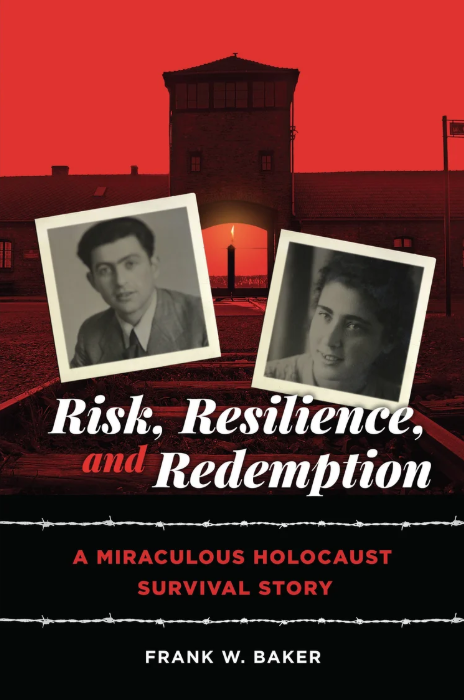
Publishing October 21st, 2025 by Tree of Life Books
About the Book: From acclaimed media literacy educator and author Frank W. Baker comes a powerful new narrative: Risk, Resilience, and Redemption: A Miraculous Holocaust Survival Story. This moving retelling of the true story of Holocaust survivors Bluma and Felix Goldberg is written specifically for young readers in prose form. At just 40 pages, this accessible edition shares their courage, resilience, and message of hope with students in grades 5 through 12.
Two young polish Jews, Bluma Tishgarten and Felix Goldberg, were torn from their families and communities as Hitler led the Nazis in their murderous march across Europe and beyond from 1939 to 1945. Despite not knowing if their friends, neighbors, and families were still alive, they struggled through the grueling conditions of near-starvation and slave labor as well as torture and terror with only the faint glimmer of hope as their beacon leading them to survival. Then they found each other. They found a life together, and they found their way to America. This is their miraculous story of the risks they took, the resilience to persevere, and their ultimate redemption.
This version preserves the emotional depth of the original graphic novel, We Survived The Holocaust: The Bluma and Felix Goldberg Story, making it an excellent choice for classrooms, book clubs, and educational programs that want to introduce Holocaust history through narrative storytelling. In today’s world, helping students think critically and care deeply about others is more important than ever. This book offers a powerful starting point for those conversations.
Risk, Resilience, and Redemption also serves as a valuable resource by addressing essential themes and fostering skills that connect past and present. Its concise length makes it especially useful for educators seeking a focused, impactful story that fits into tight classroom schedules.
Key talking points include:
• Understanding the Past, Thinking About the Future: Bluma and Felix’s firsthand accounts help readers connect historical events to current challenges, including prejudice, nationalism, and the spread of false information.
• Navigating Today’s Media: An accessible introduction to media literacy that helps students question and evaluate what they see and hear in today’s digital world.
• A Timely Resource for Classrooms: This book supports meaningful discussion on history, identity, and justice.
• Hope, Resilience, and Courage: While grounded in tragic history, the story ultimately offers a message of strength and survival that can inspire young readers.
“After reading this book you must take away a new sense of urgency that lies in the forefront of your mind to eliminate the latest scourge of antisemitism that is sweeping the world.” Henry Goldberg, second-generation survivor

About the Author: Frank W. Baker has worked in television news, public education and public television. In 2019, Frank was recognized by UNESCO with its GAPMIL (Global Alliance Partnership for Media & Information Literacy) honor. In 1998, he founded the Media Literacy Clearinghouse website and began working with teachers and students to help them better understand how to think critically about the media. Other books include Coming Distractions: Questioning Movies (Capstone, 2007), Political Campaigns & Political Advertising: A Media Literacy Guide (Greenwood, 2009), Media Literacy in The K-12 Classroom (ISTE, 2012), Close Reading the Media: Literacy Lessons and Activities for Every Month of the Year (Routledge, 2017), and We Survived the Holocaust: The Bluma and Felix Goldberg Story – The Graphic Novel (Tree of Life Books, 2022). You can find him online at www.frankwbaker.com.
Thank you, Frank, for this post about media and history literacy and the importance of including it in a curriculum to help grow hope for our future!

1 thought on “Author Guest Post: “My Hope” by Frank W. Baker, Author of Risk, Resilience, and Redemption: A Miraculous Holocaust Survival Story”